2027 Educational Technology Degree Wage Advantage by Region: Where Graduates Gain the Biggest Earnings Edge

Co-Founder and Chief Data Scientist
Choosing where to use an educational technology degree can change its financial payoff. The U. S. Bureau of Labor Statistics reported a May 2024 median wage of $74,720 for instructional coordinators, well above the $49,500 median for all occupations, but that advantage varies sharply by region, employer type, and living costs.
This guide is for students, career changers, and graduates comparing locations. You will learn where salaries tend to stretch furthest, which industries pay more, and how to decide whether relocation is worth it.
Key Things You Should Know
- The clearest national wage edge appears in roles such as instructional coordinator, where the May 2024 median wage was $74,720 compared with $49,500 for all occupations, a $25,220 national premium before regional cost adjustments.
- The biggest nominal salaries usually cluster in high-cost coastal and major metro markets, while the strongest practical ROI often appears in lower-cost Southern, Midwestern, and selected Mountain-region markets with growing education, healthcare, corporate training, and government employers.
- For most graduates, the best region is not simply the one with the highest salary; it is the one where pay, rent, student debt, job concentration, remote-work access, and advancement opportunities create the strongest net career value.
- Key Things You Should Know
- What Is the Regional Wage Advantage for Educational Technology Graduates?
- Which U.S. Regions Offer the Highest Salaries for Educational Technology Graduates?
- How Does Cost of Living Affect the Value of Educational Technology Salaries by Region?
- How Do Entry-Level and Experienced Educational Technology Salaries Compare by Region?
- Which Regions Deliver the Best Return on Investment for an Educational Technology Degree?
- Should Educational Technology Graduates Relocate for Higher-Paying Career Opportunities?
- Which Skills Increase the Regional Wage Advantage for Educational Technology Graduates?
- Which Regions Are Expected to See the Fastest Salary Growth for Educational Technology Careers?
- How Should Students Choose the Best Region for Their Educational Technology Career Goals?
- Top Trending Educational Technology Rankings
What Is the Regional Wage Advantage for Educational Technology Graduates?
The regional wage advantage is the extra earning power an educational technology graduate may gain in one location compared with local alternatives. It is not just salary. A useful comparison looks at the difference between education technology-related pay and the median wage in the same region, then adjusts that difference for housing, taxes, commuting, and career mobility.
Educational technology graduates may work as instructional designers, learning experience designers, instructional coordinators, LMS administrators, digital learning specialists, education product specialists, corporate learning consultants, or training and development managers. Because "educational technology" is not a single federal occupation category, salary analysis usually relies on related roles tracked by the Bureau of Labor Statistics and employer-posted job data.
The table below shows national wage benchmarks that help explain why the degree can produce a wage advantage. These figures should be treated as comparison anchors, not promises for individual graduates.
| Role commonly connected to educational technology | May 2024 national median wage | How it compares with the $49,500 all-occupation median | What it means for graduates |
| Instructional coordinator | $74,720 | $25,220 higher | Often relevant to K-12 systems, colleges, curriculum teams, and education agencies. |
| Training and development specialist | $64,340 | $14,840 higher | A common bridge role for graduates who apply learning technology in corporate, nonprofit, or government settings. |
| Training and development manager | $125,040 | $75,540 higher | Usually requires experience, leadership ability, and evidence of measurable learning outcomes. |
The key takeaway is that the degree's wage advantage grows when the graduate moves beyond tool support into curriculum strategy, analytics, learning design, compliance training, or team leadership. It shrinks when a role is limited to basic LMS administration in a low-budget institution.
Which U.S. Regions Offer the Highest Salaries for Educational Technology Graduates?
The highest nominal salaries tend to appear in regions with large employers, competitive labor markets, and heavy spending on digital learning. These include coastal technology hubs, state capitals, major university regions, and metro areas with healthcare, defense, finance, and software employers.
The table below summarizes the major U.S. regional patterns a graduate should compare before choosing where to work. It focuses on earning potential rather than lifestyle preference alone.
| Region | Typical salary profile | Best-fit educational technology roles | Important caution |
| West Coast and Pacific metros | Often strongest for nominal pay | Learning experience designer, education product specialist, AI-enabled learning designer, corporate instructional designer | Housing costs can erase a large portion of the salary premium. |
| Northeast corridor | High salaries in universities, healthcare, finance, and government-adjacent employers | Higher education learning designer, training manager, accessibility-focused instructional designer | Competition can be intense, especially for well-known universities and large nonprofits. |
| Mid-Atlantic and federal markets | Strong for public-sector, contractor, and compliance training roles | Government training specialist, LMS manager, workforce development consultant | Some jobs require clearance eligibility, public-sector experience, or specialized compliance knowledge. |
| South and Southeast metros | Often strong cost-adjusted value in growing metros | Healthcare training designer, corporate learning specialist, university digital learning coordinator | Salary ranges can vary widely between flagship metros and rural markets. |
| Midwest metros | Balanced salaries with moderate living costs | Instructional coordinator, corporate trainer, community college learning technology specialist | Fewer very high-paying education technology product roles may be available than in coastal tech hubs. |
| Mountain and Southwest growth markets | Improving opportunity in fast-growing metros | Online program designer, corporate learning analyst, edtech implementation specialist | Rapid population growth can raise rent quickly, reducing the expected advantage. |
If your goal is the largest paycheck, coastal and major Northeast markets usually deserve attention. If your goal is the strongest usable income after housing, transportation, and student loan payments, lower-cost metros in the South, Midwest, and Mountain West may compete surprisingly well.
How Does Cost of Living Affect the Value of Educational Technology Salaries by Region?
Cost of living can completely change the meaning of a salary offer. A higher salary in a high-rent metro may produce less monthly financial flexibility than a slightly lower salary in a region with cheaper housing and shorter commutes.
Use the next table to interpret salary offers by net value instead of headline pay. This is especially important for graduates comparing remote, hybrid, and on-site roles.
| Regional salary scenario | What looks attractive at first | What to test before accepting | Best decision rule |
| High salary, high cost of living | Large advertised salary and access to major employers | Rent, parking, taxes, commuting time, and whether raises outpace local expenses | Accept if career acceleration and long-term advancement justify the cost. |
| Moderate salary, moderate cost of living | Stable income with more predictable expenses | Whether the employer offers promotion paths, tuition support, or remote flexibility | Often best for early-career graduates building experience and savings. |
| Lower salary, low cost of living | Better affordability and lower financial stress | Whether the region has enough employers for future job changes | Works best when the role builds transferable skills and avoids career isolation. |
| Remote salary with location-based pay | Ability to live in a lower-cost region | Whether the employer reduces pay based on residence and whether travel is required | Strong option when the role offers national-level work without high-metro expenses. |
A practical approach is to calculate monthly take-home pay, then subtract rent, loan payments, transportation, insurance, and required professional costs. If the higher-paying region leaves only a small surplus after those expenses, the wage advantage may be more apparent than real.
One common mistake is comparing salary offers without comparing housing. Another is assuming a remote job can be performed from anywhere; many employers still restrict work locations because of payroll, tax, client, or time-zone requirements.
Which Industries Drive the Highest Educational Technology Salaries Across Different Regions?
Industry matters as much as geography. Educational technology graduates often earn more when they serve revenue-generating, regulated, or high-risk training environments where better learning design can reduce errors, improve compliance, or speed up workforce readiness.
The table below shows the industries most likely to create regional wage premiums for educational technology talent. These industries are important because they can make a mid-cost region more lucrative than a high-cost education-only market.
| Industry | Why it can pay a premium | Regions where it often matters | Roles to watch |
| Healthcare and life sciences | Training must support compliance, patient safety, continuing education, and complex software adoption. | Northeast, Mid-Atlantic, Southeast medical hubs, Midwest hospital systems | Clinical training designer, healthcare LMS manager, continuing education specialist |
| Technology and education software | Employers need people who understand learning science, user experience, analytics, and product adoption. | West Coast, Mountain West, Northeast innovation corridors | Learning experience designer, customer education manager, education product specialist |
| Government and defense contracting | Training projects may be large, technical, and compliance-heavy. | Mid-Atlantic, South, selected Western defense markets | Instructional systems designer, technical training specialist, workforce development analyst |
| Higher education and online program management | Institutions need support for online courses, accessibility, faculty development, and student engagement. | Northeast, Midwest, South, large university towns | Instructional designer, online learning coordinator, academic technology specialist |
| Finance, insurance, and professional services | Training supports compliance, sales enablement, onboarding, and technology change management. | Northeast, Southeast finance hubs, Midwest corporate centers | Corporate learning consultant, compliance training designer, learning analytics specialist |
Healthcare is especially important because it combines regulation, workforce shortages, and online learning demand. A graduate who understands digital course quality, assessment design, and compliance training may find stronger opportunities in health education environments, including programs that resemble the structure and rigor of an online PharmD.
How Do Entry-Level and Experienced Educational Technology Salaries Compare by Region?
Entry-level educational technology salaries are usually more compressed than experienced salaries. New graduates often compete for instructional design assistant, LMS support, academic technology, curriculum support, or training coordinator roles, while experienced professionals can move into learning strategy, analytics, product enablement, or management.
The table below explains how experience changes the regional wage advantage. This matters because a region that looks average for entry-level pay may become much stronger after three to five years of specialized experience.
| Career stage | Regional pattern | Most valuable employer signals | Best strategy |
| Entry level | Pay differences exist, but many employers benchmark junior roles conservatively. | Mentorship, portfolio-building, access to course design projects, and tools such as Canvas, Blackboard, Articulate, Captivate, and analytics dashboards | Prioritize experience quality over the highest initial salary if the role builds marketable work samples. |
| Early career | Regional differences become clearer as professionals specialize. | Ownership of online courses, accessibility reviews, assessment design, and measurable learner outcomes | Move toward industries with larger training budgets or higher compliance needs. |
| Mid-career | Large metros and remote national employers can create stronger pay jumps. | Project leadership, stakeholder management, AI-supported design, data reporting, and vendor management | Compare local promotion paths with remote or hybrid opportunities before relocating. |
| Experienced or management | The wage advantage is often highest where corporate, government, healthcare, or technology employers cluster. | Team leadership, budget ownership, enterprise LMS governance, and business impact metrics | Target regions with multiple employers so advancement does not depend on one institution. |
For new graduates, the smartest region is often the one that provides strong supervision and portfolio depth. For experienced graduates, the better region is usually the one with multiple employers competing for advanced learning design, workforce development, and digital transformation talent.
Which Regions Deliver the Best Return on Investment for an Educational Technology Degree?
Return on investment depends on program cost, time to completion, debt, employer reimbursement, salary growth, and location. A lower-cost online master's program paired with a strong regional job market can outperform a more expensive credential if both lead to similar roles.
The table below compares regional ROI patterns for educational technology graduates. It is designed to help you think beyond tuition and headline salary.
| Region type | ROI strength | Why it may work | Main risk |
| High-cost, high-salary metros | Strong for ambitious graduates seeking rapid advancement | More large employers, specialized teams, and senior roles | High housing costs and competitive hiring can delay the payoff. |
| Mid-cost university and corporate metros | Often strongest overall balance | Good mix of colleges, healthcare systems, corporations, and public-sector employers | Salary ceilings may be lower than in coastal tech markets. |
| Low-cost regional markets | Strong if remote work or stable local employment is available | Lower expenses make moderate salaries more valuable | Limited employer diversity can reduce bargaining power. |
| Remote-first career path | Potentially strong when pay is not heavily location-adjusted | Access to national employers while controlling living costs | Remote competition is broader and may require a stronger portfolio. |
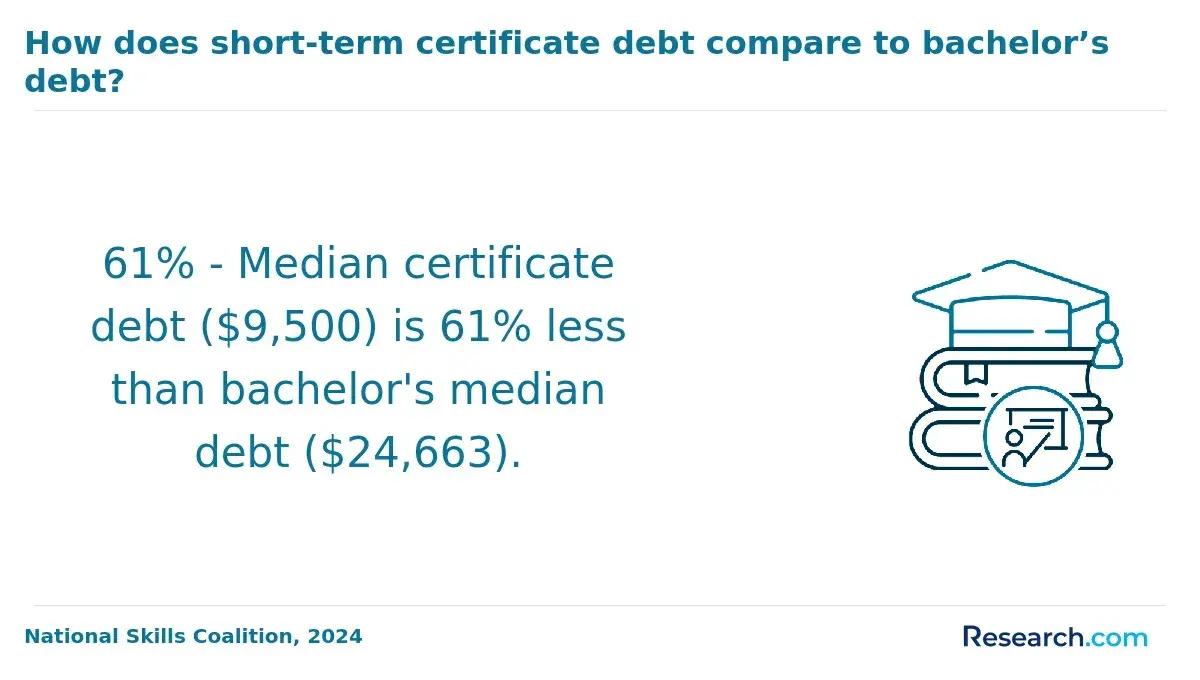
Graduate borrowing costs should be part of the ROI calculation. For the 2024-25 academic year, federal Direct Unsubsidized Loans for graduate students carried an 8.08% interest rate, which means debt can materially reduce the value of a regional wage premium if salary growth is slow.
Before enrolling or relocating, estimate ROI with this sequence. It helps prevent the common mistake of choosing a program or region based only on prestige or advertised salary.
- Estimate total program cost, including tuition, fees, books, technology, and lost work time if applicable.
- Compare likely target roles in your preferred region, not just national salary medians.
- Calculate monthly take-home pay after taxes, insurance, rent, transportation, and student loan payments.
- Check whether the region has at least three to five employer types that hire educational technology talent.
- Choose the option that improves both short-term affordability and long-term advancement potential.
Should Educational Technology Graduates Relocate for Higher-Paying Career Opportunities?
Relocation can be worthwhile when the new region offers a meaningful salary increase, stronger advancement options, and access to specialized industries. It is less attractive when the raise is absorbed by rent, commuting, taxes, or the loss of a support network.
Use the following checklist before moving for an educational technology job. These factors help separate a true wage advantage from a salary number that only looks better on paper.
- Compare net monthly income, not gross salary, across both regions.
- Confirm whether the role is permanent, grant-funded, contract-based, or tied to a specific project.
- Research how many other employers in the region hire similar talent in case the first role does not work out.
- Ask whether the employer supports certification, conference attendance, tuition reimbursement, or professional development.
- Review remote-work rules, relocation assistance, expected travel, and state-specific employment requirements.
- Evaluate whether the move improves your portfolio, leadership exposure, or industry specialization.
Relocation makes the most sense for graduates moving into high-demand sectors such as healthcare training, government learning systems, education software, or corporate workforce development. In healthcare workforce education, for example, digital training teams may support accelerated credential pathways similar in urgency to fasttrack medical programs, where speed, accuracy, and compliance all matter.
A red flag is relocating for a single job in a region with few comparable employers. If the role is eliminated or the culture is not a fit, the graduate may have to move again or accept a lower-paying local role.
Which Skills Increase the Regional Wage Advantage for Educational Technology Graduates?
The strongest regional wage advantage usually goes to graduates who combine learning theory with technical, analytical, and business skills. Employers pay more when educational technology work improves measurable outcomes, not merely when it adds digital tools to an existing course.
The skills below are especially useful because they transfer across regions and industries. They also help graduates compete for remote or hybrid roles beyond their local market.
- Instructional design models such as ADDIE, backward design, universal design for learning, and competency-based education.
- Learning management system administration, including Canvas, Blackboard, Moodle, Brightspace, or enterprise LMS platforms.
- Accessibility and inclusive design knowledge, including WCAG-aligned content practices and captioning workflows.
- Assessment design, rubric development, item analysis, and outcome mapping.
- Learning analytics, dashboard interpretation, survey design, and basic data storytelling.
- AI-assisted course development, including prompt evaluation, content review, academic integrity planning, and responsible automation.
- Multimedia development using authoring tools, video platforms, simulations, and interactive learning objects.
- Project management, stakeholder communication, vendor coordination, and change management.
Specialized domain knowledge can also raise pay. For example, a graduate who understands training needs in exercise science, coaching, biomechanics, or health promotion may be better positioned for digital learning roles connected to wellness education or a sports science degree online.
The biggest skills mistake is focusing only on software. Tools change, but employers consistently value professionals who can diagnose a learning problem, design an evidence-based solution, measure results, and explain the impact to nontechnical stakeholders.
Which Regions Are Expected to See the Fastest Salary Growth for Educational Technology Careers?
Salary growth is most likely where education, workforce training, technology adoption, and regulated industries overlap. Regions with expanding healthcare systems, government contractors, universities, corporate headquarters, and education software firms tend to create better advancement paths than regions dependent on a single school district or institution.
The table below identifies the regional conditions most associated with future salary growth. It does not predict guaranteed pay increases, but it helps graduates identify labor markets with stronger upside.
| Growth signal | Why it matters | Regions where it may appear | What graduates should look for |
| Expansion of online and hybrid education | Institutions need course design, faculty support, quality review, and student engagement expertise. | Large university systems, state capitals, fast-growing public college regions | Openings mentioning online program design, accessibility, and student success metrics. |
| Healthcare workforce demand | Hospitals and health systems need scalable onboarding, compliance, and continuing education. | Southeast, Midwest medical centers, Northeast healthcare corridors | Roles tied to clinical education, simulation, credentialing, or continuing education. |
| Corporate digital transformation | Employers need training for new systems, AI tools, cybersecurity, sales processes, and compliance. | Major corporate metros in the South, Midwest, West, and Northeast | Jobs requiring learning analytics, change management, and enterprise LMS experience. |
| Education technology product growth | Product teams need learning experts who can support adoption, customer education, and user outcomes. | West Coast, Mountain West, Northeast, remote-first employers | Roles combining instructional design with UX, product enablement, or customer success. |
| Data-intensive education and workforce planning | Employers increasingly need learning decisions supported by evidence rather than intuition. | Research universities, healthcare systems, government agencies, analytics-focused employers | Openings mentioning dashboards, outcome measurement, and data-informed program improvement. |
Data skills are becoming more valuable as learning teams are asked to prove impact. Graduates interested in analytics-heavy roles may benefit from understanding adjacent data career paths, including jobs for bioinformatics degree holders, because both fields reward the ability to translate complex data into practical decisions.
How Should Students Choose the Best Region for Their Educational Technology Career Goals?
The best region depends on the student's target role, debt level, risk tolerance, and preferred industry. A graduate who wants to build online courses for a university may choose differently from someone who wants to manage corporate learning systems or design AI-enabled training products.
Use this decision process to compare regions in a structured way. It helps balance salary, affordability, career growth, and lifestyle without overvaluing any single factor.
- Define your target role first, such as instructional designer, LMS administrator, learning analyst, training manager, or education product specialist.
- Identify the industries in each region that hire for that role, including higher education, healthcare, technology, government, finance, and corporate training.
- Compare salary ranges with local living costs, especially rent, transportation, taxes, and student loan payments.
- Check whether the region has multiple employers so you can change jobs without changing cities.
- Review job postings for required tools, certifications, portfolio expectations, and preferred degrees.
- Consider whether an online, hybrid, or local degree program gives you access to internships, practicums, employer partnerships, or faculty networks in that region.
- Choose the region that supports both your first job and your next promotion.
Students should also think carefully about program fit. Educational technology programs may be offered as bachelor's degrees, master's degrees, graduate certificates, or doctoral programs. Master's programs are common for career changers and educators moving into instructional design, while certificates may fit professionals who already have a graduate degree or relevant work experience.
Typical admissions requirements vary by school, but many graduate programs ask for transcripts, a statement of purpose, recommendations, and sometimes a resume or teaching experience. Accreditation matters because it affects transferability, employer recognition, and financial aid eligibility. Students should also compare total cost, online flexibility, practicum options, portfolio development, and whether coursework includes accessibility, analytics, AI, assessment, and project management.
This degree is a strong fit for people who enjoy teaching, technology, design, communication, and problem solving. It may be a weaker fit for students who want a purely technical software engineering path, dislike stakeholder feedback, or are unwilling to build a portfolio showing real learning design work.
Other Things You Should Know About Educational Technology
It can be worth it if the program leads to roles in instructional design, learning analytics, corporate training, online program design, or learning technology management. The payoff is strongest when tuition is controlled and the graduate builds a portfolio with measurable learning outcomes.
High-cost coastal and Northeast markets often offer the highest nominal salaries, but the best cost-adjusted advantage may come from Southern, Midwestern, and selected Mountain-region metros with lower living costs and growing employer demand.
Yes, many instructional design, LMS administration, learning analytics, and corporate training roles can be remote or hybrid. However, remote jobs are competitive, and some employers limit eligible work locations because of payroll, tax, client, or time-zone requirements.
Compare net income, rent, commuting, taxes, student loan payments, employer stability, promotion paths, and the number of similar employers in the new region. A higher salary is only worthwhile if it improves both financial flexibility and long-term career options.
Top Trending Educational Technology Rankings
References
- Most Educated Countries 2025 https://worldpopulationreview.com/country-rankings/most-educated-countries
- How does a college degree improve graduates’ employment and earnings potential? - APLU https://www.aplu.org/our-work/4-policy-and-advocacy/publicuvalues/employment-earnings/
- 18 Highest Paying Jobs With an Education Degree (not teaching) | Devlin Peck https://www.devlinpeck.com/content/jobs-with-an-education-degree
- What happened to the college wage premium? | Federal Reserve Bank of Minneapolis https://www.minneapolisfed.org/article/2025/what-happened-to-the-college-wage-premium