2027 Educational Technology Degree Persistence Report: Retention, Stop-Out Risk, and Re-Enrollment Patterns

Co-Founder and Chief Data Scientist
Choosing an educational technology degree is not only about curriculum; it is about whether the program can help you stay enrolled through work, family, cost, and academic pressure. The National Student Clearinghouse Research Center reported that 36.8 million adults under age 65 had some college credit but no credential, showing how common stop-outs remain. This guide is for prospective, current, and returning students who want to compare programs by retention, flexibility, support, and completion risk so they can choose a path with fewer avoidable setbacks.
Key Things You Should Know
- Retention is an early signal, not a guarantee: strong programs combine advising, flexible course sequencing, financial aid support, and clear re-enrollment policies rather than relying on student motivation alone.
- Stop-out risk is highest when students enroll part time without a long-term schedule, underestimate technology workload, lose financial aid eligibility, or wait too long to seek academic help.
- For career context, the U.S. Bureau of Labor Statistics reported a May 2024 median pay of $74,720 for instructional coordinators, a common role connected to educational technology and curriculum improvement.
- Key Things You Should Know
- What Do Retention Rates Reveal About Student Success in Educational Technology Degree Programs?
- Which Students Are Most at Risk of Stopping Out of a Educational Technology Degree Program?
- What Academic and Financial Challenges Reduce Persistence in Educational Technology Degree Programs?
- How Do Educational Technology Students Return After Stopping Out?
- Which Institutional Support Services Improve Persistence in Educational Technology Degree Programs?
- How Does Persistence Affect Graduation Time and Career Outcomes for Educational Technology Students?
- Which Educational Technology Degree Programs Have the Strongest Student Persistence Outcomes?
- How Are Student Persistence Patterns Changing in Educational Technology Degree Programs?
- How Should Students Evaluate Educational Technology Degree Programs Based on Persistence and Retention?
- Top Trending Educational Technology Rankings
What Do Retention Rates Reveal About Student Success in Educational Technology Degree Programs?
Retention rates show how many students continue from one academic period to the next, usually from the first year to the second year. In educational technology programs, retention matters because students often balance courses in instructional design, learning analytics, multimedia production, research methods, and applied technology projects with jobs in teaching, training, or administration.
A high retention rate can suggest that a program admits students who are academically prepared, offers realistic course loads, and intervenes early when students struggle. However, it does not prove that every student graduates on time. Retention should be read alongside graduation rates, transfer-out rates, course availability, and the support available to online and adult learners.
The table below explains the main persistence metrics students should ask for when comparing educational technology degree programs. These measures help you distinguish a program that keeps students enrolled from one that simply enrolls large numbers of students.
| Persistence measure | What it tells you | How to use it when choosing a program |
| First-year retention rate | How many new students return for the next year or term sequence | Use it as an early signal of advising quality, course fit, and student support |
| Graduation rate | How many students complete within a defined period | Compare it with retention to see whether students persist beyond the first year |
| Stop-out rate | How many students pause enrollment without graduating or officially transferring | Ask whether common causes include cost, workload, course access, or academic difficulty |
| Re-enrollment rate | How many stopped-out students return | Look for programs with clear leave, readmission, and advising processes |
| Credit completion ratio | How many attempted credits students successfully complete | Use it to evaluate whether course loads are realistic for working students |
For educational technology students, credit completion can be especially important because many courses build on each other. If a student withdraws from a research methods, design studio, or practicum course, the delay may affect several later terms.
Which Students Are Most at Risk of Stopping Out of a Educational Technology Degree Program?
Students most at risk of stopping out are usually not the least motivated. They are often the students with the least schedule margin, the least financial flexibility, or the weakest connection to advising. Educational technology programs attract teachers, school staff, trainers, and career changers, so many students are already working full time before they enroll.
The National Student Clearinghouse's 2024 reporting on adults with some college and no credential is a reminder that stop-out risk is a system-level issue, not a rare exception. For an individual student, the most important question is whether the program has structures that match the student's life outside school.
The table below summarizes common risk profiles. It is not meant to label students; it helps readers identify where they may need stronger support before enrolling.
| Student situation | Why stop-out risk may rise | What to check before enrolling |
| Full-time worker | Course deadlines may conflict with job cycles, school-year demands, or training responsibilities | Evening, asynchronous, and part-time sequencing options |
| Parent or caregiver | Unexpected care needs can disrupt group projects, practicum hours, or synchronous sessions | Leave policies, late-work rules, and flexible practicum arrangements |
| Career changer | Students may need extra support in pedagogy, technology tools, or research methods | Bridge courses, tutoring, orientation, and faculty access |
| First-generation graduate student | Program norms, academic writing expectations, and financial aid rules may be unfamiliar | Dedicated advising and writing support |
| Part-time student | Long timelines increase exposure to job changes, tuition increases, and motivation loss | Guaranteed course rotation and maximum time-to-degree rules |
Before applying, students should make a personal persistence plan rather than assuming they will "figure it out later." A practical plan should cover the following checkpoints because each one can affect whether a temporary challenge becomes a permanent stop-out.
- Estimate weekly study time for each course and compare it with your actual work and family calendar.
- Ask whether required courses are offered every term, once per year, or only when enrollment is high enough.
- Confirm how many terms you can pause without reapplying or losing catalog-year protections.
- Identify the adviser, financial aid contact, and faculty lead you would contact before dropping a course.
- Build a backup plan for technology access, childcare, work travel, or school-year peak periods.
What Academic and Financial Challenges Reduce Persistence in Educational Technology Degree Programs?
Academic challenges in educational technology programs often come from the mix of theory and production. Students may be asked to design online modules, evaluate learning tools, analyze assessment data, manage accessibility requirements, and explain instructional decisions in research-based writing. A student who is strong in teaching but new to multimedia tools may struggle in a different way than a software-savvy student who is new to learning theory.
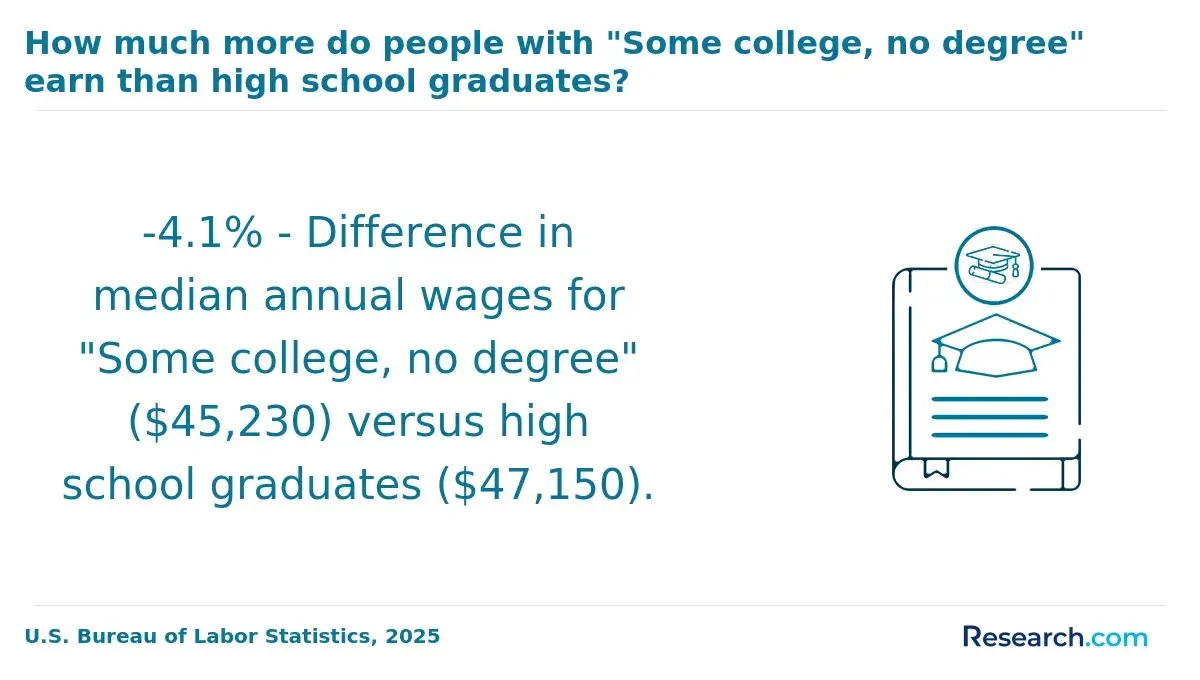
Financial pressure also affects persistence. College Board's 2024 Trends in College Pricing reported published tuition and fees of $11,610 for in-state students at public four-year institutions and $43,350 at private nonprofit four-year institutions for the 2024-25 academic year. Educational technology tuition varies widely by degree level and institution, but the broader cost gap shows why students should compare total cost, not just program reputation.
Students comparing online professional programs in other fields, such as an online PharmD, face a similar persistence question: a lower sticker price helps, but only if the course schedule, support model, and completion pathway are realistic.
The table below shows how common academic and financial barriers can affect completion. Use it to ask more precise questions instead of simply asking whether a program is "flexible."
| Challenge | How it can reduce persistence | Program feature that may reduce risk |
| Unclear course sequence | Students miss prerequisites and delay graduation by a term or more | Published degree maps for full-time and part-time students |
| Limited practicum options | Working students may not be able to complete required field or project hours | Employer-based projects and flexible supervision |
| Technology costs | Software, devices, subscriptions, or accessibility tools add unplanned expenses | Transparent technology fee and software access policy |
| Weak writing support | Research papers, capstones, and literature reviews become bottlenecks | Graduate writing center and embedded research support |
| Financial aid disruption | Dropped courses can affect satisfactory academic progress and aid eligibility | Proactive aid counseling before withdrawal deadlines |
A common mistake is choosing the lowest tuition option without asking whether students can get the courses they need when they need them. A slightly higher-cost program with predictable scheduling, strong advising, and fewer repeated courses may be less risky for a working adult than a cheaper program with limited course availability.
How Do Learning Format and Enrollment Status Affect Educational Technology Student Persistence?
Learning format and enrollment status can strongly affect persistence, but there is no single best model for every educational technology student. Online formats often fit working educators and trainers, while campus or hybrid formats may provide stronger peer connection, lab access, and faculty visibility. The better choice is the one that matches how you actually learn and how much structure you need.
Students comparing an educational technology program with a sports science degree online should look beyond the word "online." Some online programs are highly structured with cohorts and weekly deadlines, while others require much more self-direction.
The table below compares common format and enrollment combinations. It focuses on persistence trade-offs rather than convenience alone.
| Format or enrollment pattern | Persistence advantage | Persistence risk | Best fit |
| Full-time online | Faster momentum and shorter exposure to life disruptions | Heavy weekly workload can be difficult for full-time workers | Students with protected study time and strong self-management |
| Part-time online | More manageable for teachers, parents, and working professionals | Longer timeline can increase stop-out risk | Students who need flexibility but can follow a multi-year plan |
| Hybrid | Combines online flexibility with periodic in-person connection | Travel or campus dates may conflict with work | Students who value faculty access and peer networking |
| Campus-based | More structured routine and immediate access to campus services | Less flexible for students outside commuting range | Students who benefit from face-to-face accountability |
| Cohort-based | Peer support and predictable sequence may improve momentum | Falling behind can be harder if courses are locked to the cohort | Students who want structure and community |
Full-time enrollment can shorten time to degree, but it is not always the safest choice. If a full-time load forces a student to drop courses repeatedly, part-time enrollment with consistent progress may lead to a stronger completion outcome.
Before choosing a format, students should ask program staff direct questions about the learning experience. These questions reveal whether flexibility is real or mostly promotional.
- Are courses asynchronous, synchronous, or a mix of both?
- How often are required courses offered for part-time students?
- Can capstone or practicum work be completed through a current employer?
- What happens if a student fails or withdraws from a course that is offered only once per year?
- Do online students receive the same advising, tutoring, library, and career services as campus students?
How Do Educational Technology Students Return After Stopping Out?
Stopping out means pausing enrollment before completing the degree. It is different from formally transferring, graduating, or being dismissed. In educational technology programs, stop-outs often happen because of job changes, school-year workload, family responsibilities, financial aid problems, or difficulty completing a capstone or practicum.
A stop-out does not automatically mean the degree is over, but it can become harder to return if the student loses contact with the program, misses curriculum changes, or reaches a time-to-degree limit. Re-enrollment is easiest when the student leaves with a documented plan.
The table below explains common re-enrollment patterns. It helps students understand how different types of breaks may affect timeline and credit applicability.
| Return pattern | Typical situation | Persistence implication |
| Planned leave of absence | Student pauses for an approved reason and intends to return on a set term | Usually the cleanest option if the school preserves enrollment status and degree requirements |
| Informal stop-out | Student simply does not register for the next term | Higher risk because advising, aid, and catalog protections may be unclear |
| Readmission after multiple terms | Student returns after an extended gap | May require reapplication, updated requirements, or review of older credits |
| Transfer to another program | Student changes institutions or degree focus | Can help if the original program is a poor fit, but may delay graduation if credits do not transfer |
| Certificate-first return | Student returns through a shorter credential before completing the full degree | Can rebuild momentum if credits stack into the degree |
Students considering a break should take specific steps before the withdrawal deadline. These actions reduce the chance that a temporary interruption becomes a permanent loss of progress.
- Meet with academic advising before dropping below the required credit load.
- Ask financial aid how withdrawal affects satisfactory academic progress, loan status, and future eligibility.
- Get written confirmation of how long completed credits remain valid.
- Confirm whether your catalog year and degree requirements will be protected.
- Set a target return term and schedule a re-enrollment advising appointment before leaving.
Transferring can make sense when the original program lacks needed flexibility, has unavailable required courses, or no longer matches the student's career goals. It can delay graduation when credits are treated as electives, when a capstone sequence must be repeated, or when the new program requires additional prerequisites.
Which Institutional Support Services Improve Persistence in Educational Technology Degree Programs?
Institutional support services improve persistence when they are proactive, specific, and easy to access. A tutoring center listed on a website is useful only if online educational technology students can actually use it at the times they need it. The same is true for advising, career services, accessibility support, and financial aid counseling.
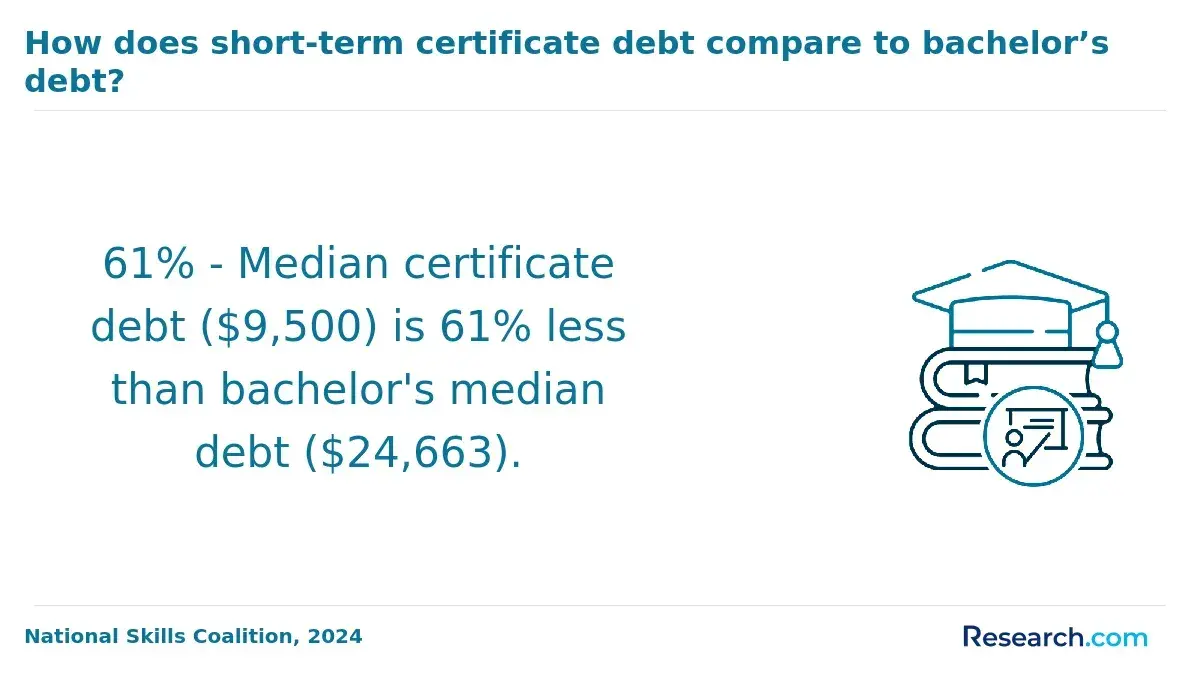
Federal Student Aid set the maximum Pell Grant at $7,395 for the 2024-25 award year. Not every educational technology student qualifies, especially at the graduate level, but the figure illustrates why financial aid counseling matters: small changes in enrollment intensity or course withdrawal can affect aid planning and persistence.
The table below connects support services to persistence outcomes. It can help students evaluate whether a program has a real student-success infrastructure.
| Support service | Why it matters for persistence | What strong implementation looks like |
| Academic advising | Prevents missed prerequisites and unrealistic course loads | Degree maps, early outreach, and advisers familiar with online and adult learners |
| Faculty mentoring | Helps students connect coursework to career goals and capstone topics | Regular office hours, project feedback, and professional guidance |
| Writing and research support | Reduces bottlenecks in literature reviews, research papers, and capstones | Graduate-level writing help and library research consultations |
| Technology help desk | Prevents tool problems from becoming missed assignments | Extended hours and support for learning management, video, design, and accessibility tools |
| Financial aid counseling | Helps students avoid aid disruption after withdrawals or enrollment changes | Clear guidance before add-drop and withdrawal deadlines |
| Career services | Supports motivation by connecting coursework to employment goals | Portfolio help, resume support, and employer-aligned project planning |
Red flags include advising that is available only during standard work hours, unclear practicum expectations, no published part-time plan, and no clear process for returning after a break. Students should not wait until they are failing a course to test whether support services are responsive.
How Does Persistence Affect Graduation Time and Career Outcomes for Educational Technology Students?
Persistence affects both graduation time and career outcomes because educational technology roles often value a portfolio of completed work, applied projects, and evidence of instructional design skill. A student who stays enrolled consistently is more likely to finish capstones, collect project samples, and build relationships with faculty or professional contacts.
The U.S. Bureau of Labor Statistics reported a May 2024 median salary of $74,720 for instructional coordinators. That figure is not a promise for educational technology graduates, but it gives useful context for roles involving curriculum evaluation, teacher training, learning standards, and instructional improvement.
Shorter credentials in other fields, including fasttrack medical pathways, can appeal to students who need quicker workforce entry. Educational technology degrees may take longer, but they can be better aligned for people who want roles in instructional design, learning experience design, academic technology, corporate training, or curriculum leadership.
The table below shows how enrollment patterns can influence graduation timing. These are practical planning categories, not promises, because actual timelines depend on transfer credits, course availability, practicum requirements, and school policies.
| Enrollment pattern | Likely effect on time to degree | Career planning implication |
| Consistent full-time enrollment | Usually shortest path if courses are passed on schedule | May allow faster transition into instructional design or leadership roles |
| Consistent part-time enrollment | Longer but often more sustainable for working adults | Lets students apply course projects in current jobs while progressing steadily |
| Repeated withdrawals | Can create cascading delays when courses are sequential | May postpone portfolio completion and graduation eligibility |
| Planned one-term leave | Can be manageable if approved and documented | May protect long-term completion better than failing multiple courses |
| Unplanned multi-term stop-out | Can trigger readmission, new requirements, or credit review | May delay career transition and increase total cost |
Persistence also affects confidence. Students who complete courses in a stable sequence are better positioned to create polished portfolio artifacts, request references, and explain their skills to employers.
Which Educational Technology Degree Programs Have the Strongest Student Persistence Outcomes?
The educational technology programs with the strongest persistence outcomes are usually the ones that can document student success, not merely advertise flexibility. Because retention and completion data may be reported at the institution level rather than the major level, students should ask for program-specific evidence whenever possible.
There is no universal public ranking that identifies the highest-retention educational technology programs across every institution. Instead, students should compare programs using a transparent evidence checklist. This approach is more reliable than assuming that a famous university, low tuition, or online format automatically means better persistence.
The table below shows the strongest evidence signals to request from schools. These indicators help students compare programs even when institutions publish data differently.
| Evidence to request | Why it matters | Stronger sign | Weaker sign |
| Program-level retention or continuation data | Shows whether students in the specific degree keep progressing | Data is available by format and enrollment status | Only institution-wide averages are provided |
| Graduation or completion data | Shows whether retained students finish | Program explains typical completion timelines | No distinction between full-time and part-time students |
| Course rotation plan | Shows whether students can plan multiple terms ahead | Required courses are mapped for at least two years | Students are told to check availability each term |
| Stop-out and re-entry policy | Shows whether interruptions are manageable | Clear leave, readmission, and credit-validity rules | Policies are vague or handled case by case only |
| Online student support access | Shows whether distance learners receive real services | Advising, tutoring, library, and tech help are available remotely | Support exists mainly for campus students |
Students comparing educational technology with data-heavy fields may also want to review career pathways such as jobs for bioinformatics degree graduates. The comparison can clarify whether they prefer learning design, analytics, curriculum, training, or technical research work.
A strong program should be able to answer persistence questions without defensiveness. If admissions staff cannot explain how part-time students graduate, what happens after a failed course, or how stopped-out students return, treat that as a serious red flag.
How Are Student Persistence Patterns Changing in Educational Technology Degree Programs?
Persistence patterns in educational technology programs are changing because students increasingly expect flexible delivery, employer-relevant projects, and stronger support for online learning. At the same time, flexibility can shift more responsibility onto the student if the program does not provide structure.
AI is also changing the field. Educational technology students are now more likely to encounter AI-assisted course design, learning analytics, accessibility tools, automated feedback systems, and academic integrity policies. This can make the degree more relevant, but it may also increase the need for clear faculty guidance and updated technology support.
Current persistence trends are best understood as trade-offs. More online access can help working adults enroll, but online students may need stronger advising and peer connection. Faster course terms can help students finish sooner, but compressed schedules can increase withdrawal risk if students underestimate the workload.
Students should watch for these changes when comparing programs because they affect both completion and career preparation.
- More programs are using online or hybrid formats, so students should ask whether support services have expanded with enrollment.
- AI and learning analytics are becoming more common, so students should ask how the curriculum teaches ethical, accessible, and evidence-based technology use.
- Employers increasingly value portfolios, so students should favor programs that build usable projects across multiple courses.
- Adult learners need flexible pathways, so students should look for part-time maps, stackable certificates, and re-entry policies.
- Tuition pressure remains important, so students should compare total cost, fees, software expenses, and the cost of delayed graduation.
The mistake to avoid is assuming that "online" means easier. A well-designed online program can support persistence, but a poorly structured online program can leave students isolated and responsible for solving every problem alone.
How Should Students Evaluate Educational Technology Degree Programs Based on Persistence and Retention?
Students should evaluate educational technology programs by asking one central question: does this program make it realistic for someone with my schedule, finances, academic background, and career goals to stay enrolled through graduation? Retention data matters, but it should be combined with practical evidence about support, sequencing, cost, and re-enrollment.
A good evaluation process should move from broad data to personal fit. Start with institutional outcomes, then narrow the comparison to the educational technology program, then test whether the program fits your life.
- Check accreditation and make sure the institution is eligible for federal financial aid if you plan to use it.
- Ask for retention, completion, and average time-to-degree data for the specific program or closest available student group.
- Compare full-time and part-time degree maps, including when required courses are offered.
- Calculate total cost, including tuition, fees, books, software, technology, travel, and the cost of extra terms.
- Ask how online students access advising, tutoring, library services, career services, and faculty support.
- Review leave of absence, withdrawal, readmission, and credit expiration policies before you need them.
- Request examples of capstone projects, portfolio work, practicum placements, or employer-connected assignments.
- Speak with current students or alumni if possible, especially those who studied while working full time.
Retention should matter more than marketing claims, but graduation outcomes should matter more than retention alone. A program that keeps students for one year but does not help them complete may not be a strong choice. Likewise, a program with modest retention may still be a good fit for a student who has the right preparation, support, and schedule.
If you are unsure, ask admissions staff a direct scenario-based question: "If I need to pause for one term after completing half the program, what exactly happens to my credits, financial aid, course sequence, and graduation date?" A school that can answer clearly is more likely to have systems that support persistence.
Other Things You Should Know About Educational Technology
A good retention rate is one that compares favorably with similar programs at the same degree level and format. Do not evaluate it alone; ask for graduation rates, part-time outcomes, online student outcomes, and average time to degree.
Not necessarily. Online programs can be highly effective for working adults, but persistence depends on structure, advising, course design, faculty access, and the student's ability to manage time independently.
A planned leave may be better than failing multiple courses, but you should speak with advising and financial aid first. Ask how the break affects aid, credits, readmission, degree requirements, and your expected graduation date.
Academic advising, writing support, technology help, financial aid counseling, faculty mentoring, and career services are especially important. The best programs make these services accessible to online, part-time, and working students.
Top Trending Educational Technology Rankings
References
- How a Student Information System Boosts Student Retention Rates https://corecampus.com/student-retention-sis/
- Time and Money: Why Students Take a Break https://www.higheredtoday.org/2024/05/24/why-students-take-a-break/
- Boosting Student Retention: How Student Success Software Can Help https://www.quadc.io/blog/boosting-student-retention-with-student-success-software
- 6 Common Reasons for Student Drop Outs & 1 Simple Solution https://www.qooper.io/blog/6-common-reasons-for-student-drop-outs-1-simple-solution
- Stop Out Students: Proven Re-enrollment Strategies (2025) - Campus Mind https://www.campusmind.org/stop-out-students-re-enrollment-strategies/
- Institutional Support Services, Learners' Retention, and https://wajofel.org/index.php/wajofel/article/download/160/199
- How many people drop out of college: Statistics analysis [2025] https://www.wooclap.com/en/blog/how-many-people-drop-out-of-college/
- AI for Student Retention: Tracking Digital Disengagement Patterns https://changinghighered.com/using-ai-behavioral-signals-student-retention/
- 3 Factors That Contribute to Higher Student Retention Rates in Universities | Full Fabric https://www.fullfabric.com/articles/3-factors-that-contribute-to-higher-student-retention-rates-in-universities
- 5 Strategies to Boost Student Retention in Higher Education https://moderncampus.com/blog/factors-affecting-student-retention.html