2027 Best Criminal Justice Degree Programs Ranking in Delaware

Co-Founder and Chief Data Scientist
Are you considering a career in criminal justice and wondering which programs in Delaware stand out? This article presents the 2027 Best Criminal Justice Degree Programs Ranking in Delaware, carefully created by Research.com's team of data scientists. It's designed to help you navigate your options with confidence.
By exploring this ranking, you'll discover programs that align with your goals and offer strong opportunities for growth. Earning a criminal justice degree can open doors to meaningful work that positively impacts your community. Let's dive in and find the path that's right for you.
Key benefits of getting criminal justice degree in Delaware
- Graduates with a criminal justice degree in Delaware can pursue well-paying jobs such as Police Officer with an average salary of $76,550 or Crime Scene Investigator earning around $95,930 annually, providing financial stability and growth.
- Career paths include roles like Correctional Officer, Forensic Science Technician, and Court Clerk, showcasing diverse opportunities for meaningful work within the criminal justice system in Delaware.
- Obtaining a criminal justice degree online offers flexibility for busy students and working professionals in Delaware, allowing them to balance life commitments while gaining valuable skills from respected programs.
- 2027 Best Criminal Justice Degree Programs Ranking in Delaware
- What can I expect from criminal justice degree in Delaware?
- Where can I work with criminal justice degree in Delaware?
What can I expect from criminal justice degree in Delaware?
The average cost of pursuing a criminal justice degree in Delaware varies widely but generally falls between $8,000 and $25,000 per year, depending on the institution and degree level. For example, graduates from Delaware Technical Community College often remark on the affordability and practicality of associate degrees, which can be completed at a fraction of the cost compared to universities like the University of Delaware or Wilmington University where bachelor's programs provide more in-depth study and hands-on experiences.
Many students find that the investment feels deeply worthwhile, especially when internships with local law enforcement agencies offer a real-world glimpse into the profession. One graduate shared how their internship with a Wilmington police department helped them connect coursework on community policing to actual neighborhood dynamics in Delaware. This blend of practical experience and tailored curriculum deepens understanding but also comes with tuition that reflects such immersive training.
Yet, the cost is more than just a number; it's a gateway to growing employment opportunities in Delaware's compact criminal justice market, where employers highly value locally educated candidates familiar with state-specific challenges. Knowing where to expect these expenses-and what value they bring-prepares students to weigh investment against potential career rewards within Delaware's distinct landscape.
Where can I work with criminal justice degree in Delaware?
Graduates with a criminal justice degree from Delaware State University or the University of Delaware often find themselves drawn to roles in local police departments like Wilmington or Newark. They describe the thrill of becoming patrol officers or detectives, where each day brings a new challenge that directly impacts community safety. The Delaware State Police, known for its rigorous standards, frequently hires degree holders who value the real-world application of their campus studies.
Others recall starting careers in correctional facilities managed by the Delaware Department of Correction, where probation officers and counselors play crucial roles in rehabilitation. The hands-on experience of working inside these institutions solidifies a graduate's understanding of justice beyond textbooks, highlighting the human element often overlooked.
Many expand their horizons toward Delaware's court system, assisting as victim advocates or legal assistants, roles that require empathy combined with legal knowledge. Social service agencies focused on juvenile justice and reentry emphasize how graduates can foster positive change, helping offenders regain stability. These career paths reflect not just jobs, but meaningful opportunities to elevate Delaware's justice landscape.
Graduates from criminal justice programs at institutions like the University of Delaware often find their efforts rewarded with competitive salaries, reflecting both local market demands and specialized skills. For example, many law enforcement officers in Delaware report mean annual wages of about $76,550, notably higher than the state average cited in general reports. This rewarding income can transform the lives of those who once worried about entry-level pay.
Correctional officers in Delaware earn a solid $58,810 annually on average, a figure that resonates with graduates pursuing stable, frontline roles. Meanwhile, those who delve into more specialized and investigative roles-such as crime scene investigators-see even more promising compensation, with mean wages nearing $95,930, illustrating the premium placed on expertise and experience.
Forensic science technicians, often requiring advanced education beyond a bachelor's degree, receive mean salaries of about $71,540, underscoring the tangible benefit of academic dedication. These figures encourage graduates from Delaware's criminal justice programs to envision a career path filled with not only meaningful work but also financial stability.
Many who have walked similar paths from Delaware colleges describe a growing confidence as they witness these salary possibilities, realizing their education opens doors to diverse and well-paid roles. This financial encouragement is often a critical motivator during demanding studies, turning abstract numbers into attainable goals.
- In Delaware, in-state tuition for criminal justice degrees at public universities ranges from $12,000 to $15,000 per year, while private colleges may charge over $20,000 annually.
- Starting salaries for criminal justice graduates in Delaware typically range from $35,000 to $45,000 per year, with mid-career professionals earning between $50,000 and $65,000.
- The job market for criminal justice roles in Delaware is expected to grow by about 5% through 2030, driven by demand in law enforcement and public safety sectors.
- Practical experience such as internships is highly valued and often included in degree programs to enhance employment prospects.
- Licensing or certification requirements vary by role and jurisdiction, especially for police officers and private investigators in Delaware.
Completing a criminal justice degree in Delaware is often viewed as a strict timeline, but real experiences reveal a more flexible journey. At Delaware Technical Community College, many associate degree students anticipate a two-year path, yet some find themselves finishing sooner by transferring previous credits or enrolling in accelerated classes. This adaptability sparks a feeling of accomplishment and control over their educational pace.
Meanwhile, bachelor's degree seekers at the University of Delaware or Wilmington University typically expect around four years full-time. Yet, graduates often share stories of balancing work, family, and studies, extending their timeline to five or six years. This isn't failure but a demonstration of resilience and dedication, turning challenges into personal victories.
Graduate students face varied lengths from one to two years, depending on specialization and prior experience. These timelines highlight how Delaware's criminal justice programs cater to diverse life circumstances, helping students transform ambition into reality with tangible flexibility.
A Juvenile Probation Officer plays a critical role in guiding youth through the justice system, balancing enforcement with rehabilitation to reduce recidivism. In Delaware, this position typically requires a bachelor’s degree in Criminal Justice or a related field, complemented by specialized training in adolescent development and counseling techniques. Many programs integrate internships with family courts or youth services agencies, giving students hands-on experience before graduation. Key Responsibilities and Skills:
- Conduct assessments of juveniles’ social, educational, and family backgrounds to develop individualized supervision plans
- Monitor compliance with court-ordered conditions, including school attendance, community service, and counseling sessions
- Facilitate group workshops on life skills, conflict resolution, and substance abuse prevention
- Collaborate with social workers, schools, and community organizations to secure support services
- Maintain detailed case files and prepare reports for judges and multidisciplinary teams Education and Certification: To become a Juvenile Probation Officer in Delaware, graduates should pursue coursework in criminology, ethics, and human behavior. Those seeking guidance on the specific steps-such as state certification, background checks, and field training-can refer to comprehensive resources on how to become a juvenile probation officer. Many agencies also require ongoing professional development, including annual workshops on trauma-informed care and legal updates. Salary and Career Outlook: In Delaware, entry-level Juvenile Probation Officers earn an average annual salary of $55,000–$62,000, with opportunities to advance into supervisory or policy roles. The state projects a steady 5% growth for probation services over the next decade, driven by increased focus on community-based alternatives to detention. Professionals often pursue master’s degrees or certifications in social work or counseling to expand their impact and elevate their career trajectory.
The difference between online and on-campus criminal justice degrees in Delaware goes beyond mere location. Graduates from Delaware State University often recall the energizing experience of face-to-face discussions and hands-on internships with local law enforcement, which not only sharpened their skills but also built invaluable professional networks. In contrast, online students appreciate the freedom to manage their studies around jobs or family, tapping into digital lectures and assignments at their own pace, a flexibility that is hard to match.
While online programs reduce expenses like commuting and housing, some graduates find the lack of in-person interaction challenging, despite improved virtual support. On-campus students at the University of Delaware describe how group projects and campus events foster a sense of community and boost confidence crucial in criminal justice careers. Yet, online learners often highlight the personal discipline they develop, equipping them with unique time management skills not typically emphasized in traditional settings.
These contrasting experiences shape not just how students learn, but who they become within Delaware's criminal justice landscape.
The average cost of a criminal justice degree in Delaware presents a nuanced picture that often surprises prospective students. While many expect a fixed price tag, data shows in-state students at public universities typically face median total costs around $12,630. This affordability opens doors for many Delaware residents who dream of careers in law enforcement, corrections, or legal analysis without overwhelming debt.
Graduates from institutions like the University of Delaware and Delaware State University often recall balancing tuition with living expenses, scholarships, and part-time work, highlighting the real-life effort behind those figures. For example, a student attending Wilmington University found the in-state tuition manageable, allowing more focus on practical internships and networking rather than constant financial stress, which is vital in the criminal justice field.
Out-of-state students, however, encounter median total costs closer to $26,750, a figure that challenges the assumption that all college expenses in Delaware fall within a modest range. Yet many see this investment as a crucial step toward long-term career satisfaction, reflecting on how scholarships and aid helped bridge the gap.
Considering criminal justice degree tuition fees Delaware-wide prompts further reflection on value versus cost. It's a reminder that strategic financial planning-like filling out the FAFSA or looking into military discounts-can transform the path to a rewarding career. Those exploring an actuary career path might note how sensible funding decisions apply universally across professions.

Delaware criminal justice graduates must satisfy specific state licensing and certification pathways before entering professional roles. Understanding these requirements ensures timely licensure and seamless career progression. • Police Officer Certification: Candidates must complete the Delaware State Police Academy or a nationally accredited basic law enforcement training program, totaling at least 600 training hours. Applicants undergo physical fitness tests, background checks, and psychological evaluations. Upon graduation, officers receive certification from the Delaware Community College Law Enforcement Training Committee. • Correctional Officer Certification: Prospective correctional officers attend a 120-hour basic corrections training course approved by the Delaware Department of Correction. Topics include inmate supervision, security procedures, and crisis intervention. Successful trainees earn a state-issued Corrections Certification. • Forensic Science Accreditation: Forensic technicians and crime scene investigators should graduate from an American Society of Crime Laboratory Directors (ASCLD)-LAB accredited program. Delaware employers often require certification through the International Association for Identification (IAI) or the American Board of Criminalistics (ABC) to validate specialized skills. • Paralegal and Legal Assistant Registration: While Delaware does not mandate state licensure for paralegals, many law firms prefer graduates who complete programs approved by the American Bar Association (ABA). Holding an ABA-approved credential demonstrates adherence to professional standards. • Continuing Education & Recertification: Certified professionals must complete annual continuing education units (CEUs), varying by role (e.g., 24 CEUs for law enforcement officers). Maintaining active status with the Delaware Criminal Justice Council or relevant board prevents lapses in certification. For students seeking more affordable online pathways or comparing out-of-state options, explore our Cheapest Online Bachelor's in Criminal Justice Degree Programs Ranking in Virginia.
Many pursuing a criminal justice degree in Delaware discover that financial aid is more accessible than they initially believed. Graduates from the University of Delaware and Delaware Technical Community College often share how starting with the Free Application for Federal Student Aid (FAFSA) opened doors to Pell Grants-federal awards that can provide up to $7,395 annually without needing repayment. This foundation eases the burden dramatically.
Beyond federal aid, Delaware's own SEED Scholarship emerges as a crucial resource, especially for full-time students maintaining solid academic standing. Imagine attending your classes with less financial stress because these state-funded scholarships are helping cover tuition at beloved local institutions.
Institutional scholarships at these schools also play a game-changing role. Students have found that merit-based awards and need-based grants make a real difference, turning what once seemed like an impossible dream into a tangible goal. Work-study options further let students earn while gaining meaningful experience in criminal justice fields-allowing them to grow financially and professionally simultaneously.
Plus, for graduates stepping into public service roles, Delaware's loan forgiveness programs offer hope, transforming daunting student debt into a manageable challenge. These layered supports collectively redefine the financial narrative surrounding criminal justice education in Delaware.
To make the most of your Criminal Justice degree in Delaware, it's essential to consider various factors that can enhance your educational experience and career prospects. One crucial aspect is exploring the most affordable criminal justice schools in Delaware, which can provide a high-quality education without excessive financial burden. By understanding the costs associated with different programs, you can make informed decisions that align with your budget and career aspirations. Furthermore, looking into the specializations offered by various institutions can help you tailor your education to specific areas of interest, such as law enforcement, forensics, or corrections. This targeted approach can significantly improve your employability and preparation for the workforce. Ultimately, optimizing your Criminal Justice education in Delaware requires a thoughtful and well-researched approach, considering factors such as program reputation, accreditation, and alumni outcomes to ensure you receive a valuable and relevant education.
Entering a criminal justice degree program in Delaware is more than just ticking academic boxes; it's about proving readiness for a demanding yet rewarding path. Graduates from well-known Delaware institutions often recall how their solid foundation in English and social studies shaped their ability to analyze cases and communicate effectively-skills essential beyond textbooks. A high school diploma or GED is fundamental, but universities here expect more: an authentic demonstration of ethical commitment through volunteer work or internships. This real-world exposure not only deepens understanding but also resonates when applying to programs.
Interestingly, while some Delaware colleges still request SAT or ACT scores, many have embraced test-optional policies, trusting a broader appraisal of potential. Students aiming for bachelor's degrees usually need a GPA between 2.5 and 3.0, reflecting a balance between academic discipline and personal growth. Associate programs offer more flexibility, welcoming those stepping back into education later, where life experience often counts as much as formal grades. This blend of expectations mirrors Delaware's diverse approach to nurturing capable future justice professionals.
While a Criminal Justice degree in Delaware offers rewarding career paths and competitive salaries, it’s essential to weigh the potential challenges before committing to your studies. Pursuing this field often involves: Emotional and Physical Demands Working in law enforcement, corrections, or forensic roles can expose you to high-stress scenarios, traumatic crime scenes, and long or irregular hours. Developing resilience, stress-management techniques, and strong support networks is crucial for long-term success. Fieldwork and Internships Many programs require hands-on experience in local agencies or correctional facilities. While invaluable for skill development, these placements may involve mandatory background checks, physical fitness tests, and strict schedules. Plan ahead to balance coursework with these real-world commitments. Certification and Licensing Costs Beyond tuition, graduates often pursue certifications-such as crime scene analyst credentials or probation officer licensing-to enhance employability. Factor in examination fees, training courses, and renewal requirements into your budget. Ongoing Professional Development The criminal justice landscape continually evolves with new laws, technologies, and community expectations. Expect to engage in regular continuing education, attend workshops, and maintain memberships in professional associations to stay current. For those interested in correctional and probation roles, understanding the specific career pathway can make all the difference-explore more on how to become a juvenile probation officer and prepare for each stage of your journey.
Students at Delaware's well-known institutions often find that their criminal justice curriculum goes beyond textbooks, immersing them in courses like Introduction to Criminal Justice, which unpacks the entire justice system from law enforcement to corrections. Graduates recall how this foundational course sparked their curiosity, making real-world connections to local police practices they witnessed during internship placements.
Courses like Criminology challenge students to rethink why crime happens, exploring societal impacts and behavioral theories that feel strikingly relevant when analyzing cases encountered in Delaware's own communities. Through Law Enforcement Procedures, students learn ethical policing and community engagement, essential lessons for those eager to serve with integrity in Delaware's diverse neighborhoods.
Delaware programs emphasize practical skills too. Classes such as Research Methods in Criminal Justice empower students to analyze crime data meaningfully, often directly related to state crime patterns. Meanwhile, Corrections and Rehabilitation sheds light on correctional systems-many graduates remember these lessons guiding their hands-on work in local probation or parole offices, making the theory come alive.
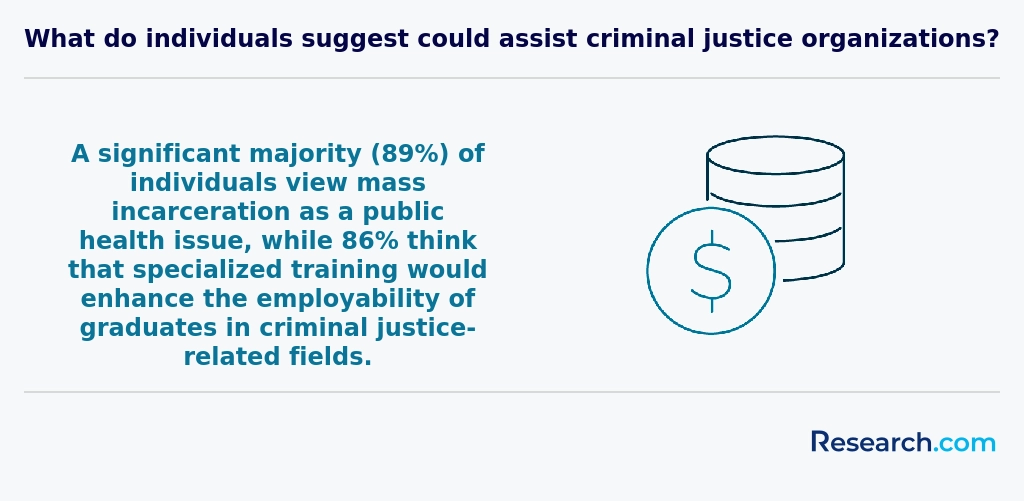
Criminal justice degree specializations in Delaware often defy a one-size-fits-all approach, reflecting the state's evolving justice landscape. Graduates from popular institutions in Delaware share how focusing on Law Enforcement equipped them with practical skills for community policing, while others found Corrections appealing for its deep dive into inmate management and rehabilitation strategies. These specializations, embedded in real-world internships across state facilities, make the learning experience tangible and emotionally engaging.
Forensic Science and Crime Scene Investigation stand out with their blend of science and law, captivating students fascinated by evidence analysis. Cybercrime and Digital Forensics, meanwhile, respond directly to today's pressing cybersecurity challenges, preparing students for Delaware's growing digital threats. Meanwhile, Legal Studies and Criminal Justice Policy offer graduates the chance to influence systemic change by understanding court systems and policy development.
Students often compare their hands-on experiences in Delaware's programs to national averages, valuing practical application alongside affordable tuition. Exploring Colorado business degree programs can also inspire interdisciplinary thinking useful for criminal justice careers.
Choosing the best criminal justice degree programs in Delaware means looking beyond surface-level rankings and questioning what truly prepares you for the field. Graduates from universities like the University of Delaware often recall how their curriculum's mix of theory and real-world internships forged critical thinking skills they hadn't anticipated needing. It's not just about textbooks; it's about the chance to navigate complex cases and understand community impact firsthand.
Affordable criminal justice degrees Delaware students appreciate frequently come from institutions like Delaware Technical Community College. These graduates share how smaller class sizes and practical training gave them confidence to step into law enforcement or forensic roles with a sense of readiness, not just theoretical knowledge.
Flexibility is another reflection point: many prefer programs offering online or hybrid models, recognizing that balancing work and study demands innovation. Also, if you're exploring avenues like hospitality and tourism degree jobs, keep in mind how criminal justice intersects with broader security challenges in public spaces, linking practical skills across disciplines.
Criminal justice degree holders in Delaware find themselves navigating a landscape rich with diverse career paths that extend far beyond traditional policing. Graduates from institutions like the University of Delaware or Delaware State University often share how their education prepared them for roles in Delaware's law enforcement agencies, but also in corrections or judicial support. These paths reflect a deeper societal commitment, where one graduate might work as a probation officer aiding rehabilitation, while another supports victims through legal advocacy-each role demanding empathy and resilience.
Jobs with criminal justice degree Delaware include opportunities in forensic science and cybersecurity, areas where the analytical skills honed in Delaware classrooms become critical. Graduates increasingly find themselves protecting digital infrastructures or unraveling complex crime scenes, illustrating how criminal justice careers blend public service with technological innovation.
Students frequently remark on how their studies at local public universities balance affordability with practical experience, encouraging them to envision roles that once seemed distant. Aspiring professionals are urged to consider these varied opportunities seriously, especially when exploring the top companies hiring MBA graduates, as interdisciplinary approaches gain momentum across Delaware's sectors.

Delaware's criminal justice job outlook reveals a landscape rich with opportunity yet shaped by local dynamics. Graduates from institutions well-known for their criminal justice programs often find themselves stepping into roles within state police, corrections, and probation services, where demand is closely tied to budgets and regional needs. Many students from Delaware colleges share stories of hands-on internships and community engagement that prepare them uniquely for the diverse challenges in law enforcement and rehabilitation.
The employment opportunities for criminal justice graduates Delaware provides extend beyond traditional policing into federal agencies and private security firms, reflecting an evolving field. Those who pursue degrees here often weigh the cost-benefit of education, noting the competitive tuition rates available compared to other states and the availability of financial aid. Many tap into resources like the most affordable criminal justice schools in Delaware to make informed choices about their education investment.
2027 Best Criminal Justice Degree Programs Ranking in Delaware
Investing in your education is a significant decision that can shape your future, and the Research.com team is keenly aware of the importance of making well-informed choices. To support students seeking programs in Delaware, we have carefully developed the "2027 Best Criminal Justice Degree Programs Ranking in Delaware." Our dedication to quality, credibility, and accuracy is demonstrated through thorough research and analysis behind this ranking.
We utilized the following reputable data sources to create a comprehensive and reliable evaluation of criminal justice degree programs:
By exploring this ranking, readers will gain valuable insights into top programs tailored to Delaware, empowering them to make confident educational decisions. For further details about how this ranking was created, please visit our Research.com methodology page.
# 1 position
Wilmington University
Master of Science in Criminal Justice


# 3 position
Wilmington University
Bachelor of Science in Criminal Justice
Frequently Asked Questions About criminal justice
Criminal justice degree students in Delaware can enhance their education by engaging in local internship opportunities. Delaware's proximity to federal agencies and state law enforcement provides access to valuable real-world experiences. For example, students can intern with the Delaware State Police or local courts, gaining firsthand insight into the justice system. According to the Delaware Department of Education, experiential learning significantly improves employment prospects after graduation.
Participating in campus organizations related to criminal justice can also deepen understanding and networking. Collaborative projects and guest lectures from professionals expose students to current trends and challenges within the field.
Additionally, Delaware students should consider research projects focusing on state crime statistics, which the Delaware Statistical Analysis Center regularly publishes. Staying informed about local crime data helps students contextualize theory practically.
The criminal justice field in Delaware is expanding into several emerging niches that reflect broader national trends. One significant area is cybercrime investigation, which responds to the growing threats in digital security. Agencies increasingly seek specialists trained to combat hacking, identity theft, and online fraud.
Another emerging niche is forensic psychology, focusing on the intersection of mental health and the law. Delaware's demand for experts who assess offender behavior and assist in rehabilitation is rising, as noted by local justice reports.
Restorative justice is also gaining attention. This approach emphasizes repairing harm through community-based solutions rather than traditional punishment, aligning with Delaware's efforts to reduce recidivism.
Lastly, criminal justice data analysis has become crucial in policy development and crime prevention, driven by Delaware's investment in data-driven strategies.
After earning a criminal justice degree in Delaware, preparing for the job market involves several focused steps. Gaining practical experience is crucial; students should pursue internships with local law enforcement agencies, correctional facilities, or legal offices. Delaware's limited but competitive job market highly values hands-on experience and networking.
Certification and continuing education can improve employability. Many roles, such as police officers or probation officers, require passing state-specific exams and training programs through Delaware's Criminal Justice Council.
Additionally, utilizing Delaware's resources like the Department of Labor's workforce development services helps graduates connect with employers and job openings. According to the U.S. Bureau of Labor Statistics, criminal justice employment in Delaware is projected to grow moderately through 2030, highlighting opportunities for qualified candidates.
Employers hiring criminal justice degree graduates in Delaware prioritize strong analytical skills. Graduates must be able to assess data and case information critically to support investigations and legal processes. Communication skills, both written and verbal, are also essential since professionals often interact with diverse community members and law enforcement agencies.
Knowledge of Delaware's specific laws and criminal justice system is highly valued. According to the Delaware Criminal Justice Council, understanding local legal frameworks helps graduates perform effectively within state agencies.
Additionally, problem-solving abilities and ethical judgment rank as key skills. Employers seek candidates who can navigate complex situations while upholding justice and public safety standards.
Finding internships in Delaware relevant to a criminal justice degree involves targeted research and networking. Students should explore opportunities through local law enforcement agencies such as the Delaware State Police and county sheriff's departments, which often offer internships or ride-along programs. Universities like the University of Delaware partner with Delaware's Department of Correction and local courts to provide hands-on experience.
The Delaware Criminal Justice Council publishes resources and internship listings that can help students connect with government and nonprofit organizations. Additionally, sites like the Delaware JobLink and USAJOBS list internships with federal and state law enforcement.
Networking at career fairs and joining professional groups like the Delaware Association of Crime Analysts can also increase internship prospects. Proactively contacting agencies and demonstrating genuine interest is crucial for securing positions in this competitive field.
A criminal justice degree in Delaware significantly enhances career mobility and advancement opportunities. Many entry-level positions in law enforcement, corrections, and social services require at least an associate or bachelor's degree. Employers such as the Delaware Department of Safety and Homeland Security often prefer candidates with formal education to increase eligibility for promotions.
Statistics from the Delaware Economic Development Office indicate that graduates with criminal justice degrees experience a 10-15% higher likelihood of career advancement within five years. The degree provides foundational knowledge in law, ethics, and investigative techniques, which are critical for supervisory roles.
Additionally, Delaware's investment in community policing and criminal justice reform efforts means degree holders are better positioned for specialized roles and leadership tracks.
Studying for a criminal justice degree in Delaware equips students with skills applicable across multiple fields, fostering interdisciplinary collaboration. Delaware's programs emphasize understanding legal systems, psychology, sociology, and public policy, which prepares graduates to work alongside social workers, law enforcement, and mental health professionals.
Delaware's focus on community-based policing and restorative justice reflects emerging trends requiring cross-sector knowledge. According to the Delaware Criminal Justice Council, this approach encourages partnerships with healthcare providers and educational institutions.
This broad training helps students adapt to diverse roles, such as victim advocacy, probation services, and policy analysis, increasing career flexibility within the criminal justice system.
When choosing between a thesis and a non-thesis criminal justice degree program in Delaware, consider your career goals carefully. A thesis option usually requires original research and is suited for students aiming for academic or research positions. It provides strong preparation for doctoral studies.
In contrast, non-thesis programs focus on coursework and practical skills, making them ideal for students seeking immediate employment in law enforcement, probation, or correctional agencies. Delaware's criminal justice sector employs around 15,000 professionals (Delaware Department of Labor, 2023), emphasizing practical experience.
Choose a program matching your future plans and learning preferences.
Students based in Delaware who wish to study criminal justice abroad have several pathways available through U.S. institutions offering international study programs. Many universities in Delaware, including the University of Delaware, provide study abroad opportunities or exchange programs in collaboration with partner universities worldwide. These programs allow students to deepen their knowledge of global criminal justice systems while earning credits toward their degrees.
The Delaware Department of Education and the Bureau of Justice Statistics report growing interest in international criminal justice careers, encouraging experiential learning abroad. While no Delaware school currently offers a fully overseas criminal justice degree, semester-long overseas programs, internships, and research projects are common options.
Financial aid and scholarships may be accessed to support these study abroad experiences, especially through federal Pell Grants or institutional funding.
Delaware offers several part-time job opportunities that complement criminal justice degree studies. Positions such as security officer, correctional officer, or police cadet provide practical experience while allowing students to continue their education. Security roles in Wilmington and Dover are common and give insight into risk assessment and public safety.
Correctional facilities in Delaware frequently offer part-time jobs or internships, helping students understand inmate management and facility operations. According to the Delaware Department of Correction, these roles improve applicants' knowledge of the justice system.
Volunteering with local law enforcement or victim advocacy programs is also valuable. It promotes community engagement and develops communication skills essential for criminal justice careers.
Overall, these roles offer hands-on experience that enhances academic learning for criminal justice students in Delaware.
Criminal justice students in Delaware benefit from diverse networking opportunities that connect them with professionals and agencies in the field. Local universities often partner with Delaware's Department of Justice and law enforcement agencies, offering internships and cooperative education programs that enhance real-world experience. Students can attend events hosted by organizations such as the Delaware Criminal Justice Council, which promotes collaboration among practitioners and scholars.
Professional associations like the Delaware Chapter of the American Society of Criminology provide additional chances to meet experts and stay updated on industry trends. These connections can be crucial when seeking employment in Delaware's growing criminal justice sector, which the Bureau of Labor Statistics projects to increase by 7% through 2030.
Alumni networks play a crucial role for criminal justice degree students in Delaware by offering valuable professional connections. Graduates often share job opportunities within local law enforcement agencies, correctional facilities, and legal organizations across the state. According to the Delaware Criminal Justice Council, collaborative networks increase employment prospects by up to 20% for recent graduates.
These networks also provide mentorship, guiding students through career decisions and exam preparations, such as for police or probation officer certifications. Regular alumni events foster continuous learning and access to internship openings, essential in Delaware's competitive criminal justice field. As a result, students benefit from enhanced career support beyond the classroom.
Customizing a criminal justice degree program in Delaware allows students to align their education with specific career goals. Many Delaware institutions offer elective courses in areas such as forensic science, cybersecurity, corrections, or law enforcement leadership. This flexibility helps students gain expertise tailored to roles like detective, probation officer, or crime analyst.
Internships are another key customization option. Delaware's proximity to state and local agencies gives students opportunities to gain practical experience. According to the Delaware Criminal Justice Council, hands-on training improves job placement rates.
Some programs also provide dual degree options or certificates in related fields like psychology or public administration, broadening career paths. Prospective students should consult academic advisors to map out a plan that meets professional licensing requirements within Delaware.
Criminal justice students in Delaware often face challenges related to limited internship and practical training opportunities. Delaware's smaller population and fewer large law enforcement agencies can restrict access to diverse field experiences compared to larger states. According to the Delaware Criminal Justice Council, hands-on experience is vital but sometimes hard to secure.
Additionally, funding can be a concern. While in-state tuition is generally more affordable, some students struggle with balancing work and study due to limited availability of scholarships specific to criminal justice fields in the state.
Delaware students also encounter curriculum gaps related to emerging criminal justice issues such as cybercrime and technology integration, where local programs may lag behind national trends.
With a criminal justice degree, individuals in Delaware can pursue various professional certifications to enhance their careers. Common options include the Certified Protection Professional (CPP) and the Certified Criminal Justice Professional (CCJP), which validate expertise in security and justice systems. Additionally, certifications like the Certified Law Enforcement Analyst (CLEA) are valuable for those seeking roles in analysis and intelligence.
Delaware's proximity to federal agencies and its active law enforcement community offer ample opportunities to leverage these certifications. According to the Delaware Criminal Justice Council, certified professionals tend to have better job prospects and higher salaries within the state's public safety departments.
Certification programs typically require passing an exam and relevant experience, providing practical recognition beyond the degree itself. Pursuing such credentials demonstrates commitment and knowledge in specialized areas of criminal justice, important for advancing in this competitive field.
Applying to a criminal justice program in Delaware requires careful preparation to stand out. Start by researching the specific admission requirements of schools like the University of Delaware or Wilmington University, as each may have unique standards.
Focus on your personal statement by clearly expressing your passion for criminal justice and your career goals. Highlight relevant experience, such as volunteer work or internships with local law enforcement agencies, which enhance your practical understanding.
Delaware's criminal justice sector is growing; the Bureau of Labor Statistics notes a steady increase in employment opportunities in this field statewide, showing the importance of a well-crafted application.
Strong letters of recommendation from educators or professionals familiar with your abilities can significantly boost your application. Also, ensure your transcripts demonstrate solid academic performance, especially in social sciences and related courses.
Finally, prepare thoroughly for any required entrance exams or interviews to reflect your commitment and knowledge about Delaware's justice system.
The criminal justice field is increasingly viewed through a global lens, influencing education and career paths in Delaware and beyond. Professionals are expected to understand diverse legal systems, human rights issues, and international cooperation in crime prevention.
In Delaware, criminal justice degree programs incorporate these global perspectives, preparing students for roles that may involve cross-border investigations or policy development. According to the U.S. Bureau of Labor Statistics, careers in criminal justice are expected to grow 6% nationally by 2032, reflecting an expanding need for expertise that includes international awareness.
Understanding global trends, such as transnational crime and cybersecurity threats, equips Delaware students with skills valuable to federal agencies and international organizations. Emphasizing ethics and cultural competence is essential to address complex challenges in the modern justice landscape.
Gaining practical experience while studying criminal justice in Delaware is essential for developing real-world skills. Many Delaware colleges offer internship programs with local law enforcement agencies, courts, and correctional facilities. For example, the Delaware Department of Justice and state police departments commonly provide internship opportunities to students. These placements allow students to observe investigations and case management firsthand.
Additionally, volunteering with community organizations focused on crime prevention offers valuable exposure. Some programs incorporate simulation labs and mock trials, helping students practice courtroom procedures. According to the Bureau of Labor Statistics, hands-on experience significantly improves employment prospects in Delaware's criminal justice field.
Choosing the right concentration within a criminal justice degree program in Delaware depends on aligning your interests with local career opportunities. Delaware offers various specializations like law enforcement, corrections, forensic science, and homeland security. Each focuses on distinct skills and job paths.
Research Delaware's crime trends and workforce needs; for example, the Delaware Criminal Justice Council provides data showing growing demand in cybercrime and community policing. Understanding these trends can guide your choice.
Also, consider programs with internships or partnerships in Delaware to gain practical experience and local networking, enhancing job prospects in the state's justice system.
- 2027 Best Criminal Justice Degree Programs Ranking in Maryland
- 2027 Best Criminal Justice Degree Programs Ranking in West Virginia
- 2027 Best Criminal Justice Degree Programs Ranking in New York
- 2027 Best Criminal Justice Degree Programs Ranking in Rhode Island
- 2027 Best Criminal Justice Degree Programs Ranking in Kentucky
- 2027 Best Criminal Justice Degree Programs Ranking in Massachusetts
- 2027 Best Criminal Justice Degree Programs Ranking in Vermont
- 2027 Best Criminal Justice Degree Programs Ranking in New Hampshire
- 2027 Best Criminal Justice Degree Programs Ranking in Indiana
- 2027 Best Criminal Justice Degree Programs Ranking in Maine
See What Experts Have To Say About Studying Criminal Justice
Read our interview with Criminal Justice experts

Frank Schmalleger
Criminal Justice Expert
Professor Emeritus
The University of North Carolina

David Carter
Criminal Justice Expert
Professor, School of Criminal Justice
Michigan State University

Mark Moore
Criminal Justice Expert
Research Professor of Public Management
Harvard University

- Advancing Economic Mobility for Workers With Criminal Records https://www.jff.org/idea/advancing-economic-mobility-for-workers-with-criminal-records/
- 10 skills you need to work in Criminal Justice | Service Care Solutions https://www.servicecare.org.uk/career-advice/10-skills-you-need-to-work-in-criminal-justice/
- Criminal Justice Career Goals https://www.bartleby.com/essay/Criminal-Justice-Career-Goals-8B09294D4789A4A5
- Emerging Trends in Criminal Justice Careers https://online.nmu.edu/criminal-justice-careers-emerging-trends/
- What to do With a Criminal Justice Degree - Paladin Security https://paladinsecurity.com/security-careers/become-security-guard-canada/
- Why criminal justice careers are becoming more specialized https://www.police1.com/career-development/why-criminal-justice-careers-are-becoming-more-specialized
- Jobs with a degree in Criminal Justice | Monroe University https://www.monroeu.edu/academics/undergraduate-programs/school-criminal-justice/what-can-you-do-criminal
- Study Criminal Justice Abroad | Go Overseas https://www.gooverseas.com/study-abroad/criminal-justice
- How To Network As A Criminal Justice Graduate https://www.northwestcareercollege.edu/blog/how-to-network-as-a-criminal-justice-graduate/
- 6 Ways to Network in the Criminal Justice Field https://www.aiuniv.edu/blog/2014/march/6-ways-to-network-in-criminal-justice