Choosing a counseling master's program in Tennessee means choosing more than a campus: your degree must fit the work you want to do and the credential you may need. The Research.com team of data scientists created the 2027 Most Popular Master's in Counseling Degree Programs Ranking in Tennessee to help students make an informed choice about programs worth considering. This guide helps prospective students and career changers compare training paths, licensure considerations, costs, formats, and career prospects before committing.
Key findings about Counseling degrees in Tennessee
For clinical mental health or addiction counseling, the U.S. Bureau of Labor Statistics reports a May 2025 national median wage of $59,350 and projects 18% job growth for 2025-2035. Those are occupational benchmarks, not expected starting salaries in Tennessee.
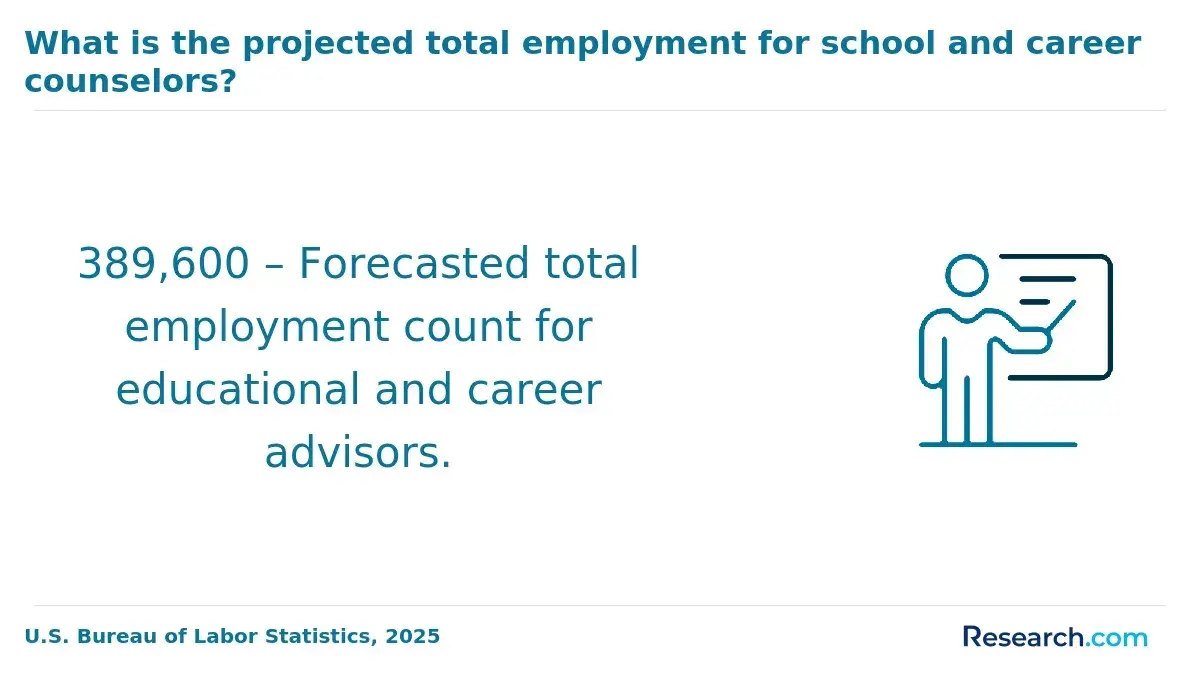
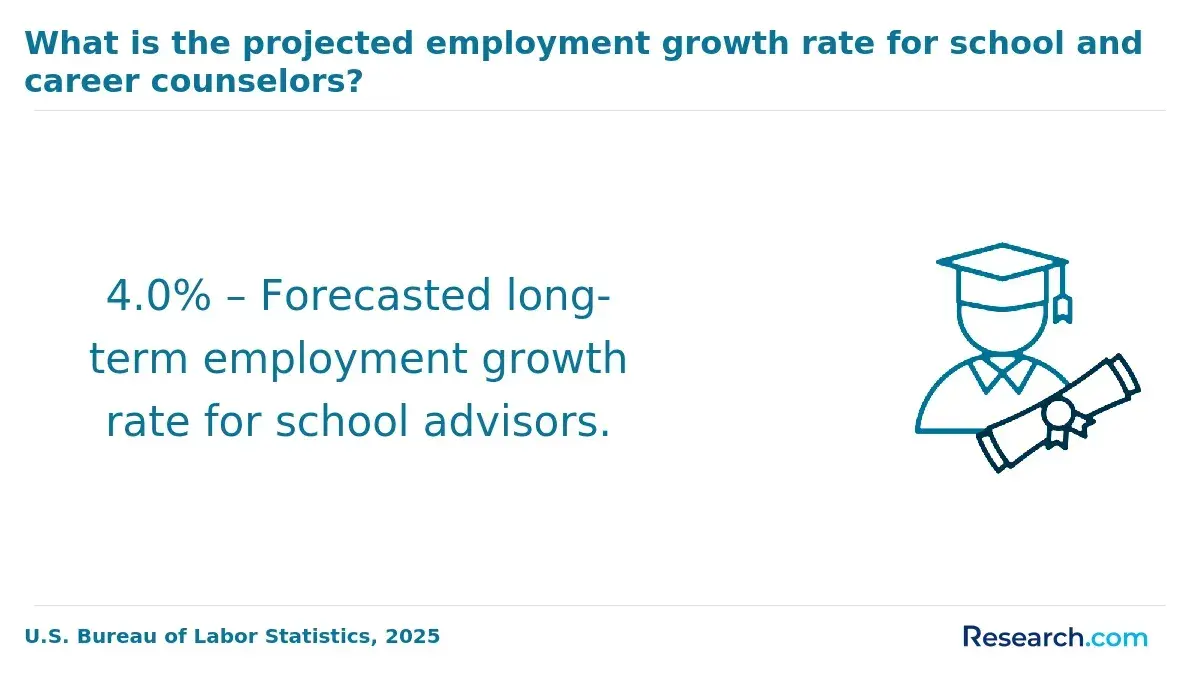
School counseling follows a different credential path: the U.S. Bureau of Labor Statistics reports a May 2025 national median of $64,330 and projected growth of 3% for 2025-2035. Compare programs by the school credential they prepare you to seek, not by salary alone.
Before enrolling, match the program's concentration and supervised training to the Tennessee credential you want. A popular clinical counseling program is not automatically a route to school counselor licensure or marriage and family therapy licensure.
What can I expect from a Counseling degree in Tennessee?
A counseling master's combines study of human development, assessment, ethics, and therapeutic methods with supervised work involving clients or students. The crucial distinction is the practice path: clinical mental health counseling, school counseling, and marriage and family therapy prepare students for different settings and credentials.
In Tennessee, a future clinical counselor should check a program against requirements of the Board for Licensed Professional Counselors, Licensed Marital and Family Therapists and Licensed Clinical Pastoral Therapists. A future school counselor should instead check Tennessee Department of Education educator-licensure requirements. Accreditation, a degree, supervised experience, examinations, and a state-issued license are separate matters; graduation alone does not confer permission to practice independently (Tennessee Department of Health; Tennessee Department of Education).
This degree makes the most sense if you want sustained, supervised work with people and can accommodate field placement and any post-degree requirements. If your goal is a nonclinical support role without professional licensure, ask employers whether a different graduate degree - or no graduate degree - is necessary before taking on counseling-program debt.
Where can I work with a Counseling degree in Tennessee?
Clinical counseling graduates may pursue roles in community mental health agencies, hospitals, outpatient practices, or substance-use treatment settings, subject to employer and licensure requirements. School counseling graduates generally pursue positions in schools under the applicable educator credential; marriage and family therapy graduates may work in family-service organizations or practices under that profession's licensing rules (Tennessee Department of Health; Tennessee Department of Education).
Location changes the practical value of a program. A Nashville or Chattanooga student may be able to compare several nearby placement settings, while a student outside a metro area should ask where required sites are located and how often travel is necessary. A placement near home can matter as much as the campus address when unpaid clinical hours must fit around employment.
National occupational medians provide a comparison point, not a Tennessee pay quote or a prediction for a new graduate. The U.S. Bureau of Labor Statistics reports a May 2025 median annual wage of $59,350 for the occupation associated with clinical mental health and addiction counseling. A student considering either path should also account for the time needed to qualify for independent practice and the pay available in their intended local setting.
For school counseling, the May 2025 national median is $64,330; for marriage, couple, and family counseling, it is $66,940 (U.S. Bureau of Labor Statistics, May 2025 occupational wage data). These are different occupations with different employers and credential requirements. To judge a Tennessee offer, compare its actual salary, benefits, supervision arrangements, and location with your current earnings and expected loan payments rather than treating the national median as a likely first paycheck.
The programs below are worth comparing for different reasons; their degree titles and stated practice areas are not interchangeable. These highlights identify program-level distinctions shown in university program information, not claims that one option produces better outcomes than another. Verify current curriculum, placement arrangements, and licensure disclosures directly with each school before applying.
Lipscomb University: Its clinical mental health counseling program offers a direct match for applicants pursuing clinical counseling rather than a school or family-therapy degree. For Nashville-area students, the decision is whether that professional focus and available placements justify its total private-university cost (Lipscomb University).
Trevecca Nazarene University: The listed program focuses on marriage and family therapy, a materially different licensing goal from the clinical mental health programs in this group. It is the more relevant comparison for someone who specifically wants to train for work with couples and families (Trevecca Nazarene University).
The University of Tennessee-Knoxville: Its MS in Counseling gives applicants a public-university option in Knoxville. Compare its current concentration and fieldwork requirements with your intended credential rather than assuming every counseling MS leads to the same license (University of Tennessee, Knoxville).
Tennessee Tech University: This public university identifies its master's route specifically as clinical mental health counseling. Students who want that practice area and can study in Cookeville should compare its resident tuition and placement geography with metropolitan alternatives (Tennessee Tech University).
East Tennessee State University: ETSU presents counseling concentrations, making the choice of track central to evaluating the program. It suits applicants who want to compare counseling practice directions within one university before settling on a credential path (East Tennessee State University).
The University of Tennessee-Chattanooga: Its counselor education program identifies a clinical mental health option in Chattanooga. That location may be especially useful if a student needs to build supervised training and professional contacts in the Chattanooga area rather than relocate for a Nashville program (University of Tennessee at Chattanooga).
Vanderbilt University: Its Human Development Counseling degree is an MEd, distinguishing its degree framework from the MS and MA offerings here. Applicants should compare its available track with the exact credential they want and weigh its net cost against public options (Vanderbilt University).
Freed-Hardeman University: Its graduate counseling offering identifies a clinical mental health route in Henderson. It gives applicants interested in that practice area an option outside Tennessee's largest cities, where placement travel and scheduling deserve close scrutiny (Freed-Hardeman University).
Belmont University: Belmont offers an MA in Counseling in Nashville. Applicants comparing it with other Nashville programs should examine the current curriculum and placement terms, because a shared city does not mean identical preparation or cost (Belmont University).
Milligan University: Its graduate program is specifically in clinical mental health counseling in northeast Tennessee. Students seeking that pathway can compare its delivery and clinical-site arrangements with nearby ETSU's concentration-based offerings (Milligan University).
These distinctions narrow the shortlist, but they do not establish current credit totals, completion times, placement outcomes, or licensure eligibility. Request those figures from programs in writing. For an additional comparison centered on broader measures, consult the best counseling programs ranking.
A full-time counseling master's commonly takes about two to three years; part-time study can take longer. The sequence matters more than the advertised minimum: prerequisite courses, when a practicum begins, internship scheduling, and the availability of approved sites can all affect a student's finish date (CACREP; individual university program requirements).
Ask each school for a term-by-term plan that includes fieldwork, not just classroom credits. If you intend to keep a full-time job, find out whether placements require weekday hours and whether the school helps secure a site near where you live. Completing the degree is also distinct from completing any supervised experience required after graduation for licensure (Tennessee Department of Health).
Online delivery can reduce commuting, but it does not remove supervised practice requirements. Campus study can make in-person faculty contact easier, yet a campus near home is not necessarily near an approved placement. The better format is the one that lets you complete required training while meeting the rules of the credential you intend to pursue.
The comparison below separates format from the issues that actually affect a working student's ability to finish.
Consideration
Online or hybrid
On campus
Class schedule
May reduce routine travel; check for live sessions or required visits.
Regular campus attendance may simplify face-to-face interaction.
Field placement
Still requires an acceptable supervised setting; ask who finds and approves sites.
May offer nearby site relationships, but availability is not assured.
Credential fit
Confirm the exact track meets Tennessee requirements and any rules where you may later work.
Make the same check; campus delivery alone does not establish eligibility.
For either format, ask whether the school accepts placements in your county and whether a move during enrollment would disrupt them. Treat any claim that an online degree "works everywhere" as a red flag: professional requirements can vary by state (Tennessee Department of Health; Tennessee Department of Education).
There is no single reliable price for a Tennessee counseling master's: tuition varies by institution, residency, program, and enrollment pattern, while published institutional averages may not describe this specific degree. A defensible comparison uses each school's current graduate-program tuition and required charges to build a total completion cost, rather than presenting an unsupported statewide average (NCES/IPEDS; individual university tuition schedules).
For a public option such as Tennessee Tech or UT Chattanooga, confirm whether you qualify for resident tuition. For any public or private nonprofit option, include mandatory fees, books, travel to placements, insurance or screening charges if required, and living costs. An apparently lower-priced program may cost more overall if it takes longer or forces you to reduce paid work.
Compare the resulting totals alongside aid offers and completion plans. The most affordable counseling programs ranking can help identify schools to investigate, but obtain a program-specific written estimate before deciding.
Start with each university's graduate assistantships, scholarships, and any employer tuition assistance, then submit the FAFSA to establish eligibility for applicable federal aid. Graduate students should not assume that undergraduate grants or Tennessee awards automatically extend to master's study; check each award's level-of-study and residency rules (Federal Student Aid; Tennessee Student Assistance Corporation).
Federal loan availability has changed for new graduate borrowers. Federal Student Aid explains that Graduate PLUS eligibility is subject to transition rules beginning July 2026; continuing borrowers may qualify for an exception, while new graduate borrowers should not build a funding plan that assumes access to new Graduate PLUS loans. Confirm your status and current Direct Loan limits with the school's financial aid office before paying an enrollment deposit (Federal Student Aid).
To reduce borrowing, compare aid that does not need repayment, ask whether an assistantship can coexist with clinical-placement hours, and calculate the amount you would need each term. A tuition discount is less useful if its conditions delay graduation or conflict with required fieldwork.
View the chart data as a table
Graduates (2024-25) distribution across ranked programs (Source: Research.com)
Category
Value
0-9
14
10-19
8
20-29
5
30-39
1
40-49
1
Expect to need a bachelor's degree and to submit materials such as transcripts, recommendations, a statement of purpose, and possibly an interview; exact prerequisites and admissions policies are set by each university (individual university admissions requirements). An undergraduate counseling major is not necessarily required, but a school may ask for particular foundational coursework or preparation.
Before applying, check both admission and credential fit. Ask whether the program's curriculum and clinical experiences align with the Tennessee license or educator credential you want, whether it holds applicable programmatic accreditation, and whether you must arrange your own site. CACREP accreditation is a program-level designation; institutional accreditation and federal aid eligibility are different checks (CACREP; U.S. Department of Education; Tennessee Department of Health; Tennessee Department of Education).
If you have prior graduate credits, request a written transfer evaluation. Credits that reduce classroom requirements may not replace a program's supervised practice or satisfy a licensing board's content rules.
Clinical counseling curricula typically cover counseling theories, ethics, assessment, diagnosis, group work, human development, and research, followed by supervised practicum and internship. A school counseling track adds preparation relevant to students, schools, and educator practice; marriage and family therapy emphasizes work with couples and family systems (CACREP; Tennessee Department of Education; Tennessee Department of Health).
Course titles alone can hide important differences. Compare syllabi or degree plans for clinical skill development, population-specific training, and when fieldwork begins. If independent clinical practice is your goal, ask the program to identify precisely which courses it uses to address Tennessee board requirements instead of assuming that an elective can fill a missing requirement later.
The most consequential choice is often between clinical mental health, school counseling, and marriage and family therapy. The first focuses on clinical counseling services; the second targets school-based work and educator credentialing; the third centers on relational and family treatment under its own professional pathway (Tennessee Department of Health; Tennessee Department of Education).
Some programs also offer concentrations or electives in areas such as substance-use counseling or work with particular populations. An elective focus is not necessarily a separate license. Compare the credential named in the program's disclosures with the job titles you want, especially if you might move to another state after graduation.
Begin with the job and credential, then work backward to the curriculum and full cost. Popularity can reveal programs worth investigating, while the most valuable counseling programs ranking offers another comparison lens; neither replaces a check of your own finances and licensing plans.
Use the following questions to turn a shortlist into a decision:
Which Tennessee credential does this exact degree and concentration prepare students to seek, and where is that stated in writing?
What are the current accreditation status, required courses, placement requirements, and site-approval process?
What will I pay through graduation after grants or assistantships, including fees, travel, and earnings lost during fieldwork?
What are the program's recent completion and applicable exam outcomes, and what reporting period do those figures cover?
Will my schedule, location, and any accepted transfer credits support the school's actual term-by-term completion plan?
For return on investment, compare total debt and foregone earnings with your baseline pay, plausible post-degree pay, completion likelihood, and how long you expect to work in the field. A low tuition figure alone does not establish value, and a high national occupational median does not guarantee an individual return.
View the chart data as a table
Projected job growth 2025-2035 by counseling career path (U.S., BLS) (Source: BLS)
Category
Value
Mental Health Counselors
18
Marriage & Family Therapists
14
Postsecondary Teachers
7
Psychologists
6
School & Career Counselors
3
Rehabilitation Counselors
2
All occupations
3
A counseling master's can support progression from supervised entry into clinical practice, school counseling, or family-focused therapy, depending on the degree and subsequent credential. Clinical and addiction counseling share a relevant national wage benchmark, but their employers, duties, and any additional credential requirements can differ (U.S. Bureau of Labor Statistics; Tennessee Department of Health).
Someone entering from teaching may find a school counseling route more aligned with prior experience, while someone seeking psychotherapy in a health setting should investigate clinical mental health preparation. If your primary interest is research, teaching at the university level, or supervising future counselors, ask whether later doctoral education is necessary for the roles you want rather than assuming a master's covers every advancement path.
View the chart data as a table
Programs by specialization (Source: Research.com)
Category
Value
Clinical Mental Health Counseling
14
School Counseling
12
Marriage, Couple, and Family Counseling
2
Clinical Rehabilitation Counseling
1
The national outlook is strongest among the counseling paths commonly grouped under substance abuse, behavioral disorder, and mental health counseling: the U.S. Bureau of Labor Statistics projects 18% employment growth from 2025 to 2035. Its projection for school and career counselors and advisors is 3% over the same period. Those national projections indicate different demand patterns; they do not measure Tennessee openings or promise a job in a particular county (U.S. Bureau of Labor Statistics, 2025-2035 Employment Projections).
For a local decision, inspect current Tennessee postings for your intended credential, setting, and commuting area. Note whether employers accept graduates working toward licensure, require an existing license, or provide supervision. That distinction can determine whether an appealing job is realistically available immediately after graduation.
2027 Most Popular Master's in Counseling Degree Programs Ranking in Tennessee
Investing in a master's degree is a consequential financial and career decision. Research.com's team uses multiple education datasets and checks measures such as outcomes, accreditation, and cost so readers can use the ranking as a starting point for comparison - not as a substitute for confirming a program's current requirements and results.
The ranking draws on these data sources:
IPEDS database: institutional enrollment, completions, and cost reporting.
Research.com's counseling rankings consider program completion, employment or doctoral admission, applicable licensure-exam results, CACREP recognition, federal Title IV eligibility, and cost. Its Best ranking first weights completion at 40%, employment or doctoral admission at 20%, applicable exam pass rates at 20%, CACREP recognition at 16%, and Title IV eligibility at 4%; weights are adjusted when a measure does not apply. Cost contributes about 7% of the final Best score. Other rankings emphasize the dimension named in their titles, so popularity should not be read as a measure of affordability or individual fit. The same approach applies to online and campus programs. Readers can review Research.com's methodology for more detail.
# 1 position
Lipscomb University
Master
Master of Science in Clinical Mental Health Counseling
Delivery mode: campus
53.30
/ 100
Final score
Program length
7 semesters
Specialization
Clinical Mental Health Counseling
GPA range
3.00 - 4.00
Program completion rate
95.4%
Employment or doctoral admission
100%
Licensure exam pass rate
100%
Application deadline
Fall 2027: Mar 4, 2027
Application process
direct
GRE
no
Prerequisites
Bachelor's degree (any major) with a 3.0 GPA; if GPA is below 3.0, applicant may submit an explanation, GRE scores, or transcripts of a completed master's degree
Additional requirements
Official transcripts from every post-secondary institution attended (unofficial accepted for initial review), resume, and Bachelor's degree with 3.0 GPA (if below 3.0, submit one of: a short explanation of the GPA, GRE scores, or transcripts of a…
Accreditation
Accredited by the Council for Accreditation of Counseling and Related Educational Programs (CACREP), with institutional accreditation from the Southern Association of Colleges and Schools Commission on Colleges (SACSCOC).
Lipscomb University earned a Research.com Student Interest Score of 53.3/100, supported by 45 graduates (2022-23) and 95.4% program completion rate. The program is CACREP-accredited, valid through 2031-03-31.
# 2 position
Trevecca Nazarene University
Master
Master of Marriage and Family Counseling
Delivery mode: campus
48.70
/ 100
Final score
Specialization
Marriage, Couple, and Family Counseling
Required credits
60 semester credits
GPA range
2.70 - 4.00
Program completion rate
94% (2024-25)
Application deadline
Fall: May 1; Spring: October 1; Summer: February 15
Application process
direct
GRE
Conditional: GRE (minimum 290 verbal + quantitative) required if undergraduate GPA is below 3.0, unless the applicant holds an MA
Prerequisites
Bachelor's degree conferred from a regionally accredited college/university.
Additional requirements
Online application, official transcript(s) showing bachelor's degree conferred, GRE score (min 290 combined; typically waived for applicants who hold an MA or have an undergraduate GPA of 3.0 or higher), two reference assessment forms…
Accreditation
Accredited by the Council for Accreditation of Counseling and Related Educational Programs (CACREP), with institutional accreditation from the Southern Association of Colleges and Schools Commission on Colleges (SACSCOC).
Trevecca Nazarene University earned a Research.com Student Interest Score of 48.7/100, supported by 32 graduates (2024-25) and 94% program completion rate. The program is CACREP-accredited, valid through 2032-10-31.
# 3 position
The University of Tennessee-Knoxville
Master
MS in Counseling
Delivery mode: campus
45.40
/ 100
Final score
Program length
2 years
Specialization
Clinical Mental Health Counseling
Required credits
60 semester credits
GPA range
2.70 - 4.00
Program completion rate
89.3% (2024-25)
Licensure exam pass rate
100% (2024-25)
Application deadline
December 1 (for June start)
Application process
direct (UT Office of Graduate Admissions online application)
GRE
no
Additional requirements
Online application; resume/CV; letter of introduction; ethical integration statement; transcripts; three references; Thinking about Counseling Exercise; on-campus interview if invited; GRE not required.
Accreditation
Accredited by the Council for Accreditation of Counseling and Related Educational Programs (CACREP), with institutional accreditation from the Southern Association of Colleges and Schools Commission on Colleges (SACSCOC).
The University of Tennessee-Knoxville earned a Research.com Student Interest Score of 45.4/100, supported by 25 graduates (2024-2025) and 89.3% program completion rate. The program is CACREP-accredited, valid through 2028-10-31.
# 4 position
Tennessee Tech University
Master
Master of Arts in Counseling and Psychology – Clinical Mental Health Counseling
Delivery mode: campus
43.60
/ 100
Final score
Specialization
Clinical Mental Health Counseling
Required credits
60 semester credits
GPA range
3.00 - 4.00
Program completion rate
100% (2024-25)
Employment or doctoral admission
100% (2024-25)
Application deadline
December 1 (fall cohort)
Application process
direct
GRE
optional
Prerequisites
Undergraduate coursework in psychology
Additional requirements
Official transcripts, three letters of recommendation, proof of residency, interview with faculty review committee, English proficiency for international students
Accreditation
Accredited by the Council for Accreditation of Counseling and Related Educational Programs (CACREP), with institutional accreditation from the Southern Association of Colleges and Schools Commission on Colleges (SACSCOC).
Tennessee Tech University earned a Research.com Student Interest Score of 43.6/100, supported by 22 graduates (2024-25) and 100% program completion rate. The program is CACREP-accredited, valid through 2032-03-31.
# 5 position
East Tennessee State University
Master
M.A. in Counseling – Clinical Mental Health Counseling
Delivery mode: campus
42.40
/ 100
Final score
Program length
2-3 years (full-time)
Specialization
Clinical Mental Health Counseling
GPA range
3.00 - 4.00
Program completion rate
84% (2022-23)
Employment or doctoral admission
100% (2022-23)
Licensure exam pass rate
100% (2022-23)
Application deadline
February 1
Application process
direct (ETSU Graduate School application)
GRE
Conditional: GRE required if GPA is below 3.0
Prerequisites
Bachelor's degree from a regionally accredited institution; any program prerequisite coursework transcripts
Additional requirements
Graduate School application, transcripts, three letters of recommendation, personal statement (1200-1500 words), interview by invitation, background check before practicum. GRE required if GPA is below 3.0.
Accreditation
Accredited by the Council for Accreditation of Counseling and Related Educational Programs (CACREP), with institutional accreditation from the Southern Association of Colleges and Schools Commission on Colleges (SACSCOC).
East Tennessee State University earned a Research.com Student Interest Score of 42.4/100, supported by 20 graduates (2022-23) and 84% program completion rate. The program is CACREP-accredited, valid through 2031-10-31.
# 6 position
The University of Tennessee-Chattanooga
Master
M.Ed. in Clinical Mental Health Counseling
Delivery mode: campus
41.70
/ 100
Final score
Specialization
Clinical Mental Health Counseling
Required credits
60 semester credits
GPA range
2.70 - 4.00
Application deadline
Fall: February 1
Application process
direct (UTC Graduate School application portal)
Prerequisites
Baccalaureate degree completed before starting graduate coursework.
Additional requirements
Graduate application, official transcripts, two graduate school essay questions plus biographical sketch, resume/CV, two professional recommendations, admission workshop with group interview and writing proficiency exam.
Accreditation
Accredited by the Council for Accreditation of Counseling and Related Educational Programs (CACREP), with institutional accreditation from the Southern Association of Colleges and Schools Commission on Colleges (SACSCOC).
The University of Tennessee-Chattanooga earned a Research.com Student Interest Score of 41.7/100, with 19 graduates (2024-25) among the verified supporting factors. The program is CACREP-accredited, valid through 2029-03-31.
# 7 position
Vanderbilt University
Master
Human Development Counseling (M.Ed.)
Delivery mode: campus
38.60
/ 100
Final score
Program length
3 years
Specialization
Clinical Mental Health Counseling
Required credits
60 semester credits
Program completion rate
88% (2023-24)
Employment or doctoral admission
100% (2023-24)
Application deadline
Priority Decision 1: Dec 1; Priority Decision 2: Jan 3; Final Decision: Jul 27 (Fall admission)
Application process
direct (Vanderbilt online application, apply.vanderbilt.edu)
GRE
no
Prerequisites
Bachelor's degree
Additional requirements
Application, transcripts, letters of recommendation, statement of purpose; interview in January; no application fee
Accreditation
Accredited by the Council for Accreditation of Counseling and Related Educational Programs (CACREP), with institutional accreditation from the Southern Association of Colleges and Schools Commission on Colleges (SACSCOC).
Vanderbilt University earned a Research.com Student Interest Score of 38.6/100, supported by 15 graduates (2024-25) and 88% program completion rate. The program is CACREP-accredited, valid through 2030-03-31.
# 8 position
Freed-Hardeman University
Master
Master of Science in Clinical Mental Health Counseling
Delivery mode: hybrid
38.60
/ 100
Final score
Program length
2 to 2.5 years (full-time)
Specialization
Clinical Mental Health Counseling
Required credits
61 semester credits
GPA range
3.00 - 4.00
Program completion rate
58% (2024-25)
Employment or doctoral admission
100% (2024-25)
Application deadline
August 10
Application process
direct
GRE
no
Prerequisites
Must have the equivalent of 12 semester hours in Behavioral Science (Psychology, Sociology, Social Work, Anthropology, Family Studies).
Additional requirements
Free online application; official transcripts for all undergraduate and graduate degrees (expected GPA of 3.00 or higher); essay of personal goals (300-500 words); interview with the Counseling Admissions Committee.
Accreditation
Accredited by the Council for Accreditation of Counseling and Related Educational Programs (CACREP), with institutional accreditation from the Southern Association of Colleges and Schools Commission on Colleges (SACSCOC).
Freed-Hardeman University earned a Research.com Student Interest Score of 38.6/100, supported by 15 graduates (2025) and 58% program completion rate. The program is CACREP-accredited, valid through 2028-03-31.
# 9 position
Belmont University
Master
M.A. in Mental Health Counseling – Clinical Mental Health Counseling
Delivery mode: campus
35.70
/ 100
Final score
Program length
2 years full-time (6 consecutive semesters, including summers)
Specialization
Clinical Mental Health Counseling
Required credits
60 semester credits
GPA range
3.00 - 4.00
Program completion rate
95% (2024-25)
Employment or doctoral admission
95% (2025-26)
Licensure exam pass rate
100% (2025-26)
Class size
13
Prerequisites
Completion of a bachelor's degree from an accredited college or university
Accreditation
Accredited by the Council for Accreditation of Counseling and Related Educational Programs (CACREP), with institutional accreditation from the Southern Association of Colleges and Schools Commission on Colleges (SACSCOC).
Belmont University earned a Research.com Student Interest Score of 35.7/100, supported by 12 graduates (2025-26) and 95% program completion rate. The program is CACREP-accredited, valid through 2028-03-31.
# 10 position
Milligan University
Master
Master of Science in Counseling (MSC) – Clinical Mental Health Counseling (CMHC)
Delivery mode: campus
35.70
/ 100
Final score
Program length
6 semesters
Specialization
Clinical Mental Health Counseling
Required credits
60 semester credits
GPA range
3.00 - 4.00
Program completion rate
91%
Application deadline
rolling
Application process
direct
GRE
Conditional: GRE (50th percentile or higher) required if overall undergraduate GPA is below 3.00
Prerequisites
An undergraduate degree that includes at least 9 hours of psychology courses, including General Psychology, Developmental Psychology, and Research Methods or Statistics
Accreditation
Accredited by the Council for Accreditation of Counseling and Related Educational Programs (CACREP), with institutional accreditation from the Southern Association of Colleges and Schools Commission on Colleges (SACSCOC).
Milligan University earned a Research.com Student Interest Score of 35.7/100, supported by 12 graduates (2024-25) and 91% program completion rate. The program is CACREP-accredited, valid through 2027-10-31.
# 11 position
Southern Adventist University
Master
Master of Science in Professional Counseling – Clinical Mental Health Counseling
Delivery mode: hybrid
34.60
/ 100
Final score
Program length
approximately two and a half years of full-time study
Specialization
Clinical Mental Health Counseling
Required credits
60 semester credits
GPA range
3.00 - 4.00
Program completion rate
90% (2024-25)
Employment or doctoral admission
100% (2024-25)
Licensure exam pass rate
100% (2024-25)
Application deadline
Fall: July 15; Winter: November 1
Application process
direct
GRE
no
Prerequisites
Bachelor's degree: a four-year degree in any field from an accredited institution; minimum cumulative undergraduate GPA of 3.0.
Additional requirements
Graduate application; official transcripts; three professional recommendation forms (one may be academic); statement of purpose; resumé; background check; criminal-record release and declaration; personality test; faculty interview.
Accreditation
Accredited by the Council for Accreditation of Counseling and Related Educational Programs (CACREP), with institutional accreditation from the Southern Association of Colleges and Schools Commission on Colleges (SACSCOC).
Southern Adventist University earned a Research.com Student Interest Score of 34.6/100, supported by 11 graduates (2024-25) and 90% program completion rate. The program is CACREP-accredited, valid through 2033-10-31.
# 12 position
Carson-Newman University
Master
Master of Science in Counseling – Clinical Mental Health Counseling
Delivery mode: hybrid
34.60
/ 100
Final score
Program length
approximately two and half years (minimum seven semesters)
Specialization
Clinical Mental Health Counseling
Required credits
60 semester credits
GPA range
3.00 - 4.00
Program completion rate
77.4% (2023-24)
Employment or doctoral admission
100% (2023-24)
Licensure exam pass rate
100% (2023-24)
Application deadline
Fall: February 1; Spring: October 1
Application process
direct
GRE
no
Prerequisites
Bachelor’s degree from a regionally accredited university; minimum overall undergraduate GPA of 3.0.
Additional requirements
Professional resume and statement of purpose, plus graduate admission requirements: application form, two recommendations, official transcripts, an interview, and a background records check.
Accreditation
Accredited by the Council for Accreditation of Counseling and Related Educational Programs (CACREP), with institutional accreditation from the Southern Association of Colleges and Schools Commission on Colleges (SACSCOC).
Carson-Newman University earned a Research.com Student Interest Score of 34.6/100, supported by 11 graduates (2023-24) and 77.4% program completion rate. The program is CACREP-accredited, valid through 2032-03-31.
# 13 position
The University of Tennessee-Chattanooga
Master
M.Ed. in Counseling – School Counseling
Delivery mode: campus
30.60
/ 100
Final score
Specialization
School Counseling
Required credits
60 semester credits
GPA range
2.70 - 4.00
Licensure exam pass rate
100% (2024-25)
Application deadline
Fall: February 1
Application process
direct
GRE
no
Prerequisites
Baccalaureate degree from a regionally accredited U.S. college or university (or foreign equivalent) required before beginning graduate coursework.
Additional requirements
2-3 professional/academic letters of recommendation, resume with helping-profession experience, two essay questions, a biographical sketch on motivation, an admission workshop with group faculty interview, and a writing proficiency exam.
Accreditation
Accredited by the Council for Accreditation of Counseling and Related Educational Programs (CACREP), with institutional accreditation from the Southern Association of Colleges and Schools Commission on Colleges (SACSCOC).
The University of Tennessee-Chattanooga earned a Research.com Student Interest Score of 30.6/100, supported by 8 graduates (2024-25) and 100% licensure exam pass rate. The program is CACREP-accredited, valid through 2029-03-31.
# 14 position
Johnson University
Master
M.A. in Counseling
Delivery mode: hybrid
30.60
/ 100
Final score
Program length
2 ½–5 years
Specialization
Clinical Mental Health Counseling
Required credits
60 semester credits
GPA range
3.00 - 4.00
Program completion rate
62.5% (2024-25)
Employment or doctoral admission
100% (2024-25)
Application deadline
Spring: October 1; Fall: February 1
Class size
7
Application process
direct
GRE
Conditional: GRE or MAT required if undergraduate GPA is below 3.0 (such admits are placed on probation)
Prerequisites
At least 15 credit hours in counseling or a related field; three references (two academic, one personal); official transcripts; government-issued photo ID; 5-10 page writing sample; interview with graduate faculty.
Additional requirements
Online graduate application; three references (two academic, one personal); official transcripts; government-issued photo ID; 5-10 page writing sample; interview with School of Social & Behavioral Science graduate faculty.
Accreditation
Accredited by the Council for Accreditation of Counseling and Related Educational Programs (CACREP), with institutional accreditation from the Southern Association of Colleges and Schools Commission on Colleges (SACSCOC).
Johnson University earned a Research.com Student Interest Score of 30.6/100, supported by 8 graduates (2024-25) and 62.5% program completion rate. The program is CACREP-accredited, valid through 2033-03-31.
# 15 position
Tennessee Tech University
Master
M.A. in Counseling and Psychology – School Counseling Concentration
Delivery mode: campus
28.90
/ 100
Final score
Specialization
School Counseling
GPA range
3.00 - 4.00
Program completion rate
100% (2024-25)
Employment or doctoral admission
100% (2024-25)
Application deadline
December 1
Class size
7
Application process
direct
GRE
optional
Prerequisites
Undergraduate coursework in psychology
Additional requirements
Official transcripts, three letters of recommendation, proof of residency, interview with faculty review committee, English proficiency for international students
Accreditation
Accredited by the Council for Accreditation of Counseling and Related Educational Programs (CACREP), with institutional accreditation from the Southern Association of Colleges and Schools Commission on Colleges (SACSCOC).
Tennessee Tech University earned a Research.com Student Interest Score of 28.9/100, supported by 7 graduates (2024-25) and 100% program completion rate. The program is CACREP-accredited, valid through 2032-03-31.
# 16 position
The University of Tennessee-Knoxville
Master
MS in Counseling
Delivery mode: campus
27.10
/ 100
Final score
Program length
2 years
Specialization
School Counseling
Required credits
60 semester credits
GPA range
2.70 - 4.00
Program completion rate
85.7% (2024-25)
Licensure exam pass rate
100% (2024-25)
Application deadline
December 1 (for June start)
Application process
direct (UT Office of Graduate Admissions online application)
GRE
no
Additional requirements
Online application; resume/CV; letter of introduction; ethical integration statement; transcripts; three references; Thinking about Counseling Exercise; on-campus interview if invited; GRE not required. Due Dec 1 for June start.
Accreditation
Accredited by the Council for Accreditation of Counseling and Related Educational Programs (CACREP), with institutional accreditation from the Southern Association of Colleges and Schools Commission on Colleges (SACSCOC).
The University of Tennessee-Knoxville earned a Research.com Student Interest Score of 27.1/100, supported by 6 graduates (2024-2025) and 85.7% program completion rate. The program is CACREP-accredited, valid through 2028-10-31.
# 17 position
Belmont University
Master
M.A. in Mental Health Counseling
Delivery mode: campus
27.10
/ 100
Final score
Program length
6 consecutive semesters
Specialization
Marriage, Couple, and Family Counseling
Required credits
60 semester credits
GPA range
3.00 - 4.00
Prerequisites
Bachelor's degree from an accredited college or university; applicants should have a strong academic record with a GPA of at least 3.0 (on a 4.0 scale).
Accreditation
Accredited by the Council for Accreditation of Counseling and Related Educational Programs (CACREP), with institutional accreditation from the Southern Association of Colleges and Schools Commission on Colleges (SACSCOC).
Belmont University earned a Research.com Student Interest Score of 27.1/100, with 6 graduates (2025-2026) among the verified supporting factors. The program is CACREP-accredited, valid through 2028-03-31.
# 18 position
Austin Peay State University
Master
M.S. in Counseling
Delivery mode: campus
27.10
/ 100
Final score
Program length
2-, 3- or 4-year plans available (part-time options)
Specialization
School Counseling
Required credits
60 semester credits
GPA range
2.75 - 4.00
Program completion rate
100% (2024-25)
Employment or doctoral admission
83% (2024-25)
Licensure exam pass rate
100% (2024-25)
Application deadline
Summer: Feb 20; Fall: Feb 20
Application process
direct
Prerequisites
12 hours of psychology or related courses (e.g., introduction to psychology, human development, psychopathology); admission to candidacy required before completing nine graduate hours; background check required before fieldwork.
Accreditation
Accredited by the Council for Accreditation of Counseling and Related Educational Programs (CACREP), with institutional accreditation from the Southern Association of Colleges and Schools Commission on Colleges (SACSCOC).
Austin Peay State University earned a Research.com Student Interest Score of 27.1/100, supported by 6 graduates (2024-2025) and 100% program completion rate. The program is CACREP-accredited, valid through 2027-10-31.
# 19 position
The University of Tennessee-Martin
Master
Master of Science in Education: Counseling - School Counseling
Delivery mode: hybrid
27.10
/ 100
Final score
Program length
9 Hour Plan of Study: Year 1 Fall ... Year 3 Fall; Spring internship *if internship remains
Specialization
School Counseling
Required credits
60 semester credits
Program completion rate
69% (2022-23)
Employment or doctoral admission
90% (2022)
Licensure exam pass rate
100% (2022-23)
Application deadline
Fall: Feb 20; Spring: Oct 8
Application process
direct
GRE
no
Additional requirements
Three letters of recommendation; a four-question personal statement; resume detailing degrees and occupational/counseling experience; signed acknowledgement of a 3-day on-campus residency; transcripts for all conferred degrees.
Accreditation
Accredited by the Council for Accreditation of Counseling and Related Educational Programs (CACREP), with institutional accreditation from the Southern Association of Colleges and Schools Commission on Colleges (SACSCOC).
The University of Tennessee-Martin earned a Research.com Student Interest Score of 27.1/100, supported by 6 graduates (2024-2025) and 69% program completion rate. The program is CACREP-accredited, valid through 2032-03-31.
# 20 position
Carson-Newman University
Master
M.S. in Counseling – Professional School Counseling
Delivery mode: hybrid
24.90
/ 100
Final score
Program length
approximately two and half years (minimum seven semesters)
Specialization
School Counseling
Required credits
60 semester credits
GPA range
3.00 - 4.00
Program completion rate
83.3% (2023-24)
Employment or doctoral admission
100% (2023-24)
Licensure exam pass rate
100% (2023-24)
Application deadline
Fall: Feb 1; Spring: Oct 1
Application process
direct
GRE
no
Prerequisites
A bachelor's degree from a regionally accredited university (international applicants welcome); minimum overall undergraduate GPA of 3.0.
Additional requirements
Professional resume; statement of purpose (plus common C-N graduate admission requirements).
Accreditation
Accredited by the Council for Accreditation of Counseling and Related Educational Programs (CACREP), with institutional accreditation from the Southern Association of Colleges and Schools Commission on Colleges (SACSCOC).
Carson-Newman University earned a Research.com Student Interest Score of 24.9/100, supported by 5 graduates (2023-24) and 83.3% program completion rate. The program is CACREP-accredited, valid through 2032-03-31.
Frequently asked questions about Counseling degree in Tennessee
Is a counseling master's worth it in Tennessee?
It can be if the degree matches a credential and job you want and its total cost is manageable relative to your likely earnings. Compare program-specific costs, time away from paid work, and local job requirements before deciding.
Does a counseling master's automatically qualify me for a Tennessee license?
No. Tennessee's relevant licensing or educator authority determines eligibility, and requirements may include particular coursework, examinations, and supervised experience beyond the degree (Tennessee Department of Health; Tennessee Department of Education).
Can I complete a Tennessee counseling master's online?
Online or hybrid coursework may be available, but supervised fieldwork still requires an acceptable site. Confirm the program's Tennessee credential disclosures and who arranges placements before enrolling.
Should I choose clinical mental health or school counseling?
Choose according to the setting and credential you want: clinical mental health preparation targets counseling practice, while school counseling targets work in schools under educator-licensure rules. Do not assume one track substitutes for the other.
How should I compare public and private programs?
Compare the same items for each: total net cost, completion time, field-placement fit, accreditation, and outcomes reported for the relevant program. Ownership alone does not establish quality or return on investment.
See What Experts Have To Say About Studying Counseling