2027 Most Popular Computer Science Degree Programs Ranking in Washington

Co-Founder and Chief Data Scientist
Choosing the right computer science degree program in Washington can be overwhelming. To help you navigate your options, this article presents the 2027 Most Popular Computer Science Degree Programs Ranking in Washington, created by the Research.com team of data scientists.
By exploring this ranking, you'll gain valuable insights into programs that are well-regarded and suited for your career goals. Earning a computer science degree opens doors to exciting job opportunities and personal growth.
Whether you're starting or changing your educational path, this guide will support you in making a confident, informed decision.
Key benefits of getting computer science degree in Washington
- Salary benefits: Graduates with a computer science degree in Washington can earn impressive salaries, such as $138,110 annually for software engineers and developers, or $95,570 for web developers, offering strong financial stability and growth potential.
- Career paths: A computer science graduate from a popular Washington university can explore various exciting roles, including software development, data analysis, and IT support, adapting to diverse industries with high demand.
- Online degree advantages: Completing a computer science degree online from a recognized Washington college offers flexible schedules and accessibility, allowing you to balance work and study while gaining marketable skills just like traditional students.
- 2027 Most Popular Computer Science Degree Programs Ranking in Washington
- What can I expect from computer science degree in Washington?
- Where can I work with computer science degree in Washington?
What can I expect from computer science degree in Washington?
When it comes to the cost of pursuing a computer science degree in Washington, students can expect tuition to vary significantly depending on their university and residency status. For example, attending a public university like the University of Washington typically means in-state students pay a more affordable rate, often ranging from $11,000 to $15,000 annually, while out-of-state tuition can be substantially higher. Graduates often recall balancing these costs with scholarships and financial aid, which are quite common given the state's focus on supporting STEM education.
At institutions like Washington State University or Seattle University, tuition prices follow similar patterns, with private colleges generally costing more but offering unique opportunities such as smaller class sizes and personalized support. Many computer science students speak enthusiastically about discovering scholarships, employer tuition assistance, or part-time internships that helped them fund their studies while gaining valuable experience.
Ultimately, investing in a degree here feels rewarding to many, as it opens doors to internships with Microsoft or Amazon, making every dollar spent seem like a smart step toward an exciting tech career.
Where can I work with computer science degree in Washington?
Graduates with a computer science degree in Washington discover a vibrant world of opportunities, especially around hubs like Seattle and Redmond. Imagine stepping out of the University of Washington's lecture halls and soon finding yourself collaborating on cutting-edge AI projects at Microsoft or shaping cloud infrastructure with AWS. These companies, alongside energetic startups, welcome fresh talent eager to innovate.
Many graduates have shared how their skills became vital in diverse fields, from enhancing cybersecurity for financial institutions in Seattle to developing smart healthcare solutions. The Washington State Department of Information Technology also offers exciting roles where you can impact public services through technology.
Picture yourself diving into emerging fields like machine learning or data analytics, with employers actively seeking expertise gained during studies at schools like Seattle University. This dynamic landscape rewards adventurous graduates ready to explore beyond traditional tech roles into government, research labs, or bioinformatics at institutions like Pacific Northwest National Laboratory.
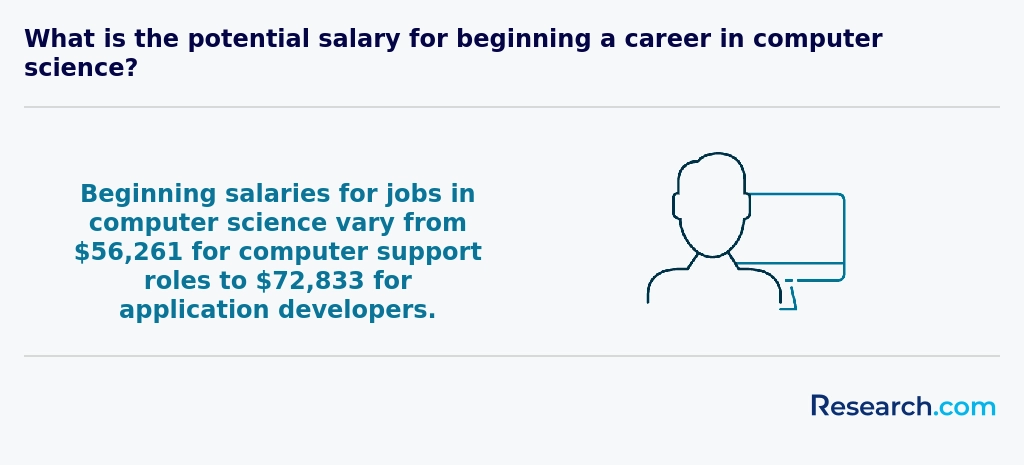
Starting salaries reflect this demand, often between $70,000 and $90,000, encouraging many to embrace their new careers with enthusiasm and confidence.
If you've earned a computer science degree in Washington, your earning potential can be quite exciting. Graduates often land roles like software developers or engineers, with mean annual wages reaching about $138,110, according to the latest U.S. Bureau of Labor Statistics data. Imagine stepping out of the University of Washington or Seattle University and quickly finding yourself in one of these vibrant tech hubs, drawing such competitive salaries.
For those who dive into data analysis, the adventure continues with roles averaging $119,040 per year-an enticing prospect for recent grads passionate about uncovering insights in massive datasets. Even web developers in the state enjoy rewarding pay, with mean wages just under $96,000, proving that creative coding skills translate well in Washington's booming tech landscape.
Many graduates share stories of their first jobs, starting with entry-level support roles that offer around $63,640 annually, which quickly lead to more specialized and better-paid opportunities. The tech ecosystem here, fueled by giants like Microsoft and Amazon, makes it clear that the path from university to exciting, well-paid work is not just a dream but a reachable reality.
- In-state tuition for bachelor's degrees in computer science at public universities in Washington ranges from $10,000 to $13,000 per year, while out-of-state tuition is between $30,000 and $35,000 yearly.
- Private universities in Washington often charge over $40,000 annually for computer science programs, excluding living costs and additional fees.
- Entry-level computer science graduates in Washington earn approximately $75,000 to $85,000 per year, with mid-career salaries commonly exceeding $120,000.
- The Seattle area hosts major tech companies like Microsoft and Amazon, creating strong job growth of about 15% for tech roles over the next ten years.
- Washington universities offer various degree levels from associate to doctoral, including online and hybrid formats to support flexible learning.
Wondering how long it takes to complete a computer science degree in Washington? Most eager learners at the University of Washington find themselves diving deep into four full years of study, balancing coding marathons and project deadlines across eight semesters. This timeframe feels just right for immersing in everything from algorithms to artificial intelligence.
But not every journey is the same! Some graduates share how internships or juggling part-time classes stretched their adventure beyond the typical four years, opening doors to real-world experiences that felt invaluable. Meanwhile, community college explorers typically chart a two-year course when pursuing an associate degree, getting a strong foundation before perhaps transferring to a four-year university.
Graduate seekers at places like Washington State University often spend about 1.5 to 2 extra years mastering advanced topics, sometimes blending bachelor's and master's pathways to speed their adventure onward. For many, the timeline adapts, but it's always a thrilling quest filled with growth and discovery.
Accredited computer science degrees ensure rigorous academics, industry recognition and seamless credit transfers. In Washington, verify programs through:
- ABET accreditation, the gold standard for computing and engineering curricula
- Regional accreditation by the Northwest Commission on Colleges and Universities (NWCCU)
- Approval from the Washington Student Achievement Council
Always confirm accreditation on each school’s official site and review how it aligns with your career goals. Accredited programs often partner with local employers for internships or specialized tracks-especially true in areas like game development at gaming schools online.
Imagine stepping onto the vibrant campus of the University of Washington, where face-to-face conversations with professors and hands-on lab work immerse you in the heart of computer science. On-campus students here experience buzzing classrooms, access to cutting-edge research labs, and lively career fairs, creating a close-knit community that fuels motivation and sparks collaboration.
Contrast that with the flexibility offered by Washington State University Global Campus, where online learners craft their schedules around work and family. These students dive into virtual labs and simulations from their favorite spots at home, requiring strong self-motivation but gaining freedom to explore at their own pace.
Graduates from both paths share excitement about mastering algorithms and software development, yet the daily rhythm differs-whether it's the buzz of campus life or the quiet focus of an evening online session. Cost-wise, online degrees often trim expenses by up to 30%, making education more accessible without sacrificing quality.
Choosing between on-campus and online means weighing personal style against the rich experiences each offers in Washington's tech-savvy environment.
Choosing an accredited computer science program ensures your degree meets rigorous academic and industry standards. In Washington, most reputable institutions hold regional accreditation from the Northwest Commission on Colleges and Universities (NWCCU), which validates institutional quality and facilitates credit transfer. Equally important is ABET accreditation for computer science curricula-this specialized recognition confirms that courses in programming, algorithms, systems design, and emerging technologies adhere to criteria vetted by industry experts. Graduates from ABET-accredited programs often enjoy enhanced employability, streamlined pathways to professional certifications, and smoother admission into graduate schools. Before applying, verify accreditation status on each university’s website or through the U.S. Department of Education’s database. Pay special attention to program-specific approvals, such as computer engineering or software engineering tracks, which can impact licensure and employer recognition. For additional context on how accreditation correlates with affordability and outcomes in different regions, consider our internal resource on the Cheapest Computer Science Degree Programs Ranking in Irvine, CA, showcasing accredited, cost-effective options outside Washington. This comparison can help you balance quality, cost, and career goals when selecting the ideal computer science degree.
The average computer science degree cost in Washington typically centers around $34,227 for in-state students. Imagine a student attending the University of Washington, balancing rigorous coding projects and late-night hackathons, all while managing tuition costs that reflect this median figure. Many graduates from public institutions describe their experience as a thrilling blend of challenge and community, made more accessible by reasonable tuition for residents.
Out-of-state students face a different adventure, with costs averaging close to $62,390. For those coming from outside Washington, attending a popular computer science program at private colleges like Seattle University can feel like an investment into a promising future, despite higher tuition fees. These students often find scholarships and financial aid crucial to bridging the gap, turning daunting price tags into manageable steps toward a rewarding career.
Living and study expenses-covering books, supplies, and housing-add layers to the total cost, creating a dynamic budget puzzle. Graduates share stories of juggling part-time jobs and vibrant campus life in cities like Seattle, highlighting both the excitement and the responsibility that come with their education. For those curious about affordability, exploring the most affordable computer science schools in washington can uncover hidden gems that balance quality and cost.

To help you choose the right path, here are the top ten computer science degree programs in Washington for 2024, ranked by popularity, academic reputation, and graduate outcomes: 1. University of Washington (Seattle) – Cutting-edge AI and machine learning labs; strong industry partnerships. 2. Washington State University (Pullman) – Renowned for cybersecurity research and hands-on capstone projects. 3. Seattle University – Emphasis on ethical computing and small-group mentorship. 4. Western Washington University (Bellingham) – High internship placement rate with local tech firms. 5. Eastern Washington University (Cheney) – Robust data science track and research assistant opportunities. 6. Central Washington University (Ellensburg) – Flexible online and on-campus hybrid model. 7. Bellevue College – Affordable associate-to-bachelor’s articulation agreements. 8. Gonzaga University (Spokane) – Strong focus on software engineering and team-based projects. 9. Pacific Lutheran University (Tacoma) – Personalized research with faculty in emerging technologies. 10. Seattle Pacific University – Growing cloud computing specialization and industry-sponsored hackathons. Graduates from these programs often report competitive career in coding salary benchmarks, reflecting the high demand for Washington-trained computer scientists. Each institution offers unique resources-state-of-the-art labs, dedicated career services, and strong alumni networks-to ensure you gain both the technical expertise and professional connections necessary for success.
Venturing into a computer science degree in Washington opens doors to a treasure chest of financial aid options that many students discover along their journey. Imagine a University of Washington student eagerly completing their FAFSA early, unlocking Pell Grants that don't require repayment, giving a sense of relief and confidence to focus on coding rather than looming bills.
State support shines through the Washington College Grant, a beacon helping hundreds of thousands reduce tuition at both public institutions and eligible private colleges. Graduates often recall how this grant, combined with merit-based scholarships targeting STEM fields like those offered at their schools, fueled their passion and eased financial stress.
Work-study programs add another layer, offering not just income but valuable tech experience on campus-picture a student debugging software by day and earning wages by night. Beyond campus, private scholarships from groups like the Washington Technology Industry Association spark hope, encouraging aspiring coders to explore myriad funding pathways as they chase their dreams.
Washington’s top computer science programs prioritize real-world learning through collaborations with leading tech organizations.
- Internships with companies like Microsoft, Amazon and emerging startups provide hands-on experience in software development, cloud computing and data analytics
- Cooperative education programs integrate paid work terms into the curriculum, allowing students to apply classroom concepts while earning credit
- Research labs at institutions such as the University of Washington’s Allen School and Washington State University’s Voiland College offer opportunities to contribute to cutting-edge AI, cybersecurity and HCI projects
- Industry-sponsored capstone projects connect students with local employers to solve real business challenges, boosting portfolios and professional networks
- Specialized fields such as AI and machine learning often feature partnerships-explore available ai degrees to see flexible options
Diving into computer science in Washington means gearing up with some solid academic essentials. Graduates from top programs at universities like the University of Washington often recall how their strong foundation in math, particularly courses like Algebra, Geometry, and sometimes Calculus, made tackling complex algorithms feel like an exciting puzzle rather than a chore.
Many schools in Washington require a high school diploma with core classes under your belt-think four years of English to sharpen your communication and three to four years of science where chemistry and physics open the door to understanding technical concepts. Even if your school didn't require computer science classes, taking technology-related courses can really set you apart and boost your confidence when you start coding.
Standardized tests such as the SAT or ACT might still be in the mix for some programs, though test-optional policies are increasingly common. Imagine preparing your application with personal statements and letters of recommendation that show your curiosity and passion for tech challenges-this holistic approach helps universities see the real you beyond grades.
As technology continues to evolve at a rapid pace, Computer Science programs in Washington are adapting to meet the demands of a future driven by innovation. In this section, we explore the latest trends shaping the tech landscape and how universities are integrating emerging technologies such as artificial intelligence, blockchain, and quantum computing into their curricula. These forward-thinking initiatives not only prepare students to become leaders in their fields but also ensure that the education they receive remains relevant in an ever-changing market. Many industry experts predict that skills in machine learning and cybersecurity will be increasingly valuable, prompting universities to foster closer partnerships with tech companies and research institutes. These collaborations provide students with opportunities for internships, hands-on projects, and networking events that pave the way for successful careers. Moreover, institutions are putting a strong emphasis on affordability without compromising quality; for instance, prospective students can explore options at the most affordable computer science schools in washington to kickstart their journey with a robust yet cost-efficient education. By staying ahead of emerging trends, the region's Computer Science programs ensure that graduates not only excel academically but also thrive in dynamic, tech-driven industries. This proactive approach is key to fostering an ecosystem where innovation meets opportunity, empowering students to contribute to groundbreaking projects and drive technological progress well into the future.
Diving into a computer science degree in Washington, you'll quickly encounter a vibrant mix of courses that spark curiosity and hands-on learning. At top universities like the University of Washington, graduates recall their excitement mastering Introduction to Programming, often in Python or Java, building the foundation for creative problem-solving.
Classes like Data Structures and Algorithms challenge students to think like engineers, organizing information as if tackling a real-world puzzle. The blend of Computer Systems and Theory of Computation deepens understanding, connecting hardware basics to elegant mathematical principles.
Software Engineering courses often feel like stepping into a tech startup's workflow, where design and teamwork are key. Meanwhile, Database Management Systems and Cybersecurity fundamentals prepare students to safeguard and manage critical data in ways that align perfectly with Washington's booming tech scene.
Graduates frequently highlight how emerging topics like Artificial Intelligence and Machine Learning create an adventurous edge, making studying here feel like preparing for tomorrow's innovations right now.
Diving into a computer science degree specializations Washington offers is like opening a treasure chest of opportunities at institutions such as the University of Washington or Washington State University. Graduates often recall the excitement of choosing pathways like Software Engineering, where they designed cutting-edge apps and systems alongside tech giants' influence. Others immerse themselves in Data Science and Analytics, sifting through massive datasets with tools learned at top computer science programs Washington state is proud of, unlocking insights that spark real-world innovation.
Adventurous minds explore Cybersecurity, mastering defense strategies against cyber threats-a crucial skill in today's digital landscape. Many find themselves captivated by Artificial Intelligence and Machine Learning, where they code intelligent systems in vibrant local research labs. Human-Computer Interaction invites curiosity, blending creativity and tech to craft user-friendly experiences. These specializations reflect a journey fueled by passion, supported by Washington's tech community and academic links, guiding those ready to embark on their own career in coding salary adventure.
Choosing the best computer science degree programs in Washington feels like setting out on an exciting adventure. Imagine exploring curriculum options that dive into algorithms and artificial intelligence or choosing exciting specializations like data science at renowned schools such as the University of Washington. Graduates often share how hands-on projects and real-world applications made their learning spark with energy and confidence.
Many students discover that affordable computer science degrees Washington state offer can make this journey even sweeter. For example, Washington State University draws those seeking solid education without the hefty price tag, providing opportunities to engage with tech giants nearby. Graduates commonly express pride in landing internships at companies like Microsoft or Amazon, thanks to their school's strong industry ties.
If balancing budget and quality is key, exploring comparisons like the Cheapest Computer Science Degree Programs Ranking in Irvine, CA helps map out smart financial choices. The thrill lies in matching your unique academic goals with your dream campus, turning your path to a computer science degree into a personalized and rewarding quest.
Graduates exploring computer science career opportunities in Washington quickly discover a vibrant landscape fueled by giants like Microsoft and Amazon. Many find themselves diving into software development, where crafting innovative applications feels like painting with code. Others thrill to the challenges of cybersecurity, defending valuable data from ever-evolving threats. Recent grads from popular universities in Seattle share how internships in these fields opened doors to rewarding jobs paying well above the national average.
For those curious about the Washington computer science degree job prospects, paths in data science and cloud engineering beckon with promises of uncovering insights from massive datasets and optimizing cloud platforms that power daily life. Student projects at colleges famed for their computer science programs often simulate real-world problems, sparking excitement and confidence in their chosen professions. Ambitious graduates sometimes pursue emerging fields like artificial intelligence, robotics, or software consulting, where every day brings new puzzles to solve.
Entry-level roles usually start with a bachelor's degree, though some seek additional healthcare certifications that pay well or graduate study to deepen expertise. Amidst Washington's dynamic tech scene, the adventure of a computer science degree never ends.
The computer science job outlook in Washington is vibrant and filled with opportunity, especially for graduates from renowned institutions like the University of Washington or Washington State University. Imagine stepping out of campus with a degree in hand and walking straight into interviews with tech giants such as Amazon or Microsoft, both headquartered in the state. Graduates often share stories of landing roles that launch their careers, thanks to active internship programs and co-op partnerships connecting students with real-world projects.
Technology employment opportunities Washington state are fueled by constant innovation and investment in fields like artificial intelligence and cloud computing. This dynamic environment translates into strong demand and competitive salaries - entry-level positions typically range from $75,000 to $90,000, making the demanding journey through rigorous computer science courses feel rewarding in both financial and professional terms. Many graduates also explore advanced paths like doctorate degrees without dissertation to broaden their horizons within this thriving ecosystem.
2027 Most Popular Computer Science Degree Programs Ranking in Washington
Investing in your education is a significant decision that can shape your future, and the Research.com team understands the importance of making informed choices. To assist prospective students in Washington, we have meticulously developed the "2027 Most Popular Computer Science Degree Programs Ranking in Washington." Our dedication to quality, credibility, and accuracy is demonstrated through thorough research and analysis underlying this ranking.
We utilized the following reputable data sources to ensure a comprehensive evaluation of computer science degree programs:
By exploring this ranking, readers will gain valuable insights into the most popular computer science degree programs in Washington, empowering them to make well-informed decisions about their educational journeys. For more details on how this ranking was created, please visit our Research.com methodology page.


# 12 position
University of Washington-Bothell Campus
Bachelor of Computer Science & Software Engineering

# 13 position
University of Washington-Bothell Campus
Master of Science in Computer Science & Software Engineering


# 17 position
Saint Martin's University
Bachelor of Science and a Master of Science in Computer Science


# 20 position
City University of Seattle
Master of Science in Computer Science (MSCS)

Frequently Asked Questions About computer science
Computer science students in Washington can enhance their learning by engaging deeply with local tech communities, such as those found in Seattle and Redmond, where major companies like Microsoft and Amazon offer internship opportunities. These experiences provide practical skills beyond classroom theory. According to the Washington Student Achievement Council, hands-on projects and cooperative education programs significantly increase job placement rates for graduates.
Joining student organizations and attending regional conferences helps learners stay current with industry trends. Additionally, students benefit from Washington's growing focus on interdisciplinary studies, combining computer science with fields like data science or cybersecurity, aligning with job market demands highlighted by the U.S. Bureau of Labor Statistics.
Emerging niches within the computer science field reflect rapid technological advancements and regional market demands. In Washington, areas such as artificial intelligence (AI) and machine learning are expanding significantly, driven by local tech giants and startups alike. According to the Washington State Employment Security Department, AI-related job postings grew by over 25% from 2021 to 2023.
Cybersecurity is another critical niche due to increasing digital threats. Washington's emphasis on cloud computing security, supported by companies like Microsoft and Amazon, creates strong demand for skilled professionals. Data science and big data analytics also rank high, with growing applications across industries such as healthcare, finance, and aerospace.
Finally, software development for augmented and virtual reality is emerging as a specialized area, benefiting from Washington's vibrant gaming industry. These niches represent promising pathways for students pursuing computer science degrees.
To prepare for the job market after earning a computer science degree in Washington, it is essential to combine technical skills with practical experience. Washington ranks among the top states for tech employment, with companies like Microsoft, Amazon, and many startups driving demand. According to the Washington State Employment Security Department, computer and mathematical occupations are projected to grow 15% through 2030, faster than the average for all jobs.
Students should seek internships, cooperative education programs, or part-time roles during their studies to build real-world experience. Additionally, gaining proficiency in popular programming languages like Python, Java, and cloud computing platforms enhances employability.
Networking through local tech meetups and university career services can open doors to job opportunities. Furthermore, obtaining industry certifications such as AWS Certified Solutions Architect or Certified ScrumMaster may improve job prospects in Washington's competitive market.
Employers in Washington value computer science graduates who possess strong programming skills, especially in languages like Python, Java, and C++. According to the Washington State Employment Security Department, proficiency in software development and data structures is essential for local tech roles.
Beyond coding, critical thinking and problem-solving abilities are highly sought. Graduates who can design efficient algorithms and manage complex systems tend to stand out.
Communication skills also matter, as teamwork and collaboration are key in Washington's major tech hubs such as Seattle and Redmond. Practical experience with cloud computing and cybersecurity increasingly adds value.
Familiarity with tools like AWS and Azure is a growing advantage in the region's job market, reflecting industry trends reported by the Computing Research Association.
Finding internships in Washington relevant to a computer science degree involves a combination of university resources, industry connections, and online platforms. Many universities, such as the University of Washington, offer dedicated career centers that connect students with internship opportunities in tech companies located in Seattle's thriving tech hub.
Networking is crucial; attending local industry events or tech meetups can provide direct contacts to recruiters. According to the Washington State Employment Security Department, internships in tech fields have grown by over 10% in recent years, reflecting strong industry demand.
Platforms like Handshake and LinkedIn are widely used by students and employers to post internships specific to Washington. Also, apply early as deadlines often fall months before the internship begins.
A computer science degree in Washington greatly enhances career mobility and advancement opportunities. The state's thriving technology sector, centered in areas like Seattle and Redmond, offers abundant positions in software development, data analysis, and cybersecurity. According to the Washington State Employment Security Department, computer and information technology occupations are projected to grow by 18% from 2020 to 2030, faster than the average for all jobs.
Graduates with computer science qualifications often experience higher starting salaries and faster promotions due to strong employer demand. Skills gained through degree programs align closely with industry needs, boosting employability in fields dominated by companies such as Microsoft and Amazon.
Additionally, Washington's network of tech companies supports continuous learning and career progression, making a computer science degree a valuable asset for long-term professional growth.
Studying for a computer science degree in Washington equips students with skills that extend beyond coding and algorithms, emphasizing interdisciplinary collaboration. Many programs integrate coursework from fields like data science, engineering, business, and health informatics, reflecting Washington's diverse tech industry demands.
Universities such as the University of Washington offer joint degrees and minors that encourage blending computer science with other disciplines. According to the National Center for Education Statistics, Washington ranks among the top states for STEM graduates, highlighting robust academic support for interdisciplinary studies.
This approach prepares graduates to work in dynamic teams tackling complex problems, making them valuable in sectors like biotechnology, aerospace, and finance.
When choosing between thesis and non-thesis computer science degrees in Washington, consider your career goals and learning preferences. Thesis programs emphasize research, requiring an original project and are ideal for those interested in pursuing a PhD or research-oriented roles. Non-thesis programs focus more on coursework and practical skills, suited for students aiming to enter the tech industry quickly.
In Washington, a hub for technology companies like Microsoft and Amazon, non-thesis degrees often cater to the demand for applied skills. According to the National Center for Education Statistics, about 60% of Washington's computer science graduates complete non-thesis programs, reflecting market trends.
Thesis options usually take longer-often two years or more-due to research commitments, while non-thesis degrees may be completed faster. Washington's universities like the University of Washington offer both paths, allowing students flexibility. Ultimately, evaluating your long-term plans and preferred learning style is key.
Students based in Washington looking to study computer science abroad have several pathways through partnerships run by Washington universities and colleges. Many institutions, such as the University of Washington, offer exchange programs with universities in Europe and Asia, allowing students to spend a semester or year overseas while earning credits toward their degree. These programs often focus on expanding cultural experience alongside technical learning.
Some Washington schools also participate in global internship programs linked to tech companies, providing practical experience in international settings. According to the Institute of International Education, about 5% of U.S. computer science students study abroad annually, reflecting steady interest in global exposure.
Additionally, students may explore third-party providers offering short-term computer science courses abroad, although transferring credits requires careful planning with academic advisors.
Washington offers diverse part-time job opportunities that complement computer science degree education. Students can find roles such as software development interns, IT support specialists, and web developers, especially in tech hubs like Seattle and Redmond. According to the Washington State Employment Security Department, technology-related part-time positions are growing by over 5% annually. These jobs provide practical experience with coding, debugging, and project management, aligning well with academic learning.
Many local startups and established companies, including those in the Pacific Northwest, actively seek student workers for remote and on-site work. Additionally, tutoring in programming languages or assisting in university computer labs are common opportunities that enhance both skills and resumes.
Computer science students in Washington benefit from a vibrant networking environment supported by local universities, tech companies, and professional organizations. Seattle, home to major tech firms like Microsoft and Amazon, offers numerous internship opportunities and tech meetups that foster direct industry connections.
Universities such as the University of Washington host regular career fairs, hackathons, and guest lectures featuring industry leaders, facilitating valuable interactions. According to the Puget Sound Business Journal, over 70% of UW's computer science graduates find employment within six months, aided by these robust networking channels.
Additionally, groups like the Washington Technology Industry Association provide workshops and networking events tailored to students. These opportunities help students establish professional relationships early in their careers, crucial for long-term success in the competitive tech landscape of Washington.
Alumni networks in Washington play a crucial role for computer science students by connecting them to a wide range of industry professionals. These networks provide access to mentorship opportunities, internships, and job placements within the state's robust tech sector, including companies in Seattle and Redmond. According to the Washington State Employment Security Department, nearly 20% of tech jobs are filled through referrals, highlighting the practical value of alumni connections.
Furthermore, active alumni associations often host events and workshops tailored to skills development and networking. This helps students stay updated on industry trends and technologies relevant to Washington's evolving market. For many students, these networks also offer a support system that encourages collaboration and knowledge sharing well beyond graduation.
Students pursuing computer science degrees in Washington have various options to tailor their programs according to their career goals. Many universities, such as the University of Washington, offer specialized tracks or elective courses in areas like artificial intelligence, cybersecurity, and data science. This allows students to gain expertise aligned with industry demands.
Internships and cooperative education programs are widely available, providing hands-on experience with local tech companies, including giants like Microsoft and Amazon. Additionally, some schools support independent research projects or capstone courses focused on real-world problems, enabling practical skill development.
The Washington Student Achievement Council reports a steady increase in computer science degrees, reflecting growing career opportunities in the state's tech sector.
Computer science students in Washington face several common challenges during their studies. One major difficulty is the rapidly evolving technology landscape, which requires continuous learning beyond the classroom. Students often struggle to keep up with new programming languages, frameworks, and tools that employers seek. According to the Washington Student Achievement Council, demand for tech skills is growing fast, but so is competition among graduates.
Another challenge is the high cost of education. Public universities in Washington have seen tuition increases, creating financial stress for many students. Additionally, balancing coursework with part-time jobs or internships can be demanding, as practical experience is essential for career success.
Many students also report difficulties with imposter syndrome and lack of diversity in STEM programs in Washington, affecting motivation and retention. Efforts to support underrepresented groups are improving but challenges remain, according to data from the National Center for Education Statistics.
With a computer science degree in Washington, you can pursue various professional certifications to boost your career prospects. Popular certifications include the Certified Information Systems Security Professional (CISSP) for cybersecurity, and the Cisco Certified Network Associate (CCNA) for networking skills.
Many graduates also seek the Project Management Professional (PMP) certification, which is valuable in tech project roles. According to the Washington Technology Industry Association, over 70% of employers value certifications alongside degrees.
Additionally, certifications in cloud computing, like the AWS Certified Solutions Architect, are increasingly in demand due to Washington's strong presence of tech companies such as Microsoft and Amazon.
Applying to a computer science program in Washington requires clear focus and strong preparation. First, ensure your academic record highlights relevant coursework in math and science, as these are crucial prerequisites across most universities. For example, the University of Washington emphasizes strong GPA and solid foundation in calculus and programming.
Next, craft a personal statement showing your passion for computer science and specific interests within the field, such as artificial intelligence or software engineering. Mention any relevant projects, internships, or coding competitions to demonstrate practical experience.
Test scores may still be requested, so prepare thoroughly for the SAT or ACT, although many Washington schools have adopted test-optional policies recently.
Finally, secure letters of recommendation from teachers familiar with your technical abilities and work ethic. According to the National Center for Education Statistics, Washington state awarded over 3,000 computer science degrees in 2022, indicating competitive demand for strong applicants.
Computer science careers are increasingly valued worldwide, with strong demand driven by technology growth. In the United States, and specifically Washington state, tech hubs like Seattle have made the region a leader in innovation and employment opportunities. According to the U.S. Bureau of Labor Statistics, computer and information technology occupations in Washington are projected to grow 17% from 2022 to 2032, much faster than the average for all jobs.
Globally, the need for skilled computer science professionals spans all industries, from finance to healthcare. Washington's proximity to major companies such as Microsoft and Amazon offers students access to cutting-edge research and internships, giving them a competitive edge internationally.
Additionally, Washington's universities often incorporate global perspectives in their curricula, preparing graduates to work in diverse, multicultural teams. This global outlook aligns with trends reported by the Computing Research Association, emphasizing collaboration across borders and cultures in the tech workforce.
Gaining practical experience while studying for a computer science degree in Washington is essential for career success. Many universities offer cooperative education (co-op) programs, enabling students to work in local tech industries such as those in Seattle, home to major companies like Microsoft and Amazon. Internships are widely available through university career centers, helping students apply theoretical knowledge in real-world settings.
Additionally, students can engage in research projects, often supported by grants from organizations like the National Science Foundation. Participating in hackathons and coding competitions hosted by regional tech groups also enhances skills. According to the Washington Student Achievement Council, nearly 60% of CS students report internship experiences before graduation.
Choosing the right concentration within a computer science degree program in Washington requires understanding your interests and career goals. Popular concentrations include software engineering, data science, artificial intelligence, and cybersecurity. Washington's tech industry, led by companies like Microsoft and Amazon, demands skills in cloud computing and machine learning.
Research local job market trends using resources like the Washington State Employment Security Department, which projects strong growth in software development and data analysis roles. Consider programs offering internships or partnerships with Seattle-area tech firms to gain practical experience.
Review course offerings and faculty expertise to ensure alignment with your chosen concentration. Many universities allow flexibility to switch concentrations as you discover your strengths.
- 2027 Most Popular Computer Science Degree Programs Ranking in Idaho
- 2027 Most Popular Computer Science Degree Programs Ranking in Montana
- 2027 Most Popular Computer Science Degree Programs Ranking in California
- 2027 Most Popular Computer Science Degree Programs Ranking in Arizona
- 2027 Most Popular Computer Science Degree Programs Ranking in Colorado
- 2027 Most Popular Computer Science Degree Programs Ranking in Oklahoma
- 2027 Most Popular Computer Science Degree Programs Ranking in Minnesota
- 2027 Most Popular Computer Science Degree Programs Ranking in Iowa
- 2027 Most Popular Computer Science Degree Programs Ranking in Missouri
- 2027 Most Popular Computer Science Degree Programs Ranking in Arkansas
See What Experts Have To Say About Studying Computer Science
Read our interview with Computer Science experts

Imed Bouchrika, Phd
Computer Science Expert
Professor of Computer Science
National Higher School of Artificial Intelligence

Elan Barenholtz
Computer Science Expert
Associate Professor
Florida Atlantic University

Kathleen M. Carley
Computer Science Expert
Professor of Computer Science
Carnegie Mellon University

Derek Riley
Computer Science Expert
Professor, Program Director
Milwaukee School of Engineering

- Top 12 Global Careers For Computer Science Degree Graduates https://womeninstemnetwork.com/careers-for-computer-science-degree/
- Tuition - School of Science, Technology, Engineering & Mathematics https://www.uwb.edu/stem/graduate/mscsse/tuition
- Bachelor of Science in Computer Science https://lowercolumbia.edu/bachelors-degrees/bscs/
- Computer Science Major https://www.washcoll.edu/majors/computer-science/index.php
- UK Computer Science Degree Requirements Explained https://accesscoursesonline.com/blogs/news/computer-science-degree-requirements
- 9+ Computer Science Cover Letter Examples (with In-Depth Guidance) https://www.tealhq.com/cover-letter-examples/computer-science
- Challenges That Frustrate Computer Science Teachers https://codeeasy.io/blog/challenges-that-frustrate-computer-science-teachers
- Best Computer Certifications for Tech Professionals https://www.computerscience.org/degrees/certifications/
- A Holistic Approach to Studying Interdisciplinary Collaboration: Computer Science https://sciety.org/articles/activity/10.21203/rs.3.rs-8694985/v1
- Computer Science Cover Letter: How to Show You're a Top Tech Candidate https://arc.dev/talent-blog/computer-science-cover-letter/