2027 Best Computer Science Degree Programs Ranking in Oregon

Co-Founder and Chief Data Scientist
Choosing the right computer science degree program can feel overwhelming, especially with so many options in Oregon. To help, this article features the 2027 Best Computer Science Degree Programs Ranking in Oregon, created by the Research.com team of data scientists. Their expert analysis gives you reliable insights to make an informed decision about which programs truly stand out.
Reading this article will guide you toward opportunities that align with your goals, boosting your confidence in pursuing a rewarding and in-demand career. A computer science degree opens doors to innovation, growth, and exciting future possibilities.
Key benefits of getting computer science degree in Oregon
- Graduates with a computer science degree in Oregon can earn strong salaries, such as $138,110 annually for software engineers and developers or $63,640 for IT support specialists, offering financial stability and rewarding career prospects.
- Career paths range widely, including roles like software developer, data analyst, and web developer, reflecting the flexibility and exciting opportunities for graduates from Oregon State University and other top schools.
- Online computer science degrees from universities in Oregon provide flexibility and accessibility, allowing students to balance work and study while gaining valuable skills recognized by employers statewide.
- 2027 Best Computer Science Degree Programs Ranking in Oregon
- What can I expect from computer science degree in Oregon?
- Where can I work with computer science degree in Oregon?
What can I expect from computer science degree in Oregon?
If you're wondering about the cost of studying computer science in Oregon, the good news is that it's pretty reasonable-especially if you're an Oregon resident. Public universities like Oregon State University and the University of Oregon have tuition rates that are noticeably lower than private schools, which makes a big difference when you're budgeting. Many students find that paying in-state tuition helps ease the financial pressure, allowing them to focus more on their projects and classes instead of stressing over bills.
Graduates often share how scholarships aimed specifically at STEM and computer science majors helped them cover expenses, which made pursuing their degree feel a lot more manageable. For example, someone attending OSU might balance part-time work with their studies thanks to the flexible online options, stretching their budget while gaining solid experience.
In the end, while private colleges tend to charge more, Oregon's tech-focused universities offer solid value that keeps the dream of a computer science degree within reach for many local students.
Where can I work with computer science degree in Oregon?
If you're studying computer science in Oregon, jobs are pretty much everywhere once you graduate. Just think about tech giants like Intel and Nike-both hire tons of grads for all kinds of roles from software engineering to systems design. Many students from schools like Oregon State or the University of Oregon find internships that easily turn into full-time gigs at these companies, which feel pretty exciting when you realize you're part of something big.
But it's not just the big names. Startups in Portland and Eugene are buzzing with opportunities, especially if you're into cool stuff like AI, cybersecurity, or full-stack development. Graduates often talk about how working in startups gives them a chance to wear many hats and actually shape new tech. Plus, healthcare tech is growing here, with places like OHSU hiring for health data and telemedicine roles-a great option if you want your work to have a real-world impact.
Even if you're into government work, Oregon needs computer experts for cybersecurity and data roles, opening a bunch of doors in public services. It's a solid place to kick off a career with an average salary near $100K, which feels pretty rewarding after all that studying.
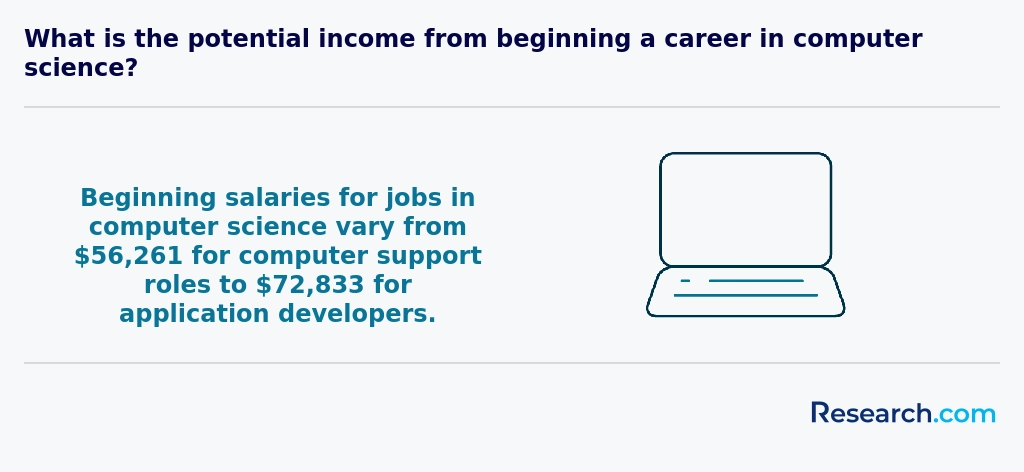
If you're graduating with a computer science degree in Oregon, you're looking at really solid earning potential. Graduates from schools like Oregon State or Portland State often land jobs as software developers or engineers, with average salaries around $138,000 a year-pretty impressive compared to national numbers. Entry-level roles might start closer to $65,000 to $80,000, which feels great when you're just starting out. But after a few years, many see their paychecks jump well past $100K, especially if they snag a role as a software developer or data analyst, where the average pay is about $119,000.
Some grads move into specialized areas like web development, earning around $95,000, or IT support roles paying just over $63,000. Imagine kicking off your career in Portland's thriving tech scene, or even Eugene, where startups and big companies alike value sharp programming and problem-solving skills taught at Oregon's top colleges. The vibe is upbeat-your degree opens doors to jobs that pay well and offer room to grow.
- Annual tuition for in-state students at Oregon public universities ranges from $11,000 to $13,000, while private schools often cost over $35,000 per year.
- Community colleges in Oregon offer transfer pathways that can help reduce the overall cost of a computer science degree.
- Entry-level computer science graduates in Oregon earn an average salary of around $75,000 per year, with mid-career salaries reaching approximately $110,000 or more.
- Oregon's tech sector is growing, creating strong demand for computer science skills in software development, data analysis, cybersecurity, and cloud computing.
- Job placement rates for computer science graduates in Oregon are above the national average due to strong ties between universities and local employers.
If you're wondering how long it takes to finish a computer science degree in Oregon, the usual answer is about four years if you're attending full-time at places like Oregon State University or the University of Oregon. That's pretty much the standard timeline for a bachelor's degree in most U.S. schools. Many grads recall cramming through eight semesters stacked with coding projects and math classes, but it's totally doable within that timeframe if you stay on track.
Some students speed things up, finishing in three years by taking heavier course loads and summer classes. It's challenging but feels rewarding when you're done early. Others juggle work and study, maybe at community colleges or online programs, stretching their journey to five years or more. It's common, and people appreciate the flexibility.
For those thinking beyond a bachelor's, a master's usually takes about two years full-time, though there are faster options too. These paths let you dive deeper while balancing real-life commitments, making Oregon a friendly place to grow your computer science skills.
Upon completion of a bachelor’s degree in Computer Science in Oregon, many graduates choose to elevate their expertise by pursuing a master’s or doctoral program. A graduate degree not only deepens technical knowledge but also enhances research skills, leadership capabilities, and earning potential. In Oregon, institutions like Oregon State University’s Ecampus and the University of Oregon offer accelerated pathways that allow students to integrate practical projects, capstone research, and internships directly into their graduate studies. For those seeking flexibility, online master’s programs in related fields such as data science or artificial intelligence have become increasingly popular. The ability to study asynchronously enables working professionals to maintain full-time roles while earning advanced credentials. Moreover, specialized programs often include hands-on labs, collaborative cohort projects, and access to industry mentors, ensuring that graduates stay at the forefront of emerging technologies. If you’re interested in harnessing data-driven insights to solve complex problems, consider exploring some of the best online masters data science programs available today. These curated programs emphasize machine learning, statistical modeling, and large-scale data management-skills that complement a Computer Science background and open doors to high-impact roles in sectors like healthcare, finance, and technology startups. When evaluating graduate options, prioritize accreditation, curriculum alignment with your career goals, and the strength of alumni networks. Look for programs offering industry partnerships, research assistantships, and career placement services. By selecting a graduate pathway that aligns with both your academic interests and professional ambitions, you’ll position yourself to lead innovative projects and secure leadership roles within Oregon’s dynamic tech ecosystem.
If you're weighing online versus on-campus computer science degrees in Oregon, one big difference is how you experience learning. On-campus programs, like those at Oregon State University, offer hands-on labs and easy access to professors and study groups. Imagine heading over to campus after class to work on code with classmates or get quick feedback from your instructor-that's a huge draw for many students.
Online degrees, on the other hand, give you serious flexibility. You can study whenever and wherever it fits your schedule, which is perfect if you're juggling work or family. Oregon State's online Bachelor of Science in Computer Science, for example, delivers the same curriculum and high-quality teaching as the in-person option, so graduates feel just as prepared.
- Cost-wise, on-campus tuition usually runs between $11,000 and $15,000 a year for Oregon residents, while online programs often save you some cash with no commuting and fewer fees.
- That said, online students might miss out on campus social vibes and spontaneous group projects.
Oregon’s Computer Science programs are not only about rigorous academics-they also foster a vibrant campus culture that enriches students’ overall experience. Beyond the classroom, students can engage in various extracurricular activities, from coding clubs and hackathons to tech meetups and guest lectures featuring industry experts. These additional opportunities provide a platform for fostering innovation, improving interpersonal skills, and building professional networks that often lead to internships and long-term career connections. In many campuses, active student organizations organize regular seminars, workshops, and career fairs that help bridge the gap between academic theories and real-world applications. For example, some schools host annual tech expos where students showcase projects, collaborate on innovative challenges, and receive feedback directly from local employers and mentors. These gatherings are instrumental in creating a sense of community among aspiring tech professionals and ensuring that graduates remain connected with the evolving tech landscape. Prospective students are encouraged to consider how each program supports these activities when evaluating their options. Many institutions offer unique support systems, including dedicated career centers and alumni networks, that provide ongoing assistance long after graduation. Discovering programs that balance academic excellence with engaging campus life can greatly enhance both personal growth and professional readiness. For additional insights on balancing quality education with extracurricular benefits, explore affordable computer science programs in oregon that provide a holistic approach to student life.
The average cost of a computer science degree in Oregon typically revolves around $55,176 for the total tuition and fees, with in-state students paying closer to $14,400. These numbers give you a solid idea of what to expect when planning your education budget here. Many students attending well-known programs, like those at Oregon State University or the University of Oregon, find the in-state tuition manageable compared to private schools, though those private options offer different experiences and financial aid opportunities.
Graduates often share how balancing those costs with their everyday expenses-like housing, books, and transportation-is a real part of the college journey. For example, budgeting for living costs around $10,000 to $15,000 per year can make a big difference in overall expenses. Having a clear picture of total tuition and fees for Oregon computer science programs helps students stay on track with their finances while enjoying campus life.
If affordability is a key concern, many students explore options through programs known for being budget-friendly. You can check out a good list of affordable computer science programs in oregon to find schools that fit your financial situation without sacrificing quality. These programs often have supportive communities and resources that make the investment feel worthwhile.

Understanding the long-term value of a Computer Science degree is crucial for prospective students. In Oregon, the average tuition for in-state students is approximately $6,930 per year, while out-of-state costs can reach $34,177. When combined with living expenses-estimated at $15,000 annually-the total four-year investment ranges from $88,000 to $196,000. Against this backdrop, graduates enjoy mean starting salaries of $63,000 to $75,000, with mid-career earnings climbing above $130,000. Key ROI metrics to consider:
- Break-Even Point: In-state students typically recoup tuition and living costs within 4–5 years post-graduation; out-of-state students may require 6–7 years.
- Salary-to-Cost Ratio: For an in-state bachelor’s graduate earning $75,000 annually, the ratio is 0.85 (75,000 / 88,000), indicating a strong return.
- Debt Payback Period: Graduates with average student loan debt of $30,000 can expect to repay in 3–4 years at a standard 10-year repayment plan, assuming disciplined budgeting and secure employment. To maximize ROI: • Pursue in-state tuition or residency waivers where possible. • Leverage internships, cooperative education (co-op) programs, and part-time roles to reduce debt and gain experience. • Compare total cost with regional alternatives; for example, you might explore the Most Affordable Computer Science Degree Programs Ranking in Baton Rouge, LA to benchmark tuition savings. • Investigate accelerated or combined bachelor’s/master’s tracks to enter the workforce sooner. By carefully analyzing these factors, students can make informed decisions, ensuring their Oregon Computer Science degree delivers both the technical skills and financial benefits needed for a sustainable and rewarding career.
If you're diving into a computer science degree in Oregon, you'll be glad to know there are plenty of financial aids waiting to lighten the load. Let's say you're studying at Oregon State University - federal aid like Pell Grants can cover up to $7,000 a year without you needing to pay it back. That's a big help when tuition hits around $11,000 for in-state students.
Besides federal help, Oregon throws in its own support through the Oregon Opportunity Grant, which chipped in about $2,600 annually for many students I've talked to at the University of Oregon. Plus, institutional scholarships targeted at computer science often boost your funds even more, especially if you've got solid grades or real need.
Some grads I know also found scholarships from groups like the Oregon Society of Women Engineers, which makes pursuing tech less stressful. Work-study gigs on campus help too - imagine earning part-time cash while learning the ropes in your field!
If you're aiming for a computer science degree in Oregon, the starting line is usually having a high school diploma or a GED. Pretty straightforward, right? Most local universities like those in Eugene or Portland expect you to have a solid grip on math-think algebra, geometry, and often precalculus or calculus. It's not about being perfect but showing you've handled these subjects well enough to dive into more complex CS concepts later.
Many students who've walked the halls of these schools mention how their strong math background made programming classes less intimidating. While test scores like the SAT or ACT aren't always mandatory due to test-optional policies, good math scores can definitely boost your application, especially if you're aiming for competitive spots.
Community colleges around Oregon offer a more flexible path; you can start with placement tests and then work your way up to transfer to a bigger university. Plus, some schools ask for letters of recommendation or personal statements-perfect chances to share your passion for coding or any cool projects you've worked on. That personal touch really helps you stand out!
- Completion of high school diploma or GED
- Proficiency in mathematics courses such as algebra and precalculus
- Standardized test scores (SAT/ACT) where applicable
- Submission of application materials like essays and recommendations
- Meeting institution-specific GPA and placement test requirements
Oregon’s computer science programs emphasize hands-on experience to prepare you for real-world challenges.
- Co-operative education: OSU and the University of Oregon partner with Intel, HP and local startups to alternate semesters of paid work and study.
- Research assistantships: Join faculty-led labs in machine learning, cybersecurity or data analytics to build advanced skills.
- Hackathons & career fairs: Participate in the Silicon Forest Expo and campus hackathons to connect directly with recruiters.
- Startup accelerators: Leverage incubators like Oregon State’s Advantage Accelerator to develop and pitch your own tech solutions.
- Capstone projects: Collaborate on industry-sponsored assignments that often lead to internship offers or job interviews.
Many graduates supplement these experiences with an advanced online data science masters to deepen their expertise.
If you're diving into a computer science degree in Oregon, you'll find your semesters packed with courses that really get you hands-on with coding and problem-solving. At places like Oregon State University or University of Oregon, graduates often talk about tackling core classes like Introduction to Programming, where you'll start writing code in languages like Python or Java-super useful when you imagine building your own app or game.
From there, you'll move into Data Structures and Algorithms, which might sound intense, but it's like learning the secret recipes for organizing data efficiently in real-world projects. Then, courses like Computer Architecture and Operating Systems break down how the actual hardware and software inside your laptop or phone work, making those geeky tech details click.
Students also enjoy software engineering classes, where they collaborate on bigger projects, just like in a tech startup, and electives like Artificial Intelligence pop up if you're curious about smarter tech. Many graduates highlight how internships and capstone projects through Oregon schools totally boost confidence, letting you build something real before you graduate.
When you dive into computer science specializations in Oregon, you'll find plenty of options to make your degree really yours. Graduates from places like Oregon State University often mention how their Software Engineering focus helped them land jobs building apps or managing complex software projects. If you're intrigued by AI, many programs here dive deep into machine learning, data mining, and even natural language processing, giving you skills that are in hot demand nationwide.
Other students highlight how cybersecurity tracks prepare them for real-world challenges like ethical hacking or protecting networks from threats-super relevant with today's focus on digital safety. Oregon computer science degree focus areas also include Data Science, which blends stats and databases, perfect for those interested in handling big data. Some grads even combine this with online options, giving them flexibility; check out the best online masters data science programs if you want to keep studying while working.
Besides those, there are cool niches like Human-Computer Interaction, Computer Graphics, and even Internet of Things (IoT) specialties that prepare you for the connected future. It's easy to see why so many find Oregon's variety exciting and tailored to today's tech scene.
Picking the best computer science degree in Oregon isn't just about the name on the diploma. It's smart to think about the type of degree, like whether you want a Bachelor of Science or a Bachelor of Arts. Graduates from Oregon State University often mention how their BS programs gave them solid technical skills perfect for coding and algorithms, while some students at the University of Oregon enjoyed the BA route because it mixed tech with a broader education. If you're hunting for affordable computer science programs Oregon has options, but it's good to factor in not just tuition but also fees and living costs. Many grads say that looking into reputable programs that are ABET-accredited gave them a confidence boost when job hunting.
Also, consider what specializations the school offers. Some programs have cool tracks in AI or cybersecurity, and others connect you with Portland's tech hub, making internships at companies like Intel way easier to land. One grad shared how those internships really made learning come alive. Don't forget to check out career support services because having guidance and networking can seriously open doors after graduation. For those curious, it's worth checking out the Most Affordable Computer Science Degree Programs Ranking in Baton Rouge, LA for broader tuition perspectives, too.
If you're diving into computer science jobs in Oregon, you'll find plenty of paths to explore. Graduates from popular schools like Oregon State University and the University of Oregon often jump into roles as software developers, crafting everything from mobile apps to complex systems. Many find the data side exciting-working as data scientists or analysts, especially with companies in Portland's booming tech scene. It's pretty rewarding to see your work directly help businesses make smarter decisions.
Others lean into cybersecurity, a field growing fast with plenty of opportunities to protect digital info, especially at government agencies and startups. Systems analysts and network admins are also in demand, keeping IT networks smooth for schools and nonprofits around the state. And for those who geek out on AI, Oregon's tech firms and research centers offer a playground to build machine learning models that actually change how things work.
If you want to boost your career even faster, consider checking out internships or co-op programs that many Oregon universities offer-they often turn into real jobs. And if you're balancing work and school, take a look at the quickest online degrees for working adults that can fit your schedule.
The computer science job outlook Oregon has been looking great lately, especially for graduates from well-known schools like Oregon State University and the University of Oregon. Many grads share stories about landing strong positions with companies like Intel or tech startups right in Portland's buzzing tech scene. This growth isn't surprising-Oregon's tech sector is expanding fast, with a projected 16% increase in related jobs over the next decade, making it a solid choice if you're eyeing a future in tech.
For students, one of the best parts is how flexible the job market has become. Plenty of roles, from software development to cybersecurity, offer remote or hybrid opportunities. That's a big plus for anyone balancing school and life. Salaries are competitive too, with median pay hovering around $103,000, which feels pretty rewarding after investing $10,000 to $15,000 yearly in education at public universities here.
If you're considering your options carefully, also check out some of the easiest associates degree to get online programs in Oregon, which can be a quicker step into tech careers before you dive into a full computer science degree. Students often find this pathway helpful for building skills and confidence in the job market focused on technology career opportunities Oregon.
2027 Best Computer Science Degree Programs Ranking in Oregon
Investing in your education is a significant decision that can shape your future, and the Research.com team understands the importance of making informed choices. To assist prospective students in Oregon, we have meticulously crafted the "2027 Best Computer Science Degree Programs Ranking in Oregon." Our commitment to quality, credibility, and accuracy is reflected in the extensive research and analysis conducted to compile this ranking.
We utilized the following reputable data sources to ensure a comprehensive evaluation of computer science programs:
By exploring this ranking, readers will gain valuable insights into the best computer science degree programs available in Oregon, helping them make well-informed decisions about their educational paths. For more details on our methodology, please visit our Research.com methodology page.


Frequently Asked Questions About computer science
Computer science students in Oregon can maximize their learning experiences by engaging deeply with both academic and extracurricular opportunities. Oregon's universities often encourage participation in hands-on projects, internships, and cooperative education programs, which provide real-world experience alongside theoretical knowledge. According to the Oregon Employment Department, internships can significantly boost job prospects in the state's growing tech sector, especially in cities like Portland and Eugene.
Students should also take advantage of Oregon's active tech communities and meetups, which supplement classroom learning with networking and mentorship chances. Furthermore, utilizing resources like university labs and research centers enhances practical skills, crucial for future employment. Staying current with emerging technologies and programming languages is vital.
Emerging niches within the computer science field reflect rapid technological advancements and Oregon's growing tech ecosystem. One key area is artificial intelligence (AI) and machine learning, where Oregon companies and universities are expanding research and development. According to the Oregon Employment Department, jobs in AI-related roles are projected to grow by over 25% through 2030.
Another important niche is cybersecurity. With increasing digital threats, demand for skilled professionals is strong in Oregon's public and private sectors. The state offers specialized programs focusing on network security and data protection.
Data science also stands out, as businesses seek experts to analyze vast data sets. Portland and Eugene have seen notable growth in data-driven jobs, with a 20% increase reported by Portland State University.
Preparing for the job market after earning a computer science degree in Oregon involves gaining both technical skills and real-world experience. According to the Oregon Employment Department, technology jobs in the state are projected to grow nearly 20% through 2031, offering strong opportunities for graduates.
Networking is crucial; students should attend career fairs, join tech meetups, and engage with professional groups like the Oregon Technology Association. Internships and cooperative education programs provide valuable hands-on experience that employers highly value.
Additionally, developing skills in areas such as cybersecurity, data analytics, and software development aligns well with local industry needs. Oregon students can also pursue certifications to enhance their resumes and demonstrate expertise.
Employers in Oregon prioritize several key skills when hiring computer science graduates. Strong programming abilities in languages such as Python, Java, and C++ remain essential, with a 2023 Oregon Tech Workforce Report noting that 72% of local tech employers seek proficiency in multiple coding languages.
Problem-solving and analytical thinking are also highly valued, as companies need professionals who can develop efficient algorithms and troubleshoot complex systems.
Additionally, experience with software development methodologies like Agile is important, reflecting 65% of survey respondents from Oregon's software sector.
Knowledge of data structures, cybersecurity basics, and cloud computing platforms like AWS is increasingly in demand, especially in Portland's growing tech market.
Finding internships in Oregon related to computer science involves leveraging both university resources and the state's growing tech industry. Many Oregon universities, like Oregon State University and the University of Oregon, offer career centers that connect students to internship opportunities through job fairs and partnerships with local companies.
Oregon's tech sector, particularly in Portland and the Silicon Forest area, includes companies such as Intel, HP, and smaller startups, which regularly seek computer science interns. According to the Oregon Employment Department, tech occupations grew by over 4% annually from 2015 to 2022, increasing internship openings.
Students should also use online platforms and local networking events like those hosted by the Portland Tech Council to find internships suited to their skills and career goals.
A computer science degree in Oregon significantly enhances career mobility and advancement opportunities. Oregon's technology industry, centered around Portland and companies like Intel and Nike, demands skilled professionals with up-to-date knowledge.
According to the Oregon Employment Department, computer and information technology occupations are projected to grow by 14.4% from 2022 to 2032. Graduates with a computer science degree have access to diverse roles ranging from software development to data analysis, improving their ability to switch industries or roles.
Moreover, a bachelor's or higher degree is often a minimum requirement for promotion within tech firms. This formal education signals proficiency and commitment to employers, enhancing the potential for higher salaries and leadership positions.
Local universities also offer strong ties to industry through internships and partnerships, facilitating smoother career transitions.
Studying for a computer science degree in Oregon offers strong preparation for interdisciplinary roles by combining technical training with exposure to fields like business, healthcare, and environmental science. Universities such as Oregon State and the University of Oregon provide collaborative projects and electives that integrate computing with diverse disciplines.
Oregon's emphasis on innovation in technology and sustainability means students often engage with real-world challenges requiring cross-field expertise. According to the Oregon Employment Department, demand for computing professionals in interdisciplinary roles is growing by 18% annually, indicating expanding opportunities.
Hands-on labs and internships further develop skills essential for teamwork and communication across sectors, equipping graduates for versatile career paths.
Choosing between a thesis and a non-thesis computer science degree program in Oregon depends largely on your career goals. Thesis programs emphasize research and require completing a substantial project, making them ideal for students aiming for doctoral studies or research roles. Non-thesis programs focus more on coursework and practical skills, suited for those targeting industry positions or immediate employment.
Oregon universities like Oregon State University offer both options, with thesis students often conducting research in areas like artificial intelligence or cybersecurity. According to the Oregon Office of University Coordination, over 60% of computer science graduates pursue non-thesis tracks, reflecting strong industry demand.
Consider your professional objectives and consult academic advisors to decide which path aligns best with your future plans.
Students based in Oregon who want to study computer science abroad have several options through exchange programs and partnerships offered by Oregon universities. Oregon State University and the University of Oregon provide study abroad opportunities in countries such as Germany, the United Kingdom, and Japan, where students can take computer science courses aligned with their degree requirements.
These programs often last one or two academic terms and help students gain international experience while earning credits transferable to their Oregon degrees. According to the Oregon University System, approximately 10% of computer science students participate in study abroad programs, reflecting growing interest in global perspectives in tech education.
Additionally, scholarship and funding resources, including some federal programs, support Oregon students studying computer science internationally.
Students pursuing computer science degrees in Oregon can find various part-time job opportunities to complement their education. Common roles include software development internships, technical support, and IT assistant positions. These jobs help build practical skills alongside academic knowledge.
Oregon's tech industry, particularly in Portland and the Silicon Forest area, offers many openings in startups and established technology firms. According to the Oregon Employment Department, computer and mathematical occupations are projected to grow 21% from 2020 to 2030, increasing demand for part-time technical workers.
Campus resources often list positions such as lab assistants or research aides, which provide relevant experience and networking possibilities.
Computer science students in Oregon benefit from a variety of robust networking opportunities that enhance their academic and professional growth. Universities like Oregon State University and the University of Oregon host regular tech events, career fairs, and hackathons, attracting local employers and tech professionals. According to the Oregon Employment Department, the state's tech sector is growing rapidly, increasing demand for graduates and boosting internship possibilities.
Professional organizations such as the Oregon Technology Association also offer mentorship programs and industry meetups. These platforms connect students with experienced engineers and recruiters, facilitating job placements across sectors like software development and data science. Online and regional conferences further expand networking beyond campus.
Alumni networks play a crucial role for computer science students in Oregon by providing access to professional connections and job opportunities. Graduates often benefit from mentorship programs that link current students with experienced alumni working in the Oregon tech industry. For example, Portland and Eugene are hubs for tech companies like Intel and Hewlett-Packard, where networking can lead to internships and employment.
These networks also facilitate knowledge sharing through events and workshops, helping students stay updated with industry trends and technologies. According to Oregon State University data, students involved in alumni programs report a 25% higher job placement rate within six months of graduation.
In Oregon, computer science degree programs often offer a range of electives and specializations to tailor your education to specific career goals. Many universities, such as Oregon State University and the University of Oregon, allow students to choose concentrations like artificial intelligence, cybersecurity, or software engineering. According to the Oregon Employment Department, fields like software development and information security are among the fastest growing, making these options highly relevant.
Students can also customize their degrees through internships or cooperative education programs, gaining practical experience aligned with their interests. Additionally, graduate certificates and minors in related fields, such as data science or business analytics, provide further flexibility.
Computer science students in Oregon often face several challenges during their studies. One common difficulty is keeping up with the rapid pace of technological change, which requires continuous learning and adaptation. According to the Oregon Employment Department, demand for tech skills is growing, but students must master emerging programming languages and tools to remain competitive.
Another challenge is the rigors of coursework. Many students find advanced math and algorithm courses particularly demanding, which can affect their overall academic performance. Additionally, balancing internships and part-time jobs with academic responsibilities is a frequent concern, as hands-on experience is vital in the Oregon tech job market.
Access to diversity and inclusion initiatives has also been improving, yet underrepresented groups in Oregon's computer science programs still report feelings of isolation and lack of mentorship, as noted by local education reports. These hurdles impact both retention rates and student success.
A computer science degree from an Oregon institution opens doors to numerous professional certifications valued in the tech industry. Popular certifications include Certified Information Systems Security Professional (CISSP) for cybersecurity roles and Certified ScrumMaster (CSM) for project management within software development. Many graduates pursue Amazon Web Services (AWS) certifications to validate cloud computing skills, especially given Oregon's growing tech sector with companies like Intel and Nike supporting cloud infrastructure expansion.
The Project Management Professional (PMP) certification is also widely respected. Oregon's employment projections indicate a 15% increase in computer and information technology jobs by 2030, highlighting strong demand for certified professionals. Local resources such as the Oregon Technology Business Center provide training and support for certification preparation.
To write a winning application for a computer science program in Oregon, start by highlighting your strong foundation in mathematics and programming. Oregon universities, including Oregon State University and the University of Oregon, highly value applicants with hands-on coding experience and relevant coursework. Make sure your personal statement clearly explains your passion for computer science and how it aligns with your career goals.
Include any internships, projects, or competitions related to technology; these practical experiences can distinguish you from other candidates. Additionally, maintain a competitive GPA-many top Oregon programs look for 3.0 or higher.
Strong letters of recommendation from teachers or employers familiar with your technical skills enhance your application. Finally, verify each institution's specific requirements and deadlines through official school websites or resources like the Oregon Office of Degree Authorization. Quality preparation and clear communication are keys to success.
Careers in computer science are increasingly recognized worldwide for their strong growth potential, driven by ongoing technological innovation. In the United States, and specifically in Oregon, the demand for computer science professionals is expected to grow by 22% from 2020 to 2030, according to the U.S. Bureau of Labor Statistics. This rate is much faster than the average for all occupations.
Globally, the field offers opportunities in diverse sectors such as artificial intelligence, cybersecurity, and software development. Educational standards, while varying, emphasize critical thinking and practical skills, aligning US degrees with international expectations. Oregon's computer science programs often integrate these global trends to prepare students for careers that can span local and international markets.
Gaining practical experience while studying computer science in Oregon is crucial for career readiness. Many Oregon universities incorporate internships as part of their curriculum, allowing students to work with local tech companies such as Intel and Oregon Health & Science University. According to the Oregon Employment Department, internships correlate strongly with higher job placement rates after graduation.
Students can also engage in research projects through faculty-led laboratories, often funded by government grants. Additionally, participating in coding competitions and hackathons hosted by organizations like the Oregon Coding Academy offers real-world problem-solving practice.
Volunteer opportunities and on-campus tech clubs provide further hands-on experience in software development and networking.
Choosing the right concentration within a computer science degree program in Oregon involves understanding your career goals and the industry demand. Oregon's tech sector, centered in Portland's Silicon Forest, values specializations like software engineering, data science, and cybersecurity.
Researching local job market trends can guide your choice. For example, the Oregon Employment Department reports steady growth in software developer roles, with a projected 7% increase over the next decade. Selecting a concentration aligned with such trends may enhance employment prospects.
Consider your interests in areas like artificial intelligence, networks, or human-computer interaction. Many Oregon universities offer diverse tracks to match these specialties. Consulting academic advisors and reviewing program curricula helps ensure the concentration fits your skills and goals.
- 2027 Best Computer Science Degree Programs Ranking in Washington
- 2027 Best Computer Science Degree Programs Ranking in California
- 2027 Best Computer Science Degree Programs Ranking in Idaho
- 2027 Best Computer Science Degree Programs Ranking in Montana
- 2027 Best Computer Science Degree Programs Ranking in Arizona
- 2027 Best Computer Science Degree Programs Ranking in Colorado
- 2027 Best Computer Science Degree Programs Ranking in Iowa
- 2027 Best Computer Science Degree Programs Ranking in Missouri
- 2027 Best Computer Science Degree Programs Ranking in Louisiana
- 2027 Best Computer Science Degree Programs Ranking in Wisconsin
See What Experts Have To Say About Studying Computer Science
Read our interview with Computer Science experts

Imed Bouchrika, Phd
Computer Science Expert
Professor of Computer Science
National Higher School of Artificial Intelligence

Kathleen M. Carley
Computer Science Expert
Professor of Computer Science
Carnegie Mellon University

Elan Barenholtz
Computer Science Expert
Associate Professor
Florida Atlantic University

Derek Riley
Computer Science Expert
Professor, Program Director
Milwaukee School of Engineering

- Top Careers in Computer Science | Careers, Salaries, and Resources https://www.computerscience.org/careers/
- Fields of Work in Computer Science: Top IT Careers | Walbrook https://www.walbrook.ac.uk/subjects/computer-science/computer-science-fields-of-work-career-in-it/
- Study Computer Science Abroad | Go Overseas https://www.gooverseas.com/study-abroad/computer-science
- 8 Tips for Computer Science Graduates to Get Their First Job https://allthecode.co/blog/post/tips-for-computer-science-graduates-to-get-their-first-job
- Computer Science Degree Pathways | Southwestern Oregon https://www.socc.edu/computerscience/
- Alumni computer science dual https://www.fbi.h-da.de/en/informieren/ueber-uns/alumni/alumni-computer-science-dual
- Computer Science at PCC https://www.pcc.edu/programs/computer-science/
- Ada Computer Science https://adacomputerscience.org/student_challenges
- How AI Is Transforming Computer Science Careers | Role of AI https://www.gisma.com/blog/how-ai-is-transforming-computer-science-careers
- 5 Challenges in Teaching Computer Science & Solutions https://www.computingolympiad.org/post/top-5-challenges-in-teaching-computer-science-in-schools-and-how-to-overcome-them