2027 Most Affordable Online Communication Degree Programs Ranking in the Northeast

Co-Founder and Chief Data Scientist
If you're exploring affordable options for an online communication degree in the Northeast, this article is here to guide you. The 2027 Most Affordable Online Communication Degree Programs Ranking in the Northeast was created by the Research.com team of data scientists to help you make an informed choice about programs that truly stand out.
Getting a communication degree opens doors to diverse careers and personal growth. By using this ranking, you can find programs that fit your budget without sacrificing quality. Dive in, feel confident, and take a step closer to your goals.
Key benefits of getting online communication degree in the Northeast
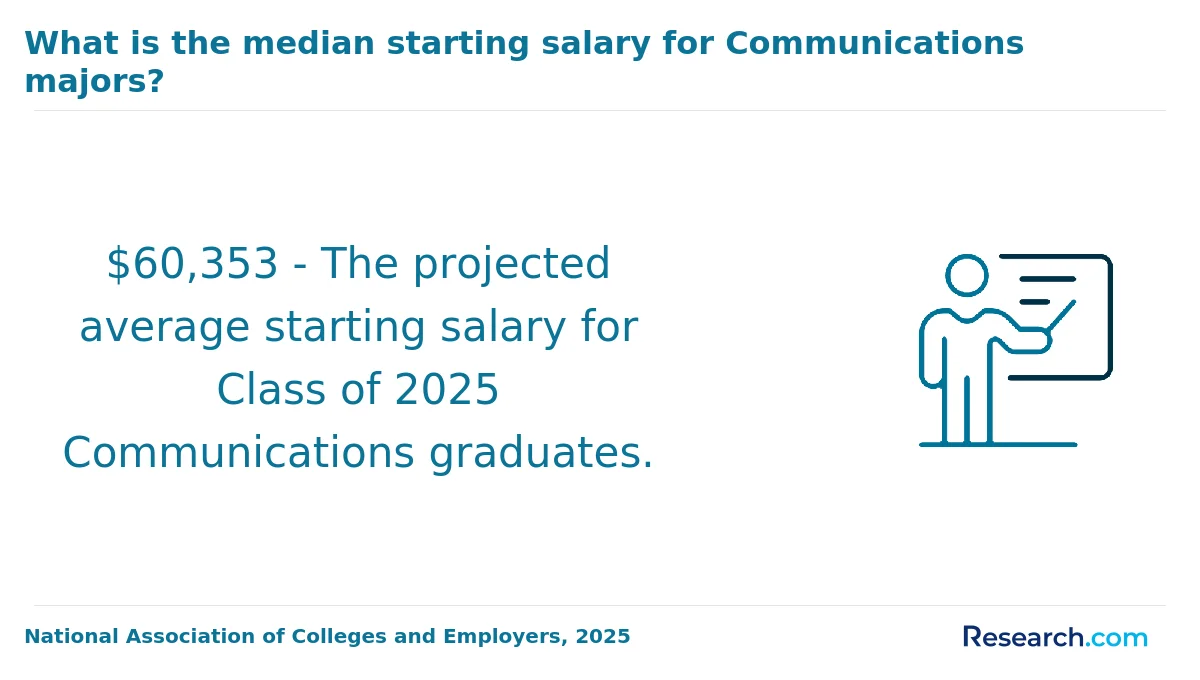
- Communication degree graduates in the Northeast often pursue careers such as public relations specialists and market research analysts, with average salaries around $62,000 to $65,000 annually, offering a solid financial foundation.
- An example graduate from Boston University explored roles in media, corporate communications, and digital marketing, showing the degree's flexibility in high-demand, creative fields that match various interests.
- Completing a communication degree online from a school like Northeastern University allowed graduates to balance work and study, gain real-world experience, and build professional networks without relocating, enhancing both convenience and career growth.
- Key benefits of getting online communication degree in the Northeast
- What can I expect from online communication degree in the Northeast?
- Where can I work with online communication degree in the Northeast?
- How much can I make with online communication degree in the Northeast?
- 2027 Most Affordable Online Communication Degree Programs Ranking in the Northeast
- Key Findings
- How long does it take to complete online communication degree in the Northeast?
- What's the difference between online and on-campus communication degree?
- What is the average cost of online communication degree in the Northeast?
- What financial aid is available to online communication degree students in the Northeast?
- What are the prerequisites for enrolling in online communication degree program in the Northeast?
- What courses are typically in online communication degree programs in the Northeast?
- What types of specializations are available in online communication degree programs in the Northeast?
- How do you choose the best online communication degree in the Northeast?
- What career paths are available for online communication degree students in the Northeast?
- What is the job market for online communication degree in the Northeast?
- Top Trending Communication Rankings
What can I expect from online communication degree in the Northeast?
The average cost of an online communication degree in the Northeast often surprises prospective students who assume all quality programs come with hefty price tags. Graduates from the University of Massachusetts and Penn State World Campus commonly share that tuition, especially at public institutions, tends to be reasonable for in-state learners, often under $15,000 annually. This affordability lets students focus more on mastering media writing or digital storytelling rather than stressing over mounting debt.
Some private schools in the region, while pricier, balance costs by offering scholarships or discounted online rates, creating opportunities for driven students who seek specialized fields like health communication without financial strain. Imagine juggling a full-time job while taking courses in crisis communication-graduates praise these flexible, financially accessible programs for enabling such balance.
Still, cost varies widely, prompting critical reflection: is the value of immersive, career-oriented training-offered by Northeast universities closely tied to thriving media markets-worth the investment? Many alumni argue yes, especially when remote internships and networking pathways come at minimal additional cost.
Where can I work with online communication degree in the Northeast?
Graduates from online communication programs at institutions like Suffolk University in Boston or Temple University in Philadelphia often find themselves navigating a dynamic job market that defies traditional boundaries. Imagine managing media relations for a bustling New York City firm or crafting digital strategies for nonprofits in New Jersey-these aren't distant dreams but tangible realities.
Many alumni describe their roles in public relations and corporate communications as both challenging and rewarding, thriving in high-stakes environments where strategic messaging shapes public perception. Others have embraced the rise of remote work, becoming digital marketing coordinators who balance creativity and analytics from anywhere in the Northeast.
Healthcare communication stands out as a unique path, particularly in Massachusetts, where graduates support patient education initiatives at renowned hospitals. The sense of contributing to community health brings a deep fulfillment often overlooked in traditional corporate roles.
For those drawn to public service, government and nonprofit sectors offer opportunities to engage directly with communities, reinforcing the importance of authentic storytelling and strategic outreach. These varied pathways reflect the Northeast's rich ecosystem, proving that an online communication degree here opens doors across industries-and emotions.
How much can I make with online communication degree in the Northeast?
Graduates from renowned institutions in the Northeast pursuing online communication degrees often find their starting salaries in a surprisingly robust range. For instance, public relations specialists emerging from colleges in Massachusetts or New York frequently report beginning salaries between $60,000 and $75,000, surpassing the national norms. This reflects not just the region's vibrant media landscape but also its high cost of living, which drives employers to offer competitive wages.
Many recent graduates recall landing entry-level roles in Boston or New York City with starting pay around $50,000, a figure that feels encouraging and validating after years of study. These roles quickly evolve; as experience accumulates, alumni moving into corporate communication or digital strategy report salaries climbing well into six figures, especially at firms headquartered right in the Northeast.
The Northeast isn't just about high-paying roles-it's about growth and opportunity. Graduates focused on digital media or social media strategy often earn between $70,000 and $90,000, reflecting the demand for specialized skills. Alumni from popular regional universities often highlight how their flexible online programs helped them seize these chances without sacrificing current job commitments or personal life balance.
2027 Most Affordable Online Communication Degree Programs Ranking in the Northeast
How do we rank schools?
Investing in your education is a significant decision that can shape your future, and the Research.com team understands the importance of making informed choices. To assist prospective students, we have carefully developed the "2027 Most Affordable Online Communication Degree Programs Ranking in the Northeast." Our dedication to quality, credibility, and accuracy is demonstrated through thorough research and analysis to ensure the ranking's reliability.
We utilized the following reputable data sources to create a comprehensive evaluation of affordable online communication programs:
By exploring this ranking, readers will gain valuable insights into the most cost-effective options for pursuing an online communication degree in the Northeast, helping them make well-informed decisions about their educational journey. For more information on our methodology, please visit our Research.com methodology page.


# 3 position
Penn State University Park
Master of Strategic Communications


# 9 position
Penn State University Park
Bachelor of Organizational and Professional Communication



# 15 position
SUNY Empire State College
Bachelor of Cultural Studies


# 18 position
Thomas Edison State University
Bachelor of Communications


Key Findings
- Tuition for online communication degrees in the Northeast ranges from $12,000 to $25,000 per year, varying by public or private institution.
- Entry-level communication specialists earn between $45,000 and $55,000 annually, with mid-career salaries rising to $70,000-$85,000.
- Job growth for communication roles in major Northeast cities like New York and Boston is projected at 6-10% over the next ten years.
- Programs often include practical skills such as digital media production and social media management to meet employer demands.
- Accreditation from bodies like CACREP can improve program credibility and influence hiring decisions.
How long does it take to complete online communication degree in the Northeast?
Completing an online communication degree in the Northeast challenges the one-size-fits-all timeline many expect. Full-time bachelor's students often finish in about four years, yet accelerated programs at institutions like Pace University or Northeastern University sometimes enable driven students to graduate in just two or three years.
Imagine balancing work and family while taking summer sessions offered by SUNY or Boston University-students reflect on how this flexibility turns a daunting schedule into manageable milestones. Associate degrees, commonly offered through community colleges across New York and Massachusetts, typically span two years, providing essential skills and pathways to bachelor's programs.
Graduate students pursuing online master's degrees frequently find their journey lasting one to two years, especially when enrolling part-time to accommodate career demands. Graduates often describe a sense of accomplishment fueled by the freedom to learn on their own terms, recognizing how these varied timelines reflect personal commitment just as much as program structure.
What's the difference between online and on-campus communication degree?
Choosing between an online and an on-campus communication degree in the Northeast reshapes not just where you learn, but how you experience your education. Graduates from Boston-area universities often recall how campus life sparked spontaneous debates after class and hands-on access to media labs that polished their skills in ways online platforms can't easily match. The immediacy of face-to-face feedback helped them build confidence in public speaking and teamwork.
Conversely, graduates who pursued online programs from schools in New York or Philadelphia describe the freedom to tailor study schedules around demanding jobs or family life as transformative. They found themselves more empowered controlling their learning pace, accessing course materials anytime, and connecting virtually through discussion boards, though they had to be proactive to foster meaningful networking.
Both paths offer rich communication theory and practical skills, but the on-campus route pulses with dynamic, real-time collaboration, while online learning flexes to life's unpredictable rhythm-especially in Northeast urban hubs where time is precious.
What is the average cost of online communication degree in the Northeast?
The average cost of an online communication degree in the Northeast is a vital consideration for many prospective students balancing education with other life commitments. Data show a median total cost around $45,886, with in-state residents paying closer to $35,570 and out-of-state students averaging $47,566. These numbers challenge the assumption that online degrees are always cheaper or a simple route to savings, especially in this region known for its prestigious institutions.
Graduates from well-known Northeast universities often reflect on the value of their investment, noting that while tuition may seem steep, the ability to study online while maintaining jobs and family roles creates a rewarding sense of accomplishment. For example, online students at Pennsylvania State University's World Campus frequently mention how the per-credit cost aligns with the flexibility and quality education they receive, allowing them to pursue the degree without relocating or interrupting careers.
The search for affordable online communication degree programs northeast leads many to explore various universities' detailed tuition structures. Students find the actual cost is influenced by extra fees, such as technology surcharges and course materials, shaping their overall financial planning. Understanding these expenses alongside tuition helps students approach their educational journey realistically and with informed confidence.
Furthermore, many explore prerequisites for a communication degree early on to tailor their academic path effectively, ensuring a smooth progression that optimizes both time and financial resources.
What financial aid is available to online communication degree students in the Northeast?
Financial aid for online communication students in the Northeast often feels like navigating a maze, but it's more accessible than many realize. Take graduates from well-known schools like Syracuse University or Boston University who leveraged federal aid through FAFSA, unlocking Pell Grants of up to $7,395 annually. These grants transformed their college experience, easing the burden beyond just tuition.
State programs also play a critical role. Imagine a student at the University of Massachusetts who qualified for MassGrant, receiving up to $1,825 that made pursuing their degree less stressful. New York residents at institutions like Stony Brook University often rely on the Tuition Assistance Program, granted up to $5,165, showing how geographic location directly influences aid opportunities.
Beyond federal and state aid, institutional scholarships often surprise students-many report receiving merit awards ranging from $1,000 to over $10,000, a compelling reason to apply early and personally engage with financial aid offices. Private scholarships from organizations aligned with communication also add unexpected layers of support, reshaping the financial narrative for many.
These layered options empower students to focus more on mastering communication and less on financial strain, revealing that the true value of aid lies in its transformative power rather than just the dollar amount.
What are the prerequisites for enrolling in online communication degree program in the Northeast?
Enrolling in an online communication degree in the Northeast often starts with meeting practical prerequisites like holding a high school diploma or GED-basic yet essential credentials that ensure you're ready for the intellectual challenges ahead. Graduates from prominent schools like Boston University or Syracuse University recall how submitting official transcripts helped showcase their academic journey and set the stage for admission.
Many programs expect at least a 2.0 GPA, but some competitive institutions nudge students to exceed this, reflecting a commitment to quality education. One graduate shared how crafting a compelling personal statement and securing strong recommendation letters became pivotal in stepping beyond mere numbers.
While standardized test scores have become less emphasized, especially after the pandemic reshaped admissions, some colleges still request them to better understand freshmen applicants. Transfer students often find themselves navigating official evaluations of prior credits-a routine yet crucial hurdle in their academic path.
Beyond academics, reliable internet and basic tech skills are non-negotiable in the Northeast's online learning landscape. Many appreciate orientation sessions designed to build confidence in digital communication tools, transforming initial apprehension into excitement about mastering a vital skill set for today's connected world.
What courses are typically in online communication degree programs in the Northeast?
Online communication degree programs in the Northeast typically immerse students in courses shaping both theory and hands-on skills crucial for today's media landscape. Graduates from institutions like the University of Massachusetts and SUNY speak highly of courses such as Introduction to Communication Theory, where they first grasp the invisible forces directing conversations in workplaces and communities.
Others describe how Media Writing and Editing classes pushed them to craft compelling stories, indispensable in digital journalism or corporate campaigns. Public Relations Strategies brought to life scenarios like managing a brand's reputation during a crisis-a skill repeatedly practiced through projects at these schools.
The immersive Digital Media Production course taught creativity through video and audio projects, boosting students' confidence in producing professional-level content. Many recall Communication Research Methods as a turning point, empowering them to design real studies applying directly to local business or nonprofit needs across Massachusetts and Pennsylvania. These courses, frequently fused with electives in social media and crisis communication, make the online experience deeply relevant and energizing for Northeastern students.
What types of specializations are available in online communication degree programs in the Northeast?
Online communication degree specializations Northeast programs challenge students to think beyond traditional boundaries. Graduates from popular institutions often share how Corporate Communication reshaped their understanding of influence, navigating crisis management or crafting compelling public relations campaigns for major organizations. In vibrant settings like Pennsylvania State University's online offerings, Digital Media specialization immerses learners in authentic social media strategy and multimedia storytelling contexts, equipping them with skills attuned to the digital economy's pulse.
Others pursuing Health Communication find themselves empowered to bridge the gap between complex health information and public comprehension, a crucial competency especially in today's healthcare landscape. This contrasts with Political Communication graduates from Massachusetts colleges who engage deeply with public affairs, refining messaging techniques that resonate within nonprofit and governmental spheres. Affordability plays into these choices, as students weigh costs against career prospects in a region with growing demand. Exploring the media communications major salary data sheds light on potential returns.
The diversity of online communication degree specializations Northeast institutions offer reflects the evolving communication landscape. Hands-on projects and internships embedded in these programs ground theoretical knowledge in real-world challenges, making the learning experience relatable and transformational for every student navigating their path.
How do you choose the best online communication degree in the Northeast?
Choosing the best online communication degree in the Northeast means looking beyond just brand names and flashy websites. Graduates from well-known universities here often point to accreditation as a foundational step-regional accreditation from bodies like the Middle States Commission guarantees your degree holds weight with employers. But the real insight comes from digging into the curriculum. Does it focus on digital storytelling, public relations, or media ethics? Aligning these details with your ambitions, whether it's journalism or corporate communication, transforms the experience from a mere credential into a meaningful journey.
Flexibility is another overlooked factor. Many working adults from colleges in the Northeast report how asynchronous courses became a lifeline, allowing them to juggle family and work while staying on track. Coupled with robust academic advising, these features make a strong case for top online communication programs Northeast ranking. Costs vary widely too; some students have found value by exploring financial aid and scholarships and even the cheapest online bachelors in journalism degree programs to balance quality with affordability.
What career paths are available for online communication degree students in the Northeast?
Graduates with an online communication degree in the Northeast are uniquely positioned to explore diverse career paths that extend well beyond traditional roles. Many find rewarding opportunities in public relations, marketing, and advertising management, where the region's dense network of media and corporate hubs sparks dynamic job prospects. Graduates from well-known universities in the Northeast often share stories of landing roles as social media strategists or corporate communications professionals, navigating real-world challenges while crafting compelling narratives that engage millions.
Those attracted to journalism discover the value of learning from hands-on experiences shaped by proximity to influential news outlets in Boston or New York City. For a deeper understanding of these roles, students frequently research the requirements for journalism to tailor their educational journey. The Northeast's competitive job market pushes graduates to innovate, whether through managing crisis communication or excelling in community outreach.
Ultimately, the varied communication degree job prospects Northeast graduates encounter reflect a blend of creativity, strategic thinking, and cultural insights, making it an exciting choice for those determined to influence both local and global conversations.
What is the job market for online communication degree in the Northeast?
The online communication degree job outlook Northeast reflects a dynamic market that goes beyond typical expectations. Graduates from institutions like Boston University or Syracuse University often find themselves immersed in industries hungry for versatile communicators. These graduates frequently share stories of landing roles at top media firms or tech companies within New York City's bustling corporate landscape, where their skills in digital content and public relations become invaluable assets.
The communication degree employment opportunities Northeast reveal a promising trajectory for those willing to engage deeply with evolving platforms. Entry-level salaries range from $45,000 to $60,000, but with experience, roles such as communication managers and digital media strategists command much higher pay, often surpassing $80,000 in urban centers. Many alumni attribute their success to understanding the strategic use of media, highlighting the importance of skilled storytelling and adaptability in this competitive region.
This strong demand aligns with projected growth, especially in public relations and social media roles. For prospective students, considering tuition costs alongside job market potential is crucial. Those who pursue degrees from regional hubs frequently benefit from the Northeast's concentrated job market, which often rewards a hands-on, innovative approach to communication careers. For a detailed perspective on public relations salary, explore public relations salary.
Frequently Asked Questions About communication
Students pursuing online communication degrees in the Northeast can maximize their learning by actively engaging with faculty and peers through virtual office hours and discussion forums. Research from the National Communication Association highlights that interactive participation improves knowledge retention and practical skills. Additionally, leveraging regional networking events and internships offered by Northeast media and public relations firms can provide valuable real-world experience. Many Northeast universities, such as Rutgers and Syracuse, offer tailored career services for online learners, enhancing job placement rates. Consistent time management and use of campus resources, even remotely, are crucial strategies for academic success in online communication programs.
The communication field is rapidly evolving, with emerging niches that attract many students in the Northeast pursuing online degrees. One significant area is digital and social media strategy, driven by the region's growing tech and marketing sectors. According to the Bureau of Labor Statistics, roles in digital content creation and analytics are growing 13% nationally through 2030, with higher demand in urban centers like Boston and New York.
Another emerging niche is health communication, especially relevant in the Northeast's robust healthcare industry. Professionals trained to bridge communication between medical experts and the public are increasingly vital, particularly after recent public health challenges.
In addition, crisis communication and corporate communication are expanding fields. Many organizations recognize the need for specialists who manage public relations in uncertain times.
Graduates with an online communication degree in the Northeast should start preparing for the job market early by building a strong professional network. According to the National Communication Association, internships are particularly valuable for gaining experience and improving employability in communication fields. Many universities in states like New York, Massachusetts, and Pennsylvania offer virtual internship opportunities tailored for remote learners.
Enhancing technical skills such as social media management, content creation, and digital analytics is crucial, as 67% of communication jobs in the Northeast require proficiency in digital tools, per the U.S. Bureau of Labor Statistics. Additionally, joining regional communication groups and attending virtual career fairs can help graduates connect with local employers.
Employers in the Northeast highly value communication degree graduates with strong interpersonal skills, critical thinking, and digital literacy. According to the National Association of Colleges and Employers (NACE), over 90% of employers seek candidates proficient in clear verbal and written communication. These skills are essential for management, marketing, and public relations roles popular in the region's dynamic economy.
Additionally, familiarity with social media platforms and multimedia tools is increasingly important. The Northeast's growing tech and media sectors require graduates who can craft compelling messages across diverse channels. Data from the Bureau of Labor Statistics highlights a 7% employment growth in communications-related occupations in key states like New York and Massachusetts between 2020 and 2030.
Moreover, problem-solving abilities and cultural awareness also rank high, reflecting the region's diverse workplaces. Graduates who demonstrate adaptability and teamwork often have better job prospects within communications fields throughout the Northeast.
Finding internships relevant to a communication degree in the Northeast requires a strategic approach. Start by exploring university career centers, which often maintain partnerships with local media outlets, PR firms, and nonprofits. Many institutions in the Northeast region, such as those in New York and Boston, boast robust networks supporting communication students.
Online platforms like Handshake and LinkedIn feature targeted internship listings. According to the National Association of Colleges and Employers (NACE), about 60% of internships in communication fields are secured through networking and university contacts. Additionally, attending virtual career fairs hosted by regional universities expands access to employers specifically seeking communication interns.
Local professional organizations, such as the Public Relations Society of America (PRSA) Northeast Chapter, offer mentorships and internships that align with communication studies. Utilizing these resources strengthens practical experience while building regional connections.
An online communication degree significantly enhances career mobility and advancement opportunities in the Northeast, a region dense with media, public relations, and corporate headquarters. According to the Bureau of Labor Statistics, communication-related jobs in this area are expected to grow by approximately 8% between 2022 and 2032, outpacing the national average. This growth benefits graduates by increasing demand for skilled communicators across industries such as technology, healthcare, and education.
The flexibility of online programs allows working professionals to upskill while maintaining employment, aiding career advancement. Employers in cities like New York and Boston often prefer candidates with formal communication training, as it improves strategic messaging and leadership capabilities.
Studying for a communication degree in the Northeast offers students a strong foundation for interdisciplinary roles by combining communication theory with practical skills applicable across various fields. Many Northeastern institutions emphasize collaboration with business, technology, and health programs, reflecting the regional job market's demand for versatile professionals.
According to the National Center for Education Statistics, the Northeast leads in integrating communication studies with digital media, marketing, and public health, preparing graduates to work effectively in diverse teams.
Online programs often include courses in data analysis, strategic communication, and media production, which are valuable in sectors like healthcare, finance, and education.
This multidisciplinary approach equips students to adapt to evolving workplace needs and excel in roles that require broad expertise.
Choosing between a thesis and a non-thesis communication degree program in the Northeast depends largely on your career goals and time commitment. Thesis programs typically require conducting original research and writing a substantial paper, which is ideal if you plan to pursue a PhD or work in research-heavy roles.
Non-thesis options focus more on coursework and practical skills, offering flexibility for professionals aiming to advance in industry or management without extensive research demands. According to the National Center for Education Statistics, many Northeast institutions offer both formats, with thesis tracks often extending program length by a semester or more.
Cost differences are generally minimal, so prioritize program structure aligned with your objectives.
Students in the Northeast seeking to study communication abroad have several options through their home institutions. Many universities in the region, such as Boston University and New York University, offer study abroad programs tailored for communication majors. These programs often include summer or semester-long exchanges in Europe, Asia, and other regions.
Online communication degrees from Northeastern schools may also incorporate international components, such as virtual collaborations with global peers or internships abroad. According to the Institute of International Education, nearly 20% of US study abroad participants in 2022 were communication students, reflecting growing interest in global media and cultural exchange.
Furthermore, students can explore programs accredited by the Accrediting Council on Education in Journalism and Mass Communications (ACEJMC), ensuring high-quality international learning opportunities. Financial aid and scholarships often support these programs, helping Northeast students manage costs while gaining global perspectives.
Students pursuing online communication degrees in the Northeast can benefit from several part-time job opportunities that align with their field of study. Positions such as social media coordinator, content writer, and public relations assistant are common and practical roles that help develop relevant skills.
According to the U.S. Bureau of Labor Statistics, the Northeast region has a notable concentration of media and communications companies, which increases the demand for support roles in these industries. Internships or part-time jobs with local news outlets, marketing firms, and nonprofit organizations provide valuable experience in crafting messages and managing communications.
Additionally, freelance opportunities in digital marketing and copywriting offer flexibility and practical knowledge that complement academic coursework.
Online communication students in the Northeast benefit from diverse networking opportunities through local professional organizations, university-hosted virtual events, and regional conferences. The Public Relations Society of America's New York and Boston chapters frequently offer virtual meetups and workshops tailored for communication professionals and students. Additionally, many online programs partner with employers and alumni networks to facilitate internships and mentorships within the region's media and corporate sectors.
According to the National Communication Association, Northeastern states have a strong concentration of communication firms, enhancing job placement and networking potential for graduates. Students are encouraged to engage in LinkedIn groups focused on Northeast communication professionals to build connections early.
Alumni networks offer significant benefits for online communication degree students in the Northeast. These networks provide access to a broad community of professionals who can offer mentorship, job leads, and industry insights. According to a 2023 report by the National Communication Association, graduates from Northeastern schools with active alumni connections are 25% more likely to secure relevant internships during their studies.
Furthermore, many Northeast universities maintain strong ties with local media outlets and communication firms, enhancing career opportunities. Networking events and online platforms facilitated by alumni associations often lead to collaborations and job placements.
For students balancing online studies, these networks create vital professional support without geographic constraints.
Many online communication degree programs in the Northeast allow students to tailor their studies through elective courses, concentrations, or certificates. This flexibility helps align education with specific career goals, such as public relations, digital media, or corporate communication.
For example, several universities offer tracks in strategic communication or media production, enabling students to gain specialized skills.
Advisors often work closely with students to select courses that enhance professional portfolios or prepare for certifications in areas like social media management.
According to the National Center for Education Statistics, Northeastern schools increasingly emphasize customizable curricula to meet diverse industry demands.
Online communication students in the Northeast often face challenges related to balancing rigorous academic workloads with personal and professional responsibilities. Many learners juggle full-time jobs or family care while engaging in demanding digital coursework. According to the National Center for Education Statistics, approximately 35% of online students in the region are working adults, which impacts their available study time.
Another challenge is the variability in access to reliable internet and technology. Although the Northeast is generally well-connected, rural areas in states like Maine and Vermont report connectivity issues that may hinder participation in synchronous online activities.
Additionally, students frequently note the difficulty of building meaningful peer and faculty interactions in virtual settings. Communication programs emphasize collaborative projects and networking, which can feel limited without in-person engagement.
Adaptation to diverse online learning platforms and staying self-motivated over extended periods also pose obstacles. These factors contribute to higher withdrawal rates among communication majors pursuing degrees remotely in the Northeast.
Graduates with an online communication degree in the Northeast have several professional certification options to enhance their career prospects. One widely recognized certification is the Accredited in Public Relations (APR) designation, which demonstrates expertise in public relations strategy and ethics. The Public Relations Society of America (PRSA), with a strong presence in Northeast cities like New York and Boston, offers this accreditation.
Another valuable certification is the Certified Digital Marketing Professional (CDMP), which aligns well with communication graduates focusing on digital media and content creation. The Digital Marketing Institute provides this globally recognized credential.
Additionally, the Society for Human Resource Management (SHRM) offers certifications such as SHRM-CP for communication professionals working in organizational development and employee engagement roles.
These certifications often require a combination of education, professional experience, and passing an exam, helping graduates stand out in competitive Northeast job markets.
To write a winning application for an online communication program in the Northeast, start by carefully researching the specific schools and their program requirements. Many institutions value applicants who show clear motivation, relevant experience, and strong writing skills. According to the National Center for Education Statistics, the Northeast has seen a 12% increase in communication program enrollments online since 2020, highlighting growing competition.
Personalize your statement of purpose by explaining how the program's strengths align with your career goals. Emphasize skills like digital media literacy and public relations, which are in high demand in the region's communication job market, as noted by the Bureau of Labor Statistics.
Include letters of recommendation from professionals or professors familiar with your communication potential. Lastly, ensure your resume is concise, highlighting relevant internships or projects to demonstrate real-world application of communication theories and tools.
Careers in communication are increasingly recognized for their global relevance, especially as digital media connects people worldwide. According to the Bureau of Labor Statistics, the communication field in the United States is projected to grow 14% from 2022 to 2032, faster than the average for all occupations. This growth reflects a rising demand for professionals skilled in cross-cultural communication, public relations, and digital content creation.
In the Northeast, where many universities offer online communication degrees, students benefit from curricula emphasizing global media literacy and international communication strategies. Institutions like Penn State and Syracuse University integrate case studies about global markets, preparing graduates to work in multinational companies or NGOs.
Understanding global perspectives equips communication graduates from the Northeast with skills to navigate diverse audiences and international issues, making their expertise valuable beyond U.S. borders.
Gaining practical experience while pursuing an online communication degree in the Northeast is vital for career readiness. Many universities in this region offer internship opportunities in nearby media, marketing, and public relations firms. According to the National Association of Colleges and Employers (NACE), over 60% of communication students who complete internships secure relevant jobs within six months.
Additionally, online students can engage in virtual internships that provide real-world projects, allowing flexibility without geographical limits. Some programs also incorporate capstone projects or collaboration with local nonprofits or businesses, offering hands-on experience.
Joining professional groups such as the Northeast Communication Association can further enhance practical skills and networking.
Choosing the right concentration within an online communication degree in the Northeast begins with evaluating your career goals. Popular areas include digital media, public relations, and organizational communication. Each concentration targets different skills and job markets.
Consider local industry demands; for example, New York and Boston show strong growth in digital marketing and media, according to the U.S. Bureau of Labor Statistics (2023). Programs emphasizing these skills may offer better job placement rates in the region.
Look at faculty expertise and alumni outcomes for each concentration, as they often indicate program quality and networking opportunities. Accreditation and curriculum alignment with your interests are also vital factors.
Finally, review flexible course schedules and internship options available online to ensure practical experience during your studies in the Northeast.
Top Trending Communication Rankings
References
- Know more about thesis vs non- thesis: what is the difference? https://studyfans.com/en/blogs/816
- Why You Should Start Networking as a Student – and How to Do It https://amplifyme.com/blog/why-you-should-start-networking-as-a-student
- 10 Essential Networking Tips for Students to Help Build Strong Connections - Luxury Student Homes https://www.luxurystudenthomes.co.uk/networking-tips-for-students/
- Communication Studies, BA https://www.nec.edu/programs/communication-studies-b-a
- Study Media Abroad: 2026 Global Guide to Courses & Careers https://www.hotcoursesabroad.com/subject/media/
- What studies are needed to work in communications? - Sup de Pub https://www.supdepub.com/en/guide/what-studies-are-needed-to-work-in-communications/
- How to find communication niches? - PSMM Monitoring & More https://psmm.pl/en/how-to-find-communication-niches/
- Online BA in Communication https://www.wiu.edu/cofac/communication/online_BA.php
- What Kind of Jobs Can You Get With a Communications Degree? https://www.belmont.edu/stories/articles/2025/what-kind-of-jobs-can-you-get-with-a-communications-degree.html
- PR strategies for niche markets: Gaining visibility through targeted communication - HBI Communication https://www.hbi.de/en/blog/pr-strategies-for-niche-markets-gaining-visibility-through-targeted-communication/