2027 Most Popular Accounting Degree Programs Ranking in Georgia

Co-Founder and Chief Data Scientist
Choosing the right accounting degree program can shape your future career and open doors to exciting opportunities. This article introduces the 2027 Most Popular Accounting Degree Programs Ranking in Georgia, developed by the Research.com team of data scientists to help you make a well-informed decision.
With this ranking, you'll discover programs that stand out for quality, value, and student success, making it easier to find the best fit for your goals.
Whether you're starting fresh or advancing your education, pursuing an accounting degree offers rewarding career potential and personal growth.
Key benefits of getting accounting degree in Georgia
- Graduates with an accounting degree in Georgia can earn competitive salaries, such as a Staff Accountant making a mean annual wage of $90,780, while other roles like Tax Preparer and Bookkeeper average around $49,580 per year.
- Popular Georgia schools offer diverse career paths for accounting grads, including roles in auditing, bookkeeping, and accounts payable, allowing you to find a job that fits your strengths and interests.
- Online accounting degrees provide flexibility and often lower costs, as shown by graduates from Georgia's top online programs who balance work and study, making education more accessible and convenient.
- 2027 Most Popular Accounting Degree Programs Ranking in Georgia
- What can I expect from accounting degree in Georgia?
- Where can I work with accounting degree in Georgia?
What can I expect from accounting degree in Georgia?
If you're thinking about studying accounting in Georgia, you're probably wondering how much it'll cost to get that degree. On average, tuition can vary quite a bit depending on where you go. Graduates from public schools like the University of Georgia or Georgia State University often share how their in-state tuition ranged roughly between $8,000 and $12,000 per year, which made budgeting a bit easier. Private colleges like Mercer University tend to be pricier, sometimes hitting $30,000 or more annually, but many students feel the investment is worth it because of smaller class sizes and personalized attention.
Keep in mind, these costs usually cover just tuition - books, fees, and living expenses add up too. But many students find ways to manage these costs through scholarships, internships, or part-time work, especially since accounting programs in Georgia often connect you with local firms for real-world experience. Hearing from other grads, the mix of practical skills and networking makes the financial stretch feel worthwhile in the long run.
Where can I work with accounting degree in Georgia?
If you're studying accounting in Georgia, you've got a bunch of cool spots to work once you graduate. Think about those grads from schools like the University of Georgia or Georgia State University who jump into public accounting firms right in Atlanta, places like Deloitte or PwC. They're out there doing audits, taxes, and consulting gigs, which gives plenty of room to grow and learn.
Others find their groove inside big corporations based in Georgia-The Home Depot or Coca-Cola are popular choices. Imagine handling budgets or financial reports for these giants! It's a real chance to specialize and see how numbers keep massive businesses ticking.
Then there are grads who head into state or local government roles, working with departments like Georgia's Department of Revenue. These jobs often feel rewarding because you're helping your own community with tax audits or public budgeting. Plus, many healthcare orgs around Atlanta hire accountants too, especially with healthcare growing fast.
Lots of grads say getting their CPA license here really boosted their career outlook, making them feel confident stepping into diverse roles across Georgia's thriving job market.
If you're wrapping up an accounting degree in Georgia, you're probably wondering, "How much can I actually make?" Well, graduates from places like the University of Georgia or Georgia State University often find themselves stepping into roles like staff accountant, bookkeeper, or tax preparer. According to the latest data, staff accountants in Georgia earn a mean annual wage of about $90,780 and make roughly $43.65 per hour. That's a solid paycheck starting out!
Some grads start off in bookkeeping or tax preparation gigs, which bring in around $49,580 yearly or about $23.84 an hour. While these numbers might seem modest compared to later career stages, think of them as a great launching pad. Many find these roles perfect for gaining experience and building confidence in real-world accounting tasks.
Picture a recent graduate from Georgia Tech landing a staff accountant job in Atlanta. The city's higher demand and living costs bump up salaries a bit, so they might enjoy a 10-15% boost over state averages. It's a rewarding jump for anyone eager to sharpen their skills and climb the ladder.
- Bachelor's degrees in accounting in Georgia typically take four years, with costs ranging from $22,000 to $30,000 for public in-state students and over $40,000 at private schools.
- Many students pursue a master's degree to complete the 150-credit hour requirement for CPA licensure in Georgia.
- Starting salaries for accounting graduates in Georgia range from $50,000 to $55,000 per year, increasing to $70,000 to $80,000 with experience and certifications.
- Employment in accounting and auditing in Georgia is expected to grow by about 7% over the next decade, matching the national average.
- CPA candidates must meet education, exam, and experience requirements regulated by the Georgia State Board of Accountancy.
- Accreditation by the Association to Advance Collegiate Schools of Business (AACSB) is important for program quality and career opportunities.
If you're studying accounting in Georgia, expect to spend about four years if you're going full-time. Graduates from schools like the University of Georgia or Georgia State know that hitting around 120 credit hours is the goal, usually spread over eight semesters. It's that steady pace that sets you up well for entry-level jobs or even beginning the path toward your CPA license.
For those wanting to speed things up, some colleges offer combined programs where you can earn both a bachelor's and master's in about five years. It's a great option if you're eager to level up faster without juggling two separate degrees.
Of course, life happens-many students work or have other commitments-so part-time or evening programs are popular. They stretch out your timeline beyond four years but offer flexibility that fits real life. Either way, plenty of folks find the journey through Georgia's accounting programs rewarding and totally doable.
. For those looking to pursue an accounting degree without breaking the bank, Georgia offers several affordable options. Prospective students can find a list of affordable accounting schools in Georgia that balance quality education with manageable tuition fees. Many of these institutions provide a comprehensive accounting curriculum, complete with courses in financial accounting, tax accounting, and auditing, all at a cost that won't lead to significant debt post-graduation. By considering these affordable options, students can set themselves up for success in the accounting field without shouldering an unmanageable financial burden.
If you're thinking about getting an accounting degree in Georgia, the biggest difference between online and on-campus programs comes down to how you want to learn and live your life while studying. Take graduates from schools like Georgia State University or Kennesaw State University-they often mention how online classes gave them the freedom to juggle work and family, grabbing lectures anytime they had a moment. No commute, no rigid schedule, just total flexibility.
On the flip side, those who went the on-campus route glow about the buzz of being right there in the classroom at UGA or Clayton State. They loved having quick chats with professors after class and making friends during study groups or internships nearby, which felt like real-world prep for Georgia's accounting job market.
And money talks-the University System of Georgia says on-campus tuition runs around $7,000 for locals, while online options can be a bit cheaper, plus you save on housing and travel. Choosing between them is really about whether you want that in-person vibe or the freedom to carve your own schedule.
The accounting industry is undergoing rapid transformation driven by technological advancements and evolving business needs. Emerging trends include automation of routine tasks, integration of artificial intelligence for data analysis, and increased focus on cybersecurity and regulatory compliance. With these shifts, students and professionals alike must adapt by developing strong analytical skills and a proactive mindset for continuous education. In Georgia, accounting programs are starting to integrate courses on fintech innovations, data analytics, and digital ethics to ensure graduates are prepared for future challenges. As the landscape evolves, advanced degrees become even more valuable. For example, pursuing a master’s degree can significantly enhance your professional prospects and earning potential-as noted by insights on master in accounting salary. By staying informed about industry trends and embracing new technologies, aspiring accountants can position themselves at the forefront of this dynamic field. Whether it’s learning to leverage blockchain for improved transparency or understanding the implications of environmental, social, and governance (ESG) metrics, the future of accounting is about combining traditional expertise with modern innovations to drive financial success and ethical leadership in business.
When thinking about the average cost of a accounting degree in Georgia, it really boils down to where you choose to study and whether you qualify for in-state tuition. For in-state students, the median total cost is around $8,664, which makes pursuing this degree in Georgia pretty doable without breaking the bank. Many graduates from popular Georgia universities share how starting at a community college or a public university helped them save significantly on tuition and still offered solid accounting programs.
Out-of-state students, however, face a steeper price tag, with median costs hitting about $32,378. These figures include tuition, fees, and other expenses like books and supplies. Graduate programs or private colleges usually push those numbers even higher, but for many local students, public schools remain the sweet spot.
For a clearer picture of budgeting, some students factor in extras like on-campus housing, meal plans, and tech fees. Books alone average $1,200 a year, which adds up but is manageable with careful planning. Those looking for an affordable route often check out affordable accounting schools in Georgia to spot the best value without sacrificing quality.
Understanding the total tuition and fees for accounting programs Georgia offers helps future students map out their college journey confidently, making the whole process feel a lot less overwhelming.

Assessing the return on investment (ROI) for an Accounting degree in Georgia helps prospective students understand how long it takes to recoup educational costs and maximize earning potential. Georgia Accounting Degree ROI at a Glance
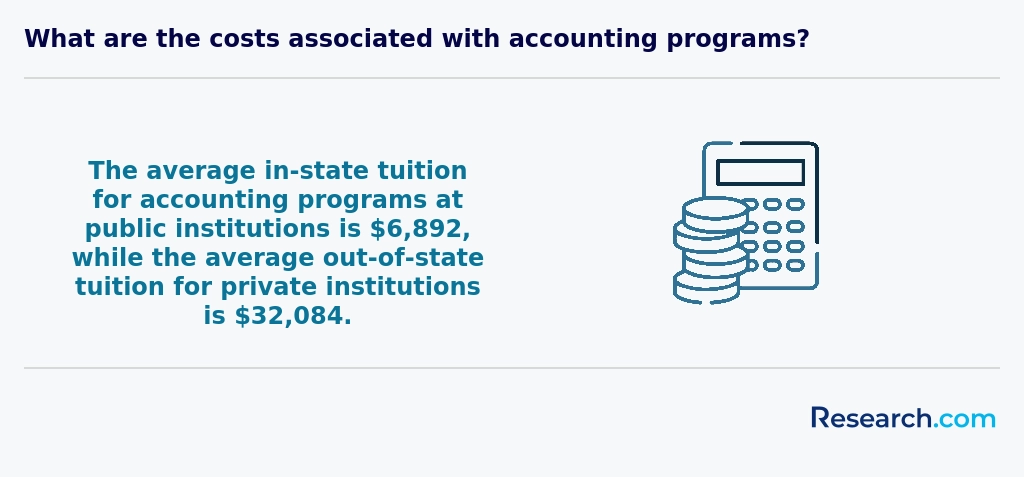
- Average In-State Tuition: $6,892 per year
- Median Four-Year Total Cost: ~$27,568 (tuition + fees)
- Mean Entry-Level Salary: $47,440 (Bookkeeper) to $86,740 (Staff Accountant)
- Estimated Payback Period: 1.5–3 years, depending on role and financial aid Key Factors Influencing ROI 1. Financial Aid and Scholarships • State grants (HOPE, Zell Miller) can reduce tuition by up to 100%. • Institutional awards at UGA or Georgia State often cover $500–$10,000 annually. 2. Internship and Work-Study Opportunities • Paid internships accelerate skill development and may lead to full-time offers. • Graduate assistantships in Master of Accountancy programs offset costs while providing practical experience. 3. Professional Credentials • Earning a CPA can boost median salaries by 20–30%. • Short-term credentials like certification for bookkeeping enhance bookkeeping skills and justify premium billing rates. 4. Career Growth and Specializations • Specializations in forensic or management accounting often command higher starting salaries. • Leadership roles in corporate finance or government accounting typically require 5+ years of experience but yield significant long-term ROI. Maximizing Your ROI • Apply early for state and institutional scholarships to minimize out-of-pocket expenses. • Leverage campus career centers for mentorship, resume workshops, and networking events. • Consider accelerated bachelor’s-to-master’s pathways to meet CPA 150-hour requirements sooner. By strategically combining financial aid, hands-on experience, and targeted credentials, students in Georgia can realize one of the highest ROI profiles among Southeastern accounting programs.
When you're tackling an accounting degree in Georgia, financial aid can really be a lifesaver. Many students here start by filling out the FAFSA to tap into federal aid like Pell Grants, which can chip in up to $7,395 a year if you qualify. This kind of help makes a massive difference, especially when tuition at schools like the University of Georgia or Georgia State University can run pretty high. A lot of grads remember how those grants helped them focus less on bills and more on studying.
Beyond federal aid, the state's HOPE Scholarship is a game-changer for in-state students keeping a 3.0 GPA or higher. It covers a big slice of tuition at local public schools, and there's also the HOPE Grant for shorter diploma or certificate programs at community colleges. If you're at Terry College of Business, you might snag some sweet scholarships specifically for accounting majors, sometimes even knocking off $5,000 from your annual costs.
Plus, don't forget private scholarships or employer tuition programs-many of these come through local groups or accounting associations, which a lot of grads leaned on to reduce their debt while gaining work experience. All in all, there's plenty of support to keep your accounting journey in Georgia affordable and less stressful.
Investing in an accounting degree in Georgia delivers a compelling return on investment (ROI), balancing tuition costs with strong earning potential. On average, a bachelor’s program in Georgia requires four years of study at an in-state tuition of approximately $9,374 per year, while out-of-state students may pay up to $27,091 annually. Considering additional fees and living expenses, the total investment ranges from $40,000 to $110,000. Graduates typically enter the workforce as Staff Accountants earning a mean annual salary of $86,740, recouping their investment in just 2 to 3 years. Bookkeepers, with an average salary of $47,440, see a payback period of around 4 years. Over a 10-year career span, Staff Accountants can expect cumulative earnings exceeding $867,400, translating to an ROI of nearly 700%. Maximize your ROI by: • Selecting programs with strong internship pipelines and high CPA exam pass rates, which correlate with faster job placement and starting salaries. • Leveraging federal and state aid-like HOPE and Zell Miller Scholarships-to reduce net tuition costs. • Comparing program affordability using our neighboring state benchmark: Most Affordable Accounting Degree Programs Ranking in Minnesota. Long-term, pursuing professional certifications (CPA, CMA, or CIA) can boost mid-career salaries by 15–25%, further shortening the payback period. When evaluating ROI, consider not only tuition vs. salary but also networking opportunities, mentorship programs, and alumni success rates. By carefully weighing these factors, aspiring accountants in Georgia can ensure their educational investment yields maximum professional and financial rewards.
If you're aiming for an accounting degree in Georgia, getting in usually means you need a high school diploma or GED first-pretty standard stuff. Many grads from schools like the University of Georgia or Georgia State say having solid skills in math and English really helped them breeze through the admissions process. Think back to high school algebra, geometry, or even statistics classes; those are the building blocks that will give you a leg up once you get to the accounting courses.
Some places still look at your SAT or ACT scores, especially your math results, though a lot of schools have started letting you skip these tests. Either way, showing you're comfy with numbers is key. If you're transferring from another college, make sure you have all your transcripts ready-Georgia Southern grads mention that getting those official records in early keeps things smooth.
Also, keep in mind that some schools ask you to take placement tests or finish certain prerequisite classes (like basic math or English) before jumping into the heavier accounting lessons. It can feel like a lot, but students often say this part makes sure you're ready and less stressed when tough classes roll around.
If you're diving into an accounting degree in Georgia, you'll quickly find yourself juggling some key courses that really shape your skills. Most programs, like the popular ones at UGA or Georgia State, kick off with the basics-financial accounting, managerial accounting, and auditing. Graduates often tell how mastering these classes felt like unlocking the core language of business. Imagine being able to break down a company's financial health or spot mistakes in records-that's what these courses teach you.
Alongside those, you'll get into federal taxation, which is practically a must-have if you want to handle real tax forms and prep in the future. Many grads highlight how this course gave them the confidence to approach tax season without the usual stress.
Students also enjoy broader business classes like economics and finance because they help you see how accounting fits into the bigger money picture. Plus, a growing number of programs feature data analytics or information systems-skills that graduates say made them feel ready for today's tech-driven workplaces. Your time in these classes at Georgia colleges feels hands-on and real, setting you up for success in local accounting jobs and beyond.
If you're thinking about an accounting degree in Georgia, you'll find plenty of cool specializations to choose from. Many students at popular schools like the University of Georgia or Georgia State University dive into financial accounting, which is all about mastering financial statements and learning GAAP rules. Graduates often land jobs in corporate finance or public accounting firms, and they love how practical and straightforward this track feels.
Others get excited about managerial accounting, focusing on budgeting and cost analysis to help businesses run smoother, which is super useful if you want to be a financial analyst or management accountant. Tax accounting is big here too-Georgia students appreciate how deeply it covers federal, state, and local tax rules, which really preps you for the real-world IRS stuff. If you want to see how accounting meets tech, check out information systems accounting for skills in software and cybersecurity-a growing field in Georgia's business world.
Some grads from Georgia's top programs also choose forensic accounting, perfect for those curious about fraud detection and investigation. It's a specialized path that's becoming hotter by the day. If you want an idea about what you can earn with these paths, lots of folks research a master in accounting salary to see how extra study can boost income. There's definitely a wide range of options in the best accounting programs with specializations Georgia offers, so you can tailor your education to exactly what excites you most.
Picking the best accounting degree in Georgia comes down to a few key things. First, check if the school is accredited-places like the University of Georgia and Georgia State University are popular because they have AACSB accreditation, which means their programs are legit and respected. Graduates often say this helped them feel confident tackling tough CPA exam topics since the curriculum covers everything Georgia requires for licensure, including the full 150 credit hours.
Cost is another big factor. Many students want affordable accounting degree programs in Georgia, so it's smart to weigh tuition against what you could earn later. A friend who went to a public university paid way less but still landed a great accounting internship in Atlanta's financial district, thanks to strong local connections. That hands-on experience made job hunting much smoother.
Also, if you're juggling work or other responsibilities, look for programs with flexible options like evening or online classes. Some Georgia schools even offer hybrid schedules to fit busy lives. And if you're considering additional credentials, don't forget to explore certification for bookkeeping that can boost your resume.
If you're studying accounting in Georgia, you've got a lot of cool career paths to consider. Many grads from popular schools like the University of Georgia and Georgia State jump straight into public accounting roles, handling tax prep, audits, and financial reports for firms in Atlanta or elsewhere. Getting your CPA is a big plus here and can boost your chances at landing great jobs and better pay. For those who want something different, corporate accounting is another hot option-think working as financial analysts or controllers in Georgia's big companies where you get to handle budgets and internal finance.
Jobs for accounting degree graduates Georgia also include government roles. Agencies like the Georgia Department of Revenue offer steady gigs managing budgets and audits, perfect if you want security while still making an impact. Nonprofits in Georgia need accountants too, where your work helps support meaningful causes.
Some grads branch into forensic accounting or internal auditing, chasing certifications like CIA or CFE to stand out. For a budget-friendly way to study accounting before diving into these careers, check out the Most Affordable Accounting Degree Programs Ranking in Minnesota if you ever consider options beyond Georgia.
The accounting job opportunities in Georgia are pretty solid, especially if you're studying at well-known spots like the University of Georgia or Georgia State. Graduates often share how the strong presence of big firms like Deloitte and KPMG right in Atlanta opens doors right after graduation. Many find entry-level roles quickly, benefiting from the state's steady demand for skilled accountants. It's exciting to hear how others landed roles in government agencies or tech startups, showing the variety available.
When thinking about employment outlook for accounting graduates in Georgia, the numbers are encouraging. The state employs tens of thousands of accountants with consistent growth expected over the next decade. Entry-level salaries are competitive, and with a CPA in hand-something Georgia makes clear and accessible-you can boost your chances. Plus, tuition here is usually more affordable than in other states, so many students look for best accelerated associate degree options to kickstart their careers faster.
2027 Most Popular Accounting Degree Programs Ranking in Georgia
Investing in your education is a significant decision that can shape your future, and the Research.com team understands the importance of making informed choices. To assist prospective students in Georgia, we have meticulously crafted the "2027 Most Popular Accounting Degree Programs Ranking in Georgia." Our commitment to quality, credibility, and accuracy is reflected in the extensive research and analysis conducted to compile this ranking.
We utilized the following reputable data sources to ensure a comprehensive evaluation of accounting degree programs:
By exploring this ranking, readers will gain valuable insights into the most popular and reputable accounting degree programs in Georgia, helping them make well-informed decisions about their educational journey. For more details on our methodology, please visit our Research.com methodology page.


Frequently Asked Questions About accounting
Students pursuing accounting degrees in Georgia can maximize their learning by engaging in internships within the state's growing finance sector. According to the Georgia Department of Economic Development, Atlanta hosts over 75 percent of the state's top accounting firms, providing valuable real-world experience. Supplementing classroom knowledge with practical work helps students understand Georgia's tax laws and business regulations more deeply.
Additionally, joining student chapters of professional organizations such as the Georgia Society of CPAs offers networking opportunities and access to industry events. Leveraging resources like workshops and certifications can boost job readiness.
Finally, maintaining strong relationships with faculty who have local industry experience is crucial for mentoring and career guidance.
The accounting field in Georgia is evolving with several emerging niches gaining importance. One rapidly growing area is forensic accounting, which involves investigating financial crimes and fraud. According to the Bureau of Labor Statistics, forensic accountants' demand is expected to grow faster than average nationwide, including in Georgia's major cities like Atlanta.
Another expanding niche is environmental accounting, reflecting increased corporate focus on sustainability and regulatory compliance. This specialization helps organizations measure and report environmental costs effectively.
Additionally, technology-driven areas such as data analytics and blockchain accounting are offering new opportunities. Professionals skilled in these tools are increasingly sought after to improve accuracy and transparency in financial reporting.
Georgia universities are adapting their accounting programs to include these in-demand skills, preparing students for the future job market.
After earning an accounting degree in Georgia, preparing for the job market requires both practical experience and professional certification. Many employers in Georgia value candidates who have passed the Certified Public Accountant (CPA) exam, especially since Georgia mandates 150 semester hours and specific coursework to qualify. Gaining internships or part-time work in local accounting firms or corporate finance departments helps build relevant skills and networks.
According to the Georgia Department of Labor, the demand for accountants and auditors in the state is projected to grow by 8% through 2030. Graduates should also leverage career services at their universities, attend networking events in Atlanta and other business hubs, and develop proficiency in accounting software widely used in the region, such as QuickBooks and SAP.
Employers in Georgia highly value accounting graduates who demonstrate strong analytical and problem-solving skills. According to the Georgia Department of Labor, proficiency in data analysis and the ability to interpret financial statements are critical for entry-level positions.
Technical expertise in accounting software like QuickBooks, Excel, and SAP is frequently required. Many Georgia employers also look for candidates familiar with Generally Accepted Accounting Principles (GAAP) and tax regulations specific to the state.
Communication skills are important because accountants must explain financial information clearly to clients and colleagues. Additionally, attention to detail and ethical judgment remain top priorities, reflecting the trust placed in accounting professionals.
Adaptability to changing financial laws and technology trends also enhances employability in Georgia's competitive accounting job market.
Finding internships in Georgia relevant to an accounting degree involves leveraging various local resources and networks. Start by exploring career services at Georgia's colleges, such as the University of Georgia or Georgia State University, which often partner with regional accounting firms. According to the Georgia Department of Labor, the state hosts over 1,200 accounting-related businesses, increasing internship availability.
Professional organizations like the Georgia Society of Certified Public Accountants (GSCPA) offer internship listings and networking events. Job boards such as Handshake and Indeed also feature numerous accounting internships across Atlanta, Savannah, and other cities. Early application and tailored resumes enhance chances of landing competitive roles.
In Georgia, an accounting degree significantly enhances career mobility by providing graduates with essential skills recognized statewide. According to the Georgia Department of Labor, accountants and auditors in the state earn a median annual wage above the national average, reflecting strong demand. This demand leads to diverse job opportunities in sectors like corporate finance, government, and public accounting firms.
Holding a degree is often a prerequisite for advancing to senior roles such as senior accountant, controller, or chief financial officer. Many employers in Georgia also require candidates to be pursuing or holding a CPA license, which typically requires an accounting degree.
Furthermore, earning this degree allows professionals to adapt to emerging fields like forensic accounting and tax consulting, areas growing in Georgia's dynamic economy.
Studying for an accounting degree in Georgia offers a solid foundation for interdisciplinary roles by combining core accounting principles with insights from business, finance, and information technology. Many Georgia universities incorporate courses that emphasize data analysis, ethics, and regulatory compliance, equipping students with versatile skills applicable in diverse sectors. According to the Georgia Department of Economic Development, over 20% of accounting graduates engage in interdisciplinary work involving financial technology, auditing, and consulting.
Programs also encourage collaboration with fields like law and management, reflecting real-world business environments. Exposure to software tools and communication techniques further prepares students to bridge gaps between departments and industries.
Choosing between a thesis and a non-thesis accounting degree program in Georgia depends on your career goals and academic interests. A thesis program requires conducting original research and writing a detailed paper, which is ideal if you plan to pursue a PhD or work in research-heavy roles. Non-thesis programs focus more on coursework and practical skills, suited for those aiming at professional practice or CPA certification.
In Georgia, many universities offer both options, with about 40% of accounting graduates opting for thesis programs, according to the Georgia Board of Accountancy. Consider workload, time commitment, and whether you prefer research or applied learning when deciding your path.
Students based in Georgia seeking to study accounting abroad have several viable options. Many universities in Georgia maintain partnerships with foreign institutions, allowing students to participate in exchange programs or earn dual degrees. According to the Georgia Department of Education, over 25% of public universities here offer study-abroad opportunities in accounting-related fields.
Popular destinations include the United Kingdom, Canada, and Australia, where accounting curricula align with US standards, offering valuable international perspectives. Additionally, programs accredited by AACSB or ACBSP ensure transferable credits and meet professional standards essential for CPA certification in the US.
Financial aid and scholarships specific to study abroad can reduce costs, with resources available through Georgia's HOPE scholarship program supporting eligible students. Reliable guidance for these opportunities is often provided by institutional international offices and academic advisors specializing in accounting education.
Students pursuing accounting degrees in Georgia can find various part-time job opportunities that enhance their education and professional skills. Common roles include bookkeeping assistant, tax preparer, and accounting clerk positions, often available in local businesses and accounting firms throughout cities like Atlanta, Augusta, and Savannah. According to the Georgia Department of Labor, these roles offer practical experience in areas such as financial reporting and client data management.
Internships with CPA firms provide exposure to audit and tax preparation processes, often flexible enough to fit student schedules. Additionally, many universities in Georgia have partnerships with regional companies offering paid internships specifically designed for accounting students.
Gaining part-time work in these areas not only supports classroom learning but also improves employability in Georgia's competitive accounting job market, which is expected to grow by 10% through 2031 per the U.S. Bureau of Labor Statistics.
Accounting students in Georgia benefit from numerous networking opportunities that connect them with professionals and organizations statewide. Universities like the University of Georgia and Georgia State University host regular events through their accounting and business departments, allowing students to meet industry experts and alumni. The Georgia Society of CPAs offers student memberships, conferences, and local chapter meetings, providing access to over 25,000 accounting professionals. Internship programs in Atlanta, one of the U.S. largest business hubs, further help students build contacts. These opportunities are crucial for building relationships that can lead to jobs and career advancement in the competitive Georgia accounting market.
Alumni networks are valuable resources for accounting degree students in Georgia, offering connections that can enhance career prospects. According to the Georgia Society of CPAs, strong alumni ties provide access to internships, job openings, and mentorship from experienced professionals in the state.
These networks often organize events and workshops in major Georgia cities like Atlanta and Augusta, allowing students to build relationships with local accounting firms. Such connections are crucial, as Georgia's accounting job market grows by approximately 8% annually, according to the U.S. Bureau of Labor Statistics.
Furthermore, alumni can offer guidance on the CPA exam and continuing education requirements, helping students navigate Georgia's licensure process effectively. Through these networks, students gain insights into industry trends and practical skills valued by employers.
In Georgia, students can customize their accounting degree programs by selecting electives and concentrations that align with their career goals. Many universities offer specializations such as forensic accounting, taxation, or auditing that allow focused study in high-demand fields. For example, schools like Georgia State University provide options to tailor coursework based on whether you want to work in public accounting or corporate finance.
Internships and cooperative education opportunities available through Georgia colleges give practical experience and professional networking, crucial for career advancement. According to the Georgia Department of Labor, accounting roles are expected to grow by 6% through 2030, making these targeted experiences highly valuable.
Additionally, some programs offer flexibility with online or hybrid classes to accommodate working students or those pursuing certifications such as CPA, which requires specific credit hours in accounting and business courses recognized by Georgia's State Board of Accountancy.
Accounting students in Georgia often face several challenges throughout their academic journey. One major difficulty is managing the rigorous curriculum, which requires a strong grasp of complex concepts like auditing, taxation, and financial reporting. According to the Georgia Board of Accountancy, the pass rate for the CPA exam-a key step for many graduates-hovers around 52%, reflecting the demanding nature of the material.
Many students also struggle with balancing coursework and gaining relevant internship experience, which is crucial in Georgia's competitive job market. Additionally, the cost of education and limited access to specialized resources can pose obstacles, especially at smaller institutions.
With an accounting degree in Georgia, you can pursue several respected professional certifications that enhance your career opportunities. The most well-known is the Certified Public Accountant (CPA), which requires passing the Uniform CPA Exam and meeting Georgia's specific experience and education criteria set by the Georgia State Board of Accountancy.
Other popular certifications include the Certified Management Accountant (CMA) and the Chartered Financial Analyst (CFA), both valuable for roles in finance and management. Many Georgia employers value these credentials for advanced accounting and financial positions.
As of recent data from the Georgia Department of Labor, professionals holding accounting certifications tend to earn higher salaries than their non-certified peers.
To write a winning application for an accounting program in Georgia, start by highlighting your academic strengths, especially in math and business-related courses. Many programs look for a strong GPA, typically above 3.0, which demonstrates your readiness for rigorous coursework. Include any relevant experience, such as internships or part-time jobs in finance or accounting, as these show practical understanding.
Georgia's Board of Accountancy notes that accredited programs often require applicants to detail their career goals in a clear personal statement. Emphasize your motivation to succeed in accounting and how the specific program aligns with those goals.
Additionally, request letters of recommendation from educators or professionals familiar with your skills. Finally, ensure all standardized test scores, such as the SAT or ACT if required, are submitted on time to improve your competitiveness.
The global perspectives on an accounting career highlight the increasing importance of adaptability and international standards. Accounting professionals in Georgia benefit from education aligned with the Generally Accepted Accounting Principles (GAAP) used throughout the US, which facilitates global mobility in the profession.
Many accounting jobs now require understanding of the International Financial Reporting Standards (IFRS), as multinational companies prefer accountants familiar with both GAAP and IFRS. The demand for such skills is growing in Georgia, where businesses engage more in global trade and investment.
According to the U.S. Bureau of Labor Statistics, employment of accountants and auditors in Georgia is expected to grow by 7% from 2022 to 2032, slightly above the national average, reflecting local demand tied to global economic trends.
Finally, accounting degrees in Georgia often integrate technology training and ethics, reflecting global shifts toward digital accounting and transparency, critical for international business compliance and competitive advantage.
Gaining practical experience while studying for an accounting degree in Georgia is essential for career readiness. Many universities in Georgia offer internship programs that connect students with local businesses, public accounting firms, and government agencies. These internships provide hands-on exposure to accounting tasks and real-world challenges.
The Georgia Department of Labor reports that accounting internships in metropolitan areas like Atlanta and Savannah are especially abundant, given the concentration of financial firms.
Additionally, some schools encourage participation in student-run organizations such as Beta Alpha Psi, which enhances networking opportunities and practical skills.
Another option involves cooperative education (co-op) programs that alternate work and study terms to build experience gradually.
Choosing the right concentration within an accounting degree in Georgia depends on your career goals and interests. Common concentrations include auditing, taxation, forensic accounting, and managerial accounting. Each offers different job prospects: for example, tax accountants in Georgia earn a median annual salary of around $65,000, according to the U.S. Bureau of Labor Statistics.
Consider your strengths and preferences. If you enjoy detailed analysis and investigations, forensic accounting might suit you. Auditing focuses on examining financial records, while managerial accounting involves business decision-making support.
Examining Georgia's job market through resources such as the Georgia Department of Labor can help identify in-demand specializations. Additionally, consult program curricula at accredited schools in Georgia to find concentrations aligning with your professional goals.
- 2027 Most Popular Accounting Degree Programs Ranking in Florida
- 2027 Most Popular Accounting Degree Programs Ranking in Mississippi
- 2027 Most Popular Accounting Degree Programs Ranking in Kentucky
- 2027 Most Popular Accounting Degree Programs Ranking in Louisiana
- 2027 Most Popular Accounting Degree Programs Ranking in Missouri
- 2027 Most Popular Accounting Degree Programs Ranking in Indiana
- 2027 Most Popular Accounting Degree Programs Ranking in Maryland
- 2027 Most Popular Accounting Degree Programs Ranking in Illinois
- 2027 Most Popular Accounting Degree Programs Ranking in Delaware
- 2027 Most Popular Accounting Degree Programs Ranking in New Jersey
See What Experts Have To Say About Studying Accounting
Read our interview with Accounting experts


John Wermert, Ph.D., CPA
Accounting Expert
Associate Professor of Accounting
Middle Tennessee State University

- Guide to Transition into an Accounting Career https://teach.com/online-ed/business-degrees/online-masters-accounting/how-to-transition-to-an-accounting-career/
- College Readiness: Connecting with the Alumni Network - Community Foundation https://southcoastcf.org/college-readiness-connecting-with-the-alumni-network/
- Inside the world of accounting internships: What to expect : ThisWayToCPA : AICPA https://www.thiswaytocpa.com/work-experience/articles/internships/inside-world-accounting-internships-what-expect/
- Alumni networks https://www.wiwi.uni-muenster.de/fakultaet/en/school/student-groups/alumni-networks
- Bachelor’s Degree in Accounting | Piedmont University https://www.piedmont.edu/program/accounting/
- Accountant Cover Letter Example https://www.careertoolbelt.com/professions/accountant/cover-letter-example/
- The Diverse Skills you Gain with an Accounting Degree https://www.accounting-education.org/blog/accounting-degree-diverse-skills/
- Professional Networking in Accounting - Accounting.com https://www.accounting.com/resources/networking-tips-for-landing-a-job/
- Accountant Salary | State-by-State Accounting Salaries https://www.allbusinessschools.com/accounting/salary/
- Accounting Career: Outlook and Overview | DeVry University https://www.devry.edu/blog/accounting-career-outlook.html