2027 Online MBA Orientation: What New Students Can Expect

Co-Founder and Chief Data Scientist
Starting an online MBA program can feel overwhelming, especially for students juggling full-time jobs and families. Newcomers often struggle to navigate digital platforms, understand course expectations, and connect with peers and instructors. Without proper guidance, this can hinder early progress and reduce confidence.
Orientation programs play a crucial role in addressing these challenges by providing structure and resources tailored to remote learners. This article explores what new students can expect during an online MBA orientation and how it helps ease the transition, sets clear expectations, and fosters a successful academic journey from the outset.
Key Things You Should Know
- Online MBA orientation in 2026 frequently includes live sessions, detailed program overviews, and introductions to key faculty, enhancing student preparedness for the flexible learning environment.
- Statistics show that 78% of new online MBA students report that orientation significantly reduces initial adaptation challenges and improves connection with peers and faculty.
- Technology training on learning platforms and resources is a central focus, ensuring students can efficiently navigate virtual coursework and collaboration tools from day one.
What is online MBA orientation?
Online MBA orientation is a structured introductory program aimed at preparing new students for the academic, technical, and social aspects of their online MBA experience. It guides students on navigating learning platforms, understanding course requirements, and accessing essential resources like academic advising, career services, and library tools. This orientation process equips students with skills to manage coursework and time effectively in a remote learning environment.
Key components of what to expect in MBA orientation often include:
- Technical onboarding to familiarize students with software and communication tools
- Introductions to faculty, staff, and peers to build community despite the lack of physical presence
- Overviews of program expectations, grading policies, and academic integrity standards
- Workshops on time management and study strategies to support self-directed learning
- Details on support services such as tutoring, counseling, and career development
Orientation formats vary widely, including live webinars, on-demand videos, and interactive modules to allow flexibility for working professionals. Some programs offer cohort networking opportunities during orientation to encourage early peer engagement. These elements address common challenges new online MBA students face, like feelings of isolation and the need to master remote learning tools.
With online programs accounting for 58% of MBA enrollments in the U.S., surpassing in-person formats for years, effective orientation plays a critical role in reducing dropout rates by minimizing uncertainty and boosting student confidence from day one. Prospective students should verify how their program structures orientation and what support services are available to maximize success.
Those interested in affordability can explore the most affordable online MBA options to find programs that balance cost and quality.
How does online MBA orientation differ from in-person?
Online MBA orientation differs from traditional in-person sessions mainly in format, interaction, and accessibility. Unlike on-campus orientations, these are held virtually via live webinars, pre-recorded videos, and interactive platforms. This allows students to access materials on demand, accommodating diverse schedules, an important advantage given that average enrollment per program fell from 215 to 182 due to increased competition among the now 732 online MBA programs.
These differences between online MBA orientation and traditional in-person sessions highlight flexibility as a key benefit, enabling students to revisit content multiple times. Interaction in virtual orientations tends to be more structured, relying on chat functions, Q&A sessions, or breakout rooms rather than informal face-to-face conversations. Many programs include scheduled virtual meet-and-greet sessions, small group discussions, and mentoring to promote networking effectively.
Online orientations emphasize digital platform navigation, covering learning management systems, submission portals, and communication tools. Clear tech guidance is essential since technical difficulties can hinder early engagement. Programs often provide tech support or practice sessions before coursework begins to assist students.
Students should expect video faculty introductions, virtual tours, and electronic access to advisors during orientation. Because of time zone differences, asynchronous participation may be necessary, requiring students to plan ahead to stay connected. To succeed in online MBA orientation, new students should test technology early, engage actively in live sessions, and initiate communication with peers and instructors to replicate the benefits of in-person networking.
Those exploring affordable AACSB-accredited online MBA programs may find these virtual orientations particularly advantageous for balancing flexibility and academic preparation.
What happens during the first week of online MBA?
During the first week of an online MBA orientation, students complete essential activities that set the stage for their programs. These include technology setup, course registration, and virtual introductions to faculty and peers. Ensuring technology readiness is critical: students verify stable internet access, become familiar with the learning management system (LMS), and check software compatibility.
A New America poll referenced by MTU Global Campus News highlights a 16% increase in trust regarding online learning quality during the COVID-19 pandemic, boosting employer confidence in virtual MBA formats. Students also engage in live webinars or recorded sessions outlining academic expectations, grading policies, and time management strategies, helping them navigate communication protocols and collaborative platforms like discussion boards and video conferencing.
A step-by-step guide to the first week of online MBA classes often includes workshops on remote career services such as resume building and virtual networking. Early coursework or assessments benchmark prior knowledge, while faculty advisors help with academic planning and goal-setting. Practical advice addresses common challenges like adapting to asynchronous learning and maintaining motivation by setting a study schedule.
Building a peer network early supports accountability and fosters community despite physical distance. Students interested in exploring options can find information about the most affordable executive MBA programs to plan their educational investment wisely.
Typical online MBA admission requirements include a bachelor's degree from an accredited institution, a competitive GPA often above 3.0, and professional experience ranging from two to five years. Many programs request Graduate Management Admission Test (GMAT) or Graduate Record Examination (GRE) scores, though some have adopted test-optional policies or waive testing based on work history and academic background.
Applicants generally must submit official transcripts and two or three letters of recommendation that highlight leadership potential and academic readiness. A well-written statement of purpose or personal essay is also essential, explaining career objectives, motivations for pursuing an MBA, and how the program fits professional goals.
Additional prerequisites often include a current resume, proof of English proficiency for international students (such as TOEFL or IELTS scores), and occasionally video interviews or other assessments. Requirements vary by institution, with top-tier programs valuing leadership experience and managerial roles, while more flexible schools emphasize academic potential and growth.
Demand for MBA programs is steady, with enrollment growth driven by domestic applications in full-time, online, and hybrid formats, according to the GMAC Application Trends Survey 2024. For those seeking an online MBA no GMAT, options are expanding, making it important to understand the typical prerequisites for online MBA programs to navigate application success.
The online MBA curriculum integrates core business disciplines to build leadership, strategic thinking, and operational skills crucial for career advancement. Key subjects include finance, marketing, organizational behavior, economics, and data analytics, along with accounting, business law, and ethical management. Coursework blends theory with applied learning through case studies, simulations, and team projects, fostering practical expertise.
Programs often offer specializations, such as entrepreneurship, supply chain management, healthcare administration, or technology management, allowing students to customize their education. For instance, those interested in technology might study digital innovation and IT strategy, while global business students focus on international markets and cross-cultural leadership.
According to AACSB's Master's Enrollment Trends 2024, enrollment in online and hybrid MBA programs has grown significantly, reaching parity with in-person options at accredited schools. This highlights the growing acceptance and effectiveness of virtual learning environments.
Students should expect asynchronous lectures paired with synchronous discussions to encourage peer engagement. Assessments include exams, group projects, and real-world case studies that mimic actual workplace challenges. Developing strong quantitative analysis and communication skills remains a priority, essential for interpreting complex data and delivering actionable insights.
The duration of an online MBA program generally ranges from 18 months to three years, depending on the structure, pace, and credit requirements. Full-time programs usually take about two years to complete, while part-time schedules, often designed for working professionals, may extend to three years or more. Accelerated options allow students to finish in 12 to 18 months but demand a substantial time commitment.
Most programs require between 36 and 60 credits. Students enrolled in asynchronous courses can often take more classes per term and progress faster, whereas synchronous schedules might limit them to one or two courses at a time. Some programs feature modular designs or stackable certificates, enabling learners to earn credentials progressively before completing the full MBA.
When selecting a program length, consider your career timeline and employer expectations. According to Northeastern University's Center for the Future of Higher Education and Talent Strategy, 71% of employers now view online business degrees as equal to or better than traditional formats, an increase of 10% since 2019. This growing acceptance helps alleviate concerns about the legitimacy of online degrees regardless of duration.
Prospective students should also confirm whether career services and networking opportunities are included, as shorter programs may have fewer networking possibilities, while longer formats often offer comprehensive support.
Online MBA program costs can vary significantly, typically ranging from $20,000 to over $100,000 for a complete degree. Public universities generally offer lower tuition, often between $20,000 and $50,000, while private institutions may charge more than $70,000. Beyond tuition, students should also consider technology fees, textbooks, and occasionally proctoring expenses. However, online MBA students save on commuting and housing costs, helping to offset these additional fees.
Pricing structures differ across programs. Some charge per credit hour, usually between $800 and $1,500, while others use flat rates for semesters or the entire program. Part-time online MBA options spread out costs but may increase total expenses due to extra fees. Financial aid options include scholarships, employer tuition reimbursement, and federal loans tailored for online degrees.
Interest in fully online MBA programs has doubled from 22% to 44%, reflecting growing preferences for flexibility and balancing work with study. In contrast, hybrid program interest has declined, according to Validated Insights via Yahoo Finance. This trend helps students maintain income while pursuing their degrees, impacting overall affordability.
Prospective students should compare total program costs against career goals and expected returns. Transparent cost breakdowns and understanding payment schedules are vital to making informed enrollment decisions.
An online MBA opens doors to a wide range of leadership roles across industries such as management, finance, marketing, consulting, and entrepreneurship. Graduates often find positions like product manager, financial analyst, marketing director, operations manager, or business consultant. Specialized tracks, including healthcare administration and technology management, focus on sectors with growing demand for MBA expertise.
Many professionals leverage an MBA to transition into higher-level roles or different fields. For instance, those from engineering or IT backgrounds commonly use an MBA to enter executive roles overseeing business strategy. Finance and accounting professionals may pivot to careers in corporate development or private equity.
Salary growth drives many to pursue an MBA. According to Princeton Review's #6-ranked online MBA program, the average total tuition and fees are $123,228, while graduates start with salaries around $147,831. This shows a strong return on investment, translating education into career advancement and better compensation.
Typical career advancements after earning an online MBA include:
- Promotion to senior management or director roles
- Opportunities at consulting firms advising on strategy and operations
- Launching or growing businesses as entrepreneurs or franchise owners
- Roles like chief financial officer, marketing vice president, or supply chain director
Combining practical experience with MBA credentials equips candidates for complex decision-making and leadership in cross-functional teams. Effective online MBA programs emphasize analytics, leadership, and global business strategy to prepare graduates for competitive markets.
Graduates holding an online MBA often see an annual salary increase between $10,000 and $30,000, influenced by factors such as industry, location, and prior experience. The Graduate Management Admission Council's 2025 Corporate Recruiters Survey reports median base salaries for MBA holders in the U.S. between $90,000 and $115,000. Finance, consulting, and technology sectors typically offer the highest salaries, frequently surpassing $120,000 within one year after graduation.
Salary outcomes differ depending on employer size and geography. Major metropolitan areas like New York, San Francisco, and Chicago tend to offer higher compensation than smaller cities. Specialized or leadership roles, such as financial analyst or product manager, can significantly elevate pay beyond median figures.
Career advancement opportunities play a key role in salary growth. An online MBA provides access to management positions with higher earning potential. For example, Auburn University's online MBA program boasts a 100% one-year retention rate from 2024 to 2025. Such retention rates often correlate with strong alumni networks and greater employer recognition, which support higher salary growth.
Prospective students should weigh program costs against expected salary gains, as some graduates report more than a 30% salary increase within two years. Outcomes can vary based on career stage and industry demand, making research an essential step before enrollment.
How to choose an accredited online MBA program?
Accreditation is crucial when choosing an online MBA program to ensure the curriculum meets recognized academic standards valued by employers and institutions. In the U.S., the Association to Advance Collegiate Schools of Business (AACSB) and the Accreditation Council for Business Schools and Programs (ACBSP) are the leading accrediting bodies. Their rigorous reviews assess faculty quality, relevant coursework, and institutional resources.
Beyond business-specific accreditation, regional accreditation by bodies like the Higher Learning Commission (HLC) or Middle States Commission on Higher Education (MSCHE) guarantees broader institutional recognition, affecting credit transferability and federal financial aid eligibility.
Applicants should also consider whether the program aligns with their career goals and offers specialized concentrations such as healthcare management, finance, or entrepreneurship. Important factors include graduation rates, alumni outcomes, and networking opportunities.
Predicted MBA enrollment growth of 3.2% annually through 2030, driven by demand for programs that waive graduate admissions tests, increases the relevance of accreditation as a reliable quality marker. For working professionals, flexibility through asynchronous coursework and effective technology platforms enhances learning.
Other Things You Should Know About MBA
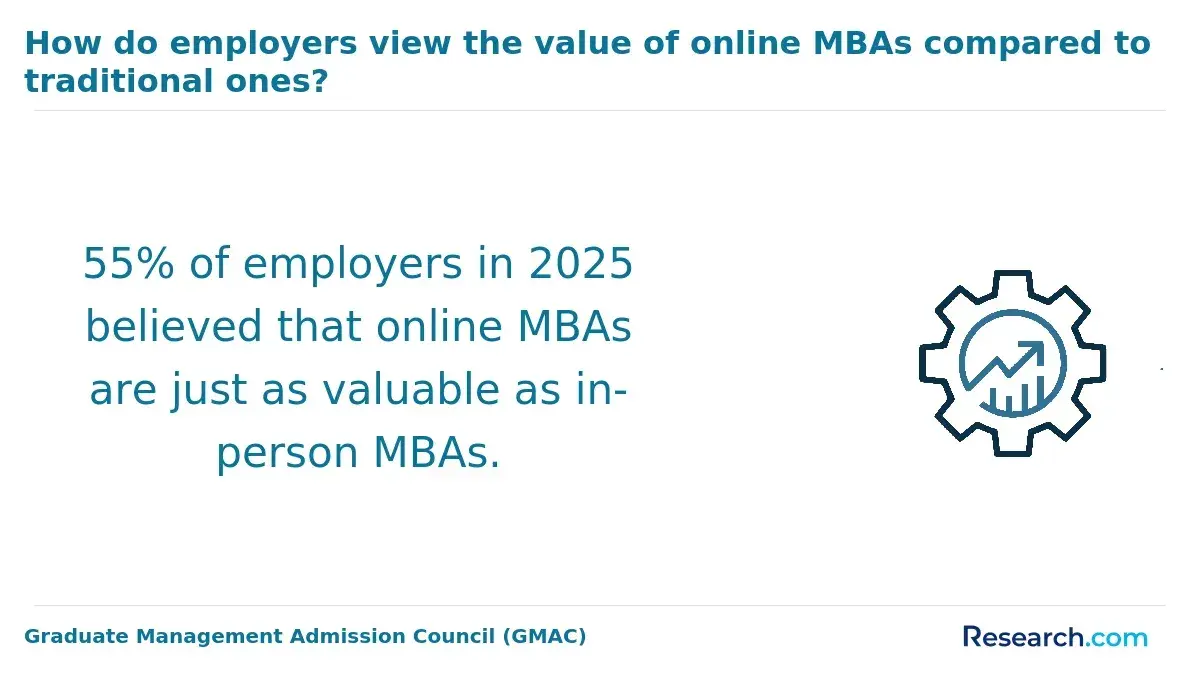
Online MBA degrees from accredited institutions are increasingly regarded as equivalent to traditional MBA degrees by employers and industry professionals. The perception largely depends on the reputation of the awarding school and the accreditation status of the program. Many top business schools now offer reputable online options that hold the same academic rigor and outcomes as their on-campus counterparts.
Successful online MBA students typically need strong time management, self-discipline, and technical proficiency to navigate digital learning platforms. Effective communication skills are also important, as virtual collaboration with peers and instructors plays a significant role. Additionally, being proactive in seeking support and maintaining motivation helps overcome challenges unique to remote learning.
Yes, many U.S. schools welcome international students into their online MBA programs since there is no requirement to be physically present on campus. However, prospective international students should confirm their eligibility regarding time zone considerations, residency restrictions, and compliance with visa regulations if they plan to later attend any in-person components. Language proficiency may also be assessed depending on the program.
- What to Expect in Your MBA Orientation Boot Camp https://www.bryant.edu/graduate/blog/what-expect-your-mba-orientation-boot-camp
- Careers for MBA Graduates | Life After an Online MBA https://www.onlinesrm.in/careers-for-mba-graduates/
- Top Salary Insights for Online MBA Professionals 2025 https://amityonline.com/blog/salary-trends-for-online-mba-graduates
- Online vs. In-Person MBA: Benefits and Differences https://freemannews.tulane.edu/2025/11/04/online-vs-in-person-mba-benefits-and-differences
- Online MBA Entry Requirements: Eligibility & Admission https://www.onlinecu.in/blog/cu/most-common-entry-requirements-for-online-mba-programs.php
- How to Choose an Accredited Fully Online MBA: A Practical Guide for Working Professionals https://www.nexford.edu/insights/how-to-choose-an-accredited-fully-online-mba
- Scope After MBA In 2026: Career Options, Salary & Future https://onlinechitkarau.com/our-blogs/scope-after-mba/
- Earn Your Online MBA — No GMAT Required for Entrance https://www.snhu.edu/about-us/newsroom/business/earn-your-online-mba-no-gmat-required
- How to Choose the Best Online MBA Program for Your Career https://www.dypatilonline.com/blogs/how-to-choose-online-mba-program-for-career-growth
- 7 Key Factors to Consider Before Choosing an Online MBA Program https://dsuonline.com/resources/blogs/7-tips-before-choosing-online-mba/