2027 Environmental Science Specializations With the Broadest Career Mobility

Co-Founder and Chief Data Scientist
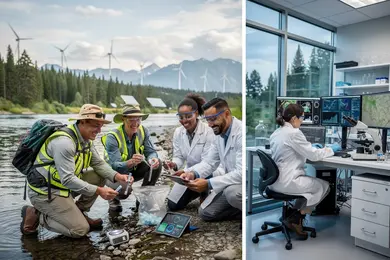
Professionals navigating an increasingly complex environmental landscape face a critical challenge: selecting a specialization that not only matches their expertise but also maximizes career flexibility amid shifting job markets. With the U. S. Bureau of Labor Statistics projecting a 10% growth in environmental science careers over the next decade, understanding which specializations align with emerging demands can determine long-term employment stability.
Simultaneously, evolving enrollment trends show a 35% surge in adult learners pursuing online environmental programs, reflecting a need for adaptable educational pathways. This article identifies specializations offering the broadest career mobility to help prospective students and professionals make informed decisions amid these dynamics.
Key Things You Should Know
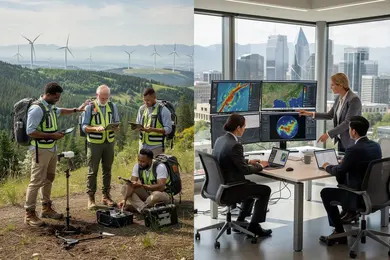
- Remote sensing and geospatial analysis dominate career mobility, with 38% annual job growth per the U.S. Bureau of Labor Statistics, but require costly software certifications limiting access for lower-income students.
- Environmental policy specialization accounts for 45% of government and NGO hires, reflecting demand for regulatory expertise; however, employers prioritize candidates with interdisciplinary knowledge, creating a credentialing complexity tradeoff.
- Climate resilience roles offer 27% higher median salaries but often mandate advanced degrees plus field experience, extending time-to-employment and increasing opportunity costs compared to technical specializations.
Which environmental science specializations offer the broadest career mobility?
Specializations with the broadest career mobility in environmental science reflect the sector's complex regulatory and data-driven demands. Environmental consulting, for instance, offers flexible pathways across industries such as energy, manufacturing, and real estate.
This flexibility emerges because regulatory compliance and sustainability assessments are near-universal needs. Practical tradeoffs include managing varied client expectations and the necessity for strong communication paired with technical expertise.
The availability of roles in both private and government sectors further supports lateral moves amid shifting market conditions. Environmental policy specialists possess versatility by operating at multiple governance levels-from local agencies to international organizations-applying their skills in legislative development, impact assessment, and corporate sustainability programs.
Maintaining relevance requires ongoing education due to evolving regulations and shifting political climates. This dynamic limits paths for those less engaged in continuous learning but expands influence for those who commit to it.
GIS professionals bring high career flexibility by integrating spatial data expertise with natural resource management, urban planning, and disaster mitigation. This specialization enables transitions between technical and strategic positions across public and private sectors.
Demand is solidified by job growth projected at 4% over a decade with a median wage around $80,060. For candidates considering pathways with broad career mobility in environmental science fields, pursuing an environmental health and safety bachelor degree online can complement these skills with critical compliance and risk management knowledge.
What jobs can environmental science graduates get across industries?
Career paths available to environmental science graduates span public agencies, private corporations, nonprofits, and consulting firms, reflecting a need for interdisciplinary skills aligned with evolving industry demands. High-demand jobs for environmental science degree holders include roles as environmental consultants, sustainability managers, data analysts, and regulatory compliance specialists.
In manufacturing sectors, graduates often focus on waste reduction and emissions tracking to meet EPA standards, while those in energy design and manage renewable projects with expertise in resource assessment and impact mitigation. Policy analysts and climate advisors typically enter government and international institutions, tasked with turning climate models into actionable policies.
By 2030, renewable energy employment is projected to reach 38 million jobs globally, reinforcing a strategic emphasis on climate science, carbon management, and sustainable energy systems in career planning. Practical employment realities require balancing technical knowledge with negotiation and stakeholder engagement skills, especially in land use and urban planning conflicts.
Entry-level positions demand proficiency in GIS mapping, environmental sampling, and data visualization, while mid-career roles expect leadership in project management and cross-sector collaboration. Supplemental certifications or graduate education in areas like hydrology, toxicology, or environmental law often become necessary to enhance career mobility.
Graduates avoiding overly narrow technical tracks tend to find greater portability across industries adapting to sustainability imperatives. Prospective students weighing these pathways can benefit from exploring similar strategic guidance on career transitions such as how to become a speech pathologist, which addresses practical career pivot considerations applicable across fields.
Which environmental science degree leads to the most flexible careers?
The combination of environmental data science and geographic information systems (GIS) offers a uniquely flexible career trajectory compared to other environmental science degrees with the highest career flexibility. Professionals skilled in spatial analysis and environmental modeling can easily transition across sectors such as government, utilities, consulting, and private industry.
For instance, a GIS specialist might move from urban planning roles to disaster response teams without undergoing extensive retraining. This adaptability is rooted in the technical demands and data-driven nature of the field, which requires proficiency in programming languages like Python and R, as well as mastery of GIS platforms such as ArcGIS and QGIS.
Although upfront technical training and ongoing certifications can present barriers, these are offset by expanded opportunities and a buffer against automation-related job losses. Mid-career specialists employed in federal or state agencies or environmental consulting typically earn between $70,000 and $90,000 annually, signaling strong employer demand and financial viability.
Compared to traditional environmental science specializations that may confine candidates geographically or sectorally, environmental data science roles accommodate shifts across agriculture, infrastructure, and climate research. Students and professionals weighing this specialization should consider these tradeoffs in skill development and the broader scope it offers.
Those seeking further guidance on aligning educational choices with career outcomes might explore resources on library science degrees online as a parallel illustration of versatile program navigation. The expanding need for professionals in data-intensive environmental fields underscores why environmental data science and GIS remain among the most versatile environmental science specializations for employment, balancing technical rigor with practical agility.
Is an online environmental science program as credible as campus-based study?
Online environmental science program credibility hinges on accreditation and curriculum rigor rather than delivery mode, but this equivalence carries practical caveats. Programs lacking structured field practicums or local internships can leave graduates underprepared for technically demanding roles like environmental engineering, where supervised lab and field experience shapes licensing pathways.
Campus-based environmental science study advantages include immersive access to labs and organic networking opportunities, critical for STEM-heavy fields requiring direct mentorship and applied skills. Professionals targeting sustainability management or corporate ESG roles, which offer salaries from $100,000 to $160,000 annually, may find online study both practical and strategic.
These positions emphasize regulatory knowledge, data analytics, and applied policy over physical lab work, aligning well with flexible online formats suitable for mid-career pivots. However, prospects should proactively engage in virtual conferences and professional organizations to mitigate networking gaps common with online learning. Prospective students should also consider related paths like what is library science to understand multidisciplinary environmental data management roles increasingly relevant in the sector.
What accreditation should an environmental science program have?
Regional accreditation recognized by the U.S. Department of Education is the baseline for legitimate environmental science programs, but specialized credentials substantially affect career mobility and employer recognition. Degrees endorsed by the National Environmental Health Science and Protection Accreditation Council (EHAC) or the Accreditation Board for Engineering and Technology (ABET) distinctly position graduates for roles in policy analysis and regulatory environments.
Government and regulatory agencies explicitly prefer candidates from these programs due to their rigorous curricula and practical training components. Consider a professional targeting environmental policy management with a salary range between $80,000 and $130,000, according to EnvironmentalScience.org data.
Such candidates benefit from programs emphasizing applied policy, regulatory frameworks, and interagency collaboration simulations. An ABET-accredited degree signals the technical and analytical competence hiring managers seek, speeding entry into senior roles.
Those without these accreditations may face longer onboarding or require certifications to meet industry standards. Additional factors influencing employability include program partnerships with federal or state environmental agencies facilitating internships and direct work experience.
While non-accredited online programs offer flexibility, they present risks for credentialing and advancement in specialized policy roles where standardized training is essential. Prioritizing programs with recognized regional accreditation plus EHAC or ABET credentials and demonstrable employer work placements directly impacts career trajectory and readiness for regulatory sector demands.
What courses are included in environmental science specializations?
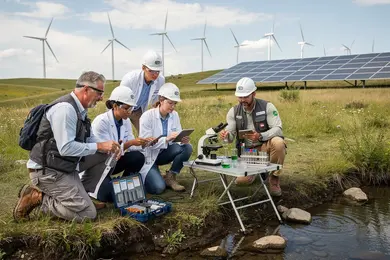
Not all environmental science specializations align equally with labor market demand or practical skill application. For instance, hydrology and water resources programs focus on fluid dynamics, watershed management, groundwater modeling, and water quality analysis, cultivating skills that directly meet employer needs.
Hydrologists earned a median annual wage of $92,060 in May 2024 with a steady 3% projected employment growth through 2033, a concrete indicator of sector viability according to the U.S. Bureau of Labor Statistics summarized by ASU Online. Conversely, broader environmental science degrees risk lack of focused technical depth unless augmented by sector-relevant electives or internships.
Policy and management tracks emphasize environmental law, sustainable development, and risk assessment, positioning graduates for regulatory or administrative roles but demanding precision in navigating complex frameworks. Engineering tracks integrate applied math, materials science, and pollution control technology, preparing students for infrastructure and remediation projects but requiring solid quantitative preparation.
Those pursuing water-resource management must also develop proficiency in hydrologic modeling and GIS software to analyze flow patterns and watershed systems effectively-capabilities often missing from general environmental science curricula. Students should weigh the tradeoff between breadth and specialization, considering if their intended career path demands specific technical competencies or broader interdisciplinary knowledge.
What admission requirements do environmental science programs usually ask for?
Admission to environmental science programs requires more than basic academic credentials; it's a strategic evaluation of quantitative skills and relevant experience. Applicants must demonstrate proficiency in math and science, typically reflected by a GPA near or above 2.5, alongside coursework in biology, chemistry, physics, and algebra.
While SAT or ACT scores still influence decisions, select programs now emphasize academic rigor and recommendation quality over standardized testing. Field-specific pathways, such as conservation biology or wildlife management, favor applicants with documented internships or volunteer roles, underscoring the premium placed on practical readiness.
Graduate programs typically demand a bachelor's degree in environmental science or a related field, with prerequisite courses that enable immediate immersion into advanced topics like ecology and GIS. Letters of recommendation and personal statements must articulate clear career objectives, aiding admissions committees in assessing candidates' commitment and suitability for dynamic environmental challenges.
Employment projections for roles like wildlife biologists reveal steady growth and competitive wages, emphasizing that employers value a blend of solid academics and field experience. Job candidates who lack tangible conservation or research exposure risk delayed workforce integration despite academic qualifications. Prospective students should weigh the tradeoffs between test scores and hands-on experience, balancing academic metrics with professional preparation to align with employers' expectations for immediate, applicable skills in a sector that increasingly demands actionable conservation expertise.
How long does an environmental science degree usually take and cost?
Choosing an environmental science degree requires balancing duration, cost, and job market alignment to optimize career outcomes. A bachelor's degree, typically four years and costing between $40,000 and $120,000, remains the most direct entry into the field.
Public institutions generally offer lower tuition, especially for in-state students, and may integrate internships that reduce barriers to employment. Working professionals often consider part-time or accelerated online programs that extend the timeline beyond four years but allow income continuity and reduce immediate financial strain.
Graduate degrees add two or more years and $20,000 to $50,000 in tuition, primarily valued for technical niches like environmental engineering or green infrastructure. These roles, requiring civil engineering coursework and practical experience, command a median wage of $104,170 with a 7% projected growth through 2033 according to U.S. Bureau of Labor Statistics data summarized by ASU Online.
Ancillary costs-lab fees, equipment, commuting, and unpaid internships-can extend total investment well beyond tuition. Delayed earnings from graduate education must be weighed against improved access to specialized government or consulting positions. Strategic degree selection should factor in local labor markets, program format, and cost efficiency to minimize employment friction while preserving long-term earning potential.
Which certifications help environmental science graduates advance careers?
Professional certifications like Certified Industrial Hygienist (CIH) and Registered Environmental Health Specialist (REHS) concretely influence employment prospects within federal agencies, regulatory bodies, and consulting firms focused on environmental compliance. For example, CIH credentials specifically target workplace safety roles, often accelerating advancement into senior health and safety management positions.
Those aiming for remediation or hazardous material roles must consider the Hazardous Waste Operations and Emergency Response (HAZWOPER) certification, which employers frequently mandate for project eligibility and typically correlates with access to higher pay scales in contractor environments. Project Management Professional (PMP) certification offers a route for environmental professionals to move beyond technical specialization toward integrated project oversight, combining scientific expertise with strategic leadership needs prevalent in governmental and private sectors.
The real-world tradeoffs include significant time and financial costs for preparation and mandatory recertifications, which often require continuous education. These demands can delay entry or add burden for graduates balancing immediate employment against long-term specialization benefits.
Salary benchmarks reflect this: Environmental Health and Industrial Hygiene specialists averaged $84,845 annually, indicating certifications collectively contribute to wage differentiation and meeting compliance expectations. Graduates must also navigate geographic and industry-specific credential relevance, given regulatory variability and employer preferences. Prioritizing certifications aligned with targeted sectors and local licensing can make the difference between qualification and market exclusion.
How do you choose a reputable environmental science program?
Selecting an environmental science program demands prioritizing accreditation and direct ties to industry needs to avoid credentials with limited labor market value. Employers in clean technology and carbon management increasingly seek candidates with hands-on experience, a trend reflected in Canadian energy jobs' 17% growth over the past decade per ECO Canada's 2024 Environmental Job Market Trends report, which signals similar U.S. sector expansions.
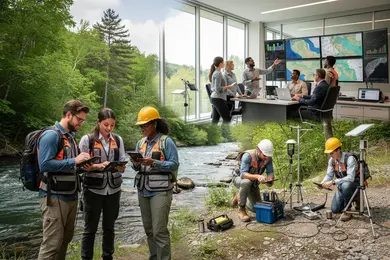
Programs emphasizing internships or lab work significantly improve job readiness compared to purely theoretical curricula. Prospective students should evaluate faculty expertise to ensure instruction incorporates current environmental challenges and technologies rather than outdated or generic content that restricts mobility within fast-evolving niches.
Course selection is equally critical; a balance of core environmental science principles with applied competencies-like climate data analytics or regulatory frameworks-better aligns with employer expectations. Logistical factors also influence outcomes: program duration, availability of part-time study, proximity to industry hubs, and career support services affect the feasibility for working professionals making a mid-career pivot.
For instance, a professional targeting clean tech policy must seek programs focused on environmental law and economic incentives instead of general natural sciences to gain immediate relevance and job market traction. Finally, comparing graduate employment rates within specialization areas linked to regional sectors reveals clearer career pathways and optimizes networking opportunities. These real-world considerations ensure an education that translates to durable workforce value rather than abstract or overly broad knowledge.
Other Things You Should Know About Environmental Science
In 2027, specializing too narrowly in environmental science can limit career mobility by reducing opportunities across diverse fields. A broader education in this area allows adaptability to various roles, including climate policy, sustainability consulting, and environmental technology, thereby increasing job prospects and the ability to switch career paths.
Environmental health, remediation, hydrology, and GIS-focused environmental science are widely accepted for federal jobs because they map to OPM and USAJOBS qualifications. Most positions require a bachelor’s degree with at least 24 semester hours in environmental science, biology, chemistry, or related coursework, plus the specific competencies listed in the vacancy announcement.
Not always. Immediate graduate study may improve access to research or policy roles but delays workforce entry and practical experience accumulation. Many employers in environmental science value a combination of hands-on experience and advanced credentials. Evaluate whether gaining work experience first will clarify specialization focus and increase the value of a later graduate degree.
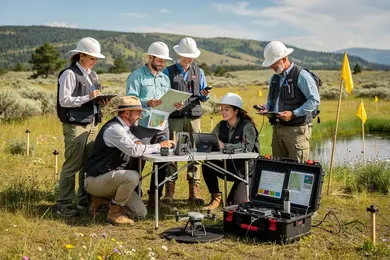
Employers expect technical graduates to handle data collection, analysis, and the application of scientific methods with precision and autonomy. Policy-focused graduates are expected to connect science to regulation and community impact, requiring strong communication and negotiation skills. Align your training with the expected job functions: technical roles demand rigorous scientific training, whereas policy roles prioritize interdisciplinary insight and stakeholder management.
References
- What Certifications are most Valuable for Environmental Science Graduates? https://www.nrep.org/blog/certifications-environmental-science-graduate
- 16 Best Colleges for Environmental Science | HelloCollege https://sayhellocollege.com/blog/best-colleges-for-environmental-science/
- Our List of Post-Secondary Accredited Programs | ECO Canada https://eco.ca/educators/program-accreditation/current-programs/
- Elevating Your Environmental Career: The Power of Environmental Certifications https://www.webuildstaffing.com/elevating-your-environmental-career-the-power-of-environmental-certifications/
- Qualification Accreditation Scheme https://www.eianz.org/resources/qualifications-accreditation-scheme
- How to Apply to Environmental Graduate Programs https://www.cjbnetwork.com/articles/how-to-apply-to-environmental-graduate-programs
- Join-Board Certified Environmental Scientist https://www.aaees.org/bces
- Environmental Certifications for entry-level and career changers https://www.theenvironmentalcareercoach.com/certification-links
- Certification Guide for Young Professionals - Board for Global EHS Credentialing https://gobgc.org/professional-environmental-certifications-professionals/
- 2025 Most Affordable Online Environmental Science Degrees https://www.onlineu.com/most-affordable-colleges/environmental-science-degrees