2027 Online Environmental Science Degrees With Strong Practical Monitoring and Compliance Training

Co-Founder and Chief Data Scientist
Mid-career environmental professionals often encounter a critical bottleneck when seeking roles demanding hands-on expertise in regulatory monitoring and compliance verification. Employers increasingly expect applicants to demonstrate practical skills beyond theory, reflecting EPA data that cites a 22% growth in demand for compliance specialists with verified field training over the last two years. However, traditional degree programs struggle to balance flexible schedules with immersive, applied learning, forcing many candidates to delay advancement or accept underqualified positions.
Concurrently, the NCES reports a sharp rise in adult enrollment in online programs offering practical credentialing, signaling a shift in how expertise is accessed and validated. This article examines online environmental science degrees that integrate strong practical monitoring and compliance training to address these professional challenges and enhance career trajectory decisions.
Key Things You Should Know
- Programs integrating hands-on compliance training report 23% higher job placement in regulatory roles per the US Bureau of Labor Statistics, emphasizing tradeoffs between accelerated practice focus and breadth of theoretical foundations.
- Employers prioritize candidates with documented field monitoring experience, as 68% of surveyed environmental agencies in 2024 rank practical EPA-standard skill verification over GPA for entry-level hires.
- Online degrees average 18 months longer to complete when combining lab access and remote data analysis modules, increasing direct educational costs by up to 15%, potentially delaying workforce entry in rapidly evolving regulatory markets.
What is an online environmental science degree with practical monitoring and compliance training?
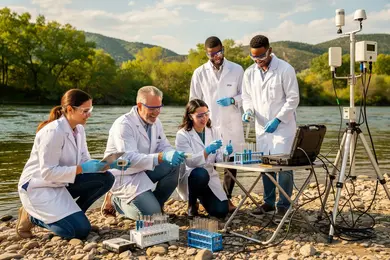
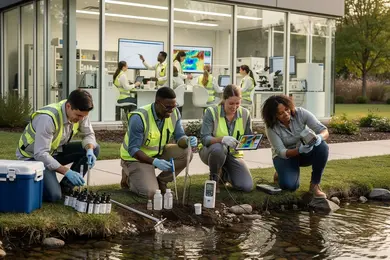
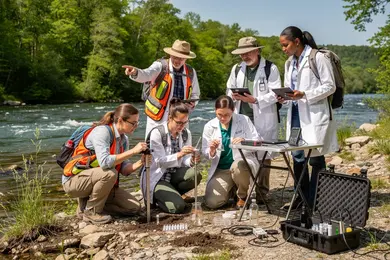
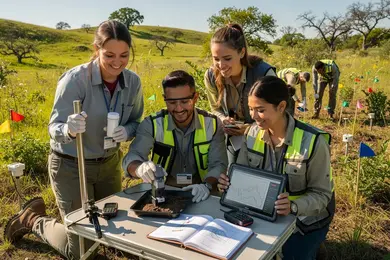
Online environmental science degrees with practical compliance training are essential to bridge the gap between theoretical study and workforce readiness. Students gain applied skills through coursework emphasizing monitoring techniques aligned with regulatory frameworks such as the Clean Water Act and EPA standards. This focus cultivates the ability to collect environmental data, perform remote or hybrid fieldwork, and interpret legal requirements-capabilities vital for industries including manufacturing and natural resource management.
For those evaluating environmental science programs focused on monitoring and regulatory compliance, the inclusion of hands-on modules with Geographic Information Systems (GIS), environmental sampling, and data analysis software is critical. Graduates lacking this exposure often face challenges transitioning into roles that demand verified technical proficiency and site inspection experience.
Employers anticipate roughly 4,000 new environmental scientist positions by 2034, with hiring favoring candidates whose training reflects real-world operational demands. Practical training offerings vary widely; therefore, prospective students must assess whether online degrees integrate accessible practicum components that meet licensing or certification prerequisites.
A tradeoff exists when choosing programs without substantial applied components-students risk limiting job prospects in compliance and monitoring roles that depend on validated field competencies. Those aiming for effective career pivots or advancement should consult comprehensive resources on online geology degrees as part of their evaluation process.
How do online environmental science degrees compare to campus programs for hands-on training?
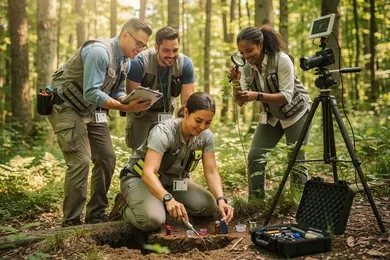
Online environmental science degrees deliver largely theoretical training but struggle to replicate the consistent, practical field experience integral to campus programs. Campus curricula routinely embed direct fieldwork, lab work, and the use of specialized equipment, ensuring students acquire hands-on skills for soil sampling, pollution analysis, and regulatory impact assessments. In contrast, online programs frequently replace these with virtual labs or require students to independently arrange local internships, creating varied quality and scope of practical exposure.
This gap significantly shapes workforce readiness. Employers in environmental consulting, government, and compliance sectors prioritize candidates who demonstrate proficiency with field instruments, data collection, and regulatory standards. Campus-trained graduates generally possess these competencies upon entry, while online degree holders often require supplemental training or entry-level positions with substantial on-the-job skill development.
Consider a water quality compliance monitor: a campus student might engage in a semester-long supervised water sampling practicum, whereas an online student relies on limited simulated data or must secure external field access, restricting practical learning depth. This tradeoff directly impacts immediate employability and salary potential.
Data from the U.S. Bureau of Labor Statistics shows environmental scientists earned a median wage of $78,980 in May 2024, tied closely to demonstrated hands-on expertise fostered more systematically by campus programs. Those assessing online degrees should plan for additional practical training investments to align with employer expectations and long-term outcomes.
For students also exploring related options like an animal science bachelor degree online, understanding the practical field experience differences across delivery modes is critical when planning skill acquisition and career trajectory.
Which U.S. online environmental science programs offer strong regulatory compliance and field monitoring?
Employers hiring for environmental compliance roles expect proficiency in both regulatory data systems and hands-on field monitoring, a balance reflected in the best U.S. online environmental science programs for regulatory compliance. The University of Arizona Online's Bachelor of Science in Environmental Science, charged at $525 per credit, sets a cost standard for 2026 while focusing on EPA-aligned site assessment and hazardous waste protocols practical for government and industry roles. Graduates are prepared to navigate Clean Air and Water Act regulations in real-world scenarios requiring effective field sampling and compliance documentation.
Oregon State University's Ecampus stands out within top online environmental science degrees with practical field monitoring in the United States by integrating GIS and remote sensing technologies. Such skills translate directly to interpreting complex environmental data for pollutant control enforcement or development impact assessments by environmental consultants. These technical competencies are increasingly non-negotiable as regulatory frameworks evolve.
Online formats facilitating the balance between fieldwork and remote study appeal to working professionals but necessitate verification of local internship or practicum options to meet experiential requirements. Without this, the value of digital-only programs can be limited due to insufficient field exposure.
Success in regulatory compliance and monitoring roles ultimately hinges on navigating digital environmental management tools alongside applied field methods. For those evaluating pathways, assessing programs for this dual competency is critical. For additional insights on related educational options, review master of library science online programs that may complement environmental data management skills.
What accreditation should online environmental science degrees have for credible career outcomes?
ABET accreditation directly impacts employability for those pursuing online environmental science degrees focused on monitoring and compliance. This distinction ensures programs meet rigorous technical standards, including hands-on training with environmental monitoring tools and regulatory reporting-skills essential for managing critical issues such as the 4,612 water systems with lead action level exceedances reported by the Environmental Protection Agency. Employers in utilities, consulting, and government sectors prioritize graduates from ABET-accredited programs who demonstrate verified competence.
Regional accreditations recognized by the U.S. Department of Education, like the Middle States Commission or WASC, establish baseline program legitimacy, but they do not guarantee the same level of specialized technical preparation. Without ABET or similarly targeted accreditation, graduates risk skepticism from employers reluctant to entrust them with complex compliance tasks. For example, a professional enforcing water safety standards must confidently interpret and act on compliance data, a proficiency less commonly validated by non-accredited programs.
Practical components that ABET mandates, such as field instrument use and experiential learning, significantly enhance readiness for real-world regulatory environments. In contrast, programs lacking these accreditations may substitute outdated curricula or unpaid internships, which often fail to develop core skills and limit career trajectories. Prospective students should critically evaluate accreditation status to avoid credential inflation and restricted job market access.
Considering the evolving demands of environmental science roles, thoughtfully comparing program credentials becomes essential. For those exploring adjacent fields, reviewing options like a library degree may also present strategic pathways.
Accreditation standards for online environmental science degrees in the United States emphasize specialized validation beyond general academic recognition. Recognized accrediting agencies for credible environmental science degree programs focus on demonstrating technical and scientific competence necessary for effective compliance management.
What courses and skills are taught in environmental monitoring and compliance-focused programs?
Programs focused on environmental monitoring and compliance emphasize regulatory expertise alongside practical skills essential for navigating federal and state environmental laws such as the Clean Water Act and Clean Air Act. Graduates must interpret pollutant sampling data and ensure operations meet legal limits, mitigating risks of costly penalties or environmental damage.
Training prioritizes data analysis with a concentration on statistical software, remote sensing, and real-time monitoring technologies to manage complex environmental datasets. For example, an environmental scientist managing air emissions at a manufacturing plant must integrate sensor data to generate compliance reports accurately.
Critical skill development includes conducting site assessments, preparing detailed compliance reports, and addressing challenges specific to industries like hazardous waste or water treatment. Communication competencies are equally stressed to translate technical findings into clear strategies for regulatory agencies or public stakeholders.
Students often face tradeoffs between limited monitoring budgets and regulatory precision, requiring problem-solving that balances data quality with operational constraints. This practical focus aligns with a modest 4% projected job growth through 2034 for environmental scientists, underscoring steady demand but also heightened competition for specialized roles.
Overall, these curricula blend hands-on field techniques, laboratory analysis, and digital mapping with regulatory literacy, preparing professionals to adapt to evolving environmental standards across diverse sectors.
What are typical admission requirements for online environmental science bachelor's and master's programs?
Admission to environmental science programs demands strategic consideration of both academic credentials and practical skills, especially given employer expectations for immediate workplace readiness. Bachelor's pathways require solid preparation in biology, chemistry, and math, with SAT or ACT scores generally mandatory unless offset by relevant experience or prior academic credits. Online students face added pressure to demonstrate self-discipline and mastery of virtual labs or local fieldwork partnerships, critical for hands-on exposure in compliance and data collection roles.
Master's degree applicants are expected to hold relevant undergraduate degrees with competitive GPAs, typically around 3.0, and navigate more rigorous application components such as GRE scores, recommendations, and statements focused on applied experience. Professional experience in regulatory compliance, environmental monitoring, or data analysis increasingly influences admission success and aligns with workforce priorities.
Practical readiness for managing continuous environmental data streams-such as those maintained by NOAA's National Water Level Observation Network-often differentiates candidates. Lack of direct field or sensor technology experience can prolong credentialing through additional certifications or delay effective integration into technically demanding roles.
For career changers, bridging gaps in quantitative skills and field competencies is vital to avoid underperformance during mandated practicums or internships. The sector values graduates who seamlessly integrate theoretical knowledge with operational command of environmental monitoring systems and regulatory frameworks, as failures here often translate to delayed employment and limited advancement.
- Strong foundational coursework in sciences and math is non-negotiable at the bachelor's level.
- Master's admissions weigh academic record alongside practical, work-based evidence.
- Experienced candidates who understand real-time data systems hold a distinct advantage.
- Online formats require additional verification of applied skills through virtual or local labs.
- Pragmatic skill gaps in compliance monitoring risk slowing professional progress.
How long do online environmental science degrees take and what do they cost?
Completing an online environmental science degree demands careful consideration of time investment and workforce alignment. Associate degrees typically require about two years, bachelor's degrees up to four years full-time, while accelerated or part-time options compress these timelines but often increase weekly effort, which can challenge working professionals.
Master's programs, usually 18 to 24 months, narrow focus on regulatory compliance and specialized monitoring skills critical for roles addressing federal climate mandates like those emphasized in the U.S. Global Change Research Program's 2024 Fifth National Climate Assessment. These graduates are positioned to meet growing demand for expertise in climate resilience and environmental data compliance.
Cost variation reflects significant tradeoffs: public institutions cost $10,000-$25,000 annually for in-state online students, while out-of-state and private schools can surpass $35,000. Total program expenses range broadly from $20,000 to $100,000, influenced by credit-hour pricing and program length. Prospective students must weigh accelerated program affordability against the risk of debt accumulation.
Employers in this sector prioritize candidates who demonstrate practical field skills paired with regulatory knowledge. Programs offering remote data collection lab modules or partnerships with environmental agencies provide distinct advantages in candidacy. For instance, a municipal water monitoring professional balancing work might finish a degree in 30 months with a curriculum integrating hands-on compliance reporting projects. Conversely, entry-level federal agency positions often require a traditional four-year bachelor's degree due to credential and internship requirements.
What careers can you pursue with training in environmental monitoring and regulatory compliance?
Environmental monitoring and regulatory compliance training channels graduates into roles requiring careful interpretation of complex federal and state laws, such as the Clean Water Act. Employers-ranging from government agencies to consulting firms-expect professionals to balance technical rigor with operational constraints, including budget and project timelines.
For example, a state agency specialist might conduct inspections and compile compliance reports that directly affect enforcement actions. In contrast, a private-sector compliance analyst manages environmental impact assessments for construction projects, negotiating regulatory demands against client priorities.
Key operational realities include:
- Adapting to shifting regulations and integrating emerging technologies into monitoring protocols
- Navigating multi-layered reporting systems while managing overlapping projects
- Collaborating with interdisciplinary teams-including engineers and policymakers-to translate data into actionable compliance strategies
Employment is geographically diverse across federal, state, and local levels, allowing candidates flexibility in location choices. However, to remain competitive, specialization in GIS, environmental data analytics, or permit acquisition processes is increasingly important.
This pathway demands a pragmatic mindset that weighs regulatory complexity against practical execution. Mastery of these tradeoffs often determines whether workers effectively align scientific data collection with operational and compliance goals.
What salary ranges and job outlook can graduates in environmental compliance expect?
Environmental compliance roles present a clear salary stratification influenced by industry, experience, and educational credentials. Entry-level positions typically start around $50,000, with mid-career professionals holding certifications or a master's degree earning $75,000 to $95,000 annually. Those in senior analytical or managerial capacities, especially in sectors like oil and gas or manufacturing, often surpass $100,000. This reflects the premium placed on advanced regulatory expertise and technical skills such as GIS and environmental impact modeling.
Practically, candidates targeting government agencies may prioritize job stability and benefits over rapid wage growth, while those entering private industry must navigate more competitive salary scales aligned with regulatory complexity. Advancing from junior roles demands certifications or graduate education; otherwise, wage growth is likely to plateau. For example, a specialist in water resource management may face routine fieldwork and reporting tasks that offer limited wage flexibility without additional expertise.
Employers expect not only regulatory knowledge but the ability to interpret complex data and negotiate compliance challenges, which means educational programs emphasizing analytical rigor provide a tangible career advantage. Transitioning into consulting or developer roles without these qualifications tends to restrict upward mobility.
- Entry-level positions: $50,000 to $65,000 annually
- Mid-career specialists with certifications or master's degree: $75,000 to $95,000 annually
- Senior analysts, managers, or consultants: $100,000 to $115,000+ annually
How can students evaluate and choose a reputable online environmental science program?
Program accreditation and curriculum specificity profoundly shape the practical value of an online environmental science degree. Accreditation from recognized bodies ensures employers view credentials as reliable, which is essential for roles involving environmental compliance monitoring. When evaluating programs, verify inclusion of applied components-virtual labs, fieldwork simulations, or agency partnerships-which critically influence job readiness beyond theoretical knowledge.
Consider this: a student focused on industrial environmental compliance needs programs with detailed coverage of regulatory frameworks such as the Clean Air Act and hands-on emissions monitoring training. By contrast, conservation-oriented careers demand expertise in ecosystem assessment methods and GIS applications.
Employment outcomes reflect a program's alignment with workforce expectations. Programs facilitating internships and with strong government or consulting industry connections increase the likelihood of placement. Faculty actively engaged in current policy or technological research further signal relevance to evolving environmental regulations.
Comparing formats and timelines is vital. Accelerated programs may appeal for flexibility but often at the cost of depth and practical experience, reducing preparedness for compliance roles. Technology requirements and consistent platform access also impact uninterrupted learning, especially for virtual fieldwork tools and compliance databases.
Balancing tuition against labor market returns requires scrutiny-higher costs can be justified by robust employer networks and certification preparation.
- Prioritize accredited programs with strong applied components.
- Match curriculum details to targeted environmental career paths.
- Evaluate graduate employment rates and internship opportunities.
- Consider tradeoffs between program speed and experiential learning depth.
- Confirm technology access and support services availability.
Other Things You Should Know About Environmental Science
Both degrees have value; a bachelor's degree provides foundational knowledge suited for entry-level roles, while a master's degree offers advanced training and specialization required for senior positions. Choosing between them depends on career aspirations and the level of expertise desired in compliance and monitoring.
Programs that integrate practical monitoring and compliance training require a significant time commitment beyond traditional coursework, including remote lab simulations, data analysis projects, and sometimes local fieldwork. These courses often have less flexibility in pacing compared to generic online degrees. Prospective students should prepare for sustained effort and active engagement, which can challenge working professionals juggling multiple responsibilities.
The value of an online degree depends heavily on program quality and the extent of practical training included. Employers tend to favor graduates from programs with rigorous, verified hands-on components and recognized accreditation. Online degrees that lack field experience or fail to cultivate regulatory compliance skills can limit immediate employability, requiring additional certification or training. Choosing programs with built-in employer partnerships or internship pathways improves market competitiveness.
Most programs align practical compliance training with U.S. Environmental Protection Agency guidance and state environmental agencies that enforce permitting, reporting, and inspection rules. Courses often cover Clean Water Act, Clean Air Act, and hazardous-waste procedures, plus documentation standards used by regulators and consultants.
References
- New Certifications https://www.nrep.org/certifications
- Free Certified Environmental Compliance Specialist Online Certification Course | Govur University https://university.govur.com/courses/certified-environmental-compliance-specialist/
- Online Environmental Science Degree | BS Environmental Science | University of Phoenix https://www.phoenix.edu/online-liberal-arts-degrees/environmental-science-bachelors-degree.html
- Environmental Compliance Training: A Guide | SafetyCulture https://safetyculture.com/topics/compliance-training/environmental-compliance-training
- Environmental Compliance Officer Courses https://www.courses.com.au/career/environmental-compliance-officer
- Master of Environmental Sciences https://www.uoguelph.ca/programs/master-of-environmental-sciences/
- EBIS-HSE - Managing Environmental Compliance - Training Course https://ebis-hse.com/training-courses/3/managing-environmental-compliance
- Choosing a bachelor's in environmental science | edX https://www.edx.org/resources/how-to-choose-a-bachelors-in-environmental-science
- Online Training for Environmental Professionals | Lorman Education Services https://www.lorman.com/online-environmental-professionals-training
- How to Become an Environmental Compliance Officer https://ehscareers.com/employer-blog/become-environmental-compliance-officer/