2027 Best Online Environmental Science Programs for Professionals Seeking Promotion Into Environmental Leadership

Co-Founder and Chief Data Scientist
Mid-level environmental professionals frequently confront the bottleneck of limited leadership opportunities despite growing ecological challenges demanding advanced expertise. Employers increasingly seek candidates with specialized skills in environmental policy, sustainability management, and regulatory compliance, areas often underrepresented in traditional degrees. Recent data from the National Center for Education Statistics shows a 37% surge in enrollment for online environmental and natural resources programs among adult learners since 2024, signaling a shift toward flexible, career-compatible education.
Understanding this trend clarifies why timely access to adaptable, rigorous online programs can critically influence promotion prospects. This article evaluates the best online environmental science programs designed for professionals aiming to secure leadership roles and outlines key factors that optimize their career advancement strategies.
Key Things You Should Know
- Completion timing for online environmental science programs often exceeds two years for working professionals, increasing opportunity costs amid a 12% projected federal climate workforce growth, necessitating employer-supported accelerated paths to offset income delays.
- Employers prioritize candidates with applied data analytics and regulatory compliance proficiencies, fields where 2024 Bureau of Labor Statistics data show 15% faster job placement, pressuring students to select programs with integrated technical skill modules.
- Tradeoffs exist as top-tier programs cost 40-70% more but correlate with 25% higher median salary gains post-certification versus affordable alternatives lacking sector-specific leadership training, complicating budgeting decisions for promotion-seeking professionals.
What are the best online environmental science programs for professionals seeking leadership roles?
Leadership roles in environmental science require a nuanced blend of scientific expertise and applied management skills, especially when navigating complex regulatory landscapes or driving sustainability in corporate and governmental contexts. Professionals advancing in clean energy firms or environmental policy must balance technical assessments with economic and social factors, making interdisciplinary competencies essential.
The best online environmental science programs for leadership roles integrate project-based learning, data analytics, and stakeholder engagement to mirror these demands. Such top environmental science degrees for professionals seeking promotion prioritize leadership development through courses in organizational behavior, environmental law, and strategic planning.
These programs prepare graduates to lead multidisciplinary teams and influence policy or business practices effectively, as the environmental goods and services sector employs approximately 34 million globally, with 13.7 million in clean energy alone. Managerial expertise substantially impacts promotion potential in this expanding field.
When choosing an online program, candidates must weigh accreditation, faculty expertise in leadership, mentorship availability, and flexibility to balance work commitments. Trade-offs include accelerated programs that may limit depth versus longer tracks that delay return on investment. Aligning outcomes with specific roles, such as sustainability coordinator or environmental compliance manager, is critical. For those exploring additional foundational studies, a geology online degree may complement environmental leadership skills.
How do online environmental science degrees compare to campus-based programs for working adults?
Online environmental science degrees for working adults offer a pathway that often outperforms campus-based options in fostering tangible career shifts, especially for those aiming at leadership roles. Data indicate that 41% of U.S. adults earning a fully online bachelor's degree reported promotions or significant role changes within three years, with over a third seeing salary increases above 20%.
Such outcomes reflect shifting employer attitudes that emphasize competency over location, particularly when credentials align with relevant work experience. Comparing online and campus-based environmental science programs reveals critical operational tradeoffs. Online formats provide unmatched scheduling flexibility, allowing mid-career professionals, such as environmental consultants, to engage in coursework around client demands without sacrificing income or job performance.
Meanwhile, on-campus study usually necessitates relocation and fixed attendance, disrupting ongoing employment and delaying the immediate application of new skills. These programs prioritize accreditation, curriculum depth, and integration of tools like virtual labs or asynchronous access to emerging regulatory content, which align with industry needs in renewable energy or waste management.
However, online learners must actively seek internships or employer partnerships to compensate for reduced spontaneous networking, though hybrid or cohort models offer partial remedies at the cost of greater time commitment. When weighing options, prospective students should gauge their industry's willingness to support tuition and prioritize programs demonstrating graduate leadership success.
For those considering a technical pivot, evaluating an online master in data science may also complement environmental science credentials by enhancing data analysis skills crucial for advanced roles.
What accreditation should online environmental science programs have to support advancement into leadership?
Regional accreditation recognized by the U.S. Department of Education or the Council for Higher Education Accreditation is the foundational credential for online environmental science program accreditation for leadership roles. This recognition ensures degree legitimacy and practical acceptability by employers who demand standardized training aligned with environmental regulatory and technological complexities.
Programmatic accreditation, such as ABET or SETAC, adds a layer of industry-specific rigor that consulting firms emphasize when seeking candidates proficient in quantitative environmental analysis and STEM skills. Choosing an accredited online environmental science degree affects eligibility for positions that require federal compliance, including many government and public sector roles where promotion depends on recognized credentials.
National or vocational accreditation often falls short in meeting these standards, limiting access to leadership roles in environmental policy and consulting. Pragmatically, those pursuing advancement within corporate sustainability governance or public administration should consider accreditations tied to environmental law or policy endorsements, which align coursework with specialized job criteria.
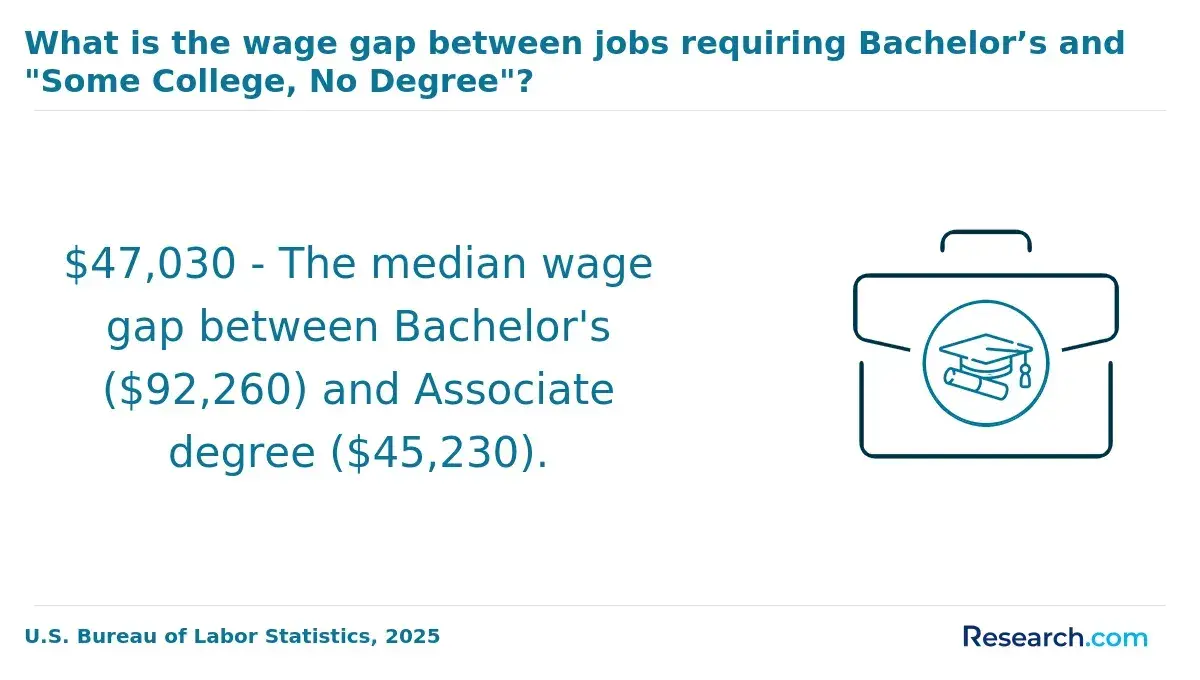
Median wages for environmental scientists have increased notably, and accredited degrees enhance opportunities to assume responsibilities like regulatory compliance management that drive this compensation growth. For prospective students analyzing educational pathways, understanding these distinctions is vital. Additionally, exploring related fields can be informative.
For example, programs like exercise science degrees online demonstrate how accreditation impacts workforce integration across disciplines. In sum, accredited online environmental science degrees for career advancement require careful scrutiny regarding the type and scope of accreditation to maintain competitiveness in a complex labor market where regulatory familiarity and formal recognition determine leadership potential.
Which environmental science degree pathways best position professionals for promotion into management roles?
Master's degrees designed with an emphasis on environmental science degree programs for leadership roles align more directly with employer demand for managerial competencies than purely technical tracks. Graduates focusing on project management, regulatory compliance, and environmental risk assessment frequently secure supervisory positions within five years, especially in sectors like renewable energy and government agencies.
A National Association of Colleges and Employers report notes a 67% placement in management, policy, or consulting roles among these degree holders, typically paired with a 24% salary increase versus their pre-master's income. In practice, the difference lies in applied curriculum elements such as real-world case studies and capstone projects demonstrating strategic and problem-solving skills under regulatory and budgetary constraints.
Employers consistently prioritize these capabilities, which traditional environmental science programs may insufficiently develop, when advancing staff into leadership roles. Tradeoffs appear in program format and scheduling. Professionals who balance work and study by choosing flexible or online options maintain industry networks and current job responsibilities, smoothing the transition into management.
Analyzing leadership-centered coursework and alumni outcomes becomes essential when selecting among the best degree pathways for environmental management promotion. Additionally, prospective candidates should explore intersections with related fields. Learning 'What is library science?' and its methods may enhance environmental information management, further broadening leadership potential.
What core courses and specializations do online environmental science programs offer for future leaders?
Leadership-oriented online environmental science programs aim beyond foundational knowledge to develop practical skills critical for managing complex projects and regulatory landscapes. Graduates are expected to integrate ecosystem management with stakeholder engagement and risk assessment to lead initiatives spanning public, private, and nonprofit sectors.
Specialization choices, such as climate adaptation or GIS mapping, dictate career trajectories and influence how students confront real-world challenges. For instance, a professional moving into consulting must navigate remediation strategies, while aspiring government analysts focus on environmental law and economic impacts. These pathways underscore the need for curricula aligned with sector-specific demands.
Employers increasingly require environmental science leaders who can interpret data analytically while steering organizational strategy under shifting policy conditions. Competencies in decision science and change management are no longer optional but expected tools for driving operational compliance and innovation.
The cost difference between online and on-campus programs-approximately 35-40% lower tuition online-combined with an 18% higher median 10-year ROI for online graduates, highlights a crucial tradeoff for many: educational accessibility with maintained, if not enhanced, financial returns. This dynamic is especially relevant for working professionals balancing time, debt, and career outcomes.
Key workforce implications include:
- Necessary advanced leadership skills beyond technical knowledge
- Specialization-driven employability tied to sector-specific expertise
- Integration of data analytics with environmental compliance and policy
- Cost and ROI considerations shaping program choice and long-term career investment
What are typical admission requirements for online environmental science programs geared to professionals?
Online environmental science programs aimed at professionals demand a foundational degree in relevant fields such as environmental science, biology, or chemistry, but some admit candidates from unrelated disciplines if they present significant industry experience or prerequisite coursework. The expectation for demonstrable quantitative skills, especially in math and natural sciences, aligns with the technical nature of environmental data analysis and modeling required for higher-level roles.
Employers increasingly value 2 to 5 years of environmental management or sustainability experience, making these programs more suitable for mid-career professionals transitioning from roles like corporate compliance to sustainability strategy. Such applicants must evidence project leadership or direct involvement in environmental initiatives to remain competitive. This practical experience requirement underlines a tradeoff: candidates without it must invest additional time and effort to build relevant expertise prior to or alongside their studies.
While GRE scores have declined in importance, letters of recommendation and statements of purpose remain critical tools for admissions committees to assess technical competence, leadership potential, and alignment with market demands. Corporate hiring trends reflect this shift - sustainability and climate strategy roles have surged 45% in postings recently, far outpacing the moderate 6% forecasted growth for environmental scientist positions.
Candidates should also be prepared to demonstrate proficiency with specialized environmental data tools and manage the workload of rigorous coursework combined with ongoing employment. This can be a significant challenge, but it is essential for those aiming to integrate academic learning directly with complex, real-world sustainability challenges.
How long do online environmental science degrees take and what do they typically cost?
For mid-career professionals targeting leadership roles in environmental science, program duration significantly impacts timing for promotion eligibility. Full-time online degrees can be completed in 18 months, accelerating advancement opportunities but posing challenges in balancing work and study. Part-time enrollment offers greater flexibility, extending completion beyond three years, which can delay career milestones but better accommodates sustained employment.
Tuition costs range widely, from approximately $15,000 at public universities to upwards of $60,000 at private or specialized institutions. Public programs often charge around $500 per credit, whereas private offerings may exceed $1,200 per credit. Additional expenses, including technology fees and certification exam costs, should be factored into budgeting decisions.
Online STEM master's programs in environmental science demonstrate graduation rates near on-campus levels, with a 74% online completion rate, underscoring their viability for working professionals. The flexibility inherent to these programs allows 83% of graduates to maintain employment, a critical factor employers recognize when assessing candidates' time-management and commitment under real-world conditions.
Choosing between asynchronous coursework with targeted residencies or practical projects can reduce educational downtime while honing applied leadership skills valued by government agencies, nonprofits, and consulting firms. Professionals must weigh these program features against career objectives and current responsibilities to align educational investment with desired advancement trajectories.
What environmental leadership careers can graduates of online environmental science programs pursue?
Graduates of online environmental science programs face a competitive landscape marked by specific workforce shortages and evolving role requirements. For example, environmental compliance managers, who ensure regulatory adherence in manufacturing and infrastructure, address a documented 76% gap in skilled personnel within regulatory and data analysis functions.
Professionals targeting sustainability director roles must master integrating environmental data into strategic decisions, balancing regulatory policies with corporate environmental objectives in sectors like renewable energy. Transitioning into environmental consulting demands fluency in risk assessment and mitigation tactics across diverse projects.
Analysts in this space must handle complex datasets, aligning with projected 69% growth in demand for these skills through 2028, according to workforce research. These roles often require supplementary technical certifications beyond degree completion, highlighting a critical tradeoff: specialized software proficiency can be a barrier.
Leadership positions, such as environmental policy advisors, emphasize policy expertise and stakeholder communication over purely technical skills. Online programs typically address this by integrating regulatory knowledge with applied communication training, supporting cross-sector collaboration. Selecting an educational path means weighing the balance between technical, data-centric competencies and managerial, policy-oriented fluency to align with targeted roles.
Employers prioritize candidates with up-to-date regulatory knowledge and the ability to interpret environmental data accurately. Therefore, online environmental science programs focusing on practical applied training can position graduates effectively within an expanding and nuanced job market.
What salary ranges and promotion potential exist for environmental science professionals in leadership?
Leadership roles in environmental science show wide salary variation, influenced heavily by sector and skill specialization. Federal mid-career managers typically earn around $95,000, while private-sector leaders in sustainability consulting often pass $120,000. Moving from a mid-level analyst to director in manufacturing can yield a 30% to 50% salary boost, but public-sector advancement is generally slower despite more stable compensation and institutional influence.
The outlook for environmental management jobs projects a 5% growth over the next decade, slightly above average, sustained by expanding environmental and sustainability education that increased over 40% in 2025. However, employers seek candidates with a balance of applied project experience, regulatory understanding, financial acumen, and the ability to communicate across diverse stakeholders.
Leadership expectations vary by sector: energy firms prioritize regulatory risk management, while nonprofits focus on community engagement and grant oversight. This divergence means students must carefully select educational paths that align with their targeted industries to optimize promotion trajectories and salary potential.
- Salary ranges from $75,000 to over $130,000 depending on industry and experience
- 5% job growth forecast supports demand for leadership-ready graduates
- Applied experience and cross-sector communication skills are critical for advancement
Are certifications or licenses needed for advanced environmental science and leadership positions?
Certifications and licenses are often pivotal filters in leadership roles within environmental science, where technical expertise alone seldom suffices. Director-level positions in sustainability or EHS fields typically require credentials such as Certified Environmental Professional (CEP), Registered Environmental Manager (REM), or OSHA certifications, reflecting regulatory complexity and sector-specific demands.
For example, a professional aiming to lead an industrial facility's compliance operations must often hold state or federal permits tied to hazardous waste or air quality standards, ensuring legal accountability and operational precision. Employers weigh advanced degrees alongside certifications because managing sustainability strategy or compliance risk involves validated, nuanced knowledge beyond experience alone.
Data from the Georgetown University Center on Education and the Workforce shows graduate environmental science or management degree holders earn roughly 31% more over a decade and have double the likelihood of achieving director roles compared to non-graduates. Key practical considerations include ongoing costs and time commitments, as many certifications mandate renewal through continuing education.
Professionals in consulting or corporate environments must strategically select multidisciplinary certifications blending leadership and regulatory skills, while specialists in areas like water resources need licenses targeted to those niches. Informed certification choices aligned with employer expectations typically result in better salary progression and positional leverage, underscoring that credentials are integral to career mobility rather than optional credentials.
Other Things You Should Know About Environmental Science
Many 2027 online environmental science programs require a 3- to 6-credit capstone instead of a thesis. The project usually asks students to solve a real workplace problem, such as sustainability planning or regulatory compliance, and is often completed in the final term under faculty supervision.
Leadership roles demand a mix of applied problem-solving skills, project management, and regulatory understanding rather than purely theoretical knowledge. Programs emphasizing case studies, data analysis software, and policy navigation better prepare graduates for decision-making under environmental constraints. Professionals should select curricula that integrate these hands-on competencies alongside theory to maximize promotion potential in operational or strategic roles.
Accelerated programs reduce time to completion but may compress complex topics, reducing opportunities for skill mastery and real-world application. This can limit readiness for senior leadership tasks that require nuanced environmental assessments and stakeholder management. For career advancement, prioritizing moderately paced programs offering capstone projects or internships leads to stronger practical learning and higher employer recognition of skills.
References
- Search Online Environmental Degree https://www.cjbnetwork.com/search/setting/online
- Environment Career Profiles Case studies https://environmentaljobs.com.au/environmental-career-paths
- BA in Environmental Studies Online | Naropa University https://www.naropa.edu/programs/undergraduate-academics/environmental-studies-online-degree/
- Environmental Certification - Encamp https://encamp.com/glossary/environmental-certification/
- 6 Sustainability Manager Salary Insights: What top companies Pay in 2026 https://ecoskills.academy/6-sustainability-manager-salary-insights/
- Environmental Education Programs in Higher Education | eePRO https://eepro.naaee.org/learning/higher-education-database
- Explore Environmental Career Profiles | ECO Canada https://eco.ca/career-profiles-index/
- What Can You Do With an Environmental Science Degree? https://willamette.edu/academics/college/environmental-science/career-options
- Certification Guide for Young Professionals - Board for Global EHS Credentialing https://gobgc.org/professional-environmental-certifications-professionals/
- Online Environmental Science Degrees: Compare Schools https://www.degreesforgood.org/online-degrees/environmental-science/