2027 Online Behavioral Health Management Degrees for Students Who Want Promotion Potential in Behavioral Health Systems

Co-Founder and Chief Data Scientist
Behavioral health systems need managers who understand care delivery, compliance, staffing, data, and patient access. The need is timely: the Bureau of Labor Statistics reports a 2024 median pay of $117,960 for medical and health services managers, reflecting the value employers place on operational leadership.
This guide is for working behavioral health staff, human services professionals, and career changers comparing online degree options. You will learn how programs differ, what accreditation matters, what graduates can pursue, and how to judge whether the investment supports your promotion goals.
Key Things You Should Know
- Online behavioral health management degrees are best for students who want supervisory, program management, compliance, operations, or service-line leadership roles rather than direct clinical licensure alone.
- Accreditation matters: choose an institution with recognized regional or national accreditation, and verify whether any clinical counseling, social work, or addiction credential pathway requires separate programmatic accreditation or state approval.
- Promotion potential is strongest when the degree adds finance, quality improvement, data, policy, and workforce-management skills; BLS data lists 2024 median pay of $78,240 for social and community service managers and $117,960 for medical and health services managers.
What is an online behavioral health management degree and who is it designed for?
An online behavioral health management degree is an academic program that combines behavioral health context with management training. Instead of focusing only on therapy techniques, it teaches students how mental health, substance use, crisis response, community-based care, and integrated care programs are funded, staffed, measured, regulated, and improved.
The degree can appear under several names, including behavioral health management, health services administration with a behavioral health concentration, human services leadership, community health administration, psychology with organizational leadership, or healthcare management with mental health electives. The right label matters less than whether the curriculum matches your career target.
This path usually fits students who already work near behavioral health systems and want to move into higher-responsibility roles. That may include case managers, behavioral health technicians, peer support specialists, intake coordinators, care coordinators, program assistants, social services staff, or healthcare workers who want to manage teams, grants, quality measures, or operations.
Students who want a broader helping-professions foundation before specializing may compare this path with a degree in human services, especially if they are still deciding between direct service, nonprofit leadership, and behavioral health administration.
The degree may not be the best standalone choice for someone whose primary goal is to become a licensed therapist, psychologist, psychiatric nurse practitioner, or clinical social worker. Those paths typically require specific clinical degrees, supervised practice, exams, and state licensure. A management degree can still be useful later, but it should not be assumed to satisfy clinical licensing rules.
The table below separates common behavioral health education paths so readers can match the credential to the role they actually want, not just the field they want to enter.
| Education path | Best fit | Typical outcome | Important limitation |
| Associate or bachelor's in behavioral health, psychology, or human services | Students seeking entry-level service, intake, coordination, or support roles | Foundation for frontline work or later graduate study | Usually not enough for independent clinical practice |
| Bachelor's or master's in behavioral health management | Working professionals pursuing supervision, program coordination, or operations roles | Leadership preparation for behavioral health organizations | Clinical licensure depends on separate program and state requirements |
| Master's in counseling, social work, marriage and family therapy, or psychology | Students seeking clinical practice pathways | Preparation for supervised clinical licensure, depending on state rules | May include less finance, operations, and executive management training |
| Graduate certificate in behavioral health administration | Degree holders who need targeted management training | Focused credential for advancement or skill-building | May not carry the same promotion weight as a full degree |
How do online behavioral health management programs compare to campus-based options?
Online and campus-based programs can lead to similar academic credentials when they are offered by accredited institutions and taught with comparable faculty, curriculum, and assessment standards. The real difference is usually the learning format, not the diploma wording.
Online programs are often designed for adults already working in behavioral health, healthcare, social services, or public agencies. They may use asynchronous lectures, live evening classes, short residencies, remote group projects, and local field experiences. Campus programs may offer more face-to-face networking, immediate access to faculty, and structured schedules, but they can be harder for full-time workers to attend.
The table below compares the formats on decision factors that matter most for students who are evaluating promotion potential while keeping a job.
| Factor | Online behavioral health management degree | Campus-based option | Best choice when |
| Schedule | Often asynchronous or evening-based | More fixed class times | Online is stronger for shift workers and full-time employees |
| Networking | Virtual peers, faculty, local practicum contacts | In-person faculty, classmates, alumni events | Campus may help students who want local employer exposure |
| Fieldwork | Usually completed near the student if required | Often coordinated through campus partners | Campus can be easier when a school has strong local agency ties |
| Technology demands | Requires comfort with learning platforms, video meetings, EHR-style assignments, and online collaboration | Less dependent on remote communication | Online is a good fit for students who can self-manage deadlines |
| Career continuity | May allow students to keep building work experience while enrolled | May require schedule changes or relocation | Online is often better for promotion-focused working adults |
Current workplace trends make the online format especially relevant. Behavioral health organizations increasingly use telehealth platforms, electronic health records, remote supervision tools, dashboards, and compliance reporting systems. Students who learn in an online environment can build digital communication habits that mirror the tools used in modern care coordination and distributed teams.
However, online learning is not automatically easier. Students should be honest about time management, writing ability, technology access, and whether they need in-person accountability. A low-quality online program with weak faculty interaction is not a better investment than a strong campus program simply because it is more convenient.
What accreditation should behavioral health management degrees have for advancement in the field?
Accreditation is one of the most important checks before enrolling. At minimum, the college or university should hold institutional accreditation recognized by the U.S. Department of Education or the Council for Higher Education Accreditation. This affects transfer credit, federal financial aid eligibility, graduate school recognition, and how employers evaluate the degree.
Programmatic accreditation depends on the type of degree. A behavioral health management, healthcare administration, or human services leadership degree may not have one universal specialized accreditor. By contrast, clinical counseling, social work, psychology, nursing, and addiction counseling pathways may require specific programmatic approval or accreditation for licensure eligibility.
Students considering a clinical route should not assume a management degree will meet licensing requirements. For example, someone who wants counseling licensure should compare behavioral health management with an online master's in mental health counseling, because the clinical curriculum, supervised hours, and state board expectations are different.
Before applying, verify accreditation and licensure alignment through a step-by-step check rather than relying only on marketing language. The following checks help reduce the risk of choosing a degree that does not support advancement.
- Confirm the institution's accreditation directly through recognized accreditor or federal databases, not only the school's homepage.
- Ask whether the program is designed for management, clinical licensure, addiction counseling credentialing, healthcare administration, or human services leadership.
- If a license or certification is part of your plan, contact your state licensing board before enrolling and ask whether the curriculum meets education requirements.
- Request written information on transfer credit, graduate school acceptance, practicum requirements, and employer partnerships.
- Review faculty credentials to see whether instructors have experience in behavioral health operations, compliance, finance, quality improvement, or clinical administration.
A major red flag is a school that uses vague phrases such as "industry recognized" without naming the accrediting body or explaining whether the program supports licensure. Another red flag is a program that promises a specific job title or salary after graduation. Accreditation helps with credibility, but it does not guarantee promotion, licensing approval, or employer preference.
What courses and skills are typically included in behavioral health management curricula?
Behavioral health management curricula usually blend human behavior, public health, healthcare administration, ethics, and organizational leadership. The strongest programs help students understand both the human side of care and the operational systems that determine whether services are accessible, compliant, financially sustainable, and effective.
Course titles vary by school, but students should look for coverage in the areas below. These subjects are important because promotion into management usually requires more than empathy and frontline experience.
- Behavioral health systems, including mental health, substance use treatment, crisis services, community care, integrated primary care, and social determinants of health.
- Healthcare finance and reimbursement, including budgeting, grants, payer requirements, Medicaid-related operations, and resource allocation.
- Compliance, ethics, privacy, and risk management, including documentation standards, confidentiality, informed consent, and quality assurance.
- Leadership and workforce management, including supervision, conflict resolution, scheduling, burnout prevention, interprofessional collaboration, and change management.
- Data and quality improvement, including outcomes measurement, patient access metrics, performance dashboards, program evaluation, and evidence-informed decision-making.
- Policy and population health, including public funding, behavioral health parity, community needs assessment, health equity, and service delivery reform.
Students who expect to lead implementation projects, technology rollouts, grant-funded initiatives, or cross-functional teams may also benefit from project management training. If that is a major gap, comparing the management curriculum with a project management degree online fast can clarify whether a healthcare-focused or project-focused credential better fits the next promotion step.
Skills matter as much as course titles. In behavioral health systems, managers often translate clinical goals into staffing models, budgets, policies, documentation workflows, and measurable outcomes. That means strong programs should require applied assignments such as case analyses, budget proposals, program evaluations, quality improvement plans, or capstone projects tied to real service problems.
Technology is now part of the skill set. Students should expect exposure to electronic health record concepts, telehealth workflows, privacy-aware data use, and the responsible use of automation or AI-assisted administrative tools. AI may help summarize documentation, flag workflow issues, or support scheduling, but managers still need judgment, privacy awareness, bias monitoring, and human oversight.
What are the admission requirements for online behavioral health management programs?
Admission requirements depend on degree level. Bachelor's programs usually focus on high school completion, prior college credit, transfer evaluation, and minimum GPA. Master's programs typically require a completed bachelor's degree, transcripts, a resume, a statement of purpose, and sometimes professional experience in healthcare, behavioral health, social services, education, criminal justice, or nonprofit work.
Applicants should treat admissions as a fit check, not just a hurdle. A program that accepts many backgrounds may be appropriate for career changers, while a program built for experienced professionals may move faster and use more workplace-based assignments.
The table below summarizes typical requirements by program level so students can prepare realistic application materials and avoid delays.
| Program level | Common admission requirements | Best preparation strategy |
| Associate degree | High school diploma or equivalent, placement requirements, basic application | Use the program to build a foundation and plan transfer options early |
| Bachelor's degree | High school diploma or prior college credits, transcripts, minimum GPA, possible transfer evaluation | Maximize transfer credits and choose electives tied to management goals |
| Bachelor's completion program | Prior credits, associate degree or equivalent coursework, resume in some cases | Ask for a degree audit before enrolling so you know remaining credits |
| Master's degree | Accredited bachelor's degree, transcripts, statement, resume, recommendations, possible work experience | Show how your work history connects to leadership, service improvement, or behavioral health access |
| Graduate certificate | Bachelor's degree, transcripts, short application, sometimes professional experience | Use it for targeted skill-building if a full degree is unnecessary right now |
Some programs do not require the GRE, especially professional master's programs designed for working adults. However, a test-optional policy should not be the main reason to enroll. More important questions include whether credits transfer, whether the curriculum matches the desired role, and whether the program's advising team understands behavioral health career pathways.
Applicants with lower GPAs can often strengthen their file through relevant experience, a strong statement of purpose, recent coursework, supervisor recommendations, or evidence of improved academic performance. Career changers should explain transferable skills such as crisis communication, team coordination, budgeting, compliance, customer service, data reporting, or community outreach.
How long do online behavioral health management degrees take and what do they cost?
Program length depends on degree level, transfer credit, course load, and whether the school uses traditional semesters, accelerated terms, or competency-based pacing. A bachelor's degree commonly requires about 120 credits, but students with an associate degree or prior college credits may finish much faster. Master's programs often require fewer credits than bachelor's programs but can be more intensive because courses assume graduate-level writing, analysis, and professional application.
Cost also varies widely by public or private status, residency rules, per-credit tuition, fees, books, technology costs, travel for residencies, and lost work time. College Board's 2024 Trends in College Pricing reports average published tuition and fees of $11,610 for in-state students at public four-year institutions and $43,350 at private nonprofit four-year institutions for the 2024-25 academic year.
Those figures are not behavioral-health-specific, but they show why students should compare total price rather than assuming every online option is cheaper.
The table below gives a practical comparison of common online pathways. Use it to estimate time commitment and to identify the cost factors you should request from each school.
| Credential | Typical time to complete | Common cost drivers | Best fit |
| Associate degree | About 2 years full time | Community college tuition, online fees, books, transfer planning | Students starting in the field or building toward a bachelor's degree |
| Bachelor's degree | About 4 years full time; less with transfer credit | Credits required, residency tuition, transfer acceptance, fees | Students seeking entry to mid-level coordination or supervisory tracks |
| Bachelor's completion program | Often 1 to 2 years, depending on accepted credits | Transfer evaluation, upper-division tuition, prior learning credit policies | Working adults with previous college coursework |
| Master's degree | Often 1.5 to 3 years, depending on pace | Graduate tuition, employer reimbursement, practicum or residency costs | Professionals pursuing management, director, or administrative advancement |
| Graduate certificate | Often less than 1 year to 18 months | Number of courses, whether credits can stack into a degree | Degree holders needing targeted leadership or behavioral health operations training |
Students can reduce total cost by making transfer and funding decisions before enrollment. The most important steps are straightforward but often overlooked.
- Request an official transfer credit review before committing to a bachelor's or completion program.
- Ask whether prior learning, military training, professional certifications, or workplace training can reduce required credits.
- Compare total program cost, including fees, books, technology charges, residencies, background checks, and field placement expenses.
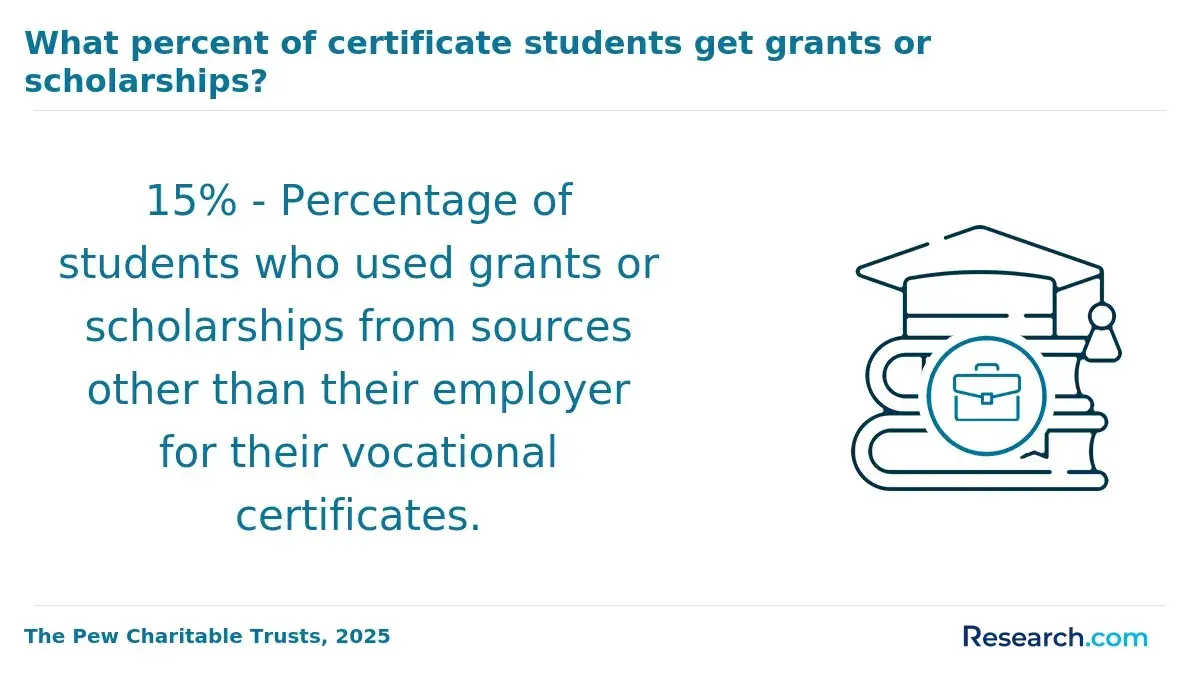
- Check employer tuition assistance, public service scholarship options, state workforce grants, and federal financial aid eligibility.
- Choose part-time study if keeping income and benefits is more important than graduating quickly.
The cheapest program is not always the best value. A slightly higher-cost program may be worth considering if it has stronger advising, accepted transfer credits, relevant capstone projects, employer connections, or a schedule that allows you to keep working. Conversely, an expensive program with weak career alignment can reduce return on investment even if the school has a recognizable name.
What behavioral health leadership and management roles can graduates pursue?
Graduates may pursue roles across community mental health centers, substance use treatment providers, hospitals, integrated care clinics, crisis response programs, nonprofit agencies, residential treatment programs, correctional health services, school-linked service organizations, managed care organizations, and public health departments. The exact role depends on prior experience, degree level, licensure, employer requirements, and local labor markets.
Students who want broader healthcare executive preparation can also compare this path with a master's in health administration, particularly if they want leadership roles across hospitals, clinics, payer organizations, or healthcare systems beyond behavioral health.
The table below connects common job titles with the responsibilities typically associated with behavioral health management. Titles vary by employer, so students should read job descriptions carefully rather than relying only on the title.
| Role | Typical responsibilities | Degree value |
| Behavioral health program coordinator | Coordinate services, track referrals, support staff schedules, monitor program deliverables | Useful for moving from frontline work into organized program responsibility |
| Case management supervisor | Supervise case managers, review documentation, support training, monitor caseload distribution | Builds leadership, compliance, and quality improvement skills |
| Substance use program manager | Manage program operations, coordinate treatment workflows, support audits, oversee reporting | Helpful when paired with relevant experience or addiction credential knowledge |
| Behavioral health operations manager | Improve intake, scheduling, staffing, patient flow, data reporting, and service efficiency | Strong fit for students who like systems, metrics, and process improvement |
| Quality improvement specialist | Analyze outcomes, prepare reports, support compliance reviews, lead service improvement projects | Good fit for students who enjoy data-informed decision-making |
| Clinical services administrator | Coordinate budgets, staffing, policy implementation, and cross-team operations | Often requires experience and may require clinical credentials depending on the employer |
| Nonprofit behavioral health director | Oversee grants, partnerships, staff, budgets, community programs, and performance reporting | Management training helps connect mission, funding, and operations |
Promotion pathways often build in stages. A worker may move from direct service to lead worker, then supervisor, then program manager, then director or administrator. A degree can strengthen the transition, but employers commonly weigh experience, performance history, people-management ability, crisis judgment, documentation accuracy, and knowledge of funding or compliance systems.
Students who are early in their careers should not overlook lateral moves. Intake, utilization review support, quality assurance assistant, grant reporting assistant, and care coordination roles can build the operational knowledge needed for future leadership.
What salary ranges and promotion potential exist in behavioral health management careers?
Salary potential in behavioral health management depends on the role, degree level, supervisory scope, employer type, region, funding source, and whether the position requires clinical licensure. Management roles in hospitals or large healthcare systems often pay more than entry-level nonprofit service roles, but they may also require stronger finance, compliance, and staff leadership experience.
BLS May 2024 data provides useful national benchmarks. The median annual wage for social and community service managers was $78,240, while medical and health services managers had a median annual wage of $117,960. These figures do not isolate behavioral health-only employers, but they give students a realistic comparison between community service management and broader healthcare administration tracks.
The table below places common behavioral health-related roles into a salary and advancement context using national occupational categories where available. Use these benchmarks as reference points, not guarantees.
| Career direction | Closest BLS occupational benchmark | 2024 median annual pay | Promotion relevance |
| Frontline counseling or behavioral health support track | Substance abuse, behavioral disorder, and mental health counselors | $59,190 | Clinical advancement may require licensure-specific graduate education |
| Community program leadership | Social and community service managers | $78,240 | Strong fit for program supervision, nonprofit management, and community agency leadership |
| Healthcare operations and administration | Medical and health services managers | $117,960 | Strong fit for larger systems, operations, compliance, quality, and service-line leadership |
Promotion potential is strongest when students can show that the degree helped them solve employer problems. Examples include reducing intake bottlenecks, improving documentation quality, supporting audit readiness, managing grant outcomes, reducing staff turnover, or using data to improve patient access.
Students should be careful with ROI assumptions. A behavioral health management degree can improve competitiveness for leadership roles, but salary outcomes vary. Rural agencies, small nonprofits, public programs, and grant-funded organizations may have tighter pay bands than large hospital systems or managed care organizations. On the other hand, smaller organizations may offer faster responsibility growth for employees who can handle multiple operational functions.
A practical way to assess ROI is to compare the degree cost against job postings in your target region. Look for required degree level, preferred experience, licensure language, supervisory scope, salary range, and whether the job asks for budgeting, quality improvement, EHR reporting, compliance, or grant management. If postings consistently require clinical licensure for the roles you want, a management degree alone may not be the right investment.
How does the job outlook for behavioral health management professionals compare nationwide?
The national outlook is favorable for many healthcare and behavioral health leadership paths, largely because demand for mental health care, substance use services, integrated care, crisis response, and healthcare coordination remains high. Workforce shortages also create pressure for managers who can recruit, retain, schedule, supervise, and support teams effectively.
BLS employment projections for 2024 to 2034 show medical and health services managers growing 23%, much faster than the average for all occupations. For students, that means healthcare administration skills may have strong transfer value beyond one behavioral health setting, especially when paired with experience in compliance, data systems, and patient access operations.
Behavioral health organizations are also being shaped by several current trends. Students should understand these trends because they affect hiring expectations and the skills employers may reward.
- Integrated care is expanding, requiring managers who can coordinate behavioral health, primary care, substance use treatment, and social services rather than operating in silos.
- Telehealth remains part of behavioral health delivery, increasing the need for leaders who understand access, privacy, scheduling, and digital patient engagement.
- Data reporting and value-based care are raising expectations for measurable outcomes, quality improvement, and program evaluation.
- AI and automation are entering administrative workflows, but human oversight remains essential for privacy, bias control, documentation quality, and ethical use.
- Workforce burnout continues to affect behavioral health providers, making supervision, retention, workload management, and psychological safety important leadership skills.
Job outlook can vary substantially by state and region. Areas with large health systems, Medicaid expansion infrastructure, crisis services investment, correctional health contracts, or strong nonprofit networks may offer more leadership openings. Rural areas may have fewer employers but broader roles, meaning one manager may oversee multiple functions.
Students should also watch employer language. Some job postings say "behavioral health manager" but require a clinical license because the manager supervises clinical care. Others emphasize operations, grants, quality, or program administration and may be open to non-licensed candidates with relevant management education and experience.
How can students evaluate and choose a reputable online behavioral health management program?
The best program is the one that aligns with your target role, budget, schedule, transfer credits, and credential needs. A reputable online degree should make its accreditation, curriculum, faculty qualifications, costs, student support, and career outcomes easy to verify before you enroll.
Use the following steps to compare programs in a way that supports career advancement rather than just admission speed.
- Start with your target job postings and list the degree level, experience, licensure, and skills employers repeatedly request.
- Confirm institutional accreditation and, if relevant, any programmatic accreditation or state approval tied to clinical or addiction credentials.
- Request total program cost in writing, including tuition, fees, books, residencies, field placement expenses, and graduation fees.
- Ask for a transfer credit estimate and confirm how many credits must be completed at the institution.
- Review the curriculum for finance, compliance, data, quality improvement, leadership, behavioral health systems, and applied capstone work.
- Ask how online students access advising, tutoring, faculty office hours, library services, career support, and disability accommodations.
- Find out whether field experiences, internships, or applied projects can be completed through your current employer or local agencies.
- Compare class format, including asynchronous work, live sessions, group projects, exam proctoring, and expected weekly hours.
Red flags deserve special attention because they can turn a convenient degree into a poor investment. Be cautious if a school avoids direct accreditation questions, pressures you to enroll quickly, will not provide a full cost estimate, gives unclear answers about licensure, promises employment outcomes, or lacks faculty with behavioral health or healthcare administration experience.
The table below summarizes common mistakes and better alternatives. It can help students avoid decisions that look efficient at first but create problems later.
| Common mistake | Why it creates risk | Better approach |
| Choosing the fastest program without checking fit | Speed does not matter if the degree does not match the desired role | Compare curriculum against job postings before applying |
| Assuming online means lower cost | Fees, fewer transfer credits, and graduate tuition can raise total price | Request a total cost estimate and transfer audit |
| Ignoring licensure language | Clinical management roles may require a license the program does not provide | Check state board and employer requirements before enrolling |
| Relying only on rankings | Rankings may not reflect your region, employer network, or career goal | Prioritize accreditation, curriculum, support, cost, and outcomes |
| Skipping career services questions | Online students may need proactive support for internships and advancement | Ask how the school supports working adults and remote learners |
Before making a final decision, ask an admissions advisor specific questions and request written answers when possible. Strong programs should be willing to explain who the degree is for, what it does not do, and how it connects to real behavioral health management work.
- Which job titles do recent graduates or working students commonly pursue, and what evidence supports that claim?
- Does the program prepare students for management roles, clinical licensure, or both?
- How many credits will I need after transfer evaluation?
- Can I complete applied projects through my current employer?
- What software, data, EHR, telehealth, or quality improvement tools are used in coursework?
- What happens if my state or employer requires a different credential for the role I want?
Other Things You Should Know About Behavioral Health Management
While both fields focus on mental health, behavioral health management emphasizes the administration and organizational aspects within healthcare systems, aiming to improve patient care and outcomes. Psychology focuses on understanding and treating individual behaviors and mental processes. Thus, behavioral health management is distinct from psychology but complements it by enhancing system-level efficiencies.
Sometimes. A certificate may be enough if you already have a relevant degree and need targeted skills in administration, compliance, quality improvement, or behavioral health systems. A full degree may make more sense if job postings in your target role require a bachelor's or master's.
Some do, but many use applied projects, capstones, or field experiences instead of traditional internships. If you are working, ask whether your current workplace can be used for approved projects or supervised experience.
Strengthen academic writing, spreadsheet basics, professional communication, and comfort with online learning platforms. If you already work in behavioral health, start paying attention to budgets, documentation workflows, quality measures, and staffing challenges, because those topics often appear in management coursework.
References
- Behavioral Health Career Descriptions | SAMHSA https://www.samhsa.gov/about/careers/behavioral-health-workforce/careers-by-state/descriptions
- Managed Behavioral Health Organization Accreditation - NCQA https://www.ncqa.org/employers/ncqa-programs-of-interest-to-employers/managed-behavioral-health-organization-accreditation/
- Health and Human Services: Campus & Online Degrees and Careers https://www.publichealthonline.org/human-services/online-degree-programs/
- Mental and Behavioral Health Career Paths: Resources for Students https://www.nationwidechildrens.org/specialties/behavioral-health/for-providers/training-programs/behavioral-health-career-paths
- Behavioral Health Hiring Outlook 2026 | HCRI https://hcrnetwork.com/behavioral-health-hiring-outlook-2026-what-employers-need-to-know/
- Online vs Hybrid vs Campus Learning in Healthcare: Which Is Right for You? https://www.edumed.org/articles/online-vs-hybrid-vs-campus/
- Online DBH Programs – Online Doctor of Behavioral Health https://www.onlineeducation.com/healthcare/doctor-of-behavioral-health-programs
- Behavioral Health Workforce - Career Roadmap - Mayor's Office of Community Mental Health https://mentalhealth.cityofnewyork.us/workforce-career-roadmap
- A Workforce Under Pressure: Preparing the Behavioral Health Workforce for Today and Tomorrow https://www.thenationalcouncil.org/behavioral-health-workforce-under-pressure-preparing-today-tomorrow/
- Behavioral Health Leadership Guide https://paloaltou.edu/resources/business-of-practice-blog/behavioral-health-leadership-guide