2027 Online Behavioral Health Management Degrees for Students Who Want Program Manager Careers

Co-Founder and Chief Data Scientist
Choosing an online behavioral health management degree is really a career-planning decision: do you want to manage mental health, substance use, community care, or integrated health programs without necessarily becoming a licensed clinician? The need is substantial; SAMHSA's 2023 survey, published in 2024, estimated that 58.7 million U.S. adults had any mental illness. This guide is for students comparing online degrees, certificates, and career paths. You'll learn how accreditation, licensure, cost, curriculum, timelines, and salary data should shape a smart program choice.
Key Things You Should Know
- Behavioral health management degrees are best suited for students who want program leadership, operations, compliance, care coordination, or community health roles; they usually do not qualify graduates for clinical licensure by themselves.
- U.S. Bureau of Labor Statistics data from May 2024 places median annual pay at $78,240 for social and community service managers and $117,960 for medical and health services managers, but behavioral health program manager pay varies by employer, funding source, state, and experience.
- Before enrolling, verify institutional accreditation, state licensure alignment if you want clinical credentials, internship requirements, total program cost, transfer-credit policy, and whether the curriculum includes behavioral health finance, quality improvement, privacy, and program evaluation.
What is an online behavioral health management degree?
An online behavioral health management degree is an academic program that prepares students to help plan, operate, evaluate, and improve services for people with mental health conditions, substance use disorders, developmental disabilities, co-occurring conditions, or social-service needs. Unlike counseling, social work, psychology, or psychiatric nursing programs, the management track usually emphasizes systems, supervision, compliance, budgeting, care delivery, and outcomes rather than direct clinical diagnosis or therapy.
These programs may appear under several names, including behavioral health leadership, behavioral health administration, health services management with a behavioral health concentration, human services management, community health management, nonprofit leadership, or healthcare administration with mental health coursework. Students also compare this pathway with broader healthcare administration majors when they want management mobility beyond behavioral health settings.
The right degree level depends on your starting point and target role. The table below summarizes common academic options and how they typically fit program manager goals.
| Credential | Typical student | Best fit | Limitations |
| Undergraduate certificate | Current healthcare or social-service worker | Focused skill building in case management, addiction services, or nonprofit operations | May not meet degree requirements for management postings |
| Associate degree | New student seeking entry-level human services work | Behavioral health technician, intake support, peer services, or transfer pathway | Usually limited for program manager roles without experience |
| Bachelor's degree | Student seeking supervisory or coordinator roles | Program coordinator, case management supervisor, community outreach lead, residential services supervisor | Some employers prefer a master's degree for director-level roles |
| Master's degree | Experienced professional or bachelor's graduate targeting leadership | Program manager, service line manager, quality manager, behavioral health administrator | Clinical licensure still requires a qualifying clinical program if the role includes therapy or diagnosis |
| Graduate certificate | Professional with a related degree | Adding behavioral health policy, administration, or integrated-care expertise | Usually supplements rather than replaces a degree |
A strong online program should make the management purpose clear. If most courses are counseling theory and practicum-based therapy, it may be a clinical program. If most courses cover leadership, program evaluation, finance, policy, workforce management, and service delivery, it is closer to behavioral health management.
Which accreditation matters for behavioral health programs?
Accreditation matters because it affects credit transfer, federal financial aid eligibility, graduate-school options, employer confidence, and, for clinical paths, licensure eligibility. For behavioral health management degrees, the first requirement is institutional accreditation from an accreditor recognized by the U.S. Department of Education or the Council for Higher Education Accreditation.
Programmatic accreditation depends on the degree's purpose. Management-focused programs do not always have a behavioral-health-specific accreditor, so students should evaluate the broader field of study. A healthcare management master's program may seek CAHME accreditation. A counseling program may need CACREP alignment. A social work program may need CSWE accreditation. Nursing programs that prepare psychiatric-mental health nurse practitioners must meet nursing accreditation and state board expectations; students comparing that clinical route may also research fastest PMHNP programs.
The table below shows which accreditation signals matter most for different behavioral health education goals.
| Goal | Accreditation or approval to check | Why it matters |
| Behavioral health program management | Institutional accreditation; relevant business, public health, or healthcare administration quality markers | Supports aid eligibility, employer recognition, and graduate transfer options |
| Healthcare administration leadership | Institutional accreditation; CAHME for some graduate healthcare management programs | May strengthen preparation for hospital, clinic, and health system roles |
| Professional counseling licensure | Institutional accreditation; CACREP or state-recognized curriculum where required or preferred | Licensure boards may require specific coursework and supervised clinical training |
| Social work licensure | CSWE-accredited BSW or MSW program where applicable | Many states require CSWE-accredited social work education for licensure |
| Psychiatric-mental health nursing practice | Accredited nursing program; state board approval; national certification eligibility | Needed for advanced nursing practice and prescribing pathways where allowed |
A common mistake is assuming that "accredited university" means "licensure-ready program." Institutional accreditation is necessary, but clinical licensure depends on the exact degree, supervised hours, curriculum, faculty qualifications, and state board rules.
Do online and campus programs meet licensure requirements?
Online and campus programs can both meet licensure requirements, but format alone does not determine eligibility. The deciding factors are the program's curriculum, practicum or internship structure, state authorization, accreditation, and whether the degree is designed for a licensed profession such as counseling, social work, marriage and family therapy, psychology, or advanced practice nursing.
Behavioral health management degrees usually prepare students for administrative and leadership roles rather than independent clinical practice. That means a graduate may qualify for roles involving program operations, staff supervision, grant reporting, service coordination, quality improvement, or compliance, but not for therapy, diagnosis, or prescribing unless they also complete a separate licensure-eligible clinical pathway.
Students should use the following sequence before assuming an online degree meets a licensing goal:
- Identify the exact license you want, such as LPC, LCSW, LMFT, psychologist, substance use counselor, or psychiatric-mental health nurse practitioner.
- Find the state licensing board requirements for education, supervised hours, exams, background checks, and field placements.
- Ask the school to provide written confirmation of which states the program is designed to satisfy.
- Confirm whether online students can complete required fieldwork in their own state and whether the school helps secure placements.
- Review whether the degree title, course names, and credit hours match the board's rules rather than relying only on marketing language.
This distinction matters for program manager careers because many leadership roles do not require a clinical license, but some employers prefer or require one for managers supervising clinical staff. For example, a community mental health center may hire a nonclinical operations manager for scheduling and compliance but require a licensed clinician for a clinical program director role.
What courses are in a behavioral health management curriculum?
A behavioral health management curriculum combines health administration, human services, behavioral health policy, data use, and leadership. The best programs help students understand both the human side of care and the operational realities of running services that depend on staffing, reimbursement, compliance, quality metrics, and community partnerships.
Students considering broader service-oriented roles may also compare a human services degree, especially if they want more exposure to case management, family services, crisis support, and community resources. Behavioral health management programs tend to go further into budgets, program evaluation, organizational leadership, and regulatory systems.
The table below outlines common course areas and how each one connects to program manager responsibilities.
| Course area | What students learn | Program manager relevance |
| Behavioral health systems | Mental health, substance use, crisis care, recovery models, and integrated care | Helps managers understand service lines and client needs |
| Healthcare finance and reimbursement | Budgets, payer systems, grants, Medicaid basics, and cost controls | Supports sustainable program planning and resource allocation |
| Program evaluation | Logic models, outcomes, quality measures, reporting, and continuous improvement | Prepares managers to demonstrate effectiveness to funders and executives |
| Ethics, law, and privacy | HIPAA, confidentiality, mandated reporting, consent, and risk management | Reduces compliance risk in sensitive behavioral health settings |
| Leadership and workforce management | Supervision, conflict resolution, staff development, burnout prevention, and team communication | Builds skills for leading multidisciplinary teams |
| Health information systems | Electronic health records, telehealth workflows, data dashboards, and documentation standards | Reflects current employer demand for technology-literate managers |
Current trends are changing what "management" means in behavioral health. Telebehavioral health, mobile crisis services, value-based payment, integrated primary care, and AI-assisted documentation are pushing managers to understand technology, privacy, workflow design, and data quality. A strong program should not teach behavioral health leadership as if services still operate only through paper records and traditional office visits.
What are the admission requirements for these programs?
Admission requirements vary by degree level, but online behavioral health management programs generally evaluate academic readiness, work experience, professional goals, and sometimes background eligibility for field placements. Competitive programs are transparent about requirements before you apply.
The most common admissions materials are listed below. Reviewing them early helps you avoid delays, especially if you need transcripts from several schools or plan to request transfer credit.
- High school diploma or GED for undergraduate programs, or a bachelor's degree from an accredited institution for graduate programs.
- Official transcripts showing prior coursework, GPA, and completed prerequisites where required.
- Personal statement explaining interest in behavioral health leadership, community services, healthcare administration, or nonprofit management.
- Resume or work history, especially for master's programs aimed at working professionals.
- Letters of recommendation from supervisors, faculty, or professional contacts, if required.
- Background check, immunization documentation, drug screening, or field-placement clearance when the program includes in-person practicum experiences.
Some schools waive standardized tests or do not require them at all, especially for online professional programs. More important than test policy is whether the school admits students into the correct pathway. If your goal is program management, an administration-focused degree may fit. If your goal is therapy, choose a licensure-track clinical program instead.
Transfer credit can significantly affect both cost and time to completion. Before enrolling, ask whether the program accepts community college credits, prior bachelor's coursework, military training, professional certifications, or credits from nationally accredited institutions. Do not assume all credits will transfer just because the previous school was legitimate.
How long does an online behavioral health management degree take?
Completion time depends on degree level, transfer credits, enrollment intensity, practicum requirements, and whether the program uses traditional semesters or accelerated terms. Online study can make scheduling easier, but it does not automatically reduce the total academic work required.
The table below gives typical timeframes for students planning a behavioral health program manager pathway.
| Program type | Typical full-time timeline | Part-time timeline | Best for |
| Certificate | Several months to 1 year | 1 to 2 years | Professionals adding a focused management or behavioral health credential |
| Associate degree | About 2 years | 3 or more years | Students seeking entry-level roles or transfer to a bachelor's program |
| Bachelor's degree | About 4 years without transfer credit | 4 to 6 years | Students targeting coordinator, supervisor, or early management roles |
| Master's degree | About 1.5 to 2 years | 2 to 4 years | Students seeking program manager, director, or administrative leadership roles |
Accelerated programs can be useful for experienced adults with transfer credits and strong time-management skills. The trade-off is intensity: shorter terms often mean more weekly reading, writing, group work, and deadlines. If you work full time in a demanding behavioral health setting, a part-time format may produce better learning and less burnout.
Fieldwork also affects pacing. A nonclinical management degree may use a capstone or administrative internship, while a clinical program can require extensive supervised practice that must be completed at approved sites. Students should ask whether field placement hours are flexible, whether evening or weekend options exist, and whether the school has placement partnerships in their state.
How much do online behavioral health management degrees cost?
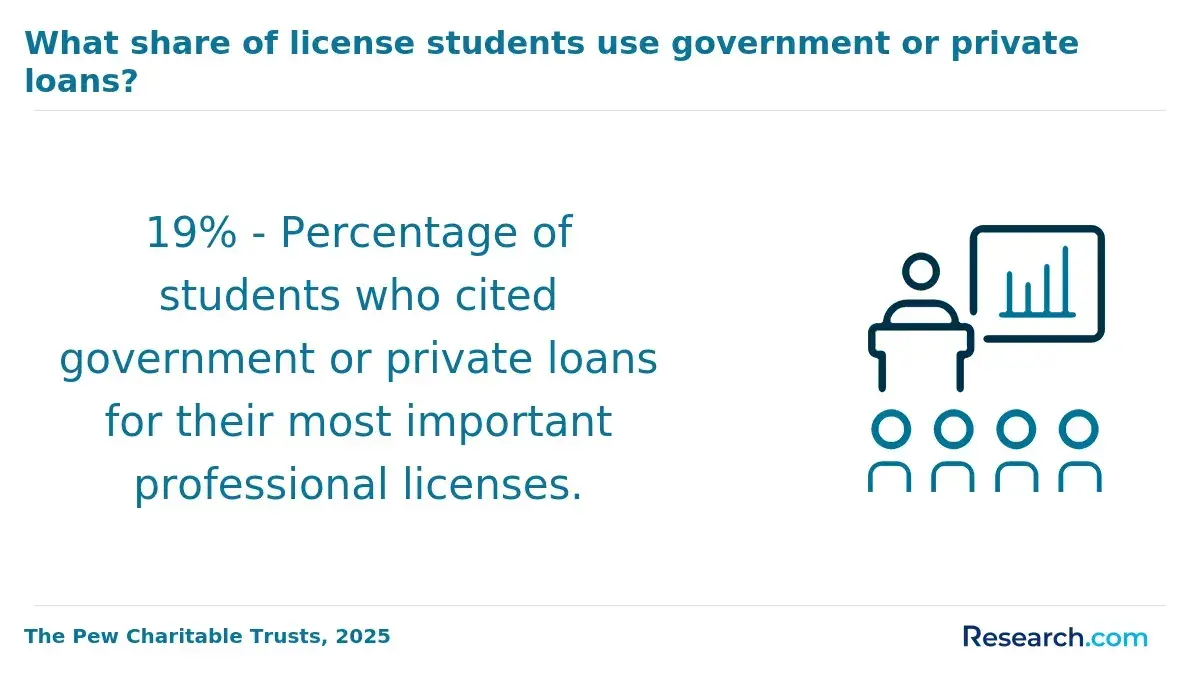
Costs vary widely by school, degree level, residency status, transfer credit, and fees. The College Board's 2024 pricing report listed average published tuition and fees of $11,610 for in-state students at public four-year institutions and $43,350 at private nonprofit four-year institutions for the 2024-25 academic year. Those figures are not behavioral-health-specific, but they provide a useful benchmark when judging whether an online program's price is unusually low, moderate, or high.
When comparing costs, focus on the total price to finish the credential, not only the per-credit tuition. A program with a higher per-credit rate may cost less overall if it accepts more transfer credits or requires fewer total credits.
- Tuition per credit or per term, including whether online students pay in-state, out-of-state, or flat online rates.
- Required technology, online learning, graduation, clinical clearance, background check, or field-placement fees.
- Books, digital course materials, assessment platforms, and software subscriptions.
- Travel costs for campus intensives, internships, practicums, conferences, or required in-person orientations.
- Lost work hours if fieldwork or synchronous classes conflict with employment.
- Loan interest and repayment obligations, especially for graduate students using federal unsubsidized or PLUS loans.
To reduce cost, start with accredited public universities, employer tuition assistance, transfer-friendly completion programs, community college pathways, and scholarships tied to behavioral health workforce development. If you already work for a hospital, community mental health center, county agency, or nonprofit provider, ask whether tuition reimbursement is available for roles tied to retention or promotion.
A common red flag is a school that emphasizes "fast and easy" completion but is unclear about total credits, transfer limits, accreditation, or fieldwork costs. Behavioral health management involves vulnerable populations and regulated services, so the cheapest program is not always the safest investment.
What careers can behavioral health management graduates pursue?
Graduates can pursue roles in mental health agencies, substance use treatment programs, hospitals, residential facilities, crisis service organizations, integrated care clinics, nonprofit organizations, correctional health programs, managed care organizations, public health departments, and social-service agencies. The exact role depends on degree level, experience, state rules, and whether the graduate also holds a clinical license.
The table below summarizes common career paths and the type of preparation they often require.
| Career path | Typical responsibilities | Common preparation |
| Behavioral health program coordinator | Scheduling services, tracking referrals, supporting reporting, coordinating staff communication | Bachelor's degree or associate degree plus experience |
| Case management supervisor | Overseeing case managers, reviewing documentation, monitoring service plans, improving workflows | Bachelor's degree; experience in human services or behavioral health |
| Substance use program manager | Managing treatment operations, grant deliverables, compliance, staffing, and community partnerships | Bachelor's or master's degree; substance use credential may be preferred |
| Residential services manager | Supervising group homes or residential treatment operations, staffing, safety, and client support systems | Bachelor's degree; supervisory and compliance experience |
| Quality improvement specialist | Analyzing outcomes, documentation quality, audits, client satisfaction, and performance metrics | Bachelor's or master's degree with data and evaluation coursework |
| Behavioral health operations manager | Managing budgets, productivity, staffing models, electronic records, and service delivery processes | Master's degree or bachelor's degree plus substantial experience |
| Clinical program director | Leading clinical services, supervising licensed staff, ensuring treatment quality, managing risk | Often requires a clinical graduate degree and active license |
Program managers usually need a mix of people skills and systems skills. Employers often value candidates who can supervise teams, interpret data, manage grants, understand Medicaid or insurance documentation, improve workflows, communicate with clinicians, and handle crisis-sensitive operations without losing sight of client dignity.
This degree is a strong fit if you want to improve behavioral health access and service quality through leadership rather than individual therapy. It may not be the best fit if your main goal is to become a therapist, psychologist, psychiatric prescriber, or independent clinical practitioner.
How much do program managers in behavioral health earn?
Behavioral health program manager salaries vary because the role sits between healthcare administration, social services, nonprofit leadership, and clinical operations. The most relevant federal salary benchmarks are not always titled "behavioral health program manager," so students should compare related occupations rather than relying on one job title.
U.S. Bureau of Labor Statistics May 2024 data reported a median annual pay of $78,240 for social and community service managers and $117,960 for medical and health services managers. The first benchmark is often closer to community behavioral health and nonprofit program roles, while the second may better reflect larger healthcare systems, hospitals, or management roles with broader operational authority. The table below shows how related BLS categories can help you interpret salary expectations.
| Related occupation | May 2024 median annual pay | How to use the benchmark |
| Social and community service managers | $78,240 | Useful for nonprofit, county agency, community behavioral health, and human services management roles |
| Medical and health services managers | $117,960 | Useful for hospital, clinic, managed care, and health system operations roles |
| Substance abuse, behavioral disorder, and mental health counselors | $59,190 | Useful for comparing management pay against direct-service counseling-related roles |
Job growth data also supports careful career planning. BLS projects medical and health services manager employment to grow 29% from 2023 to 2033, much faster than the average for all occupations. That does not mean every behavioral health graduate will become a high-paid administrator, but it does show strong broader demand for people who can manage healthcare operations, compliance, staffing, and service quality.
Several factors influence earning potential: graduate education, supervisory experience, budget responsibility, clinical licensure, geographic location, employer size, union rules, funding model, and whether the role involves 24/7 operations. Students seeking higher compensation should look for programs that build finance, analytics, compliance, and leadership skills, not just introductory behavioral health knowledge.
How do you choose a reputable online program?
A reputable online behavioral health management program should be accredited, transparent, career-aligned, and realistic about what it can and cannot prepare you to do. The best choice is not automatically the fastest, cheapest, highest-ranked, or most heavily advertised program. It is the program that matches your career goal, state requirements, budget, learning style, and timeline.
Use the following steps to compare programs before applying:
- Define your target role first: program coordinator, program manager, clinical director, quality specialist, operations manager, or nonprofit administrator.
- Check institutional accreditation using official accreditor or federal databases rather than relying only on the school's website.
- Confirm whether the degree is management-focused, clinical-licensure-focused, or a hybrid, and ask for state-specific licensure disclosures if relevant.
- Compare total completion cost, including transfer credits, fees, books, fieldwork expenses, and loan interest.
- Review the curriculum for behavioral health finance, compliance, privacy, quality improvement, leadership, program evaluation, and health information systems.
- Ask how online students complete internships, capstones, or administrative field experiences in their local area.
- Request career outcome information, employer partnerships, alumni examples, and job titles graduates commonly pursue.
- Evaluate student support, including advising, tutoring, library access, disability services, technical support, and career coaching.
If you are comparing management careers outside healthcare, it can also help to look at how other applied management degrees structure cost, timelines, and online learning. For example, students exploring operations-heavy roles sometimes compare behavioral health administration with fields such as online construction management to understand how industry-specific management degrees differ.
Watch for common red flags when speaking with admissions representatives. These warning signs do not always mean a program is poor, but they should prompt deeper questions before you commit.
- The school cannot clearly explain accreditation, state authorization, or licensure limitations.
- The program advertises clinical career outcomes even though the curriculum is not licensure-track.
- Total cost is hard to calculate because fees, transfer-credit limits, or practicum expenses are unclear.
- Online students must find their own field placements with little school support.
- Courses are outdated and do not address telehealth, electronic records, privacy, quality metrics, or integrated care.
- Admissions pressure is high, but academic advising and career support are vague.
The smartest final step is to contact at least three programs with the same questions and compare written answers. A strong school will be willing to explain trade-offs, not just promote enrollment.
Other Things You Should Know About Behavioral Health Management
Many students do, especially in part-time or asynchronous programs. Full-time work becomes harder if the program requires daytime fieldwork, live classes, group projects, or accelerated terms, so ask for a sample weekly workload before enrolling.
A behavioral health management degree provides comprehensive knowledge and skills essential for advancing into program manager roles. The curriculum typically includes topics like healthcare policies, strategic planning, and management principles, positioning graduates favorably for leadership positions by 2026.
Useful skills include electronic health record navigation, spreadsheet analysis, dashboard interpretation, telehealth workflow management, privacy-aware documentation, and basic quality reporting. Managers do not need to be software engineers, but they should be comfortable using data to improve services.
Yes, it can be a practical bridge for behavioral health technicians, case managers, peer support specialists, counselors, or social-service workers who want leadership roles. The transition is strongest when the degree is paired with supervisory experience and measurable project results.
References
- Online DBH Programs – Online Doctor of Behavioral Health https://www.onlineeducation.com/healthcare/doctor-of-behavioral-health-programs
- Mental Health Program Manager Salary & Career Outlook https://online.maryville.edu/online-bachelors-degrees/healthcare-management/careers/mental-health-program-manager/
- Admission Requirements | Undergraduate Admissions + Programs https://www.ualberta.ca/en/admissions/how-to-apply/admission-requirements/index.html
- Why Accreditation Matters in Choose Mental Health Treatment https://archwaybehavioralhealth.com/blog/importance-of-accreditation-finding-a-trusted-mental-health-treatment-center/
- How to Choose the Right Online College https://www.straighterline.com/blog/goodie-how-to-choose-the-right-online-college
- Online Healthcare Administration Bachelors Degree | CHCP https://www.chcp.edu/degrees-certificates/healthcare-administration-bachelors-degree/online/
- CARF Accreditation Consulting: Why It Matters for Behavioral Health Programs https://circabehavioral.com/carf-accreditation-consulting/
- Required application documents https://www.vu.lt/en/required-attachments
- Prepping for Accreditation in Behavioral Health | BestNotes - BestNotes https://www.bestnotes.com/which-accreditation-body-should-you-pursue/
- Achieving Excellence: Behavioral Health Accreditation - Haven Health Management https://havenhealthmgmt.org/achieving-excellence-behavioral-health-accreditation/