2027 Best AI Courses for Virtual Assistants With Certificates

Co-Founder and Chief Data Scientist
Many professionals with degrees in unrelated fields face challenges when trying to enter the evolving AI industry as virtual assistants.
Without formal training, adapting to the technical demands and securing credible certifications can seem daunting, limiting job prospects and career growth. This gap impacts those seeking flexible learning options that fit busy schedules while providing relevant skills recognized by employers.
This article explores the best AI courses designed to equip virtual assistants with verified certificates, focusing on accessible, accredited programs that facilitate a strategic career pivot into AI-driven roles.
Key Things You Should Know
- AI courses for virtual assistants in 2026 emphasize practical skills in automation, natural language processing, and virtual task management to meet growing demand in the U.S. job market.
- Certificate programs accredited by reputable institutions boost employability, with 75% of graduates reporting job placement within six months of completion in 2024 data.
- Most top courses offer flexible online formats, enabling working professionals to upskill efficiently while balancing other commitments without sacrificing quality education.
Advance Your Career with AI Online Courses
Artificial Intelligence: Implications for Business Strategy
This program provides an introduction to Artificial Intelligence and their implications for business strategy. Earn an official digital certificate.

Oxford Artificial Intelligence Programme
Explore this Oxford Artificial Intelligence programme offered in a flexible learning environment and explore topics like machine learning, automation, and robotics.

Implementing Agentic AI: Building Your Organizational Playbook
This online MIT Agentic AI course offers a practical approach to deploying AI agents in your organization, including a custom playbook. 3 weeks, exclusive launch price.

AI Adoption: Driving Business Value and Impact
This online MIT AI Adoption: Driving Business Value and Impact offers practical frameworks to close the gap between AI potential and business reality.

Artificial Intelligence in Pharma and Biotech
Discover the applications and limitations of artificial intelligence in pharma and biotech with this MIT online short course.

What does an AI course for virtual assistants cover and who are these programs for?
AI training programs for virtual assistants focus on essential skills like natural language processing, chatbot implementation, workflow automation, and data management.
These skills enable assistants to use AI tools effectively for tasks such as optimizing schedules, managing emails, and enhancing customer communications. Many courses also emphasize practical experience with popular AI software and introduce ethical considerations surrounding AI use.
Online virtual assistant courses with certificate options often cover customization of AI assistants to meet specific industry needs, from healthcare to legal support. Advanced modules may delve into AI analytics, helping virtual assistants interpret data patterns and support strategic decisions.
Such programs benefit administrative professionals, freelancers, and recent graduates aiming to enhance their competencies or pivot careers toward AI-specialized administrative roles.
Increasing investment and demand for AI-capable virtual assistants align with reports like McKinsey's survey, which highlights that 72% of companies adopting AI are expanding their AI budgets and 40% foresee generative AI driving higher administrative staffing needs. This trend underscores the value of acquiring AI skills to remain competitive in evolving job markets.
For those seeking accelerated pathways to technical proficiency, exploring the fastest computer science degree programs can complement AI training and expand career opportunities within technology-driven administrative roles.
Advance Your Career with AI Online Courses
Artificial Intelligence: Implications for Business Strategy
This program provides an introduction to Artificial Intelligence and their implications for business strategy. Earn an official digital certificate.
Oxford Artificial Intelligence Programme
Explore this Oxford Artificial Intelligence programme offered in a flexible learning environment and explore topics like machine learning, automation, and robotics.
Implementing Agentic AI: Building Your Organizational Playbook
This online MIT Agentic AI course offers a practical approach to deploying AI agents in your organization, including a custom playbook. 3 weeks, exclusive launch price.
What types of AI courses for virtual assistants offer certificates or microcredentials?
AI certification programs for virtual assistants generally fall into three categories: professional certificate programs, specialized skill courses, and microcredential bundles.
Professional certificates cover broad topics such as natural language processing, machine learning fundamentals, and automation tools. These programs typically last several months and end with a verified credential recognized by employers.
Specialized skill courses offer focused expertise in areas like conversational AI design, chatbot development, or voice recognition, providing microcredentials that reflect mastery of specific competencies.
Microcredential bundles combine multiple focused courses, enabling virtual assistants to quickly build a portfolio of validated skills. These programs often include practical projects and portfolio development to demonstrate applied knowledge.
Platforms such as Coursera and edX offer many options developed by universities and industry leaders, ideal for those seeking online courses with microcredentials in AI for virtual assistant roles.
A 2024 Coursera Learner Outcomes Survey found that 77% of learners who earned professional certificates in AI or data reported positive career outcomes such as promotions or new jobs within six months, compared to 58% for non-certificate learners. This highlights the value employers place on verified credentials when evaluating candidates.
When choosing courses, virtual assistants should prioritize programs with hands-on projects and relevant tools like Python, TensorFlow, or chatbot platforms. For comprehensive options, consider exploring the best online masters in artificial intelligence to further expand AI expertise and career opportunities.
How do I choose a reputable, job-relevant AI course for virtual assistants?
Choosing the best job relevant artificial intelligence training for virtual assistant careers involves evaluating courses for their practical applicability and industry recognition. Prioritize programs offering certificate-backed completion credentials, as these signal verified skills valued by employers.
Look for curricula covering automation tools, natural language processing, data management, and ethical AI use, especially those designed for non-technical professionals. Stay current by selecting courses with up-to-date content, reflecting rapid advances in AI technology.
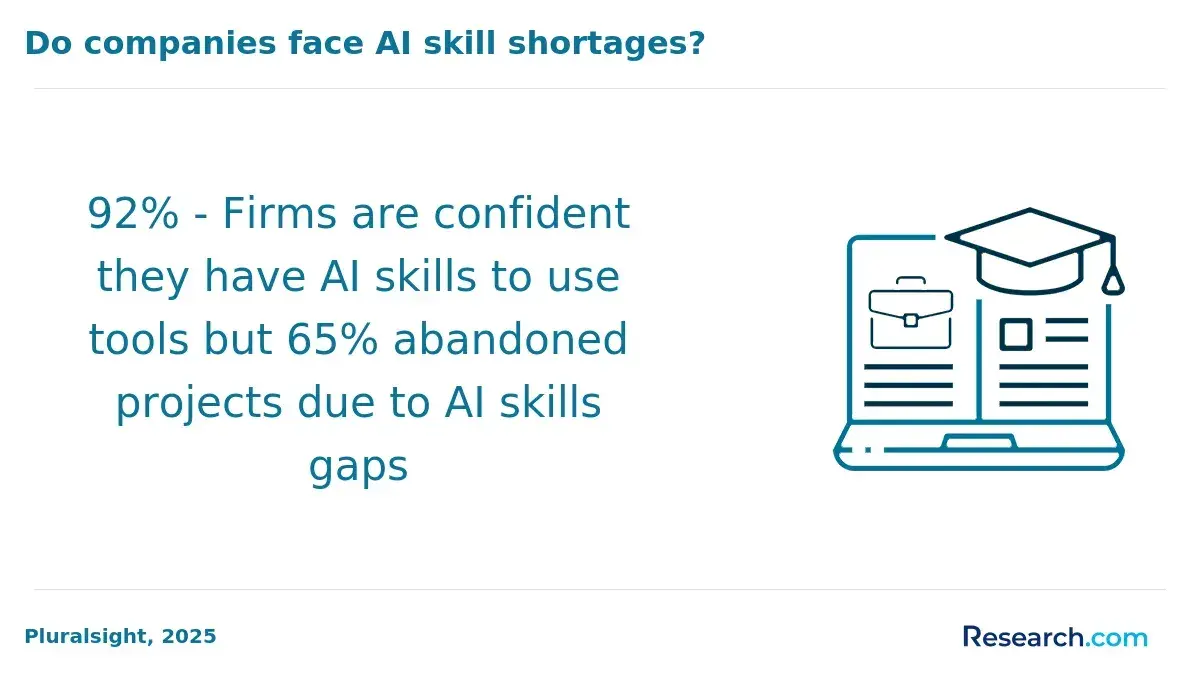
According to the LinkedIn Learning 2024 Workplace Learning Report, enrollments in AI literacy have surged by 65%, highlighting the need for relevant skills. Avoid outdated syllabi that miss recent AI applications in virtual assistance.
Course format and instructor expertise matter greatly. Interactive modules and real-world case studies enhance learning retention.
Instructors with professional AI experience or advanced academic credentials provide valuable perspectives. Also, seek programs offering job placement support or industry partnerships to increase employment opportunities.
When weighing affordability and time commitment, choose courses that balance quality with your schedule and budget. Investing in well-regarded certificates typically improves job prospects and earning potential.
Additionally, prospective students interested in deeper academic advancement may explore a PhD in AI online for expanded career options.
By carefully assessing these factors, you can identify reputable AI courses for virtual assistants that align with career goals and market demands.
Are AI courses for virtual assistants offered online, on campus, or in hybrid formats?
AI courses for virtual assistants come in online, on-campus, and hybrid formats to accommodate different learning preferences. Online AI courses for virtual assistants with certificates are particularly popular due to their flexibility, ideal for professionals balancing multiple commitments.
These courses typically feature video lectures, interactive modules, and live sessions focused on automation tools, natural language processing, and AI integrations relevant to virtual assistant roles.
On-campus courses, often offered by community colleges and universities with technology or business programs, provide structured, in-person learning with hands-on labs and direct faculty interaction. They are well-suited for students seeking comprehensive mentorship and strong networking within local professional communities.
Hybrid learning options for virtual assistant AI training blend online coursework with occasional on-site workshops, offering a balance between flexibility and personal engagement essential for practicing skills and troubleshooting AI tools.
When choosing a program, consider your learning style and career goals. Online courses enable rapid skill acquisition while working full time, campus options offer intensive support and credential value, and hybrid models suit those who thrive in mixed-learning environments with peer interaction.
Additionally, Zapier's Automation Status Report highlights AI's increasing business impact, with 42% of small businesses automating customer workflows and 64% of users saving over six hours weekly per employee.
For those interested in expanding their expertise further, exploring data analysis programs can provide complementary skills to enhance career prospects in AI-driven roles.
What should I look for in accreditation and recognition of AI certificates?
Accreditation plays a critical role in determining the value of AI certificates in the job market. Programs backed by accredited institutions or recognized professional bodies related to AI or technology education generally hold more credibility.
Look for regional accreditation from agencies acknowledged by the U.S. Department of Education or the Council for Higher Education Accreditation (CHEA) to ensure the course meets rigorous academic standards. Certificates from established universities or reputable online platforms with industry partnerships are preferred over informal or unaccredited offerings.
Endorsements by industry leaders such as Microsoft, IBM, or Google add practical relevance, signaling alignment with current employer needs. This recognition is particularly important for virtual assistant roles increasingly relying on AI for marketing and automation.
Verifiable credentials like digital badges or unique authentication codes enhance trust and simplify skill validation during hiring. Assess if the course syllabus and instructor qualifications demonstrate in-depth content and practical experience.
Consider courses that emphasize trending AI applications, especially in marketing, reflecting data that 64% of marketers use generative AI tools and 38% report significant productivity gains.
Choosing AI certificate programs with solid accreditation, industry recognition, authentic credentials, and a focus on relevant skills will better prepare candidates for evolving career opportunities in AI-driven fields.
What core skills and tools do the best AI virtual assistant courses teach?
AI virtual assistant courses build essential skills in natural language processing (NLP) to help assistants understand and respond accurately to user requests. These programs often include automation technologies such as robotic process automation (RPA) and workflow management to streamline repetitive tasks, reducing errors and boosting efficiency.
Data literacy is also emphasized, teaching basics of analysis and interpretation to support informed decision-making with AI-generated insights.
Students gain experience with popular AI platforms and assistant frameworks like Google Dialogflow, Microsoft Bot Framework, and Amazon Lex. This knowledge enables the design, deployment, and management of conversational agents for scheduling, email handling, and customer service.
Integration techniques are key, focusing on connecting AI assistants to CRM systems, calendars, and communication tools.
Cost remains a barrier for 60% of workers seeking upskilling, yet 73% would engage in AI training if affordable certificates were accessible (World Economic Forum, Future of Jobs Survey 2024). Top courses combine technical proficiency in AI platforms and automation with soft skills and ethical considerations, supporting career growth through recognized credentials and practical tools.
What are the typical admission requirements and time commitment for these programs?
Admission requirements for AI courses tailored to virtual assistants are generally accessible, often needing only a high school diploma or equivalent. Some advanced options may request basic computer literacy or familiarity with tools like spreadsheets and email automation.
There is typically no need for in-depth coding skills, making these programs suitable for learners with varied educational backgrounds. Occasionally, certificate courses include a brief math or logic assessment to ensure preparedness for AI concepts.
Time commitments differ based on course format and depth. Part-time online courses tend to require 20 to 60 hours spread over 4 to 12 weeks. Self-paced learning offers greater flexibility, with a recommended 3 to 6 hours weekly to suit working virtual assistants managing client demands.
More intensive certificate programs with hands-on projects can involve up to 100 hours across several months, providing practical expertise in AI tools focused on automation, data handling, and workflow improvement.
Freelancers listing AI and automation as key skills earn a median hourly rate 44% higher than those without, according to Upwork's 2024 Freelance Forward report. Prospective students should evaluate their skills and schedule carefully, choosing modular courses to target essential competencies efficiently and enhance earning potential.
How much do AI courses for virtual assistants cost, and what funding options exist?
AI courses tailored for virtual assistants come with a broad range of costs, from free online options to paid programs priced between $200 and $2,500.
Many short-term or micro-credential courses cluster around the $300 to $800 range, aligning with the preferences of 68% of professionals who favor programs under three months, according to the edX Skills Pulse Survey 2024. These offerings focus on practical skills that translate quickly to the workplace, often accompanied by certificates to demonstrate expertise.
Financial support for these courses is commonly available. Employers frequently subsidize or fully fund tuition for training that enables fast application of skills, as 56% of learners reportedly apply what they've learned within four weeks.
Independent students may explore options such as:
- Employer tuition reimbursement programs covering full or partial costs.
- Scholarships and grants from education providers and nonprofits focused on workforce growth.
- Federal financial aid and Workforce Innovation and Opportunity Act (WIOA) funding for eligible candidates.
- Payment plans or subscription-based access on platforms like Coursera and Udemy for flexible budgeting.
Selecting accredited courses with recognized certification maximizes return on investment. Many free courses paired with paid certification exams allow cost control while securing formal validation of skills.
Verifying that courses include practical projects or simulations boosts chances of quickly applying skills and gaining employer recognition.
What careers and freelance opportunities can AI-skilled virtual assistants pursue?
AI-skilled virtual assistants unlock diverse career opportunities by combining technical prowess with operational knowledge. Many roles focus on AI integration, where assistants customize automation tools to streamline business workflows and enhance efficiency.
Others specialize in AI-driven data analysis, interpreting customer interaction patterns or sales data to support smarter decision-making.
Project coordination positions leverage AI platforms for resource management and timeline forecasting, while companies increasingly hire AI-capable virtual assistants to develop chatbots, automate content, and optimize customer service. These applications reduce manual tasks yet maintain personalized engagement.
According to IBM's 2024 Global AI Adoption Index, 59% of organizations actively seek professionals blending AI expertise with operational skills, though 36% cite a talent shortage as a barrier to scaling AI initiatives. This demand highlights the growing value of credentials in AI platforms like TensorFlow and Azure Cognitive Services.
Building skills in automation workflows and data interpretation, alongside traditional virtual assistant duties, positions professionals competitively in a rapidly evolving job market shaped by AI-driven transformation.
What is the salary outlook and long-term demand for AI-enabled virtual assistants?
The salary outlook for AI-enabled virtual assistants is strong due to the rising use of AI tools across various industries. Entry-level virtual assistants in the U.S. earn between $45,000 and $55,000 annually, while experienced professionals typically make $70,000 to $90,000.
Advanced skills in machine learning, natural language processing, and automation can increase earning potential beyond these ranges.
Demand for AI-trained virtual assistants is expected to grow rapidly. The World Economic Forum's 2024 Future of Jobs report projects a 39% global increase in roles requiring AI and machine learning skills by 2028.
Key growth areas include automation specialists and virtual assistants skilled in data management, customer service automation, and workflow optimization.
Success in this field depends on developing competencies in AI frameworks, automation coding, and data analysis. Proficiency in tools such as Python and AI-driven customer service platforms is valuable, as are certifications in AI-related fields. Employers seek candidates who combine administrative expertise with technical AI fluency.
Virtual assistants must prepare for shifting responsibilities from routine tasks to strategic, AI-powered functions. This ongoing learning curve offers opportunities for higher salaries and career advancement in a competitive market.
Other Things You Should Know About Artificial Intelligence
AI courses tailored for virtual assistants in 2027 focus on enhancing skills in machine learning, natural language processing, and automation. These courses equip virtual assistants with up-to-date competencies, making them invaluable assets in dynamic AI-integrated environments.
Popular programming languages for AI development include Python, R, Java, and C++. Python is especially favored due to its extensive libraries and frameworks that simplify machine learning, natural language processing, and data analysis tasks essential for AI applications.
Yes, many AI courses include modules on ethics, covering topics such as data privacy, bias mitigation, and responsible AI deployment. Understanding these ethical considerations is critical for virtual assistants to maintain trust and comply with relevant regulations in their work.
Ongoing learning is crucial for virtual assistants to stay current with rapidly evolving AI technologies and tools. Continuous education helps them adapt to new software updates, incorporate advanced functionalities, and maintain a competitive edge in their roles.
References
- 100+ Virtual Assistants Online Courses for 2026 | Explore Free Courses & Certifications | Class Central https://www.classcentral.com/subject/virtual-assistants
- AI Certification: Your Pathway to Mastering Artificial Intelligence https://www.exin.com/article/ai-certification-your-pathway-to-mastering-artificial-intelligence/
- International Board for AI Accreditation | Professional Accreditation Body https://www.aiaccreditationboard.org/
- AI in Virtual Medical Assistants Market Report 2025-2030, By Offering, Mode, and Geo https://www.marketsandmarkets.com/Market-Reports/ai-in-virtual-medical-assistants-market-164416014.html
- How colleges with hybrid instruction can support online students this fall https://www.highereddive.com/news/how-colleges-with-hybrid-instruction-this-fall-can-support-online-students/582141/
- Artificial Intelligence – AI Certification https://apmg-international.com/product/artificial-intelligence-ai-certification
- Best AI Courses Online: Free and Paid Options Compared https://hakia.com/news/best-ai-courses-online/