2027 ECPI University Online BS Electronic Systems Engineering Technology - Electronic Systems Engineering Technology: Cost, Admissions, Curriculum, and Career Paths

Co-Founder and Chief Data Scientist
Deciding on an online program for electronic systems engineering technology requires more than cursory research. Prospective students must weigh factors like curriculum relevance, cost, and admission flexibility against the evolving demands of the engineering workforce.
In 2024, the National Center for Education Statistics reported a 15% increase in enrollment in online STEM programs, reflecting a broader shift toward accessible, tech-focused education suited for working adults. This highlights the importance of programs that balance rigorous technical training with flexible delivery.
This article explores the cost, curriculum, admissions process, and career outcomes of the online BS Electronic Systems Engineering Technology program at ECPI University to help readers assess alignment with their goals.
Key Points About ECPI University's BS Electronic Systems Engineering Technology - Electronic Systems Engineering Technology Program
- An 83% acceptance rate at ECPI University's BS Electronic Systems Engineering Technology program indicates moderate selectivity, balancing accessibility with peer quality for a practical academic challenge.
- The program's curriculum, designed by faculty with industry and academic expertise, aligns with evolving engineering tech standards, enhancing graduate readiness for field-specific employer expectations.
- With a total tuition cost of $32,788, students face a substantial investment that demands weighing long-term salary prospects against upfront financial commitment in engineering technology careers.
What can students expect from ECPI University's online BS Electronic Systems Engineering Technology - Electronic Systems Engineering Technology curriculum?
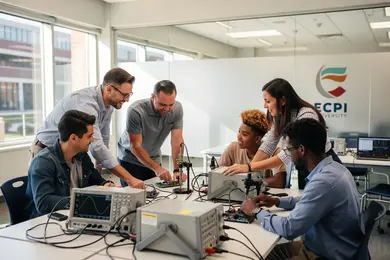
Curricula in electronic systems engineering technology often balance theory with hands-on skill development, and ECPI University's online BS Electronic Systems Engineering Technology course structure reflects this dual emphasis common to U.S. standards. The program moves from foundational topics to specialized technical skills, mirroring the demands employers place on graduates to manage both hardware and software challenges.
For instance, a student who encounters equipment failure on a manufacturing line would need practical troubleshooting expertise and applied knowledge of embedded systems to minimize downtime effectively.
Below are key components illustrating the comprehensive curriculum for electronic systems engineering technology at ECPI University:
- Circuit Analysis: This coursework requires students to understand and analyze electrical circuits, a critical foundation for diagnosing and designing electronic systems. Mastery in this area supports problem-solving across multiple industries where accurate signal and power flow interpretation is essential.
- Embedded Systems: Focusing on hardware-software interfaces, these courses train students to program and optimize microcontrollers and processors. Proficiency here is vital for roles involving automation, control systems, and communications technology, reflecting employer demand for integrated system developers.
- Project Management and Ethics: Beyond technical skills, students engage with engineering ethics and project leadership. This prepares graduates to navigate professional standards and participate effectively in team environments, addressing real workplace expectations.
This program's accelerated format led by continuous enrollment expedites completion but requires disciplined self-management to fully benefit from its hands-on labs and simulation projects. When evaluating such a curriculum, prospective students should consider their ability to engage deeply with material that demands both practical and conceptual competencies.
Those seeking an efficient path aligned with a broad set of industry-relevant skills might also explore options like a 1 year masters degree for further specialization after completing foundational studies in areas like those emphasized at ECPI University.
What are ECPI University's admission requirements for online BS Electronic Systems Engineering Technology - Electronic Systems Engineering Technology program?
Admission to ECPI University's online BS Electronic Systems Engineering Technology program is more selective than many assume, reflecting a targeted approach to ensuring candidates can handle the technical demands. For example, an applicant with a basic high school diploma but no demonstrated proficiency in relevant cognitive skills might find their admission prospects limited without submitting additional test scores or documentation of competencies.
Here are the core admission factors prospective students should expect and prepare for:
- High School Completion: Applicants must have completed high school or hold a GED certificate. This is a baseline requirement to confirm foundational academic preparation essential for STEM-focused coursework.
- Standardized Testing: While SAT or ACT scores are recommended, ECPI University places notable emphasis on other standardized tests such as Wonderlic or WISC-III. These assessments help gauge cognitive aptitude and problem-solving potential specific to engineering technology fields.
- Supporting Academic Records: Submission of secondary school GPA, class rank, and college-preparatory program completion is encouraged, though not mandatory. These details can strengthen an application by demonstrating consistent academic performance.
- Additional Documentation: Letters of recommendation and formal competency demonstrations are advised to provide evidence of skills and readiness, particularly valuable for applicants whose academic records alone may not fully reflect their abilities.
- English Proficiency: TOEFL scores are suggested for non-native English speakers to verify language skills necessary for complex technical instruction, but these are not strictly enforced.

Is it difficult to get admitted to ECPI University's online BS Electronic Systems Engineering Technology - Electronic Systems Engineering Technology program?
Admission to most BS Electronic Systems Engineering Technology programs tends to be moderately competitive due to the specialized skills and technical knowledge required, as well as steady industry demand. Candidates often face selective screening based on academic background, hands-on experience, and standardized test scores.
In contrast, ECPI University's online BS Electronic Systems Engineering Technology program exhibits a notably higher acceptance rate of 83%, with 3,398 admitted out of 4,099 applicants. This figure indicates a less stringent admissions process compared to many peer programs. The lack of SAT or ACT requirements further reduces barriers, shifting admission emphasis towards academic transcripts and relevant experience.
For applicants balancing work or family commitments, this accessibility can simplify entry but may also reflect less competitive pressure within the applicant pool.
One graduate recounted initial hesitation about applying online, uncertain if their non-traditional background matched typical expectations. The streamlined application and absence of testing requirements ultimately alleviated stress, allowing focus on academic readiness without the burden of additional exams. This experience suggests that ECPI University's process caters well to those who may excel in coursework yet face challenges with conventional admission metrics, though prospective students should weigh this against their own career goals and industry expectations for rigor.
What is the cost of attending an online BS Electronic Systems Engineering Technology - Electronic Systems Engineering Technology program at ECPI University?
Tuition and fees for the online BS Electronic Systems Engineering Technology program at ECPI University approximate $18,484 annually, excluding books, housing, and board expenses. The total cost of attendance can reach nearly $32,788 when these additional living and supply costs are factored in.
Unlike some institutions with flat-rate tuition for online learners, ECPI charges consistent tuition regardless of the student's residency, which can suppress geographic cost savings often seen elsewhere. For students balancing finances against career timelines, this relatively transparent cost structure reduces uncertainty about hidden or technology fees.
Compared to typical tuition fees for similar electronic systems engineering technology online degree programs, ECPI's pricing sits competitively within the private institution range, where annual expenses commonly exceed $20,000. Yet, when factoring in room and board at traditional campuses, many students might consider alternatives like associates degrees online if shorter or less costly pathways better match their workforce entry goals or budget constraints.
The absence of explicit online-specific technology fees at ECPI signals cost transparency for distance learners, a meaningful detail for prospective students. However, it remains crucial to assess how the broader cost footprint aligns with long-term career outcomes in the electronic systems engineering technology field, especially as hiring managers increasingly weigh practical skills alongside formal credentials.
Understanding these tuition fees and the total financial commitment allows students to make informed decisions balancing educational value with their individual career strategies.
Are there financial aid options for online BS Electronic Systems Engineering Technology - Electronic Systems Engineering Technology students at ECPI University?
Access to financial aid fundamentally shapes the feasibility of pursuing an online BS Electronic Systems Engineering Technology degree at ECPI University, especially for students balancing education with working or military commitments. While institutional aid reduces upfront cost barriers, the diversity of funding options can impact a student's total debt load and influence long-term financial stability.
Choosing to maximize scholarships, grants, or employer reimbursement can minimize reliance on federal loans, which have structured but long-term repayment obligations. This strategic mix matters for those entering technical roles where early career earnings may not immediately offset educational expenses.
Below is a breakdown of key financial aid categories relevant to students in this program:
- Institutional Scholarships: Offered based on academic merit or financial need, these awards often cover a portion of tuition costs and require maintaining satisfactory academic progress to continue eligibility.
- Federal Grants and Loans: Available to eligible students who demonstrate financial need, federal grants do not require repayment, whereas loans provide access to funding with deferred or income-driven repayment plans post-graduation.
- Military Benefits: Active-duty personnel and veterans can leverage education benefits such as the GI Bill to reduce out-of-pocket expenses, a critical factor for service members seeking technical skills aligned with defense industry roles.
- Corporate Tuition Reimbursement: Employees working in relevant industries may gain tuition coverage through employer-sponsored programs, reducing educational costs while maintaining income and work experience.
- Payment Plans: ECPI University may provide structured payment arrangements for qualifying students, allowing for budgeting flexibility without increasing debt burden.
What learning resources are available to online BS Electronic Systems Engineering Technology - Electronic Systems Engineering Technology students at ECPI University?
The availability and quality of learning resources critically influence student outcomes in technical online programs, where hands-on concepts must be conveyed without physical labs. For students in the BS Electronic Systems Engineering Technology program at ECPI University, these resources can mitigate common barriers of distance learning such as limited direct interaction and delayed feedback.
For example, seamless access to digital platforms allows students juggling employment or family obligations to engage meaningfully with complex engineering modules at flexible times, helping translate theoretical knowledge into applicable skills. These foundational supports also connect coursework to employment readiness, a key consideration given employer preferences for candidates familiar with industry-standard tools and problem-solving approaches.
Below is an outline of core resources provided to facilitate these outcomes.
- Robust Digital Infrastructure: ECPI University offers a well-developed online system that provides uninterrupted access to lectures, assignments, and interactive learning modules. This technical backbone aims to decrease downtime and navigation issues, enabling students to focus on content mastery relevant to electronic systems engineering.
- Technical Support Services: Dedicated technical teams are available to troubleshoot software or platform difficulties. Prompt resolution prevents disruptions that could otherwise derail study schedules and impact comprehension of sequential, technical material.
- Academic Advising and Tutoring: Personalized tutoring and advising assist students in decoding challenging coursework and planning their academic trajectory. This guidance is vital for understanding specialized engineering topics and meeting prerequisite competencies.
- Resource Libraries and Databases: Access to extensive online libraries and engineering research databases enhances students' ability to conduct deeper inquiry, supporting project work and fostering analytical skills increasingly demanded by employers.
- Career Services and Networking: ECPI's career support offers targeted help in resume writing and interview preparation, aligned with technical sector expectations. Their industry partnerships further create channels for internships and employment, bridging the gap between academic learning and practical workforce application.
Does ECPI University's online BS Electronic Systems Engineering Technology - Electronic Systems Engineering Technology program have in-person clinicals or practicums?
For students weighing the necessity of in-person clinicals or practicums in an Electronic Systems Engineering Technology degree, the absence of such requirements at ECPI University represents a significant departure from many traditional programs. Across the industry, hands-on experience often demands time-intensive internships or lab practicums to ensure graduates can operate real-world equipment and workflows confidently. However, this approach can limit accessibility for those balancing work or geographic constraints.
Unlike many programs that mandate on-site clinicals, the ECPI University online Electronic Systems Engineering Technology practicum requirements are embedded within virtual labs, simulation software, and project-based assignments. This format substitutes physical presence with interactive scenarios that aim to replicate engineering challenges, allowing students to build competencies in circuit design, troubleshooting, and system integration without stepping onto a campus. This suits learners needing flexibility but may risk less direct exposure to varied physical hardware environments often encountered by on-site counterparts.
Furthermore, in-person clinicals for ECPI University Electronic Systems Engineering Technology degree candidates are not compulsory. The university includes experiential learning within coursework and assessments, with any additional internships or co-op opportunities being optional and student-arranged. This tradeoff means graduates might need to seek external hands-on experiences to fully meet some employer expectations in highly specialized roles.
Prospective students should consider how this curriculum design aligns with their professional goals and whether supplementary practical exposure is necessary. For those interested in accelerated or modular study formats, ECPI's adoption of 6 week courses may also influence time management and experiential learning options.
What careers can graduates of online BS Electronic Systems Engineering Technology - Electronic Systems Engineering Technology at ECPI University secure?
The practicality of the online BS Electronic Systems Engineering Technology at ECPI University largely depends on how effectively graduates translate their skills into long-term technical roles. For students assessing the job prospects for graduates, it is crucial to understand the balance between theoretical learning and hands-on experience the program offers, which directly influences employability in a competitive job market.
The choice to pursue this degree should consider how the curriculum's emphasis on embedded systems and network communications aligns with industry demands.
Below are representative roles reflecting typical career outcomes:
- Electronics Engineer: Designs and enhances electronic equipment, focusing on circuits and signal processing. These engineers command salaries that reflect specialized skill levels in fields like telecommunications and aerospace.
- Systems Technician: Supports system implementation by assembling and troubleshooting electronic components, requiring practical expertise to maintain operational efficiency in manufacturing or defense settings.
- Test Engineer: Conducts product diagnostics and validation, ensuring reliable system performance prior to deployment. Positions often require a keen eye for detail and problem-solving under tight project timelines.
Graduates venturing into these roles should weigh entry-level salary competitiveness against the technical skills acquired. For those exploring less traditional pathways or supplementary qualifications, options like easy certifications to get online may complement their foundational degree and improve marketability.
What is the salary outlook for online BS Electronic Systems Engineering Technology - Electronic Systems Engineering Technology graduates?
Salary expectations for graduates of the online BS Electronic Systems Engineering Technology program at ECPI University are closely linked to the specialization and industry sector they enter. While direct median salary data for this degree is unavailable, related fields provide a useful benchmark for decision-making, especially for those weighing the financial return on investment.
For example, graduates from programs in Electromechanical Instrumentation and Maintenance Technologies—fields with significant overlap—report median salaries near $57,855, indicating strong earning potential in hands-on technical roles that require advanced troubleshooting and system maintenance skills.
From the perspective of electronic systems engineering technology graduate salaries in the U.S., figures around $51,000 for computer engineering technicians reinforce the idea that technical acumen in this space can open doors to mid-range engineering salaries. This contrasts with lower median earnings in broader fields like business administration, typically closer to $38,500, highlighting a practical tradeoff: the technical degree demands specialized knowledge but offers better compensation in return.
The average earnings for ECPI University electronic systems engineering technology graduates are thus plausible within these technical job markets, where employers value applied engineering skill sets more than abstract theory.
Choosing this path aligns well with students considering efficient programs—similar in duration and focus to 6-month certificate programs that pay well—who want targeted skills leading to tangible salary outcomes. The program's relevance is strongest for those aiming to join sectors with steady demand for electronic systems maintenance, programming, and technology administration roles, where practical expertise translates to competitive compensation.
How do you know if ECPI University's online BS Electronic Systems Engineering Technology - Electronic Systems Engineering Technology program is the right choice for you?
Choosing whether ecpi university's online BS Electronic Systems Engineering Technology program fits your needs hinges on aligning its structure and outcomes with your practical circumstances and career aspirations. Evaluating how this program addresses key learning preferences and workforce realities helps avoid misaligned expectations and missed opportunities. Consider these critical factors before committing:
- Learning Format Flexibility: Assess if asynchronous online delivery suits your schedule and study habits. Since many technology students balance work or family, the ability to engage with coursework on your own timeline is vital for sustained progress and skill mastery.
- Hands-On Skill Development: Check for curriculum elements that go beyond theory-such as circuit design labs, embedded systems projects, and simulations-that develop applicable technical competencies sought by employers in electronic systems engineering roles.
- Peer Interaction Opportunities: Determine the extent of collaborative learning and networking facilitated through online forums and group projects. Developing teamwork skills and building professional connections can significantly impact job placement and career growth.
- Alignment With Career Goals: Reflect on whether the program's practical focus and technical breadth match your intended position within the electronics sector, especially if you expect to move into roles demanding applied systems integration and project management expertise.
A recent graduate shared that choosing the program came down to fitting study time around his full-time job while gaining specific project-based experience missing from his previous education. He recalled, "I hesitated at first because online learning seemed isolating, but the interactive labs and group assignments helped me feel connected and confident. It wasn't just theory—I could immediately apply what I learned at work."
This reflection underscores the importance of weighing how the program's design complements personal circumstances and real-world application before deciding.
What Graduates Say About ECPI University's BS Electronic Systems Engineering Technology - Electronic Systems Engineering Technology Program
- Charlotte: "Studying the BS Electronic Systems Engineering Technology - Electronic Systems Engineering Technology program at ECPI University was intense but practical, especially the hands-on labs that mirrored real-world electronics troubleshooting. What really stood out was how the curriculum emphasized building a solid portfolio and completing internships, which turned out to be crucial when I started applying for jobs. While some positions required professional licensure, employers in my area prioritized candidates with proven technical skills and relevant experience, so ECPI's approach gave me a competitive edge in landing my first role."
- Linh: "ECPI University's program gave me the flexibility I needed to work full-time while studying, which was essential for staying afloat financially. The coursework was rigorous but realistic, focusing on applied knowledge rather than just theory, and that practical training helped me transition into remote engineering roles faster than I expected. I've noticed that without official licensure, some advancement opportunities can be limited, but the program set me up well for certifications and internships that have kept me moving forward in my career."
- Paige: "Reflecting on my time in the BS Electronic Systems Engineering Technology - Electronic Systems Engineering Technology program at ECPI University, I appreciated the clear link between classroom learning and industry expectations. The professors didn't sugarcoat the hiring realities, like how building experience and certifications often trump degrees alone in our field. This pushed me to get involved in internships and professional networking early, which paid off by helping me secure my current job. It's a challenging path, but I feel the program prepared me to meet those challenges head-on."
Other Things You Should Know About Degrees
While the online BS Electronic Systems Engineering Technology program focuses on theoretical knowledge and simulations, it offers limited physical lab exposure since it lacks mandatory in-person practicums. This may affect students' readiness for roles that demand practical troubleshooting and hardware handling. Those prioritizing direct equipment experience should consider supplementing with internships or seek programs that integrate blended learning.
Employers familiar with ECPI's accelerated, practical approach often value graduates for their applied skills and ability to learn quickly. However, some traditional engineering roles or employers in highly regulated sectors might favor candidates from ABET-accredited programs or those with extensive hands-on training. Candidates should highlight project work and internships on their resumes to offset any hesitation related to the fully online format.
For students without prior technical experience, jumping straight into this accelerated program can be challenging due to its pace and complexity. It's recommended that such students first build a foundation through associate degrees or coursework in electronics fundamentals before enrolling. This preparation helps reduce dropout risk and improve comprehension, ensuring a smoother progression through the demanding curriculum.
References
- ECPI University | Campus and Online Education Options https://www.trade-schools.net/ecpi-university/
- Bachelor of Engineering - Electronic Systems Engineering https://www.conestogac.on.ca/fulltime/bachelor-of-engineering-electronic-systems-engineering
- B.S. Electronics Engineering Technology https://www.jeduka.com/usa/universities/ecpi-university/b-s--electronics-engineering-technology
- Top Online Electronics Engineering Bachelor's Degrees Online https://www.onlinecolleges.me/engineering-degrees/bachelors/electronics-engineering/
- LER https://ler.me/programs/ecpi-university-bachelor-of-science-in-electronic-systems-engineering-technology-electronic-systems
- Bachelor of Science (B.S.) in Electronics Systems Engineering Technology https://www.tesu.edu/degrees-programs/bachelors/bs-electronics-systems-engineering-technology.php