2027 Best Career Pivot Options for People With a Mobile App Development Degree
Audited and Verified:
Our Editorial and Data Verification Process
Research.com uses government datasets, official education statistics and primary institutional information to support its career and degree guides. Our review process checks factual accuracy, occupational definitions, source dates and the requirements associated with the credentials discussed.
How This Article Was Fact-Checked
Our editorial team verifies salary estimates, employment projections, education requirements and program information against original data providers and official organizations. Salary figures are checked against the relevant occupational definitions and reporting periods. Information about licensure, accreditation and required in-person training is reviewed separately.
Fact-checked and verified on:

Co-Founder and Chief Data Scientist
Graduates holding a mobile app development degree frequently encounter uncertainty once their first career goals change or stall, particularly as technology landscapes shift quickly. With 65% of tech workers contemplating career changes within the next five years, drawing on transferable competencies such as coding, UX design, and project management becomes vital. Accessible entry-level pivot roles can be found in fields like cybersecurity, product management, and data analysis, all of which are seeing strong growth. Credential approaches, including targeted certifications, plus resumes reframed to emphasize adaptable skills, strengthen these transitions. This article examines practical pathways and tactics for navigating and thriving across varied professional routes beyond conventional mobile app development positions.
Key Things to Know About the Best Career Pivot Options for People With a Mobile App Development Degree
- Mobile app development graduates possess strong coding, UX design, and problem-solving skills-ideal for entry-level roles in UX/UI design, product management, or software testing within rapidly growing tech sectors.
- Pursuing certifications in cloud computing or data analysis enhances marketability-while targeted networking in industry-specific groups increases access to unadvertised pivot opportunities.
- Reframing resumes to highlight transferable skills and quantifiable achievements supports transitions into high-demand fields such as fintech, health tech, and edtech, offering promising long-term career growth.
What Career Pivot Options Are Available to People With a Mobile App Development Degree?
As the labor market evolves quickly because of technological advances and changing economic demands, career pivoting has grown into an increasingly common and professionally legitimate choice. Figures from the Bureau of Labor Statistics (BLS) indicate that workers today switch jobs, and often whole careers, more often than in prior decades, mirroring a dynamic work environment that prizes adaptability and ongoing learning.
Findings from the National Association of Colleges and Employers (NACE) point out that graduates holding technical degrees such as mobile app development carry a broad skill set regarded as transferable across many growing sectors. LinkedIn Workforce Insights affirms that mobile app development graduates often move into roles beyond conventional coding, drawing on their technical foundation together with problem-solving abilities.
For anyone examining entry-level career paths for mobile app development graduates, a number of especially viable pivot options stand out:
- Software Engineering: This pivot is a natural extension, given that mobile app development shares core programming skills and software design principles that apply to a variety of platforms.
- Product Management: Numerous graduates head toward managing digital products, applying technical expertise to steer development teams, rank features, and align results with user needs.
- UI/UX Design: Familiarity with user interface and experience concepts makes it possible to shift into design roles centered on user-focused digital solutions.
- Data Analysis: Logical reasoning and problem-solving abilities translate well into data analytics, where user data and app metrics are interpreted for strategic choices.
- Cybersecurity: Rising mobile security concerns let graduates apply their knowledge of app vulnerabilities and coding to enter this expanding field, adding further certifications along the way.
Every one of these pivots rests on a base of transferable competencies, including coding proficiency, critical thinking, and technical communication, which underscores why a mobile app development degree is an especially adaptive credential.
This article will look closely at common pivot directions, reviewing accessible entry points, strategies for enhancing credentials, networking approaches, and resume reframing to support deliberate and well-informed career changes. For readers pursuing advanced credentials, resources such as the cheapest PhD programs online offer further pathways for growth and specialization.
Which Industries Outside the Traditional Mobile App Development Field Hire Mobile App Development Degree Holders?
Graduates holding a mobile app development degree find career opportunities far beyond conventional tech companies that focus only on mobile products. A number of industries regularly hire mobile app development graduates, valuing coding proficiency, user experience expertise, and agile development skills. These industries rank high in hiring volume and offer a range of roles:
- Healthcare: Rising dependence on mobile health applications, telemedicine, and patient management systems fuels demand. Roles include mobile developers inside healthcare software teams, where mobile app development credentials are a recognized pipeline.
- Financial Services: Banks and fintech firms hire developers, UX/UI designers, and product managers focused on secure transactions and mobile banking. Mobile app skills matter here, though familiarity with compliance standards strengthens a candidacy.
- Education Technology: EdTech companies look for front-end and back-end developers to build interactive learning platforms, treating mobile app development as a strong foundation while stressing adaptability.
- Retail and E-commerce: With attention on mobile shopping experiences, employers seek developers who can also turn technical abilities into insights about customer behavior. Mobile app credentials are prized alongside digital marketing experience.
- Media and Entertainment: Streaming and gaming firms hire app developers and interactive designers to craft rich experiences. Creativity and multimedia integration skills complement established mobile development expertise.
- Consulting and Professional Services: Firms delivering digital transformation need graduates for agile project management and client-centered app development. Degrees are appreciated, yet candidates must emphasize adaptability and communication skills.
- Manufacturing and Logistics: Greater use of mobile solutions across supply chains and field operations generates demand. Graduates should show how their skills apply within this traditionally hardware-focused sector.
- Government and Public Sector: Mobile platforms for citizen engagement and service delivery call for security-aware developers. Mobile app credentials are respected, though frequently supplemented with domain knowledge.
Moving to a new industry while staying in familiar functions, such as software development or UI design, usually requires fewer additional credentials than shifting into wholly different roles like marketing or data analysis. This distinction helps graduates plan career transitions strategically and pinpoint where further training may be needed.
Taking part in informational interviews with mobile app development graduates now working in adjacent industries provides valuable insight into employer expectations and industry culture. Such conversations help build a targeted employer list aligned with career goals and raise the odds of a successful pivot.
Anyone weighing a mobile app development degree should recognize its flexibility in opening doors beyond conventional pathways, which is especially valuable for career changers seeking roles in emerging sectors. Prospective students may also investigate related fields through resources like the cheapest counseling degree online to compare options and plan long-term outcomes effectively.
What Transferable Skills Does a Mobile App Development Degree Provide for Career Changers?
Career changers ought to carry out a personal competency-mapping exercise, listing skills gained from coursework, internships, and projects, then research how those skills align with other job descriptions. Practice presenting examples of achievements clearly so hiring managers recognize the relevance.
- Problem Solving: Building mobile apps hones logical reasoning and debugging skills that are essential for spotting and resolving issues. These abilities are highly relevant in business analysis, where detecting process inefficiency is crucial, and in technical support roles that call for systematic troubleshooting.
- Programming Literacy: Knowledge of coding languages and software development lifecycles reaches beyond app creation. This understanding supports careers in data analysis, where scripting automates workflows, and in marketing technology, especially when managing automation tools and optimizing digital campaigns.
- Project Management: Agile methodologies and sprint planning used in mobile app settings translate smoothly into product management and operations jobs, which require efficient coordination of resources, timelines, and cross-functional teams.
- User Experience (UX) Design Understanding: Abilities developed from designing user-centered interfaces apply directly to user research, usability testing, and digital content strategy roles, strengthening human-centered design approaches.
- Communication Skills: The clear documentation and team collaboration that app development requires help professionals turn technical jargon into accessible language, a valuable asset in client relations, instructional design, and technical writing careers.
- Adaptability to New Technologies: The fast-moving nature of app development cultivates the ability to pick up new tools and approaches quickly, which benefits work in emerging tech sectors, IT consulting, and roles that demand continuous professional growth.
- Data Literacy: Grasping APIs and data structures aids entry into data management, business intelligence, and analytics roles by enabling the interpretation and manipulation of complex datasets.
Mastering this kind of communication is vital, since explicit skill translation boosts the chances of success in new fields. Upcoming guidance will detail how to refine resumes and networking strategies to articulate these competencies effectively.
Hiring managers in fields outside tech often evaluate a mobile app development degree by working out how its skills apply to their particular needs. Graduates can ease this process by tailoring resumes to spotlight relevant technical abilities, selecting portfolio projects that display applicable competencies, and writing cover letters that plainly connect their education to employer priorities, which helps bridge gaps in understanding the degree's value across related industries.
- Degree Relevance: Employers vary in how strictly they judge whether a mobile app development credential fits a given role. Showing transferable skills, such as coding proficiency, user interface design, and problem-solving, helps offset worries about niche degree relevance. Notably, larger firms weigh institution prestige and GPA more heavily, whereas smaller companies value practical skills and adaptability.
- Implicit Bias: Certain hiring managers prefer traditional degrees to interdisciplinary ones, unconsciously discounting mobile app development qualifications during screening. Graduates should counter this by researching employers thoroughly, taking part in networking, and putting demonstrable achievements such as certifications or real-world projects first rather than relying only on credentials.
- Employer Size and Type: Startups and smaller firms tend to be more open to mobile app development graduates pivoting into adjacent fields, focusing on demonstrated skills. By contrast, large organizations usually rely on automated systems that weigh GPA and degree reputation, demanding more strategic resume optimization.
Focusing first on employers known for interdisciplinary hiring, which can be spotted through LinkedIn alumni, employee testimonials, and recruiting content, helps graduates build proof of cross-sector expertise. Over time, this foundation makes broader career pivot success possible.
Those exploring alternative paths might also consider fields similar to a construction management degree, where transferable competencies can prove valuable.
People pivoting careers often fret about starting over at the bottom, yet data indicates that mobile app development credentials, particularly when combined with relevant internships, speed up advancement within 3 to 5 years. Graduates should assess pivot roles by how well their competencies match core skills, expected pay, promotion speed, and alignment with long-term goals, making sure the entry-level job they choose moves their professional journey forward rather than stalling it.
- Product Management: Entry-level roles in this area center on supporting product development and launches by coordinating engineering, design, and marketing teams. Duties include collecting product requirements, ranking tasks, and tracking timelines. Success depends on problem-solving, communication, and familiarity with Agile frameworks. Reporting typically goes to product managers or directors. Graduates with mobile app development backgrounds gain from coding experience and UX knowledge, which allows smoother collaboration with developers and faster advancement to mid-level product roles, often within 2 to 3 years, compared with peers who lack technical skills.
- Quality Assurance (QA) Analyst: QA analysts concentrate on software reliability through test design, execution, and bug documentation. Key skills include sharp attention to detail, logical analysis, and experience with scripting or testing automation. Such roles usually report to QA leads or engineering managers. A mobile app development education gives graduates a solid grasp of software lifecycles and testing frameworks, making them particularly effective at spotting coding errors and often speeding transitions into automation and QA engineering positions.
- Data Analyst: Duties here include extracting and analyzing data sets, carrying out statistical work, and building visual reports. Proficiency in SQL, Excel, and languages such as Python or R is crucial. Reporting lines frequently connect to data managers or business analysts. A mobile app development curriculum's emphasis on database management and data handling speeds up onboarding, and internships on analytics projects further aid progression into mid-tier analyst roles.
- Sales Engineer: Merging technical expertise with client interaction, sales engineers run demos, provide technical advice, and customize solutions. Strong product knowledge, clear communication, and problem-solving are critical. Reporting generally goes to sales managers or technical leads. Mobile app development grads stand out thanks to genuine insights into software capabilities, which enables confident answers to client queries and quicker career growth in technical sales tracks.
- Technical Communications Specialist: These roles involve crafting user manuals, help content, and API documentation with clarity. Key strengths include written communication and technical understanding. Usually reporting to communications or product marketing managers, mobile app development knowledge helps turn complex code into accessible language, often leading to faster promotions into senior documentation or content strategy positions.
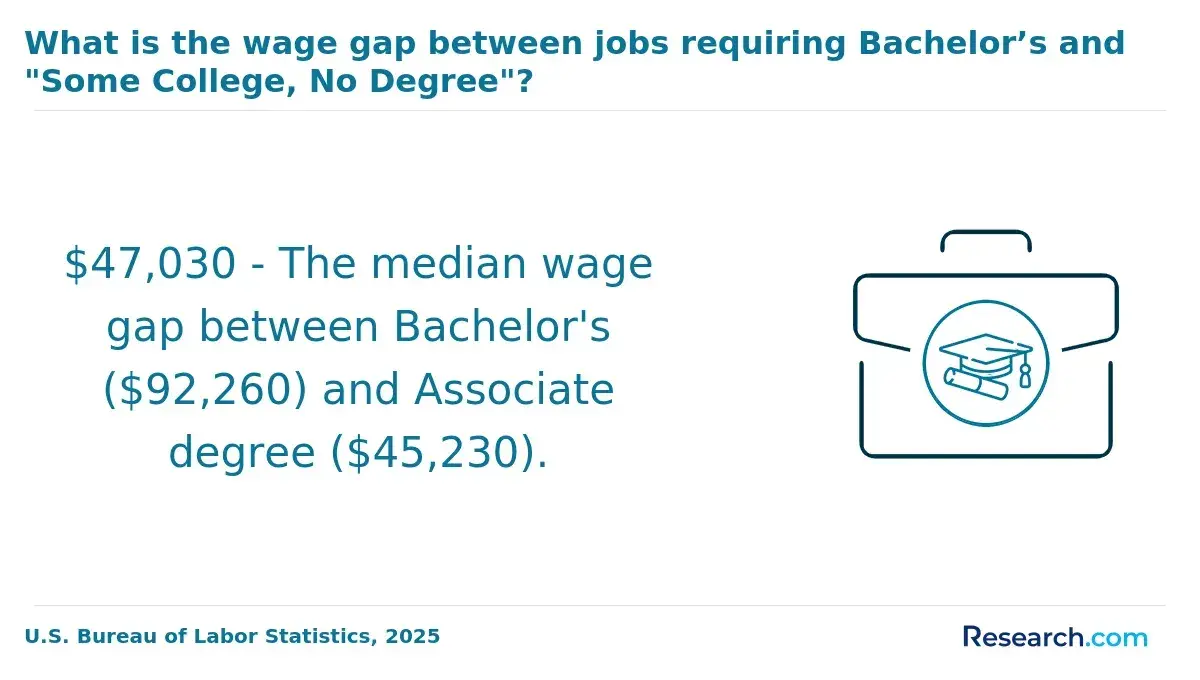
Graduates holding a mobile app development degree frequently discover that pivoting into alternative career paths can unlock notably higher earning potential than conventional app development roles. This difference stems largely from the economic structures and profitability of various industries, some of which are willing to reward technical skills paired with business insight far more generously.
- Financial Technology: This sector stands out for delivering top-tier median salaries early and mid-career. Roles in payment systems, blockchain development, and algorithmic trading platforms offer strong base pay supplemented by annual bonuses and equity incentives, driven by high-margin business models and a fiercely competitive innovation landscape.
- Management Consulting: Moving into consulting firms focused on IT strategy and digital transformation often yields premium compensation packages. These positions stress problem-solving and adaptability, frequently offering performance bonuses and funding for skill development, which reflects their direct impact on client profitability.
- Enterprise Technology and Software Engineering: Big tech corporations and SaaS companies pay senior engineers and product managers well, often adding profit-sharing and stock options. These roles gain from a mobile app development background but typically require broader expertise or advanced credentials to maximize salary growth.
- High-Growth Startups: Although base salaries may vary, equity compensation offers considerable upside potential. Startups also deliver flexibility such as remote work and swift professional growth, intangibles that can boost overall compensation and career satisfaction.
- Health Technology and Digital Health: Even though compensation here tends to be somewhat lower because of tighter margins and regulatory hurdles, this sector values software knowledge for managing healthcare data and compliance, making it a strong alternative for those seeking meaningful impact.
Industry profitability and market dynamics largely account for these compensation disparities: high-margin sectors reward direct contributions to revenue or cost reduction, whereas government and nonprofit roles tend to have capped salary ranges despite stable benefits. Assessing offers means looking beyond base pay to factor in bonuses, equity, retirement contributions, health plans, professional education budgets, and work flexibility.
Ambitious career pivots often call for investments in additional qualifications, such as certifications or graduate studies, along with extended preparation time. Networking efforts and the opportunity cost of delayed workforce entry also shape whether the financial return justifies the transition. Grasping these trade-offs helps align compensation goals with realistic career strategies.
Growing demand for professionals with a mobile app development background arises from particular technological and market dynamics within several high-growth sectors, each providing distinct entry points aligned with mobile app development competencies.
- Healthcare Technology: The surge in telemedicine and patient-focused applications calls for developers skilled in UI/UX design, data integration, and compliance with privacy laws. These capabilities help healthcare firms digitize services and seek secure, user-friendly apps.
- Financial Services and Fintech: Fintech's swift growth depends on scalable, secure mobile platforms for payments and investment management. Mobile app developers who grasp integration with legacy financial systems open up roles in product innovation and cybersecurity adaptation.
- EdTech: The move toward remote and hybrid learning drives demand for cross-platform mobile learning tools. Developers skilled at creating engaging, accessible educational apps match this sector's need for interactive user experiences.
- E-commerce and Retail: The expansion of mobile commerce requires app developers adept at optimizing performance and embedding payment gateways to strengthen customer engagement and streamline shopping experiences.
- Smart Home and IoT: Expanding connected-device ecosystems depend on intuitive mobile interfaces that control product functionality. Mobile app skills translate into designing dependable communication pathways between devices and user-centric controls.
- Entertainment and Media: Streaming and mobile gaming sectors look for developers who can innovate fast, responsive interactive content delivery and platform integration to raise user engagement.
Targeting emerging companies and startups within these sectors offers a strategic advantage, since these organizations prioritize demonstrated skills and adaptability over formal credentials, making them especially open to mobile app development graduates pivoting careers. Networking at niche industry events and joining developer communities can expose candidates to such opportunities.
Building sector-specific targeting into job searches aligns mobile app development strengths with areas of market expansion, yet candidates should weigh opportunity volume alongside career fit and compensation. High-growth industries often involve greater volatility than mature fields, so gauging personal risk tolerance is essential when planning a professional pivot.
Earning a graduate certificate provides a strategic credential for mobile app development degree holders who aim to pivot careers without the extensive time or financial investment a full degree demands. According to the National Center for Education Statistics (NCES), these certificates typically require between six and fifteen credits, which can be finished in under a year, making them efficient tools for professional growth or career redirection.
This efficiency fits well with the graduate certificate benefits for mobile app development degree holders seeking swift skill diversification.
- Time and Cost: Graduate certificates demand less time and money than master's programs, and are often delivered online to suit working professionals. This flexibility lets graduates upskill while keeping a job or actively searching for one.
- Career Signal Value: Unlike broad degree programs, certificates target niche skills that fit specific job requirements. Research from the American Council on Education finds that hiring managers increasingly value certificates closely tied to technical and management roles, reinforcing career pivot success with graduate certification in mobile app development.
- Common Certificate Categories: Mobile app development graduates often pursue certificates in data analytics, project management, user experience research, nonprofit management, or financial analysis. Salary data indicates that data analytics and project management certificates correspond with average salary increases of 10-15%, while UX research credentials strengthen qualifications for emerging tech roles.
- Credential Inflation: Not every certificate holds equal market value. Prospective students should assess programs on accreditation status, employer recognition, alumni career outcomes, and cost-benefit analysis before enrolling to maximize returns.
- Integration Into Pivot Timeline: Timing matters: graduates may opt to earn certificates before applying to satisfy credential requirements, during applications to show active commitment, or after landing a new role for professional development. This decision tree helps tailor the credential acquisition strategy to personal career change circumstances.
Recent data reveals that 60% of mid-career professionals use short-term credentials, including graduate certificates, to navigate career changes successfully, underscoring their growing importance in the labor market. For those exploring accelerated pathways, consider reviewing the fastest online business degree options as complementary opportunities within the broader career pivot strategy.
Professional certifications act as targeted validation tools that differ considerably from academic credentials. While degrees often reflect broad foundational knowledge, industry-recognized certifications serve as labor market signals, providing proof of practical expertise that can improve hiring prospects beyond Mobile App Development roles. This distinction matters for those using a Mobile App Development degree to pivot careers, since certifications often offer a competitive edge only when aligned with the desired field.
For instance, the Project Management Professional (PMP) certification, valued in IT, consulting, and corporate sectors, requires documented project experience and passing a rigorous exam after 3-6 months of preparation, and costs about $555 for non-members. Other relevant credentials include:
- Certified Analytics Professional (CAP): Validates data analysis skills; calls for a degree, professional experience, and exam passage; preparation 4-6 months; costs around $495-$695; prized in analytics and business intelligence roles.
- SHRM-CP (Society for Human Resource Management - Certified Professional): Centers on HR knowledge; requires some HR experience; 3-4 months exam preparation; approximately $400 fee; recognized in HR and talent management.
- Salesforce Administrator: Demonstrates CRM platform expertise; no prerequisite, though Salesforce experience helps; preparation spans a few weeks to 2 months; exam fee $200; valued by firms using Salesforce for sales and customer relations.
- Certified ScrumMaster (CSM): Validates agile project management; requires a 2-day course and exam; costs about $1,000; important for agile teams and software development roles.
- Google UX Design Professional Certificate: Entry-level UX/UI credential; self-paced (~6 months); low-cost and online; useful for transitions into design and user experience.
Before committing resources, research certification relevance by scanning job postings for your target pivot role, examining LinkedIn profiles of successful professionals, and holding informational interviews to uncover which certifications employers value. This strategy ensures efficient use of time and money on credentials that materially affect hiring outcomes.
Sequence certifications strategically to maximize immediate value aligned with your pivot goals. If a certification is still in progress, list it that way on your resume and mention your commitment during interviews to signal ongoing professional growth. Such transparency shows seriousness about career change while building credentials.
Mobile app development graduates weighing broader career transitions will benefit from weaving these certifications into their professional development path. Identifying transferable competencies and accessible entry-level pivot roles, backed by credible certifications, can unlock opportunities across diverse high-growth sectors and roles.
For additional guidance on accelerating career advancement, perhaps while pursuing a fastest masters degree online, exploring flexible credential-building options alongside industry certifications may prove valuable.
Freelance and contract work act as powerful accelerators for career pivots among mobile app development degree holders, particularly within the expanding gig economy that now covers over 36% of the U.S. workforce. Freelancers often move into fields such as content creation, research, data analysis, virtual assistance, communications consulting, and project coordination, drawing on their technical fluency and problem-solving skills while picking up domain-specific knowledge outside app development.
- Portfolio Development: Completing client projects produces tangible outcomes that strengthen a freelance portfolio, vital evidence for employers judging readiness for full-time roles in new industries.
- Professional Endorsements: Positive feedback and client relationships built during freelance assignments often turn into strong references, boosting credibility for permanent positions.
- Credential Leverage: Framing a mobile app development degree as a marker of technical expertise and adaptability helps freelancers stand out on platforms such as Upwork and Fiverr. Well-crafted service packages that showcase transferable skills draw in a diverse client base.
- Practical Launch Tips: Beginning with competitive rates builds reputation; choosing freelance platforms aligned with target sectors increases exposure. Regularly updating resumes with freelance achievements, particularly quantifiable ones, strengthens applications for pivot roles.
- Financial and Sector Suitability: Freelance-first career shifts call for financial stability and tolerance for variable income. Certain regulated fields or government roles limit freelance options, making direct job applications more feasible in those cases.
For professionals with enough runway, taking on freelance contracts significantly shortens the time required to build cross-sector credibility, paving a strategic, experience-driven pathway to successful career transitions beyond mobile app development.
Deliberate networking is vital for mobile app development graduates pivoting careers, since many lack established professional ties in new fields. Research from Harvard Business Review, MIT Sloan Management Review, and labor market sociology underscores that weak ties and referral hiring usually outperform standard job applications.
Drawing on this, graduates should adopt five targeted networking methods.
- Alumni Network Activation: Find alumni from your mobile app development program who have moved into your desired industry. Use alumni directories or LinkedIn filters to identify relevant contacts. Ask for brief conversations about their career shifts and advice.
- Professional Association Entry: Join associations tied to your target sector to reach practitioners, workshops, and networking forums. Concentrate on meaningful conversations rather than collecting contacts. Volunteer for committees or task groups to raise your visibility.
- Informational Interview Campaigns: Arrange concise interviews with industry insiders to gain firsthand insight. Use polite, clear messaging such as "I'm a mobile app development graduate exploring [field]. May I ask a few questions about your career path?" Prepare thoughtful questions that respect their time.
- LinkedIn Strategic Connection-Building: Reach out to professionals with customized messages that highlight shared backgrounds or interests. Skip generic invites; refer to mutual contacts, recent posts, or events. Engage regularly by commenting or sharing relevant content.
- Community of Practice Engagement: Take part in online or local groups centered on your target industry's skills or challenges. Contribute actively to show expertise and curiosity. Offer support to build reciprocal relationships.
Common networking hurdles, including imposter syndrome, fear of rejection, unclear messaging, and discomfort with self-promotion, can be eased by using conversational framing centered on curiosity and learning. For example, at events say, "I'm exploring opportunities in [field] and would love to hear about your experience." On LinkedIn, try, "I noticed we share a mobile app development background and am eager to learn about your role at [Company]. Would you be open to connecting?"
Establishing a sustainable networking rhythm is essential: set aside weekly time blocks for outreach, define clear goals such as connecting with two new professionals per week, and track interactions to nurture long-term relationships. Such a disciplined approach turns networking into an ongoing career development practice.
Recent data highlights that 85% of jobs are secured through networking or referrals, demonstrating the crucial advantage of strategic connections for career-pivoting mobile app development graduates.
What Graduates Say About the Best Career Pivot Options for People With a Mobile App Development Degree
- Tristan: "Graduating with a mobile app development degree opened doors I hadn't imagined, particularly in high-growth sectors like healthcare tech and fintech. Drawing on transferable competencies such as problem-solving and UI/UX design helped me move smoothly into product management roles. My advice? Focus on earning relevant certifications and building a strong network early, since it truly accelerated my career pivot."
- Jesiah: "Looking back on my journey, the mobile app development coursework gave me technical skills that made accessible entry-level positions in quality assurance and user experience research highly attainable. Reframing my resume to stress project collaboration and agile methodologies was a game-changer when applying outside traditional developer roles. Over the long term, this degree has positioned me well for diverse opportunities in emerging digital markets."
- Christopher: "From a professional standpoint, the biggest insight from my mobile app development background is the power of continuous credential strategies, such as completing specialized bootcamps alongside my degree. I found that networking through industry conferences and developer forums created pivotal connections that helped me break into cybersecurity within tech. This blend of skills and relationships is essential for sustainable career growth."
Other Things You Should Know About Mobile App Development Degrees
Holders of a mobile app development degree should showcase their technical skills alongside transferable competencies such as problem-solving, project management, and user experience design. It matters to tailor resumes so they emphasize achievements relevant to the desired industry or role, including specific programming languages, app deployment experiences, and collaboration within agile teams. Cutting overly technical jargon or app-specific details can make the resume more accessible to hiring managers outside traditional app development roles.
Employers want to see two to four polished projects displaying wireframes, clickable prototypes, and usability testing results. A mobile app graduate should also add redesign case studies, Figma files, and a brief explanation of how user feedback altered the final interface.
In 2027, earning additional certifications can give mobile app developers specialized skills, boosting their versatility in tech-related fields. These certifications can close knowledge gaps, open doors to emerging technologies, and sharpen competitiveness in the job market, helping enable a successful career pivot.
Graduates draw on their understanding of software lifecycle and interface design to shift into roles such as product management, UX/UI design, and technical consulting. Highlighting cross-functional collaboration skills and familiarity with user-centered design helps show value in these adjacent positions. Ongoing learning and networking within related fields also support smooth transitions by exposing graduates to varied industry practices and expectations.
- How to build a successful career in the mobile app development industry in 2025 and beyond - Foonkie Monkey https://www.foonkiemonkey.co.uk/blog/how-to-build-a-successful-career-in-the-mobile-app-development-2025/
- The Role of Certifications in Advancing Your Tech Career: Why They Matter (update) https://nupaths.org/the-role-of-certifications-in-advancing-your-tech-career-why-they-matter/
- How to start a career as a mobile app developer https://www.brightec.co.uk/blog/how-start-career-mobile-app-developer
- Top Industries Using Mobile Applications in 2024 https://www.addwebsolution.com/blog/industries-that-use-mobile-apps
- Dream Employers for Mobile Developers: What Industries Hire the Most? https://careerkarma.com/blog/what-industry-hires-the-most-mobile-developers/
- Build Essential Mobile App Development Skills for Your Career Development https://sisgain.com/blogs/build-essential-mobile-app-development-skills-for-your-career-development
- How Do Certifications Impact A Developer’S Job Prospects? - Proxify https://proxify.io/sv/knowledge-base/%7Bdeveloper-types/how-do-certifications-impact-a-developers-job-prospects
- 7 In-Demand Skills for Mobile App Developers - ABM College Canada https://www.abmcollege.com/blog/7-in-demand-skills-for-mobile-app-developers
- Live-in-the-App Industry Certifications for Future Careers https://knowledge-pillars.com/live-in-the-app-industry-certifications-for-future-careers/
- Top Countries to Hire Mobile App Developers https://globalsquirrels.com/blog/countries-to-hire-mobile-application-developers/