2027 Online Educational Policy Doctorate Programs with Specializations: Concentrations, Tracks, and Career Paths
Audited and Verified:
Our Editorial and Data Verification Process
Research.com uses government datasets, official education statistics and primary institutional information to support its career and degree guides. Our review process checks factual accuracy, occupational definitions, source dates and the requirements associated with the credentials discussed.
How This Article Was Fact-Checked
Our editorial team verifies salary estimates, employment projections, education requirements and program information against original data providers and official organizations. Salary figures are checked against the relevant occupational definitions and reporting periods. Information about licensure, accreditation and required in-person training is reviewed separately.
Fact-checked and verified on:

Co-Founder and Chief Data Scientist
Selecting an online Educational Policy doctorate is essentially a decision about the issues you hope to address: school funding, equity, governance, data, higher education, or systems leadership. That choice matters because the U.S. Bureau of Labor Statistics reported a May 2024 median wage of $103,960 for postsecondary education administrators, which makes advanced policy and leadership preparation financially meaningful for many professionals.
This guide assists educators, administrators, analysts, and nonprofit leaders in comparing specializations, grasping how concentrations influence coursework and research, and selecting a track that matches realistic career goals.
Key Things You Should Know
- Specializations usually signal a broad doctoral focus, concentrations group related electives and research methods, and tracks often define a structured pathway such as policy analysis, leadership, higher education, or equity-centered reform.
- Most online Educational Policy doctorates require roughly 45 to 70 credits beyond the master's degree, with Ph.D. programs usually emphasizing original research and Ed.D. programs usually emphasizing applied problem-solving in schools, agencies, or organizations.
- Higher-paying aligned roles often sit in senior administration, policy leadership, consulting, and training leadership. BLS May 2024 data placed the median wage for training and development managers at $125,040.
What Are the Best Specializations and Concentrations for an Online Educational Policy Doctorate?
The ideal specialization is the one that aligns with the policy problems you want to investigate and the professional environment where you seek influence. In online Educational Policy doctorates, these terms are connected but not interchangeable.
A specialization serves as the primary academic focus, a concentration is a group of courses inside the degree, and a track is frequently a defined path with particular milestones, electives, or research requirements.
The table below compares typical online Educational Policy doctorate specializations by academic focus, probable coursework, and career fit. Use it to determine which path supports your professional goals before you compare school names or tuition rates.
| Specialization or Concentration | Ideal Fit | Typical Coursework | Common Career Alignment | When to Skip It |
| Education Policy Analysis | Professionals seeking to assess laws, funding models, accountability systems, or reform initiatives | Policy analysis, education economics, quantitative methods, program evaluation | Policy analyst, research director, legislative education advisor, think tank researcher | Skip it if you prefer daily school operations to data, legislation, and systems analysis |
| Educational Leadership and Governance | School, district, nonprofit, and agency leaders who want executive-level preparation | Governance, strategic planning, organizational change, finance, and ethics | District administrator, chief academic officer, nonprofit executive, education consultant | Skip it if your primary goal is a tenure-track research career |
| Equity, Diversity, and Social Justice Policy | Leaders centered on access, civil rights, school discipline, language policy, or opportunity gaps | Critical policy studies, equity audits, culturally responsive leadership, law and ethics | Equity officer, advocacy director, policy strategist, DEI-focused education consultant | Skip it if you do not want to handle complex legal, political, and community-facing issues |
| Higher Education Policy | Professionals employed in colleges, universities, accreditation, student success, or state higher education systems | Higher education finance, governance, enrollment policy, accreditation, student affairs policy | Dean, provost's office leader, institutional research leader, state higher education analyst | Skip it if your career is mostly in K-12 and you do not plan to transition |
| Curriculum, Instruction, and Learning Policy | Educators interested in standards, assessment, instructional systems, and learning outcomes | Curriculum policy, assessment systems, learning theory, instructional improvement | Curriculum director, assessment leader, instructional policy consultant | Skip it if you want a purely public policy or finance-heavy degree |
| Educational Technology and Digital Learning Policy | Professionals assessing online learning, AI in education, accessibility, data privacy, and instructional technology systems | Digital learning policy, instructional systems, technology leadership, privacy and ethics | Digital learning director, edtech policy advisor, instructional innovation leader | Skip it if you want a traditional school administration path with little technology focus |
| Special Education and Student Support Policy | Leaders centered on disability policy, multi-tiered systems of support, mental health access, or student services | Special education law, student support systems, compliance, intervention policy | Special education administrator, student services director, compliance leader | Skip it if you are not ready to navigate state rules, federal compliance, and interdisciplinary teams |
Readers who want a stronger instructional design foundation before doctoral study may also compare the best online instructional design master's programs, particularly if they are moving from teaching into digital learning strategy.
How Do I Choose the Right Track in My Educational Policy Doctoral Degree?
Begin with the job you want after the degree, not the course title that sounds most appealing. A doctoral track should link your current experience, research question, faculty support, and long-term career path.
The steps below can help you compare tracks practically before you apply or enroll:
- Define your target setting: K-12 district, higher education, government agency, nonprofit, research organization, consulting firm, or education technology company.
- Pinpoint the problems you want to solve, such as funding equity, accountability, special education compliance, student success, curriculum policy, workforce preparation, or AI governance.
- Compare required courses, not merely concentration names, because two programs may use the same label while providing very different training in statistics, leadership, law, or qualitative research.
- Check faculty expertise and recent dissertation topics to confirm that at least one faculty member can support your planned research area.
- Ask whether the track is fully online, hybrid, or online with residencies, since some policy doctorates require in-person intensives, internships, or dissertation defenses.
- Check whether the track supports your desired credential outcome, particularly if you need superintendent preparation, principal licensure, or another state-specific administrative credential.
- Assess return on investment using total program cost, employer tuition benefits, expected time to completion, and realistic career advancement opportunities.
A common mistake is choosing the most prestigious-sounding concentration without checking whether it suits your methods training. For instance, a policy analysis track may look appealing, but it can become difficult if you dislike statistics, econometrics, or large-scale data interpretation.
Another mistake is assuming that all tracks lead to identical career outcomes. A higher education policy concentration may support institutional research or student success leadership, whereas a K-12 governance track may better support district administration, state policy, or superintendent-adjacent roles.
A third mistake is overlooking the dissertation stage. If your research question concerns rural school finance, but the program's faculty specialize mainly in higher education leadership, you may struggle to find strong advising even if the degree title appears relevant.
If your goal is a licensed school psychologist role rather than policy leadership, compare the doctoral route with school psychology programs online accredited by NASP, since licensure-oriented preparation differs from an Educational Policy doctorate.
What Career Paths Can I Pursue With a Doctorate in Educational Policy?
A doctorate in Educational Policy can prepare you for academic, administrative, research, advocacy, and consulting careers. It is not a degree for only one job; the result depends on your work history, specialization, research portfolio, geographic mobility, and whether the program emphasizes research or practice.
The table below links common career paths with the doctoral concentrations that often support them. It is intended to clarify fit, not to suggest that a concentration alone qualifies someone for every role.
| Career Path | What the Role Typically Involves | Useful Concentrations | Key Skills |
| Education Policy Analyst | Assesses laws, programs, funding models, and reform proposals for agencies, think tanks, districts, or nonprofits | Policy analysis, education economics, equity policy | Research design, statistics, writing for policymakers, data visualization |
| District or System-Level Administrator | Leads curriculum, operations, accountability, student services, or strategic initiatives across schools | Leadership and governance, curriculum policy, special education policy | Budgeting, change management, legal compliance, stakeholder communication |
| Higher Education Administrator | Works in student success, academic affairs, enrollment policy, institutional research, accreditation, or executive administration | Higher education policy, governance, institutional research | Assessment, accreditation knowledge, enrollment strategy, policy interpretation |
| Education Consultant | Advises schools, agencies, edtech firms, or nonprofits on strategy, compliance, equity, evaluation, or systems improvement | Leadership, technology policy, program evaluation, equity policy | Client management, project design, facilitation, applied research |
| Faculty or Research Scholar | Conducts research, teaches graduate courses, publishes scholarship, and advises students | Policy analysis, higher education policy, social foundations, research methods | Publishing, grant writing, advanced methods, theory development |
| Advocacy or Nonprofit Policy Leader | Shapes education campaigns, analyzes legislation, builds coalitions, and communicates policy recommendations | Equity policy, community engagement, special education policy, governance | Public communication, coalition building, legislative analysis, ethical leadership |
BLS May 2024 data put the median wage for postsecondary education administrators at $103,960. For readers weighing higher education policy, that number suggests the degree may align with leadership roles that demand advanced knowledge of governance, finance, student outcomes, and institutional regulation.
Policy analyst and research-oriented roles may be more competitive, since many employers value strong methodological training, publications, or applied evaluation experience. If you seek these roles, prioritize programs with courses in quantitative methods, qualitative inquiry, causal evaluation, policy writing, and dissertation topics that yield a strong research sample.
Administrative roles frequently depend more on prior leadership experience. A doctorate can strengthen your profile, yet employers may still expect a record of managing budgets, supervising teams, leading initiatives, and implementing policy under real constraints.
Roles that carry wide responsibility, control over budgets, specialized technical skills, or executive leadership duties tend to produce the strongest earnings. Your concentration can improve your positioning for such roles, yet pay also depends on the kind of employer, location, experience, union or public-sector pay scales, and whether the job is administrative, academic, or consulting-oriented.
The following table draws on BLS national median wage figures for May 2024 across related occupations. They are medians at the occupation level, not promised results for doctorate holders.
| Related Occupation | Median Wage, May 2024 | Concentrations That Could Help | Reasons It May Pay More |
| Training and Development Manager | $125,040 | Educational technology policy, learning systems, and organizational leadership | Such roles can involve learning strategy across the enterprise, workforce development, and training systems enabled by technology |
| Political Scientist | $132,350 | Policy analysis, education politics, and quantitative research | Policy roles centered on research can reward strong analytical abilities and a record of publication |
| Postsecondary Education Administrator | $103,960 | Higher education policy, governance, and institutional research | Senior roles at colleges and universities often include budgets, compliance, accreditation, and institutional strategy |
| Elementary, Middle, and High School Principal | $104,070 | Educational leadership, governance, and curriculum policy | Positions in leadership carry duties related to staffing, instruction, compliance, safety, and improvement of the school |
| Social and Community Service Manager | $78,240 | Equity policy, community engagement, and student support policy | Roles in nonprofits and agencies can expand into executive leadership, particularly when paired with expertise in policy and evaluation |
Concentrations in policy analysis, higher education policy, educational technology policy, and leadership or governance often offer the greatest salary potential, since they can lead to executive, research, or systems-level positions. Still, they are not necessarily better choices when your experience and professional network lie in another area.
Concentrations in equity, student support, and special education policy can open the door to substantial leadership roles, though compensation differs considerably by sector. Public school districts, state agencies, nonprofits, and advocacy groups may use quite different pay structures even when the work demands advanced expertise.
To evaluate earning potential carefully, weigh each concentration against the roles you could realistically pursue within five years. A track linked to an occupation with a somewhat lower median may still deliver better ROI if it helps you move ahead faster in your present field.
Doctorates in Educational Policy earned online can command respect if they are offered by properly accredited institutions, demand rigorous research, and match what an employer needs. In general, employers focus less on how the program is delivered than on the institution's credibility, the quality of the program, relevant experience, and whether the candidate can apply research to genuine education problems.
Institutional accreditation is the strongest quality indicator. Within the U.S., students ought to confirm that the university has recognized institutional accreditation and that any licensure-related track satisfies state requirements. Educational Policy doctorates generally do not need programmatic accreditation the way counseling, psychology, nursing, or educator licensure programs might, yet state credential rules can still affect administrative roles.
How academic institutions regard an online doctorate can vary based on whether it is a Ph.D. or an Ed.D., how rigorous the dissertation is, the research productivity of the faculty, and the graduate's publishing record. If you seek a tenure-track faculty position, a research-intensive Ph.D. with solid methods training and scholarly publications may prove more competitive than an Ed.D. focused on practice.
To gauge employer respect, ask programs pointed questions before you enroll. Convincing answers should demonstrate that the online format is simply a delivery method, not a shortcut.
- Do online and campus students receive the same transcript or diploma?
- Who teaches the doctoral courses: full-time faculty, adjunct instructors, or a combination?
- Which research methods sequence does my selected concentration require?
- Can online students qualify for research assistantships, conference funding, or projects led by faculty?
- Which dissertation, capstone, or applied research projects have recent graduates finished?
- Does the program report completion rates, expectations for time to degree, or career outcomes?
One major warning sign is a program that promotes speed and convenience yet offers scant information about faculty advising, dissertation support, research expectations, or accreditation. A second warning sign is a concentration that sounds marketable but lacks dedicated courses or faculty expertise to support it.
Doctoral programs in Educational Policy delivered online usually structure research through virtual seminars, methods courses, faculty advising, dissertation committees, and remote access to library databases and statistical software. Certain programs require a traditional dissertation, whereas others use a dissertation-in-practice, a policy analysis project, or an applied capstone.
The research format frequently depends on whether the degree is a Ph.D. or a professional doctorate. A Ph.D. generally requires students to create original scholarship that advances the field, while an Ed.D. commonly requires them to apply research to a practical problem within an actual organization.
The following table compares typical research formats, helping you judge which one suits your goals and preferred way of working.
| Research Structure | Ideal For | Usual Output | Effect of Specialization |
| Traditional Dissertation | Students who seek research, faculty, policy institute, or advanced analytical positions | An original study including literature review, methodology, findings, and implications | Policy analysis tracks may call for more rigorous quantitative or mixed-methods designs |
| Dissertation-in-Practice | Practicing administrators and leaders who are addressing an applied organizational problem | A problem-based study centered on improvement, implementation, or evaluation | Tracks in leadership, equity, and curriculum policy often choose topics connected to the workplace |
| Policy Analysis Project | Students with interests in legislation, finance, program design, or public-sector decision-making | A policy brief, cost analysis, implementation study, or comparative policy review | Concentrations in governance, finance, and policy analysis align particularly well |
| Program Evaluation Capstone | Professionals who evaluate interventions, grants, student support systems, or institutional initiatives | An evaluation report offering findings and recommendations for decision-makers | Tracks in student support, higher education, and nonprofit policy may adopt this format |
Your specialization ought to guide your research question. A student in higher education policy might investigate funding models for retention, an equity policy student might study disparities in discipline, and an educational technology policy student might assess AI governance or digital access.
Students online should ask how dissertation advising functions across time zones, how frequently committees meet, whether synchronous sessions are mandatory, and what occurs if a faculty advisor departs. Such practical details can influence your progress as much as the formal curriculum does.
A large number of online Educational Policy doctoral students hold full-time jobs, particularly in Ed.D. programs built for working educators and administrators. The central question is not whether employment is feasible, but whether the program's pace, research demands, residency requirements, and dissertation timeline are practical for your schedule.
Professionals who work should compare program formats with care. A part-time, cohort-based Ed.D. may be workable for a district administrator, whereas a research-intensive Ph.D. with advanced statistics, assistantship duties, or publication goals may demand more flexible work arrangements.
Use this checklist to assess whether a program suits your weekly schedule and professional responsibilities:
- Ask how many hours per week students usually devote to coursework in core terms, methods courses, and dissertation stages.
- Check whether classes are asynchronous, synchronous, or blended, and whether live sessions occur outside normal working hours.
- Determine whether residencies, intensives, or dissertation defenses involve travel during the academic year.
- Ask whether your workplace could serve as a research site and whether employer approval is required.
- Examine leave policies, tuition assistance rules, and workload flexibility before you enroll.
- Prepare for greater time demands during proposal writing, data collection, and dissertation revisions.
Some students look for accelerated options because they wish to spend less time away from career momentum. If speed matters greatly, compare legitimate 1 year EdD programs online carefully: the quickest route may not provide the specialization depth, research support, or dissertation timeline required for Educational Policy goals.
It is a common mistake to assume that the online format is automatically easier. Online doctoral work may be more flexible, yet the reading, writing, research, and committee expectations stay demanding.
Admission requirements differ by university and degree type, though online Educational Policy doctoral programs generally expect applicants to demonstrate graduate-level academic capability, professional experience in education or a related area, and a clear rationale for doctoral study. Competitive applicants can link their background to a particular policy problem and explain how the program's specialization supports that aim.
Most programs request a number of core materials. Exact requirements can vary, so confirm them with the school before you apply:
- A master's degree from an accredited institution, frequently in education, public policy, leadership, curriculum, higher education, or a related field
- Official transcripts that show graduate academic performance and preparation for prerequisites
- A statement of purpose that explains career goals, research interests, and the preferred concentration or track
- A professional resume or curriculum vitae documenting experience in leadership, teaching, policy, research, nonprofit work, or administration
- Letters of recommendation from supervisors, faculty members, or professional leaders who can address your readiness for doctoral work
- A writing sample, policy brief, research paper, or professional analysis that demonstrates advanced writing ability
- An interview, if the program uses one to assess fit with faculty expertise and cohort expectations
Certain programs have cut or eliminated standardized test requirements, while others may still ask for GRE scores, particularly for research-intensive Ph.D. tracks. If a program is test-optional, rely on the rest of your application to demonstrate readiness for research, writing, and independent study.
The concentration you choose can influence how well you fit in admissions. A policy analysis track may prefer applicants with experience in statistics, economics, program evaluation, or research, whereas a leadership track may prize management experience, school improvement work, and proof of organizational impact.
Applicants frequently weaken their application by writing an overly broad statement. Rather than saying that you want to improve education, identify a specific issue such as rural school finance, community college completion, special education dispute resolution, AI use in assessment, or state accountability policy.
Several factors shape the cost of an online Educational Policy doctorate: credit requirements, public or private status, residency classification, technology fees, dissertation continuation fees, travel requirements, and the time you take to finish. Since many programs require 45 to 70 credits beyond the master's degree, even small differences in per-credit tuition can substantially alter the total cost.
NCES data published in 2024 indicated that average graduate tuition and required fees were higher at private nonprofit institutions than at public ones. For doctoral applicants, the practical lesson is straightforward: compare the total program cost, not just per-credit tuition, since fees, residencies, and additional dissertation terms can affect affordability.
The following table outlines key cost factors and explains why each matters when you compare online Educational Policy doctorate programs.
| Cost Element | Why It Matters | Questions to Ask |
| Per-credit tuition | Most programs charge per credit, so even a small tuition difference compounds over the full degree | Do online, in-state, and out-of-state students pay the same tuition? |
| Credit requirement | At the same tuition rate, a 45-credit program may cost far less than a 70-credit program | After my transfer credits or prior graduate credits are reviewed, how many credits will be required? |
| Fees | Fees for technology, library, registration, and dissertation can raise the advertised price | Which fees are required each term? |
| Residencies and travel | Certain online programs require in-person intensives, adding costs for transportation, lodging, and time away from work | How many campus visits are required, and when do they take place? |
| Dissertation extension terms | Students who take longer may owe continuation tuition or fees once coursework ends | What cost applies if my dissertation requires additional terms? |
| Employer support | Tuition reimbursement can lower out-of-pocket costs, though it may carry annual limits or service commitments | Will my employer reimburse doctoral coursework, and do policy concentrations qualify? |
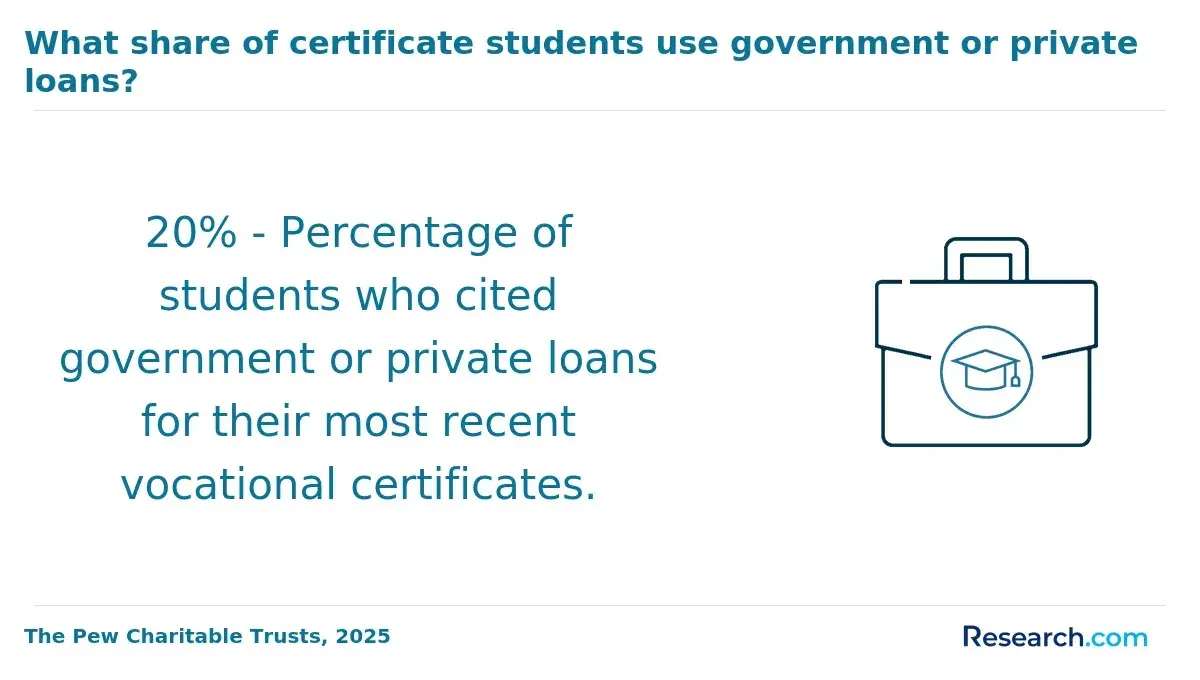
Funding possibilities may include federal student loans, employer tuition assistance, military or veteran education benefits, institutional scholarships, graduate assistantships, fellowships, payment plans, and awards from professional associations. Online doctoral students should ask whether part-time students can receive funding, because certain awards are restricted to full-time or campus-based students.
To lower costs, compare accredited lower-cost options early rather than after you have applied. A helpful starting point is this guide to the cheapest online EdD programs, but confirm that any lower-cost program still provides Educational Policy coursework, qualified faculty, and a research model suited to your goals.
A frequent funding mistake is to borrow for a degree without linking the credential to a realistic promotion or career change. Before you enroll, estimate the total amount you may pay, the time it may take to finish, and the job roles your chosen concentration can reasonably prepare you to pursue.
What Is the Difference Between a Educational Policy Ph.D. and a Professional Educational Policy Doctorate?
Purpose is the central difference. A Ph.D. in Educational Policy is generally built for original research, theory development, academic scholarship, and policy analysis. A professional doctorate, usually an Ed.D., is typically built for applied leadership, organizational improvement, and evidence-based decision-making in actual education settings.
The comparison that follows shows how the two pathways commonly differ. Program titles vary, so always examine the curriculum, dissertation format, faculty expertise, and graduate outcomes.
| Area | Educational Policy Ph.D. | Professional Educational Policy Doctorate or Ed.D. |
| Primary Goal | Conduct original research that adds to scholarship and policy knowledge | Use research to address practical problems in schools, colleges, agencies, or organizations |
| Best For | Aspiring faculty members, researchers, policy scholars, think tank analysts, and advanced methodologists | Practicing administrators, policy leaders, nonprofit executives, and practitioner-scholars |
| Research Emphasis | Usually places more weight on theory, statistics, research design, and preparation for publication | Commonly centers on applied inquiry, improvement science, evaluation, and leadership practice |
| Final Project | A traditional dissertation is common | A dissertation-in-practice, applied dissertation, policy project, or capstone may be used |
| Online Availability | Available, though often less common and sometimes more selective regarding research fit | Frequently offered online for working professionals |
| Career Alignment | Academic research, policy research, faculty roles, and advanced analysis | Executive leadership, district administration, higher education leadership, consulting, and applied policy work |
A Ph.D. may be the better option if you seek a university research career, intend to publish, or wish to apply advanced quantitative or qualitative methods in a professional setting. It can also suit policy analysts who want to work in research organizations where deep methodological knowledge is essential.
An Ed.D. may be the wiser choice if you aim to lead change within an organization, evaluate programs, design strategies for policy implementation, or advance into senior administrative work. It can be particularly practical for working professionals who want a doctoral structure centered on applied problems.
A poor choice can cause difficulties later. A student who wants a tenure-track career may find a practice-focused Ed.D. less competitive in certain academic markets, whereas a working administrator may find a research-heavy Ph.D. less aligned with daily leadership goals.
Other Things You Should Know About Educational Policy Programs
In some cases, though not in all. Certain universities show the concentration on the transcript instead of the diploma, whereas others do not formally list it. Before you assume that employers will see it, ask the admissions office how the specialization is documented.
A switch early in the degree is allowed by many programs, but changing later can postpone graduation if the new track requires different electives, methods courses, internships, or dissertation advising. Before you make the change, ask whether credits apply across tracks.
Not necessarily. Certain leadership tracks align with administrative licensure, yet Educational Policy doctorates are frequently non-licensure degrees. Since requirements differ by state, confirm them with the program and the relevant state education agency.
Most programs require a dissertation or capstone connected to the concentration and approved by the faculty chair, including a prospectus, proposal defense, and final oral defense. Topics must align with the program's research focus and usually avoid purely local school-management issues unless they address policy analysis, equity, governance, or higher-education regulation.
- What Can You Do with a PhD in Education https://aituedu.org/what-can-you-do-with-a-phd-in-education/
- The Best EdD Programs of 2025 | EdDPrograms.org https://www.eddprograms.org/schools/best-doctor-of-education-programs/
- Online Doctor of Education (EdD) Program Specializations / Concentrations https://www.onlineeddprograms.com/specializations/
- Best Online Ph.D. and Doctoral Programs | OEDb https://www.oedb.org/rankings/online-phd-programs/
- Guide to the Best Online EdD Degree Programs for You https://teach.com/online-ed/education-degrees/online-edd-programs/