2027 Online Educational Policy Doctorate Program Costs: Tuition, Fees, Financial Aid, and Employer Reimbursement
Audited and Verified:
Our Editorial and Data Verification Process
Research.com uses government datasets, official education statistics and primary institutional information to support its career and degree guides. Our review process checks factual accuracy, occupational definitions, source dates and the requirements associated with the credentials discussed.
How This Article Was Fact-Checked
Our editorial team verifies salary estimates, employment projections, education requirements and program information against original data providers and official organizations. Salary figures are checked against the relevant occupational definitions and reporting periods. Information about licensure, accreditation and required in-person training is reviewed separately.
Fact-checked and verified on:

Co-Founder and Chief Data Scientist
A doctorate in Educational Policy earned online can lead to senior leadership, research, and policy positions, yet the price is hard to gauge from tuition figures alone. NCES data published in 2024 indicates that average graduate tuition and required fees came to $12,596 at public institutions and $29,931 at private nonprofit institutions for 2022-23, before factoring in living costs, loans, or program fees. This guide serves educators, administrators, analysts, and working professionals who are weighing online doctorate options at a time when student debt remains a major worry. You will learn how to estimate total cost, compare formats, reduce borrowing, and judge whether the degree matches your career goals.
Key Things to Know About Online Educational Policy Doctorate Program Costs
- There is no single official national average for online Educational Policy doctorates, so applicants should compare total tuition by multiplying required credits by the per-credit rate and then adding technology, dissertation, residency, and graduation fees.
- Federal graduate borrowing can be expensive: for 2024-25, Direct Unsubsidized Loans for graduate students carry an 8.08% fixed interest rate, while Grad PLUS Loans carry a 9.08% fixed interest rate, making scholarships, assistantships, and employer support especially important.
- Employer tuition assistance may cover part of an online doctorate when the degree aligns with the employee's role; under current federal tax rules, up to $5,250 in qualifying employer educational assistance can generally be excluded from taxable income each year.
What is the average tuition cost of an online Educational Policy doctorate program?
The most accurate answer is that tuition for an online Educational Policy doctorate depends on the institution, credit load, residency policy, and whether the degree is an EdD or a PhD. Federal datasets do not report a separate national average for this particular online specialty, so the sounder planning approach is to build a tuition-only estimate from the school's required credits and its published per-credit rate.
As a benchmark, NCES graduate tuition data published in 2024 shows that public institutions stay less costly on average than private nonprofit ones, though doctoral students should not presume a public online program is automatically cheaper once out-of-state rates and fees are counted. Many online education doctorates call for roughly 45 to 60 post-master's credits, and some programs require more when research, cognate, or dissertation credits are included.
The table below illustrates how total tuition shifts when the same doctorate carries different per-credit prices. Treat it as a calculation model, not a guarantee that any particular school will match these figures.
| Per-credit tuition | 54-credit doctorate | 60-credit doctorate | What it means for budgeting |
| $600 | $32,400 | $36,000 | Common among lower-cost public options or highly affordable online programs |
| $900 | $48,600 | $54,000 | A midrange planning benchmark for many online education doctorates |
| $1,200 | $64,800 | $72,000 | Often high enough that employer support or grants can meaningfully change affordability |
| $1,600 | $86,400 | $96,000 | A premium-cost scenario in which ROI deserves careful review before borrowing |
Applicants comparing cheapest online EdD programs should look past the advertised per-credit rate. A lower tuition rate can lose its edge if the program demands more credits, charges dissertation continuation fees, or requires travel for residencies.
A practical cost formula looks like this: required credits multiplied by the tuition rate, plus mandatory fees, plus travel, books, software, background checks when required, and loan costs if you borrow. That yields a clearer "real cost" than the tuition figure highlighted on a program page.
Are online Educational Policy doctorate programs subject to distance learning or technology fees?
Yes, plenty of online Educational Policy doctorate programs charge distance learning, technology, online course, library, student services, or platform fees. Such fees may be billed per credit, per course, per term, or as a flat mandatory amount, and they are frequently easy to overlook when students look only at tuition.
Technology fees matter because doctoral programs last several years. Even a modest per-credit or per-term fee can accumulate across 50 or more credits, particularly if the dissertation stage runs longer than expected. Some institutions fold these costs into a flat online tuition rate, while others list them separately in the tuition and fees schedule.
Before you enroll, ask the school to confirm which charges are mandatory and which are optional. The fee questions that matter most are:
- Is a separate online, distance learning, or technology fee charged for each course, credit, or semester?
- Are dissertation, candidacy, comprehensive exam, library, graduation, or transcript fees billed separately?
- Do students pay full tuition during dissertation continuation, or is a reduced continuous-enrollment rate available?
- Are required synchronous sessions, campus visits, or professional conferences included in the cost of attendance?
- Will fees rise if tuition increases during the years I am enrolled?
A frequent mistake is comparing two programs on tuition alone while ignoring fee structure. A program with a somewhat higher tuition rate but fewer separate fees may prove more predictable than a cheaper-looking option with multiple recurring charges.
What out-of-pocket expenses should online Educational Policy doctorate students anticipate?
Online students typically save on relocation and daily commuting, yet they still encounter expenses that may not show up in the tuition line. Educational Policy doctorates can involve research software, books, association memberships, dissertation editing, data collection, exam fees, and travel for residencies or defense presentations.
The table below outlines common out-of-pocket expenses and why they matter. Schools may count some of these items in the official cost of attendance, but students should confirm what aid eligibility actually covers.
| Expense category | Typical reason it appears | Budget risk |
| Books and digital materials | Policy, leadership, statistics, and research methods coursework | Costs differ widely by course and may fall outside tuition |
| Research and analysis software | Dissertation data analysis, qualitative coding, surveys, or citation management | Certain tools are free through the university, while others need student licenses |
| Residency travel | Required campus intensives, orientations, research seminars, or dissertation milestones | Airfare, lodging, meals, parking, and unpaid work time can add up substantially |
| Dissertation expenses | Editing, transcription, data collection, printing, or participant recruitment | Costs frequently appear late in the program, when students are already paying continuation fees |
| Professional development | Conference attendance, policy association memberships, or leadership networking | Helpful for career mobility but not always required or reimbursed |
To steer clear of underbudgeting, ask for the school's full cost-of-attendance estimate and weigh it against your own circumstances. A working superintendent, policy analyst, or higher education administrator may face different costs than a full-time student, since travel timing, work leave, and childcare needs can alter the real price of attendance.
Residency status can matter a great deal, though the effect hinges on the school's pricing model. Some public universities charge separate in-state and out-of-state graduate tuition even for online students. Others apply a flat online rate to all students, which can make a public university appealing to out-of-state applicants.
The table below lays out the main tuition models applicants are likely to meet. This comparison helps you determine whether residency will help, hurt, or leave your total cost unchanged.
| Tuition model | How it works | Best fit | Cost caution |
| In-state and out-of-state rates | Residents pay a lower public tuition rate, while nonresidents pay more | Students applying to a public university within their own state | Out-of-state online students may pay far more unless a waiver applies |
| Flat online rate | Every online student pays the same tuition no matter where they live | Working professionals comparing programs across the country | The flat rate can still exceed a local in-state option |
| Private institution rate | Tuition typically stays the same regardless of state residency | Students who prioritize fit, specialization, cohort model, or faculty expertise | Institution type by itself does not determine value; compare outcomes and total cost |
Students should also ask whether relocating, military status, educator discounts, state employee benefits, or regional tuition agreements influence eligibility. Residency classification rules can be strict, and changing status after enrolling is not always simple.
Online doctorates tend to be more convenient for working professionals, yet they are not always cheaper in tuition terms. The largest savings typically come from avoiding relocation, keeping full-time employment, and cutting commuting costs rather than from a lower per-credit price.
For educators comparing timelines, accelerated options such as 1 year EdD programs online may seem appealing, but speed should be balanced against workload, dissertation readiness, transfer credit rules, and whether the credential's structure aligns with Educational Policy career goals.
The table below compares typical cost differences between online and campus-based doctorate formats. It is most helpful for spotting which costs shift from the school bill to the student's own budget.
| Cost factor | Online doctorate | On-campus doctorate | Decision point |
| Tuition | Might be flat-rate, in-state/out-of-state, or private-rate | Usually tied to campus graduate tuition rules | Compare total credits and fees, not the format by itself |
| Employment continuity | Frequently built for working professionals | May call for more daytime presence | Keeping income can be the biggest affordability advantage |
| Housing and relocation | Generally not required | May require a move near campus | Campus costs can climb sharply when relocation is needed |
| Travel | May involve limited residencies | Regular commuting or campus attendance | Online is cheaper only when residency travel is limited and predictable |
| Networking | Often virtual, cohort-based, or residency-based | More frequent in-person access | Career value rests on faculty access, policy networks, and placement support |
An online program can make the most financial sense when you can keep earning, tap employer benefits, and avoid relocation. A campus program may deserve consideration if it provides a funded assistantship, lower in-state tuition, stronger research access, or a policy network tied directly to your target career path.
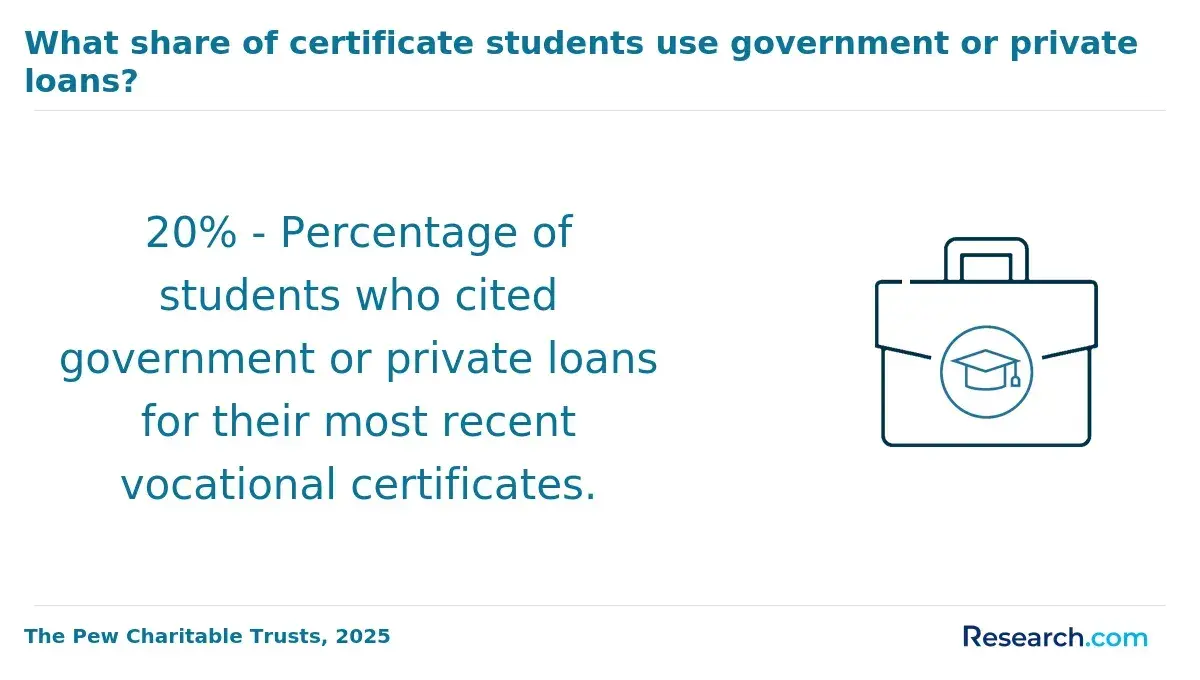
Yes, though online doctoral students should verify eligibility early. Graduate assistantships, fellowships, tuition waivers, research grants, and institutional scholarships can lower costs, but some are set aside for full-time campus-based students because they involve teaching, research, or administrative work on site.
Assistantships appear most often in research-intensive PhD pathways, yet EdD students may still uncover departmental scholarships, dissertation grants, leadership fellowships, or project-based research support. Educational Policy students with quantitative analysis, program evaluation, grant writing, or K-12 leadership experience may compete well for funded work that matches faculty projects.
Follow this sequence when you ask about institutional funding:
- Ask the program director if online doctoral students qualify for assistantships, fellowships, or tuition waivers.
- Request funding information separately from the graduate school, college of education, and department, since awards may be administered in different ways.
- Ask whether awards demand full-time enrollment, campus presence, a minimum GPA, research hours, or teaching duties.
- Find out whether funding covers tuition only or can also pay for fees, research travel, and dissertation expenses.
- Ask whether funding renews and what occurs if you slow enrollment during the dissertation stage.
A major red flag is assuming that "doctoral funding available" applies equally to online students. Always request written confirmation before you pick a program on the strength of expected aid.
Students enrolled in accredited online Educational Policy doctorate programs may qualify for federal loans, institutional aid, scholarships, grants, employer assistance, veterans benefits, and payment plans. Eligibility hinges on accreditation, enrollment status, satisfactory academic progress, and whether the school takes part in federal student aid programs.
The federal loan landscape matters for cost planning. For 2024-25, graduate students may borrow up to $20,500 per year in Direct Unsubsidized Loans before turning to Grad PLUS Loans, which can cover remaining eligible costs but come with a higher fixed interest rate. That makes non-loan aid especially valuable.
The table below compares major funding options by how they lower cost. It can help you determine which options to pursue before leaning heavily on loans.
| Funding option | How it helps | Key limitation |
| Federal Direct Unsubsidized Loan | Offers graduate borrowing up to the annual limit | Interest accrues, and borrowing may not cover the full cost |
| Grad PLUS Loan | Can cover the remaining eligible cost of attendance after other aid | Higher interest rate plus credit check requirements |
| Institutional scholarship | Lowers tuition with no repayment | May be competitive, limited, or tied to enrollment intensity |
| Graduate assistantship or fellowship | May provide a stipend, tuition support, or fee support | Online eligibility may be restricted |
| Employer reimbursement | Offsets cost while the student stays employed | May require grades, preapproval, service commitments, or annual caps |
| Veterans or military education benefits | Can reduce or cover eligible tuition and fees | Benefit level depends on individual eligibility and institutional certification |
Applicants who are not fully committed to a doctorate might also weigh adjacent graduate pathways, such as the best online instructional design master's programs, if their goal is curriculum strategy, learning systems, or educational technology rather than policy leadership or doctoral-level research.
Before you borrow, complete the FAFSA, request the school's official aid package, and ask for a year-by-year estimate. If that package leans mostly on Grad PLUS borrowing, work out the monthly payment under several repayment scenarios before enrolling.
Employer tuition reimbursement can cover an online Educational Policy doctorate when the degree bolsters the employee's current role or a documented leadership pathway. It is common among school districts, universities, education agencies, nonprofit organizations, consulting firms, and policy-focused employers, though coverage rules differ widely.
Many employers reimburse only after a course is finished with a minimum grade. Others pay the school directly, cap benefits each year, exclude fees or books, or require employees to stay with the organization for a set period after receiving assistance. Current federal tax rules generally permit up to $5,250 in qualifying employer educational assistance to be excluded from taxable income annually, but employees should verify the details with payroll or a tax professional.
Employer support is most likely when the doctorate addresses a business or institutional need. For an Educational Policy doctorate, the strongest cases usually tie coursework and dissertation research to measurable outcomes such as policy implementation, student success strategy, compliance, workforce development, assessment systems, or leadership succession.
Do not assume an online format will be ruled out. Many employers care about accreditation, relevance, and cost documentation rather than whether classes meet on campus. Seek approval before enrolling, and retain syllabi, receipts, invoices, grades, and proof of accreditation for reimbursement review.
Working professionals stand a better chance of winning sponsorship when they frame the doctorate as an employer-aligned investment rather than a personal credential. The proposal should demonstrate why the program is relevant, how the schedule will safeguard job performance, and what the employer gains in return.
Draft a concise business case before you speak with a supervisor or HR representative. A strong request typically includes the following:
- Name the employer's problem, such as policy compliance, leadership succession, program evaluation, accreditation preparation, curriculum governance, or student outcome improvement.
- Tie specific courses, research methods, or dissertation plans to that problem.
- Show the full cost, covering tuition, fees, books, and the expected annual reimbursement amount.
- Explain the schedule and how coursework will avoid interfering with core work responsibilities.
- Offer something in return, such as sharing research findings, leading an internal project, training staff, or staying employed for a defined period.
- Ask whether the employer can offer direct billing, tuition reimbursement, paid professional development time, conference funding, or dissertation data access.
Negotiation works best when the request is specific. Rather than asking whether the employer will "pay for a doctorate," ask whether it can fund a set amount per year, cover a particular course sequence, sponsor dissertation research, or approve the program under an existing professional development policy.
A frequent mistake is waiting until after enrollment to ask. Many employers require preapproval, and skipping that step can leave otherwise eligible tuition nonreimbursable.
What ROI can graduates expect from an online Educational Policy doctorate?
ROI depends on the student's current salary, total program cost, debt level, career target, and whether the doctorate is required or simply preferred. An Educational Policy doctorate is usually strongest for professionals seeking senior roles in school districts, higher education administration, education agencies, research organizations, foundations, consulting, or policy leadership.
BLS data published in 2024 reported a median annual wage of $102,610 for postsecondary education administrators, based on May 2023 wage data. That figure is not a doctorate-specific salary promise, yet it helps applicants weigh the degree cost against leadership roles where advanced credentials may be valued.
The table below frames ROI by career direction instead of assuming a single universal payoff. Use it to judge whether the doctorate aligns with the role you actually want.
| Career direction | How the doctorate may help | ROI consideration |
| District or state education leadership | Builds skills in policy analysis, systems leadership, and evidence-based decisions | Best when the credential supports promotion, salary lane movement, or executive eligibility |
| Higher education administration | Supports roles in academic affairs, institutional effectiveness, student success, or policy compliance | Value hinges on institutional hiring norms and whether experience is also strong |
| Policy research or evaluation | Develops capacity for research design, data interpretation, and program evaluation | ROI improves when the program offers strong methods training and dissertation relevance |
| Consulting or nonprofit leadership | Can bolster credibility for education reform, grants, and strategic initiatives | Income may vary, so heavy borrowing can be riskier |
| Academic faculty path | May support teaching in education leadership or policy programs | A PhD may be preferred for tenure-track research roles at certain institutions |
Students weighing related education careers should also check whether their target role carries specialized accreditation or licensure expectations. For instance, those leaning toward pupil services rather than policy leadership may need to compare requirements for school psychology programs online accredited by NASP instead of assuming an Educational Policy doctorate will satisfy practice requirements.
The degree is most likely to pay off when it directly supports a promotion path, a leadership credential expectation, a dissertation project with professional value, or an employer-funded development plan. It is less likely to justify the cost if the student is unsure of the career goal, must borrow the full amount at high interest, or expects the doctorate alone to produce a salary increase without relevant experience.
Other Things You Should Know About Educational Policy
Sometimes. Schools may accept prior doctoral credits, though limits are common, and master's credits often do not shorten a post-master's doctorate unless the curriculum permits advanced standing. Request an official transfer review before estimating any savings.
Part-time enrollment can make payments easier to handle, yet it does not always lower total cost. When the program charges annual fees, dissertation continuation fees, or yearly tuition increases, a slower pace can raise the final price.
Yes. Many employers reimburse up to $5,250 per year tax-free under IRS rules, and some limit payment to a fixed percentage of tuition each term. Most require prior approval, a grade of B or better, and proof that the program holds regional accreditation.
Qualified 529 funds can generally go toward eligible higher education expenses at qualifying institutions, including many graduate programs. Confirm the school's eligibility and check which expenses qualify before you withdraw any funds.
- Weighing the Benefits of a Tuition Reimbursement Program https://www.tasb.org/news-insights/weighing-tuition-reimbursement-program
- Financial Aid at Online Colleges | OEDB.org https://www.oedb.org/ilibrarian/financial-aid-for-online-colleges/
- Affordable Doctoral Programs in 2026: How ACE Is Keeping Education Accessible When Others Are Cutting Back | ACE Blog https://ace.edu/blog/affordable-doctoral-programs-in-2026/
- 25 Cheapest Online EdD Programs of 2025 https://www.eddprograms.org/schools/affordable-online-doctor-of-education-programs/
- Ph.D. Student Voices: The Highlights and Challenges of Navigating a Hybrid Doctorate - OJDLA https://ojdla.com/articles/ph-d-student-voices-the-highlights-and-challenges-of-navigating-a-hybrid-doctorate
- THE STATE OF EDUCATION BENEFITS https://www.brighthorizons.com/-/media/bh/edassist/pdfs/report-state-of-education-benefits.ashx
- Online EdD Programs in Education Policy - Doctor of Education https://www.onlineeddprograms.com/specializations/education-policy
- Talent Studies: Investing in employee education benefits everyone https://www.luminafoundation.org/our-work/talent-investments/
- Tuition Assistance – What Students Want and What Institutions Can Do https://www.encoura.org/resources/wake-up-call/tuition-assistance-what-students-want-and-what-institutions-can-do/
- Financial Aid for Online Colleges | CollegeAtlas https://www.collegeatlas.org/financial-aid-for-online-colleges