2027 Mechanical Engineering Degree Completion Time Report: How Long Students Actually Take to Graduate

Co-Founder and Chief Data Scientist
Mechanical engineering degree completion timelines reveal complex interactions between academic, professional, and personal factors shaping student trajectories. For many, internships, co-op programs, and industrial project requirements extend the time needed beyond nominal program lengths. Transfer students face additional hurdles aligning credits, while working adults must balance course loads with employment responsibilities, often slowing progression. Recent National Center for Education Statistics data (2024) indicate a median completion time of six years in engineering fields, reflecting these real-world constraints rather than institutional expectations alone. This article explores those influencing factors and typical patterns to provide a grounded overview of how long students actually take to graduate.
Key Things To Know About Mechanical Engineering Degree Completion Time
- Mapping out your exact graduation timeline ensures you can seamlessly transition into high-impact technical positions like mechanical engineer, aerospace engineer, or robotics specialist. Knowing when you will finish allows you to strategically coordinate your application submissions with major corporate engineering hiring cycles and entry-level design openings.
- Understanding how long it takes to graduate allows you to build an accurate financial plan against the mechanical engineering field's strong median annual salary of roughly $99,510. This clear timeline helps you map out an explicit return on investment and calculate exactly when your post-graduation earnings will offset your educational costs.
- Factoring completion time into your educational search highlights the efficiency of online mechanical engineering programs, which frequently offer accelerated structures or asynchronous coursework. This flexible setup allows you to master complex physical and thermodynamic principles much faster while keeping your active schedule open to gain hands-on technical or laboratory experience in real time.
- What Is the Average Graduation Time for Mechanical Engineering Students? Average Graduation Timeline
- What Factors Have the Biggest Impact on Graduation Speed? Graduation Timeline Factors
- How Does Full-Time Versus Part-Time Enrollment Affect Graduation Timelines? Full-Time vs. Part-Time Graduation Timeline
- Do Online Mechanical Engineering Students Graduate Faster Than Campus-Based Students? Do Online Mechanical Engineering Students Graduate Faster Than Campus-Based Students?
- How Many Months or Years Can Transfer Credits Save? How Many Months or Years Can Transfer Credits Save?
- Do Accelerated Mechanical Engineering Programs Significantly Reduce Completion Time? Accelerated Program Timeline
- Which Mechanical Engineering Program Requirements Most Often Extend Graduation Timelines? Factors Extending Graduation Timeline
- Does Taking Longer to Graduate Increase the Cost of a Mechanical Engineering Degree? Impact on Program Cost
- Does Graduating Faster Improve Career Prospects? Impact on Career Prospects
- Which Scheduling Mistakes Commonly Delay Graduation? Mistakes to Avoid
What Is the Average Graduation Time for Mechanical Engineering Students?
The typical mechanical engineering degree completion duration for full-time students generally ranges between four and five years, though many do not finish within this window. National Center for Education Statistics data from 2024 indicate that approximately 60% of students complete their bachelor's degree in mechanical engineering within six years of initial enrollment. This extended timeframe often reflects the rigorous nature of the curriculum and the necessity for students to balance academic demands alongside extracurricular, work, or personal commitments. For those enrolled part-time or working while studying, the graduation timeline frequently stretches beyond the traditional four-year expectation.
Variations in average time to graduate mechanical engineering programs commonly result from several intertwined factors. Heavier course loads required for technical prerequisites, participation in internships or cooperative education, and involvement in undergraduate research can all extend degree programs by adding semesters. Transfer students may face additional hurdles due to inconsistent credit acceptance, leading to repeated courses or gaps in their program progression. Enrollment format also plays a role; students in online artificial intelligence degree programs or similar hybrid disciplines may experience different pacing influenced by program design, flexibility, and institutional policies. Such factors contribute to significant heterogeneity in completion timelines, challenging standardized assumptions about degree duration.
These differences in graduation timing carry implications for academic planning, financial investment, and workforce entry. Extended enrollment can increase educational costs and delay earning potential, but may also allow for deeper experiential learning and skill development valued by employers—factors that remain highly relevant whether a student is attending on-campus or completing an online engineering degree. Understanding these tradeoffs is crucial for students and advisors aiming to align educational pathways with realistic expectations and career objectives, particularly in a field as complex and demanding as mechanical engineering.
What Factors Have the Biggest Impact on Graduation Speed?
Graduation speed for mechanical engineering students is influenced by an interplay of academic planning, program design, and personal circumstances rather than a single dominant factor. Students' choices regarding enrollment status, credit transfers, and workload distribution intersect with institutional policies and external demands to create varied timelines. Recognizing these combined effects improves decision-making around course sequencing and program format, clarifying why completion times differ even within the same mechanical engineering program.
- Enrollment Status and Course Load: Full-time enrollment accelerates progress by allowing students to complete required credits in fewer semesters, typically within 4.5 to 5 years according to the National Center for Education Statistics. Part-time students often extend their studies beyond 7 years due to lighter course loads, reflecting a tradeoff between managing work-life balance and timely graduation.
- Transfer Credits Effect on Mechanical Engineering Master's Completion Time: Transfer students face potential delays from needing to align previous coursework with program requirements. On average, transfer students graduate approximately one year later than freshmen, largely influenced by institutional credit acceptance policies and prerequisite completion.
- Academic Preparedness and Course Repetition: Students with robust backgrounds in math and physics tend to move through prerequisites efficiently, while those requiring remedial classes or course repetition extend their degree duration. This factor often interacts with institutional advising quality, which can mitigate delays by optimizing student pathways.
- Co-op and Internship Participation: Work-integrated learning opportunities offer valuable experience but may prolong graduation if they reduce academic semester course loads or require taking time off from studies. Many employers view these experiences favorably despite the longer timelines, reflecting a practical tradeoff between immediate graduation speed and career readiness.
- Financial and Personal Obligations: Economic constraints frequently necessitate reduced course loads or academic interruptions, delaying graduation. Research by the Engineering Workforce Commission highlights strong correlations between financial aid availability and on-time completion rates, emphasizing the real-world impact of personal finances on academic progress.
- Institutional Curriculum Design and Advising: Flexible program structures with clear roadmap guidance enable students to sequence courses strategically, minimizing bottlenecks caused by prerequisite chains or limited course offerings. Quality academic advising notably supports enrollment strategy, counteracting operational barriers that otherwise extend degree timelines.
Factors such as enrollment status and program design impact graduation speed directly, but must be considered in conjunction with transfer credit policies and individual academic circumstances. For students navigating these complexities, strategic planning-potentially with guidance akin to that used in successful online masters in marriage and family therapy programs-can make the difference between extended timelines and efficient completion.
How Does Full-Time Versus Part-Time Enrollment Affect Graduation Timelines?
Full-time enrollment in mechanical engineering programs typically enables graduation within four to five years, reflecting the intended pace of most curricula. In contrast, part-time students often require six to eight years or more due to reduced course loads each term. According to recent education workforce analyses from 2024, this gap emerges because full-time students maintain continuous academic momentum, benefiting from regular course availability and streamlined progression through core requirements, whereas part-time students face inherently slower advancement. This difference is not merely temporal but also affects how students engage with complex, sequential engineering concepts that demand sustained focus and integration over time.
The interplay between credit load, course sequencing, and external responsibilities drives these divergent timelines. Full-time students typically enroll in a full schedule-around 12 to 15 credits per semester-allowing completion of prerequisite chains without extended delays. Meanwhile, part-time learners, balancing work and family demands, often take fewer credits and encounter scheduling conflicts, especially given that advanced courses may only be offered infrequently or at fixed times. Although some programs offer evening or hybrid formats to accommodate part-time attendance, these adjustments only partially mitigate the extended duration. Additionally, financial aid eligibility frequently favors full-time status, indirectly influencing students' capacity to maintain a steady course load and timely progress.
Enrollment status also shapes long-term implications such as financial planning and workforce entry. Graduating earlier through full-time study aligns with employer expectations for timely credentialing, enabling quicker access to professional licensing and career opportunities. Conversely, extended part-time pathways allow for ongoing income and experience but can delay key milestones, potentially affecting salary trajectories and technology currency. The 2024 national employment data suggest that most mechanical engineers entering the workforce do so within five years post-matriculation, reinforcing that full-time enrollment remains the predominant model for those prioritizing expedited degree completion and alignment with labor market demands.
Do Online Mechanical Engineering Students Graduate Faster Than Campus-Based Students?
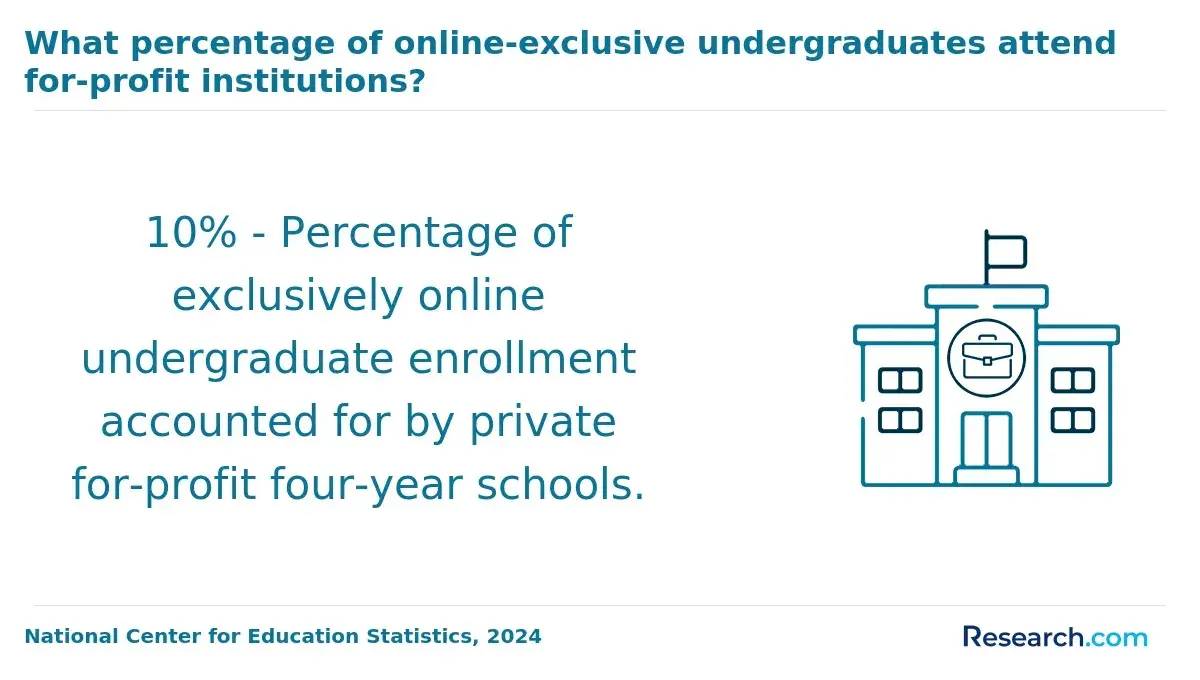
Contrary to some assumptions, online mechanical engineering students do not typically finish their degrees faster than those studying on-campus. While online education provides flexible scheduling that many believe should accelerate graduation, the reality is more complex, with average completion times often matching or slightly exceeding campus-based timelines. National Center for Education Statistics data from 2024 shows a median of approximately 5.1 years for on-campus students and 5.3 years for online learners. This challenges the notion that the ability to self-pace coursework, inherent in many online programs, consistently translates into a shorter pathway to degree completion.
Graduation speed in either modality is shaped by several intertwined factors beyond flexibility alone. Online students often juggle full-time jobs, family obligations, and other responsibilities, which can slow progress despite course availability. Conversely, campus students benefit from more structured schedules, mandatory lab sessions, and easier access to faculty, supporting steadier advancement through program requirements. Additionally, internship demands, credit transfer policies, and institutional pacing rules weigh heavily on completion time, with part-time enrollment common among online students further extending their study period relative to full-timers on campus.
Choosing between online and campus-based mechanical engineering programs also has broader implications for how students manage academic discipline and their entry into the workforce. Online learners must develop strong self-regulation and time management skills to maintain momentum without the in-person cues and peer engagement campus settings provide. These demands can elongate timelines but may align better with career or life priorities for working adults. Ultimately, the mode of study influences not only how quickly a degree is earned but also the conditions under which students sustain their progress and transition into engineering roles.
One recent graduate recalled hesitating during the rolling admissions period for an online mechanical engineering program. Balancing a demanding job and family, they delayed application submission while verifying prerequisites and financial aid options, unsure if waiting would improve their chances. This uncertainty extended their start date by several months but allowed them to enroll with a clearer plan. Their experience underscores how timing decisions and personal circumstances can subtly influence the pace at which online students progress, independent of program structure.
How Many Months or Years Can Transfer Credits Save?
Transfer credits can shorten the time required to complete a mechanical engineering degree, but the actual months or years saved depend heavily on the volume of transferable credits and how well those credits align with the destination institution's curriculum. Generally, students entering with 30 to 60 credits may reduce their degree duration by roughly one to two years, though some may only save a few months if credit applicability is limited. The impact of transfer credit on mechanical engineering degree duration varies widely because program structures often demand sequential coursework, complicating efforts to accelerate progression without retaking foundational classes. According to the National Student Clearinghouse Research Center, students with substantial relevant transfer credits tend to graduate significantly earlier, supporting the potential for meaningful time savings when credits are appropriately matched.
Key factors shaping the actual time saved through transfer credits include accreditation compatibility, course equivalency evaluations, and institutional policies capping the number of transferable credits-often around 60% of total program hours. Mechanical engineering requires careful review of prerequisites like calculus, physics, and materials science; if transferred credits do not fully satisfy these requirements or are deemed non-equivalent, students must complete additional coursework, reducing time savings. Moreover, residency mandates can require students to complete a minimum number of credits directly at the awarding institution, further constraining acceleration. These academic and administrative considerations illustrate why months saved through transfer credits in mechanical engineering programs are not uniform and emphasize the importance of detailed credit articulation reviews before enrollment decisions.
As transfer credits influence degree planning, they also affect financial cost and course sequencing, shaping a student's overall educational experience and readiness for professional practice. While accelerated degree completion can enable earlier workforce entry, students must balance speed with mastery of essential competencies needed for licensure and employer expectations. For those exploring flexible and accelerated educational options, resources covering related fields, such as MFT programs online, illustrate a broader trend toward alternative pathways that combine transfer credits and online delivery to reduce time-to-degree in STEM and allied professions.
Do Accelerated Mechanical Engineering Programs Significantly Reduce Completion Time?
Accelerated mechanical engineering programs aim to compress the traditional degree timeline, allowing students to finish in about three years instead of the usual four or five. These programs achieve this by increasing course loads each term, reducing breaks, and condensing curricula to eliminate downtime. The structure is built around a dense sequencing of required classes and projects that minimizes idle periods commonly found in standard progression models. This design intends to speed up graduation by pushing students through content more rapidly while maintaining essential competencies.
However, the degree to which these formats genuinely shorten completion times depends heavily on several critical factors. The intensified pacing can limit scheduling flexibility, posing challenges when prerequisite courses or co-requisites create bottlenecks that are difficult to avoid despite the accelerated structure. Additionally, if internship requirements, cooperative education, or comprehensive capstone projects remain unchanged, they can constrain how much the timeline can realistically be compressed. Students must also contend with the heavier credit load per term, which increases the risk of course overload, potentially causing delays if adjustments or remediation become necessary.
The trade-offs extend beyond just time savings. The elevated workload intensity often leads to heightened stress levels and reduced opportunity for deep learning or exploration outside the core curriculum. Scheduling rigidity can impair students' ability to balance employment or personal obligations, sometimes leading to attrition or extension of study duration. Consequently, while accelerated programs offer a formal reduction in nominal timeframe, actual student experiences frequently reflect a compromise between speed and manageable progression that can lessen the expected advantage.
An accelerated mechanical engineering graduate recalls hesitating during the rolling admissions period due to uncertainty about how quickly they could enroll after completing prerequisite coursework at a community college. They faced a month-long waiting period where incoming cohort spots were not guaranteed, creating anxiety about losing momentum. Ultimately, the decision to accept a pending offer hinged on balancing the risk of delayed start against the pressure to accelerate degree completion. This experience highlighted how institutional timing and admissions logistics can undermine the streamlined intent of accelerated pathways despite the program's structural design.
Which Mechanical Engineering Program Requirements Most Often Extend Graduation Timelines?
Graduation timelines in mechanical engineering programs are often extended not simply due to the total credit requirements but because of specific embedded curricular components that enforce sequencing and require intensive effort. These elements are integral to maintaining program rigor and aligning with professional standards but limit scheduling flexibility and can slow student progression. The design and structure of these requirements vary by institution, influencing how and when students can complete their degrees.
- Sequential Prerequisites: Foundational courses in math, physics, and introductory engineering must be completed in strict order, restricting students' ability to accelerate progress. Delays in mastering early STEM coursework cascade because advanced classes depend heavily on prior mastery, making timely completion a common bottleneck. This structured progression reflects essential knowledge building but reduces semester-by-semester flexibility.
- Capstone and Senior Design Projects: Collaborative, multi-phase design projects demand significant team coordination, prototyping, and testing time, which often conflicts with other course schedules and outside commitments. These high-impact experiential learning requirements mimic real-world engineering challenges but are not easily compressed, frequently stretching final-year timelines.
- Cooperative Education Placements: Many programs integrate co-op internships lasting six months to a full year to provide hands-on industry experience. While enhancing employment prospects, these placements effectively pause academic progression, adding semesters beyond typical full-time study, particularly for students balancing work and school.
- Credit Transfer and Articulation Complexities: Transfer students often encounter administrative hurdles as institutions evaluate and accept prior coursework, which may not align perfectly with mechanical engineering curricula. This can necessitate additional classes or repeating content, prolonging degree completion, especially when transfers happen mid-sequence.
- Laboratory and Technical Skill Courses: Intensive lab components requiring specialized equipment and scheduled sessions can limit course availability each term. These practical requirements ensure competence but create scheduling inflexibility, potentially forcing students to extend their study duration if missed or delayed.
According to 2024 cohort analyses by the U.S. Bureau of Labor Statistics and Lightcast, roughly 30% of mechanical engineering students extend their studies beyond four years, often attributable to these structured components rather than credit volume alone. Understanding how these specific requirements interact is crucial for setting realistic academic timelines, especially for students balancing external responsibilities or navigating institutional policies.
Does Taking Longer to Graduate Increase the Cost of a Mechanical Engineering Degree?
Extending the time required to graduate with a mechanical engineering degree typically increases total tuition and associated costs, especially when students pay tuition per semester or credit hour. Many institutions impose higher fees as students exceed standard completion timelines, and financial aid eligibility often has strict duration limits, forcing longer-term students to rely more heavily on loans or out-of-pocket payments. Additional expenses such as housing, textbooks, and supplies accumulate with each extra semester, compounding the financial impact. This dynamic is particularly relevant for those facing the financial strain of lost potential earnings during extended academic enrollment, which can influence the overall financial position well beyond tuition bills. Considering the financial impact of extended mechanical engineering program duration is critical for students balancing academic pacing with economic constraints.
However, extended enrollment does not always translate directly into higher costs. Some institutions offer flat-rate tuition models regardless of course load, enabling students to spend more time completing their degree without proportional tuition increases. Part-time enrollment pricing, employer tuition assistance programs, or policies allowing flexible pacing can mitigate additional expenses. Students who strategically adjust their course loads to maintain financial aid eligibility or who leverage transfer credits may avoid the steepest cost penalties typically associated with longer degree completion times. Careful enrollment decisions and awareness of tuition structures are essential to manage the economic tradeoffs involved. For those pursuing fields with robust earnings potential, like a data scientist degree, understanding these financial mechanics can shape both the timing and viability of extended academic plans.
Does Graduating Faster Improve Career Prospects?
Graduating faster from a mechanical engineering degree can provide an earlier entry point into the workforce, allowing candidates to start their career path and income generation sooner. However, employers do not assess the speed of degree completion in isolation; rather, hiring decisions focus primarily on a candidate's practical experience, skills, and ability to apply engineering principles effectively. The impact of quick degree completion on mechanical engineering job opportunities often hinges on timing relative to labor market demand, but early graduation alone rarely outweighs a lack of substantive training or project exposure.
The key factors influencing whether graduating faster improves career prospects include the depth of internship participation, the strength of the technical portfolio, mastery of core competencies, and professional networking. Employers tend to prioritize candidates who have accumulated relevant project experience and demonstrated workplace readiness, as reflected in studies where 62% of engineering employers favored practical skills over accelerated program completion. Students who focus solely on finishing early without engaging in internships or hands-on learning risk diminishing their competitiveness in hiring pools where comprehensive skill sets trump speed.
Balancing timely graduation with robust experiential learning is critical for long-term employability in mechanical engineering. While faster completion can be advantageous in high-demand regions or sectors by advancing entry timing, it often comes with trade-offs such as reduced exposure to advanced topics and networking opportunities. Students aiming to optimize career outcomes should weigh these considerations carefully, ensuring that accelerated programs do not sacrifice the depth of practical knowledge and connections essential for sustainable growth in the field. For related pathways, those interested might explore options like a doctorate in data analytics online, which also reflects evolving industry expectations for technical specialization.
Which Scheduling Mistakes Commonly Delay Graduation?
Graduation delays in mechanical engineering degree programs often stem not from academic difficulty alone but from avoidable scheduling and planning mistakes during enrollment and course selection. These issues affect students across degree levels and formats, interrupting steady academic progression. Understanding typical pitfalls related to course sequencing, credit loads, and transfer credit alignment can help maintain on-time graduation trajectories.
- Ignoring Prerequisite Chains: Mechanical engineering curricula require strict sequencing. Enrolling in advanced courses without completing foundational prerequisites causes course repetition or postponement, disrupting progression and elongating time-to-degree.
- Suboptimal Credit Loads: Taking fewer credits per semester-often due to work or personal responsibilities-slows progress. Data from the National Center for Education Statistics in 2024 show nearly 45% of engineering students delay graduation by at least a year, frequently linked to part-time enrollment or uneven credit accumulation.
- Transfer Credit Misalignment: Delays in evaluating or appropriately applying transfer credits prevent timely enrollment in required mechanical engineering courses. Since many core classes are infrequently offered, misalignment can add semesters.
- Poor Elective Selection: Electives that don't satisfy degree requirements waste credits and time. Without academic advising, students risk diverting efforts from mandatory courses essential for on-schedule completion.
Other Things You Should Know About Mechanical Engineering
Internships and co-op placements are valuable for mechanical engineering students but often add semesters or extend graduation timelines. While these experiences enhance employability and practical skills, students must weigh the tradeoff between immediate completion and the long-term career benefits. Prioritizing structured co-op programs integrated into the curriculum can mitigate delays, but opting for unscheduled or lengthy work terms typically prolongs graduation.
Engaging in research introduces a variable workload often outside the standard course requirements, which can slow progress toward degree completion. For mechanical engineering students aiming for industry roles, excessive research involvement may detract focus from essential applied coursework. Conversely, those targeting graduate study or R&D careers should consider research a necessary investment, though they must strategically manage time to avoid extending their program unnecessarily.
Mechanical engineering programs tend to have tightly sequenced courses due to prerequisite chains, so flexibility is limited without risking delays. Students who attempt to customize schedules heavily, such as by swapping semesters or adding minors, risk extending time to graduation. Practical advice is to adhere closely to advised course sequences and defer optional specializations until after core requirements are met to maintain a predictable timeline.