2027 Geography Salary Trends Report: Are Wages Keeping Up With Tuition and Inflation?

Co-Founder and Chief Data Scientist
Consider a prospective Geography student weighing the decision to enroll amid rising tuition fees and persistent inflation. This student seeks to understand whether the financial return on a Geography degree truly offsets these increasing costs.
Evaluating salary trends alongside education expenses is essential, as the rising price of higher education can quickly erode the value of starting wages. Without this comparison, students risk committing to a path that may not provide sustainable long-term financial benefits.
Salary growth, tuition, and inflation rarely progress uniformly, complicating the assessment of a degree's worth. Focusing solely on initial salaries overlooks the impact of inflation and changing living costs on purchasing power over time.
This article examines how salary trends for Geography graduates measure against tuition hikes and inflation, analyzing return on investment, affordability, and the broader economic factors that determine the long-term financial value of a Geography degree.
Key Things to Know About Geography Salary Trends
- Graduate wages in geography have grown 4% since 2022, lagging behind a 6.5% tuition inflation rate; this gap signals that rising education costs may outpace initial salary gains, pressuring graduates' net lifetime returns.
- Specializing in geospatial data analytics correlates with a 15% higher median salary over generalist peers, highlighting how technical skill acquisition drives income differentiation within geography careers.
- Long-term earning potential aligns closely with industry sector choice; geography graduates entering environmental consulting see 10-year salary growth rates nearly double those in basic research roles, emphasizing strategic career path decisions.
- Key Things to Know About Geography Salary Trends Key Things to Know About Geography Salary Trends
- What Is the Current Salary Outlook for Geography Graduates? Salary Outlook
- Are Geography Salaries Keeping Up With Inflation? Inflation Impact
- How Do Tuition Costs Compare With Geography Salary Growth? Tuition vs Salary
- Does a Geography Degree Deliver a Positive Return on Investment? Degree ROI
- Which Industries Offer the Highest Salaries for Geography Graduates? Which Industries Offer the Highest Salaries for Geography Graduates?
- Which States and Cities Offer the Highest Pay for Geography Professionals? Which States and Cities Offer the Highest Pay for Geography Professionals?
- How Do Geography Salaries Grow Throughout a Career? Career Growth
- How Do Geography Salaries Compare With Similar Degrees? Salary Comparison
- How Is Employer Demand Affecting Geography Salary Trends? Employer Demand
- How Can Students Maximize Their Lifetime Earnings With a Geography Degree? Maximizing Earnings
What Is the Current Salary Outlook for Geography Graduates?
Geography graduate salary trends in the US in 2024 reveal a complex picture influenced by industry sector, technical expertise, and economic factors like inflation. Median wages for roles such as cartographers, geographers, and urban planners typically fall between $68,000 and $85,000 annually, though entry-level salaries often start closer to $50,000.
For example, two graduates with the same degree may diverge significantly in earnings if one focuses on GIS analytics in the private sector, where specialized skills command a premium, while the other enters a government planning office with slower salary growth. This divergence underscores that initial pay is only part of the story in assessing earning potential.
Current earning potential for Geography degree holders depends heavily on how individuals leverage their skills over time alongside sector-specific demand. Starting salaries around $55,000 to $60,000 reported by the National Association of Colleges and Employers reflect a modest entry point compared to the broader market, but wage growth in fields like environmental consultancy and spatial data science can outpace inflation in the long run.
Prospective students must weigh these figures against rising educational costs and inflation exceeding 6%, which challenge real income gains. This dynamic makes ongoing skills development and potential certifications critical for those seeking to maximize their career trajectory.
Looking beyond immediate pay, the labor market outlook shows faster growth for specialized urban planning, environmental management, and GIS roles compared to many other specialties, which can translate to better salary prospects with experience.
Those considering how to build a lasting career in geography would benefit from exploring not only traditional pathways but also opportunities presented by newer fields. For students considering alternatives or accelerated options, understanding what degree can I get online in 6 months may offer adaptable routes into the workforce while they build relevant expertise.
Are Geography Salaries Keeping Up With Inflation?
Nominal wage increases in geography-related occupations have not consistently translated into improved purchasing power for graduates, largely due to inflation outpacing salary growth. According to the U.S. Bureau of Labor Statistics, median wages for geographers rose by about 5% since 2020, while inflation, measured by the Consumer Price Index, climbed roughly 12% over the same period.
Consider a recent geography graduate earning a starting salary that nominally increased compared to four years ago: despite a higher paycheck, the real value of their income-what it actually buys-has effectively declined, making it harder to cover living expenses and repay student debt.
For prospective and current students weighing whether geography graduate salaries vs inflation rates provide sufficient economic return, this wage stagnation presents a critical factor. Those paying tuition increases that exceed both wage growth and inflation face a narrowing margin for financial gain, highlighting a real challenge when compared to lowest cost online bachelor's degree opportunities elsewhere.
Geographic careers reliant on traditional skills tend to lag behind inflation more than interdisciplinary roles that emphasize technical competencies like GIS and data science, which currently command better salary growth and can better offset tuition cost pressures.
How Do Tuition Costs Compare With Geography Salary Growth?
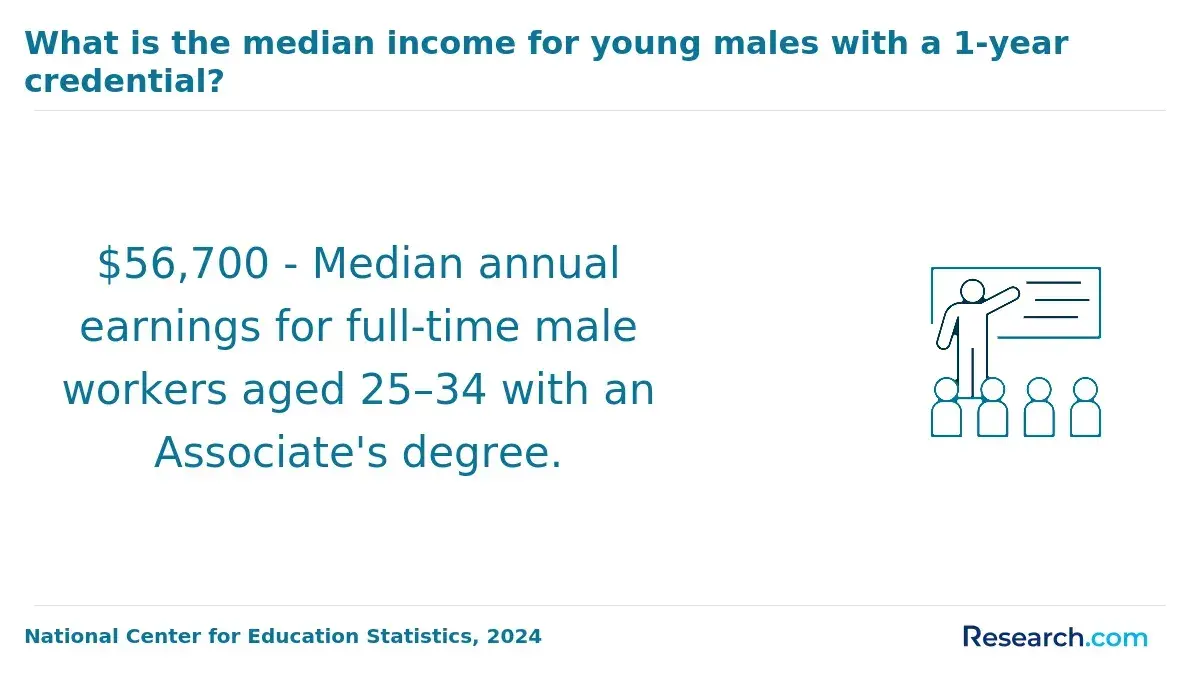
Comparing tuition increases directly with salary growth offers a clearer measure of the true financial returns of a geography degree than either metric alone. While average annual tuition at public four-year institutions has risen about 3.8% over the past decade according to the National Center for Education Statistics and U.S. Bureau of Labor Statistics data from 2024, entry-level salaries for geography graduates show more modest annual growth near 2.0% to 2.5%, lagging behind even general inflation.
Early-career median salaries range between $48,000 and $55,000, but tuition costs rising faster than wages means new graduates may struggle to recoup their investment promptly. By contrast, mid-career wages climb to $70,000-$85,000, indicating the long-term payoff of a geography degree emerges over time rather than immediately after graduation.
This gap between education cost acceleration and initial earnings influences individual financial planning significantly. For instance, a student entering a public university today faces higher upfront tuition than one who graduated a decade ago, yet their starting salary may not reflect that jump.
One prospective student who must finance most tuition through loans might experience greater pressure to delay buying a home or funding further education, while another with family support or scholarships may navigate early salary stagnation more comfortably.
Factors such as sector choice-government, consulting, or GIS technology-also affect how quickly a graduate's salary catches up to educational expenses. Understanding these dynamics helps frame the investment in a geography degree within realistic economic and career contexts rather than simplified salary or tuition snapshots.
After graduating during a period of quickly rising tuition, one recent geography alumnus recalls weighing the cost against slower early salary growth. They postponed relocating to a preferred city slightly due to concerns about repaying student loans, even though job prospects in urban planning were solid.
"It wasn't just about getting the diploma," they reflected, "but figuring out how to handle the pressure of tuition rising faster than what I was making right out of school." This experience underlines that timing and financial resources critically shape how tuition costs compare with salary development in the early career years for geography graduates.
Does a Geography Degree Deliver a Positive Return on Investment?
Return on investment for a Geography degree goes beyond initial salary figures, focusing on whether the total cost of education aligns with long-term career earnings, advancement opportunities, and professional development. This calculation must take into account rising tuition costs, which have consistently increased faster than wage growth over the past decade, as reported by the National Center for Education Statistics in 2024.
For instance, a graduate entering the workforce in urban planning or geospatial technology may start with competitive salaries-often above those of other social science fields-but the degree's financial payoff typically unfolds over several years as specialized skills like GIS significantly enhance earning potential.
Consider a student who invests in a Geography degree while supplementing it with certifications in data analysis or environmental science; this combination can accelerate income growth and improve job market resilience. Data from the Georgetown University Center on Education and the Workforce show that median salaries five years after graduation for Geography majors tend to meet or surpass earnings for many liberal arts graduates, indicating a trend toward moderate to positive return on investment over time.
Still, whether a Geography degree ultimately proves financially worthwhile depends heavily on individual career paths, geographic location, and the ability to leverage in-demand technical competencies amid fluctuating economic conditions.
Thus, assessing the value of a Geography degree requires weighing the upfront financial burden against expected salary trajectories and employment prospects in growing sectors. While some graduates may feel the impact of high tuition costs for years, those who strategically integrate technical training and pursue roles in expanding fields often experience steady wage increases and enhanced job security.
This nuanced balance means that return on investment varies considerably across different contexts, underscoring the importance of personalized educational and career planning grounded in up-to-date labor market data.
Which Industries Offer the Highest Salaries for Geography Graduates?
Determining where geography graduates can achieve the strongest salary outcomes requires looking beyond simple job titles to the industries that value spatial analysis and geospatial data expertise the most.
Rising tuition costs and inflation make it essential for students to target sectors that not only employ geography graduates but also offer robust compensation aligned with their advanced skills. Real-world evidence shows that domains leveraging geographic information systems (GIS), data analytics, and environmental knowledge tend to reward graduates the highest.
Below is an evidence-based list reflecting the highest paying industries for geography graduates based on recent U.S. Labor Statistics and professional surveys from 2024:
- Technology Sector: This field leads in salary potential for geography majors due to the demand for GIS specialists, geospatial analysts, and data scientists focused on big data and location-based services. Advanced spatial data skills enable these professionals to influence product development and strategic decisions. Technology firms pay a premium because their operations depend heavily on accurate geographic data interpretation and software solutions.
- Engineering and Environmental Consulting: Geography graduates in this sector are often involved in infrastructure planning, environmental assessments, and sustainable development projects. High wages correlate with proficiency in spatial modeling, regulatory knowledge, and the ability to manage environmental impact data, making these roles critical in civil engineering and natural resource management.
- Government Agencies: Federal organizations such as the U.S. Geological Survey and the Environmental Protection Agency offer competitive salaries that combine job stability with benefits. Geography graduates typically fill roles related to terrain analysis, environmental monitoring, and policy development, where long-term sector knowledge and specialized GIS training are highly valued.
- Energy Industry: The oil, gas, and renewable energy sectors employ geography professionals skilled in remote sensing and terrain analysis to support exploration and development activities. These industries provide lucrative pay due to the technical expertise required to optimize resource extraction and monitor environmental conditions in challenging landscapes.
- Urban Planning and Development: Although not always the highest-paying, this sector offers considerable salary growth for geography graduates who specialize in spatial data applications to guide land use, transportation, and housing projects. Skills in GIS mapping and demographic analysis are essential here, particularly within rapidly growing metropolitan areas.
- Financial Services: Geographic data analytics increasingly supports risk assessment, market analysis, and location strategy in banking and investment firms. Geography graduates with data science credentials can command strong salaries by helping organizations leverage spatial insights to improve decision-making and operational efficiency.
A 2024 report by the American Association of Geographers highlights that technology and environmental consulting are consistently among the top-paying industries for geography-related occupations, confirming the value of combining geospatial skills with sector-specific expertise.
Prospective students should weigh these salary prospects against educational expenses and may find guidance on advanced degree options useful, such as reviewing online PsyD programs, which illustrate the broader trend of specialized graduate studies enhancing earning potential across fields.
Which States and Cities Offer the Highest Pay for Geography Professionals?
In the United States, geography professionals' earning power is closely tied to where they live and work, reflecting local industry strengths and government funding priorities. Data from the U.S. Bureau of Labor Statistics (BLS) in 2024 underscores a pattern: areas with substantial government operations, advanced technology companies, and environmental consulting hubs offer notably higher wages.
Yet, these lucrative salaries often come with significantly higher living costs and competitive job markets, making location choice a strategic decision for those with geography degrees. Below are some of the top-paying states and metropolitan regions for geography roles, highlighting critical factors to weigh:
- California: This state leads due to its major technology centers and environmental consulting firms that rely heavily on GIS and remote sensing. While salaries often exceed $85,000 annually, high housing and living expenses mean net savings might be limited, especially for entry-level professionals.
- Washington, D.C. Metro: The Washington-Arlington-Alexandria area boasts median geography wages over $90,000, fueled by federal agencies such as the U.S. Geological Survey and defense-related research institutions. Job competition is steep, but specialized skills in geospatial intelligence can justify the premium pay.
- Virginia: Proximity to Washington D.C. and its federal contractors creates strong demand for geography experts, particularly in GIS and spatial analysis, with salaries rivaling those in the capital. However, similar to D.C., housing affordability can constrain net income gains.
- Seattle Metro Area: Home to tech giants focused on mapping software and urban planning platforms, Seattle offers high median wages. A growth-driven market in tech and environmental sectors supports steady demand but comes with rising living costs.
- Texas: While average geography salaries here-typically between $60,000 and $75,000-are below coastal hubs, Texas provides more affordable living and expanding opportunities in energy and environmental management, making it a viable choice for balancing cost and career growth.
- Colorado: Geographic professionals benefit from stable demand in environmental sectors and increasing GIS applications, with moderate salaries and lower living expenses relative to top-paying states. This makes Colorado attractive for younger graduates starting their careers.
How Do Geography Salaries Grow Throughout a Career?
Salaries for geography-related roles generally show steady increases as professionals move from entry-level to more experienced positions. Early-career geographers and GIS specialists often start with salaries between $50,000 and $60,000, reflecting positions in government agencies, environmental consulting, or academic settings.
By mid-career, typically after five to ten years, median salaries rise to between $65,000 and $85,000, driven by greater expertise and responsibilities such as managing projects or leading data analysis. According to the U.S. Bureau of Labor Statistics (2024), more senior roles-including federal senior scientists or upper management GIS managers-can earn upwards of $100,000, with top professionals making $120,000 or more annually.
Consider two geography graduates: one chooses to work in local government focused on public planning, accumulating moderate experience but limited advanced qualifications; the other pursues a master's degree and gains certifications in geographic information systems and remote sensing, eventually moving into senior technical roles within the National Geospatial-Intelligence Agency.
Despite starting at similar salary levels, the latter's focused investment in specialized skills and credentials typically results in higher salary growth and broader career opportunities. Key factors influencing long-term earnings include advanced education, professional certifications, and positions within federal agencies or high-demand sectors where geographic expertise is critical.
One geography alumnus recalls hesitating before enrolling in a graduate program due to concerns about rising tuition, hoping that the investment would translate into meaningful salary growth. After completing a master's and obtaining a GIS certification, they noticed a marked increase in their responsibilities and compensation within a few years.
Reflecting on this, they acknowledged the tension between the cost of education and potential income gains but felt reassured by the steady wage progression linked to enhanced qualifications and government-sector roles, which helped offset financial pressures over time.
How Do Geography Salaries Compare With Similar Degrees?
Geography graduates see median salaries comparable to several related fields, but with distinct long-term earning trajectories influenced by specialization and industry demand.
Entry-level annual pay for geography majors hovers around $50,000, placing them close to environmental science peers. However, differences emerge in specialized sectors like Geographic Information Systems (GIS), where technical skills can elevate salary growth over time. This dynamic merits consideration for prospective students assessing the return on investment amid rising tuition and inflation.
The following comparison helps clarify how geography salaries align with related degree paths:
- Environmental Science: Salaries generally align with those of geography graduates at the entry-level, reflecting overlapping roles in environmental consulting and sustainability. However, environmental scientists often work in research and policy sectors where funding volatility may impact salary increases.
- Urban Planning: Urban planners tend to command 5-10% higher starting salaries, boosted by specialized certifications and consistent public sector demand. This premium reflects the direct application of skills to city infrastructure and development projects, which often have dedicated funding streams.
- Geology: Geology graduates frequently report higher median salaries driven by resource extraction and engineering sectors. These industries offer competitive starting pay due to the technical nature of the work and industry profitability, though they can be cyclical based on commodity markets.
- GIS and Spatial Analysis Specializations: Geography graduates who develop expertise in GIS and remote sensing tend to experience stronger salary growth and resilience against inflation, as reported by the American Association of Geographers. This technical proficiency opens doors to tech and data-driven roles with evolving demand.
Real-world scenarios highlight that geography students investing in spatial technologies and data science skills can better navigate salary pressures caused by tuition increases. For those weighing options, exploring programs recognized for affordability, such as those listed among the affordable data science degree offerings, could further improve long-term returns.
How Is Employer Demand Affecting Geography Salary Trends?
Employer demand directly influences salary trends in geography-related occupations by shaping the level of competition among employers for skilled candidates. For example, urban planners and GIS specialists who demonstrate proficiency in technologies such as remote sensing and spatial analysis are increasingly sought after, which creates upward pressure on wages.
According to the U.S. Bureau of Labor Statistics 2024 Occupational Outlook, jobs in metropolitan areas and environmental consulting sectors are experiencing notable wage growth as demand intensifies. However, practical scenarios reveal that while some graduates secure higher starting salaries, others face slower wage increases depending on local market saturation and the specificity of their technical skills, highlighting the variability within employer demand impact on Geography salaries.
Major factors shaping employer demand include industry reliance on geospatial data for decision-making, technological advancements, and regional economic development patterns. Although strong employer demand can lead to faster salary growth, actual compensation is also moderated by factors like work experience, specialization, organizational budgets, and broader economic conditions.
Research from the National Association of Colleges and Employers underscores this complexity, showing that geography graduates with specialized technical proficiencies tend to command higher initial wages, yet these increments often lag behind rising tuition and inflation rates. This gap challenges new graduates to weigh the long-term returns of a Geography degree against educational costs carefully.
Prospective students and career changers can gain perspective by exploring fields related to geography, including options like instructional design degree online programs, which may offer alternative career paths with competitive earning potential. Ultimately, understanding Geography wage growth and job market trends requires an evaluation of employer demand within the context of both technical skill sets and economic realities.
How Can Students Maximize Their Lifetime Earnings With a Geography Degree?
Maximizing lifetime earnings with a geography degree requires more than a strong academic record; it demands strategic skill acquisition and targeted career positioning. Data from the U.S. Bureau of Labor Statistics and the National Association of Colleges and Employers (NACE) in 2024 highlight the financial benefits of combining geographic expertise with technical competencies like GIS and data analysis.
For example, a graduate who supplements field knowledge with GIS certification can secure higher-paying roles in urban planning or environmental consulting. Prioritizing growth sectors and continuous learning is essential.
Below are effective strategies students should consider to enhance their long-term income:
- Technical Certification: Obtaining credentials such as GIS Professional (GISP) signals proficiency in specialized tools, positioning graduates for in-demand roles and higher salaries in technology-driven geospatial fields.
- Advanced Degrees: Earning a graduate degree in geography or interdisciplinary areas can increase lifetime earnings by 20-30%, as advanced qualifications open doors to leadership and research positions.
- Sector Focus: Targeting fast-growing industries like government, renewable energy, or consulting leverages escalating demand for spatial data expertise, translating into better compensation packages.
- Internships and Networking: Gaining practical experience and professional contacts early improves access to high-paying roles and supports career mobility.
- Skill Diversification: Developing complementary skills in environmental science, data analytics, or programming enhances adaptability and salary growth potential amid evolving market needs.
- Technology Awareness: Staying current with emerging spatial data software ensures relevance and competitiveness in a tech-centric job landscape.
- Geospatial Analytics Roles: Pursuing positions like spatial data scientist or environmental manager typically offers higher salaries than traditional cartography or fieldwork.
References
- Does College Pay Off? A Comprehensive Return On Investment Analysis - FREOPP https://freopp.org/whitepapers/does-college-pay-off-a-comprehensive-return-on-investment-analysis/
- Geospatial & GIS Jobs Board | GEO CAREERS https://www.geo-careers.com/career-roadmap/
- Wage growth has failed to keep pace with inflation - Centre for Cities https://www.centreforcities.org/reader/out-of-pocket-the-places-at-the-sharp-end-of-the-cost-of-living-crisis/wage-growth-has-failed-to-keep-pace-with-inflation/
- The price of college is rising faster than wages for people with degrees | USAFacts https://usafacts.org/articles/is-college-worth-it-the-price-of-college-is-rising-faster-than-wages-for-people-with-degrees/
- Careers and progression in geography https://www.rgs.org/schools/careers-and-progression
- 3 approaches to location-based pay (and the pros and cons of each) https://ravio.com/blog/3-approaches-to-location-based-pay
- Highest Paying Geography Jobs in India- TheGeoecologist - Geography Ebooks | TheGeoecologist https://geographyebooks.com/highest-paying-geography-jobs-in-india-thegeoecologist/
- The University Courses With The Highest Return On Investment - Here Student Living https://herestudents.com/the-university-courses-with-the-highest-return-on-investment/
Other Things You Should Know About Geography
The growing demand for GIS skills has driven higher pay in that niche, but focusing too narrowly can limit flexibility in the job market. Students should carefully assess whether their preferred programs balance GIS proficiency with strong foundational geography knowledge to sustain longer-term adaptability. Prioritizing curricula that integrate technology with spatial analysis and critical thinking often yields better resilience against salary stagnation and shifting employer needs.
Internships and relevant work experience enhance practical skills and professional networks, often accelerating salary growth post-graduation. However, these opportunities can extend time to degree or reduce focus on academic performance, impacting entry-level job options. Students should aim to secure applied experiences that align closely with their career goals, as strategic choices here tend to influence earnings more than the marginal variation in GPA.
Advanced degrees can open doors to specialized roles and higher pay but come with significant costs and delayed workforce entry. The decision hinges on program reputation, alignment with in-demand skills, and realistic assessment of postgrad job markets. For many, earning a master's focused on applied areas such as urban planning or environmental consulting justifies the expense, while less targeted advanced study may not sufficiently offset tuition increases.
Higher-paying geographic roles often involve increased responsibility, tighter deadlines, and more demanding workloads, which can affect well-being and job satisfaction. Candidates must decide whether the incremental salary premium compensates for potential stress, longer hours, or required mobility. Evaluating employer culture and career trajectory opportunities can clarify if a salary gain aligns with personal priorities beyond raw income metrics.