2027 Geography Career Outcomes by Degree Level Report: Pay, Employment, and Advancement Patterns

Co-Founder and Chief Data Scientist
Professionals and students considering a geography degree often confront opaque information about how degree levels translate into tangible career advantages. With 2024 data showing that those holding advanced geography degrees experience nearly 30% faster job placement rates, this gap in clarity obscures critical decisions about investing time and resources into further education.
This discrepancy matters because it reflects wider disparities in workforce mobility and access to leadership roles that can shape long-term career trajectories. Understanding these nuances is vital for aligning educational choices with realistic employment and pay outcomes. This article analyzes pay, employment, and advancement patterns across geography degree levels to guide informed decision-making.
Key Things to Know About Geography Career Outcomes by Degree Level
- Associate degrees in geography often lead to entry-level jobs with limited advancement, reflecting employers' preference for bachelor's credentials for analytical roles, thus impacting long-term career trajectory decisions.
- Employers increasingly value master's-level geography graduates for specialized GIS and environmental planning tasks, indicating a workforce trend toward credential differentiation influencing hiring and promotion paths.
- The extended time and cost to attain doctoral-level geography qualifications constrain accessibility and practical return for many, with data showing fewer than 15% secure roles requiring such credentials within five years.
- Key Things to Know About Geography Career Outcomes by Degree Level Key Things to Know About Geography Career Outcomes by Degree Level
- What Career Outcomes Can Students Expect From Each Geography Degree Level? Career Outcomes by Degree
- How Much Do Geography Graduates Earn by Degree Level? Salary by Degree Level
- Which Geography Degree Level Offers the Strongest Employment Prospects? Best Degrees for Employment
- What Entry-Level Jobs Can You Get With a Geography Degree? Entry-Level Career Opportunities
- How Do Geography Degree Levels Affect Career Advancement and Promotion Opportunities? Career Growth by Degree
- Is a Geography Degree Worth It Based on Salary, Employment, and ROI? Salary, ROI, and Value
- How Do Associate, Bachelor's, Master's, and Doctoral Geography Degrees Compare? Comparing Degree Levels
- Which Industries and Employers Hire Geography Graduates by Degree Level? Which Industries and Employers Hire Geography Graduates by Degree Level?
- What Skills, Credentials, and Experience Improve Geography Career Outcomes? What Skills, Credentials, and Experience Improve Geography Career Outcomes?
- Which Geography Degree Level Is Best for Your Career Goals? Choosing the Right Degree
What Career Outcomes Can Students Expect From Each Geography Degree Level?
Career outcomes for students with geography credentials demonstrate clear stratification by degree level, with distinct implications for employment access, pay scales, and advancement potential. Entry-level certificates and associate degrees primarily position graduates for technician or support roles, offering faster labor market entry but limited upward mobility without additional education.
For example, an associate degree holder working as a GIS technician may find regional infrastructure projects provide steady but plateaued demand, highlighting the importance of advanced credentials for long-term growth. Transfer students or working adults often weigh these constraints carefully, as associate-level credentials improve immediate employability but usually require bachelor's completion to unlock more substantial advancement opportunities and salary increases.
Bachelor's degrees in geography notably expand access to professional roles such as environmental consultants or urban planners, where employers expect analytical capabilities, GIS software proficiency, and critical thinking. According to the National Center for Education Statistics, graduates with these credentials enjoy clearer pathways to salary growth and career mobility than those with lower-level qualifications.
Master's degrees further specialize graduates for leadership positions or technical fields like geospatial intelligence, matching employer preferences for project management and research expertise. Doctoral degrees remain focused on academic, research, or high-level consulting roles, where credential depth directly impacts job security and influence, though the extensive time and resource investment may limit feasibility for adult learners compared to options like short degrees that pay well.
How Much Do Geography Graduates Earn by Degree Level?
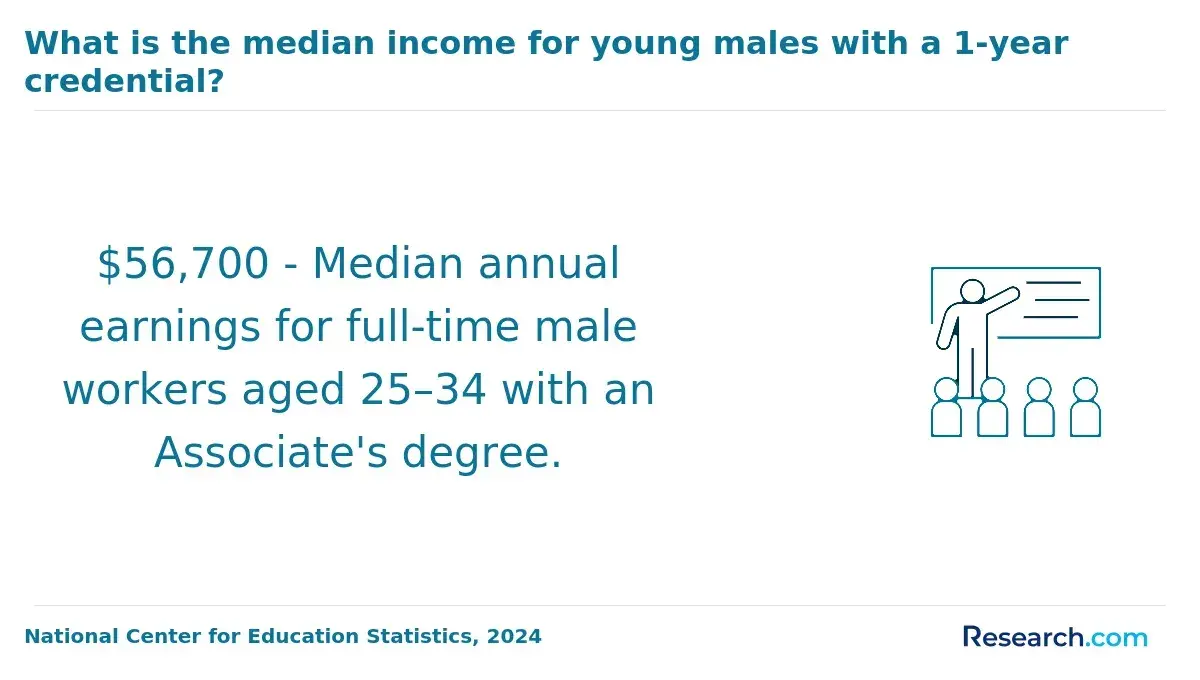
Earnings for geography graduates vary substantially by degree level, reflecting not only formal qualifications but also the complexity of roles, employer expectations, and regional labor market demands. While certificate and associate degree holders typically enter technician or support roles with starting salaries near $40,000, these positions often show limited wage growth unless supplemented by further education or specialized certifications.
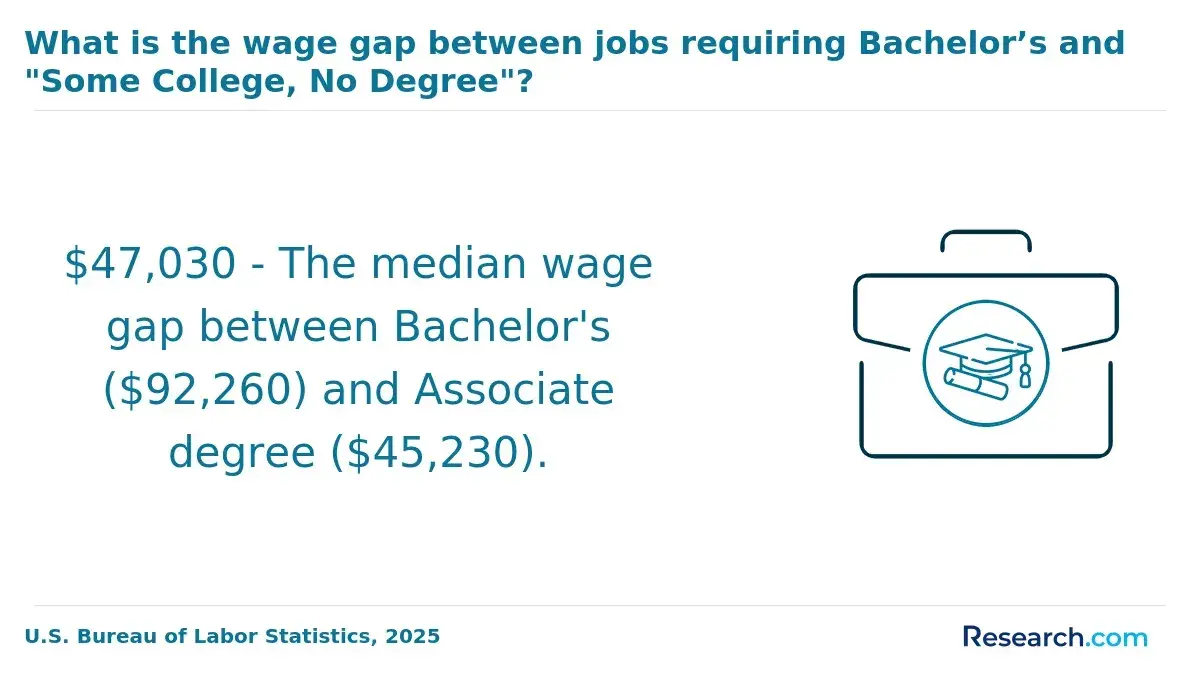
Bachelor's degree holders access a wider range of occupations-such as urban planning and environmental consulting-with median salaries frequently between $60,000 and $65,000; however, advancement often depends on accumulating relevant field experience or targeted skills beyond the degree itself. For working adults weighing the time and cost of further education, the jump from bachelor's to a master's degree may yield an earnings boost of 20 to 30 percent, primarily through eligibility for managerial or specialized research roles averaging $75,000 to $85,000.
Doctoral degrees command higher salaries, often exceeding $90,000, especially in academia or advanced research, but these positions are less common and may offer slower financial returns early on compared to master's-level roles. Moreover, the geographic location, availability of funding, and employer preferences significantly shape opportunities at this level, complicating the decision to pursue the longest credential.
Geographic Information Systems Professional (GISP) certification and other technical credentials can supplement degree earnings by validating specialized skills, yet long-term salary gains still hinge on education level and progression into interdisciplinary or leadership positions. This nuanced landscape means that adult learners, transfer students, and professionals should evaluate not only median pay but also employment stability, career pathways, and real-world hiring criteria when planning their educational trajectory.
One recent graduate recalls evaluating local job listings alongside national wage data and finding that many entry-level roles preferred a bachelor's degree even when the posted pay was close to what certificate holders earned. Faced with the costs and time commitment of a master's program, this individual hesitated but ultimately chose to gain experience first, recognizing that regional employers valued practical GIS skills and professional certification almost as much as advanced degrees.
The graduate's ongoing conversations with employers highlighted how advancement often depended on a combination of credentials, on-the-job performance, and networking rather than degree alone, underscoring the practical importance of aligning education plans with specific career goals and local market conditions.
Which Geography Degree Level Offers the Strongest Employment Prospects?
The most robust initial employment opportunities within geography tend to arise from bachelor's degrees, which balance foundational knowledge, technical skills like GIS, and employer expectations for relevant experience. According to the U.S. Bureau of Labor Statistics 2024 data, geography-related jobs requiring a bachelor's degree exhibit roughly a 12% higher employment rate within the first year after graduation compared to associate or certificate holders.
While certificates and associate degrees enable quicker labor-market entry, they frequently channel graduates into technician or limited-mobility roles, often lacking the specialization needed for progression. For example, a graduate with an associate degree might begin working sooner but encounter barriers moving beyond entry-level positions unless they pursue further education.
Advanced degrees such as master's or doctorates generally provide access to specialized roles in urban planning, research, or consultancy, with master's holders reporting median salaries about 25% higher than bachelor's graduates per Postsecondary Employment Outcomes 2024. However, these pathways often involve longer job searches, driven by competitive openings and higher employer expectations for fieldwork, internships, or prior experience.
Employers increasingly prioritize hands-on credentials and applied skills, so bachelor's programs embedding experiential learning frequently yield faster placements and better job readiness. Therefore, students weighing whether to enter the workforce immediately, upgrade credentials, or invest time in graduate study must consider these tradeoffs: early entry with limited advancement versus delayed but potentially higher-paying, specialized roles concentrated in particular regions or sectors.
What Entry-Level Jobs Can You Get With a Geography Degree?
Entry-level geography jobs and career paths diverge substantially based on degree level, influencing both immediate employability and future mobility. Associate degree holders often secure technician or support roles emphasizing GIS and cartographic skills but typically require additional certifications to remain competitive. In contrast, bachelor's degree graduates are more likely to access positions demanding analytical capabilities and programming knowledge, such as urban planning assistants or environmental consultants.
Without relevant internships or fieldwork experience, however, geography degree graduates face tougher competition, as reflected in data from the National Center for Education Statistics showing stronger hiring outcomes for candidates with applied practicum involvement. The choice between associate, bachelor's, and advanced degrees should account for how employers value technical certifications, hands-on experience, and transferable skills like critical thinking and communication.
Many entry-level roles are regionally dependent, with metropolitan areas and environmental sectors offering greater demand, while remote opportunities remain limited due to fieldwork requirements. Individuals must weigh the tradeoff between shorter programs that facilitate quick workforce entry but provide constrained advancement versus more advanced geography degrees that broaden access to specialized planning or research positions.
For those weighing options, exploring MSW programs still accepting applications can offer additional pathways complementary to traditional geography career tracks.
How Do Geography Degree Levels Affect Career Advancement and Promotion Opportunities?
Advanced degrees in geography significantly influence how quickly professionals access supervisory and specialized roles, with many employers explicitly requiring graduate-level credentials for management positions in areas like urban planning and environmental consulting. Data from 2024 reports by the National Center for Education Statistics indicate that over 60% of mid-career geographers in leadership hold at least a master's degree, highlighting formal education's role over experience alone in securing promotions.
Bachelor's degree holders often face longer timelines-typically 7 to 10 years of work experience-before reaching comparable managerial tiers, pointing to a clear tradeoff between time invested in education versus accumulated practical expertise. For working adults and transfer students, pursuing a graduate degree can accelerate leadership readiness, especially where licensure or certification mandates advanced qualifications, but balancing these demands against immediate job responsibilities remains a crucial consideration.
One professional narrative illustrates this: a mid-level analyst weighed completing a master's while managing full-time employment, uncertain if the additional credential would translate into tangible promotion opportunities within their environmental consulting firm. Despite skepticism about automatic advancement, the individual recognized the necessity of graduate-level GIS programming skills and formal certifications increasingly favored by employers.
Post-degree, they noted swifter eligibility for project lead roles and improved internal mobility, validating the strategic value of targeted graduate education combined with work experience. However, this outcome depended heavily on timing and alignment with employer credential standards, underscoring that higher degrees facilitate but do not guarantee career acceleration in geography disciplines.
Is a Geography Degree Worth It Based on Salary, Employment, and ROI?
Salary and employment outcomes for geography graduates clearly vary by degree level, reflecting distinct labor market opportunities and tradeoffs in time and cost. Bachelor's holders generally see stable demand and competitive pay, especially within government and environmental sectors, making a four-year degree a practical choice for many seeking viable employment with moderate completion time.
In contrast, those with associate degrees or some coursework face more limited roles often tied to technical support, where salary prospects and job security tend to be lower, highlighting how credential depth aligns with workforce mobility and financial returns. This underscores essential considerations for working adults or transfer students weighing whether to continue or pause their geography studies given personal time constraints and local job market saturation.
Advanced credentials such as master's and PhDs push salary ceilings higher in specialized niches but introduce longer study durations and greater debt risk, which can affect return on investment for geography graduates, especially if employed in nonprofit or academic fields with slower pay growth. Additional certifications like GIS Professional status may enhance advancement but add extra cost and time, complicating the decision to pursue extended education.
Online options or part-time formats can mitigate opportunity costs for those balancing work and study, evidenced by similar flexible approaches in some LMFT online program offerings. Ultimately, evaluating geography degree salary and employment outcomes means assessing how degree level, financial burden, regional demand, and career goals intersect to determine realistic pathways rather than assuming direct payoff from higher academic attainment alone.
How Do Associate, Bachelor's, Master's, and Doctoral Geography Degrees Compare?
Employment prospects and career progression in geography hinge significantly on the credential level, though payoffs are not uniformly proportional to additional years of study. An associate degree typically leads to entry-level technician or assistant roles in areas like GIS operation and environmental services, offering modest job security but limited upward mobility without further qualifications.
For example, a graduate with an associate may find stable work as a GIS technician but will likely hit a ceiling without pursuing a bachelor's degree, which broadens access to analyst positions in government or consulting sectors that demand stronger analytical skills and often specialized certifications. Bachelor's holders generally experience improved earnings and more varied job opportunities, yet the rapid specialization in geography-related fields means that a generic bachelor's degree may not suffice for competitive roles requiring niche expertise.
Master's degrees consequently become crucial for leadership track positions, technical specialization in spatial data science, or policy-oriented roles, with many employers explicitly requiring or favoring this level. Data from government workforce studies underline a distinct wage premium for master's graduates and increased likelihood of managerial responsibilities, balanced against substantial additional time and financial commitment.
Doctoral study is best suited for those targeting research-intensive, strategic, or senior consulting roles where deep subject matter expertise justifies the higher investment and longer completion timeline. Although demand for doctoral geographers is more limited, these careers hold disproportionate influence in innovation and policy formulation.
Ultimately, students must weigh how the choice to stop at an associate or bachelor's degree versus advancing to graduate study affects their immediate employment stability, flexibility for career shifts, and long-term leadership potential in a field where hands-on experience and professional certification often rival formal credentials in employer valuation.
Which Industries and Employers Hire Geography Graduates by Degree Level?
Employer demand and hiring patterns for geography graduates vary sharply across degree levels, reflecting distinct expectations about technical proficiency, experience, and job complexity. Associate degree holders typically find opportunities in entry-level roles such as GIS technicians and technical support, especially within government agencies and environmental consulting firms that prioritize practical skills and certifications over advanced credentials.
In contrast, bachelor's degree graduates access a wider industrial spectrum, including urban planning, transportation, and federal agencies like the U.S. Geological Survey, where intermediate GIS expertise and analytic capabilities are baseline requirements. Advanced degrees reshape the employment landscape by opening specialized roles in research, academia, policy formulation, and leadership positions demanding deep methodological knowledge and subject-matter expertise.
Master's graduates, for example, are nearly twice as likely as bachelor's holders to secure leadership duties, according to the Council of Graduate Schools. Doctoral holders often align with universities and government research labs focused on sustainable development or climate science, where high-level analytic rigor is essential. Certificates, meanwhile, serve as efficient skill-enhancers for mid-career professionals aiming for targeted advancement without the time or financial investment of further degrees.
These distinctions have practical implications for career planning. Public sector employers frequently impose higher credential requirements for advancement, while private firms may weigh experience and licensing heavily alongside degrees. Proximity to metropolitan hubs also influences employer expectations, with urban planning and environmental consulting jobs favoring candidates who combine formal education with demonstrable technical competencies.
Prospective students must weigh whether stopping at an associate or bachelor's degree aligns with their desired job functions or if investing in graduate education better positions them for leadership and research-intensive roles, as underscored by recent U.S. Bureau of Labor Statistics and National Center for Education Statistics data.
What Skills, Credentials, and Experience Improve Geography Career Outcomes?
GIS proficiency combined with applied data analysis distinguishes geography graduates in a competitive job market, particularly at the bachelor's level where technical competency forms the hiring baseline. Employers expect candidates to supplement academic credentials with tangible skills and documented experience; internships, apprenticeships, or hands-on field placements improve employment prospects by offering verifiable contexts for communication and project management skills.
For example, geography students with documented experiential learning show a 25% higher employment rate within six months, underscoring the practical advantage of integrating real-world exposure into educational pathways focused on geography degree skills for career advancement. Credentials such as certifications from recognized bodies like the GIS Certification Institute play a nuanced role, often influencing mid-career advancement more than immediate post-graduate opportunities.
At advanced degree levels, portfolio development and leadership experience become decisive for supervisory and research-oriented roles, emphasizing applied projects over purely theoretical coursework. Military veterans and working adults might weigh credit transfers and prior experience when pursuing higher credentials, balancing the trade-off between technical specialization and leadership readiness. Geography students must navigate these pathways while recognizing that practical licensure preparation and communication aptitude substantially impact promotion trajectories.
Given these dynamics, geography students should prioritize programs that integrate certifications, internships, and leadership development to enhance long-term mobility and resilience. Adult learners and transfer students can benefit from aligning their accumulated experience with curricula that emphasize applied learning rather than solely academic theory.
Working professionals exploring options might also consider adjacent fields via multidisciplinary offerings, such as those found in architect degree online programs, where spatial skills have crossover relevance. This strategic approach clarifies the complex interplay among skills, credentials, and experience needed for geography jobs and optimizes decisions across degree levels.
Which Geography Degree Level Is Best for Your Career Goals?
Employment rates by geography degree level reveal distinct patterns that directly affect workforce integration and career trajectory. An associate degree often provides quicker entry into technician or GIS assistant roles but typically limits access to positions requiring broader analysis or planning expertise. Bachelor's degrees offer a significant leap in employability, with about 75% of graduates securing relevant jobs within a year, reflecting employer preference for the deeper skill set and specialization possible at this level.
For example, a working adult aiming for a role in urban planning may find a bachelor's degree balances timely completion with sufficient qualifications, while transfer students might leverage associate credits towards this pathway, mindful of credit transfer policies and opportunity costs. Advanced degrees extend these opportunities further, especially for those targeting leadership or research positions. A master's or doctorate not only enhances specialization but is often necessary for regulated roles or academic careers, as employer expectations increasingly favor candidates with such credentials.
However, the financial and time investments involved demand careful planning, with many professionals evaluating whether immediate career gains offset delayed workforce entry. This is why some learners explore options like a doctorate degree online no dissertation to expedite completion. Data from the National Center for Education Statistics underscore that approximately 80% of master's degree holders report advancement within five years, highlighting the tangible value of graduate study in geography fields.
Prospective students should weigh these outcomes alongside regional employer requirements, program flexibility, and licensure prerequisites. Understanding which geography degree level offers the highest employment rates can guide decisions that balance immediate job access with long-term career mobility and specialization potential, particularly for military-affiliated students and adult learners considering part-time or accelerated formats.
References
- Top Job Opportunities for Geography Graduates in 2025 | Dukes Plus https://dukesplus.com/guides/best-universities-geography-uk/job-opportunities-geography/
- Jobs & Careers - AAG https://www.aag.org/jobs-careers/
- Why geographers are employable https://www.rgs.org/choose-geography/choose-a-career-with-geography/why-geographers-are-employable
- Geography careers: what jobs are linked to studying geography? https://icould-stg.appidy.co.uk/stories/careers-in-geography/
- Where do geographers work? Geo industries & career paths https://www.gogeogo.com/en/blog/geosectors-overview
- Best Online Bachelor's Degrees in Geography - GISDegree.org https://www.gisdegree.org/online/bachelors-in-geography/
- Jobs you can pursue with a geography degree https://www.openstudycollege.com/blog/jobs-you-can-pursue-geography-degree
- Geography careers: what jobs are linked to studying geography? https://icould.com/stories/careers-in-geography/
- Geography https://www.careerpilot.org.uk/job-sectors/subject/geography
- Study Geography Abroad - Top Universities for Masters, MBA, PhD Degree Programs https://studee.com/degree/abroad/geography
Other Things You Should Know About Geography
Advanced degrees in geography often come with higher upfront costs and longer time commitments, but the payoffs vary significantly depending on the field and employer expectations. Master's and doctoral programs tend to emphasize research or specialized technical skills, which can limit immediate job placement but enhance prospects in academia, government, or specialized consulting roles.
If your target careers prioritize practical application over academic credentials, carefully weigh whether the incremental salary or advancement benefits justify the resources. Prioritize your decision based on the specific sector you aim to enter and your tolerance for delayed workforce entry versus long-term positioning.
Bachelor's programs often provide broad, interdisciplinary knowledge, allowing flexibility in early career choices but less depth in niche areas. In contrast, graduate programs tend to demand specialization, which can improve expertise but may also constrain adaptability if market demands shift.
Consider whether initial generalist skills that facilitate varied roles or deeper, specialized competencies that meet precise employer demands better serve your career path. For those uncertain about a definitive focus, starting with a bachelor's degree that emphasizes versatility may reduce risk before committing to advanced specializations.
Employers hiring geography graduates frequently place substantial value on applied experience such as internships, GIS proficiency, and project work, sometimes over academic ranking or degree level. While higher degrees can signal expertise, lack of hands-on experience can limit hiring potential or slow early career progression.
Prospective students should actively seek opportunities for applied learning regardless of degree tier to align with employer expectations. Those pursuing advanced degrees without relevant practical experience risk delayed employment or difficulty transitioning into applied roles.
For current workers, part-time advanced geography programs offer a realistic balance of maintaining income and gaining credentials but often extend the timeline and may limit immediate access to research resources or networking opportunities. Full-time study accelerates degree completion and immersion but requires leaving or reducing work commitments, which carries financial and professional risks.
If your goal is prompt career transition or advancement, prioritize full-time study if feasible; otherwise, select part-time pathways that provide flexibility without sacrificing critical program components linked to outcomes, such as internships or capstone projects.