2027 General Studies Career Outcomes by Degree Level Report: Pay, Employment, and Advancement Patterns

Co-Founder and Chief Data Scientist
Adults returning to education or transfer students pursuing a general studies degree often face uncertainty when evaluating how their chosen degree level will impact career outcomes. In 2024, data shows that employment rates for bachelor's general studies graduates exceeded those of associate degree holders by over 15%, reflecting broader workforce demands for higher-level credentialing.
Yet, many working professionals confront tradeoffs between immediate employment needs and long-term advancement potential tied to degree completion. Understanding pay differences, hiring trends, and promotion likelihoods across degree levels directly informs these high-stakes decisions. This article analyzes employment, pay, and advancement patterns by general studies degree level to support informed education and career choices.
Key Things to Know About General Studies Career Outcomes by Degree Level
- Associate-level general studies graduates face limited direct career advancement, as credentials often serve as entry points rather than gateways to managerial roles, implying a need for timely credential stacking or further education.
- Bachelor's degree holders in general studies experience broader employer recognition and job-market access; however, workforce data from 2024 reveals many still compete in generalized roles, requiring strategic specialization for upward mobility.
- Master's and doctoral completions significantly enhance advancement probabilities but incur higher costs and longer timelines, demanding candidates weigh immediate workforce entry against long-term credential investment returns.
- Key Things to Know About General Studies Career Outcomes by Degree Level Key Things to Know About General Studies Career Outcomes by Degree Level
- What Career Outcomes Can Students Expect From Each General Studies Degree Level? Career Outcomes by Degree
- How Much Do General Studies Graduates Earn by Degree Level? Salary by Degree Level
- Which General Studies Degree Level Offers the Strongest Employment Prospects? Best Degrees for Employment
- What Entry-Level Jobs Can You Get With a General Studies Degree? Entry-Level Career Opportunities
- How Do General Studies Degree Levels Affect Career Advancement and Promotion Opportunities? Career Growth by Degree
- Is a General Studies Degree Worth It Based on Salary, Employment, and ROI? Salary, ROI, and Value
- How Do Associate, Bachelor's, Master's, and Doctoral General Studies Degrees Compare? Comparing Degree Levels
- Which Industries and Employers Hire General Studies Graduates by Degree Level? Which Industries and Employers Hire General Studies Graduates by Degree Level?
- What Skills, Credentials, and Experience Improve General Studies Career Outcomes? What Skills, Credentials, and Experience Improve General Studies Career Outcomes?
- Which General Studies Degree Level Is Best for Your Career Goals? Choosing the Right Degree
What Career Outcomes Can Students Expect From Each General Studies Degree Level?
Career outcomes for general studies degree holders vary significantly by credential level, influencing employment opportunities and advancement potential in meaningful ways. For example, a working adult with an associate degree in general studies may access broader entry-level roles than a certificate holder, benefiting from targeted coursework that supports immediate workforce insertion and steady job retention.
However, many employers still expect additional experience or education to consider candidates for supervisory positions, underscoring the practical tradeoff between quicker completion and slower promotion trajectories. This dynamic is critical for transfer students and military-affiliated learners who often weigh accelerated credentialing against longer-term advancement in fields requiring supervisory responsibilities.
Bachelor's degree graduates typically gain competitive advantage by meeting employer expectations for leadership-track roles that demand analytical skills and communication proficiency. This level often opens doors to internships and professional networks that foster career mobility, a factor less accessible to those with lower-level credentials.
A key consideration for adult learners balancing time investment against labor market rewards is the enhanced advancement ceiling that a bachelor's degree affords, with many organizations using this credential as a baseline for salary increases and mid-level management. The practical realities of labor market segmentation emphasize how degree level can shape access not only to jobs but also to promotions and specialized roles within the general studies field.
At the graduate level, master's and doctoral degrees refine specialization and leadership readiness with added focus on strategic thinking and advanced competencies, aligning well with positions demanding management aptitude or research expertise. Many master's programs integrate certificates and concentrations, increasing alignment with licensure requirements in professions experiencing rising demand.
Doctoral degree holders, although fewer, tend to secure roles requiring deep subject-matter expertise but face narrower job market applicability outside academia, where extended degree completion times pose significant opportunity costs. For students considering pathways such as MBA programs, understanding these practical distinctions can inform decisions that balance immediate employment goals with long-term career strategies in general studies.
How Much Do General Studies Graduates Earn by Degree Level?
Earnings for general studies graduates vary significantly by degree level, but the differences reveal more than just wage increases-they highlight the practical tradeoffs in education investment and career positioning. For instance, certificate holders often start with pay in the $30,000 to $40,000 range, which may suit those seeking quick entry into foundational roles, yet these positions typically offer limited upward mobility without further credentials or experience.
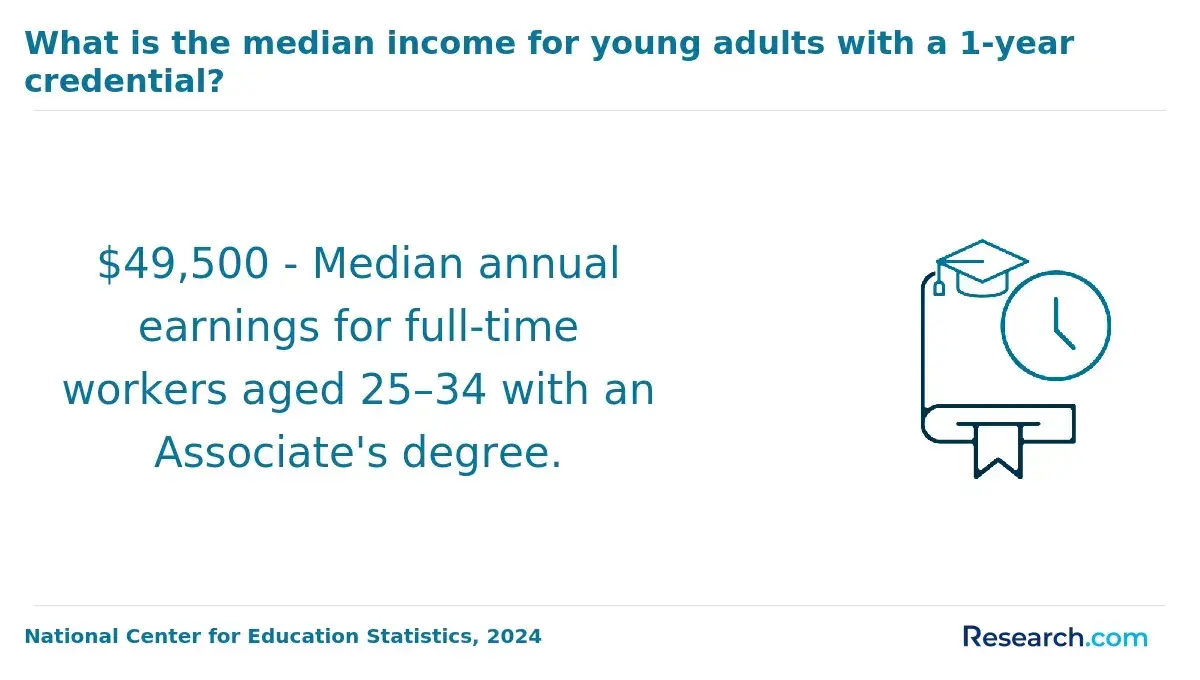
Associate degrees can open access to a wider range of roles, typically paying $40,000 to $50,000 annually, but graduates often face challenges around stability and advancement unless they leverage transfer credits or additional schooling. Bachelor's degree holders, earning between $50,000 and $65,000, generally qualify for professional or managerial jobs where analytical and communication skills become vital; however, payoff depends heavily on the field of employment and geographic market conditions rather than degree alone.
At the graduate level, median salaries commonly rise above $70,000 but come with longer completion times, greater financial costs, and the necessity of combining general studies with specialized certifications or skills that employers value. The likelihood of securing supervisory or policy-oriented positions improves, yet these roles demand relevant experience, not just credentials.
Unemployment rates decline with higher degrees, but for working adults and military-affiliated students, weighing the cost-benefit of graduate study versus accelerated entry into the workforce remains essential. In real-world terms, choosing whether to pursue additional education in general studies is as much about credit transferability, timing, and job market fit as it is about anticipated salary gains.
A student pursuing a general studies bachelor's degree shared that comparing median pay data with local job listings prompted a reassessment of their master's degree ambitions. They noted, "I realized many higher-paying roles also required specific certifications or years of experience beyond the degree itself."
Balancing the cost and commuting demands of graduate school with the possibility of lateral moves instead, this student ultimately decided to focus on industry-recognized credentials while maintaining employment, reflecting a pragmatic response to the nuanced earnings landscape and the real costs of prolonged education in their region.

Which General Studies Degree Level Offers the Strongest Employment Prospects?
Bachelor's degrees in general studies provide the most consistent gateway to stable employment, reflecting employer preferences that increasingly set this credential as a minimum for professional roles. While certificates and associate degrees can enable quicker labor market entry, especially into administrative or support positions, they often coincide with higher unemployment and lower median salaries, frequently under $35,000 annually as recent College Scorecard data shows.
Those pursuing associate or certificate paths should anticipate a tradeoff between immediate employment and limited upward mobility, as many employers view these qualifications as insufficient for long-term advancement or leadership roles. Graduate degrees in general studies-master's and doctoral-can significantly enhance earnings and open niche opportunities in leadership, education, and consultancy, but their value depends heavily on relevant specialization and practical experience.
Data indicate master's degree holders earn roughly 20-30% more than bachelor's holders in related occupations, yet the labor market for advanced generalists is comparatively narrow. For working adults, continuing education while employed offers a strategic route to improve credentials and access higher salaries, but it requires balancing time and financial investment with anticipated returns.
Choosing the right credential level often hinges on regional labor demands, licensure expectations in affiliated professions, and personal career goals. For example, a student aiming for managerial roles or graduate study admission may prioritize earning a bachelor's degree first, possibly transferring credits from earlier coursework. In contrast, those needing immediate income might select certificates or associate degrees but should plan for further study to avoid wage stagnation.
What Entry-Level Jobs Can You Get With a General Studies Degree?
The range of entry-level jobs available to graduates with a general studies degree varies notably by the degree level attained and reflects differing employer expectations. Associate degree holders typically find themselves in support roles emphasizing routine tasks, while bachelor's graduates access broader positions requiring analytical thinking and some independent judgment.
For example, a recent graduate with a bachelor's degree might move into a junior project coordinator role that demands organizational skills alongside decision-making capacity, whereas an associate degree holder may be steered toward clerical or administrative assistant positions with limited advancement at the outset. According to the U.S. Bureau of Labor Statistics (2024), occupations such as customer service representatives and sales associates remain common entry points for these graduates, highlighting the degree's emphasis on versatile but generalized skill sets.
Employability in these roles is often contingent on supplemental factors like internships, applicable certifications, or hands-on experience, which can differentiate candidates in a crowded market. Many employers use degree level as an initial filter and expect proof of practical skills, sometimes valuing demonstrated work experience over formal education alone, especially in smaller labor markets where networking and portfolio evidence carry weight.
Meanwhile, urban centers generally offer more bachelor's-level openings, providing a potential pathway for those aiming to build a diverse skill base and later transition into management or specialized roles. Students considering further education might explore options such as MSW programs still accepting applications that build on foundational competencies while expanding future career mobility.
How Do General Studies Degree Levels Affect Career Advancement and Promotion Opportunities?
Degree level in general studies directly influences eligibility for supervisory roles and shapes career mobility timelines, yet advancement is rarely automatic based on credentials alone. For example, workers holding associate degrees often find themselves confined to entry-level roles unless supplemented by substantial work experience or additional certifications. In contrast, bachelor's degree holders tend to access promotion opportunities more rapidly, reflecting employer preferences for demonstrated critical thinking and communication skills.
A 2024 Bureau of Labor Statistics report indicates that bachelor's degree holders are about 20% more likely to be considered for supervisory positions compared to those with associate degrees in similar fields, highlighting how educational attainment interacts with internal promotion policies and credential expectations. Advancement dynamics also depend on industry requirements and role-specific licensure or certification, where a general studies credential without specialized accreditation may limit upward movement.
Adult learners and working professionals often weigh the benefit of pursuing higher-level degrees or transfer credits against the time and cost involved, navigating employer demands and career stage realities. Those with some college credits but no degree face slower promotion prospects, while bachelor's degree completion signals stronger leadership readiness and aligns better with mid-career advancement pathways. For military-affiliated students or those balancing work, pathways that recognize prior learning and facilitate degree completion can crucially influence internal mobility and long-term earning potential.
One general studies graduate recalled hesitating before enrolling in a bachelor's program despite steady employment, uncertain if the investment would translate into leadership opportunities. After reaching a plateau in his role, he observed that coworkers with bachelor's degrees were increasingly assigned team lead responsibilities.
This practical insight prompted him to complete his degree, which eventually broadened his eligibility for supervisory roles but also required navigating company-specific credential policies and demonstrating relevant experience beyond the diploma itself. His experience underscores the nuanced decisions adults face when evaluating degree levels for meaningful promotion outcomes.
Is a General Studies Degree Worth It Based on Salary, Employment, and ROI?
Salary outcomes and employment prospects for general studies graduates vary significantly by degree level and individual circumstances, which complicates broad assessments of worth. Bachelor's degree holders in general studies typically earn less than peers with specialized degrees, creating opportunity costs for students considering additional education. Associate degree graduates may benefit from lower tuition and debt loads but face a pronounced pay gap and fewer advancement pathways.
For adult learners or working professionals balancing responsibilities, extended time-to-completion can reduce the economic benefits of the degree, making the decision to enroll contingent on a clear understanding of local labor market demand and personal career goals. Employment and ROI for general studies graduates often hinge on the ability to supplement the degree with targeted credentials or graduate education, as employers tend to prioritize technical skills or certifications for stable, advancing roles.
The flexibility of a general studies program can serve those switching fields or unsure of their career direction, but this often comes at the expense of clear advancement ladders or professional licensing opportunities. For individuals evaluating the real-world financial and career implications, comparing general studies with more occupationally focused paths-such as an urban planning degree-highlights the tradeoffs between versatility, salary potential, and long-term career mobility.
Understanding the interplay between salary potential, employment stability, and time commitment is critical for prospective students with prior credits or military backgrounds who may be weighing the value of continuing general studies education. Because wage growth and promotion prospects may be limited without supplemental qualifications, the ROI at both associate and bachelor's levels is uneven and often regional. In this context, evaluating general studies degree salary outcomes alongside individual circumstances and broader workforce trends provides a clearer, realistic framework for informed decision-making.
How Do Associate, Bachelor's, Master's, and Doctoral General Studies Degrees Compare?
The decision to pursue a general studies degree at various levels requires weighing trade-offs between entry access, career flexibility, and credential value in the labor market. Associate degrees typically offer a baseline qualification with roughly a 70% employment rate within a year, positioning graduates for administrative or support roles but rarely enabling advancement without additional certifications or experience.
For example, a working adult with credits stacked toward a bachelor's may find the associate degree practical for immediate employment but limited if seeking supervisory roles or transfers to more specialized programs. Bachelor's degrees increase employment stability and open doors to a wider range of middle-skill positions, especially where transfer agreements facilitate credit mobility and degree completion for nontraditional students.
According to the College Scorecard, general studies bachelor's holders show stronger occupational mobility, though pay premiums can vary regionally and often depend on supplementary field-specific credentials. Master's degrees extend potential into leadership roles within sectors like education and healthcare administration but require employers to value generalized knowledge alongside proven experience, making them a strategic choice primarily for those targeting specialized or managerial positions rather than direct licensure.
Doctoral degrees in general studies are less common and generally oriented toward academic or research careers, involving substantial time investment and financial burden with uncertain returns relative to earnings growth. These programs rarely correlate with credentialing requirements and carry completion risks that necessitate careful consideration by candidates focused on consultancy or scholarly pathways. Across levels, the ability to stack credits and leverage transfer policies significantly affects affordability and career trajectory.
Which Industries and Employers Hire General Studies Graduates by Degree Level?
Employers hiring general studies graduates segment their expectations and job roles notably by credential level, influencing career pathways and advancement potential. Associate degree holders primarily find opportunities in entry-level administrative support, retail, and healthcare support roles where foundational skills and adaptability outweigh technical specialization. Many hiring managers at this level prioritize specific skills and demonstrable competencies over the degree itself, making work experience or certifications a critical factor.
For example, a regionally based healthcare provider may prefer an associate graduate with practical office management skills and certification over a less experienced bachelor's holder for certain support positions. Bachelor's degree holders typically access broader sectors such as education, public administration, and business operations, where communication, critical thinking, and leadership relevant to mid-level management are essential.
Data from the National Center for Education Statistics indicates these graduates enjoy higher median earnings and lower unemployment rates compared to those with associate degrees, reflecting employer preference for formal education in supervisory roles. However, progression into specialized or managerial positions often requires either graduate training or significant professional experience, which shapes returns on investment in time and expense.
At the master's and doctoral levels, the career focus shifts toward specialized, policy-driven, or academic roles with responsibilities in nonprofit management, research, and postsecondary education. Employers, especially in public sector and research institutions, increasingly require advanced degrees for leadership or analytic positions, valuing graduate-level research competencies and peer-reviewed contributions. Certificate holders tend to occupy narrowly defined roles where rapid credentialing is more valuable than extensive academic preparation.
What Skills, Credentials, and Experience Improve General Studies Career Outcomes?
Employers increasingly demand more than a broad foundation from general studies graduates, emphasizing practical skills and applied experiences that demonstrate immediate workplace value. Analytical thinking, communication, and adaptability remain essential transferable skills, but differentiators like project management or data analysis certifications directly affect advancement opportunities.
For example, an associate degree holder who supplements their credential with vocational certifications in IT or healthcare will have clearer access to employment pathways and promotion readiness than peers relying solely on generalist academic records. This nuanced stacking of credentials and experiences aligns with real workforce planning decisions that prioritize role-specific capabilities within general studies career advancement skills.
Work experience gained through internships, apprenticeships, or military service plays a critical role in distinguishing candidates, as 78% of employers prefer those with demonstrated hands-on or leadership involvement. Adult learners and transfer students, in particular, benefit from intentionally combining prior credits with current experiential learning and specialized credentials to forge strategic career trajectories.
For bachelor's degree holders, credentials signaling managerial potential or specific industry expertise create meaningful differentiation when competing for higher-level positions. Navigating these choices demands balancing the practical value of licensure or certifications with the time and financial investments involved, especially when considering options like pursuing a cheapest tuition online college to extend or upgrade one's academic preparation.
Which General Studies Degree Level Is Best for Your Career Goals?
Choosing the appropriate general studies degree level critically shapes employment access and long-term advancement potential. An associate degree often provides a rapid, cost-efficient entry pathway suitable for those prioritizing quicker workforce integration or career changes with immediate skill acquisition, though it typically limits eligibility for specialized roles or managerial positions.
For learners balancing work and study or managing transfer credits strategically, this credential aligns well with short-term goals but may necessitate additional qualifications to meet employer credential expectations or licensure demands in regulated fields, illustrating a clear tradeoff between time investment and advancement breadth.
Bachelor's degrees in general studies offer stronger alignment with employer demand for mid-level management and promotion readiness, supported by evidence such as the 2024 IPEDS data which shows a 12% higher promotion rate within five years compared to associate holders. This degree level also enhances eligibility for graduate programs and professional certifications, which are increasingly essential in competitive labor markets.
Many adult learners and military-affiliated students weigh the depth of specialization and experiential learning opportunities found in bachelor's programs to bridge foundational knowledge and long-term mobility, mitigating opportunity costs of prolonged education. Graduate degrees, while less prevalent in general studies, serve distinct roles in leadership, research, and niche specialization but involve substantial financial and time investments, often doubling debt burden as reflected in recent College Scorecard reports.
Prospective students assessing these programs must consider whether such degrees substantially affect employment outcomes or if alternative approaches like a 1-year MPA online might better fit accelerated career objectives. Evaluating general studies degree employment outcomes by credential level through this lens helps clarify realistic expectations beyond prestige, guiding informed decisions that balance educational investment with measurable returns on advancement.
References
- Research Summary: Education and Lifetime Earnings https://www.ssa.gov/policy/docs/research-summaries/education-earnings.html
- How does a college degree improve graduates’ employment and earnings potential? - APLU https://www.aplu.org/our-work/4-policy-and-advocacy/publicuvalues/employment-earnings/
- Undergraduate Research Experiences Grow Career-Ready Transferable Skills - The Council on Undergraduate Research https://www.cur.org/journal-article/undergraduate-research-experiences-grow-career-ready-transferable-skills/
- Is College Worth it? | Return on Investment Analysis of College Degree https://educationdata.org/college-degree-roi
- A General Studies Degree Is a Launchpad for Career Changers https://www.tuw.edu/gen-ed/general-studies-degree-benefits/
- Does College Pay Off? A Comprehensive Return On Investment Analysis - FREOPP https://freopp.org/whitepapers/does-college-pay-off-a-comprehensive-return-on-investment-analysis/
- Careers https://clas.iusb.edu/general-studies/information-for-students/careers.html
- What Can You Do With a General Studies Degree? https://www.calcoast.edu/news/what-can-you-do-with-a-general-studies-degree
- General Studies Degree Jobs: 10 Careers + Salaries (2026) | Extern https://www.extern.com/post/general-studies-degree-jobs-career-guide
- Future Career Outlook: General Studies Degree | ALU https://alu.edu/alublog/future-career-outlook-general-studies-degree-alu/
Other Things You Should Know About General Studies
Working adults often prioritize flexibility, but higher degree levels in general studies generally require longer and more intensive study periods. Associate degrees may offer quicker entry points with less coursework, fitting better around jobs and family responsibilities. Bachelor's and master's programs demand more sustained engagement, which can delay income growth or require part-time study. Those balancing full-time work should prioritize programs with flexible scheduling and assess if the time investment aligns with their career advancement goals.
Many employers view a bachelor's degree in general studies as a stronger credential, often associating it with a broader foundational skill set and greater academic rigor. However, for certain administrative or support roles, an associate degree may suffice, particularly if paired with relevant experience. Candidates aiming for roles requiring strategic thinking or leadership should prioritize bachelor-level credentials, while those focused on immediate employment with minimal disruption might consider an associate degree.
General studies degrees emphasize breadth over depth, which can limit technical expertise employers seek in some fields. While this interdisciplinary approach builds adaptable skills, it may require graduates to pursue additional certifications or on-the-job training for advancement. Students anticipating careers that reward specialization should weigh if the broad curriculum delays specialization opportunities or if combining general studies with focused minors or certificates better balances flexibility and marketability.
Without targeted career advancement strategies, a master's in general studies often provides limited immediate returns compared to specialized graduate degrees. The broader nature of the curriculum may not significantly differentiate candidates in competitive job markets. Prospective students should assess if the degree supplements practical experience or professional networks that enhance advancement or if their resources might be better allocated toward credentials with clearer employer demand.