2027 Entry-Level Hiring Trends for Agriculture Graduates: Where New Grads Have the Best Odds

Co-Founder and Chief Data Scientist
Recent agribusiness graduate Jenna faces a common dilemma: navigating uneven entry-level demand where many positions still require prior experience. This mismatch pushes her toward oversaturated roles like field technician or farm assistant, risking wasted effort on markets with limited openings.
Meanwhile, data from a 2024 USDA survey reveals a 15% year-over-year rise in demand for skills-based hires in sustainable crop management within the Midwest, highlighting geographic and specialization areas often overlooked by job seekers. Without strategic targeting, graduates risk bypassing these growth pockets. This article examines the entry-level roles, industries, locations, skills, and hiring conditions that maximize Agriculture graduates' chances for success.
Key Things to Know About Entry-Level Hiring for Agriculture Graduates
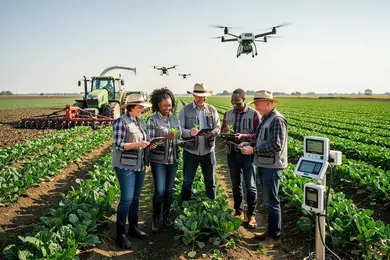
- Employer demand in agriculture centers on precision farming roles, reflecting a 22% growth in tech-enabled functions; students must balance traditional skills with digital proficiency to remain competitive.
- The Midwest and California dominate hiring markets for entry-level agriculture positions, signaling geographic concentration that shapes relocation and internship priorities.
- Employers increasingly prioritize internships over graduate degrees in agriculture; this signals that early industry experience often outweighs advanced credentials, affecting cost and timing decisions for new graduates.
- Key Things to Know About Entry-Level Hiring for Agriculture Graduates Key Things to Know About Entry-Level Hiring for Agriculture Graduates
- What Is the Entry-Level Hiring Outlook for Agriculture Graduates? Entry-Level Hiring Outlook
- What Are the Best Entry-Level Jobs for Agriculture Graduates? Best Entry-Level Jobs
- Which Industries Hire the Most Entry-Level Agriculture Graduates? Top Hiring Industries
- Where Do Agriculture Graduates Have the Best Hiring Odds? Best Entry-Level Markets
- What Starting Salaries Can Entry-Level Agriculture Graduates Expect? Entry-Level Salaries
- Which Skills and Certifications Help Agriculture Graduates Get Hired? Top Skills and Certifications
- How Much Experience Do Entry-Level Agriculture Jobs Require? Entry-Level Experience Requirements
- What Do Employers Look for in New Agriculture Graduates? What Do Employers Look for in New Agriculture Graduates?
- How is AI Affecting Entry-Level Hiring for Agriculture Graduates? How is AI Affecting Entry-Level Hiring for Agriculture Graduates?
- How Can Agriculture Graduates Improve Their Job Search Results? Job Search Strategies
What Is the Entry-Level Hiring Outlook for Agriculture Graduates?
The entry-level hiring outlook for agriculture graduates in the United States in 2024 is uneven, shaped by strong demand in some regions and fields but tight competition and limited openings in others. States with expansive, diversified agricultural sectors such as California and Iowa offer more opportunities, especially in crop production, food processing, and agribusiness services.
However, graduates targeting smaller or less intensive farming regions face the reality of fewer roles and must often compete with more experienced candidates and incoming graduates possessing specialized skills.
National data from the U.S. Bureau of Labor Statistics projects a 7% growth in agricultural and food scientist jobs through 2032, signaling steady but not rapid expansion, emphasizing the need for graduates to align their applications with high-demand niches rather than broadly seeking entry-level roles.
The regional agriculture graduate employment trends and job market analysis further reveal that employers increasingly prefer candidates with practical experience including internships or skills in data analytics, supply chain management, and precision agriculture technologies. This raises a practical tradeoff: entry-level candidates without such backgrounds risk longer job searches or settling for roles outside their target specialties.
For example, pursuing supply chain management positions in agribusiness consulting may yield faster placement than oversaturated farm production roles. Graduates planning their approach should also consider the value of geographic mobility or gaining targeted technical skills to improve their odds of employment.
For those prioritizing technical competencies, reviewing programs such as accelerated psychology programs can offer insights into how accelerated curricula emphasize applied skill development, a model some agriculture pathways are beginning to adopt.
What Are the Best Entry-Level Jobs for Agriculture Graduates?
Strong entry-level positions for agriculture graduates combine accessible hiring prospects with clear skill alignment and meaningful development opportunities. Roles like agricultural technician often provide a practical gateway by leveraging hands-on experience in research or field data collection, where demand continues to grow at about 5% annually according to the U.S. Bureau of Labor Statistics.
Employers favor candidates who demonstrate applied competencies through internships or lab work, making these positions apt for building transferable skills that ease transitions into specialized science or extension careers. Conversely, purely operational roles may limit early exposure to technical analysis, while sales functions demand interpersonal strengths but can detach new graduates from core agricultural science, affecting long-term fit.
Positions such as soil and plant scientist or environmental compliance technician reflect the rising premium on data literacy and sustainability expertise, especially within government and consulting sectors. These jobs require analytical acumen and sometimes certification, narrowing accessibility but offering clearer advancement pathways into senior technical or regulatory roles.
Farm manager trainee openings maintain steady rural demand driven by retirements but prioritize operational leadership and tech familiarity, which might suit graduates targeting management more than research. Graduates must weigh how skill sets and industry concentration intersect with their career goals while recognizing that competition and turnover patterns differ widely across these entry points.
One recent agriculture graduate described her dilemma choosing between a soil analysis role with a state agency and a farm operations trainee position with an agribusiness firm. She noted that while the soil scientist job matched her environmental interests and offered structured growth, the farm manager track promised quicker hands-on responsibility but less focus on analytical skills she wished to develop.
Ultimately, she accepted the state agency to enhance her technical expertise, acknowledging the tradeoff in slower managerial advancement but valuing the alignment with her long-term specialization plans. This choice illustrates how new graduates must carefully interpret job descriptions and sector demands to avoid mismatches that constrain early-career progression.
Which Industries Hire the Most Entry-Level Agriculture Graduates?
Entry-level hiring for agriculture graduates is predominantly concentrated in four sectors: agribusiness, food production, environmental consulting, and government agencies. Agribusiness leads in volume due to ongoing modernization demands in farming operations and supply chain efficiency, alongside a steady need for technicians and sales roles.
Candidates with internship experience or cooperative education placements have a measurable advantage here, but competition and regional job clustering can limit geographic flexibility. According to 2024 labor data from the U.S. Bureau of Labor Statistics, this sector maintains the highest hiring rates for new graduates, reflecting persistent workforce shortages and growing emphasis on sustainable practices.
Food production firms offer significant entry-level opportunities in quality control and regulatory roles, driven by expanding organic and specialty food markets, though employment stability often depends on shifting consumer trends and compliance environments.
Environmental consulting attracts graduates with stronger technical skills in data analysis and environmental software, supporting public and private climate resilience projects; however, these roles might require a higher baseline of specialized knowledge and often provide greater geographic mobility.
Government positions supply more stable, benefits-rich employment but tend to experience fluctuating hiring tied to budget cycles and political priorities. Graduates weighing these options must balance volume and accessibility against skill requirements and long-term job security to effectively target sectors matching their qualifications and career objectives.
Where Do Agriculture Graduates Have the Best Hiring Odds?
Entry-level hiring odds for agriculture graduates depend heavily on the density of employers and availability of relevant openings rather than geography alone. For instance, metropolitan regions blending agritech startups with traditional food supply chain roles provide diverse opportunities but face intense applicant competition and higher living costs.
By contrast, regions such as the Midwest or California's Central Valley concentrate agriculture-related industries with strong demand driven by labor shortages and retirements, offering better odds if graduates can navigate fewer but more specialized openings.
New graduates weighing where to pursue work should consider how employer type impacts access; government and extension services often simplify entry through internships, while private agribusiness may require prior experience but present clearer progression paths.
Assessing the best regions for agriculture graduates to find entry-level jobs requires balancing opportunity volume against applicant competition and cost-of-living trade-offs. Hybrid or remote roles remain scarce given the hands-on nature of most agriculture jobs, though data-centric consulting positions are an exception.
According to 2024 analyses from the U.S. Bureau of Labor Statistics and Lightcast, prioritizing sectors with documented growth and workforce shortages enhances hiring prospects more than targeting locations solely by size or familiarity. Those interested in combining leadership development with sector-specific knowledge might explore options such as an online PhD leadership program that aligns with evolving agricultural technologies and management demands.
What Starting Salaries Can Entry-Level Agriculture Graduates Expect?
Starting salaries for entry-level agriculture graduates vary widely and depend on more than just the degree earned. Factors such as the specific role, employer type, location, and relevant technical skills significantly influence offers.
For example, a graduate with internship experience and certification in sustainable farming working in a private agritech firm in California's Central Valley may receive an offer notably higher than a peer in a nonprofit role in a rural area. This reflects both market-driven pay differentials and varying benefit packages. Understanding these dynamics is crucial for setting realistic expectations and evaluating employment opportunities.
Key determinants shaping entry-level salary prospects include:
- Role Specialization: Positions in agribusiness management or agricultural engineering often command higher starting pay versus general farm technician roles, reflecting the specialized skills and responsibilities involved.
- Industry Sector: Private agritech companies and multinational food corporations typically offer more competitive salaries and bonuses compared to public-sector or nonprofit agricultural organizations, which may focus more on stability and benefits.
- Geographic Location: Regions with dense agribusiness hubs like California's Central Valley or the Midwest Corn Belt provide higher base salaries due to cost of living and demand, whereas rural or less concentrated markets tend to offer lower wages.
- Technical Credentials and Experience: Graduates with internships or certifications in precision agriculture or sustainable farming techniques generally negotiate starting salaries 5%-10% above peers without these qualifications, highlighting employer value on practical skills.
- Early Career Incentives: Agronomy consulting and agrochemical sales sectors often include performance bonuses and profit-sharing in entry packages, rewarding results but potentially adding income variability.
- Non-Salary Benefits: Comprehensive health coverage, tuition reimbursement, and professional development opportunities can differentiate offers that appear lower in base pay but may provide longer-term career value.
- Remote Work and Mobility: Field-based roles limit remote work options, influencing compensation packages and requiring consideration of geographic flexibility and lifestyle preferences.
One recent agriculture graduate shared that the starting salary negotiations took into account both location and growth potential rather than base pay alone. Despite a higher offer from a firm in a high-cost metro, the candidate hesitated due to limited mentorship and slower skill development.
Ultimately, they accepted a lower-paying role in the Midwest with structured training and clearer advancement paths. This decision underscored the importance of evaluating total compensation and career trajectory, not just immediate salary figures, especially when experience is limited and long-term stability is a priority.
Which Skills and Certifications Help Agriculture Graduates Get Hired?
Employers hiring entry-level agriculture graduates are prioritizing applied technical skills, digital fluency, and clear evidence of job readiness alongside traditional academic credentials. Candidates who combine data interpretation abilities with familiarity in precision agriculture tools stand out as the industry increasingly leverages technology for operational efficiency.
For instance, a recent graduate proficient in GIS mapping and farm management software, who also completed an internship applying these skills in real-world contexts, will generally have stronger prospects than those relying solely on classroom knowledge.
The emphasis on practical experience reflects the sector's seasonal variability and evolving regulatory landscape, pressing employers to favor adaptable candidates who can contribute immediately.
Agriculture graduate certifications for hiring advantage tend to vary by specialization but require strategic selection to maximize return on time and investment. Entry-level agriculture skills employers seek therefore encompass a blend of technical, regulatory, and communication competencies. Below are key skills and certifications that enhance hiring potential for new graduates in agriculture roles:
- Analytical Skills: Critical for roles involving crop analytics, resource management, or supply chain optimization, this includes interpreting data through software tools. Demonstrable experience via internships or portfolio projects strengthens employability beyond basic coursework.
- Precision Agriculture Technology: Proficiency in platforms like GIS mapping, Ag Leader, or Trimble systems is increasingly essential. Hands-on familiarity during education or work experience is more impactful than standalone certificates.
- Certified Crop Adviser (CCA): Highly regarded in crop management and agronomy positions, the CCA credential signals adherence to industry standards but supplements rather than replaces practical competence.
- Pesticide Applicator Licensing: Mandatory for chemical handling roles, providing legal compliance credibility. Required by federal or state regulations, this license is non-negotiable where relevant.
- Communication Skills: Strong verbal and written communication distinguish candidates able to bridge technical teams, farmers, and policy stakeholders. Demonstrated through presentations, report writing, or team projects.
- Internship Experience: Cooperative education placements offer applied learning that many employers prioritize. Real-world exposure helps graduates navigate sector-specific challenges and seasonal cycles effectively.
- Emerging Tech Credentials: Specialized microcredentials in AI applications or drone operations may enhance niche career paths but should be pursued only when aligned with targeted job goals.
Agriculture graduates evaluating degree programs might also consider complementary business skills. For example, pursuing an online business administration degree alongside technical study can diversify skill sets and improve competitive positioning across agribusiness sectors.
How Much Experience Do Entry-Level Agriculture Jobs Require?
Entry-level agriculture roles often present a wide spectrum of experience expectations that reflect the distinct demands of various positions within the field. While roughly 40% of openings require candidates to have completed internships, practicums, or possess one to two years of part-time or seasonal experience, this does not always constitute a strict barrier.
Employers frequently differentiate between mandatory and preferred experience; many listings seek a demonstrated skill set or applied project work rather than formal full-time employment. For example, a recent graduate with a strong portfolio of academic projects and relevant certifications may remain competitive for roles such as crop scouting or field technician positions, even when the posting indicates some experience is desired.
The variance in experience requirements often hinges on job complexity, employer size, and regional labor market conditions. Positions demanding technical expertise-such as precision agriculture analysts or roles in agricultural software support-commonly expect applicants to have specific credentials or a history of relevant applied work, aligning with higher regulatory and operational risks.
In contrast, smaller firms and enterprises operating in tight labor markets tend to value adaptability and learning potential, sometimes ranking these qualities above direct experience. Agriculture graduates should therefore assess job specifics carefully, recognizing that experience requested may be flexible, particularly when supplemented by certifications, volunteer roles, or demonstrable technical skills.
Understanding the nuances between required and preferred experience is critical for making informed job search decisions. While some entry-level postings list one to three years of experience to refine candidate pools, these often function as screening tools rather than absolute criteria.
According to a 2024 report from the National Association of Colleges and Employers, over one-third of agriculture job listings explicitly state no prior experience is necessary, underscoring the importance of transferable competencies.
Graduates should critically evaluate their practical exposures alongside stated requirements to identify realistic opportunities rather than dismiss positions solely on experience lists, balancing effort invested against potential outcomes in varied agricultural labor markets.
What Do Employers Look for in New Agriculture Graduates?
Employers evaluating new agriculture graduates increasingly prioritize demonstrated job readiness over academic credentials alone. Recruiters assess candidates based on applied skills, relevant hands-on experience, clear communication, technical proficiency, adaptability, and awareness of current industry trends.
For example, a large agribusiness hiring for a precision agriculture analyst role may favor applicants with demonstrated internship experience using GIS software combined with the ability to present data-driven insights to diverse teams. This hiring approach reflects a broader shift toward skills-based evaluation, where portfolios and practical exposure weigh heavily in decision-making.
Key qualities employers commonly value include:
- Hands-On Experience: Candidates who complete internships, cooperative education, or project-based work provide tangible proof of practical skills, often ranking higher than those with theoretical knowledge alone.
- Technical Proficiency: Familiarity with crop management, soil science, precision agriculture software, and basic programming signals readiness for increasingly automated and data-driven roles.
- Communication Skills: The ability to clearly convey findings and collaborate across disciplines and stakeholders-including farmers, suppliers, and regulators-is essential for integrated field and office work.
- Adaptability And Problem-Solving: Employers look for graduates who demonstrate flexibility through real-world projects or research addressing evolving agricultural challenges, showcasing initiative beyond standard classroom tasks.
- Relevant Certifications: Credentials such as Certified Crop Adviser (CCA) enhance credibility but rarely guarantee placement; they are most effective when paired with measurable applied experience.
- Industry Awareness: Understanding current trends such as AI integration and automation helps candidates anticipate workplace demands and reduces training burdens.
- Workplace Readiness Signals: With reduced training budgets, employers prefer candidates who require minimal onboarding, making documented examples of past achievements critical for early career success.
How is AI Affecting Entry-Level Hiring for Agriculture Graduates?
AI-driven recruitment tools in agriculture hiring processes are reshaping entry-level roles by automating routine tasks and emphasizing digital fluency in candidate screening. Employers in agriculture increasingly prioritize applicants who combine traditional crop or soil science knowledge with data literacy and familiarity with AI-assisted precision agriculture.
This blend of skills allows graduates to adapt to evolving job descriptions where interpreting AI outputs and managing technology deployment become core responsibilities rather than manual labor alone. For example, a recent graduate applying for a field technician role may now be evaluated less on physical fieldwork experience and more on their ability to analyze remote sensing data and collaborate on technology integration projects.
Labor market data from early 2024 suggests significant variation across agriculture subfields and employers in how AI impacts job availability and candidate expectations. Positions in commodity crop management tend to have higher automation exposure, shifting demand toward hybrid skill sets, while niche sectors focused on sustainable or specialty crops still value hands-on expertise combined with emerging tech competencies.
Recognizing these differences lets graduates target roles, internships, and skill-building efforts that align with sector-specific AI adoption levels and employer workflows. Developing strong analytic capabilities and communication skills to interact with multidisciplinary teams enhances prospects amid competitive applicant pools that are increasingly filtered by automated systems.
Understanding the nuanced impact of AI on entry-level agriculture job opportunities can guide students toward meaningful upskilling without overreliance on technology alone. Rather than assuming AI will replace entry roles entirely, graduates should focus on demonstrating applied technical skills alongside practical experience, consideration of sustainability metrics, and problem-solving within evolving workflows.
Those exploring advanced education can also evaluate masters degrees that are worth it to deepen interdisciplinary expertise responsive to employer demands in this shifting landscape.
How Can Agriculture Graduates Improve Their Job Search Results?
Agriculture graduates aiming to improve job search success find targeted applications outperform broad, unfocused efforts because employers typically rely on applicant tracking systems that require precise job-title matching. For example, a graduate focusing on "entry-level agribusiness analyst" roles in regions known for agricultural innovation will likely see better callbacks than one who submits generic resumes to diverse roles nationwide.
This focused strategy is critical given that many employers prioritize keyword alignment with specific skills and qualifications, as shown by National Association of Colleges and Employers data indicating tailored resumes increase interview invitations by up to 30%. Prioritizing entry-level agriculture jobs hiring tips that include geographic and industry demand signals enhances the efficiency of job search efforts.
Graduates should also leverage internships, capstone projects, or certifications that demonstrate relevant practical skills, which improve interview-to-offer conversion rates per U.S. Bureau of Labor Statistics findings. Networking by engaging with professional groups or alumni can raise hire probability by around 40%, particularly in specialized fields like sustainable farming or food production management.
Additionally, submitting applications within 48 hours of posting optimizes ATS visibility, a detail often overlooked by many applicants. Those seeking to broaden qualifications might consider complementary credentials, such as an online MFA degree, to diversify skill sets and adapt to evolving job market needs.
References
- Agricultural Student Education Resources | AgHires https://info.aghires.com/student-resources
- Agriculture Jobs Abroad: Top Countries & Careers https://takshashilauniv.ac.in/agriculture-jobs-abroad/
- BSc Agriculture Salary, Job Opportunities, and Scope in India https://deshbhagatuniversity.in/2025/08/04/bsc-agriculture-salary/
- Agriculture Entry Level Jobs in All Melbourne VIC - Jul 2026 | SEEK https://au.seek.com/agriculture-entry-level-jobs/in-All-Melbourne-VIC
- Agriculture Industry In Need Of Future Employees - American Cattlemen https://americancattlemen.com/agriculture-industry-in-need-of-future-employees/
- Agricultural Graduate & Trainee Jobs https://www.agrirs.co.uk/disciplines/graduate-jobs
- The impact of AI on entry-level jobs: A graduate perspective - IFOW https://www.ifow.org/news-articles/the-impact-of-ai-on-entry-level-jobs-a-graduate-perspective
- What are the highest paying jobs in agriculture? https://www.elearningonline.co.nz/what-are-the-highest-paying-jobs-in-agriculture/
- Is AI responsible for the rise in entry-level unemployment? | Revelio Labs https://www.reveliolabs.com/news/macro/is-ai-responsible-for-the-rise-in-entry-level-unemployment/
Other Things You Should Know About Agriculture
Employers often favor candidates from specialized agriculture programs that directly align with their operational needs, such as agribusiness, soil science, or plant pathology, because these graduates require less on-the-job training. While a general agriculture degree offers broad foundational knowledge, it may place graduates at a disadvantage in competitive markets where technical depth is prioritized. Students aiming for quicker employment should weigh the tradeoff between wider academic exposure and the increased job readiness that specialized programs typically provide.
Internships and hands-on farm experience carry substantial weight because they demonstrate applied skills and workplace adaptability that GPA alone does not capture. Employers often consider practical experience as a proxy for readiness to handle the physical and logistical challenges of entry-level roles. Graduates with solid academic records but limited practical exposure may face longer job searches or less favorable starting positions, indicating that prioritizing real-world experiences can enhance employability more than marginal GPA improvements.
Geographic flexibility significantly improves hiring odds due to the uneven distribution of entry-level openings across regions. Graduates willing to relocate to rural or agriculturally dense areas often access more positions and higher chances for career growth than those confined to urban centers or specific locales. Given this, it is advisable for new grads to evaluate their willingness to work in different markets as a critical factor in their early career planning to maximize job prospects.
Entry-level positions frequently involve fluctuating workloads tied to planting, harvesting, and market cycles, requiring adaptability and endurance. Graduates should anticipate periods of intense physical labor and extended hours balanced by off-peak times that allow recovery or skill development. Understanding these cycles beforehand helps new hires manage work-life balance and assess whether their personal resilience aligns with the job demands, affecting long-term job satisfaction and retention.