2027 Agriculture Degree Outlook Through 2030: Enrollment, Salary, and Hiring Projections

Co-Founder and Chief Data Scientist
Deciding whether to pursue or advance an agriculture degree requires navigating complex market signals that often conflict. For example, despite a reported 5% enrollment increase in agriculture programs nationally from 2023 to 2024, employer demand varies widely by region and specialization, creating pockets of intense competition amid shortages.
Solely relying on projected job growth can mask how automation and credential shifts are narrowing pathways for graduates without complementary skills. Meanwhile, salary trends reflect a spectrum influenced by industry subsectors and geographic cost of living rather than uniform gains. This article explores agriculture enrollment, salary patterns, hiring projections, industry demand, geographic opportunity, and emerging workforce changes through 2030 to support more informed education and career decisions.
Key Things to Know About the Agriculture Degree Outlook Through 2030
- Increasing automation in agriculture reduces demand for general labor but raises the need for specialized skills in precision farming, urging students to focus on technical competencies to maintain employability.
- A 2024 employer survey reports 18% of agribusinesses struggling to find graduates with data analytics expertise, signaling a workforce gap that may pressure hiring and salary trends in niche sectors.
- Enrollment growth remains uneven geographically, with rural programs facing decline due to access and cost barriers, suggesting students should weigh location-based opportunities carefully before committing.
- Key Things to Know About the Agriculture Degree Outlook Through 2030 Key Things to Know
- How is Agriculture Degree Enrollment Expected to Change Through 2030? Enrollment Trends Through 2030
- How Many Agriculture Graduates Will Enter the Workforce by 2030? Graduate Workforce Entry Projections
- What Are the Hiring Projections for Agriculture Graduates Through 2030? Hiring Projections Through 2030
- Which Agriculture Careers Will Experience the Most Job Growth? Fastest-Growing Career Paths
- What Is the Salary Outlook for Agriculture Graduates Through 2030? Salary Outlook Through 2030
- Which Industries Will Hire the Most Agriculture Graduates by 2030? Top Hiring Industries
- Where Will Demand for Agriculture Graduates Be Strongest? Strongest Geographic Demand
- Which Agriculture Specializations Will Be Most in Demand by 2030? Specializations
- How Will AI and Technology Affect Agriculture Careers Through 2030? AI and Technology Impact
- Is a Agriculture Degree Worth Pursuing Based on 2030 Projections? Degree Value Through 2030
How is Agriculture Degree Enrollment Expected to Change Through 2030?
Enrollment trends in agriculture degree programs through 2030 reflect a complex interplay of labor-market demand, regional demographics, and program adaptability. While national projections suggest a moderate annual increase around 2% for undergraduate agriculture degree enrollment, students must weigh the implications of this growth carefully. Increasing enrollment in institutions with strong ties to agribusiness and emerging technologies could heighten admission competition and expand specialization options in areas like biotechnology and precision agriculture, whereas programs that fail to evolve risk stagnant or declining student interest.
For instance, midwestern universities, benefiting from stable agricultural economies, are likely to maintain steady enrollment, contrasting with rural regions facing reduced demand that could lead to program downsizing or closures. These enrollment shifts have direct consequences for workforce supply and graduate outcomes. A steady rise in graduates equipped with STEM and data analytics skills aligns with employer expectations in sectors such as environmental conservation and climate-adaptive farming, helping to mitigate risks of oversaturation in traditional roles.
However, prospective students should consider the nuanced distinctions between growing program capacity versus increased tuition or limited institutional resources, which can affect class size and quality. Furthermore, as online delivery grows, particularly in related fields exemplified by healthcare administration online programs, the accessibility of agriculture degrees may expand, influencing overall enrollment trends and the geographic distribution of students seeking flexible options.
How Many Agriculture Graduates Will Enter the Workforce by 2030?
The number of agriculture graduates entering the workforce by 2030 is shaped by more than just enrollment and degree completion figures. While undergraduate agriculture programs have shown steady growth in conferrals, with annual completions increasing about 1-2% over recent years according to the National Center for Education Statistics, this growth does not directly translate into a uniformly expanding workforce. Many graduates delay employment, pursue advanced degrees, or find roles outside traditional agriculture sectors, which means the actual influx of new professionals is somewhat dispersed across time and industries.
Employers increasingly value adaptability and practical experience, so the competition intensifies as more candidates bring diverse, relevant skills beyond the degree alone. Projected demand for agriculture graduates aligns with a 5-7% employment growth rate through 2030 as noted by the Bureau of Labor Statistics, but this demand is concentrated in specialized areas such as agribusiness technology, environmental management, and food science rather than evenly spread.
Regional discrepancies also factor in; urban and technology-focused hubs see higher employment growth compared to rural areas with traditional farming bases, influencing where graduates find opportunities. Consequently, the pipeline of roughly 25,000 to 30,000 new graduates annually must be viewed through the lens of shifting sector needs and selective employer priorities rather than as a bulk supply of interchangeable entrants.
What Are the Hiring Projections for Agriculture Graduates Through 2030?
Employer demand for agriculture graduates through 2030 appears moderate and regionally uneven, shaped by shifting industry needs rather than broad, consistent expansion. The U.S. Bureau of Labor Statistics projects about 5% growth across agricultural occupations, reflecting steady but not rapid job creation that may mask varying opportunities by role and location.
For instance, graduates targeting rural farm management positions may encounter more openings but also face limitations in amenities and potentially lower wages compared to urban-centric agricultural technology roles, where competition can be fiercer and employers increasingly prioritize data analytics and biotechnology skills. Projected annual job openings of approximately 15,000 nationally represent a mix of newly created jobs and retiree replacements, underscoring that growth alone does not guarantee plentiful entry-level options.
Employers often look for candidates who combine classical farming knowledge with practical experience in precision agriculture and sustainability, implying that graduates relying solely on degree credentials without internships or relevant projects could struggle to differentiate themselves. Additionally, interdisciplinary fluency in biology, technology, and environmental science enhances employability but may require students to seek specialized education beyond traditional curricula, pointing to real-world tradeoffs in program choice and preparation.
While the overall labor market for agriculture remains stable, individual graduates must weigh geographic and specialization factors carefully. Demand concentrated in specific sectors, such as food safety inspection or agricultural engineering, may not align with every student's interests or local job density. Consequently, relying exclusively on national employment projections can obscure localized hiring challenges and the premium on adaptable skill sets.
Prospective students should critically assess how well their education paths equip them to meet evolving employer standards and practical realities within the diverse and regionally differentiated agriculture workforce.
Which Agriculture Careers Will Experience the Most Job Growth?
Job growth projections through 2030 for agriculture careers reveal distinct opportunities largely shaped by technological advancement and environmental priorities. Agricultural engineers, at the intersection of machinery innovation and sustainability, are anticipated to outpace many agricultural roles in growth rate due to their role in implementing smart farming technologies such as drones and precision equipment.
This specialization demands a blend of technical and agronomic knowledge, making it a suitable choice for students comfortable with STEM subjects but potentially limiting for those focused solely on traditional agriculture studies. Employers also highlight that steady openings among soil and plant scientists reflect ongoing needs to optimize crop yields while addressing ecological concerns, yet these roles tend to require strong foundational biology training and may face regional variability in demand.
Animal scientists represent a moderate growth area where shifts in consumer preferences and regulatory frameworks influence hiring trends, emphasizing ethical livestock management and disease control. Rapid expansion is also seen in agronomy and data science, where the ability to analyze complex agricultural datasets is increasingly prized, signaling a cross-disciplinary future for agriculture jobs. For students weighing their options, understanding these dynamics is critical.
For instance, pursuing a career in the fastest growing agriculture jobs and salary trends sector may necessitate continuous education and flexibility to adjust to evolving industry tools and standards. Those exploring education pathways should consider whether programs emphasize both technical proficiency and agriculture fundamentals, or focus narrowly on one aspect. Alternatives like a nursing school with no entrance exam may appeal to individuals seeking a different employment outlook but with comparably growing healthcare demand.
What Is the Salary Outlook for Agriculture Graduates Through 2030?
Salary projections for agriculture graduates through 2030 must be considered in light of inflation, evolving labor market demand, credential inflation, and ongoing shifts in job roles driven by technology and policy. Modest annual real wage growth between 3% and 5% is anticipated, but this varies widely by specialization, experience, and geography. Job seekers should understand that entry-level pay often reflects technical skill requirements and regional industry concentration, not just degree prestige.
These factors shape how much agriculture professionals can realistically expect to earn over time. Key elements influencing salary trends include:
- Specialization Premiums: Roles in agricultural engineering, biotech, and agribusiness management tend to command higher starting wages due to technical demands and sector growth. Skills in data analytics and sustainability further differentiate earning potential.
- Geographic Variability: Urban centers and high-tech agricultural hubs generally offer superior compensation compared to rural and commodity-focused regions where traditional farming roles predominate.
- Experience Effects: Mid-career professionals with 10 to 15 years in the field may see salaries rise to roughly $75,000-$95,000, especially if they transition into leadership or supply chain roles.
- Credential Expectations: Increasingly, employers seek candidates who combine a degree with complementary expertise in automation, environmental compliance, or digital technologies, influencing advancement and pay.
- Industry Consolidation: Mergers and shifting agricultural policies could moderate long-term salary growth and reduce available positions, pressuring workers to develop versatile skills.
- Regional Policy Impacts: Local sustainability initiatives and trade policies may alter demand for specialized roles, affecting wage trajectories unpredictably.
- Entry-Level Wage Range: Starting salaries commonly fall between $45,000 and $55,000, but this can be higher in biotech and engineering roles due to their technical rigor and applied research focus.
Which Industries Will Hire the Most Agriculture Graduates by 2030?
Projecting hiring trends for agriculture graduates through 2030 requires examining how industry growth, workforce replacement, technological advancement, and regulatory shifts reshape employer demand. While total job volume is influenced by automation-driven efficiencies, increasing complexity in agricultural operations sustains the need for technically skilled graduates.
Candidates versed in data analysis, agri-tech tools, and interdisciplinary approaches will have stronger positioning as employers seek flexible problem solvers to meet evolving food system challenges. The agriculture graduate hiring trends by industry 2030 emphasize sectors blending traditional practices with innovation. Below are key industries expected to generate the strongest hiring demand.
- Farm and Ranch Management: Despite mechanization reducing some routine labor, farm and ranch management roles require expertise in sustainable practices, precision agriculture, and resource optimization. Entry-level positions emphasize biological sciences combined with skills in digital monitoring and operational analysis.
- Food Manufacturing: Companies handling food processing and supply chains need graduates familiar with crop and livestock production as well as compliance with heightened safety regulations. Roles often focus on quality control, logistics coordination, and process optimization.
- Environmental Consulting: Increasing climate adaptation and resource conservation regulations create demand for graduates skilled in soil science, environmental policy, and sustainable land management to advise public and private sector clients.
- Biotechnology and Agronomy: Firms investing in genetic crop improvements and bio-based products seek graduates proficient in plant sciences and laboratory research, balancing fieldwork with experimental methodologies.
- Government and Non-Profit: Although entry-level openings are fewer compared to private sector roles, these organizations offer opportunities aligned with conservation, rural development, and regulatory compliance, requiring both technical knowledge and community engagement skills.
Prospective students weighing these sectors should consider that competition varies widely with specialization and geographic location, influencing salary prospects and career sustainability. Exploring agricultural programs that integrate technology and data analytics enhances employability across diverse roles. Those interested may also compare related fields such as exercise science degrees online to understand cross-disciplinary educational pathways that incorporate biological and data sciences.
Recognizing these trends enables current degree holders and educators to align curricula and career planning with realistic, data-driven industry needs reflective of the top US industries employing agriculture degree holders through 2030.
Where Will Demand for Agriculture Graduates Be Strongest?
Demand for agriculture graduates is highly nuanced by regional and sector-specific factors that influence both job opportunities and competitive landscapes. Concentrations of employers in the Midwest-especially Iowa, Nebraska, and Illinois-offer relatively stable hiring driven by large-scale crop production and agri-business services, yet these markets also experience considerable applicant volume, which can intensify competition despite consistent openings.
In contrast, California's Central Valley, with its emphasis on specialty crops and organic farming, presents opportunities that often require more specialized knowledge in technology-integrated farming methods, making local credentials and expertise in precision agriculture increasingly important for candidates aiming to stand out in this evolving marketplace. Emerging employment pockets in precision agriculture and sustainable supply chains show how integration of digital tools, from drones to AI, is reshaping traditional roles, thereby elevating the value of interdisciplinary skills combining biology, data analytics, and business acumen.
Graduates without proficiency in these areas risk narrowing their options to more traditional or rural positions, where demand may be steady but salary growth and career flexibility are more limited. The cost of living variances, particularly between rural Midwest states and California hubs, further complicate decision-making, as higher wages in technology-driven sectors may be offset by living expenses, requiring realistic evaluation of total employment value over simple job counts.
Public investment patterns and regional workforce shortages also drive opportunity disparities, with sustainable agriculture and alternative protein production gaining momentum in select clusters that prioritize environmental compliance and supply chain innovation. This uneven geographic and sectoral distribution means that graduates should weigh not just where jobs exist but the extent to which each locale aligns with their skill set and long-term career aspirations. According to updated 2024 data from the U.S. Bureau of Labor Statistics and USDA projections, those who adapt to the multidisciplinary demands of modern agriculture stand a better chance of securing well-compensated roles that balance evolving employer expectations with practical operational realities.
Which Agriculture Specializations Will Be Most in Demand by 2030?
Projected job growth in agriculture specializations through 2030 reflects shifting priorities in technology integration, sustainability, and food system complexity. Students and professionals must weigh these dynamics when selecting focus areas, balancing demand forecasts against skill acquisition timelines and regional market realities. For instance, a student choosing between agronomy and agricultural engineering should consider not only growth rates but also the technical competencies required, such as precision agriculture technology versus soil science expertise.
Understanding these nuances informs expectations about flexibility, earning potential, and employer preferences upon graduation. Demand signals vary: the U.S. Bureau of Labor Statistics highlights agriculture occupations growing faster than average, particularly those combining technical and interdisciplinary skills. Food system resilience and environmental pressures underpin many roles, while automation continues to reshape engineering-related specialties.
Such patterns suggest that versatility in both science and technology domains enhances long-term career adaptability. Below are key agriculture specializations expected to see the strongest demand by 2030.
- Agronomy and Crop Science: Emphasizing sustainability and yield improvement, this specialization addresses climate-related pressures on food production. Key skills include soil health management, pest control, and genetic crop enhancement. Graduates often work in research, extension services, or farm management across varied climates and scales.
- Agricultural Engineering: Focused on automation and precision agriculture, this field requires knowledge of robotics, sensors, and system design. The integration of drones and AI for farm operations drives employer demand, especially in high-tech agricultural enterprises and equipment manufacturing.
- Food Science and Business Management: Specialists here handle supply chain complexity, regulatory compliance, and food safety protocols. Skills in economics, logistics, and traceability systems are critical as consumer expectations for transparency and sustainability grow.
- Environmental and Natural Resource Management: Professionals develop and implement sustainable agricultural practices, water resource allocation, and conservation policies. This specialization suits those aiming for roles in public agencies and non-profit sectors focused on ecosystem services.
- Precision Agriculture Technology: Emphasizes data analytics, GIS, and remote sensing to optimize crop production and resource use. Employers seek graduates proficient in software tools and agronomic data interpretation to enhance decision-making on farms.
How Will AI and Technology Affect Agriculture Careers Through 2030?
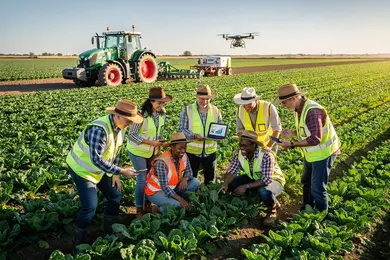
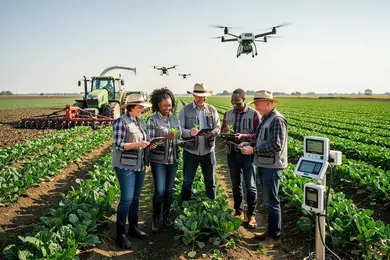
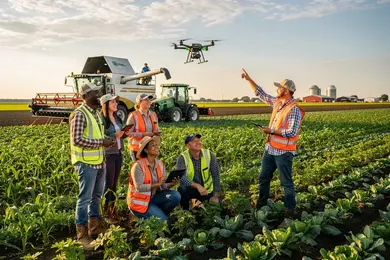
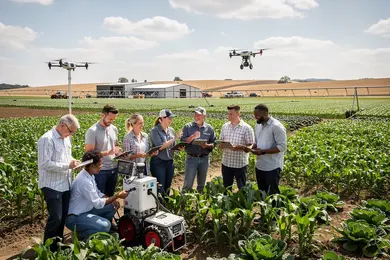
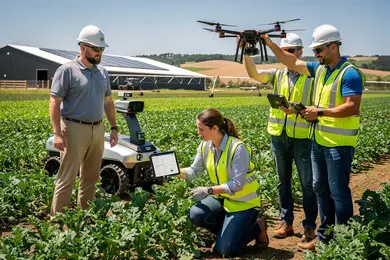
Artificial intelligence and automation are poised to largely augment rather than simply automate agriculture roles, shifting routine tasks like planting and irrigation monitoring to AI-enabled systems while elevating demand for specialists skilled in data analysis, robotics, and sensor technology. For example, a farm technician may now oversee drone-based crop surveillance rather than manually inspecting fields, requiring competencies in software management alongside traditional agronomic knowledge. This shift means that students and current professionals must critically assess educational programs for integration of applied technology training and data literacy to remain competitive in a labor market increasingly valuing tech competence over manual labor.
The impact of technology on agriculture jobs and hiring trends presents clear tradeoffs: while expertise in AI-driven resource management projects stronger salary growth and more stable hiring, there is a widening skills gap that could marginalize workers without access to specialized training or who remain focused on conventional farmhand roles. Employers increasingly prioritize candidates with cross-disciplinary skills blending agronomy with emerging tech, reinforcing the need for ongoing professional development and certifications aligned with precision agriculture.
Informed decision-making about coursework and credentials-factoring in long-term viability and breadth of technical application-will be essential for navigating evolving workforce demands. This evolving landscape underlines the importance of targeted educational investments; those exploring adjacent fields may also benefit from frameworks found in other specialized roles such as how to become a medical examiner assistant, where technical proficiency complements domain-specific expertise.
Prospective students and educators analyzing agriculture degree outlook through 2030 should weigh program outcomes against practical realities of AI integration in agriculture career growth through 2030, recognizing that while some roles are redefined by technology, sustained success requires adaptability, specialized skills, and strategic alignment with industry innovation pathways.
Is a Agriculture Degree Worth Pursuing Based on 2030 Projections?
Projected employment growth for agriculture-related careers through 2030 is moderate, roughly aligning with average occupational expansion according to the U.S. Bureau of Labor Statistics. However, students considering an agriculture degree should recognize that salary and job availability vary significantly by specialization, geographic location, and technical proficiency. For example, graduates targeting agribusiness or environmental consulting roles may secure higher wages but face stiffer competition and often require interdisciplinary skills such as data analytics or environmental science. Those prioritizing immediate earning potential might find better returns in certain STEM fields despite a stable job market in agriculture sectors.
The agriculture degree job market outlook 2030 illustrates a modest increase in enrollment fueled by interest in sustainable farming and agri-tech innovations, potentially intensifying competition for specialized positions. Geographic constraints also impact flexibility, with many roles concentrated in rural or specific agricultural hubs, limiting mobility for graduates. Practical experience remains crucial, but candidates must weigh this against tuition costs, duration of study, and the quality of entry-level pathways. Individuals balancing agricultural interests with other career options may explore a doctorate in counseling online for broader employment prospects, highlighting the tradeoff between niche expertise and workforce adaptability.
Salary and employment projections for agriculture graduates indicate median wages typically range from $50,000 to $75,000, with significant variance based on role and employer sector. The degree offers reasonable job stability and vital societal contributions in food production and environmental stewardship, yet those seeking high financial returns or urban job markets should critically assess their options. Understanding the practical realities and market nuances is essential to making an informed decision about pursuing this path.
References:
- The phenomenal demand for 21st century AgriBusiness graduates - Study International https://studyinternational.com/news/phenomenal-demand-21st-century-agribusiness-graduates/
- Agricultural Graduate Jobs: 104K+ Annual Openings Through 2030 | Eagmark Agri-Hub https://eagmark.net/news/agricultural-graduate-employment-outlook-2025-2030
- Learn more about a guide to in-demand specializations 2030 https://studyfans.com/en/blogs/789
- Ag And AgriTech Market Trends For 2025-2030 From EOSDA https://eos.com/blog/agritech-market-overview-and-trends-for-2025-2030/
- AI Skills for Life and Work: Labour market and skills projections https://www.gov.uk/government/publications/ai-skills-for-life-and-work-labour-market-and-skills-projections/ai-skills-for-life-and-work-labour-market-and-skills-projections
- Rise of green, education and agriculture jobs - Career Industry Council of Australia (CICA) https://cica.org.au/rise-of-green-education-and-agriculture-jobs/
- Agriculture Labour Market Forecast 2023-2030 | CAHRC-CCRHA https://cahrc-ccrha.ca/resources/document/agriculture-labour-market-forecast-2023-2030
- Strategic Agriculture Hiring Report | AgHires https://info.aghires.com/agriculture-job-seeker-hiring-trends
- AI isn’t likely to wipe out all farming jobs – but it is changing who bears the risks https://theconversation.com/ai-isnt-likely-to-wipe-out-all-farming-jobs-but-it-is-changing-who-bears-the-risks-275227
- The practicality of an agriculture degree in today's landscape | AGDAILY https://www.agdaily.com/insights/exploring-practicality-of-agriculture-degree/
Other Things You Should Know About Agriculture
Specialized Agriculture programs often offer deep technical skills and direct access to industry networks, which can improve employability in niche sectors like crop science or agri-business. However, broader interdisciplinary degrees that combine agriculture with environmental science, technology, or business may provide greater flexibility for shifting job markets and emerging roles. Prospective students should prioritize programs with practical learning components and clear links to employers; such programs tend to better position graduates for long-term adaptability and salary growth amid industry changes.
Fieldwork, internships, and laboratory experiences are often indispensable in agriculture programs but can also extend time to graduation and increase workload intensity. While demanding, these hands-on components substantially enhance graduate readiness and appeal to employers who prioritize applied skills over theoretical knowledge. Students should evaluate how well programs integrate practical experiences without compromising academic progress, as insufficient exposure may limit competitiveness despite favorable hiring projections.
Regions with concentrated agricultural industries often offer more on-site training opportunities and stronger local hiring networks, which can improve job placement immediately after graduation. Conversely, programs located in less agriculture-centric areas may lack such direct employer connections, possibly forcing graduates to relocate for work. Aspiring agriculture professionals should consider how program location aligns with their targeted employment markets and be prepared for geographic mobility if direct local placement opportunities are limited.
With agriculture salary increases projected to be steady but not exceptional, students must carefully assess program costs relative to expected starting salaries and career advancement potential. Prioritizing affordable programs that emphasize high-impact skills and professional networking can optimize return on investment. Overcommitting to high-cost programs without significant employer prestige or experiential learning risks extending debt burdens without proportionate salary benefits.