2027 Data Analytics Career Outcomes by Degree Level Report: Pay, Employment, and Advancement Patterns

Co-Founder and Chief Data Scientist
Choosing between certificate, associate, bachelor's, or master's degrees in data analytics involves high-stakes tradeoffs that can shape career trajectories. For working professionals balancing time and cost constraints, unclear distinctions in employment outcomes amplify risk.
Recent 2024 labor market data shows that advanced degree holders in data analytics experience disproportionately higher rates of job mobility and leadership placement, reflecting employers' rising expectations for complex problem-solving skills. However, faster entry-level employment often favors shorter programs.
This report analyzes pay disparities, employment rates, and advancement patterns by degree level to equip prospective students with precise insights for aligning education choices with career objectives in data analytics.
Key Things to Know About Data Analytics Career Outcomes by Degree Level
- Associate degrees often enable quicker entry into data-related roles but tend to limit advancement without additional credentials, reflecting a tradeoff between early employability and slower career progression.
- Employers increasingly prefer bachelor's or higher degrees for competitive analyst positions, showing a workforce trend that values deeper theoretical knowledge and signals credential-based hiring filters.
- Master's or doctoral programs require substantial time and financial investment, impacting access; while they open senior roles, the delayed workforce entry can affect short-term return on educational investment.
- What Career Outcomes Can Students Expect From Each Data Analytics Degree Level? Career Outcomes by Degree
- How Much Do Data Analytics Graduates Earn by Degree Level? Salary by Degree Level
- Which Data Analytics Degree Level Offers the Strongest Employment Prospects? Best Degrees for Employment
- What Entry-Level Jobs Can You Get With a Data Analytics Degree? Entry-Level Career Opportunities
- How Do Data Analytics Degree Levels Affect Career Advancement and Promotion Opportunities? Career Growth by Degree
- Is a Data Analytics Degree Worth It Based on Salary, Employment, and ROI? Salary, ROI, and Value
- How Do Associate, Bachelor's, Master's, and Doctoral Data Analytics Degrees Compare? Comparing Degree Levels
- Which Industries and Employers Hire Data Analytics Graduates by Degree Level? Which Industries and Employers Hire Data Analytics Graduates by Degree Level?
- What Skills, Credentials, and Experience Improve Data Analytics Career Outcomes? What Skills, Credentials, and Experience Improve Data Analytics Career Outcomes?
- Which Data Analytics Degree Level Is Best for Your Career Goals? Choosing the Right Degree
What Career Outcomes Can Students Expect From Each Data Analytics Degree Level?
Career outcomes in data analytics differ sharply by degree level. Certificates and associate degrees often serve as rapid entry points into junior analyst or support roles but tend to limit upward mobility due to employer preferences for formal degrees in mid- and senior-level positions.
For example, many working adults pursuing associate degrees must weigh the tradeoff between shorter time-to-completion and potential career plateaus, given industry demands for complex strategic skills that typically require higher qualifications.
Career-focused learners should also consider how articulation agreements or transfer credits impact progression toward a bachelor's degree, which remains the most favored credential for stable employment and emerging leadership roles as reflected in the 2024 U.S. Bureau of Labor Statistics projections on data analytics degree level career outcomes.
Bachelor's degrees in data analytics provide a baseline for technical proficiency combined with analytical reasoning and communication skills, positioning graduates for mid-level positions that include data modeling and project coordination. This credential particularly benefits transfer students and working professionals seeking to establish a foundation for leadership tracks or graduate studies.
The 2024 National Center for Education Statistics data confirms that bachelor's holders dominate the sector's mid-tier roles, enabling many to leverage their degree for further specialization via MBA programs or master's credentials.
While master's degrees enhance strategic decision-making capabilities and often integrate real-world practicum elements that improve managerial candidacy, doctoral degrees remain niche, primarily preparing graduates for research-driven or academic roles where innovation and policy analysis are central.
How Much Do Data Analytics Graduates Earn by Degree Level?
Wage outcomes for data analytics graduates vary considerably by degree level. Certificate holders often start near $45,000 annually, reflecting entry-level positions with limited specialization. Associate degree earners approach $60,000, typically filling technician or analyst support roles where practical skills matter but may face advancement ceilings without further study.
Bachelor's degree graduates generally command between $70,000 and $85,000, aligning with mid-tier analyst roles that expect quantitative rigor and broader business acumen. However, mobility and pay progression can hinge on industry and regional demand.
Master's degree holders frequently surpass $100,000 in salaried positions, leveraging expertise in complex analytics techniques and leadership potential. Doctoral paths yield the highest salaries, often above $130,000, but these careers are niche, often research-intensive, and require deep commitment, limiting their appeal to those targeting specialized sectors like healthcare analytics or AI research.
Employment stability and career flexibility often improve with higher credentials, but not uniformly. Many employers value proven skills and certifications alongside formal degrees, meaning that time and cost to advance educationally should align with realistic job requirements and personal circumstances.
For adult learners or military-affiliated students, transfer credits and program length significantly impact return on investment when considering whether to pursue a bachelor's or master's after an associate or certificate.
A 2024 report from the U.S. Bureau of Labor Statistics emphasizes that data analytics wage premiums also reflect employer expectations around leadership and project management, not just technical knowledge, influencing how graduates position themselves in competitive markets.
One graduate recalled hesitating after reviewing local job postings that consistently preferred bachelor's degrees despite holding an associate credential with solid technical experience. They weighed the financial and time costs required to complete their bachelor's against incremental salary gains and potential for promotion.
Conversations with recruiters underscored that some firms prioritized specialized master's training for higher-level roles, but others valued demonstrated project impacts more than formal credentials alone. This nuanced insight tempered their eagerness to immediately pursue graduate school, opting instead for targeted certifications and work experience to bridge skill gaps while reassessing longer-term educational goals.
Which Data Analytics Degree Level Offers the Strongest Employment Prospects?
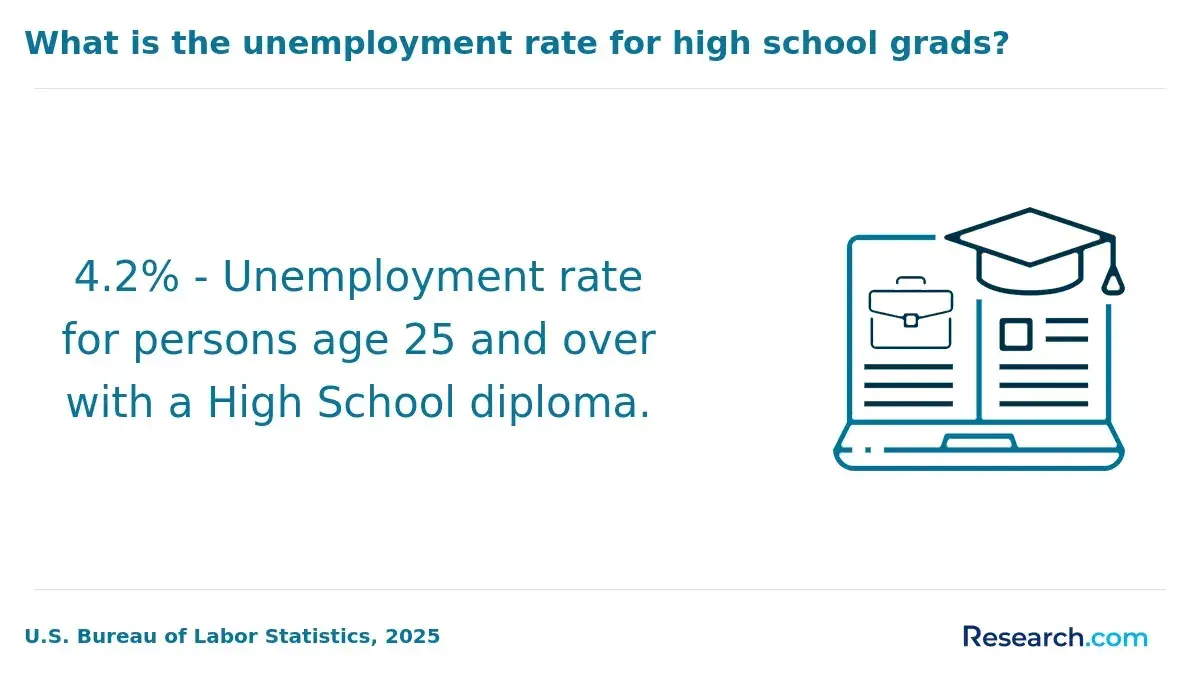
Bachelor's degrees in data analytics tend to offer the most robust employment opportunities, balancing entry requirements and market mobility. Employers frequently set a bachelor's as the minimum credential for full data analyst roles, which lowers unemployment risk to near 3%, according to the 2024 U.S. Bureau of Labor Statistics.
In contrast, certificate holders, while often able to enter the workforce quickly into technician or junior analyst roles, face higher job instability with unemployment rates frequently above 5.5%. This employment volatility reflects both regional market variations and the more limited scope of positions accessible without a four-year degree.
Master's degrees improve access to specialized roles involving predictive analytics, machine learning, and strategic decision-making, often accompanied by higher salaries and faster career progression. However, this level demands additional investment not only in time and tuition but also in gaining relevant practical experience-such as internships or advanced projects-to realize these benefits.
Doctoral and professional degrees, while valuable in research-heavy or niche corporate teams, don't broadly enhance employment opportunities for the typical candidate and serve more targeted leadership or innovation functions.
The choice between entering the workforce promptly with a certificate or associate degree and pursuing further study involves clear tradeoffs. Those prioritizing swift employment may accept limited advancement pathways initially, while students aiming for mid-to-senior roles should weigh the longer commitment for bachelor's or master's credentials that unlock broader occupational access and leadership tracks.
Data from the National Center for Education Statistics highlights that over 80% of bachelor's graduates secure relevant employment within a year, emphasizing stronger long-term outcomes than shorter credentials typically provide.
What Entry-Level Jobs Can You Get With a Data Analytics Degree?
Entry-level job opportunities for data analytics graduates vary significantly by degree level, reflecting distinct employer expectations and workforce realities. Associate degree holders frequently take on roles centered around data cleaning, reporting basics, and dashboard upkeep, which provide foundational skill development but often limit early career mobility.
In contrast, bachelor's degree graduates are more regularly considered for positions requiring deeper analytical reasoning, including predictive analytics and multi-department collaboration, where proficiency in programming languages like Python or R becomes crucial. National job analysis data from 2024 indicates a clear preference for higher degrees in roles demanding advanced technical capabilities, affecting both salary potential and progression speed.
Practical experience through internships or applied projects plays a decisive role in employability across all degree levels, as graduates demonstrating relevant fieldwork tend to accelerate onboarding and reduce training investments. Certifications such as Microsoft Certified: Data Analyst Associate or the Google Data Analytics Certificate further validate candidates' skills beyond academic achievements, influencing hiring decisions in competitive markets.
Students weighing entry-level data analytics job options should consider how initial positions offer different trajectories-some serving as stability points with incremental skill gains, others designed as stepping stones to roles like data engineer or visualization specialist.
For those contemplating graduate study or specialized credentials, understanding these nuances can shape more strategic planning. This dynamic is especially relevant for learners who may explore a doctorate of education to integrate data skills with broader leadership or academic roles.
How Do Data Analytics Degree Levels Affect Career Advancement and Promotion Opportunities?
Degree level plays a decisive role in shaping access to supervisory and specialized roles within data analytics. Employers often require at least a bachelor's degree for mid-level promotion eligibility.
According to the U.S. Bureau of Labor Statistics (2024), individuals holding bachelor's degrees tend to progress more rapidly into leadership tracks compared to those with associate credentials, reflecting employer preferences for comprehensive theoretical and applied skills that four-year programs cultivate.
Master's degrees further expand advancement opportunities by aligning graduates with managerial and strategic positions demanding expertise in areas like data governance and predictive modeling, as highlighted by recent Integrated Postsecondary Education Data System (IPEDS) trends.
However, these benefits come with trade-offs: working professionals frequently balance degree completion with evolving job duties, moderating promotion timing despite credential gains, while certification stacking remains integral to standing out in competitive mid-career roles.
Practical considerations such as transfer credit efficiencies and variable licensure requirements also affect how quickly learners can leverage degree attainment for promotion, especially for adult learners and military-affiliated students managing nontraditional pathways.
Employer mandates for formal education in key leadership positions underscore that pinpointing the right credential must consider internal mobility policies and whether additional education substantially elevates professional credibility or merely duplicates experience already acquired. This dynamic suggests that students with prior work history should weigh how incremental degrees enhance not just knowledge but also eligibility for targeted roles rather than assuming a linear promotion benefit.
A previously employed data analytics learner recalled hesitating between pursuing an associate degree versus returning for a bachelor's, concerned that the former would cap advancement within their company's structured promotion ladder.
After consulting with supervisors and referencing the company's criteria, they realized that while an associate credential might unlock entry-level roles, mid-tier positions and leadership development programs explicitly required bachelor's degrees plus relevant certifications.
Although the decision to invest more time in school was daunting, the learner appreciated understanding how degree level concretely influenced internal mobility and felt more confident applying for managerial tracks once both educational and certification requirements were met.

Is a Data Analytics Degree Worth It Based on Salary, Employment, and ROI?
Deciding on pursuing a data analytics degree hinges on balancing salary prospects, employment stability, and return on investment across degree levels. Bachelor's degree holders often face entry-level employment risks such as slower job absorption and underemployment without supplementary experience or certifications.
Conversely, master's degree holders typically benefit from faster career mobility and lower unemployment, although the greater time and financial commitments, including higher debt burdens, require careful consideration against these advantages.
For working professionals and transfer students, evaluating local labor market demand, credit acceptance, and program flexibility is crucial to minimizing disruption and maximizing the practical value of additional credentials in data analytics degree salary and employment outcomes.
Salary potential must be weighed alongside opportunity cost, as longer master's programs double average tuition and extend time out of the workforce compared to bachelor's degrees. The risk-adjusted ROI varies with individual career trajectories, especially when advancement to senior or management roles is uncertain.
The widespread growth in data analytics-related jobs signals strong demand, but employers' preference for combined technical and business skills means interdisciplinary training can significantly enhance employability. Adult learners and those with STEM backgrounds should also explore how programs accommodate working schedules and recognize prior learning to optimize their investment.
Practical considerations include leveraging internships and certifications to improve employment prospects post-graduation. For those comparing extended educational routes, programs like MFT programs offer models of accelerated credentialing worth examining.
Ultimately, evaluating pay, employment stability, and advancement potential within the context of individual circumstances and evolving employer expectations provides a more nuanced picture of data analytics degrees' worth than raw earnings or growth statistics alone.
How Do Associate, Bachelor's, Master's, and Doctoral Data Analytics Degrees Compare?
Associate degrees in data analytics typically serve as rapid entry points to technical roles like data technician or junior analyst, where workforce access is good but upward mobility without further education or substantial experience is constrained. These programs often appeal to those balancing cost and time, though credit transfer options can enable incremental progress toward a bachelor's degree, broadening longer-term prospects.
Bachelor's degrees provide stronger qualification for a wider range of analyst and entry-level data scientist roles, with median employment rates exceeding 85% according to 2024 College Scorecard data, making them the most versatile option for labor-market entry and roles requiring client interaction or project leadership.
Master's credentials emphasize advanced analytics, leadership, and specialization, typically accelerating promotion to managerial or strategic positions within two to three years, but come with higher tuition costs and longer program commitments. Certification pathways like the Certified Analytics Professional often complement these degrees to enhance career leverage in competitive sectors.
Doctoral degrees, while least common, suit niche roles focused on research, policy, or academic leadership, demanding significant time investment without broad occupational applicability but yielding distinct advantages for thought leadership and innovation-driven positions.
For many students, the decision to stop at an associate or bachelor's degree, return for a master's, or pursue doctoral study hinges on balancing typical program length, debt burden, and targeted career flexibility rather than general employment rates alone.
Which Industries and Employers Hire Data Analytics Graduates by Degree Level?
Employers hiring data analytics graduates clearly differentiate their expectations and roles based on degree levels, affecting job responsibilities and career mobility. Associate degree holders frequently find roles in technical support or data cleansing within regional healthcare providers, retail, or manufacturing, where their practical skills and credential meet immediate operational needs but rarely lead to advancement without further education.
For example, many logistics firms rely on associates for routine database maintenance but reserve analytical modeling or strategic roles for higher-degree holders. This segmentation is supported by U.S. Bureau of Labor Statistics data showing approximately 35% of data analysis support roles require only an associate credential, indicating accessible entry points paired with constrained progression.
Bachelor's graduates tend to dominate hiring in finance, technology, insurance, and marketing sectors, where employers expect a blend of data manipulation, visualization, and statistical competencies. These fields often use bachelor's as a baseline for roles like business intelligence analysts, reflecting a wage premium of around 20% over associate-level workers per National Center for Education Statistics figures.
Master's degree holders are sought by consulting firms, federal agencies, and pharmaceuticals for mid-level data scientist or analytics manager positions that combine technical specialization with leadership demands. Their advanced training enables work on predictive modeling and strategic initiatives, unlike graduates at lower levels, who face limits on both responsibility and sector breadth.
Doctoral graduates mainly secure positions in research organizations, academia, and high-level policy institutions focusing on innovation, algorithm development, and experimental design.
Certificate holders fill niche roles requiring specific tool expertise, such as SQL or Tableau, useful for swift tool mastery but often lacking the broader analytical scope employers favor. Ultimately, hiring practices reflect a balance between formal credentials, practical experience, and industry-specific demands, underscoring the importance of targeted credential choices aligned with desired employers and functions rather than assuming uniform returns across degree levels.
What Skills, Credentials, and Experience Improve Data Analytics Career Outcomes?
Data analytics candidates face nuanced employer demands that extend beyond foundational technical skills like SQL, Python, or data visualization. While these remain baseline requirements, hiring managers increasingly prioritize combined expertise in statistical reasoning and domain-specific knowledge, enhancing employability across degree levels.
For many applicants, especially those holding associate or bachelor's degrees, stacking industry-recognized certifications such as the Certified Analytics Professional or Microsoft Certified: Data Analyst Associate serves as a critical differentiator, signaling practical readiness beyond academic theory-a factor cited by 68% of hiring managers in recent surveys. This interplay of credentials directly impacts promotion potential and access to roles with greater responsibility.
Applied experience through internships or apprenticeships further sharpens candidate desirability, with data showing a 25% increase in employment rates within six months post-graduation for students completing such learning. Military veterans often leverage leadership and technical background advantages translated through credentialing pathways, illustrating the importance of practical skills over degree level alone.
Soft skills including problem-solving, communication, and teamwork also play a decisive role in career progression, enabling collaboration and leadership readiness in complex data environments. Portfolios showcasing relevant projects augment confidence in candidates lacking extensive work histories, underscoring the value of experiential evidence.
Given these dynamics, adult learners, transfer students, and working professionals must strategically evaluate how to integrate prior credits, hands-on projects, and credentials to optimize outcomes without defaulting to extended academic timelines.
The interplay between degree level, credential stacking, and experiential learning creates a viable pathway for many to achieve parity or exceed traditional employment outcomes, which is particularly salient when considering the best degree for felons pursuing meaningful entry into data analytics.
This points to a pragmatic framework emphasizing tailored skills development aligned with career goals rather than one-size-fits-all academic progression within data analytics certification programs for career advancement.
Which Data Analytics Degree Level Is Best for Your Career Goals?
Choosing a degree level in data analytics directly affects job market entry and long-term professional trajectory, especially for adult learners balancing time and financial resources. For example, associate degrees tend to offer faster completion and immediate employment access with around 65% employment rates within six months, but they often limit advancement without further education.
Those aiming for roles with broader specialization or supervisory duties typically require at least a bachelor's degree, as about 80% of data analyst positions now expect this credential, reflecting stronger employer demand and better alignment with licensure or certification requirements.
Graduate degrees in data analytics tend to suit candidates targeting senior, strategic, or technical leadership roles, though they involve greater opportunity costs and increased debt, with average student loan burdens about 40% higher than bachelor's holders.
Transfer pathways and certificate programs may support career changers seeking flexible options, yet these often lack the depth and credential recognition that employers prioritize for advancement. Evaluating employment outcomes by data analytics degree level is essential for informed workforce planning, particularly for military-affiliated students or those weighing the tradeoff between immediate pay and long-term mobility.
Practical decision-making also involves considering how degree choice impacts specialization, time to complete, and employer expectations in various industries. Working professionals should weigh whether additional credentials will be necessary for leadership or specialized roles in fast-evolving sectors.
For those exploring cost-effective online alternatives, understanding options-such as programs focusing on criminal justice-can inform budgeting and credit transfer strategies relevant to their career goals, as highlighted in resources like criminal justice degree online cost.
References
- Data Analytics Career Path: Roles, Growth & Future Opportunities https://www.analyticsshiksha.com/jobs/data-analytics-career-path-roles-growth-and-future-opportunities
- Careers in data analytics: a comprehensive guide https://www.bcs.org/articles-opinion-and-research/careers-in-data-analytics-a-comprehensive-guide/
- Data Analytics & Data Science Careers: Roles and Pathways - DataWiz College https://datawizcollege.com/data-analytics-and-data-science-career-path/
- How to Become a Data Analyst: 10-Step Career Roadmap | Walbrook https://www.walbrook.ac.uk/subjects/data-science/how-to-become-a-data-analyst/
- A Guide to Choosing Your Data Analyst Degree Pathway | LIS https://www.lis.ac.uk/stories/data-analyst-degree
- Data Analyst Salaries Around the World: How Much Do Data Analysts Make? | DataCamp https://www.datacamp.com/blog/data-analyst-salaries-worldwide
- Master’s in Data Analytics Salary Information | University of Bridgeport https://www.bridgeport.edu/news/masters-in-data-analytics-salary-information/
- Choosing the right certifications for data analytics and data science - Spiceworks https://www.spiceworks.com/it-careers/choosing-the-right-certifications-for-data-analytics/
- How to choose the right data analytics certification course for Career Goals? https://analyticstraininghub.com/how-to-choose-the-right-data-analytics-certification-course-for-career-goals/
- Data Analyst jobs in the United States https://www.dataanalyst.com/
Other Things You Should Know About Data Analytics
The workload in data analytics programs significantly increases from associate to doctoral levels, with master's programs often representing a substantial leap in complexity and time commitment compared to bachelor's degrees. Students targeting master's or doctoral studies should be prepared for intensive projects, advanced statistical methodologies, and often independent research, which can conflict with full-time work or personal obligations.
Those balancing work and study must realistically assess their capacity, as underestimating these demands can lead to burnout and delayed graduation.
While some employers in data analytics prioritize hands-on skills and certifications, especially for entry-level roles, many mid- to senior-level positions still require formal degrees, particularly bachelor's or higher. Candidates without degrees may face a glass ceiling in advancement and salary negotiations. For long-term growth in structured environments, prioritizing degree completion over solely certification-based pathways is generally advisable.
Employers often expect bachelor's degree holders to handle routine data processing and reporting tasks effectively, while requiring master's graduates to lead complex analytical modeling, interpret nuanced data patterns, and contribute strategically to business decision-making. This creates a real division in job roles and responsibilities, impacting promotion speed and project significance.
Students should choose based on whether they aim for technical execution roles or strategic analytical leadership.
Choosing a specialized data analytics program-such as those focused on machine learning, business intelligence, or healthcare analytics-can significantly enhance employability in targeted industries, but may limit flexibility if career goals change.
Conversely, generalized programs offer broader foundational skills with wider applicability but may face tougher competition for niche roles. Prospective students should prioritize alignment between program focus and industry demand to maximize career return and adaptability.