2027 Construction Management Degree Oversupply or Undersupply? Student Volume vs Employer Demand

Co-Founder and Chief Data Scientist
Faced with a surge of nearly 15,000 construction management graduates nationwide in 2023, many students and professionals must assess if employer demand can absorb this influx. The Bureau of Labor Statistics projects just a 7% job growth for construction managers through 2032, indicating potential regional imbalances and increased competition.
Meanwhile, employers emphasize advanced technical skills and on-site experience, which some programs may overlook, affecting graduate employability. These disparities complicate degree value and hamper strategic career planning as oversupply risks underemployment. This article compares construction management student volume against employer demand, job growth, industry needs, regional dynamics, and skill gaps to clarify the field's sustainability or saturation.
Key Things to Know About Construction Management Graduate Supply and Employer Demand
- Rising construction management graduate numbers outpace regional job growth, causing intensified entry-level competition and forcing candidates to differentiate through specialized skills or geographic flexibility.
- Employer surveys in 2024 show a growing preference for candidates with sustainable construction expertise, indicating a skills mismatch that may leave generalist graduates underemployed.
- Prolonged degree completion time due to program backlogs increases opportunity costs for students, impacting those with limited financial resources and discouraging timely entry into a constrained labor market.
- Is There an Oversupply or Undersupply of Construction Management Graduates? Graduate Oversupply or Shortage
- How is Construction Management Degree Enrollment Changing? Degree Enrollment Trends
- How Many Construction Management Graduates Enter the Workforce Each Year? Annual Graduate Workforce Entry
- Does Job Growth Support the Rising Supply of Construction Management Graduates? Job Growth Versus Supply
- How Competitive is the Entry-Level Market for Construction Management Graduates? Entry-Level Market Competition
- Which Industries Have the Greatest Demand for Construction Management Graduates? Top Hiring Industries
- Where are Construction Management Graduates Most in Demand? Top Geographic Demand
- Which Construction Management Specializations and Degree Levels Face the Strongest Demand? Which Construction Management Specializations and Degree Levels Face the Strongest Demand?
- Are Employer Skill Gaps Affecting Demand for Construction Management Graduates? Are Employer Skill Gaps Affecting Demand for Construction Management Graduates?
- What is the Future Supply-and-Demand Outlook for Construction Management Graduates? Future Supply-Demand Outlook
Is There an Oversupply or Undersupply of Construction Management Graduates?
The relationship between construction management graduate supply and employer demand is nuanced, with national workforce data indicating a general balance rather than a clear oversupply or shortage. While the volume of graduates entering the job market aligns with total openings fueled by residential and commercial sector rebounds, regional variations create distinct realities.
Urban centers and fast-growing metropolitan areas frequently encounter shortages of qualified candidates, forcing employers to compete for talent, whereas rural or economically slower regions may experience relative oversupply, intensifying competition for fewer positions. This uneven distribution means that graduates must consider geographic flexibility and specialization when assessing prospects rather than relying on aggregate supply-demand snapshots.
Interpreting construction management graduate supply and employer demand analysis requires attention to credential nuances and employer expectations that complicate straightforward comparison of graduate numbers to job counts. Many employers show a clear preference for candidates holding bachelor's degrees accompanied by internship experience or proficiency with industry-specific software, which can disadvantage degree holders despite similar supply volumes.
Additionally, growth in programs and enrollment, including alternative pathways like accelerated degree programs online, has increased output but can distort apparent demand alignment if graduates lack practical experience or specialization in emerging fields like sustainable building or modular construction.
Consequently, the labor market reflects a dynamic where degree volume matches opportunity broadly but calls for graduates to differentiate strategically by skillset and location to mitigate localized oversupply risks.
How is Construction Management Degree Enrollment Changing?
Enrollment in construction management is growing moderately, driven largely by the rise of online offerings that attract nontraditional students and working professionals seeking flexible education. This shift toward distance learning broadens access but complicates assessments of educational quality and real-world readiness.
While bachelor's degree completions remain the primary output, niche master's and certificate programs serve professionals targeting specialized skills. However, regional disparities persist as construction booms in certain states fuel localized demand for graduates, contrasting with national data that show supply often exceeds entry-level job openings, intensifying competition in saturated labor markets.
The divergence between localized hiring needs and broad graduate availability means prospective students must weigh program delivery modes, geographic factors, and credential types to better position themselves for employment.
Employers increasingly emphasize practical experience and technical proficiency, signaling that mere degree attainment without hands-on skills may not suffice in competitive markets. The gradual diversification of the student body challenges historic demographic trends in the field but does not yet translate into significant shifts in workforce composition.
According to the National Center for Education Statistics data from 2024, enrollment growth has averaged a modest rate reflecting these complex dynamics rather than uniform expansion or contraction.
One construction management student recalls entering a program where cohort sizes had noticeably increased compared to previous years, largely due to expanded online sections. While peers appreciated the greater scheduling flexibility, some expressed concern about potential overcrowding in internship placements and the possible dilution of individualized faculty support.
The student weighed whether this growth paralleled stronger job prospects or simply heightened competition, highlighting the nuanced decision-making involved in interpreting enrollment trends amid shifting educational and labor market conditions.
How Many Construction Management Graduates Enter the Workforce Each Year?
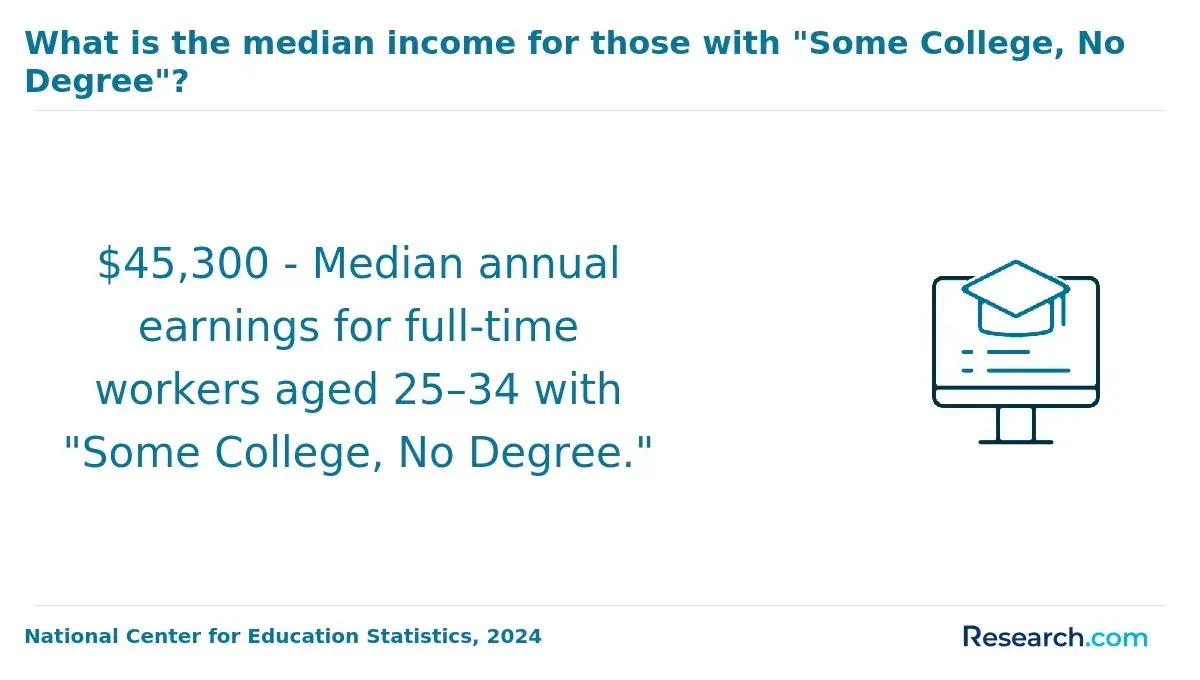
Total annual graduates with degrees in construction management do not directly translate to immediate workforce availability in core industry roles, as reported by the National Center for Education Statistics and IPEDS for 2023-2024. Approximately 7,000 to 8,000 students earn bachelor's credentials yearly, but only about 60-70% secure positions explicitly within construction management or closely related occupations like project supervision or coordination right after graduation.
Many graduates pursue adjacent fields including real estate, engineering support, or construction supply chain roles, which complicates straightforward assessments of labor supply versus employer demand.
Employer hiring patterns, regional market fluctuations, and credential expectations also influence how graduates transition into the workforce. For example, firms in strong regional markets may quickly absorb new entrants, while slower areas face a surplus despite comparable graduate output.
Additionally, employers value practical experience, certifications, or internships alongside academic degrees, meaning that graduates without these may delay or divert their entry into direct construction management roles. As a consequence, raw graduate volume alone risks misrepresenting labor market dynamics, since not all graduates compete for the same jobs or enter the market simultaneously, and skill alignment heavily impacts placement rates.
This nuanced reality underscores the importance of analyzing graduation data alongside real-time job openings, replacement demand, and industry-specific skill requirements when evaluating supply-demand balance.
Decision-makers must factor in geographic disparities, workforce mobility, and varying employer preferences rather than relying solely on degree completion counts. Failing to consider these elements can lead to either overestimating available talent pipelines or underappreciating market constraints, ultimately affecting education program adjustments and hiring strategies within construction management sectors.
Does Job Growth Support the Rising Supply of Construction Management Graduates?
Employment projections for construction managers reflect steady expansion, yet rising graduate numbers often outpace accessible roles, especially at entry-level. Despite an 11% growth forecast by the U.S. Bureau of Labor Statistics, the volume of graduates entering the labor force from numerous programs frequently exceeds available positions requiring hands-on experience, specialized certifications, or geographic mobility.
For instance, a recent graduate in a crowded metropolitan area might find competition intense, as employers prioritize candidates with demonstrated software skills and internships. This imbalance can increase underemployment risks even amid strong overall labor demand.
The mismatch between graduate output and employer demand is reinforced by regional and sectoral disparities, where local infrastructure needs or retirements may create pockets of sustained hiring, while other areas face saturation. Many employers emphasize practical abilities alongside formal education, meaning graduates without relevant on-the-job training can struggle to convert degrees into jobs.
Navigating these nuances is critical for those weighing educational investment, as oversupply in some markets contrasts with ongoing demand in specialized or traditional construction sectors. Awareness of such dynamics helps prospective students and current degree holders strategize effectively rather than relying solely on broad construction management job growth trends.
Reflecting these labor realities can guide decision-making toward actionable pathways, such as seeking certifications or relocating to regions with emerging opportunities in green building or infrastructure renewal.
Those evaluating the return on a construction management degree should also consider alternative credentials or programs linked to practical skill-building, much like choices seen in a business degree online or other fields. This contextual understanding promotes a more nuanced approach to career planning that aligns graduate volume with genuine employer demand rather than oversimplified growth statistics.
How Competitive is the Entry-Level Market for Construction Management Graduates?
The supply of construction management graduates in 2024 frequently outpaces entry-level job availability in many regions, creating a challenging hiring environment.
Although the U.S. Bureau of Labor Statistics forecasts an 8% employment growth rate through 2032-exceeding average occupational growth-many employers still require prior experience, such as internships or relevant fieldwork, which narrows opportunities for recent graduates.
This mismatch between graduate volume and initial job openings signals not a pure oversupply but rather a nuanced imbalance shaped by skill expectations, geographic clustering, and sector-specific hiring patterns. The following factors critically influence the competitive landscape for new entrants.
- Applicant Volume:The increasing number of graduates intensifies competition, particularly in metropolitan areas where construction firms concentrate. Candidates must assess regional graduate-to-job ratios before targeting applications.
- Experience Requirements:Many entry-level roles demand 1-2 years of related experience, often through internships or cooperative education. Without these, graduates face barriers to securing full-time offers.
- Employer Skill Preferences:Technical knowledge alone is insufficient; employers prioritize soft skills such as communication and budget management, elevating candidates who demonstrate project collaboration.
- Industry Demand Variability:Segments like infrastructure and commercial construction may post more vacancies, while residential projects fluctuate with economic cycles, requiring job seekers to target stable or expanding niches.
- Geographic Concentration:Opportunity density varies sharply; regions experiencing construction booms offer more openings, but candidates unwilling or unable to relocate confront a constrained market.
- Underemployment Trends:Many recent graduates accept administrative or peripheral roles to build experience, signaling a structural delay in direct career entry.
- Certification and Apprenticeship Influence:Additional qualifications can markedly improve hiring prospects, incentivizing strategic credentialing beyond the degree.
A recent graduate experienced these dynamics firsthand, applying to over 50 positions nationwide. Despite strong academic performance, repeated interview feedback cited a lack of direct site experience and competition from candidates with internships.
The graduate shifted focus to infrastructure projects in less saturated regions, supplementing credentials with a project management certification. This cautious pivot led to an offer after nearly a year, illustrating that entry-level success often hinges on geographic flexibility, targeted specialization, and proactive skill development in a crowded market.
Which Industries Have the Greatest Demand for Construction Management Graduates?
Demand for construction management graduates is notably uneven across industry sectors due to structural economic factors and variation in project complexity. Graduates weighing career paths should consider not only the volume of job openings but also competition intensity, required competencies, and advancement trajectories.
For example, commercial construction often offers a high number of entry-level roles but also draws many applicants, whereas public infrastructure projects may have fewer openings yet demand higher technical expertise and offer more specialized advancement.
Similarly, sectors like renewable energy construction, though smaller now, require ongoing skill development in sustainability that can differentiate candidates over time. Below are core industries exhibiting the strongest construction management job demand by industry sector.
- Commercial Building:This sector leads in job volume, driven by ongoing office, retail, and mixed-use development. Employers seek graduates with skills in budget management, vendor coordination, and regulatory compliance. Roles range from project coordinators to site managers, though competition among graduates is intense.
- Residential Construction:Consistent demand stems from housing market dynamics and urban growth. Entry-level positions often focus on subcontractor supervision and scheduling, while advancement requires proficiency in cost estimating and client interaction.
- Public Infrastructure:State and federal investments in transportation and utilities create positions demanding familiarity with public procurement processes and multi-stakeholder coordination. These jobs may be fewer but often offer stable, higher-responsibility roles.
- Heavy and Civil Engineering:Includes highway, bridge, and large-scale earthworks projects. Employers prioritize technically trained managers who understand complex engineering specifications and safety standards, with a premium on field experience.
- Renewable Energy Construction:While smaller in scale, this growing field values adaptability to new materials and green building certifications. Professionals able to bridge construction practices and sustainability requirements are increasingly sought after.
- Industrial Facility Development:Specialized factories and warehouses require project managers skilled in handling unique equipment installations and strict timeline adherence. This sector favors candidates with technical backgrounds and process optimization expertise.
A graduate navigating options should also review expectations regarding leadership ability and practical experience across these sectors to align their specialization with employer demand. The supply-demand balance varies geographically and by degree level, making a clear-eyed, data-driven approach essential when assessing potential job markets or when exploring whether is project management a good degree for their goals.
Where are Construction Management Graduates Most in Demand?
National employment statistics for construction management often mask significant regional variability in demand, which is critical for graduates weighing location choices. Metropolitan hubs with dense development projects and diversified employers tend to draw disproportionately high numbers of openings relative to local graduate output, but these markets also come with heightened competition and elevated living costs.
For example, a graduate targeting New York City may face a surplus of qualified candidates despite abundant postings, necessitating strong project experience or niche certifications to gain traction, whereas relocating to a less saturated Texas metro could offer quicker entry but potentially lower salaries and fewer large-scale projects.
Concentration of employers in sectors like commercial construction and public infrastructure profoundly shapes where job growth outpaces graduate supply. Regions investing heavily in transportation and utilities frequently report shortages of candidates with both technical expertise and leadership capabilities, creating favorable hiring conditions.
Conversely, smaller or slower-growing construction economies, particularly in parts of the Midwest and Northeast, exhibit an oversupply of construction management graduates, translating into increased applicant competition and a need for greater geographic mobility or specialization to secure roles.
Graduates and career planners should therefore assess local market cycles, employer composition, and credential expectations rather than rely solely on headline job numbers when evaluating opportunity.
While urban areas offer diverse pathways, they may not universally translate to better employment outcomes if costs and applicant pools are prohibitive, and remote work remains uncommon in on-site construction roles. Practical considerations such as internship access, regional credentialing norms, and specialization in fields like infrastructure versus residential development materially influence employability.
According to recent U.S. Bureau of Labor Statistics data, states with robust infrastructure pipelines present some of the strongest demand signals, but these advantages are contingent on aligning skills with market needs and accepting geographic tradeoffs inherent to the construction industry's localized labor dynamics.
Which Construction Management Specializations and Degree Levels Face the Strongest Demand?
Employer demand within construction management is notably uneven across specializations and degree qualifications, driven by evolving project priorities and regulatory landscapes. While generalist bachelor's degree holders frequently find entry-level roles, those with advanced credentials or focused technical skillsets encounter stronger hiring competition favoring their profiles.
For example, a graduate with a bachelor's in construction management might compete largely on foundational project coordination capabilities, whereas a master's-level candidate specializing in risk management may qualify for fewer but more specialized leadership roles, reflecting employer preferences for risk mitigation expertise and contractual oversight.
Recent data from the U.S. Bureau of Labor Statistics and Lightcast indicate that demand concentrates in areas blending sustainability, technological fluency, and strategic project integration. Below are key demand patterns reflecting where employers prioritize credential type and specialization alignment:
- Sustainable Construction: Demand is driven by regulatory push and client emphasis on environmental standards, favoring candidates experienced in green building methods and materials, often tested through certifications and project portfolios.
- Construction Technology: Expertise in BIM, construction analytics, and digital tools is increasingly critical for managing complex projects, advancing precision, and reducing cost overruns-skills valued at entry to mid-career levels.
- Master's-Level Risk Management: Senior roles requiring negotiation, contract administration, and integrated delivery systems prioritize advanced degrees combined with practical experience, reflecting a narrower and more competitive talent pool.
- Certification-Enhanced Qualifications: Regardless of degree, certifications in specialized areas like safety compliance or BIM software significantly enhance employability by validating up-to-date technical competencies.
- Bachelor's Degree in General Construction Management: Remains the baseline qualification for many field supervision and project coordination roles, but without strong specialization or certification, candidates may face higher competition in saturated markets.
Are Employer Skill Gaps Affecting Demand for Construction Management Graduates?
Demand for construction management graduates in the United States is shaped less by an absolute shortage of candidates and more by the prevalence of skill mismatches that complicate hiring decisions. Employers weigh proficiency in digital tools, sustainability practices, and project management software alongside certifications and real-world experience, making it challenging to fill roles even when graduate numbers are robust.
For example, a hiring manager seeking a candidate fluent in both BIM software and green building standards might find an abundance of degree holders but few who meet these specific technical and regulatory demands, illustrating how skill gaps distort perceptions of oversupply or undersupply.
These construction management graduate skill shortages impacting hiring growth reflect a nuanced labor market where competition intensifies around candidates who balance technical competencies with leadership and communication abilities. Regions and firms prioritizing practical experience and specialization may face longer recruiting cycles despite a healthy graduate pool.
This dynamic suggests prospective students and current degree holders benefit from strategically selecting programs that incorporate relevant internships, certifications, and applied projects, while also considering how they might stand apart in a crowded field. Individuals evaluating pathways should also remain aware that not all employers value the same skill sets equally, influencing what counts as in-demand qualifications across different markets and job levels.
Furthermore, understanding these complexities aids in managing expectations about workforce opportunities and informs choices such as whether to pursue additional credentials or explore alternative routes, like degrees for felons, that meet specific employment barriers.
Recognizing how skill gaps affect demand clarifies why supply-demand metrics alone can misrepresent actual hiring challenges and highlights the operational tradeoffs in workforce planning and personal career development within the construction management sector.
What is the Future Supply-and-Demand Outlook for Construction Management Graduates?
Graduates aiming to improve outcomes in construction management employment must focus on targeted job searches rather than high-volume, unfocused applications. Identifying specific entry-level job titles that align closely with their skills and regional labor market conditions is critical.
For example, a recent graduate who concentrates efforts on urban markets with strong demand for technology proficiency in BIM and sustainability can distinguish themselves more effectively than one scattering applications broadly. Prioritizing roles where qualifications meet employer criteria and tailoring resumes using industry language increases the likelihood of interview invitations, reflecting a more efficient use of limited job-seeking resources.
Understanding the construction management employment outlook and graduate availability reveals that timing, regional demand, and demonstrated practical experience heavily influence hiring decisions. Many employers now value blended skills combining project management, regulatory knowledge, and software fluency, so showcasing these through relevant projects or internships enhances perceived job readiness.
Market research and networking must be informed by data on where employer demand exceeds graduate supply, such as less saturated rural areas. Prospective students and current degree holders can also benefit from examining options like the best online colleges for military spouses, which may offer flexible pathways to relevant credentials.
Those who do not strategically align their job search with these supply-and-demand nuances risk prolonged underemployment or the need for additional certifications.
The future supply and demand for construction management graduates is not uniform; regional saturation in some urban centers contrasts with shortages elsewhere. Prioritizing roles where employers explicitly seek graduates with practical experience and up-to-date technical skills will ultimately yield better career entry outcomes than generalized application approaches.
References
- Can the "Construction Skills Gap" Be Closed by Current Construction Managers? - CCS Construction Staffing https://www.staffccs.com/can-the-construction-skills-gap-be-closed-by-current-construction-managers/
- Construction Management Jobs and Career Path | Cardinal Civil https://cardinalcivil.com/blog/what-jobs-can-you-get-with-a-construction-management-degree
- 5 Construction Management Career Opportunities Out of College https://aic-builds.org/5-construction-management-career-opportunities-out-of-college/
- Industry spotlight: Record talent demand in construction is creating opportunities for Gen Z https://joinhandshake.com/blog/network-trends/industry-spotlight-record-talent-demand-in-construction-is-creating-opportunities-for-gen-z/
- Degrees That Build: The Many Potential Paths to a Career in Construction Management - Ruppert Landscape https://www.ruppertlandscape.com/degrees-that-build-the-many-potential-paths-to-a-career-in-construction-management/
- Construction Management | Construction Career Path | NMU https://online.nmu.edu/construction-management-career-path/
- CourseCareers https://coursecareers.com/blog-posts/what-it-takes-to-get-hired-construction-project-management
- Construction management degree compressed to two years - Construction Management https://constructionmanagement.co.uk/construction-management-degree-compressed-to-two-years-in-uk-higher-education-shift/
- Exploring Job Selection Influences of Construction ... https://easychair.org/publications/paper/329L/open
- From Hands-On to High-Tech: How Construction & Trades Management Is Evolving in 2026 | Miller-Motte College https://www.miller-motte.edu/blog/skilled-trades/from-hands-on-to-high-tech-how-construction-trades-management-is-evolving-in-2026/
Other Things You Should Know About Construction Management
Choosing between shorter and longer construction management programs requires balancing time investment with hands-on learning. Longer programs often incorporate internships, cooperative education, or project-based learning that better prepare graduates for real employer demands.
When program length limits practical experience, graduates may face steeper learning curves despite the credential. Prioritizing programs that embed substantial fieldwork-even if longer-can yield stronger career readiness and ease entry into competitive roles.
A broad curriculum without specialized tracks may limit job prospects in niche sectors such as sustainable building or infrastructure projects. Employers increasingly value targeted skills alongside core management knowledge, so students should assess if their program offers relevant elective options.
Investing time in developing competencies aligned with emerging industry trends often differentiates candidates amid fluctuating demand. Without specialization, graduates risk being perceived as more generic and less suited for specialized roles with better compensation.
Employers in construction management increasingly prioritize communication, teamwork, and problem-solving abilities alongside technical proficiency. Programs that emphasize leadership development and client interaction prepare students for the multifaceted realities of managing complex projects.
Graduates lacking these skills may struggle to advance or secure positions with high responsibility despite technical qualifications. Prioritizing educational environments that integrate soft skill training can significantly improve workforce adaptability and long-term career growth.
Yes, the concentration of construction activity and employer demand varies significantly by region, influencing graduate outcomes. Students targeting areas with robust commercial or infrastructure development should focus on matching local industry needs through program choice or specialization.
Conversely, graduates relocating to regions with slower growth or limited projects may face tougher competition and fewer opportunities. Understanding these regional dynamics supports smarter educational investments and career planning aligned with geographic labor markets.