
2027 Women's Health NP Program Guide for Nurses in Nevada: MSN Options and Clinical Planning
Audited and Verified:
Our Editorial and Data Verification Process
Research.com uses government datasets, official education statistics and primary institutional information to support its career and degree guides. Our review process checks factual accuracy, occupational definitions, source dates and the requirements associated with the credentials discussed.
How This Article Was Fact-Checked
Our editorial team verifies salary estimates, employment projections, education requirements and program information against original data providers and official organizations. Salary figures are checked against the relevant occupational definitions and reporting periods. Information about licensure, accreditation and required in-person training is reviewed separately.
Fact-checked and verified on:

Co-Founder and Chief Data Scientist
Nevada nurses interested in women's health nurse practitioner (WHNP) practice may need to look beyond in-state MSN programs. The difficult part is not finding an online course catalog; it is confirming that a program will enroll a Nevada resident, support approved local clinical training, and prepare graduates for certification and Nevada advanced practice licensure.
This guide explains the MSN options worth investigating, the questions to ask before applying, and how to build a realistic clinical and financial plan.
Key Things You Should Know
- A Nevada RN can investigate out-of-state WHNP MSN programs, but online enrollment permission and approved Nevada clinical placements must be confirmed separately.
- WHNP preparation involves graduate coursework, supervised population-focused clinical training, national certification, and Nevada APRN licensure; an MSN alone does not authorize NP practice.
- Compare at least three costs beyond tuition: clinical travel, required campus visits, and reduced work hours during rotations.
What Is a Women's Health Nurse Practitioner Program in Nevada?
A WHNP program prepares an already-licensed RN for advanced assessment, diagnosis, treatment, and preventive care focused on women's health across the lifespan. An MSN WHNP track is an advanced practice program, not an initial RN program or a general graduate nursing degree.
Graduates typically seek the Women's Health Care Nurse Practitioner certification offered by the National Certification Corporation (NCC), then apply for Nevada APRN licensure.
For a Nevada resident, "in Nevada" can describe where clinical training occurs, not necessarily where the university is located. A distance program may deliver coursework from another state while requiring faculty-approved clinical experiences at Nevada sites.
Nurses who still need an RN license must complete an appropriate prelicensure route first; shorter practical nursing study pathways do not provide a shortcut to WHNP eligibility.
What Are the Requirements to Become a WHNP in Nevada?
Start with your present credential. An experienced RN entering an MSN WHNP track, an APRN adding a new population focus, and a graduate of a non-APRN MSN face different educational reviews.
Prior women's health employment is valuable preparation, but it does not automatically replace graduate coursework or supervised WHNP clinical experiences.
The usual sequence has four distinct decisions:
- Hold the RN license required by the program and maintain licensure appropriate for clinical training.
- Complete a graduate WHNP track that meets the applicable educational and supervised clinical requirements.
- Meet NCC's current eligibility rules and pass its WHNP certification examination.
- Apply to the Nevada State Board of Nursing for APRN licensure and meet its current documentation and practice requirements before working as a WHNP.
Confirm the exact requirements with the program, NCC, and the Nevada board before enrollment. An RN completing a bachelor's degree may consider online RN-to-BSN programs with applied assignments, but an RN-to-BSN does not itself supply WHNP graduate preparation.
Which MSN Women's Health NP Programs Are Available to Nevada Nurses?
A dedicated Nevada-based MSN WHNP track should not be assumed available simply because a Nevada university offers other NP specialties. Out-of-state programs are therefore important candidates.
The institutions below have offered WHNP graduate pathways, but this is a starting list for direct verification, not a claim that every track is accepting Nevada applicants for a particular entry term.
Use this shortlist to identify which admissions offices need to confirm the current degree award, Nevada enrollment eligibility, format, and placement policy:
| Institution to investigate | Decision-critical question |
| University of Cincinnati | Is its WHNP MSN track accepting Nevada residents for the intended term, and what in-person requirements apply? |
| University of South Alabama | What WHNP degree options are currently offered, and can required clinical experiences be completed at approved Nevada sites? |
| Vanderbilt University | Which entry route leads to current WHNP preparation, and how often must students attend in person? |
Ask each school for written confirmation rather than relying on a general "online" label. If a program is unavailable or cannot approve a Nevada placement, an FNP track is a different population-focus choice, not an interchangeable WHNP credential. That distinction also applies when exploring 12-month FNP study pathways.
Online coursework can reduce relocation needs, but it cannot move supervised patient care onto a screen. Compare formats by the attendance and placement obligations a Nevada student will actually face, particularly if you intend to keep working.
The practical differences are clearer when coursework and clinical training are evaluated separately:
| Feature | Distance or hybrid WHNP track | Campus-centered WHNP track |
| Course attendance | May mix asynchronous work with scheduled classes or assessments | More predictable on-site attendance, but greater relocation or commuting demands |
| Clinical training | Potentially near home if the program approves Nevada sites and preceptors | May use established regional relationships; local Nevada placement is not guaranteed |
| Travel | Possible intensives, skills evaluations, or orientation visits | Regular campus presence and potentially travel to assigned clinical sites |
Request a sample term schedule showing live sessions, clinical days, and required visits. Also ask whether the school identifies sites, approves student-proposed preceptors, or expects students to secure leads. Resources about clinical training support in family NP education can help frame those questions, but an FNP school's policy does not establish a WHNP school's placement support.
Check three separate matters: the institution's recognized accreditation, the nursing program's accreditation status and scope, and whether the school can enroll a Nevada resident in the specific WHNP track.
CCNE and ACEN are nursing program accreditors; neither grants an individual Nevada practice license. State authorization to enroll a student also does not, by itself, secure a clinical site.
Ask the program to identify its nursing accreditation and confirm that the WHNP preparation and degree you would enter fall within the applicable accredited program.
Then ask the Nevada State Board of Nursing what educational documentation it requires for APRN licensure, and confirm NCC examination eligibility against the program's curriculum.
A school's general graduate accreditation or an appealing admissions policy is not a substitute for these checks. The same distinction matters when exploring attainable DNP entry requirements: easier entry says nothing by itself about WHNP preparation.
WHNP curricula generally combine advanced health assessment, pathophysiology, and pharmacology with women's health diagnosis and management, reproductive and gynecologic care, prevention, evidence-based practice, and supervised clinical learning. Specific courses, credits, competencies, and required hours depend on the school and current credentialing standards.
Clinical planning should begin before admission. Ask whether the program can approve Nevada sites that offer the required range of patient experiences, how it qualifies preceptors, who evaluates student performance, and what happens if a site withdraws.
A Nevada RN's current job may offer useful contacts, but employment shifts are not automatically accepted as student clinical hours. Simulation likewise should not be assumed to replace required supervised patient encounters.
Choose training for the population you intend to serve. For example, accelerated mental health NP certificate study addresses a different specialty and cannot be treated as a substitute for WHNP-focused coursework and clinical evaluation.
Applicants usually need an eligible nursing degree, an RN license, transcripts, and evidence that they can undertake graduate study. Programs may also evaluate GPA, nursing experience, references, a statement of purpose, interviews, or prerequisite coursework.
Requirements are school-specific: do not assume that a Nevada RN license alone satisfies every admissions or clinical-placement condition.
If your bachelor's degree is outside nursing, ask whether the school offers an RN-to-MSN entry route and how it reviews your prior coursework. If you already hold an MSN or another APRN credential, request a formal review of previous courses and documented clinical work; acceptance of credits or hours is not automatic.
Clinical sites may impose additional screening, immunization, or onboarding requirements after academic admission.
General advice on comparing entry barriers at nursing schools should not replace a WHNP-specific eligibility review. Before paying an application fee, obtain the track's current admissions checklist and ask whether Nevada-based clinical study is feasible for your planned start term.
Completion time depends on entry credentials, course sequencing, enrollment intensity, and clinical-site availability. A published full-time plan may not fit an RN who needs to reduce course load during rotations. Ask for both a standard plan and the longest allowable part-time plan, including what happens if a clinical placement is delayed.
Published tuition alone is not an adequate price comparison. Request a school-specific estimate covering tuition and mandatory fees, books and technology, screening and site onboarding, campus visits, clinical travel, certification and licensing expenses, and any income lost by changing work hours.
Compare the total amount paid through graduation under the pace you can sustain, not just a per-credit rate. Exploring less expensive nurse practitioner study can help generate candidates, but only a current WHNP-specific cost and placement estimate can establish which option is cheaper for you.
After obtaining the required certification and Nevada APRN licensure, a WHNP may pursue roles in gynecology practices, reproductive health services, outpatient clinics, and other settings serving women's health needs. Actual duties depend on Nevada law, employer privileges, demonstrated competencies, and the patient population.
A WHNP credential should not be confused with nurse-midwifery preparation or assumed to qualify its holder for every primary care vacancy.
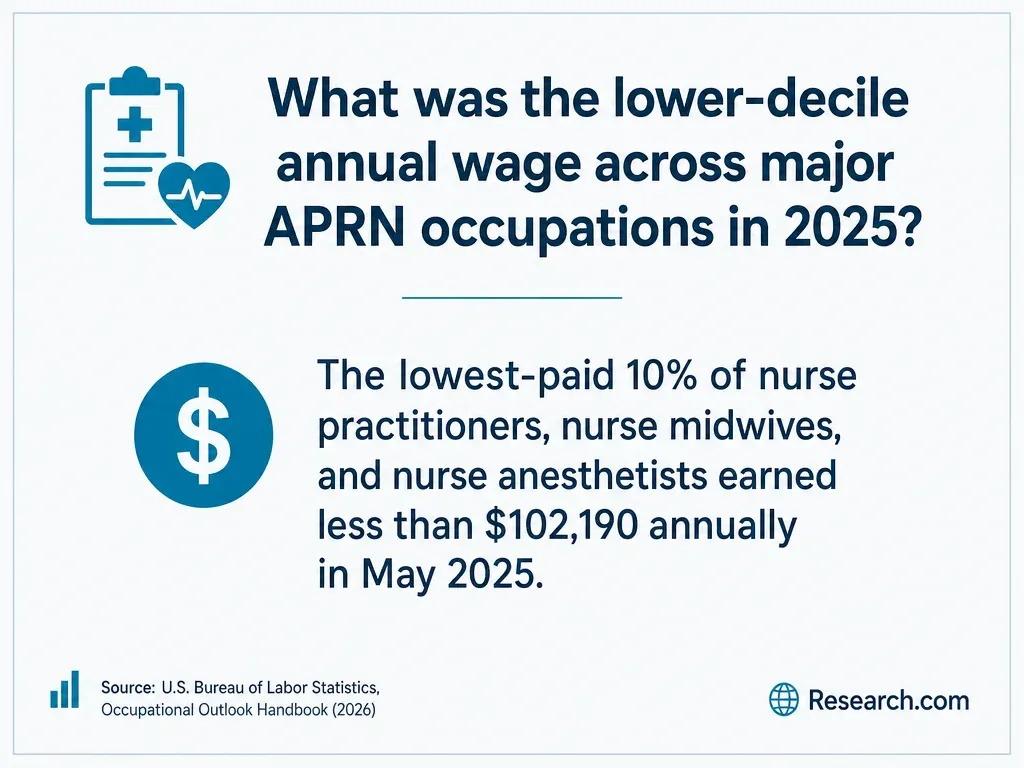
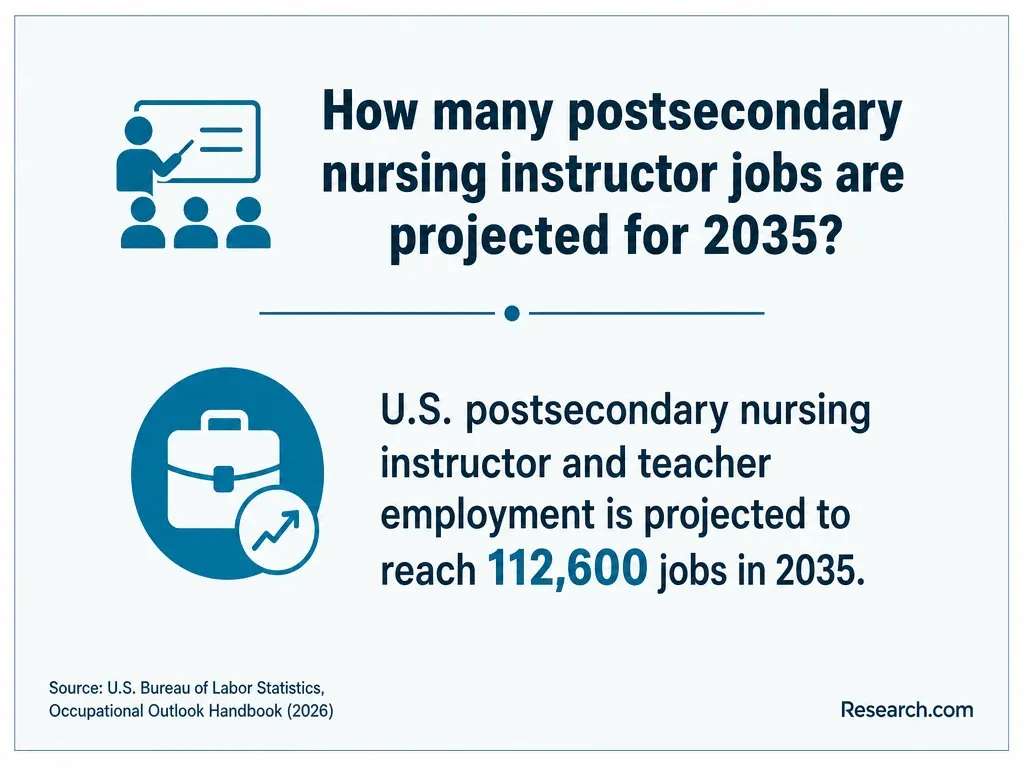
The U.S. Bureau of Labor Statistics reports wages and employment projections for the broader nurse practitioner occupation, not a Nevada WHNP-only workforce. Those occupation-wide figures can provide market context, but they cannot predict a new WHNP graduate's offer.
Compare local postings for specialty fit, experience expectations, schedule, benefits, and compensation; ask employers whether they recruit WHNPs specifically or require another NP population focus.
If your intended work is primarily psychiatric care, accelerated PMHNP master's admissions and requirements are relevant to a different career decision. Do not select WHNP preparation solely because a nearby employer advertises generic "NP" openings.
How Can Nevada Nurses Choose a Reputable WHNP Program?
Shortlist programs only after confirming the precise WHNP degree route, then compare written answers for the same Nevada-based scenario.
A lower-cost MSN route is useful only if it leads to the specialty preparation and clinical access you need; comparing lower-cost BSN-to-MSN routes requires checking the eventual NP track rather than assuming every bridge includes one.
Before accepting an offer, use these questions to test whether a program's promises translate into a workable plan:
- Will you enroll a Nevada resident in this WHNP track for my intended term, and what degree will I earn?
- Where are the required in-person sessions, and what is the full-time or part-time term-by-term schedule?
- Who finds, approves, and replaces Nevada clinical sites and preceptors, and which patient experiences must they provide?
- How does the curriculum support NCC WHNP certification eligibility, and what documentation will I receive for Nevada APRN licensure?
- What is my estimated total cost at my planned pace, including fees and travel, and what happens financially if a placement delays graduation?
Seek the answers from the program in writing and verify credentialing questions with NCC and the Nevada board. If two otherwise suitable schools differ mainly in price, placement accountability and the risk of a delayed clinical term may be more consequential than a modest tuition difference.
Other Things You Should Know About Nursing
Not automatically. The patient's location can trigger another state's licensure and practice rules. Confirm the applicable requirements before providing care across state lines.
No. They are distinct advanced practice roles with different educational preparation and certification. A WHNP program does not by itself prepare a nurse for nurse-midwifery certification.
Requirements vary by position. Relevant RN experience can strengthen an application, but check the program's admissions criteria and each employer's stated qualifications separately.
Continuing education and supervised workplace training may strengthen care within an FNP's existing preparation and authorized scope. They do not confer WHNP certification; an FNP seeking that credential should ask a WHNP program and NCC about the required additional education.
- Cost of Attendance (Budget) | 2025-2026 Federal Student Aid Handbook https://fsapartners.ed.gov/knowledge-center/fsa-handbook/2025-2026/vol3/ch2-cost-attendance-budget
- Supporting nurse practitioner education: Preceptorship... - PMC https://pmc.ncbi.nlm.nih.gov/articles/PMC6626202/
- Master of Science - Nursing | Academics | UNLV https://www.unlv.edu/degree/msn
- Women's Health Nurse Practitioner Program (WHNP) | Frontier Nursing University https://frontier.edu/womens-health-nurse-practitioner/
- Women's Health Nurse Practitioner MSN | Duke University School of Nursing https://nursing.duke.edu/academic-programs/msn-master-science-nursing/womens-health-nurse-practitioner
- Online Master of Science in Nursing | 8 Specializations | University of Nevada, Reno https://nevadaonline.unr.edu/academics/graduate/msn
- How to Become a Psychiatric Nurse Practitioner: BSN to PMHNP | Nevada State University https://nevadastate.edu/son/rn-bsn/how-to-become-a-psychiatric-nurse-practitioner-from-bsn-to-pmhnp/
- M.S. Women's Health Nurse Practitioner Degree Program | Nazareth University https://www2.naz.edu/academics/grad/womens-health-nurse-practitioner/
- ACEN position statement on clinical/practicum | acenursing.org https://www.acenursing.org/position-statement/acen-position-statement-related-to-clinical-practicum-learning-experiences
- AACN Essentials FAQs | aacnnursing.org https://www.aacnnursing.org/essentials/tool-kit/faqs


