
2026 What Can You Do with a Nurse Education Doctorate? Careers, Salaries, Academic Roles, and Industry Paths

Co-Founder and Chief Data Scientist
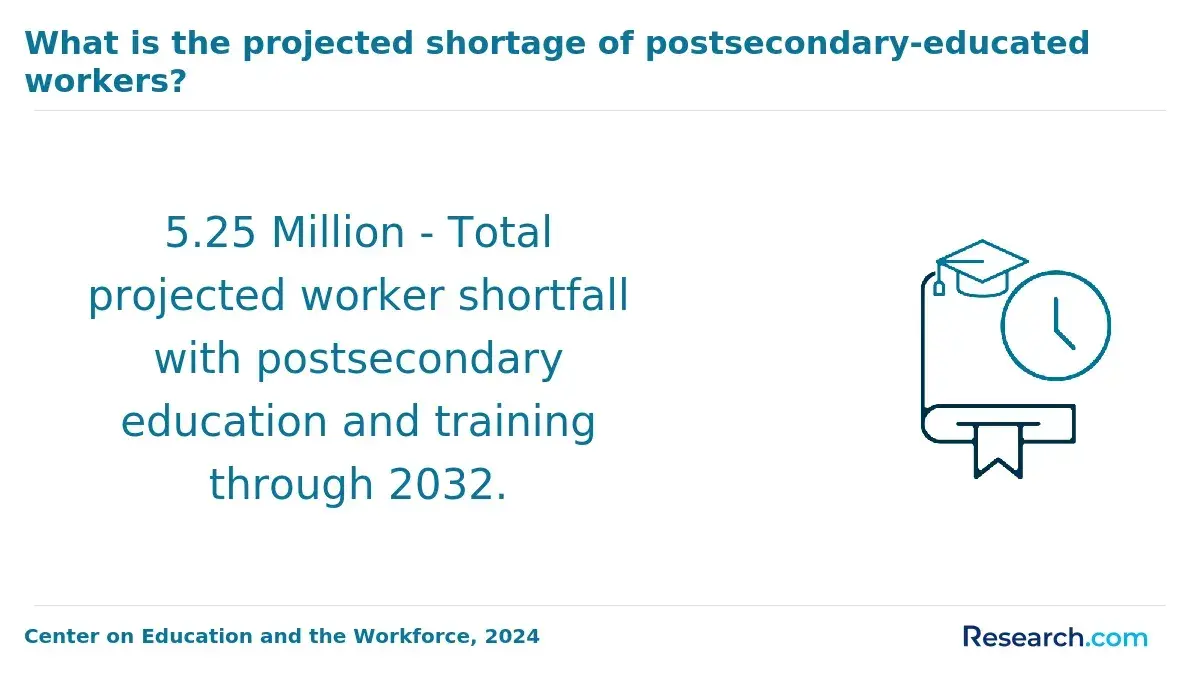
A Nurse Education doctorate can lead to faculty, executive, curriculum, policy, consulting, and healthcare training roles, but the payoff depends on the path you want. The need is real: AACN reported that U. S. nursing schools turned away 65,766 qualified applications in 2023, with faculty shortages among the major constraints. This guide is for nurses weighing a DNP, PhD, or EdD with a nurse education focus. You'll learn which careers open up, how salaries differ, and how to judge whether the degree matches your goals.
Key Things to Know About Online Nurse Education Doctorate Career Outcomes
- A Nurse Education doctorate is most valuable when it connects directly to a target outcome: tenure-track faculty work, academic leadership, clinical education leadership, healthcare workforce development, simulation leadership, or consulting.
- Recent U.S. labor data shows strong salary upside in adjacent leadership roles: BLS reported a May 2024 median wage of $117,960 for medical and health services managers, compared with $86,530 for postsecondary nursing instructors and teachers.
- Online programs can be respected when they are institutionally accredited, nursing-accredited when applicable, transparent about practicum or dissertation expectations, and aligned with whether you want a teaching, research, executive, or applied practice doctorate.
What skills do you gain from Nurse Education doctorate degrees?
A Nurse Education doctorate develops advanced teaching expertise, but it is not only a "how to teach nursing" degree. Strong programs combine pedagogy, evidence-based practice, leadership, curriculum design, assessment, technology, accreditation literacy, and scholarly inquiry so graduates can improve how nurses are prepared across colleges, hospitals, health systems, and workforce programs.
The table below summarizes the skill areas most often tied to career mobility. Use it to compare whether a program is preparing you for classroom teaching only or for broader leadership across academic and healthcare settings.
| Skill area | What it helps you do | Career value |
| Curriculum design | Build, revise, and evaluate nursing courses, competencies, and clinical learning experiences | Useful for faculty, program director, and continuing education roles |
| Instructional design | Create online, hybrid, simulation, and competency-based learning experiences | Valuable as healthcare education becomes more digital and learner-centered |
| Assessment and evaluation | Measure student learning, clinical competency, program outcomes, and licensure-readiness indicators | Important for accreditation, quality improvement, and academic leadership |
| Research and evidence appraisal | Interpret studies, conduct scholarly projects, and apply findings to nursing education or practice | Essential for PhD-oriented roles and helpful for DNP or EdD leadership roles |
| Academic leadership | Manage faculty teams, mentor instructors, oversee programs, and lead policy or accreditation work | Supports advancement into chair, director, dean, or chief academic roles |
| Simulation and educational technology | Use simulation, virtual learning, AI-assisted learning tools, and clinical decision platforms responsibly | Increasingly important in hospitals, universities, and workforce training departments |
AI is changing the nurse educator skill set. Employers increasingly value educators who can evaluate AI-enabled tutoring, clinical reasoning tools, simulation analytics, and assessment platforms without weakening academic integrity or clinical judgment. A doctorate can help you become the person who sets policy, trains faculty, and decides when technology improves learning rather than simply adding another platform.
What specializations can you pursue within Nurse Education doctorate degrees?
Specialization matters because "nurse education" can point toward several different labor markets. A general nurse education track may offer flexibility, while a focused specialization can help if you already know whether you want to work in academia, simulation, leadership, population health, or clinical professional development.
The following table shows common focus areas and the career paths they tend to support. Specialization titles vary by university, so compare curriculum outcomes rather than relying on the name alone.
| Specialization or focus | Best fit | Typical career directions |
| Nursing education leadership | Nurses who want to lead academic programs or health system education departments | Program director, department chair, dean-track roles, director of nursing education |
| Simulation education | Nurses interested in clinical judgment, scenario design, and simulation center operations | Simulation director, clinical learning lab leader, faculty development specialist |
| Curriculum and instructional design | Nurses who want to build online, hybrid, and competency-based programs | Instructional design leader, curriculum consultant, academic innovation director |
| Evidence-based practice education | Nurses who want to connect teaching with clinical outcomes and practice change | DNP project mentor, EBP coordinator, professional development leader |
| Research-focused nursing education | Nurses aiming for scholarship, grants, tenure-track roles, or doctoral mentorship | Assistant professor, principal investigator, PhD faculty mentor |
| Population health or community education | Nurses interested in public health, health equity, and community-based workforce training | Public health educator leader, nonprofit training director, policy education specialist |
If you are still comparing nursing graduate routes, look at how doctoral education fits with practice-focused options such as online nurse practitioner programs. NP programs usually prepare graduates for advanced clinical practice, while nurse education doctorates are better aligned with teaching, leadership, curriculum, scholarship, and workforce development.
Are online Nurse Education doctorate programs respected by employers?
Online Nurse Education doctorate programs can be respected by employers, but the format alone does not determine credibility. Hiring committees usually care more about accreditation, faculty quality, scholarly expectations, practicum design, reputation in nursing education, and whether the graduate can demonstrate real outcomes such as curriculum redesign, faculty development, accreditation work, or published scholarship.
Online and hybrid doctorates differ in how they support networking, clinical education practice, and research mentorship. The table below can help you choose a format based on how you learn and where you want the degree to take you.
| Program format | Strengths | Limitations | Best fit |
| Fully online | Maximum flexibility for working nurses, broader school choice, fewer relocation barriers | Requires strong self-management; may offer less in-person faculty networking | Experienced educators or leaders who can complete projects at their workplace |
| Hybrid | Combines online coursework with residencies, intensives, or campus-based scholarship support | Travel costs and scheduling demands can be significant | Nurses who want flexibility but value face-to-face mentoring and cohort connections |
| Campus-based | Strong access to faculty, research teams, teaching assistantships, and university resources | Less flexible for full-time professionals and geographically limited applicants | Students pursuing research-intensive PhD roles or full-time academic preparation |
Accreditation is one of the clearest employer-respect signals. Look for institutional accreditation, and when the doctorate is a nursing practice degree, review whether the nursing program has appropriate accreditation from bodies such as CCNE, ACEN, or CNEA. If you are comparing doctoral formats and cost, lists of cheapest online nursing PhD programs can be a starting point, but affordability should be weighed against mentorship, research fit, completion support, and faculty expertise.
What industries value professionals with Nurse Education doctorate degrees?
Nurse Education doctorate holders are valued wherever organizations need expert educators who understand nursing practice, adult learning, quality improvement, and workforce readiness. The strongest demand is not limited to universities; health systems, public agencies, simulation companies, continuing education providers, and professional associations also need people who can translate clinical standards into effective learning.
The table below compares industries that commonly value this credential. It also shows why the same doctorate can produce different outcomes depending on whether the role is academic, operational, or advisory.
| Industry or sector | Why the credential matters | Examples of roles |
| Colleges and universities | Doctoral credentials are often preferred or required for faculty rank, program leadership, doctoral supervision, and accreditation responsibilities | Professor, program director, department chair, dean-track administrator |
| Hospitals and health systems | Education leaders help improve onboarding, competency validation, clinical practice transitions, and staff development | Director of nursing education, clinical education executive, professional development leader |
| Academic medical centers | These employers often combine education, quality improvement, evidence-based practice, and interprofessional training | EBP education director, nurse residency leader, simulation director |
| Healthcare technology and simulation companies | Vendors need nursing experts who can align products with clinical learning, faculty needs, and competency standards | Clinical education consultant, product education strategist, simulation curriculum advisor |
| Professional associations and credentialing bodies | Organizations need experts who understand competencies, continuing education, certification standards, and policy | Certification exam advisor, continuing education director, standards specialist |
| Government and public health | Public programs need workforce training, population health education, and policy implementation support | Training director, workforce development analyst, public health education leader |
BLS May 2024 wage data shows why industry choice matters: medical and health services managers had a median wage of $117,960, while postsecondary nursing instructors and teachers had a median wage of $86,530. That does not mean leadership is always "better"; academic roles may offer tenure pathways, scholarship opportunities, and mission fit that compensation data alone cannot capture.
What executive or leadership roles can Nurse Education doctorate degrees qualify you for?
A Nurse Education doctorate can support executive or leadership advancement when it is paired with management experience, measurable education outcomes, and credibility with clinicians or faculty. The degree is especially useful for roles that require both nursing expertise and the ability to design systems for learning, competency, quality, and workforce readiness.
The table below outlines leadership roles where the credential may strengthen candidacy. Salaries vary by employer, region, union environment, institutional budget, and whether the role is faculty-based or health-system-based.
| Role | How the doctorate helps | Salary context |
| Director of nursing education | Signals readiness to lead educator teams, competency programs, onboarding, and continuing education | Often benchmarked against healthcare education or nursing leadership pay scales |
| Chief nursing education officer | Supports systemwide strategy for clinical learning, workforce development, and academic partnerships | May align with senior nursing or healthcare administration compensation |
| Academic program director | Prepares graduates to manage curriculum, faculty, accreditation, assessment, and student success | Often tied to academic administrator or faculty salary structures |
| Dean or associate dean of nursing | Doctoral preparation is commonly expected for senior academic leadership and external credibility | Depends heavily on institution size, public/private control, and faculty rank |
| Simulation center director | Combines pedagogy, technology, clinical judgment, and operations | May be paid through academic, hospital, or academic medical center budgets |
| Healthcare workforce development executive | Uses education strategy to address retention, transition-to-practice, compliance, and skills gaps | Can overlap with medical and health services management compensation |
The degree alone rarely qualifies someone for executive leadership. Employers usually look for a record of managing people, budgets, accreditation projects, clinical education programs, student outcomes, or cross-functional initiatives. If your current background is mostly bedside practice, look for programs that include leadership practica, organizational change projects, or partnerships with health systems.
Are there academic careers available for Nurse Education doctorate holders?
Yes. Academic careers are among the most direct uses of a Nurse Education doctorate, especially for nurses who want to teach prelicensure, RN-to-BSN, MSN, DNP, or continuing professional education learners. The key distinction is whether you want a research-intensive academic role, a teaching-focused faculty role, or an academic administration track.
The table below compares common academic paths. Use it to identify which doctorate type and scholarly preparation best fit your target role.
| Academic path | Common expectations | Best-aligned doctorate |
| Tenure-track professor | Research agenda, publications, grants, teaching, service, doctoral student mentoring | PhD in Nursing or research-focused doctorate |
| Clinical-track faculty | Teaching, clinical supervision, simulation, curriculum work, student evaluation | DNP, EdD, or PhD depending on institution |
| Nursing program director | Curriculum oversight, accreditation, faculty coordination, student outcomes, compliance | DNP, EdD, or PhD with education leadership experience |
| Department chair | Faculty workload, hiring, budgeting, assessment, strategic planning | Doctorate plus academic leadership record |
| Dean or associate dean | Institutional leadership, external partnerships, fundraising, accreditation, faculty governance | Doctorate plus significant administrative experience |
| Doctoral project or dissertation chair | Scholarship supervision, methods expertise, writing mentorship, committee leadership | PhD for research dissertations; DNP or EdD may fit applied projects |
The faculty labor market is shaped by a persistent supply challenge. AACN's 2024 reporting on nursing education continued to identify faculty shortages as a major reason schools cannot admit all qualified applicants. For prospective students, that means academic opportunities may be strong, but competitiveness still depends on teaching experience, specialty expertise, scholarship, licensure, and geographic flexibility.
If your goal is doctoral-level academic work but you are comparing DNP and PhD pathways, reviewing MSN to DNP programs can help you understand practice-focused options. A DNP may fit applied education leadership, while a PhD is often the stronger match for research-intensive faculty careers.
Are there consulting opportunities for Nurse Education doctorate holders?
Consulting can be a strong path for Nurse Education doctorate holders, especially those who have built a portfolio in curriculum design, accreditation readiness, simulation, faculty development, continuing education, or clinical onboarding. Consulting is less predictable than a full-time role, but it can offer flexibility, varied projects, and higher hourly or project-based earning potential for experts with a clear niche.
Before treating consulting as a primary career goal, identify the problem you can solve better than a general nursing leader or instructional designer. Common consulting opportunities include:
- Curriculum redesign for nursing schools moving toward competency-based education or revised clinical judgment models.
- Simulation scenario development, debriefing training, and simulation center workflow improvement.
- Faculty development for online teaching, assessment design, academic integrity, and student success strategies.
- Accreditation preparation, self-study support, and outcomes assessment planning.
- Hospital nurse residency, preceptor, onboarding, and continuing education program design.
- Educational technology evaluation for learning management systems, virtual simulation, AI-supported tutoring, or clinical reasoning tools.
Consulting makes the most sense if you already have visible expertise, professional contacts, and evidence of results. A full-time leadership role may be better if you prefer stable benefits, a defined team, institutional authority, and long-term implementation rather than short project cycles.
What nonprofit or public sector roles are open to Nurse Education doctorate holders?
Nurse Education doctorate holders can contribute meaningfully in nonprofit and public sector settings because many workforce, public health, and access problems depend on education. These roles may not always pay as much as executive positions in large health systems, but they can offer mission alignment, policy influence, and broad population impact.
The strongest public-interest roles usually involve designing education at scale rather than providing one-time training. Examples include:
- State workforce development leader focused on nursing pipeline programs, rural practice preparation, or faculty capacity initiatives.
- Public health training director responsible for continuing education, emergency preparedness, vaccination education, or community health worker partnerships.
- Nonprofit clinical education director supporting maternal health, aging services, behavioral health, or underserved communities.
- Policy education specialist translating regulations, licensure changes, or care standards into training for nurses and healthcare organizations.
- Grant-funded program evaluator measuring whether education initiatives improve retention, competency, access, or patient outcomes.
This path is a better fit when your motivation is systems change, equity, community outcomes, or workforce access. It may be a weaker fit if your primary goal is maximum salary growth and you are not interested in grant cycles, public accountability, or slower-moving institutional processes.
How do Nurse Education doctorate degrees impact long-term earning potential?
A Nurse Education doctorate can improve long-term earning potential, but the effect is indirect. The credential can qualify you for roles with higher responsibility, but income depends on sector, location, leadership scope, rank, publication record, clinical specialty, and whether you move into administration, consulting, or industry.
The table below compares salary-relevant pathways using recent U.S. labor data where a direct federal category exists. For doctorate holders, these figures should be treated as role benchmarks, not guaranteed outcomes.
| Career direction | Relevant wage benchmark | What it means for ROI |
| Postsecondary nursing faculty | BLS reported a May 2024 median wage of $86,530 for nursing instructors and teachers, postsecondary | Best ROI when the degree leads to faculty rank, program leadership, tenure eligibility, or sustained academic employment |
| Healthcare administration or education leadership | BLS reported a May 2024 median wage of $117,960 for medical and health services managers | Can offer stronger salary upside if you pair the doctorate with management experience |
| Clinical advanced practice comparison | BLS reported a May 2024 median wage of $129,210 for nurse anesthetists, nurse midwives, and nurse practitioners as a combined category | Clinical APRN routes may out-earn some educator roles, so compare against your desired work, not only the degree level |
| Consulting and industry education | No single BLS category isolates nurse education consulting | Income can be high but variable; portfolio, niche, reputation, and client pipeline matter more than the credential alone |
Cost is the other side of ROI. Federal datasets do not isolate the average cost of attendance for Nurse Education doctorates specifically, but NCES graduate tuition benchmarks released in 2024 show the scale of the investment: average annual graduate tuition and required fees were $12,596 at public institutions and $29,931 at private nonprofit institutions for 2022-23. Because doctoral programs often take several years, employer tuition benefits, assistantships, scholarships, and part-time pacing can materially change the return.
Career advancement rates for Nurse Education doctorate holders are not reported in one national public dataset, so be cautious with programs that imply predictable promotions. A better approach is to ask each program for recent graduate job titles, faculty placement, leadership promotions, dissertation or DNP project outcomes, and employer types.
How can you assess if a doctorate degree in Nurse Education is aligned with your career goals?
The right question is not simply whether a Nurse Education doctorate is "worth it." The better question is whether this specific doctorate, at this specific cost and format, moves you toward a role you would actually want. The degree is usually a strong fit for nurses who want to teach, lead academic programs, direct clinical education, influence workforce development, or build education systems.
Use the following steps to test alignment before applying. These actions can help you avoid choosing a program that sounds prestigious but does not match your target outcome.
- Define your target role first, such as professor, dean-track leader, director of nursing education, simulation director, consultant, or workforce development executive.
- Choose the doctorate type that matches the role: PhD for research-intensive academic careers, DNP for applied practice and systems leadership, or EdD for education leadership and organizational learning.
- Verify institutional accreditation and, when applicable, nursing program accreditation before comparing tuition or rankings.
- Review faculty profiles to confirm that at least two faculty members have expertise in your intended area, such as simulation, curriculum, assessment, leadership, or nursing education research.
- Ask about dissertation, capstone, or DNP project expectations, including whether you can complete applied work in your current workplace.
- Request recent graduate outcomes by job title, not just broad employment claims.
- Compare total cost, fees, travel, practicum expenses, technology requirements, and time away from paid work.
- Check whether the program supports online learners with writing help, statistics support, library access, advising, and doctoral completion coaching.
Cost comparisons should go beyond tuition per credit. The table below shows common cost factors that can affect affordability and completion planning.
| Cost factor | Why it matters | What to ask |
| Tuition structure | Per-credit, flat-rate, and cohort pricing can produce different totals | What is the full estimated tuition for the entire program? |
| Required residencies | Hybrid intensives can add travel, lodging, and missed-work costs | How many campus visits are required and when? |
| Program length | Part-time pacing may reduce workload pressure but extend fee exposure | What is the median time to completion for working students? |
| Dissertation or project support | Weak support can increase time-to-degree and total cost | What completion support is available after coursework? |
| Employer benefits | Tuition reimbursement can improve ROI if service obligations are reasonable | Does my employer cover doctoral credits, fees, or project expenses? |
| Assistantships or scholarships | Some research or campus-based programs offer funding that online programs may not | Are doctoral nursing students eligible for aid beyond loans? |
Common mistakes include choosing a specialization only because it is interesting, assuming an online doctorate is easier, ignoring faculty mentorship fit, overlooking accreditation, and treating a doctorate as an automatic promotion tool. If you are still building toward graduate nursing education, comparing broader online nursing programs can help you map the sequence from current credentials to doctoral goals.
Other Things You Should Know About Nurse Education
Yes, many online and hybrid programs are designed for working nurses. The main challenge is not weekly class attendance but sustained writing, research, practicum work, and dissertation or project completion.
Many programs require an MSN, but some offer BSN-to-DNP or bridge pathways. Requirements vary by school, degree type, licensure status, and whether the program is practice-focused or research-focused.
No. A DNP is generally practice- and systems-focused, while a PhD is research-focused. Both can support teaching roles, but PhD preparation is often preferred for tenure-track research positions.
It can, especially if you want to lead clinical education, simulation, staff development, workforce training, accreditation, or consulting. The degree is strongest when paired with relevant leadership experience and measurable education outcomes.
References
- Five ways a doctoral degree in nursing can transform your career https://onlinedegrees.bradley.edu/blog/five-ways-a-doctoral-degree-in-nursing-can-transform-your-career
- A Deep Dive Into a Nurse Educator Career | ACE Blog https://ace.edu/blog/a-deep-dive-into-a-nurse-educator-career/
- Best Ed.D. Nursing Education Programs (2026 Rankings) https://www.nurseeducator.com/degrees/edd/
- Difference Between DNP & PHD: Salary, Career, Skill | Maryville Nursing https://nursing.maryville.edu/blog/dnp-vs-phd-difference
- AACN Fact Sheet - DNP https://www.aacnnursing.org/news-data/fact-sheets/dnp-fact-sheet
- Shaping the future of Europe's high-skilled workforce through industrial doctorates https://www.cesaer.org/news/shaping-the-future-of-europes-high-skilled-workforce-through-industrial-doctorates-2004/
- What Can You Do With a Doctorate in Nursing? https://credenzahealth.com/career-advice/what-can-you-do-with-a-doctorate-in-nursing
- Exploring the Benefits and Paths to Nursing Higher Education https://blog.diversitynursing.com/blog/exploring-the-benefits-and-paths-to-nursing-higher-education
- Nurses for a Healthier Tomorrow https://www.nursesource.org/nurse_educator.html
- How Much Can You Earn With a Doctor of Nursing Practice (DNP)? https://www.allnursingschools.com/dnp/salary/


