2027 UT Austin MSDS vs. Notre Dame Online MS in Data Science: Cost, Curriculum, Admissions, and Format

Co-Founder and Chief Data Scientist
UT Austin's online Master of Science in Data Science (MSDS) and Notre Dame's online MS in Data Science pose a practical choice: prioritize a comparatively low advertised tuition and flexible study, or consider a different program experience if its curriculum and support justify the cost. For prospective students balancing work, technical preparation, and a budget, the decision depends on more than the schools' names. This comparison separates published facts from details you should confirm before applying or paying a deposit.
Key Things You Should Know
- UT Austin has advertised approximately $10,000 in tuition for its 30-credit online MSDS. Do not compare that tuition-only figure with a Notre Dame quote that includes fees or other expenses.
- Curriculum and scheduling may matter more than the degree title: compare required courses, available electives, live-session obligations, and project opportunities against the work you want to do.
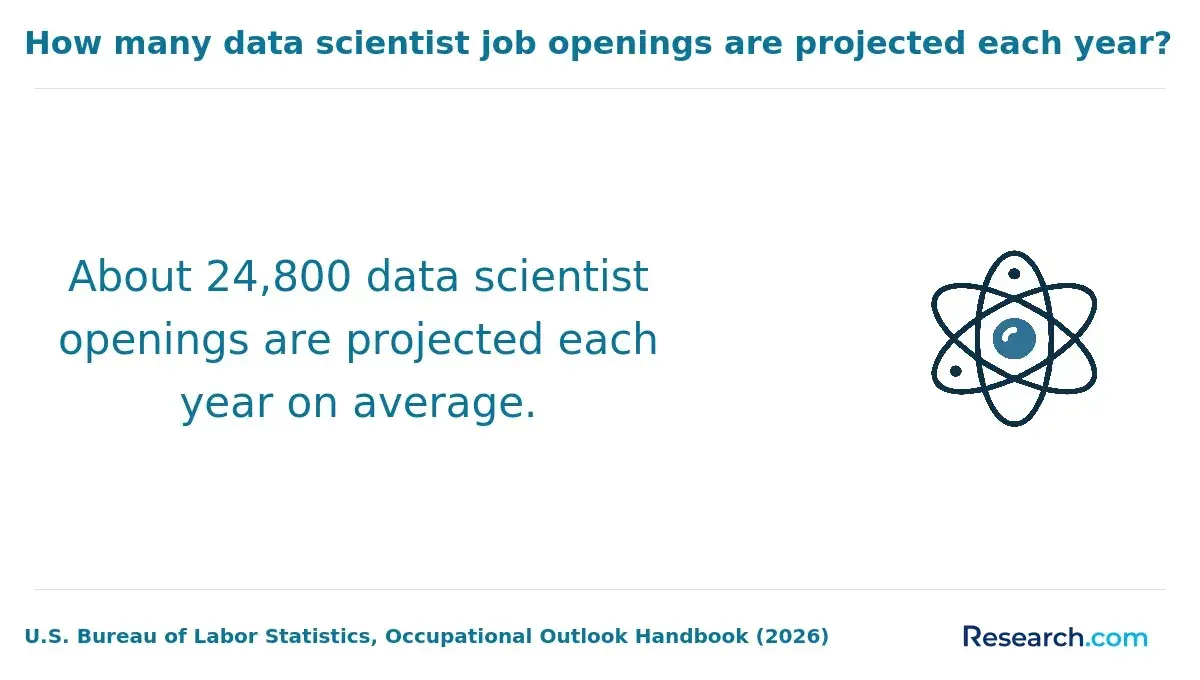
- Neither degree establishes a likely personal salary. The U.S. Bureau of Labor Statistics reports a $120,230 median annual wage for data scientists in May 2025, across workers with different backgrounds and experience levels.
How do UT Austin and Notre Dame online data science master's programs compare?
Both are online graduate degrees in data science, but the useful comparison is what each requires from you and what you receive in return. The table keeps published UT Austin information separate from Notre Dame details that need confirmation for your intended entry term.
| Decision factor | UT Austin online MSDS | Notre Dame online MS in Data Science |
| Academic requirements | 30 credits, commonly described as 10 courses. | Confirm the current credit total, required courses, and degree plan directly with the program. |
| Published price reference | Approximately $10,000 in advertised tuition; check the current term's charges. | Obtain a written, term-specific tuition and mandatory-fee estimate before comparing totals. |
| Online experience | Built around online coursework that offers flexibility over when students study. | Confirm whether your courses require live attendance, group meetings, or scheduled assessments. |
| Best initial fit test | Strong candidate when price and control over study time are priorities. | Worth closer consideration if its particular courses, teaching model, or student support meet needs UT Austin does not. |
Notre Dame should not be treated as automatically better supported, nor UT Austin as automatically less interactive, based on institution type or price. Ask each program for a current degree plan and a sample weekly course schedule; those documents make the comparison concrete.
Which program costs less: UT Austin MSDS or Notre Dame online MS?
UT Austin is the clearer low-cost option on advertised tuition: its online MSDS has been marketed at approximately $10,000 for the degree. A current, comparable Notre Dame total cannot be established here, so a precise price difference would be misleading. Request an itemized quote from each school for the same expected enrollment period.
The quote should distinguish tuition and mandatory fees from books, software, equipment, any travel, and borrowing costs. Also check whether tuition changes with enrollment pace and whether your employer will reimburse either program. UT Austin's advertised figure is a useful starting point, not a guaranteed all-in bill. If the lowest possible sticker price is your overriding constraint, compare other economical online data science master's options before committing.
What are the curriculum differences between UT Austin and Notre Dame?
UT Austin's 30-credit MSDS provides a defined set of graduate data science courses spanning statistical and computational work. For a fair comparison, obtain the current required-course and elective lists for both degrees rather than relying on broad descriptions such as "AI-focused" or "hands-on." A course title alone does not show how much modeling, coding, or independent work it entails.
Check syllabi for the methods you need, the software students actually use, and the form of assessment: exams, individual projects, group work, or a culminating project. If you want to demonstrate applied work to employers, ask whether each program offers a substantial project you can discuss or show publicly, subject to data-use restrictions. If responsible AI is a career priority, verify whether it is taught in required coursework or only touched on in an elective; a dedicated AI ethics and governance track may be more suitable than assuming either data science degree provides that specialization.
How do the online formats compare for flexibility and student support?
UT Austin's online design is attractive to students who need substantial control over when they watch lessons and complete work. Flexibility does not remove deadlines or the need to collaborate. For Notre Dame, confirm the live-attendance policy for the courses you would take rather than assuming that "online" means either fully self-paced or regularly synchronous.
Before choosing, ask both schools for a sample course calendar showing assignment deadlines, exam windows, office hours, group-work expectations, and time-zone requirements. Ask separately who answers academic questions and how students access advising or career services. These operational details matter especially if you are balancing employment with a data science master's; an otherwise appealing course can be a poor fit if its fixed meetings overlap your work hours.
What are the admission requirements for each data science master's program?
Both programs require an application for graduate admission, but you should use each school's current program-specific checklist for deadlines, transcripts, recommendations, essays, test policies, and any prerequisite expectations. Do not assume that a quantitative degree guarantees admission or that a nontechnical degree rules it out.
For either application, be ready to show evidence of programming, mathematics, and statistics preparation relevant to graduate data science work. Coursework, projects, and professional work can help explain your readiness, but preparation is not necessarily a substitute for a formally required prerequisite. If avoiding a personal statement is a deciding constraint, verify each school's current application rather than assuming its policy; you can also investigate ML master's degree options without a personal essay.
How long do UT Austin and Notre Dame data science degrees take?
UT Austin's MSDS requires 30 credits, but calendar time depends on course load, course availability, and how consistently you enroll. Do not turn a possible accelerated pace into an expected graduation date. For Notre Dame, request the current course sequence and ask whether its advertised timeline assumes a fixed cohort pace or can be adjusted.
Compare realistic plans based on the number of courses you can manage alongside work, not each school's shortest promotional timeline. Confirm whether required courses run every term and whether taking a break would delay completion.
What careers and job roles can graduates pursue?
Depending on prior experience and the work completed during the degree, graduates may pursue data scientist, machine learning, analytics, or other data-intensive roles. The better program is the one whose assignments build evidence for your target job: statistical inference and experimentation for analytical roles, for example, or substantial programming and model evaluation for more technical roles.
Review actual job postings you would apply to, then compare their required skills with each school's course syllabi. That avoids a common mistake: choosing by institutional reputation while overlooking a gap between the curriculum and the role you want. Neither degree title by itself establishes readiness for every data science job.
What salaries can data science master's graduates expect?
The U.S. Bureau of Labor Statistics reports that the median annual wage for data scientists was $120,230 in May 2025. That is an occupational median, not an entry-level offer or a reported outcome for graduates of either program. Prior experience, location, employer, responsibilities, and the role secured after graduation can all change an individual offer.
For a personal return-on-investment estimate, compare your current compensation with realistic jobs you qualify for, then weigh any potential increase against total education costs and time spent studying. Do not assume the degree would cause the entire difference between your current pay and the occupational median.
Are these data science master's programs accredited and professionally recognized?
Evaluate accreditation at the institutional level and verify each university's current status through its official accreditation disclosures and accreditor. Do not assume that a data science program needs a separate profession-specific accreditation to be legitimate, or that institutional accreditation means every employer will value the two degrees identically.
If you need employer reimbursement or plan to study from a particular state, also check your employer's eligibility rules and the university's authorization to enroll students where you live. Those are separate questions from accreditation and are best resolved before paying an application fee.
How should students choose between UT Austin and Notre Dame?
Choose UT Austin first for closer investigation if its curriculum meets your goals and low advertised tuition plus schedule control are decisive. Give Notre Dame serious consideration if its verified courses, teaching arrangements, and available support better address your learning needs - and the itemized cost is affordable. There is no evidence-based universal winner without those program details and your own constraints.
A practical final check is to obtain both current degree plans, sample schedules, admission checklists, and written cost estimates, then compare them against the same target job and weekly study availability. If the preferred program strains your budget, explore funding routes for a master's in data science before assuming that borrowing the difference will pay off. The largest avoidable errors are comparing unlike price figures, overlooking required meeting times, and treating an occupational salary as a promised graduate outcome.
Other Things You Should Know About Data Science
Possibly, but check course and data-use rules first. Work involving restricted datasets, teammates, or employer information may need permission or a public-data version before you share it.
Not necessarily. Ask for the current technical requirements, including operating-system compatibility and whether courses provide cloud computing resources, before buying equipment.
It depends on your employer's policy. Confirm eligible institutions, reimbursement limits, grade requirements, and whether payments occur before or after each term.
Not always. Employers may also look for relevant experience, demonstrable projects, and skills matching the particular role. Assess what evidence you could produce during the degree and what gaps would remain afterward.
References
- Types of Financial Aid: Grants, Work-Study, and Loans | studentaid.gov https://studentaid.gov/understand-aid/types
- Academic Years, Academic Calendars, Payment Periods, and Disbursements | 2025-2026 Federal Student Aid Handbook https://fsapartners.ed.gov/knowledge-center/fsa-handbook/2025-2026/vol3/ch1-academic-years-academic-calendars-payment-periods-and-disbursements
- Types of student financial aid | usa.gov https://www.usa.gov/student-aid
- Tuition Rates | University of Texas at Austin https://onestop.utexas.edu/managing-costs/cost-tuition-rates/tuition-rates/
- Four Models for Course Delivery | UChicago Online https://online.uchicago.edu/pedagogical_approach_to_online_learning/four-models-for-course-delivery/
- Costs & Affordability | Office of Financial Aid | University of Notre Dame https://financialaid.nd.edu/costs-and-affordability/
- Data Science vs. Applied Data Science: Main Differences | Syracuse University https://ischool.syracuse.edu/applied-data-science-vs-data-science/
- Full article: Students' Experience and Perspective of a Data Science Program in a Two-Year College | tandfonline.com https://www.tandfonline.com/doi/full/10.1080/26939169.2023.2208185
- What's the Difference Between Asynchronous and Synchronous Learning? | Ohio State Online https://online.osu.edu/content-hub/blogs/whats-the-difference-between-asynchronous-and-synchronous-learning/
- What Is Data Science? Definition, Skills, Applications & More | Harvard SEAS https://seas.harvard.edu/news/what-data-science-definition-skills-applications-more