2027 RN Specialty Certification vs an APRN Certification: Different Purposes and Entry Routes
Audited and Verified:
Our Editorial and Data Verification Process
Research.com uses government datasets, official education statistics and primary institutional information to support its career and degree guides. Our review process checks factual accuracy, occupational definitions, source dates and the requirements associated with the credentials discussed.
How This Article Was Fact-Checked
Our editorial team verifies salary estimates, employment projections, education requirements and program information against original data providers and official organizations. Salary figures are checked against the relevant occupational definitions and reporting periods. Information about licensure, accreditation and required in-person training is reviewed separately.
Fact-checked and verified on:

Co-Founder and Chief Data Scientist
An experienced RN may qualify for a specialty exam without returning to school, while an RN seeking an advanced practice role needs a different educational and licensing route. Confusing the two can lead to unnecessary tuition costs - or a credential that does not authorize the work you want to do. This guide compares their entry requirements, clinical preparation, timelines, and career implications so you can identify the right next step for your current license and intended role.
Key Things You Should Know
- RN specialty certification validates expertise within RN practice; it does not grant an APRN license or expand legal scope.
- APRN certification generally follows graduate-level preparation for a specific role and population focus; state APRN licensure or recognition is a separate requirement.
- Check the exact credential before enrolling: an RN specialty exam may emphasize documented practice hours, while APRN eligibility depends on an approved educational pathway and supervised clinical preparation.
What is the difference between RN specialty certification and APRN certification?
RN specialty certification is a professional credential recognizing an RN's knowledge in an area such as critical care, emergency nursing, or medical-surgical nursing. APRN certification establishes eligibility for a defined advanced practice role and population focus, subject to the certifier's rules. Neither credential is itself a state nursing license.
This comparison shows why the same word - certification - can describe two very different decisions.
| Question | RN specialty certification | APRN certification |
| What does it recognize? | Expertise in a specialty within RN practice | Preparation for a specified advanced practice role and, where applicable, population focus |
| Typical entry point | Active RN license plus credential-specific practice or other eligibility requirements | RN licensure and completion of a qualifying graduate or post-graduate APRN track |
| Does it create practice authority? | No; RN scope remains governed by state law | No; the nurse must also obtain applicable state APRN licensure or recognition |
An RN-to-BSN degree may support academic advancement, but it is not an APRN qualification. Even a guide to RN-to-BSN programs with no clinicals addresses a different goal from advanced practice preparation.
What education and licensing does each nursing certification require?
For an RN specialty credential, the awarding organization sets eligibility. Depending on the exam, it may require an active RN license, a specified amount and recency of specialty practice, continuing education, or a combination of these. A BSN is not universally required.
For example, AACN Certification Corporation awards the CCRN credential for eligible nurses practicing with acutely or critically ill patients; applicants must check its applicable exam handbook for the current practice-hour route.
For APRN certification, the nurse generally completes a qualifying graduate-level APRN program or post-graduate certificate aligned with a role and population focus, then meets the certifier's examination requirements. State APRN authorization is an additional step, and states may impose their own conditions. A leadership or informatics MSN does not become an NP qualification simply because it is a graduate nursing degree.
If you are an LPN/LVN rather than an RN, neither route bypasses initial RN preparation and licensure. Accelerated LPN-to-RN bridge programs are a separate starting-point comparison; confirm that any program actually meets your state's RN licensure requirements.
How do RN specialty and APRN career pathways differ?
An RN specialty pathway usually deepens expertise in work the nurse already performs: developing unit-specific judgment, completing orientation, documenting qualifying experience, and pursuing certification when eligible. It can support a move into a specialty team, preceptor position, or other RN-level opportunity, but employers still evaluate demonstrated competence.
An APRN pathway changes the intended role. Nurse practitioners, clinical nurse specialists, nurse-midwives, and nurse anesthetists have distinct preparation and regulatory requirements. An ICU RN's experience, for example, may be valuable for future graduate study but does not substitute for a nurse anesthesia program or authorize anesthesia practice.
Someone without an RN license needs an initial licensure route before either postlicensure pathway. Entry-level MSN options for career changers should be evaluated for their actual RN-licensure outcome; the degree title alone does not establish APRN eligibility.
RN specialty certifiers commonly assess a nurse's license and professional experience rather than require graduation from a particular specialty certificate program. A review course may help with exam preparation, but completing one does not itself confer board certification.
APRN certifiers typically require graduation from a qualifying, appropriately accredited graduate or post-graduate nursing program with preparation matching the certification sought. Verify the exact certifier's education rules, the program's nursing accreditation and track, and your state board's APRN requirements. Institutional accreditation, nursing program accreditation, and state authorization are separate checks.
This matters particularly when comparing MSN pathways that accept ADN-prepared nurses: admission to an MSN bridge does not mean its eventual track prepares graduates for APRN certification. Ask which specific credential and state authorization the completed track is designed to support.
Yes - RNs can often complete exam review and continuing education online, and some certifiers offer authorized testing options. The underlying specialty practice requirements, however, must be met through qualifying nursing work; online coursework cannot manufacture clinical experience or replace employer competency checks.
Some APRN academic coursework is also delivered online, but supervised clinical experiences require approved sites and qualified oversight. Programs may require live sessions, campus visits, simulation, or travel. Compare those commitments alongside tuition and lost work time when considering lower-cost online BSN-to-MSN degree routes; "online" does not mean clinically remote or schedule-free.
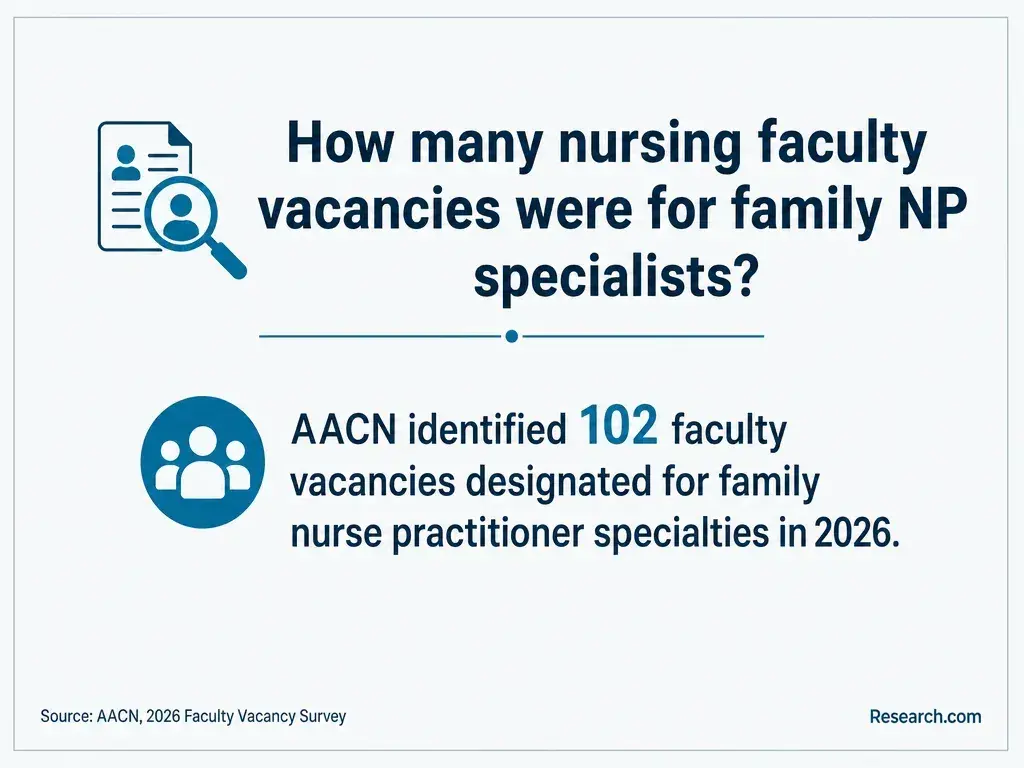
APRN preparation connects advanced assessment, pathophysiology, and pharmacology with coursework and supervised clinical learning for the intended role and patient population. A family NP track, for example, must prepare students for family-focused primary care rather than treating unrelated RN specialty employment as equivalent clinical training. Specific courses, hours, competencies, and acceptable sites depend on the program, certifier, and applicable regulation.
An already-certified APRN changing population focus may need a formal review of previous coursework and supervised experiences. The receiving program determines what additional preparation is necessary; past hours do not automatically transfer. Compare post-master's family NP clinical training requirements against the certifier's and state board's rules before assuming a short certificate fills every gap.
An RN specialty review course may have few admission barriers, but exam eligibility is a different matter: the certifier may require active licensure and documented specialty practice. Check eligibility before paying for preparation materials.
APRN programs commonly evaluate RN license status, prior nursing education, academic record, prerequisites, and track-specific experience or application materials. Admission standards vary, and admission alone does not establish future exam or state-licensure eligibility. If you do not yet hold an RN license, second-degree nursing admission options address an earlier step; verify prerequisites, clinical placement eligibility, and eventual NCLEX eligibility separately.
The RN specialty timeline is driven less by the length of an exam-review course than by how long it takes to accumulate eligible practice. An experienced RN who already meets a certifier's requirements may prepare and apply relatively quickly; a new graduate may first need substantial specialty employment and orientation.
APRN preparation usually involves a multi-term graduate or post-graduate program, supervised clinical placements, certification testing, and a state authorization process. Prior education, enrollment intensity, course sequencing, and placement availability all affect completion time.
Advertised 12-month family NP study schedules warrant especially close review: determine the applicant profile, accepted prior graduate work, clinical schedule, and point at which graduates can actually seek certification and licensure.
RN specialty credentials can strengthen an application for relevant RN jobs, but they do not create a separate licensed occupation or guarantee a raise. APRN certification, paired with state authorization, supports applications for the corresponding advanced practice role. Hiring may still depend on population-specific experience, employer credentialing, and local demand.
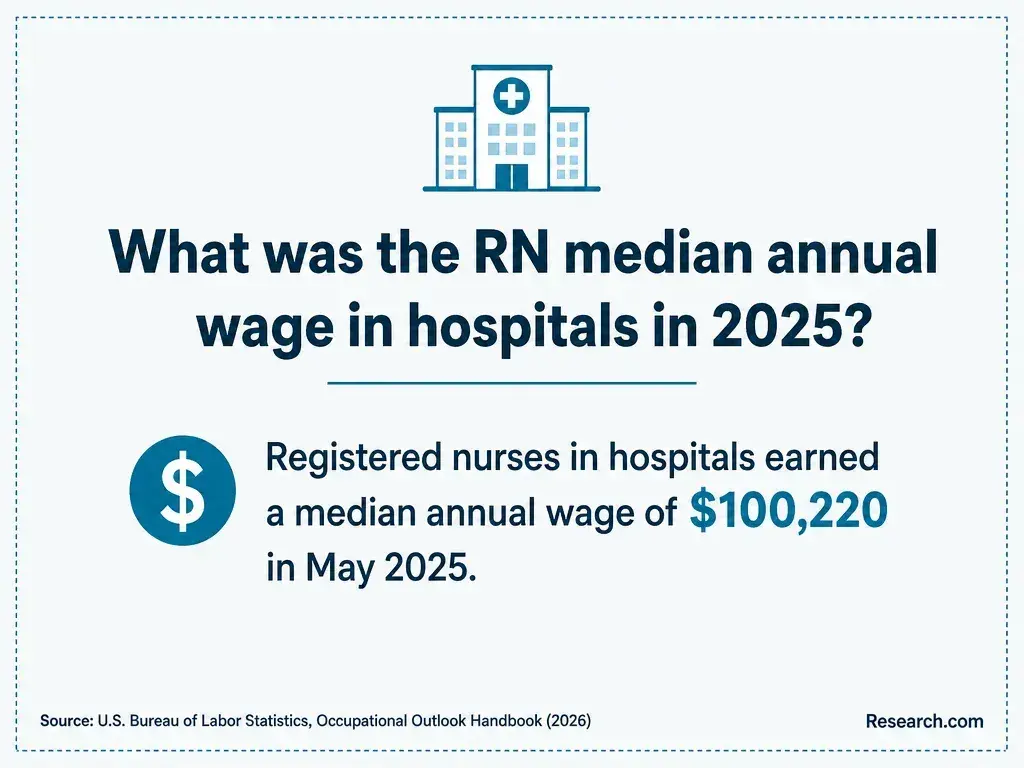
For pay comparisons, use U.S. Bureau of Labor Statistics figures for the occupation - such as registered nurse or nurse practitioner - not as a promised salary for someone holding a particular certification. Specialty, region, setting, schedule, and experience can change an offer substantially.
Compare actual postings and employer pay policies against the full cost of preparation, including clinical travel and reduced work hours. Affordable graduate pathways to NP preparation may reduce tuition, but lower tuition alone does not establish a better financial return.
How should you choose a reputable nursing certification program?
Start with the credential you need, not a program's marketing label. A reputable RN exam-review provider and a qualifying APRN degree program solve different problems. Before paying an application fee or deposit, verify these points with the organizations that control eligibility:
- For an RN specialty exam: Find the certifier's current eligibility guide, exam outline, practice-documentation rules, fees, and renewal requirements; then confirm that your work meets its definition of eligible practice.
- For an APRN track: Ask the program which role and population focus it prepares students for, which certification exam graduates may pursue, how clinical sites and preceptors are approved, and whether your state accepts the pathway.
- For either route: Obtain a written estimate of tuition or review-course costs, testing and renewal fees, travel, required time away from work, and any employer reimbursement conditions.
A shorter degree is valuable only if it fits your existing credentials and target role. Assess shorter doctoral nursing study options against the actual track: a non-APRN DNP, however reputable, will not by itself qualify a nurse for NP certification.
Other Things You Should Know About Nursing
Yes, if the nurse independently meets each credential's eligibility and renewal rules. Holding both does not merge their scopes of practice.
Generally, yes. Renewal cycles and acceptable continuing education or practice evidence vary by certifier; check the rules for your exact credential.
No. A school certificate documents completion of its program. Professional board certification is awarded by a separate certifying organization after its eligibility and assessment requirements are met.
Some employers reimburse exam fees, review courses, or graduate tuition, often with eligibility or service conditions. Ask for the written policy before relying on that funding.
- GA R&R - GAC - Chapter 410-11 REGULATION OF ADVANCED PRACTICE REGISTERED NURSES https://rules.sos.ga.gov/gac/410-11
- Why Some Nurses Obtain Specialty Certification and Others Do Not | nih.gov https://pmc.ncbi.nlm.nih.gov/articles/PMC8064627/
- Learn about Advanced Practice Registered Nurses (APRN) | mass.gov https://www.mass.gov/info-details/learn-about-advanced-practice-registered-nurses-aprn
- APRN Licensure and Practice in Ohio - Ohio Board of Nursing https://nursing.ohio.gov/education-and-practice/practice-and-prescribing/scopes-of-practice/aprn-licensure-and-practice-in-ohio
- APRN Practice FAQ - Texas Board of Nursing https://www.bon.texas.gov/faq_practice_aprn.asp.html
- What Are Post-Graduate APRN Certificate Programs and Who Should Consider Them? | catholic.edu https://nursing.catholic.edu/connect-contact/news-events/all-stories/what-are-post-graduate-aprn-certificate-programs-and-who-should-consider-them
- Nursing Certifications | Berkley School of Nursing https://nursing.georgetown.edu/blog/nursing-certifications/
- 50 Nursing Certifications to Increase Your Salary | nurse.com https://www.nurse.com/blog/24-nursing-certifications-to-boost-your-career/
- Advanced Practice Registered Nurses (APRN) | ANA https://www.nursingworld.org/practice-policy/workforce/what-is-nursing/aprn/
- Board Certification | AACN https://www.aacn.org/certification