2027 Return on Investment of an Online Paralegal Bachelor's Degree: Salary vs Cost

Co-Founder and Chief Data Scientist
A prospective paralegal student is usually deciding between three pressures: the cost of a bachelor’s degree, the need to keep working while enrolled, and the salary improvement needed to make the investment worthwhile. An online paralegal bachelor’s degree can be a practical path for career changers, legal assistants seeking advancement, and working adults who want a stronger credential without leaving their jobs.
The financial question is not simply “Can I afford tuition?” A better question is: “Will the degree improve my employability, salary growth, and access to better legal support roles enough to justify the total cost?” Recent data shows that paralegal professionals with a bachelor’s degree earn approximately 15% more than those with an associate degree, which makes program cost, accreditation, aid, and career outcomes especially important.
This guide breaks down the true cost of an online paralegal bachelor’s degree, compares likely salary outcomes, explains 10-year and long-term ROI, and shows how tuition reimbursement, financial aid, specialization, and accreditation can affect the value of the degree.
Key Things to Know About the Return on Investment of an Online Paralegal Bachelor's Degree
- Online paralegal bachelor's degrees average $20,000-$40,000 in tuition-often lower than traditional programs-making them accessible for students balancing work and study.
- Graduates see median salaries around $56,000 annually, with some regions offering higher wages aligned with increased experience and credentials.
- Non-financial benefits include stronger job security, opportunities for promotion, and access to specialized professional development essential for long-term career growth.
What Is the True Cost of Earning an Online Paralegal Bachelor's Degree From Enrollment to Graduation?
The true cost of an online paralegal bachelor’s degree is higher than the tuition figure advertised on a school’s website. Students should calculate the full cost from enrollment through graduation, including tuition, fees, books, software, exam proctoring, and any required legal research tools.
Published tuition rates, often called sticker prices, commonly range from $15,000 to $45,000 for online paralegal bachelor’s programs. The amount a student actually pays can be lower after grants, scholarships, employer tuition assistance, or transfer credits. According to net price calculators on university websites and data from the National Center for Education Statistics and IPEDS, average net tuition after grants and scholarships usually falls between $10,000 and $30,000.
- Tuition sticker price: Published tuition for online paralegal bachelor’s degrees commonly falls between $15,000 and $45,000, depending on the institution, residency policy, and transfer-credit rules.
- Net tuition after aid: Scholarships and grants can reduce out-of-pocket tuition to approximately $10,000-$30,000 for many students.
- Technology fees: Online platform and student-service fees often add $300-$1,000 over the program.
- Books and materials: Textbooks, legal writing guides, case materials, and digital resources can cost between $1,200 and $2,000 across the degree.
- Proctoring charges: Some programs charge $50-$150 per course for remote exam monitoring, which can add several hundred dollars.
A realistic total-cost estimate for an online paralegal bachelor’s degree is $12,500 to $48,000. Students transferring an associate degree or prior college credit may land near the lower end. Students attending higher-priced private or for-profit institutions, taking longer to finish, or receiving limited aid may pay closer to the upper end.
Before enrolling, ask each school for a complete cost-of-attendance estimate, not just tuition per credit. Also confirm whether legal research databases, proctoring, graduation fees, and required software are included. If you are comparing credential options beyond a degree, resources on online certifications with strong earning potential can help you evaluate lower-cost add-ons or alternatives.
How Does the Starting Salary for Paralegal Bachelor's Degree Graduates Compare to the Total Cost of the Degree?
Starting salaries for graduates with a bachelor’s degree in paralegal studies often range from $45,000 to $53,000, according to the Bureau of Labor Statistics (BLS) Occupational Outlook Handbook. Entry-level roles may include legal assistant, paralegal assistant, litigation assistant, corporate paralegal, or compliance support roles.
The salary-to-cost comparison depends heavily on the student’s net price. A low-cost online program with strong transfer-credit acceptance and financial aid can create a much faster payback timeline than a higher-cost program with limited aid.
| Scenario | Total Degree Cost | Starting Salary | Gross Income Needed to Match Cost |
| Lower-cost outcome | $15,000 | $50,000 | About 3.6 months |
| Higher-cost outcome | $35,000 | $45,000 | About 9.3 months |
These payback estimates use gross salary, not take-home pay. Taxes, living expenses, loan interest, and whether the student works while enrolled all affect the real repayment timeline. Still, the comparison is useful: a program that costs $15,000 creates a very different ROI profile than one that costs $35,000, even if both lead to similar first jobs.
Salary projections show an average annual growth rate of about 3% for paralegal professionals. Over time, promotions, legal specialization, supervisory work, or movement into corporate compliance can improve the return. Students comparing education costs across fields may also find broader tuition-planning context in Research.com’s guide to affordable online counseling degree options.
- Starting salary range: Median entry-level salaries commonly fall between $45,000 and $53,000 for paralegal careers linked to bachelor’s graduates.
- Degree cost variation: Total online paralegal degree costs may range from $15,000 to $35,000 in common low- and high-cost scenarios.
- Payback period: Students may need between 3.6 and 9.3 months of gross income to equal the degree cost.
- Salary growth potential: Around 3% annual salary growth and advancement can improve the long-term value of the degree.
- Non-financial return: Better job stability, stronger writing and research skills, and access to more specialized roles can matter as much as the first salary offer.
What Is the Average Return on Investment (ROI) for an Online Paralegal Bachelor's Degree Over a 10-Year Career?
ROI for an online paralegal bachelor’s degree measures the added earnings a graduate may receive over time compared with the cost of earning the credential. In practical terms, students should compare total program cost against the salary premium they expect over 10 years.
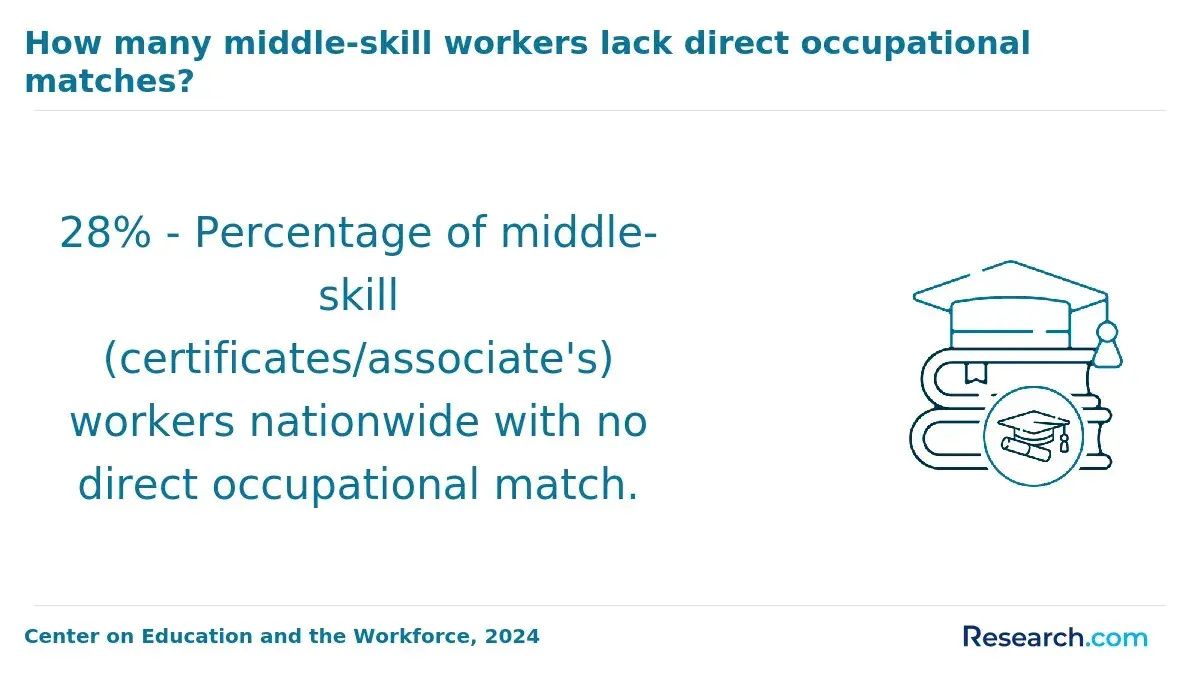
Trusted sources such as the Georgetown University Center on Education and the Workforce and PayScale’s College ROI Report use similar logic when evaluating whether a degree’s long-term earnings justify its cost.
For example, the Bureau of Labor Statistics reports the median salary for paralegals in 2023 is about $56,230 annually. Assuming a steady 3% yearly raise, a paralegal with a bachelor’s degree can expect to earn roughly $640,000 over a decade. By comparison, someone without this degree working in related administrative roles averages about $45,000 a year, totaling approximately $520,000 over the same period.
The difference-around $120,000-represents the estimated earnings advantage associated with the bachelor’s degree. If a typical online paralegal bachelor’s program costs between $20,000 and $40,000, including fees and materials, the estimated 10-year ROI ranges from $80,000 to $100,000 after subtracting education costs.
- ROI definition: ROI is the net financial gain after comparing added earnings with the full cost of the degree.
- 10-year earnings example: A bachelor’s-prepared paralegal may earn roughly $640,000 over a decade under the stated salary-growth assumption.
- Comparison point: Related administrative roles without the bachelor’s degree total approximately $520,000 over the same period.
- Estimated net ROI: After deducting $20,000 to $40,000 in program costs, the 10-year ROI ranges from $80,000 to $100,000.
- Main risk: ROI falls if a student overpays for the degree, does not graduate, attends a weakly recognized program, or enters a lower-paying local job market.
A graduate who completed an online paralegal bachelor’s degree described the decision as “challenging but empowering” because he had to weigh tuition, work hours, family responsibilities, and future salary growth at the same time. “Every late night felt more justified knowing it was building a stable foundation for my future,” he said. His experience highlights an important point: ROI is strongest when the program is affordable enough to complete and flexible enough to fit around paid work.
How Do Online Paralegal Program Tuition Rates Compare Across Public, Private, and For-Profit Institutions?
Online paralegal bachelor’s tuition varies significantly by institution type. Public universities often offer the lowest net price, especially for in-state students or online learners charged a flat tuition rate. Private nonprofit schools may cost more but can offer stronger career services, alumni networks, or employer recognition. For-profit colleges may advertise convenience or accelerated timelines, but students should examine completion rates, debt, accreditation, and employer perception before enrolling.
| Institution Type | Typical Cost Position | Potential Advantage | Key Risk to Check |
| Public institutions | Often lower cost | Flat-rate online tuition and stronger affordability | Residency rules, transfer-credit limits, and course availability |
| Private nonprofit schools | Often higher cost | Reputation, advising, career support, and employer recognition | Higher net price if grants do not offset tuition |
| For-profit colleges | Varies widely | Flexible scheduling and accelerated formats | Lower completion rates, employer skepticism, and higher debt risk |
The cheapest online paralegal bachelor degree is not automatically the best value. A low tuition rate can be a poor investment if students cannot finish, credits do not transfer, or employers question the credential. Likewise, a higher-priced school may be worth considering only if its net price, accreditation, completion outcomes, and career placement justify the added cost.
Students who want a legal-education pathway with specific employer recognition may also compare online aba approved paralegal programs when evaluating affordability, credibility, and career fit.
If you are comparing tuition structures across professional programs, Research.com’s resource on online marriage and family therapy program formats can provide a useful point of comparison for how accelerated online degrees affect cost and completion planning.
What Long-Term Salary Growth Can Paralegal Bachelor's Degree Holders Expect Over a 20- to 30-Year Career?
Paralegal salary growth usually improves as professionals gain legal research experience, drafting skills, case-management ability, and familiarity with specialized practice areas. A bachelor’s degree can support advancement, but salary growth still depends on employer type, location, specialization, performance, and whether the graduate moves into higher-responsibility roles.
Early-career paralegals may earn near $52,000 annually while building core skills. Between five and ten years, professionals who specialize in corporate law, intellectual property, litigation, compliance, or another higher-demand area may move into the $60,000 to $70,000 range. Around the 10- to 15-year mark, supervisory or senior paralegal roles can push earnings above $75,000.
After two decades, earnings often stabilize but remain well above entry-level pay. Experienced paralegals in advanced roles may reach or exceed $85,000 annually. Over a 30-year period, those with a bachelor’s degree earn an estimated $500,000 to $700,000 more than peers without a degree.
- Early career: Salaries begin near $52,000 and rise as graduates build practical legal skills.
- Mid-career: Between five and ten years, specialization and promotions can move salaries into the $60,000 to $70,000 range.
- Senior-level milestone: After 10 to 15 years, leadership and advanced responsibility can lift wages above $75,000.
- Late career: Experienced paralegals often reach around or above $85,000 after 20 years.
- Lifetime premium: Over 30 years, degree holders earn an estimated $500,000 to $700,000 more than non-degree professionals.
One graduate said the degree “didn’t just increase my salary-it transformed my confidence and career path.” That point matters for ROI. The biggest long-term returns often come when graduates use the degree to pursue promotions, negotiate better roles, specialize, or move into employers with stronger compensation structures.
How Does the ROI of an Online Paralegal Bachelor's Degree Compare to an Associate Degree or a Professional Certificate?
An online paralegal bachelor’s degree typically costs more and takes longer than an associate degree or professional certificate. Whether it offers better ROI depends on the student’s career goals, current education level, local job market, and need for speed versus long-term advancement.
| Credential | Typical Cost | Best Fit | ROI Consideration |
| Professional certificate | $1,000 to $5,000 | Fast entry, career testing, or adding legal skills to an existing degree | Low cost and quick completion, but often lower starting pay and fewer advancement options |
| Associate degree | $10,000 to $20,000 | Students seeking an affordable academic credential and entry-level preparation | Balanced cost and training depth, but may be less competitive for some senior roles |
| Bachelor’s degree | $25,000 to $50,000 | Career changers, advancement-focused students, and those targeting specialized or supervisory roles | Higher upfront cost, but stronger long-term salary and promotion potential |
The Bureau of Labor Statistics reports that paralegals holding bachelor’s degrees earn median annual salaries between $52,000 and $56,000. Associate degree holders typically see wages from $47,000 to $50,000, while those with certificates often start around $40,000.
- Choose a certificate if: You need the fastest, lowest-cost route into legal support work or already have a bachelor’s degree in another field.
- Choose an associate degree if: You want an affordable academic credential and may later transfer credits toward a bachelor’s degree.
- Choose a bachelor’s degree if: You want stronger access to corporate, compliance, intellectual property, supervisory, or advancement-oriented positions.
The bachelor’s degree is usually the stronger long-term investment for students who expect to stay in the field for many years. Certificates and associate degrees may produce faster short-term ROI because they cost less, but the bachelor’s degree can offer better cumulative earnings if it leads to higher-paying roles and promotions.
Which Online Paralegal Specializations or Concentrations Yield the Highest Earning Potential After Graduation?
Specialization can improve the earning potential of an online paralegal bachelor’s degree, especially when the concentration aligns with higher-paying legal markets. General paralegal training is useful, but employers often pay more for candidates who can support complex litigation, corporate transactions, intellectual property matters, regulatory compliance, or technology-heavy legal work.
- Litigation support: Graduates in this area typically earn median salaries 10% to 15% higher than generalist paralegals because they can assist with trial preparation, e-discovery, document review, and case management. Credentials such as the Certified Litigation Support Professional (CLSP) can add post-degree costs.
- Intellectual property (IP) law: IP specialization yields approximately a 12% salary premium by applying knowledge of patents, trademarks, and technical documentation. Additional credentials, such as Registered Patent Paralegal status, may be required or preferred by some employers.
- Corporate or business law: This track offers competitive salaries with about an 8% premium over generalist roles. It can be especially useful for students interested in contracts, governance, mergers, compliance, or in-house legal departments.
- Criminal law: Criminal law can be meaningful and stable, particularly in public service settings, but salaries tend to align more closely with generalist paralegal pay and usually require fewer additional credentials.
The strongest specialization is not always the one with the highest headline premium. Students should also consider local employer demand, certification costs, internship access, and whether they have prior work experience that supports the specialty. For example, a student with a technology background may find stronger ROI in intellectual property or e-discovery, while someone with business experience may be better positioned for corporate law or compliance.
How Do Employer Tuition Reimbursement and Financial Aid Reduce the Net Cost of an Online Paralegal Bachelor's Degree?
Employer tuition reimbursement and financial aid can significantly reduce the net cost of an online paralegal bachelor’s degree. For working adults, these funding sources may determine whether the degree produces a strong ROI or creates unnecessary debt.
Under IRS Section 127, employers may offer up to $5,250 per year in tax-free educational assistance to employees. This benefit commonly applies to undergraduate programs, including paralegal studies, when the employer’s policy covers job-related or career-development education. The Society for Human Resource Management (SHRM) reports that nearly 59% of U.S. employers provide some form of tuition assistance.
Federal and institutional aid can further lower the cost. Grants and scholarships do not require repayment. Subsidized federal loans can reduce the immediate burden compared with private loans, though borrowing still increases the total cost if interest accrues over time.
For example, a student facing $20,000 in annual tuition might receive $5,250 from employer reimbursement, a $4,000 federal grant, and subsidized loans for the remainder. This combination can reduce out-of-pocket costs to less than half the sticker price.
- Employer tuition reimbursement: Up to $5,250 annually in tax-free assistance under IRS Section 127 can reduce degree costs.
- Benefit availability: Approximately 59% of U.S. employers offer tuition aid, according to SHRM.
- Federal aid: Grants and subsidized loans can complement employer assistance.
- Combined savings: Employer reimbursement plus federal aid can cut the net cost of a paralegal degree by more than half.
- Planning step: Ask your employer whether reimbursement is paid upfront or after course completion, whether a minimum grade is required, and whether you must remain employed for a set period after receiving funds.
Students comparing funding strategies across online programs can review Research.com’s guide to accelerated online bachelor’s degree options to see how program length, transfer credits, and employer benefits can affect affordability.
What Hidden Costs Should Students Factor Into the Total Investment of an Online Paralegal Bachelor's Degree?
Hidden costs can make an online paralegal bachelor’s degree more expensive than advertised. Students evaluating ROI should include mandatory fees, legal research tools, exam charges, graduation costs, and professional expenses in their budget.
These hidden costs can total $1,000 to $2,000 over the program. That may not change the decision to enroll, but it can affect borrowing needs and extend the time required to break even after graduation.
- Technology fees: Many institutions charge $50 to $200 per semester to support learning platforms and online services.
- Proctoring and exam costs: Online exam monitoring fees may add $25 to $50 per test.
- Graduation and administrative fees: One-time fees of $100 to $300 may apply near the end of the program.
- Course-specific software: Legal studies courses may require database access, document-management tools, or other software that can cost several hundred dollars per term.
- Professional memberships: Optional memberships can cost between $50 and $150 annually, but they may support networking, job searches, and continuing education.
To avoid surprises, request a full cost-of-attendance breakdown from the school before enrolling. Ask whether textbooks are included, whether proctoring is required in every course, whether legal database fees are separate, and whether transfer credits can reduce both tuition and fee exposure.
Students concerned about academic pathways and admission options can also review Research.com’s guide to online colleges that accept applicants with lower GPAs when planning future education choices.
How Does the Accreditation Status of an Online Paralegal Program Affect Graduate Salary and Employability?
Accreditation affects whether employers, graduate schools, and financial aid systems recognize an online paralegal degree as credible. A lower-cost program may not be a good investment if its accreditation limits job prospects or transfer options.
Regional accreditation evaluates the institution as a whole and is generally the most widely recognized form of institutional accreditation. Programmatic accreditation focuses on a specific program or discipline. Employers commonly place more confidence in degrees from regionally accredited institutions, and surveys from the National Association of Colleges and Employers (NACE) and the Society for Human Resource Management (SHRM) confirm that hiring managers favor candidates with regionally accredited degrees.
Attending a school without proper accreditation can create problems beyond employment. It may restrict access to federal financial aid, transfer credit, graduate study, government roles, healthcare-related legal positions, or employer tuition reimbursement. Before applying, students should verify accreditation through the U.S. Department of Education’s accreditation database or the Council for Higher Education Accreditation (CHEA).
- Regional accreditation: Covers the institution and typically carries strong employer and academic recognition.
- Programmatic accreditation: Reviews a specific program and can add value, but it does not replace institutional credibility.
- Employer impact: Regionally accredited degrees often provide stronger hiring and salary-negotiation positioning than non-accredited credentials.
- Career restrictions: Non-accredited or weakly recognized schools may limit access to advanced education, federal aid, and certain employers.
- Verification: Check the U.S. Department of Education and CHEA databases before enrolling.
What Entry-Level Job Titles and Salary Ranges Are Available to Graduates of Online Paralegal Bachelor's Programs?
Graduates of online paralegal bachelor’s programs can qualify for several legal support and compliance-related roles. Starting salary depends on location, employer type, internship experience, specialization, and whether the job is in a law firm, corporation, government agency, healthcare organization, finance company, or real estate setting.
- Legal Assistant: Median starting pay ranges from $40,000 to $47,000, with government and finance sectors generally offering the highest salaries.
- Corporate Paralegal: Salaries typically fall between $45,000 and $52,000, especially in technology and corporate law firms valuing corporate governance expertise.
- Litigation Paralegal: Entry-level earnings average $42,000 to $50,000, with large law firms and government agencies paying on the higher end.
- Compliance Analyst: Starting pay ranges from $43,000 to $55,000, notably within finance and healthcare where regulatory knowledge is critical.
- Real Estate Paralegal: Pays between $40,000 and $48,000, with urban real estate firms and title companies offering better compensation.
- Family Law Paralegal: Starting salaries span $38,000 to $46,000, with higher wages commonly found in major metropolitan legal markets.
- Intellectual Property Paralegal: Entry-level pay can reach $50,000 to $60,000, mainly within technology and pharmaceutical industries.
- Government Paralegal: Salaries range from $42,000 to $51,000, with federal and state agencies favoring candidates holding certifications such as the Certified Paralegal credential.
Students who want stronger first-job outcomes should look for programs with internship options, legal writing instruction, research database training, career services, and specialization tracks. Certifications and concentrations in intellectual property, compliance, litigation support, or corporate law can raise starting salaries by several thousand dollars when matched with employer demand.
What Graduates Say About the Return on Investment of Their Online Paralegal Bachelor's Degree
- : "Choosing the online paralegal bachelor’s degree was a decision rooted in carefully evaluating the cost versus the potential salary boost. The flexible schedule allowed me to maintain my job while studying, which made the investment manageable. Beyond the dollars, the program gave me confidence and skills that opened doors to leadership roles within my firm. —Kayden"
- : "Reflecting on my experience with the online paralegal program, I realize the ROI extended far beyond financial returns. The program enhanced my critical thinking and legal writing abilities, which led to greater job security and new career advancement opportunities. It wasn’t just about the degree-it was about growth and increased professional recognition. —Cannon"
- : "Pursuing the online paralegal bachelor’s degree significantly impacted my career trajectory in a professional way I hadn’t anticipated. It provided a comprehensive understanding of legal processes that employers value highly, making me more competitive in the job market. The time and money invested truly paid off through promotions and expanded responsibilities. —Nolan"
Other Things You Should Know About Paralegal Degrees
Typically, graduates can expect to recoup the cost of their online paralegal bachelor's degree within 3 to 6 years after entering the workforce.
This timeline depends on factors such as tuition fees, the salary increase gained compared to entry-level positions without a degree, and employment stability. Those who secure jobs in higher-paying sectors or regions may see a faster return on investment.
Salary outcomes vary significantly based on geographic region and industry sector. For example, paralegals working in metropolitan areas with higher living costs often earn more than those in rural locations.
Additionally, industries like corporate law firms and government agencies tend to offer higher salaries compared to small private practices. These differences can greatly influence the overall return on investment.
Employer surveys indicate that a bachelor's degree in paralegal studies is increasingly valued for roles requiring specialized knowledge and leadership potential.
Labor market data from sources like the Bureau of Labor Statistics show steady demand for paralegals, particularly those with a four-year degree, which often leads to better job security and advancement opportunities. Employers recognize the degree as a signal of strong skills and commitment to the profession.
References
- 11 Types of Paralegals That Are in Demand https://campus.edu/blog/paralegal/paralegal-specialties-that-are-in-demand
- The ROI of an Online BBA Degree: Is it Worth the Investment? https://www.dypatilonline.com/blogs/the-roi-of-an-online-bba-degree-is-it-worth-the-investment
- Which College Degrees Have the Best Return on Investment? https://www.visualcapitalist.com/which-college-degrees-have-the-greatest-return-on-investment/
- Paralegal Salary by State | 2025 https://www.allcriminaljusticeschools.com/legal-and-paralegal/paralegal-salary-by-state/
- Factors that influence the return on investment of legal technology https://www.wolterskluwer.com/en-gb/expert-insights/factors-that-influence-the-return-on-investment-of-legal-technology
- How Much Does it Cost to Become a Paralegal? https://legalcareerpath.com/cost-to-become-a-paralegal/
- Tuition Reimbursement: How Do Employers Benefit from It? | KBI Benefits https://www.kbibenefits.com/tuition-reimbursement-benefits
- Paralegal Showdown: Certificate vs Degree – Who Takes the Verdict? https://www.paralegalinst.com/paralegal-certificate-or-degree-ultimate-guide
- Career Insight: How Much Do Paralegals Make | Career Insider | UTSA Professional and Continuing Education https://www.utsa.edu/pace/news/career-insight-how-much-does-paralegal-make.html
- Are Online Paralegal Programs Accredited? https://lakewood.edu/online-paralegal-programs-accredited/