2027 Questions to Ask Before Accepting a Blood and Marrow Transplant Nurse Position
Audited and Verified:
Our Editorial and Data Verification Process
Research.com uses government datasets, official education statistics and primary institutional information to support its career and degree guides. Our review process checks factual accuracy, occupational definitions, source dates and the requirements associated with the credentials discussed.
How This Article Was Fact-Checked
Our editorial team verifies salary estimates, employment projections, education requirements and program information against original data providers and official organizations. Salary figures are checked against the relevant occupational definitions and reporting periods. Information about licensure, accreditation and required in-person training is reviewed separately.
Fact-checked and verified on:

Co-Founder and Chief Data Scientist
A blood and marrow transplant (BMT) nursing offer can be exciting, but the job depends heavily on the unit behind it. Transplant recipients may need close monitoring, complex treatment, and rapid escalation when complications arise. For a new graduate or an experienced RN changing specialties, the most useful questions concern orientation, staffing, clinical support, schedule, and compensation - not just the job title. This guide explains what to ask, how to interpret the answers, and when to request more detail before accepting.
Key Things You Should Know
- Ask how long supervised orientation lasts, who assesses your competencies, and what support remains after you take an assignment independently.
- Compare offers using the actual patient assignment, available help, required shifts, and total compensation - not the advertised hourly rate alone.
- BMT is an RN specialty, not a separate license: the U.S. Bureau of Labor Statistics reported a $93,600 median annual wage for all registered nurses in May 2024, not a BMT-specific salary.
What does a blood and marrow transplant nurse do?
BMT nurses care for people receiving hematopoietic stem cell transplants, sometimes called bone marrow transplants. The work may take place in an inpatient transplant unit, an outpatient infusion clinic, or a follow-up program. Responsibilities vary by setting and employer, but can include assessments, central-line care, medication administration, transfusion support, symptom management, patient and caregiver education, documentation, and coordination with the transplant team.
The distinction between settings should shape your first interview question: "Which phases of transplant care will I cover, and what will my assignment look like on a typical shift?" An inpatient nurse may care for patients through conditioning, transplant, and early recovery; an ambulatory nurse may monitor patients who return frequently for treatment and assessment. Ask whether the position rotates between these settings and who handles urgent concerns after hours.
If your long-term goal is to become a nurse practitioner rather than practice as a transplant RN, compare the role and education required before committing to a degree. Online NP tuition and fee considerations are a separate decision from evaluating this bedside job offer.
What education is required to become a blood and marrow transplant nurse?
A BMT staff nurse generally needs education that leads to registered nurse eligibility, an active RN license, and employer-required specialty training. An associate degree in nursing (ADN), nursing diploma, or bachelor of science in nursing (BSN) can be a prelicensure route; individual employers may prefer or require a BSN. A degree alone does not authorize RN practice.
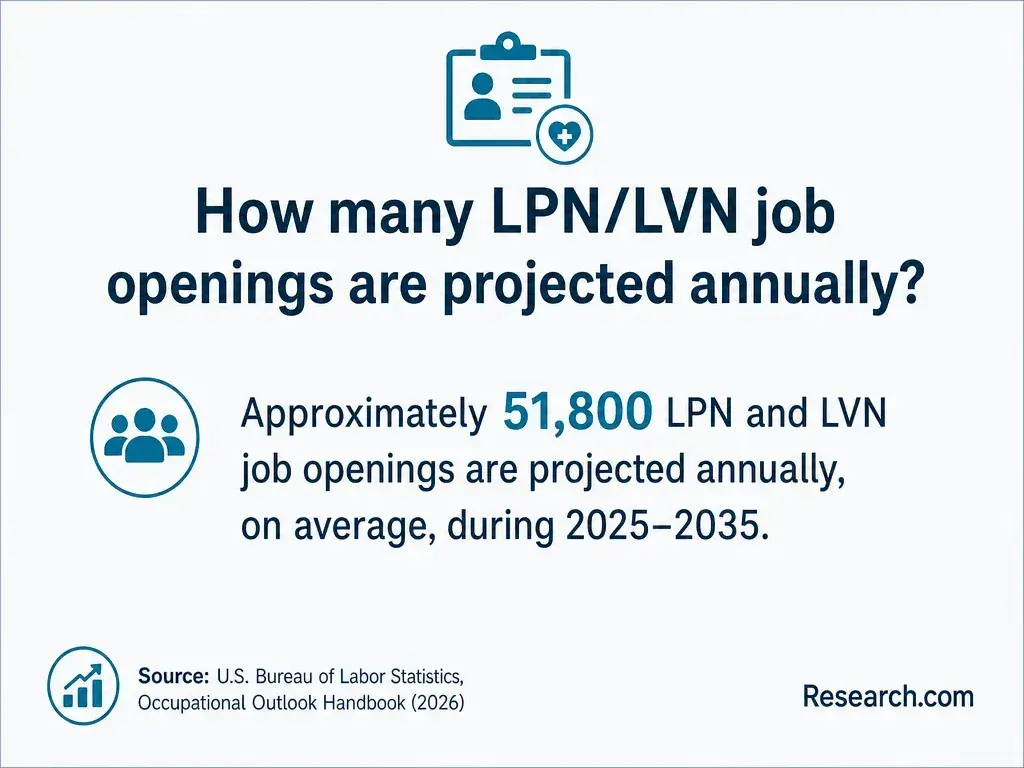
Before accepting, ask "Does this position require a BSN now, require one by a deadline, or offer tuition assistance to earn one?" Get any deadline and reimbursement conditions in writing. If you are an LPN/LVN considering transplant nursing, confirm that the opening is an RN position and review LPN-to-RN clinical training requirements; LPN/LVN experience does not itself replace RN licensure.
What licenses and certifications do transplant nurses need?
The baseline credential for an RN-level BMT position is an active RN license that authorizes practice in the job's jurisdiction. Employers may also require life-support credentials and documented competence in treatments used on the unit. Ask the recruiter to separate requirements before your start date from credentials and competencies you can complete during orientation.
Specialty certification is a different matter. The Oncology Nursing Certification Corporation offers the Blood and Marrow Transplant Certified Nurse (BMTCN) credential; eligibility depends on its current requirements, including relevant practice and education. Certification does not replace a license, employer training, or unit-specific competency checks. Ask whether the employer pays exam fees, provides study support, or rewards certification - and verify eligibility with the certifying organization before planning around an exam date.
Do not confuse RN specialty certification with preparation for advanced practice. For example, Accelerated psychiatric NP certificate options address a different role and population focus; they are not a substitute for BMT orientation or certification.
For this job decision, the best pathway is the one that gets you qualified for the employer's RN opening without unnecessary additional education. The distinctions below help you interpret a degree requirement in an offer.
| Pathway | Relevance to a BMT staff nurse position | What to verify |
| Prelicensure ADN or diploma | Can lead to RN eligibility; some employers prefer a BSN. | State licensure eligibility and the employer's degree policy. |
| Prelicensure BSN | Can lead to RN eligibility and may meet a stated BSN hiring requirement. | Whether graduation and licensure are required before the start date. |
| RN-to-BSN | Advances an already-licensed RN's education; does not provide initial RN licensure. | Employer deadlines, scheduling flexibility, and tuition assistance. |
| Graduate nursing degree | Usually unnecessary for a staff RN role; may support a separate advanced, education, or leadership goal. | The specific role and qualifications the degree actually prepares you for. |
If an ADN-prepared RN can start on the unit while completing a BSN, that may be more practical than postponing relevant clinical experience. Compare course obligations with your proposed shift pattern; RN-to-BSN pathways using applied projects may have different requirements from programs with clinical components.
If the offer requires you to earn or complete a nursing degree, check three separate issues before enrolling: the institution's accreditation, the nursing program's applicable accreditation, and - for a prelicensure route - its status with the relevant state board of nursing. ACEN and CCNE are examples of nursing program accreditors, but accreditation scope and board requirements depend on the particular program and jurisdiction. Neither institutional accreditation nor an employer's tuition benefit, by itself, establishes eligibility for initial RN licensure.
Ask the employer whether its tuition benefit covers your proposed institution and degree, whether continued employment is required, and whether a specific accreditation status is part of its hiring policy. An MSN bridge option for an ADN-prepared RN should be evaluated against the role you actually want; a graduate credential is not automatically necessary to work as a BMT staff nurse.
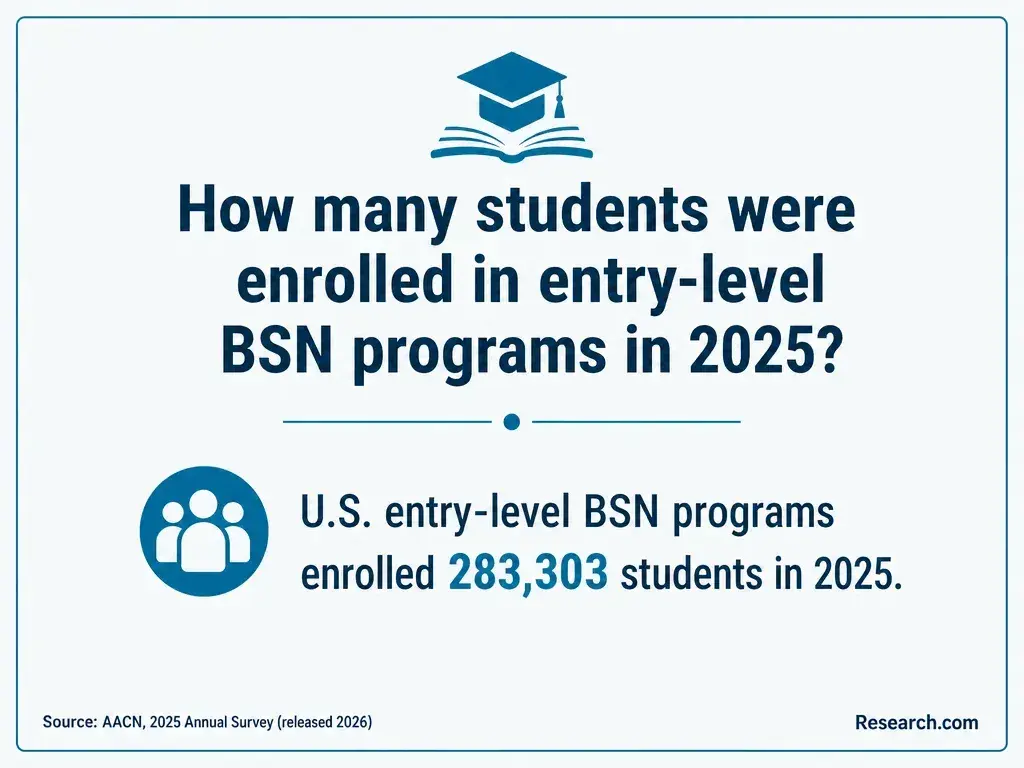
Prelicensure nursing education provides foundations such as assessment, pharmacology, infection prevention, clinical judgment, and supervised patient care. It does not establish independent competence in BMT nursing. Specialty onboarding may cover transplant phases, immunosuppression, central-line and transfusion policies, recognition of complications, escalation procedures, patient education, and the unit's documentation systems. The employer determines which tasks require supervised practice and competency validation.
Ask "Can I see the orientation plan and competency checklist before accepting?" Find out whether you will have consistent preceptors, protected learning time, exposure to the patients you will later be assigned, and a process for extending orientation if needed. Classroom modules and simulation are useful, but neither should be presented as a replacement for supervised performance on the unit.
Employer onboarding also differs from clinical placement in an academic NP program. If graduate study is part of your future plan, Family nurse practitioner programs with placement services address a separate question about arranging program-approved supervised experiences.
There is no universal BMT preparation timeline. A nursing student must finish an eligible prelicensure program, meet examination requirements, and obtain an RN license before practicing as an RN. A licensed nurse changing specialties may be able to start sooner, but still needs employer orientation. Its length should reflect prior experience, the setting, the assignments, and demonstrated competence - not simply a fixed number of weeks.
Ask when you will begin carrying a full assignment, what must be demonstrated first, and what happens if you need more supervised time. For a new graduate, also ask whether a nurse residency and BMT orientation run together or have separate expectations. Additional graduate education, including Short online DNP completion pathways, is not a prerequisite for a staff RN position and should not delay accepting a well-supported entry opportunity unless it serves another clear goal.
Employers may value oncology, hematology, infusion, or acute-care experience, but some hire new graduates or nurses from other specialties with structured onboarding. More important than assuming your previous experience transfers perfectly is finding out how the unit will assess your starting point. Strong assessment, medication safety, infection prevention, communication, and timely escalation matter; BMT-specific performance must still be learned and evaluated.
Use these questions to compare the support behind competing offers. Ask for examples from the actual unit and shift you would work, rather than relying on hospital-wide averages.
- "What patient assignment is typical on my shift, and when does it change because of acuity?"
- "Who can help immediately if a patient deteriorates or I need a second experienced nurse?"
- "How often are nurses floated, and which assignments can a newly oriented nurse decline pending training?"
- "Who are my preceptors, how is progress assessed, and can orientation be extended?"
- "What are the weekend, holiday, on-call, and schedule-rotation requirements?"
- "What proportion of nurses hired into this role remain on the unit, and what feedback has changed the orientation program?"
Specific, consistent answers are more useful than a promise that the team is "supportive." If you are ultimately seeking an NP role, Shorter postgraduate family nursing preparation serves a different career transition; it does not address gaps in a BMT RN's bedside orientation.
There is no single national BMT nurse wage in the standard U.S. occupational data. The U.S. Bureau of Labor Statistics reported a May 2024 median annual wage of $93,600 for registered nurses overall. That is a broad benchmark across employers, settings, and experience levels - not a prediction of a BMT offer or a new graduate's pay.
Request a written breakdown of base pay, shift and weekend differentials, overtime rules, on-call pay, sign-on bonuses and repayment conditions, benefits, parking, and any certification or tuition benefits. Then compare the expected schedule and commuting costs, not just annualized base pay. If an employer expects a degree upgrade, ask how much it will reimburse and when you become eligible.
A bedside BMT offer should not be justified by assuming you will later earn an advanced practice salary. For a separate career change, compare graduate costs - including Lower-cost online PMHNP programs where that specialty matches your goal - against that role's actual requirements and employment prospects.
What career outlook and advancement options exist in transplant nursing?
The BLS projects employment of registered nurses to grow 5% from 2024 to 2034. That occupation-wide projection does not forecast openings on a particular BMT unit. Local transplant programs, staffing plans, turnover, and the number of available positions matter more when evaluating an offer.
Experience may lead to senior bedside roles, precepting, clinical education, care coordination, quality improvement, management, or - after separate qualifying education and authorization - advanced practice. Ask whether the employer has a clinical ladder, paid education time, certification support, and examples of nurses advancing without leaving direct patient care. A promise of promotion is less meaningful than written eligibility criteria and an available position.
If a future leadership or advanced-practice goal involves doctoral study, Exploring attainable DNP entry requirements is a later educational decision, not a condition for accepting a BMT staff RN job. Accept the offer when its day-to-day assignment, supervised transition, support, and compensation work for you now - not solely because of a possible future pathway.
Other Things You Should Know About Nursing
Ask whether a shadow shift is available and what you may observe under the employer's privacy and safety rules. Use it to understand workflow and teamwork, while recognizing that one shift may not represent nights or weekends.
Yes. Ask what training matched the eventual assignment, what surprised them, and whom they call for help. Their experience adds context to the manager's description.
Ask the recruiter to clarify the difference in writing before you sign, particularly for shift, unit, pay, bonus terms, and required credentials. Do not rely on a verbal assurance to change written terms.
Yes. If the employer cannot explain assignments, escalation support, or how competence is assessed - or the schedule and compensation do not work for you - another setting or a more structured transition may be a better fit.
- Update Transplant Program Key Personnel Training and Experience Requirements | HRSA https://www.hrsa.gov/optn/policies-bylaws/public-comment/update-transplant-program-key-personnel-training-and-experience-requirements
- Nurse shift patterns, staffing and their association with... - PMC https://pmc.ncbi.nlm.nih.gov/articles/PMC12538485/
- Graft-Versus-Host Disease - StatPearls - NCBI Bookshelf - NIH https://www.ncbi.nlm.nih.gov/books/NBK538235/
- Professional Wellbeing | Healthcare Workers https://www.cdc.gov/niosh/healthcare/impactwellbeing/professional-wellbeing.html
- Salary Structure and Pay Grades | Current Employees https://hr.ufl.edu/working-at-uf/compensation-payroll/salary-structure-and-pay-grades/
- The Roles of Nurses in Hematopoietic Cell Transplantation for the Treatment of Leukemia in Older Adults - ScienceDirect https://www.sciencedirect.com/science/article/abs/pii/S0749208119301421
- Nurse Scheduling Through the Eyes of Nurse Leaders | Boundless Learning Online Learning Services https://onlinedegrees.bradley.edu/blog/nurse-scheduling
- The role of the nurse before, during and after transplant | Myeloma UK https://hcp.myeloma.org.uk/courses/myeloma-nurse-learning-programme/lessons/module-6-stem-cell-transplantation-in-myeloma/topics/the-role-of-the-nurse-before-during-and-after-transplant/
- Types of Stem Cell or Bone Marrow Transplant | American Cancer Society https://www.cancer.org/cancer/treatment-types/stem-cell-transplant/types-of-transplants.html