2027 Post-Master's AGPCNP Certificates for Nurses in Alabama: Gap Analysis and Primary Care Clinicals
Audited and Verified:
Our Editorial and Data Verification Process
Research.com uses government datasets, official education statistics and primary institutional information to support its career and degree guides. Our review process checks factual accuracy, occupational definitions, source dates and the requirements associated with the credentials discussed.
How This Article Was Fact-Checked
Our editorial team verifies salary estimates, employment projections, education requirements and program information against original data providers and official organizations. Salary figures are checked against the relevant occupational definitions and reporting periods. Information about licensure, accreditation and required in-person training is reviewed separately.
Fact-checked and verified on:

Co-Founder and Chief Data Scientist
For an Alabama nurse who already holds a graduate degree, the key issue is not simply finding a short certificate. It is finding an adult-gerontology primary care nurse practitioner (AGPCNP) track that will evaluate prior coursework, provide the missing supervised primary care preparation, and support certification and Alabama APRN practice requirements. This guide explains how to compare certificate options, request a meaningful gap analysis, and assess clinical placement feasibility before committing tuition or changing your work schedule.
Key Things You Should Know
- A post-master's AGPCNP certificate prepares graduate-educated nurses for adult-gerontology primary care; prior NP experience in another population focus does not automatically waive specialty coursework or clinicals.
- Ask each school for a written gap analysis covering the three advanced practice sciences, population-specific courses, supervised direct patient care, and the resulting course sequence.
- Before enrolling, confirm the track's certification eligibility, Alabama clinical-site arrangements, total charges, and the separate steps for national certification and Alabama APRN approval.
What Is a Post-Master's AGPCNP Certificate in Alabama?
A post-master's AGPCNP certificate is a graduate educational pathway for a nurse who already has an MSN or other qualifying graduate nursing preparation and needs the coursework and supervised clinical education for the adult-gerontology primary care NP role. The population focus encompasses adults across the adult lifespan, including older adults; the role emphasizes ongoing, ambulatory, preventive, and chronic-condition care. It is distinct from adult-gerontology acute care preparation.
The starting point changes the size of the gap. An FNP may already have graduate assessment and primary care experience but still need documented adult-gerontology competencies. An acute care NP needs primary care preparation despite experience treating adults. A graduate of a non-APRN MSN program may need substantially more advanced practice coursework and clinical education. The receiving school - not the applicant's job title - determines what its certificate can recognize.
This certificate does not replace initial nursing education. Someone without an RN license or qualifying nursing preparation should investigate routes such as MSN entry programs for non-nursing graduates instead; those routes serve a different purpose and do not automatically lead to AGPCNP eligibility.
What Are Alabama's AGPCNP Certification and APRN Licensing Requirements?
Keep three decisions separate: a school determines certificate completion and examination preparation; a national certifier determines eligibility for its AGPCNP credential; and the Alabama Board of Nursing determines APRN authorization to practice in Alabama. The relevant national examinations include adult-gerontology primary care NP certification pathways offered by the American Nurses Credentialing Center (ANCC) and the American Academy of Nurse Practitioners Certification Board (AANPCB). Check the chosen certifier's current eligibility rules before assuming a certificate qualifies.
Alabama NP practice also involves state requirements for collaborative practice with a physician. Before taking an offer, verify the Board of Nursing's current APRN application, RN-license and certification requirements, and the approvals and documentation required for the intended collaborative practice arrangement. A national credential or multistate RN privilege alone is not Alabama APRN authorization.
Population focus matters at this stage. If your intended practice spans children as well as adults, compare accelerated FNP certificate admissions and requirements rather than assuming AGPCNP preparation covers pediatric primary care. Neither certificate extends practice beyond its education, certification, state authorization, and employer privileges.
Which Alabama Schools Offer Accredited Post-Master's AGPCNP Certificates?
The University of Alabama at Birmingham (UAB) and the University of South Alabama are Alabama-based schools to investigate for post-graduate adult-gerontology primary care NP study. Confirm the exact certificate track and its availability for your entry term directly with each school: a school's MSN specialty listing does not, by itself, establish that it is admitting post-master's certificate students to the same track.
This comparison identifies the facts to obtain before treating either school as an eligible option. Published school-wide accreditation is not a substitute for confirmation of the applicable nursing program's accreditation scope or your certification pathway.
| Alabama school to contact | Track-specific questions that affect the decision |
| University of Alabama at Birmingham | Is the AGPCNP post-graduate certificate accepting applicants for the intended term? What graduate work and clinical hours can its faculty accept, and what Alabama placement support is available? |
| University of South Alabama | Is an AGPCNP post-graduate certificate offered for the intended term and applicant location? What are its gap-analysis, in-person, clinical-site, and certification-eligibility policies? |
Request the certificate's current plan of study and written confirmation of the relevant nursing accreditation, certifier alignment, and Alabama enrollment and clinical eligibility. If neither track can accommodate your location or schedule, compare authorized out-of-state options; a list of affordable graduate pathways to NP preparation is a starting point, not proof that a particular school offers an AGPCNP certificate or can place students in Alabama.
Online didactic courses can reduce commuting, but they do not remove supervised clinical shifts, live assessments, simulation, intensives, or possible campus visits. A campus-based format may offer more face-to-face access to faculty and local contacts, yet still may not guarantee a clinical site near your home or workplace.
For a working APRN, compare the required weekly availability rather than the delivery label. Ask whether lectures are asynchronous, which meetings occur at fixed times, how far ahead clinical schedules must be set, and whether placements can be completed outside normal weekday hours. Also ask whether a reduced course load delays the next specialty course or clinical sequence. Comparisons with fast-track mental health nursing graduate study may illustrate format trade-offs, but another NP specialty's pace does not predict an AGPCNP certificate timeline.
AGPCNP clinical education must develop and evaluate primary care competencies with the appropriate adult and older-adult population under program-approved supervision. Suitable experiences may involve ambulatory, family or internal medicine, geriatric, or other approved longitudinal primary care settings. A hospital-based acute care assignment does not become a primary care rotation merely because its patients are adults.
The school's gap analysis should distinguish previously documented graduate clinical hours from new hours required in its AGPCNP curriculum. Relevant prior hours may inform the review, but employment shifts, orientation, simulation, and hours from another population focus are not automatically interchangeable with approved, faculty-evaluated AGPCNP direct care. Confirm the current hour and documentation rules with both the program and intended certifier.
Ask who identifies sites, secures affiliation agreements, approves preceptors, monitors patient and encounter exposure, and arranges an alternative if a site withdraws. Guidance on online FNP school responsibilities for preceptors can help frame those questions, although an FNP program's policy does not establish an AGPCNP school's placement commitment. Obtain site approval before counting on your employer's clinic as a placement.
A faculty review typically examines prior graduate advanced pathophysiology, advanced pharmacology, and advanced health assessment, then maps remaining work to AGPCNP role and population competencies. Possible requirements include adult and older-adult primary care management, health promotion, diagnostic reasoning, chronic disease management, and supervised clinical courses. Course titles and whether an earlier course is accepted vary by institution.
The most useful gap analysis identifies each prior course considered, the evidence reviewed, the required replacement or additional course, and its place in the clinical sequence. A transcript alone may not show whether a pharmacology course covered the needed advanced practice content; keep syllabi and, if applicable, clinical logs and evaluations. An existing PMHNP credential, for example, documents a different population-focus role: accelerated mental health NP certificate study is not a substitute for adult-gerontology primary care courses.
Expect schools to review a qualifying graduate nursing degree, active RN licensure, transcripts, prior advanced practice preparation, and eligibility to complete clinicals in the relevant state. A school may also request a résumé, references, a statement of purpose, existing APRN certification where applicable, and clinical compliance records. Do not assume that every certificate requires existing NP certification - or that a non-APRN MSN receives the same abbreviated plan as an experienced NP.
For an actionable admissions review, send the certificate coordinator your transcripts, advanced practice course syllabi, prior clinical-hour documentation, licenses, and certifications. Ask for a written answer identifying both admission eligibility and the proposed AGPCNP course-and-clinical plan; these are different decisions. If you hold only an ADN and are exploring graduate study, bridge programs from an ADN to an MSN address an earlier educational step, not direct entry into a post-master's certificate.
There is no reliable single Alabama certificate price or completion time: both depend on the school's current charges and your individualized gap analysis. An already-prepared NP who receives approved course recognition may have a different plan from a nurse whose MSN contained no APRN coursework. Clinical course sequencing, placement availability, and part-time enrollment can add terms even when the remaining credit count looks modest.
For a comparable estimate, request an itemized calculation for your proposed plan, including tuition by credit, mandatory fees, required visits, travel to clinical sites, compliance costs, and certification and state application expenses. Add any income lost from reducing work hours. Ask whether the quoted tuition applies to certificate students and whether employer assistance covers nondegree certificates.
Cost comparisons with online psychiatric NP programs by cost can help identify overlooked fees, but another specialty's tuition or clinical requirements should not be used as an AGPCNP price quote. Compare written, track-specific estimates only after each school completes its review.
Once nationally certified, authorized for Alabama APRN practice, and appropriately credentialed by an employer, an AGPCNP may pursue adult-focused primary care roles in clinics, health systems, geriatric services, or other suitable settings. Work may include assessment, diagnosis and management within authorized scope, prevention, medication management, and coordination of care. A certificate alone is not a job offer, certification, or practice authorization.
The U.S. Bureau of Labor Statistics reports nurse practitioner wages as an occupation-wide measure, not an AGPCNP certificate graduate salary or an Alabama offer. Pay for a particular position depends on employer, experience, schedule, location, responsibilities, and the collaborative practice arrangement. Compare actual offers for compensation and clinical support rather than estimating a return on tuition from a national median. If your goal is practice leadership or a doctorate rather than a new NP population focus, planning an accelerated DNP pathway addresses a different educational decision.
How Strong Is Demand for AGPCNPs in Alabama?
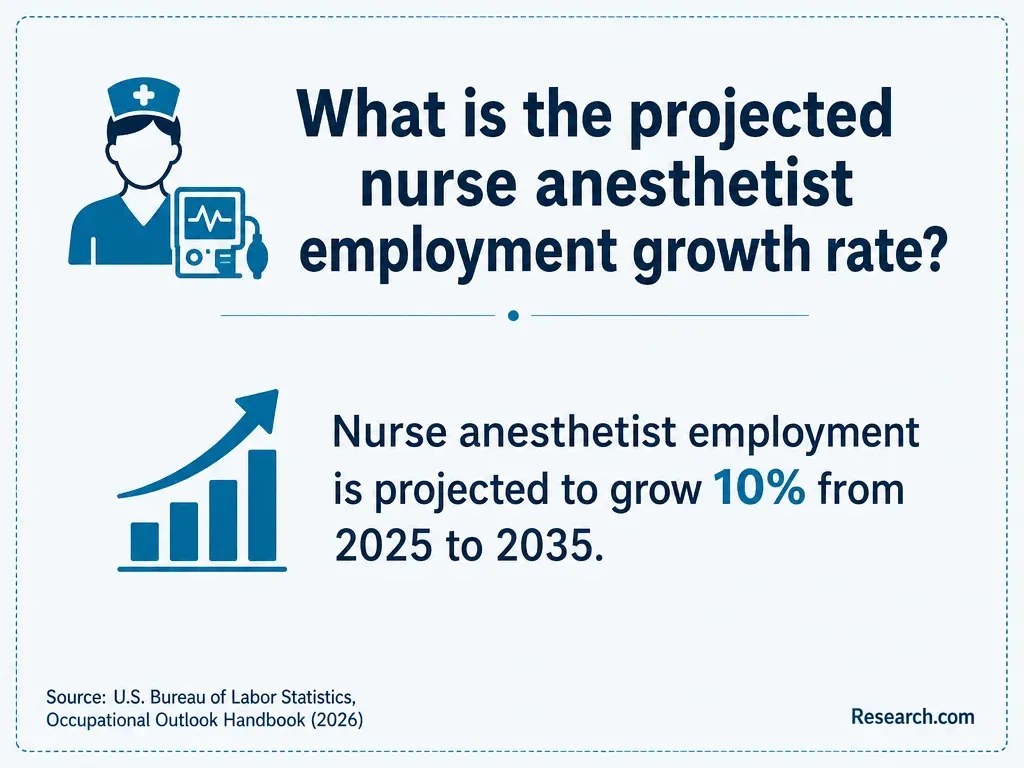
National nurse practitioner employment projections indicate growth, but they do not isolate Alabama AGPCNP vacancies, primary care openings, or demand in a specific county. Adult and older-adult primary care can be a relevant service need; whether it translates into an attractive local position depends on employers, site capacity, compensation, and their ability to support Alabama's practice requirements.
Test demand before enrolling: review openings that explicitly accept AGPCNP certification, note whether they require prior primary care experience, and speak with prospective employers about patient mix, onboarding, and collaborative practice support. A shortage narrative is not a substitute for an offer in the community where you intend to work. If you are considering additional doctoral study for competitiveness, compare the actual job requirements before spending time on comparing prerequisite policies in DNP programs; a DNP does not replace the AGPCNP preparation required for this population focus.
Other Things You Should Know About Nursing
Not automatically. Patient-location rules, the other state's APRN authorization requirements, and applicable telehealth and prescribing rules must be checked before providing care.
No. A school-issued certificate is separate from national certification. Ask your certifier how you must maintain each credential you intend to keep.
Possibly, if the program approves the site, preceptor, learning experiences, and required agreements. Your ordinary paid duties do not automatically count as supervised student clinical hours.
Yes, if the school permits it. The written plan lets you assess the actual courses, clinical requirements, sequence, and likely expense before committing.
- Health Workforce Shortage Areas | hrsa.gov https://data.hrsa.gov/topics/health-workforce/shortage-areas
- CRNP Initial Requirements - Alabama Board of Nursing https://www.abn.alabama.gov/licensing/advanced-practice/crnp/crnp-requirements/
- Addressing Provider Shortages in Rural & Underserved Alabama - Alabama Commission on the Evaluation of Services https://evidence.alabama.gov/publications/addressing_provider_shortages_in_rural__underserved-_alabama/
- Adult-Gerontology Primary Care Nurse Practitioner FAQs | UAMS College of Nursing https://nursing.uams.edu/programs/dnp/program-information/specialities/agpcnp/faqs-2/
- Nursing Field Experience: Find a Preceptor and Site | Academics at Walden University https://academicguides.waldenu.edu/nursing-field/find-preceptor
- Graduate Clinical Placements | Master of Science in Nursing Handbook 2025-2026 https://u.osu.edu/msnursinghandbook2025/clinical-requirements/specialty-clinical-locations-and-travel/
- Post-Graduate Certificate | College of Nursing https://www.southalabama.edu/colleges/con/postgradcert.html
- Adult-Gerontology Primary Care Nurse Practitioner Postgraduate Certificate | Purdue University Global Academic Catalog https://catalog.purdueglobal.edu/graduate/nursing/adult-geronotology-primary-care-nurse-practitioner-certificate/
- Nursing Post-Graduate Certificate | University of South Alabama https://bulletin.southalabama.edu/programs-az/nursing/nursing/nursing-post-graduate-certificate/
- Rule 850-X-8-.01 - Continuing Education https://admincode.legislature.state.al.us/administrative-code/850-X-8-.01