2027 Post-Master's AGACNP Certificates for Nurses in Hawaii: Gap Analysis and Acute Care Clinicals
Audited and Verified:
Our Editorial and Data Verification Process
Research.com uses government datasets, official education statistics and primary institutional information to support its career and degree guides. Our review process checks factual accuracy, occupational definitions, source dates and the requirements associated with the credentials discussed.
How This Article Was Fact-Checked
Our editorial team verifies salary estimates, employment projections, education requirements and program information against original data providers and official organizations. Salary figures are checked against the relevant occupational definitions and reporting periods. Information about licensure, accreditation and required in-person training is reviewed separately.
Fact-checked and verified on:

Co-Founder and Chief Data Scientist
A Hawaii nurse who already holds a master's degree may need new, documented preparation - not another full degree - to become an adult-gerontology acute care nurse practitioner (AGACNP). The difficult part is determining which prior courses and clinical hours count, then finding supervised acute care placements that an eligible program will approve. This guide explains how certificate programs conduct a gap analysis, what Hawaii nurses should verify about certification and APRN licensure, and how to compare programs before committing time or tuition.
Key Things You Should Know
- A formal program gap analysis - not an RN job title or an existing MSN - determines which AGACNP courses and supervised clinical experiences a nurse must complete.
- AGACNP graduates generally evaluate 2 national certification options, from ANCC and AACN Certification Corporation; a school-issued certificate alone is not national certification or Hawaii APRN licensure.
- Before enrolling, confirm 3 separate matters in writing: Hawaii enrollment eligibility, access to approved acute care clinical sites, and the program's intended certification pathway.
What is a post-master's AGACNP certificate in Hawaii?
A post-master's AGACNP certificate is graduate education for a nurse who already has a qualifying graduate nursing degree and wants preparation for the adult-gerontology acute care NP population focus. It is not a second MSN by default. Its purpose is to address the difference between the nurse's documented prior preparation and the courses and supervised practice needed for AGACNP eligibility.
"In Hawaii" may describe the nurse's residence and clinical location, not the school's campus. An out-of-state program can be an option only if it accepts Hawaii students, supports acceptable clinical arrangements, and prepares graduates for the intended certification and Hawaii licensing pathway.
The starting credential changes the likely gap. The examples below describe what a receiving program must evaluate, not credits or hours it will necessarily waive.
| Applicant background | Central gap-analysis question |
| Certified FNP | Which prior advanced courses are acceptable, and what new acute care content and supervised adult-gerontology experiences are required? |
| Experienced ICU or emergency RN with a non-APRN MSN | Which NP role, advanced assessment, prescribing, and population-focused requirements remain despite substantial bedside experience? |
| Certified NP in another population focus | Which existing graduate competencies overlap, and which patient populations and clinical experiences are missing? |
An FNP certificate is not an interchangeable shortcut: postgraduate FNP certificates organized by duration address a different population focus and practice goal.
What are Hawaii's AGACNP certification and APRN licensure requirements?
The sequence is education, eligibility for a national AGACNP certification examination, certification, and Hawaii APRN authorization. The Hawaii Board of Nursing - not the certificate program - decides whether an applicant meets state requirements. A nurse should confirm the board's applicable RN license, graduate education, national certification, application, and any separate prescriptive-authority requirements before enrolling and again before applying.
The two AGACNP certification organizations to investigate are the American Nurses Credentialing Center (ANCC), which awards AGACNP-BC, and AACN Certification Corporation, which awards ACNPC-AG. Their current eligibility rules and documentation requirements may differ. Ask the program which examination or examinations its graduates are prepared to pursue and whether it will provide the transcripts and clinical verification required.
Certification in a different NP population focus does not itself establish AGACNP eligibility. For example, time-efficient PMHNP certificate pathways prepare for psychiatric-mental health practice, not adult-gerontology acute care practice. Likewise, an AGACNP certificate, passing an examination, and receiving Hawaii APRN authorization are distinct milestones.
How do AGACNP programs prepare nurses for acute care clinicals?
AGACNP clinical education connects advanced assessment and treatment planning to supervised care of adults and older adults with complex acute, critical, or unstable conditions. Depending on program approval and available patients, experiences may occur in hospital-based services and other settings where the required acute care competencies can be demonstrated. The setting's name alone does not establish that its patients, preceptor, or experiences meet program requirements.
A strong clinical plan identifies who finds sites, who approves preceptors, how faculty oversee learning, how encounters and hours are recorded, and how performance is evaluated. Simulation can help students rehearse judgment and communication, but nurses should not assume it replaces required supervised direct patient care. Employment hours in an ICU or emergency department also do not automatically become graduate AGACNP clinical hours.
Placement responsibility deserves particular scrutiny for Hawaii residents. Questions about online FNP school responsibilities for preceptors illustrate a broader issue that applies here: "placement assistance" may mean referrals rather than a confirmed AGACNP site. Request the AGACNP program's written Hawaii placement policy and escalation plan if a site falls through.
Check institutional accreditation and the applicable nursing program accreditation separately. Verify the institution's status with its recognized institutional accreditor, then confirm whether the graduate nursing program and post-graduate certificate fall within the published scope of accreditation by a nursing accreditor such as the Commission on Collegiate Nursing Education (CCNE) or Accreditation Commission for Education in Nursing (ACEN). Do not infer that every certificate offered by an accredited university has the same accreditation status.
Accreditation is only one check. The school must also be able to enroll a Hawaii resident, arrange or approve Hawaii clinical education, and document that the specific AGACNP track meets its intended certification requirements. Ask the school and relevant authorities to confirm those points for your entry term.
Accreditation must be assessed for the specific pathway, not borrowed from another credential. For example, MSN bridge options for ADN-prepared RNs involve different entry credentials and academic sequences; their existence says nothing about a school's post-master's AGACNP certificate.
A certificate typically centers on adult-gerontology acute care assessment, diagnosis and management, pharmacologic decision-making, and supervised specialty practica. The receiving program also reviews whether prior graduate work adequately covers advanced pathophysiology, advanced pharmacology, and advanced health assessment. Course titles alone may not show the required content, academic level, or clinical application.
Request an individualized, written gap analysis based on transcripts, syllabi when requested, and verified clinical records. It should identify required courses, the sequence of practica, accepted prior work, and any conditions that could change the plan. A school may require a nurse to repeat or extend content if prior preparation does not meet its standards or the intended certification pathway.
Curricula should be compared by population focus, not merely by how quickly classes can be completed. Online MSN-PMHNP completion timelines, for instance, do not predict an AGACNP certificate's course sequence or acute care clinical requirements.
Applicants generally need an RN license and a graduate nursing credential acceptable to the program. Schools may also assess graduate grades, relevant nursing experience, advanced coursework, recommendations, and whether the applicant can meet clinical-site requirements. Some distinguish applicants who are already NPs from those whose MSN or DNP prepared them for a non-APRN role.
An experienced acute care RN may be a compelling applicant, but bedside expertise does not replace formal NP preparation. Conversely, an already-certified FNP may have transferable graduate coursework while still needing substantial acute care-specific education. The school - not an admissions advertisement - must determine each applicant's academic and clinical gap.
This is a postlicensure route. Less competitive accelerated nursing programs address entry into RN education for people pursuing initial nursing preparation; they are not an alternative route to AGACNP eligibility for someone without an RN license and qualifying graduate preparation.
There is no reliable Hawaii-wide completion time or price. A nurse's written gap analysis determines the required credits and practica, while course scheduling and clinical-site availability affect when those requirements can be finished. A shorter academic plan can still take longer if a required placement is unavailable in the intended term.
For a useful cost comparison, request a term-by-term estimate that separates tuition from mandatory fees, clinical compliance expenses, travel or lodging for campus visits, certification and licensing expenses, and any reduced earnings during practica. Compare the estimate against the hours you can realistically work, not tuition alone. Ask when tuition is charged, whether unused prior credits reduce charges, and what happens financially if a placement delays enrollment.
Affordable graduate study after a nursing bachelor's may help a nurse comparing other educational goals, but a BSN-to-MSN price should not be used as a quote for a post-master's AGACNP certificate. Obtain the certificate's own itemized charges.
Online coursework can reduce routine travel, but it does not make acute care practica remote or automatically flexible. A Hawaii nurse may still need scheduled live classes, simulation, campus visits, and supervised clinical shifts. Island location matters: a program's willingness to enroll Hawaii residents is not the same as having viable, approved preceptors and patient experiences where the student lives.
Before accepting an offer, obtain written answers about state enrollment authorization, Hawaii clinical-site restrictions, required visits, who secures placements, and whether a mainland placement would be necessary if local options fail. A nurse who cannot travel or reduce work hours should treat an unresolved placement plan as a major risk, even if the didactic courses are asynchronous.
Advertised speed in short-format family NP degree and certificate routes does not establish comparable AGACNP availability or scheduling. Evaluate the actual AGACNP clinical calendar rather than an online program's general marketing language.
After obtaining the necessary certification and Hawaii APRN authorization, an AGACNP may seek roles caring for adults and older adults with acute or complex conditions, subject to employer privileges and scope-of-practice rules. Potential employers include hospital-based and specialty services. A certificate does not guarantee an opening, a particular schedule, independent privileges, or immediate readiness for a high-acuity service without orientation.
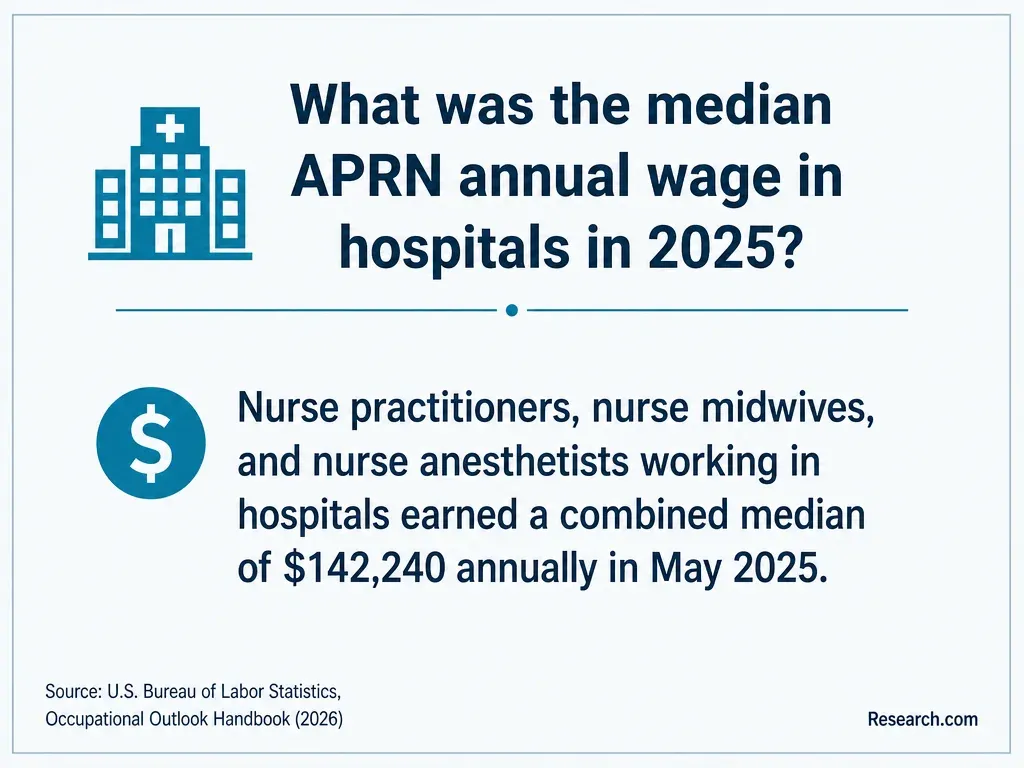
The U.S. Bureau of Labor Statistics reports nurse practitioner wages and employment projections for the broader occupation, not a separate Hawaii AGACNP certificate-graduate salary. Those figures can provide occupational context, but they cannot predict an individual offer. Compare actual Hawaii postings and offers by specialty, shift expectations, call, experience requirements, benefits, and location.
The target patient population should come before a tuition comparison. PMHNP programs compared by tuition address a different clinical role; choosing the cheaper specialty would not prepare a nurse for AGACNP work.
How can nurses choose a reputable Hawaii AGACNP certificate program?
Compare programs using the same personal starting point: your license, graduate transcript, certification status, documented clinical experience, island of residence, and intended AGACNP role. A published "minimum time to completion" is less useful than a plan built around your actual gap analysis and placement options.
Before paying a deposit, seek written confirmation of the following decision-critical details:
- Ask for an individualized course and supervised-clinical gap analysis, including what prior work was accepted and what remains.
- Verify institutional and nursing-program accreditation scope, Hawaii enrollment eligibility, and the intended national certification pathway.
- Identify who obtains and approves Hawaii acute care sites and preceptors, and what happens if a placement is unavailable.
- Request a realistic course-and-clinical schedule and an itemized total-cost estimate, including travel and possible delay costs.
If a nurse's goal is broader practice-focused doctoral education rather than a new AGACNP population focus, comparing DNP admission criteria may be relevant. A DNP without an appropriate AGACNP track and clinical preparation, however, is not a substitute for AGACNP eligibility.
Other Things You Should Know About Nursing
Yes, if the nurse separately meets each certification body's eligibility and maintenance requirements. Holding both credentials does not remove the need to practice within applicable state law and employer privileges.
No. Patient location can trigger another jurisdiction's licensing and practice rules. Verify the requirements of each state where patients are located before providing care.
Yes. Renewal is governed by the certifying organization, while Hawaii APRN license renewal is a separate state process. Check both sets of current deadlines and requirements.
No. The destination state determines its own APRN licensing requirements. Keep education, certification, clinical, and licensing records available for a new application.
- Addressing Barriers to APRN Practice: Policy and Regulatory Implications During COVID-19 | nih.gov https://pmc.ncbi.nlm.nih.gov/articles/PMC10074063/
- Understanding College Costs | studentaid.gov https://studentaid.gov/resources/prepare-for-college/students/choosing-schools/consider-costs
- Graduate Clinical Placements | Master of Science in Nursing Handbook 2025-2026 https://u.osu.edu/msnursinghandbook2025/clinical-requirements/specialty-clinical-locations-and-travel/
- Adult Gerontology Acute Care Nurse Practitioner (AGACNP) (Post-Master's Certificate) | Bradley University Catalog https://catalog.bradley.edu/graduate/programs/adult-gerontology-acute-care-nurse-practitioner-agacnp-postmasters-certificate-online/
- Post-Master's Adult-Gerontology Acute Care NP Certificate | Walden University https://www.waldenu.edu/online-certificates-programs/nursing-post-masters/adult-gerontology-acute-care-nurse-practitioner
- AGACNP Post Master's Certificate Online | King University https://www.king.edu/programs/online-degree-programs/post-masters-agacnp-certificate/
- Adult-Gerontology Acute Care Nurse Practitioner Post-Master's Certificate | brenau.edu https://www.brenau.edu/programs/adult-gerontology-acute-care-nurse-practitioner-post-masters-certificate/
- Adult Gerontology Acute Care Nurse Practitioner | University of New Hampshire https://www.unh.edu/program/certificate/adult-gerontology-acute-care-nurse-practitioner
- Adult Gerontology-Acute Care Nurse Practitioner | Rivier Academics https://www.rivier.edu/academics/all-programs/adult-gerontology-acute-care-nurse-practitioner-post-masters-certificate-online/
- Adult Gerontology Acute Care Nurse Practitioner (AG-ACNP) | Nursing License Map https://nursinglicensemap.com/advanced-practice-nursing/nurse-practitioner/adult-gerontology-acute-care-np/