2027 PMHNP Preparation for a Nurse Educator with an MSN: Prior Coursework, Gap Analysis, and Clinical Training
Audited and Verified:
Our Editorial and Data Verification Process
Research.com uses government datasets, official education statistics and primary institutional information to support its career and degree guides. Our review process checks factual accuracy, occupational definitions, source dates and the requirements associated with the credentials discussed.
How This Article Was Fact-Checked
Our editorial team verifies salary estimates, employment projections, education requirements and program information against original data providers and official organizations. Salary figures are checked against the relevant occupational definitions and reporting periods. Information about licensure, accreditation and required in-person training is reviewed separately.
Fact-checked and verified on:

Co-Founder and Chief Data Scientist
An MSN in nursing education gives you graduate-level expertise, but it does not establish eligibility to practice as a psychiatric-mental health nurse practitioner (PMHNP). The consequential decision is which parts of your MSN a PMHNP program will accept - and which advanced clinical courses and supervised experiences you must complete. This guide explains how to request a documented gap analysis, evaluate post-master's programs, plan for clinical placements and costs, and verify the steps from certificate completion to certification and state APRN authorization.
Key Things You Should Know
- An educator-focused MSN is not PMHNP preparation; a post-master's PMHNP certificate is often the most direct route, subject to a program's formal review.
- Prior graduate courses may reduce duplication, but the receiving program must assess course equivalence, advanced clinical content, and documented supervised hours.
- ANCC's PMHNP certification eligibility specifies at least 500 faculty-supervised clinical hours in the PMHNP role and population; programs or other applicable standards may require more. Before paying a deposit, obtain a written plan showing remaining courses, approved clinical placements, total estimated cost, and whether the program meets certification and APRN requirements in your intended state of practice.
What Is the PMHNP Pathway for a Nurse Educator With an MSN?
For an RN whose MSN concentrated on teaching rather than advanced practice, the usual pathway is admission to a post-master's PMHNP certificate that prepares graduates for psychiatric-mental health NP certification. Some nurses instead choose a PMHNP-focused DNP or another graduate pathway if they want the additional degree or cannot find a certificate that meets their needs. The appropriate route depends on your transcript, clinical background, state, and goal - not the letters "MSN" alone.
Teaching psychiatric nursing, supervising students, or working as a psychiatric RN may strengthen an application. None, by itself, replaces PMHNP education or authorizes diagnosis, prescribing, or other NP functions. If your earlier route was an associate degree followed by graduate study, bridge programs from an ADN to an MSN explain a different academic transition; your present question is whether the completed graduate work meets a new APRN population focus.
What Prior MSN Coursework Can Transfer Into PMHNP Preparation?
Courses in research, evidence-based practice, policy, or education may satisfy general graduate requirements. Advanced pathophysiology, advanced pharmacology, and advanced health assessment warrant closer review: a course with a familiar title may not cover the depth, patient population, assessment skills, or supervised application required by the PMHNP program. An educator-track pharmacology survey, for example, should not be presumed equivalent to advanced pharmacology for prescribers.
The receiving school decides both whether it accepts a course and whether that course applies to the PMHNP certificate. Ask about grade and course-age rules, credit limits, and required courses that cannot be waived. If your educational history also includes RN-to-BSN programs without traditional clinical rotations, keep those undergraduate credits distinct from graduate APRN coursework and supervised PMHNP clinical hours.
How Can You Identify PMHNP Coursework and Clinical Gaps?
Request a written, individualized gap analysis from each prospective PMHNP program. A useful analysis identifies the accepted courses, unmet courses and competencies, required supervised clinical experiences, and the resulting sequence. An admissions estimate is not a substitute for the determination made by the program officials who approve academic and clinical equivalencies.
Gather the following records before requesting that review so the school can evaluate what you actually completed:
- Send official transcripts and syllabi for relevant graduate courses, including objectives, content, credits, and dates.
- Provide any verifiable records of faculty-supervised advanced-practice clinical hours, patient populations, settings, and evaluations; identify employment hours separately.
- Ask the program to map accepted work against its PMHNP courses, clinical competencies, and certification preparation, then provide the remaining plan in writing.
- Confirm whether proposed sites and preceptors can deliver the missing patient encounters under faculty oversight.
A DNP in education or leadership does not remove a PMHNP gap merely because it includes practice hours. Likewise, online DNP leadership pathways for graduate nurses serve a different objective when they do not provide the psychiatric NP clinical preparation needed for this role.
Programs commonly request an accredited nursing master's degree, an active and acceptable RN license, graduate transcripts, a résumé, references, and a statement of goals. Some also specify GPA thresholds, RN experience, psychiatric experience, an interview, or prerequisite advanced clinical courses. Requirements vary: admission to a university does not necessarily mean admission to its PMHNP track or approval for clinical placement.
Ask separately about the states in which you may enroll and complete clinical training, as well as background checks, immunizations, and site onboarding. Prelicensure entrance-test advice - such as exploring nursing admission without these entrance exams - does not establish the admissions rules for a post-master's PMHNP certificate.
Check institutional accreditation, the nursing program's applicable accreditation status and scope, and whether the specific PMHNP post-graduate pathway meets the educational requirements of the certification organization and your state nursing regulator. CCNE and ACEN accredit nursing education, but a school's general accreditation statement is not proof that every specialty pathway or campus has the same status.
Use the accreditor's and school's records to confirm the exact credential and location. Then ask the program, the PMHNP certifier, and your intended state board to clarify any eligibility uncertainty before enrollment. State authorization to enroll you, approval of your clinical location, certification eligibility, and eventual APRN authorization are separate questions. Advice about accessible admission routes to accelerated nursing study concerns initial nursing preparation, not verification of a graduate PMHNP pathway.
Online delivery may reduce travel to class, but it does not make supervised clinical care virtual or self-paced. Both formats can require scheduled psychiatric placements, live instruction, skills assessments, simulation, and campus visits. Compare the obligations below using the program's schedule for your intended entry term.
| Decision factor | Online or hybrid program | Campus-based program |
| Course attendance | May combine asynchronous work with required live sessions | Typically involves scheduled in-person classes |
| Clinical training | Requires approved in-person sites and preceptors, potentially near the student | Requires approved sites and preceptors, often within the school's region |
| Travel | May include campus intensives and travel to clinical sites | Regular campus travel plus travel to clinical sites |
| Placement support | Varies; geographic restrictions may limit options | Varies; local relationships do not guarantee a placement |
Ask who identifies sites, who approves preceptors, what happens if a placement falls through, and whether clinical shifts can coexist with your teaching schedule. "Online coursework" has different implications in LPN-to-RN programs with online coursework; it should not be used to infer the clinical demands of graduate PMHNP study.
Preparation typically combines advanced assessment, pathophysiology, and pharmacology with psychiatric diagnosis, psychopharmacology, psychotherapy approaches, crisis and safety assessment, and care across the lifespan. Supervised experiences should let students assess and manage patients in the PMHNP role with faculty oversight and approved preceptors. Programs determine how to sequence experiences and assess competence; hours alone do not demonstrate readiness.
Confirm that the clinical plan covers the populations and care settings the program requires, how patient encounters are documented, and how faculty evaluate your decisions and communication. Psychiatric RN employment and nurse-educator teaching can inform your practice, but they are not automatically accepted as faculty-supervised PMHNP student hours. Accelerated entry-level routes, including an accelerated licensed practical nursing program guide, address a different license and cannot substitute for this APRN clinical training.
There is no dependable one-size-fits-all duration or price. Your written gap analysis determines how many courses remain; course sequencing, clinical-site availability, and part-time enrollment determine how quickly you can finish. Compare published prices using the remaining credits or terms you personally must complete, rather than an advertised certificate minimum that assumes prior APRN coursework you do not have.
Build a total-cost estimate that includes tuition and mandatory fees, books and technology, travel or lodging for required visits, placement-related expenses, certification and state application fees, and income lost if clinical shifts displace paid teaching. Compare lower-tuition psychiatric nursing graduate programs only after checking each school's treatment of your MSN credits and its placement responsibilities. A lower per-credit charge can lose its advantage if more credits, travel, or unpaid time are required.
Completing the certificate is an educational milestone, not an APRN license. Graduates generally must establish eligibility for the American Nurses Credentialing Center's Psychiatric-Mental Health Nurse Practitioner (Across the Lifespan) certification examination, pass the examination, and apply for APRN authorization under the rules of the state or states where they will practice. Verify the current ANCC eligibility guide and your board's requirements; applications, background checks, prescribing authority, and other conditions vary by jurisdiction.
Keep your RN license, official program records, certification documents, and state approval status organized. Do not begin practicing as a PMHNP solely because coursework is complete or an exam application has been submitted. Guidance on one-year FNP admission requirements concerns a different NP population focus and cannot establish PMHNP certification eligibility.
What Careers, Salaries, and Job Outlook Can PMHNPs Expect?
PMHNPs may work in outpatient psychiatry, integrated primary care, community mental health, hospitals, or other approved settings. Their work can include psychiatric assessment, diagnosis, treatment planning, medication management, and psychotherapy within their education, competence, employer privileges, and state scope of practice. An experienced nurse educator may also combine clinical practice with teaching, but employer onboarding and specialty support still matter when entering a new provider role.
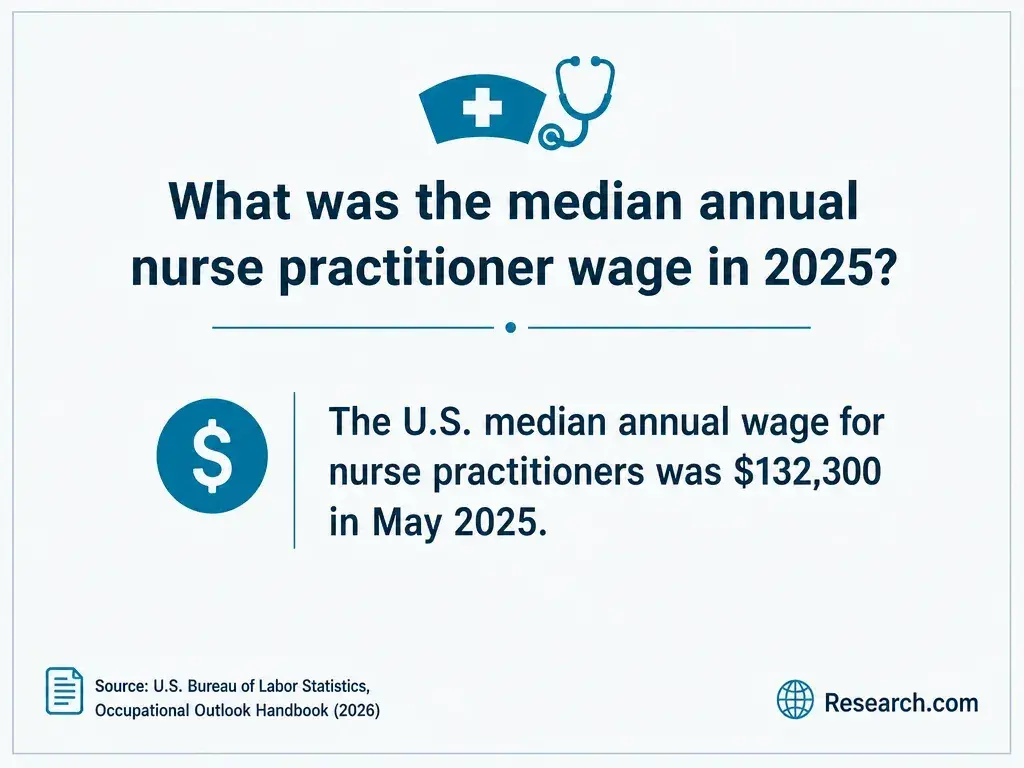
The U.S. Bureau of Labor Statistics reports wages and projected growth for the broader nurse practitioner occupation, not a separate national PMHNP salary or job-growth rate. Use its most recent nurse practitioner figures as labor-market context, not a forecast of your own offer. Location, setting, experience, schedule, and the time needed to build a caseload can substantially change the financial result. When weighing a clinical career change against continued teaching, compare actual local offers and your full education costs; broad lists of budget-conscious NP education pathways cannot resolve the fit of a specific PMHNP certificate.
Other Things You Should Know About Nursing
Often, yes, but confirm the weekly clinical schedule, live classes, and any campus visits before committing to a teaching contract. Clinical shifts may occur during standard business hours even when coursework is online.
It may demonstrate relevant experience, but an RN specialty certification is not the PMHNP credential and does not ordinarily replace required graduate NP education. Ask the program how it considers the certification in admissions or its gap analysis.
Possibly, if the program approves the site, patient experiences, supervision, and preceptor - and can separate student learning from your paid RN or educator duties. Obtain approval before counting any hours.
No. Each state where you intend to practice applies its own APRN authorization rules. Confirm educational and clinical eligibility before enrollment and state requirements again when applying to practice.
- Pages - Advanced Practice Nurse Certification https://www.njconsumeraffairs.gov/nur/Pages/APN-Certification.aspx
- APRN Practice FAQ - Texas Board of Nursing https://www.bon.texas.gov/faq_practice_aprn.asp.html
- NYS Nursing: License Requirements - Office of the Professions https://www.op.nysed.gov/professions/nurse-practitioners/certification-requirements
- Post-Graduate PMHNP Certificate Program | Berkley School of Nursing https://nursing.georgetown.edu/non-degree-certificates/pmhnp-post-graduate-certificate-program/
- Post-Master's Psychiatric Mental Health Nurse Practitioner CERTIFICATE - Johns Hopkins School of Nursing https://nursing.jhu.edu/programs/post-degree/psychiatric/
- EdAssist | Advancing your nursing career with an MSN | Bright Horizons https://www.brighthorizons.com/resources/blog/edassist/advancing-your-nursing-career-with-an-msn-know-your-options
- PMHNP Programs Guide: MSN, DNP & Post-Master's Certificates | Confetto https://www.confetto.ai/articles/psych-np-certificate-programs
- Online Post-Master's PMHNP Graduate Certificate Programs - Psychiatric-Mental Health Nurse Practitioner https://www.graduatecertificates.com/nursing/pmhnp-psychiatric-mental-health-nurse-practitioner
- AACN Essentials FAQs | aacnnursing.org https://www.aacnnursing.org/essentials/tool-kit/faqs
- Master's in Nursing (MSN) Program Guide: 2026-27 Edition | Nursing License Map https://nursinglicensemap.com/nursing-degrees/masters-in-nursing/