2027 Pain Screening vs a Comprehensive Pain Assessment: Concepts for Nursing Students
Audited and Verified:
Our Editorial and Data Verification Process
Research.com uses government datasets, official education statistics and primary institutional information to support its career and degree guides. Our review process checks factual accuracy, occupational definitions, source dates and the requirements associated with the credentials discussed.
How This Article Was Fact-Checked
Our editorial team verifies salary estimates, employment projections, education requirements and program information against original data providers and official organizations. Salary figures are checked against the relevant occupational definitions and reporting periods. Information about licensure, accreditation and required in-person training is reviewed separately.
Fact-checked and verified on:

Co-Founder and Chief Data Scientist
A patient's answer to "Are you in pain?" can start a nursing assessment, but it cannot finish one. Nursing students need to recognize when a brief screen is enough to establish a next step and when the patient needs a fuller evaluation of symptoms, function, safety, and possible causes. This distinction matters in simulation, supervised clinical care, and documentation.
This guide explains the workflow, compares common tools, and shows how to evaluate whether a nursing program gives you enough practice to use them responsibly.
Key Things You Should Know
- Screening identifies a possible problem; a comprehensive assessment characterizes pain, its effects, and relevant risks so the care team can make informed decisions.
- A 0-10 rating is one data point, not a diagnosis. Self-report is preferred when possible; tool choice, patient communication, and reassessment matter as much as the number.
- Students learn the distinction through supervised practice. Classroom or simulation performance does not by itself establish independent clinical competence or an RN license.
What Is the Difference Between Pain Screening and Comprehensive Pain Assessment?
Pain screening is a brief check for whether pain may be present or needs follow-up. Comprehensive pain assessment gathers enough detail to understand the patient's experience, its effect on daily function, associated findings, and factors that could change the care plan. A positive screen prompts further assessment; it does not establish the cause or automatically dictate treatment.
The comparison below shows what each step is meant to accomplish. The exact workflow depends on the setting, the patient, and institutional policy.
| Feature | Initial screening | Comprehensive assessment |
| Main question | Is pain present or otherwise suspected? | What is happening, how does it affect the patient, and what needs attention? |
| Typical information | Patient report, brief rating if appropriate, or a cue that further evaluation is needed | Symptom history, function, relevant examination findings, risks, prior responses, and patient goals |
| Outcome | Determines whether to investigate or escalate | Supports clinical judgment, communication, planning, and a reassessment baseline |
Students in RN-to-BSN pathways without standard hospital rotations may study this distinction in coursework, but a postlicensure format should not be mistaken for initial hands-on assessment preparation.
How Do Nurses Perform an Initial Pain Screening?
Begin with the patient's preferred language and a question they can understand, such as whether they have pain or discomfort now. If they can self-report, ask for a description or use an appropriate rating scale. If they cannot, look for changes in behavior or condition and seek information from caregivers when useful. A caregiver's observation informs the screen but does not replace the patient's report when the patient can communicate.
A screen is not a reason to overlook an urgent concern. New severe pain, pain with a concerning change in condition, or a sudden change from the patient's usual pattern calls for timely assessment and escalation under the clinical site's protocol. Students should report concerning findings to their supervising nurse rather than independently deciding that a rating alone explains them.
Students exploring LPN education options with distance coursework should check how the program teaches and evaluates this in person: online lessons cannot replace required supervised assessment practice.
What Does a Comprehensive Nursing Pain Assessment Include?
A fuller assessment connects the symptom to the patient's condition and priorities. The questions below help students organize data without treating a mnemonic or checklist as a substitute for clinical judgment.
- Symptom pattern: Onset, location, duration, quality, intensity, timing, radiation, and what worsens or relieves the pain.
- Impact and goals: Effects on movement, sleep, breathing, mood, and activities; what improvement would matter to the patient.
- Relevant context: Recent injury or procedure, known conditions, prior pain, current and previous treatments, and the patient's response.
- Safety and examination: Relevant vital signs and findings, changes in function or alertness, and treatment risks that require a licensed clinician's judgment.
For example, two patients who both report "7 out of 10" may need different follow-up if one describes familiar pain while the other reports a new symptom with a change in condition. Students comparing practical nurse to registered nurse study options should ask how supervised assessment and clinical judgment develop across the transition, rather than assuming prior patient-care experience satisfies every RN-program competency.
Learn what each tool measures, who can use it, and its limits. Programs and clinical sites may select different instruments; no single scale fits every patient.
This comparison separates self-report tools from observational approaches, a distinction that prevents students from treating all scores as interchangeable.
| Tool or approach | Typical use | Important limit |
| Numeric Rating Scale (0-10) | Patient can understand and communicate a numerical rating | The number does not identify a cause or capture function by itself |
| Faces Pain Scale-Revised or another validated faces scale | Patient can select a face that represents pain intensity | Use the chosen scale as intended; do not assume a face measures mood |
| FLACC | Behavioral observations for patients who cannot reliably self-report, commonly in pediatric care | Behavior can have causes other than pain and needs clinical context |
| PAINAD | Observational assessment in advanced dementia when reliable self-report is not possible | A score supports, but cannot replace, broader assessment |
A symptom framework such as PQRST helps structure follow-up questions; it is not an intensity scale. Students considering accelerated BSN admission options for career changers should ask how quickly the curriculum moves from learning these tools to applying them in supervised patient encounters.
Use self-report whenever the patient can provide it. A child may be able to use an age- and development-appropriate faces or numeric scale; an older adult should not be assumed unable to rate pain because of age. Check hearing, vision, language, cognition, and the patient's understanding before changing methods.
When reliable self-report is not possible, observe behavior and changes from the patient's usual presentation, use an appropriate validated tool, and ask family or caregivers about familiar patterns when available. Facial expression, movement, vocalization, and consolability may offer clues, but an absence of visible distress does not prove an absence of pain. Also consider other explanations for a behavioral change and report uncertainty.
In mental health settings, symptoms and communication needs require the same individualized approach. An accelerated mental health NP certificate study is a later specialty pathway for eligible nurses, not a substitute for learning foundational pain assessment with patients who communicate differently.
Document the patient's words where useful, the tool and score if one was used, location and characteristics, effect on function, relevant findings, actions taken, and whom you notified. Distinguish the patient's report from your observations. Record a refusal or inability to use a scale without inventing a score, and follow site rules for charting as a student.
Reassessment asks whether the patient's pain, function, and condition changed after an intervention or over time. Its timing depends on the intervention, patient condition, and institutional policy - not a universal interval. Compare findings with the earlier baseline, assess for adverse effects when relevant, document the response, and escalate inadequate relief or a concerning change. A lower number alone does not establish that treatment was safe or met the patient's goal.
For nurses later considering online practice doctorates for MSN-prepared nurses, pain-documentation improvement may be a project topic, but a project's requirements and any practice-hour obligations must be verified with the program; reviewing charts is not the same as demonstrating bedside competence.
Students usually encounter pain assessment in health assessment, fundamentals, pharmacology, and clinical judgment learning, then apply it in simulation and supervised clinical care. A useful learning sequence moves from selecting a suitable tool to interviewing the patient, recognizing a change that needs escalation, documenting accurately, and reassessing the response. A correct answer on an exam is not the same as doing all of this safely with a patient.
Ask how faculty observe performance: Do students receive feedback on patient communication, tool selection, handoff, and documentation? Do scenarios include patients who cannot easily self-report? During placements, follow the supervising nurse's direction and the site's protocols; students should not interpret course completion as authorization for independent practice.
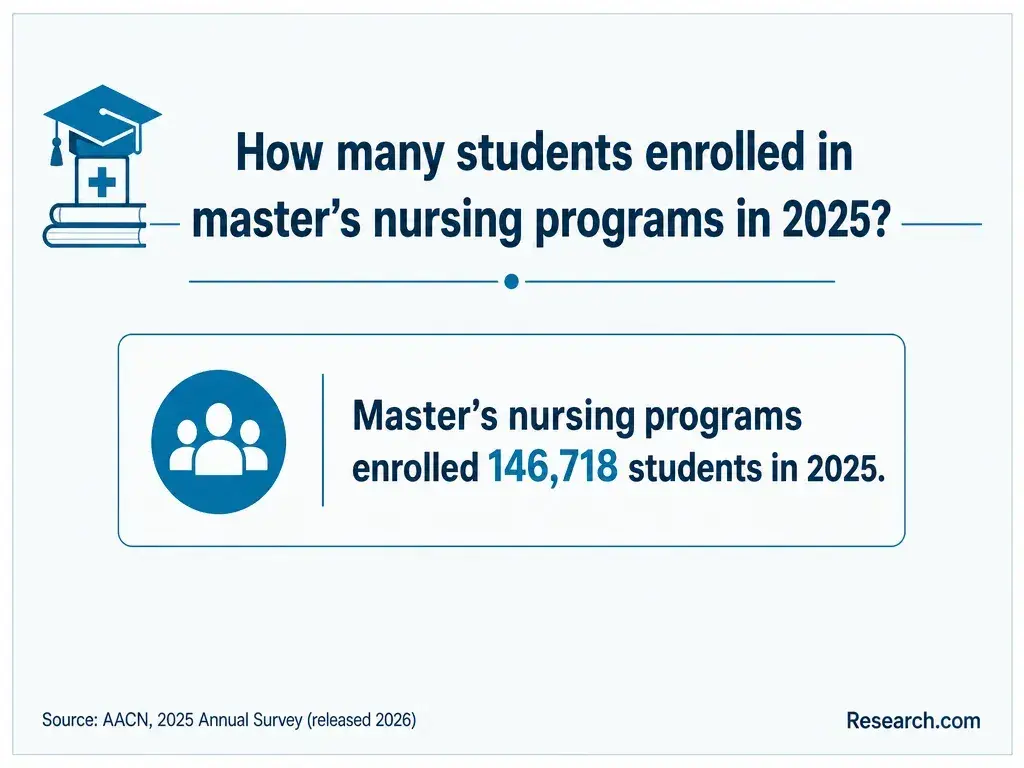
Later, an RN comparing lower-cost master's nursing pathways after a BSN should distinguish advanced coursework from the supervised foundational skills expected in initial nursing education.
Pain assessment is a clinical competency, not a standalone nursing license. For a US prelicensure program, check the applicable state board of nursing's approval or recognition requirements and confirm that the specific program is intended to prepare graduates for the relevant NCLEX and initial license application. The board makes licensing decisions; graduation alone does not grant a license.
Also verify the institution's accreditation and the nursing program's accreditation status and scope, where applicable. These are distinct from state board approval. Ask whether clinical placements are available in your location and whether the program's graduates meet eligibility requirements in the state where you intend to apply.
These checks still matter when comparing shorter doctoral nursing study options, although a postlicensure doctorate should not be confused with a program preparing students for their first RN license.
Choose a program that can show how students progress from a brief screen to a defensible assessment under supervision. A polished simulation lab is useful, but ask how faculty evaluate performance in both simulation and approved clinical settings.
Use these questions when comparing programs; request answers for the specific campus, format, and entry term you are considering.
- Where and with which patient populations will I practice assessment, and who arranges placements?
- How are communication, tool choice, escalation, documentation, and reassessment evaluated?
- What happens if a student struggles with clinical judgment or needs additional supervised practice?
- Which labs, simulations, clinical shifts, and campus visits require in-person attendance?
If access is a concern, admission-focused nursing school comparisons can help identify programs to investigate. Do not choose on admission odds alone: confirm clinical access, approval, accreditation, and the actual conditions under which you will learn patient assessment.
What Nursing Careers, Salaries, and Job Outlook Follow Pain Assessment Training?
Pain assessment is a foundational skill used across RN roles, including bedside, ambulatory, home health, and community care. It does not create a separate licensed occupation or guarantee a specialty job. New graduates still need an RN license where required, employer orientation, and setting-specific competency development. An RN moving toward advanced practice needs the appropriate graduate preparation, certification, and state authorization for that role.
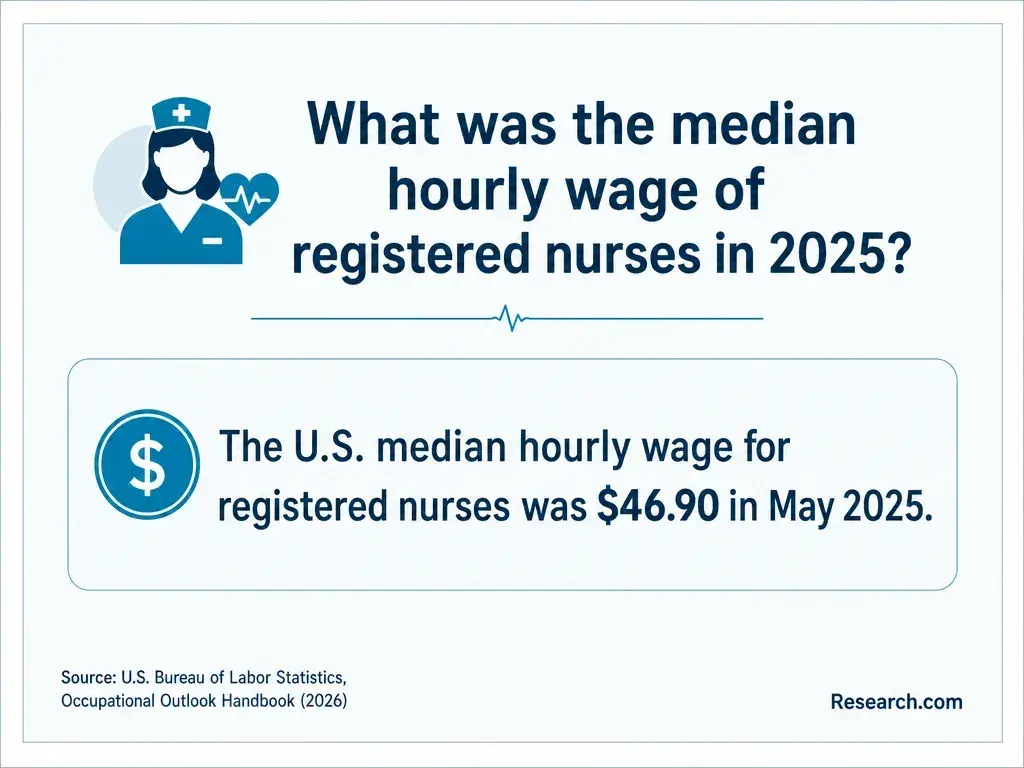
For salary comparisons, use US Bureau of Labor Statistics figures for the registered nurse occupation and its published employment projections, then check local offers and schedules. An occupation-wide median is not the starting salary of a new graduate or the earnings attributable to pain-assessment training; specialty, location, experience, and hours worked can change an offer.
Because wage and projection releases change, verify the current BLS reference year and projection period rather than relying on a fixed figure when making an enrollment budget.
If family practice is a later goal, preceptor assistance in online family NP programs may be worth comparing. Such assistance does not replace verifying placements, population-focused preparation, certification eligibility, or state APRN requirements.
Other Things You Should Know About Nursing
No. That phrase emphasized attention to pain, but pain is a subjective experience, not a physiological vital sign like temperature. Follow current clinical policy without treating a score as an automatic treatment instruction.
Do not assign one for them. Ask whether they can describe the pain or its effect in another way, document the response accurately, and tell the supervising nurse what you could and could not assess.
No. A meaningful goal may concern sleep, movement, or another activity. The patient and licensed care team should consider what is realistic and safe in that clinical context.
Students must follow their program's supervision rules and the clinical site's policies. Being able to ask about pain does not authorize independent interpretation, treatment decisions, or practice beyond the student role.
- Assessment | Pain Management Network https://aci.health.nsw.gov.au/chronic-pain/health-professionals/assessment
- Recognising and Responding to Acute Deterioration Standard | safetyandquality.gov.au https://www.safetyandquality.gov.au/national-standards/nsqhs-standards/recognising-and-responding-acute-deterioration-standard
- Pain Assessment in the Patient Unable to Self-Report | PubMed https://pubmed.ncbi.nlm.nih.gov/31610992/
- Pain Assessment - StatPearls - NCBI Bookshelf - NIH https://www.ncbi.nlm.nih.gov/books/NBK556098/
- Indicators of clinical deterioration in adult general ward... - PMC https://pmc.ncbi.nlm.nih.gov/articles/PMC11600595/
- Pain Assessment Resources for Professionals | National Institute of Neurological Disorders and Stroke https://www.ninds.nih.gov/current-research/trans-agency-activities/pain-consortium/pain-assessment-resources-professionals
- CDC Clinical Practice Guideline for Prescribing Opioids for Pain https://www.cdc.gov/mmwr/volumes/71/rr/rr7103a1.htm
- Assessment of Chronic Pain: Domains, Methods, and Mechanisms - ScienceDirect https://www.sciencedirect.com/science/article/pii/S1526590015008652
- Pain Assessment and Pain Scores | ucsf.edu https://pain.ucsf.edu/understanding-pain-pain-basics/pain-assessment-and-pain-scores
- Pain: Prevention, assessment and management, Fourth edition | rnao.ca https://rnao.ca/bpg/guidelines/assessment-and-management-pain