2027 Assistant Nurse Manager Interviews: Presenting Staffing, Improvement, and Team Leadership Examples
Audited and Verified:
Our Editorial and Data Verification Process
Research.com uses government datasets, official education statistics and primary institutional information to support its career and degree guides. Our review process checks factual accuracy, occupational definitions, source dates and the requirements associated with the credentials discussed.
How This Article Was Fact-Checked
Our editorial team verifies salary estimates, employment projections, education requirements and program information against original data providers and official organizations. Salary figures are checked against the relevant occupational definitions and reporting periods. Information about licensure, accreditation and required in-person training is reviewed separately.
Fact-checked and verified on:

Co-Founder and Chief Data Scientist
An assistant nurse manager interview tests more than whether you can run a shift. Hiring leaders want evidence that you can make staffing decisions, improve care processes, and support nurses while remaining accountable for safety. This guide is for experienced RNs preparing to move from direct care or charge nursing into formal supervision.
You'll learn how to select examples, explain your individual contribution without overstating results, and assess whether the role - or additional education - is the right next step.
Key Things You Should Know
- Prepare three distinct examples: a staffing decision, a measurable improvement effort, and a team leadership situation.
- For each example, explain the situation, your authority, the action you took, and the outcome; use a baseline and follow-up measure when one exists.
- Check the posting before pursuing another degree: an active RN license and relevant unit leadership experience may matter more than an MSN for an assistant manager opening.
What does an assistant nurse manager do in a healthcare organization?
An assistant nurse manager helps a nurse manager oversee a unit or service line. Depending on the employer, the role may include shift staffing, assignments, onboarding, coaching, safety follow-up, schedule administration, and coordination with physicians and other departments. Some positions retain direct patient-care duties; others are primarily administrative. The manager generally retains broader responsibility for budgets, hiring, and unit performance, although delegated authority varies.
Read the posting for its actual reporting line, shift coverage, and decision rights. A role with frequent after-hours staffing calls differs substantially from one focused on weekday projects. It also differs from an advanced practice role: FNP completion timelines and entry requirements concern preparation for a separate clinical career, not qualification for unit management.
What education and RN license requirements apply to assistant nurse managers?
Assistant nurse manager postings commonly seek an active RN license in the state of practice, relevant clinical experience, and evidence of charge, preceptor, or supervisory work. A BSN may be required or preferred; some employers accept another nursing degree with substantial experience. Check the specific posting rather than assuming that an MSN, a set number of years, or a certification is universally required.
Practical nursing experience can strengthen an applicant's examples, but an LPN/LVN credential does not replace an RN license when the position requires one. Nurses planning that transition can examine practical nurse to registered nurse study options, then verify a program's actual duration, clinical requirements, and eligibility with the school and state board. RN licensure and employer onboarding remain separate steps.
How should you answer assistant nurse manager interview questions?
Build a small evidence bank before the interview. Choose situations in which you personally assessed a problem, worked within your authority, communicated a decision, and followed up. For each, use a concise situation-action-result answer. State who made the final decision when it was not yours, and distinguish a result you measured from a change you merely observed.
For example: "During an unexpected absence on a high-acuity shift, I reviewed assignments and available competencies, escalated the coverage gap to the supervisor, and helped reassign patients under unit policy. We documented the coverage decision and reviewed handoff concerns at the end of the shift." Add a verified outcome if you have one; do not invent an avoided incident.
If your nursing career began through a practical-nurse route, focus the interview on your later RN practice and leadership evidence. Comparing accelerated LPN training schedules may help someone entering nursing, but training speed is not a substitute for examples from the role you now seek.
A strong staffing example shows how you balanced patient needs with staff competencies, workload, breaks, and escalation rules - not simply how you filled an open slot. Name the constraints you could assess, the options you considered, and who approved a change. Avoid implying that you independently changed staffing levels or delegated outside policy.
Prepare one example using this sequence so the interviewer can follow your judgment:
- Set the scene: describe the shift, coverage gap, and patient-care pressures without identifying patients.
- Explain your assessment: include available staff, relevant competencies, assignments, and the escalation threshold.
- Describe the action: identify your decision, the supervisor's decision, and how you communicated changes.
- Report the follow-up: use documented measures, such as filled shifts or overtime hours, if available; otherwise describe what you monitored without claiming a measured improvement.
If you pursued a BSN while working, that experience may also illustrate scheduling discipline, but it is not a staffing outcome. Nurses considering that step can explore exploring RN-to-BSN nontraditional clinical formats while confirming each program's actual practice, project, and attendance requirements.
Describe improvement as a defined problem, an intervention, and an evaluation - not as a claim that one person "fixed" safety. A useful example might involve revising a handoff checklist, teaching a process, and checking whether documentation or compliance changed. Explain the measure's denominator and time period if you cite a rate. A short-term increase may not establish that the change caused it.
Clarify whether you proposed the change, collected approved data, trained colleagues, or led implementation. Protect patient information and confidential employer data; use a de-identified summary only when your organization permits it. If the work involved formal research rather than local quality improvement, follow the institution's applicable review requirements.
Do not count an operational project as supervised advanced practice clinical training. For nurses weighing a different career goal, a guide to family NP clinical placement support addresses a distinct educational requirement; it does not make a unit safety project an NP clinical placement.
Choose an example that shows both accountability and respect. Describe the behavior or workflow issue without labeling a colleague as difficult, explain how you heard each person's perspective, and show how you applied policy or involved the appropriate manager. End with the follow-up you actually performed, such as checking handoffs or arranging coaching.
Interviewers may ask how you would respond to a strong clinician who repeatedly misses a documentation expectation. A credible answer separates immediate patient-safety concerns from routine performance coaching, documents facts rather than assumptions, and avoids promising discipline beyond your authority. Precepting and committee work can supply evidence of influence, but neither automatically proves supervisory experience.
Match professional development to the job you want. Time-efficient PMHNP certificate pathways address a specialized advanced practice transition, whereas this interview calls for examples of managing people and unit operations.
Certification can help when it matches your responsibilities and you meet the awarding organization's current eligibility rules. The American Nurses Credentialing Center's Nurse Executive (NE-BC) and the American Organization for Nursing Leadership's Certified Nurse Manager and Leader (CNML) are examples to investigate. Their degree, experience, examination, and renewal requirements differ; neither credential grants an RN license or supervisory authority.
Before paying for preparation, compare the job posting with the credential's official eligibility guide and ask whether the employer values or reimburses it. If you do not yet qualify, a documented charge-nurse assignment, preceptor work, or employer leadership training may be a more direct next step.
Keep leadership credentials distinct from clinical specialty preparation. Online FNP certificate routes after an MSN serve nurses pursuing an advanced practice population focus; they are not substitutes for nurse management experience.
For an RN with strong unit experience, the best educational step depends on the employer's minimum requirements and the gaps revealed by the interview. These pathways serve different purposes:
| Pathway | When it may help | Key limitation |
| RN-to-BSN | The employer requires or prefers a BSN and the RN holds an associate degree or diploma. | It does not, by itself, establish management competence. |
| MSN in nursing leadership or administration | The nurse is aiming for broader management work and wants structured study in operations, finance, and improvement. | Cost and study time may not be justified for an assistant manager opening. |
| Employer training and supervised leadership assignments | The nurse meets degree requirements but needs stronger evidence of staffing, coaching, and project work. | Opportunities and authority depend on the employer. |
An ADN-prepared RN interested in graduate study should verify bridge admissions and the credential awarded at each stage; ADN-to-MSN admission requirements vary by program. A non-APRN leadership MSN does not prepare its graduate for NP licensure. If the next interview is imminent, improving your evidence bank may have more immediate value than enrolling in another degree.
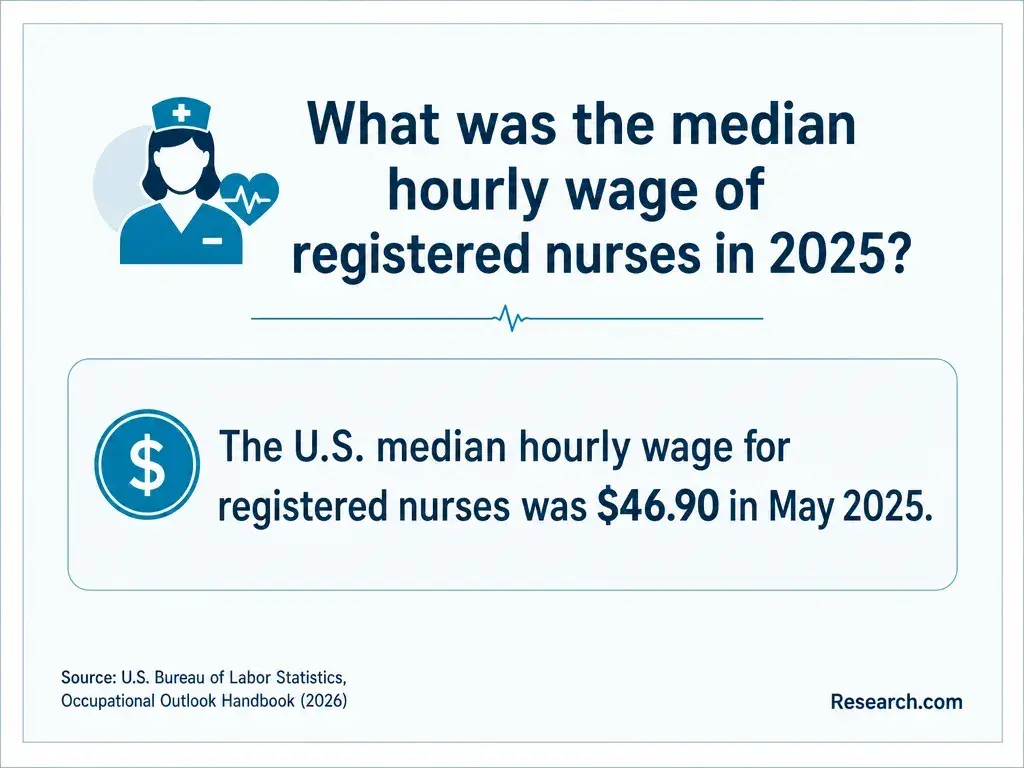
Assistant nurse manager pay depends on employer, location, unit, shift obligations, bargaining agreements, and whether the position is hourly or salaried. The U.S. Bureau of Labor Statistics does not publish a national wage specifically for this job title. Registered nurse wages cover a much broader occupation, while medical and health services manager wages encompass many non-nursing jobs; neither is a reliable assistant nurse manager salary quote.
Compare written offers on base pay, differentials, overtime eligibility, on-call expectations, benefits, and the number of staff and shifts you would support. Ask how success is measured and what training precedes independent responsibility. Advancement may lead to nurse manager, director, or quality leadership positions, but promotion depends on demonstrated performance and available openings - not a degree alone.
Higher pay is not a sound reason to assume an NP pathway is preferable: the work and preparation differ substantially. Online NP program affordability comparisons are useful only if advanced clinical practice, rather than unit leadership, is your intended destination.
How should you evaluate nursing leadership degree programs and employers?
Start with the job, not a school advertisement. Ask the hiring manager which degree is required, which is preferred, what decisions the assistant manager can make, and what support is available during staffing or performance escalations. If you need more education, check the institution's accreditation, the applicable nursing program accreditation, admissions rules, course format, total cost, and employer reimbursement terms.
For an online MSN, verify live-session times, group work, required on-site activities, project access, and time to completion alongside tuition and fees. Cost-focused MSN pathways for bachelor's-prepared nurses can provide a starting point for comparison, but confirm current charges and whether the specific leadership track fits your goal. Choose an employer with clear onboarding and realistic authority before assuming a graduate degree will solve a poorly supported management role.
Other Things You Should Know About Nursing
Usually, yes. Bring a brief page of example prompts and questions if the interviewer permits it. Use it to stay accurate, not to read scripted answers.
Aim for roughly one to two minutes initially. Give enough detail to show your judgment, then let the interviewer request more about the outcome or your role.
Use it if you can explain what you noticed, how you escalated concerns, what you changed, and what you learned. Do not present an unresolved safety risk as a success.
Only if your employer authorizes their use and the material contains no protected patient information or confidential staff or business data. A permitted, de-identified description is often safer.
- Plan-Do-Study-Act (PDSA) Directions and Examples | Agency for Healthcare Research and Quality https://www.ahrq.gov/health-literacy/improve/precautions/tool2b.html
- Interventions to improve team effectiveness within health care | nih.gov https://pmc.ncbi.nlm.nih.gov/articles/PMC6950792/
- The STAR method | Get careers information and advice | National Careers Service https://nationalcareers.service.gov.uk/careers-advice/interview-advice/the-star-method
- Using the STAR method for your next behavioral interview (worksheet included) | MIT https://capd.mit.edu/resources/the-star-method-for-behavioral-interviews/
- Charge Nurse vs. Nurse Manager: How Are They Different? | Nevada State University https://nevadastate.edu/son/rn-bsn/charge-nurse-vs-nurse-manager-how-are-they-different/
- PDSA Cycles: Improvement and Implementation - NIRN https://nirn.fpg.unc.edu/blog/pdsa-cycles-improvement-and-implementation/
- Nurse Manager: Role, Education, Salary & How to Become One | RegisteredNursing.org https://www.registerednursing.org/specialty/nurse-manager/
- Strengthening Nurse Manager Retention | Compendium 2.0 | AONL https://www.aonl.org/resources/Nurse-Leadership-Workforce-Compendium/Nurse-Manager-Retention
- Nurse Staffing, Work Hours, Mandatory Overtime... - Journals | SSPH+ https://www.ssph-journal.org/journals/international-journal-of-public-health/articles/10.3389/ijph.2024.1607068/full
- What healthcare staffing metrics should your facility track? | Nursa https://nursa.com/facility/articles/healthcare-staffing-metrics