2027 Evaluating a Hospital Case Manager Job: Workload, Performance Measures, Schedule, and Support
Audited and Verified:
Our Editorial and Data Verification Process
Research.com uses government datasets, official education statistics and primary institutional information to support its career and degree guides. Our review process checks factual accuracy, occupational definitions, source dates and the requirements associated with the credentials discussed.
How This Article Was Fact-Checked
Our editorial team verifies salary estimates, employment projections, education requirements and program information against original data providers and official organizations. Salary figures are checked against the relevant occupational definitions and reporting periods. Information about licensure, accreditation and required in-person training is reviewed separately.
Fact-checked and verified on:

Co-Founder and Chief Data Scientist
A hospital case manager position may offer less bedside care, but it does not necessarily offer a lighter workload. For an RN considering the move - or a nursing student planning toward it - the crucial details are the patients assigned, decisions expected, resources available, and measures used to judge performance.
This guide explains the daily work, questions to ask before accepting an offer, and education or certification that may help. Use it to distinguish a well-supported care-coordination role from one that shifts discharge pressure onto an individual nurse.
Key Things You Should Know
- Ask how many patients you would cover by unit and acuity, who handles utilization review, and who covers absences; there is no single national caseload standard that makes a posted number meaningful on its own.
- Evaluate length of stay, avoidable delays, discharge-plan quality, and readmissions alongside factors outside the case manager's control. An employer should explain both the measures and the support for meeting them.
- Hospital RN case manager positions commonly seek an active RN license and relevant clinical experience; a BSN or specialty certification may be preferred, but neither replaces onboarding or competence in the hospital's workflows.
What does a hospital case manager do each day?
A hospital case manager coordinates a patient's plan across the care team and the next care setting. Depending on the hospital, the job may combine discharge planning, care coordination, payer communication, and utilization review - or divide those functions among separate teams.
A typical day starts with reviewing new admissions, anticipated discharges, barriers, and changes in clinical status. The case manager joins rounds; discusses needs and preferences with patients and families; coordinates with physicians, bedside nurses, social workers, therapists, and post-acute providers; documents plans; and escalates delays. A complex discharge may require equipment, home services, transportation, caregiver teaching, or a facility willing and able to accept the patient.
Ask which tasks belong to this position rather than assuming every case manager performs them. In particular, clarify who conducts medical-necessity reviews, communicates with payers, arranges community services, and makes final decisions about discharge readiness. An LPN/LVN route may lead to valuable patient-care experience, but practical nursing entry pathways with flexible coursework do not substitute for an RN license when the position requires one.
How demanding is hospital case management work?
The work is usually less physically intensive than a bedside assignment, but it can be cognitively and emotionally demanding. A case manager may need to prioritize several time-sensitive discharges while responding to new admissions, payer requests, family concerns, and changes in available services. The workday can be interrupted repeatedly even when the schedule is predictable.
A caseload figure alone is a weak measure of workload. Ten patients with complex placement needs may require more time than a larger group with straightforward plans. Compare offers by asking about unit acuity, admissions and discharges per shift, weekend coverage, administrative help, EHR documentation, and whether one person covers both case management and utilization review. Request a shadow shift if possible.
If you are seeking relief from bedside strain, distinguish less lifting from less pressure. Moving into an advanced clinical role is not automatically an easier alternative: short-format family NP degree and certificate routes lead toward different education and clinical responsibilities, not a simpler version of hospital case management.
What performance measures evaluate hospital case managers?
Hospitals may review discharge timeliness, avoidable days, length of stay, documentation, payer-review deadlines, readmissions, patient experience, and whether appropriate follow-up services were arranged. Definitions differ: an "avoidable day," for example, may reflect a placement shortage or payer delay rather than an individual case manager's performance.
The useful distinction is between a measure the case manager can influence and one the hospital controls collectively. Before accepting an offer, ask for the measure definitions, reporting period, and expectations during orientation. Ask how leaders account for patient complexity, staffing, physician decisions, bed availability, and community-service capacity. A fair review should examine the quality and safety of coordination, not reward discharge speed at the expense of a workable plan.
If the team uses improvement projects to address recurring delays, RN-to-BSN project-based learning options may help an RN practice analyzing workflows. A course project, however, is not evidence that an employee has improved a hospital's outcomes.
For a position advertised as an RN hospital case manager, expect the employer to require an active RN license in the relevant jurisdiction. Requirements for degree level and experience vary: some postings accept an ADN-prepared RN, while others require or prefer a BSN and prior acute-care experience. Employers may also employ social workers in case management roles, but their education, licensure, and assigned duties are not interchangeable with an RN position.
Clinical experience matters because the nurse must recognize changing needs, communicate with the treatment team, interpret documentation, and know when to escalate a concern. New graduates should check whether an employer offers a structured pathway; graduation and RN licensure alone do not establish readiness to manage a complex hospital caseload independently.
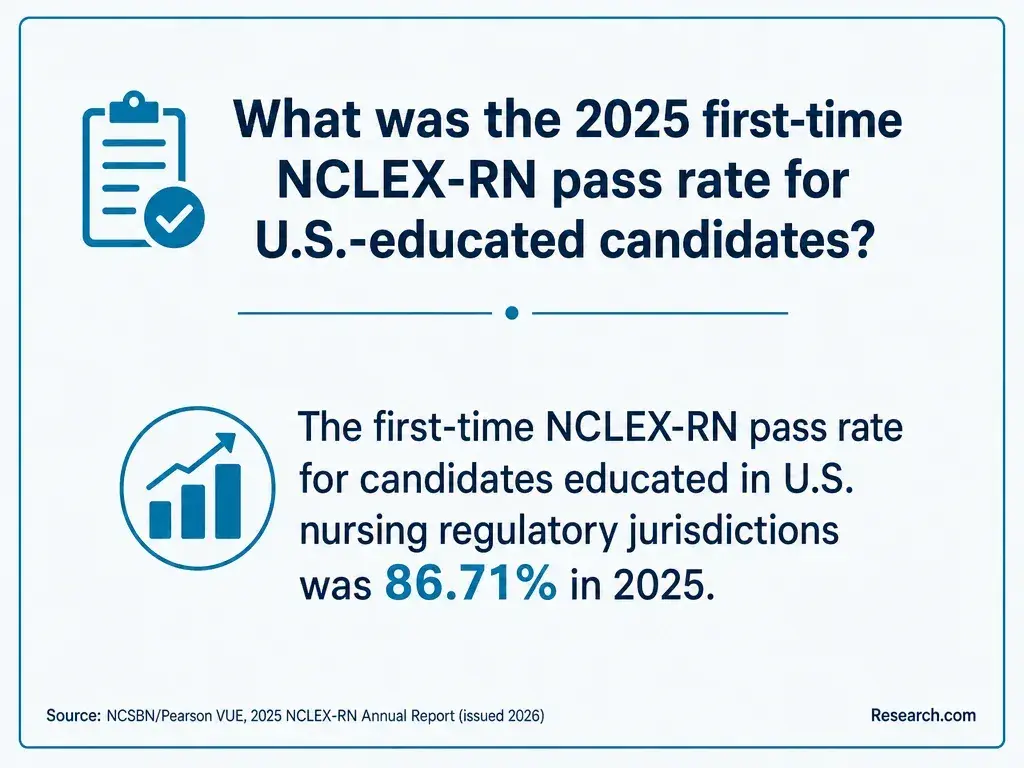
For a career changer without an RN license, nursing education pathways without prior licensure are a starting point to compare. Confirm that any chosen prelicensure program meets the applicable state board's requirements for NCLEX-RN eligibility. An online advertisement or a prior non-nursing degree does not grant an RN license.
The most direct pathway is to qualify for RN licensure, gain relevant clinical experience, and then apply for case management positions. Degree choice matters chiefly when it affects entry into RN practice, local hiring requirements, or a nurse's longer-term goals.
The following comparison separates routes into nursing from advancement after licensure; none guarantees a hospital case management job.
| Pathway | Best fit for this goal | Key limitation to check |
| Prelicensure ADN or BSN | Someone seeking initial RN preparation | Confirm state-board eligibility and whether target employers require a BSN. |
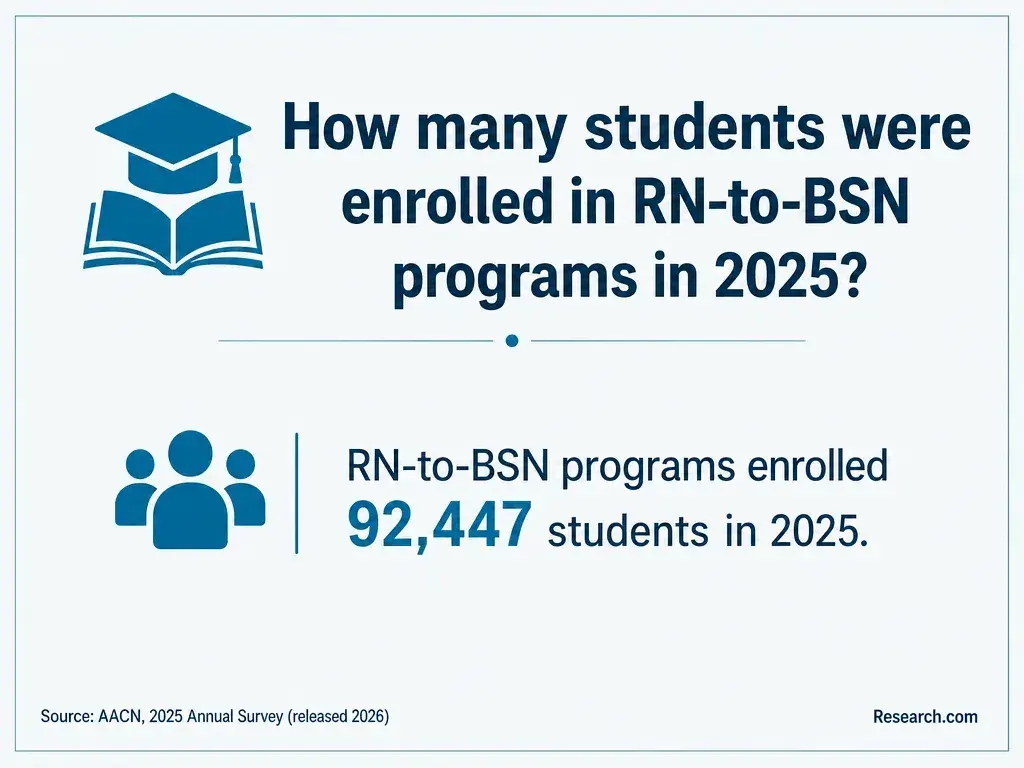
| RN-to-BSN | A licensed ADN-prepared RN seeking broader hiring options | It is postlicensure study, not initial RN preparation or a replacement for experience. |
| Non-APRN MSN | An experienced RN pursuing leadership, systems, or broader advancement | It is generally unnecessary for entry-level hospital case management. |
An ADN-prepared RN should check actual local postings before paying for another degree. If advancement eventually requires graduate study, ADN-to-MSN education pathways are worth comparing with an RN-to-BSN followed by an MSN - but only after confirming each program's RN-license prerequisites, awarded credentials, total costs, and fit for the intended role.
For an already-licensed RN, online RN-to-BSN coursework may make it easier to keep working while studying. That does not mean every course is asynchronous or that projects have no workplace or scheduling demands. A campus program may provide more fixed in-person interaction, but commuting and class times can be harder to combine with shifts.
For someone seeking initial RN licensure, online coursework cannot eliminate required supervised clinical learning and other in-person components. Compare the actual weekly schedule, lab and simulation attendance, clinical placement arrangements, travel, and who resolves placement problems - not just the label "online" or "hybrid."
Graduate study is optional for most case management applicants. If it serves a separate advancement goal, compare budget-conscious graduate nursing options for BSN nurses against employer tuition assistance, time away from work, and the job requirements you are trying to meet.
Useful preparation combines clinical judgment with systems knowledge. Nursing courses in adult health, pharmacology, assessment, and population health help an RN understand patient needs. Coursework or continuing education in care coordination, health policy, informatics, quality improvement, ethics, and communication can help with transitions between settings.
Courses alone will not teach a hospital's payer contracts, referral network, EHR workflows, or escalation process. Look for orientation that includes observed rounds, supervised cases, feedback on documentation, and gradual assignment of complex patients. Prior bedside experience can be particularly valuable when it includes discharge teaching and collaboration across disciplines.
Specialty graduate coursework should match a genuinely different career aim. For example, PMHNP education costs and program choices concern preparation for an advanced practice role, not a required curriculum for coordinating hospital discharges.
The Certified Case Manager (CCM) credential, awarded by the Commission for Case Manager Certification, and the Accredited Case Manager (ACM) credential, awarded by the American Case Management Association, are two credentials to investigate. Their eligibility routes, experience rules, exams, fees, and renewal requirements differ and can change. Consult the awarding organization's current candidate materials before paying for preparation or assuming that a particular job qualifies.
Certification can demonstrate specialty knowledge and may matter in a specific employer's hiring or advancement process. It does not replace an RN license where one is required, authorize new nursing duties, or remove the need for hospital-specific orientation. Ask hiring managers whether certification is required at hire, expected later, reimbursed, or simply preferred.
Do not confuse case management credentials with advanced practice certification. Fast-track mental health nursing graduate study is relevant to nurses pursuing that distinct specialty, not to qualifying for a hospital case manager position.
Hospital schedules vary from weekday coverage to rotating weekends, holidays, or extended shifts. Ask about the actual start and end times, on-call obligations, cross-coverage, and whether documentation routinely continues after the scheduled shift. A weekday posting is not proof that every weekend or holiday is free.
The U.S. Bureau of Labor Statistics does not publish a separate wage or job-growth series for hospital case managers. Its registered nurse figures cover many settings and duties, so an occupation-wide RN median is not a reliable salary quote for this job. Compare the written offer with local hospital postings using the same location, shift, experience requirements, and pay basis; include differentials, overtime eligibility, retirement benefits, and tuition assistance.
Experience may lead to utilization review, complex-care coordination, population health, case management leadership, or quality roles. Before funding another degree, determine whether the next job calls for it or instead rewards documented experience and targeted training. A guide to shorter DNP programs may help with a separate doctoral goal, but a DNP is not a standard requirement for hospital case management advancement.
How can students choose an accredited nursing program for case management?
If you still need initial RN preparation, verify three separate issues: the institution's accreditation, the nursing program's applicable accreditation, and state-board approval or recognition for the intended licensure jurisdiction. Nursing program accreditation may be through an organization such as ACEN or CCNE, depending on the program. Confirm each status directly with the responsible body and ask the school how its graduates qualify to seek RN licensure in your state.
Then compare the program's total cost, supervised clinical arrangements, schedule, graduation requirements, and published outcomes. An already-licensed RN considering an RN-to-BSN should also ask which credits apply to the degree and whether case management-related courses or projects fit the work they want to do. The best value may be employer training rather than another credential.
A doctorate-focused program comparison answers a different question. Even admission-focused nursing practice doctorate comparisons should not drive a case management applicant's choice unless a clearly identified future position calls for doctoral preparation.
Other Things You Should Know About Nursing
Some employers offer hybrid or remote case management duties, but hospital-based positions may require rounds, in-person collaboration, or on-site coverage. Ask which duties and days are actually remote before accepting an offer.
No. They may collaborate on the same discharge, but their professional training, licenses, and assigned responsibilities differ. Check the hospital's role descriptions rather than assuming either position performs every case management task.
Yes, if the nurse maintains appropriate licensure and meets the hiring employer's requirements. After substantial time away, expect an assessment of current bedside skills and possibly a structured refresher or orientation.
Request the written job description, pay and schedule terms, orientation plan, typical unit assignment, coverage model, and performance expectations. A shadow shift can reveal how those policies work in practice.
- Inpatient Case Management - Womack Army Medical Center https://womack.tricare.mil/Health-Services/Case-Management/Inpatient-Case-Management
- Section 7: Measuring Value in a Care Management Program | Agency for Healthcare Research and Quality https://www.ahrq.gov/patient-safety/settings/long-term-care/resource/hcbs/medicaidmgmt/mm7.html
- Health Worker Burnout | hhs.gov https://www.hhs.gov/surgeongeneral/reports-and-publications/health-worker-burnout/index.html
- Case Management - StatPearls - NCBI Bookshelf https://www.ncbi.nlm.nih.gov/books/NBK562214/
- Strategies for utilisation management of hospital services - PMC https://pmc.ncbi.nlm.nih.gov/articles/PMC9125833/
- Measurement and prediction of inpatient case manager workload in a tertiary hospital setting | mit.edu https://dspace.mit.edu/entities/publication/55f13fb3-15e2-4cca-b2f9-2faf725f05cc
- Case Study: Redesigning the Inpatient Case Management Team | HealthCity https://healthcity.bmc.org/case-study-redesigning-inpatient-case-management-team/
- Experts: Hospital Case Management | Ovid https://www.ovid.com/journals/hcmt/fulltext/00055757-200703000-00001~experts-lower-caseloads-when-case-managers-take-on-more
- Chapter6 | aaaceus.com https://www.aaaceus.com/courses/cm1003/cm1003_chap02.htm
- What is a Case Manager's Role in Health Care? | Brooks Rehabilitation https://brooksrehab.org/resources/what-role-do-case-managers-play-in-patient-care/