2027 Online RN-to-MSN and ADN-to-MSN Programs for Nurses in Wyoming: Entry Routes, Costs, and Practicum
Audited and Verified:
Our Editorial and Data Verification Process
Research.com uses government datasets, official education statistics and primary institutional information to support its career and degree guides. Our review process checks factual accuracy, occupational definitions, source dates and the requirements associated with the credentials discussed.
How This Article Was Fact-Checked
Our editorial team verifies salary estimates, employment projections, education requirements and program information against original data providers and official organizations. Salary figures are checked against the relevant occupational definitions and reporting periods. Information about licensure, accreditation and required in-person training is reviewed separately.
Fact-checked and verified on:

Co-Founder and Chief Data Scientist
An online MSN may let a Wyoming RN advance without relocating, but the right route depends on more than whether classes are remote. Associate-degree nurses must find out how a program bridges undergraduate coursework, while prospective nurse practitioners need a track that supports supervised practice and certification.
This guide compares entry routes, accreditation checks, costs, timelines, and Wyoming practicum arrangements so you can identify a program that fits your current license, intended role, and ability to complete required in-person work.
Key Things You Should Know
- An ADN-to-MSN route is for an already-licensed RN; it does not prepare an unlicensed applicant for initial RN licensure.
- Before enrolling from Wyoming, confirm three separate matters: institutional accreditation, nursing-program accreditation where applicable, and authorization to enroll and place students in Wyoming.
- "Online" usually describes coursework, not the entire degree: an APRN track requires approved, supervised clinical experience, and its cost depends partly on where that experience occurs.
What are online RN-to-MSN and ADN-to-MSN programs in Wyoming?
These are postlicensure graduate pathways for registered nurses who live or plan to complete coursework or practice experiences in Wyoming. "RN-to-MSN" describes progression from an RN credential to a Master of Science in Nursing; "ADN-to-MSN" specifies that the nurse enters with an associate degree in nursing. A school may deliver online courses from another state while arranging approved in-person experiences in Wyoming. The label alone does not establish that Wyoming residents can enroll in every specialty.
The entry route changes what you study before the MSN. This comparison helps identify which admissions and degree-award questions to ask.
| Route | Typical starting point | Important distinction |
| ADN-to-MSN bridge | RN license plus an associate nursing degree | Includes specified upper-division or bridge coursework before graduate progression; a BSN may or may not be awarded along the way. |
| RN-to-BSN, then MSN | RN license plus an associate nursing degree | A separate BSN award can offer a stopping point, but requires two admissions and potentially different tuition structures. |
| BSN-to-MSN | RN license plus a BSN | Usually avoids the undergraduate bridge; the MSN specialty still determines practicum and career eligibility. |
If you have an ADN, compare the actual degree awards and progression rules - not just the word "bridge." A review of associate-degree RN to MSN options can help frame that comparison. Ask whether the school awards a BSN before the MSN, since that matters if you pause or change programs.
Which accreditation and Wyoming approvals should online MSN programs have?
Check institutional accreditation for the university and the accreditation status and scope of its nursing program, commonly through CCNE or ACEN. Then ask the program to confirm, in writing, that it can enroll a student located in Wyoming and arrange any required Wyoming clinical experiences for your specific track and entry term. Institutional accreditation, nursing accreditation, state authorization, and eligibility for professional licensure answer different questions.
For an APRN track, request the school's written determination about whether its curriculum meets Wyoming's educational requirements for the intended role and population focus. Confirm certification eligibility with the relevant certifying organization and licensing requirements with the Wyoming State Board of Nursing. Do not infer that approval of an RN program, a university's general accreditation, or authorization to offer online classes covers a particular graduate clinical placement.
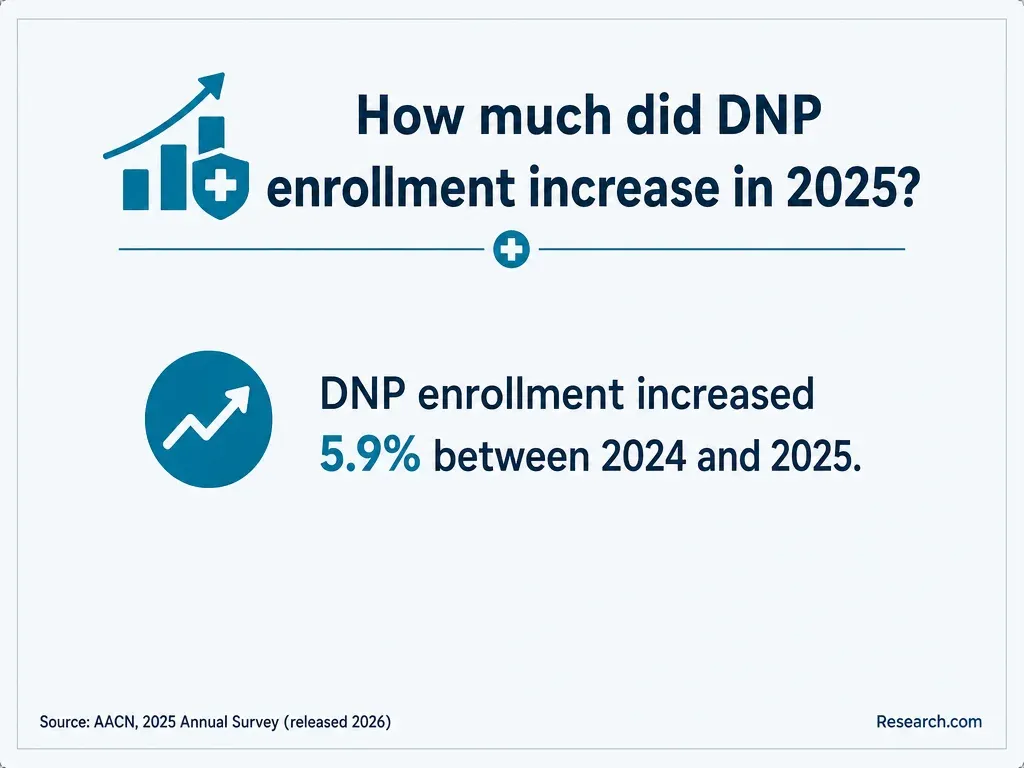
If you may later pursue a practice doctorate, investigate understanding barriers to DNP admission separately; an accredited MSN does not guarantee admission or transfer of credits into a DNP.
What are the admission requirements for RN-to-MSN and ADN-to-MSN programs?
Expect a current RN license, official transcripts, and a review of prior nursing education. Schools may also specify a minimum GPA, statistics or other prerequisite coursework, professional experience, references, a statement of goals, and additional requirements for a particular specialty. Admission to the university does not necessarily mean admission to the MSN track or permission to begin its clinical sequence.
For an ADN applicant, the decisive question is how many bridge courses will actually apply to the degree. Request a written degree audit showing accepted transfer credits, required upper-division nursing work, the point at which graduate courses begin, and whether an interim BSN is awarded. An RN who also holds a bachelor's degree in another subject should ask whether that degree changes the bridge requirements; it does not automatically replace nursing coursework.
If you are not yet an RN, these postlicensure routes are not an entry point to nursing. Compare prelicensure options instead; accelerated nursing programs with broader entry criteria are one possible starting point for applicants who already have a non-nursing bachelor's degree, subject to each school's prerequisites and initial-licensure rules.
Online delivery can reduce routine travel for lectures, but it does not remove deadlines, scheduled discussions, exams, group work, campus intensives, or local practice hours. A campus-based program may simplify access to faculty and established clinical partners, although attending regularly can be impractical for nurses far from the campus. Neither format guarantees a Wyoming placement.
Compare the weekly schedule and required locations, not just the advertised format. Ask which sessions are live, whether a skills assessment or simulation requires travel, how often campus attendance occurs, and what happens if a Wyoming site cannot take a student in the planned term. For nurses balancing shifts or caregiving, a delayed placement can matter more than the convenience of asynchronous lectures.
If the immediate goal is a bachelor's credential rather than a graduate role, online RN-to-BSN programs with applied assignments may be a more manageable first step. "No clinicals" in a program description should still be checked against any community-based or on-site assignment requirements.
ADN-entry students commonly complete upper-division nursing bridge work before graduate study. MSN courses may address evidence appraisal, population health, quality improvement, leadership, and research methods, with additional coursework determined by the track. Exact course sequences and credit requirements belong to the individual school's catalog.
The specialty, not the MSN letters alone, determines the next professional step. Education, leadership, and informatics tracks prepare nurses for responsibilities that differ from advanced clinical practice; they do not by themselves qualify a graduate as a nurse practitioner. APRN tracks require role- and population-focused preparation, including advanced clinical content and supervised experiences aligned with the intended certification. An FNP track and a psychiatric-mental health NP track are not interchangeable.
Choose a specialty by working backward from the role you intend to seek in Wyoming. If psychiatric care is the goal, compare curriculum and placement feasibility before comparing prices for affordable online psychiatric nurse practitioner programs; a lower advertised tuition rate has limited value if the necessary clinical sites are inaccessible.
There is no reliable Wyoming-wide completion time. An ADN-entry nurse generally has bridge requirements that a BSN-prepared RN does not, while an APRN specialty adds a clinical sequence that may depend on site and preceptor availability. Full-time or part-time enrollment, transfer-credit decisions, course rotation, and any required campus visits can all alter the finish date.
Ask each school for a term-by-term plan for your exact entry credential and track. It should identify when graduate status begins, when clinical courses are offered, whether courses must be taken in sequence, and what happens if a placement is delayed. Calculate time to completion from your likely start term rather than from a school's fastest advertised example.
Promoted short-format options, including short-format family NP degree and certificate routes, may serve applicants with substantially different prior graduate preparation. Do not apply a post-master's certificate timeline to an ADN-to-MSN student.
A defensible price comparison needs an individualized credit plan and the school's current fee schedule. ADN-to-MSN applicants should price the bridge and graduate phases separately; they may be billed at different rates or have different aid treatment. Without a verified school quote, no single tuition figure represents online MSN study for Wyoming nurses.
Request an itemized estimate covering the charges below, then compare the total to graduation rather than tuition per credit alone.
- Required bridge and graduate credits multiplied by their respective tuition rates, plus mandatory university and program fees.
- Books, technology, background checks, immunizations, and any required simulation or equipment charges.
- Travel and lodging for campus visits or clinical sites, plus possible reductions in paid work during intensive terms.
- Certification examination and Wyoming licensure application costs, if the chosen track leads toward an APRN role.
Ask the financial aid office about eligibility at each phase, federal graduate loans where applicable, scholarships, and employer tuition assistance. Employer funding may depend on grades, continued employment, or repayment terms. When reviewing online NP tuition and fee considerations, compare programs using the credits you personally must complete; a low per-credit rate can still produce a higher bill if fewer prior credits apply.
Online students complete required in-person experiences at sites their program approves. APRN placements must support the track's role, population, competencies, supervision, and required clinical hours. A leadership or educator practicum may involve a different setting and set of objectives, but it still must meet that program's rules. Existing employment hours do not automatically count toward either type.
Wyoming's geography makes placement planning an admissions issue, not a task to postpone until the first clinical term. Before paying a deposit, obtain clear answers to these questions:
- Does the school secure Wyoming sites and preceptors, help students find them, or require students to do so?
- Which site and preceptor qualifications apply, and who approves affiliation agreements and evaluates performance?
- Can the required population and patient encounters be obtained near your home, or should you budget for travel or a changed work schedule?
- What is the school's contingency plan if a preceptor withdraws or a site cannot accept students?
Simulation, RN employment, and supervised graduate clinical hours are distinct. An experienced nurse considering a later specialty change can examine accelerated FNP certificate admissions and requirements, but the receiving program and certifying body determine whether prior graduate coursework or hours meet the new population focus.
Career options depend on the completed track, the nurse's experience, and any additional credential. An education MSN can support staff-development or teaching applications; leadership and informatics tracks can support relevant organizational roles. An APRN-focused MSN can provide educational preparation for its specified advanced practice role, but graduation alone is not APRN licensure, national certification, or a job offer.
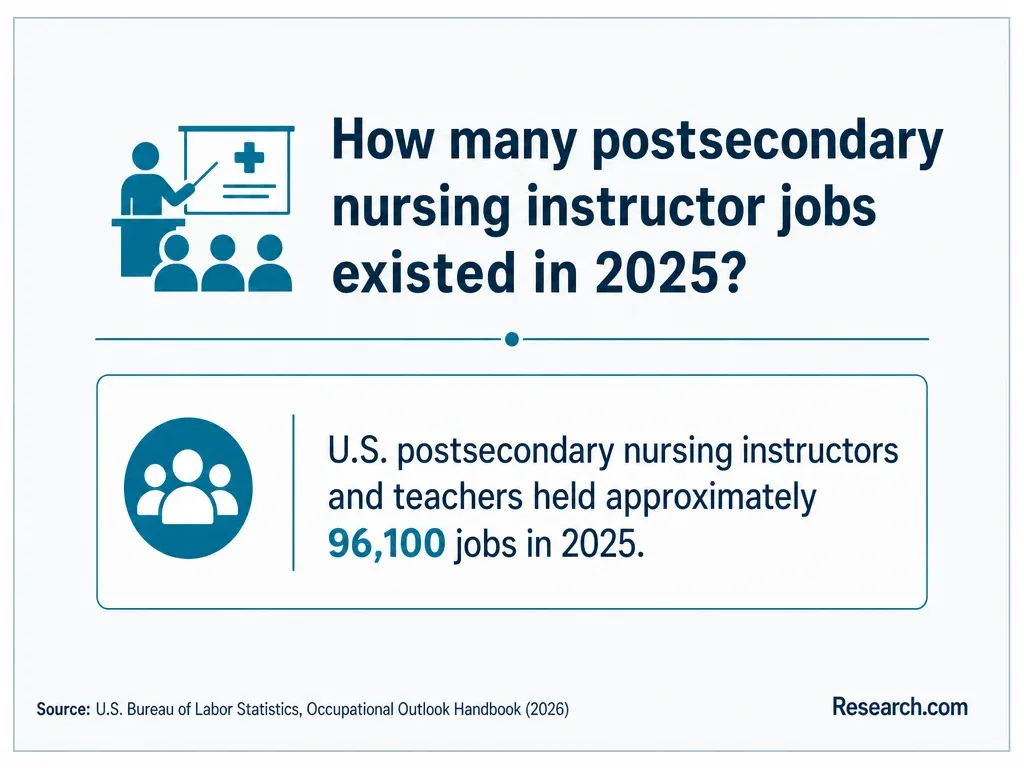
For pay comparisons, match the occupation to the proposed job. U.S. Bureau of Labor Statistics wage information for registered nurses, nurse practitioners, and nursing instructors describes different occupations; none is a guaranteed "MSN salary." Wyoming wage estimates may also be unavailable or less stable for a narrowly defined occupation. Compare current Wyoming job postings and employer pay ranges with the applicable BLS occupational data, then account for role requirements and any change in hours worked. National employment-growth projections are useful context, not a prediction of openings in your Wyoming community.
For an experienced nurse seeking organizational advancement rather than a new APRN license, comparing post-master's DNP leadership options may eventually be relevant. First check whether the desired employer actually requires further education; experience, a focused project, or employer-supported training may meet the nearer-term goal.
How do MSN graduates meet Wyoming APRN licensure and certification requirements?
Start by identifying the exact APRN role and population focus, then verify the corresponding graduate-track requirements, national certification eligibility, and Wyoming State Board of Nursing application requirements. The board makes the Wyoming licensing decision; the certifying organization determines eligibility for its examination. A general MSN in education, leadership, or informatics is not a substitute for role-specific APRN preparation.
Before enrollment, ask the school to document how its curriculum and supervised clinical experiences align with the intended certification and Wyoming licensure pathway. Before applying to practice, confirm the board's then-current requirements for RN license status, educational records, certification, application materials, and any other conditions. Do not assume that an RN multistate practice privilege grants APRN authority.
An MSN-prepared APRN changing specialties should request a formal program review of prior coursework and documented clinical experiences. Postgraduate PMHNP certificate comparisons can help identify questions to ask, but experience in another NP population does not automatically satisfy psychiatric-mental health preparation or certification requirements.
Other Things You Should Know About Nursing
Tell the program before relocating. Your new location can affect enrollment authorization, clinical-site approval, and whether the curriculum meets requirements where you intend to seek a license.
Do not assume so. Ask the program about progression and placement rules, and resolve license status with the responsible nursing board before performing any RN work or supervised activities that require an active license.
No. Some pathways award an interim BSN and others do not. Get the school's degree-award policy in writing if a BSN matters to your employment or backup plan.
Ask for minimum technology requirements and the format of live classes, exams, and simulations. Check whether your connection can reliably support those activities and whether the school offers technical support when access fails.
- WSBN - Licensing - Wyoming State Board of Nursing https://wsbn.wyo.gov/licensing
- 054-6 Wyo. Code R. §§ 6-4 - Programmatic Standards for Wyoming Nursing Education Programs https://www.law.cornell.edu/regulations/wyoming/054-6-Wyo-Code-R-SS-6-4
- Preceptor Manual | westernwyoming.edu https://www.westernwyoming.edu/academics/major-programs/health-care/nursing/clinical-partners/preceptor-manual.php
- Tuition and Fees | uwyo.edu https://www.uwyo.edu/fsbo/student-financial-services/tuition-and-fees.html
- RN-to-MSN: Registered Nurse to Master of Science in Nursing | University of Maryland School of Nursing https://www.nursing.umaryland.edu/academics/grad/registered-nurse-to-masters/
- RN to MSN Online Program - University of Texas Arlington https://academicpartnerships.uta.edu/healthcare-nursing-online-programs/rn-to-msn/general/
- Best Online MSN Programs in Wyoming (2027) | RegisteredNursing.org https://www.registerednursing.org/degree/msn/wyoming/
- Best ADN-to-MSN Bridge Programs For Nurses | nursejournal.org https://nursejournal.org/degrees/msn/best-adn-to-msn-bridge-programs/
- Comprehensive Guide to RN-to-MSN Programs | ANA https://www.nursingworld.org/content-hub/resources/becoming-a-nurse/guide-to-rn-to-msn-programs/