2027 Online Retail Management Degree Programs With University Scholarships: Awards, Eligibility, and Net Cost

Co-Founder and Chief Data Scientist
An online retail management degree can look affordable until technology fees, residency rules, and scholarship restrictions change the final bill. College Board reported average published 2024-25 tuition and fees of $11,610 at public four-year in-state institutions and $43,350 at private nonprofit institutions.
This guide helps prospective, transfer, adult, and military students compare university-funded awards, renewal terms, and realistic net cost - not tuition or a headline scholarship alone - before choosing a program.
Key Things You Should Know
- Online retail management students may qualify for institutional merit, need-based, transfer, adult-learner, or military awards, but many universities restrict awards by campus, enrollment level, residency, or degree type.
- A larger scholarship does not automatically create the lowest price: compare the award against total tuition, mandatory fees, transfer-credit acceptance, and whether the award applies every enrollment period.
- For context, average published 2024-25 tuition and fees were $11,610 at public four-year in-state institutions and $43,350 at private nonprofit institutions; financial aid can reduce those figures, but each student's net cost is individualized.
Which Online Retail Management Degree Programs Offer University Scholarships?
Dedicated online retail management bachelor's degrees are less common than online business administration, merchandising, marketing, supply chain, or management degrees with retail-focused electives. That matters because a university may offer institutional scholarships to online business students generally while not maintaining a separate retail management scholarship.
Start with universities that clearly state that online undergraduates are eligible for institutional aid. Public universities may offer resident-focused awards and lower base tuition; private nonprofit universities may offer broader institutional discounts but start at a higher published price. Ask whether the exact online major, degree level, and attendance pattern qualify.
This comparison framework helps distinguish an advertised opportunity from a confirmed award in your admission and financial-aid offer.
| Program pathway | Institutional scholarship possibility | Important confirmation point | Best fit |
| Online bachelor's in retail management | May be available through undergraduate merit or need-based programs | Whether fully online students are included | Students seeking retail-specific coursework |
| Online business administration with retail electives | Often considered under general undergraduate scholarship rules | Whether concentration changes aid eligibility | Students wanting broader business flexibility |
| Online merchandising or fashion merchandising | May include department, donor, or school-based awards | Whether awards are open to distance learners | Students interested in buying, merchandising, and product strategy |
| Online associate-to-bachelor's pathway | Transfer awards may be available after admission | Minimum transferable credits and GPA | Students reducing bachelor's cost through prior credit |
Retail management typically develops skills in customer experience, merchandising, inventory, store operations, sales analysis, team supervision, and e-commerce. If a retail-named degree has limited scholarship access, compare it with an online business program that supports the same career goal and has more transparent institutional-aid terms. Students beginning with lower-division study can also evaluate an associates degree online pathway before transferring, but they should confirm which credits will apply to the intended bachelor's program.
How Much Scholarship Money Can Online Retail Management Degree Students Receive?
There is no universal scholarship amount for online retail management students. University-funded awards can be one-time, annual, per-term, or renewable, and an admitted student's actual amount may depend on academic record, financial need, transfer status, available funding, and enrollment intensity.
The most useful way to assess an award is to convert it into an annual and degree-completion value. A $2,000 award applied once has a different value from a $2,000 annual award that is renewable for four years, provided the student can meet its conditions.
Use the financial-aid offer to identify how the school applies each award.
| Award feature | Why it changes value | What to verify |
| Amount and frequency | A per-term award may be larger over time than a one-time award | Whether the stated amount is annual, term-based, or total |
| Tuition-only restriction | Required fees, books, and course materials may remain payable | Which charges the scholarship can cover |
| Enrollment requirement | Part-time enrollment can reduce or eliminate some awards | Minimum credits required each term |
| Duration | An award may end before degree completion | Maximum semesters, years, or credit hours |
| Stacking rule | Other grants can alter institutional funding | Whether the university adjusts awards after outside aid posts |
Do not treat an online scholarship calculator or promotional maximum as an offer. The controlling document is the aid notification and its accompanying terms. Students planning an accelerated graduate route should separately compare the total budget for 1 year master's programs online, because undergraduate scholarships usually do not transfer to graduate enrollment.
What Are the Eligibility Requirements for Online Retail Management Degree Scholarships?
Eligibility requirements are the rules a student must satisfy to receive an award. They can apply at admission, before each academic year, or at the time funds are disbursed. Online status alone does not establish eligibility; some institutions extend the same awards to online and campus students, while others reserve particular scholarships for campus-based enrollment.
Common requirements are listed below. Confirm them in writing for the exact retail management or related business program.
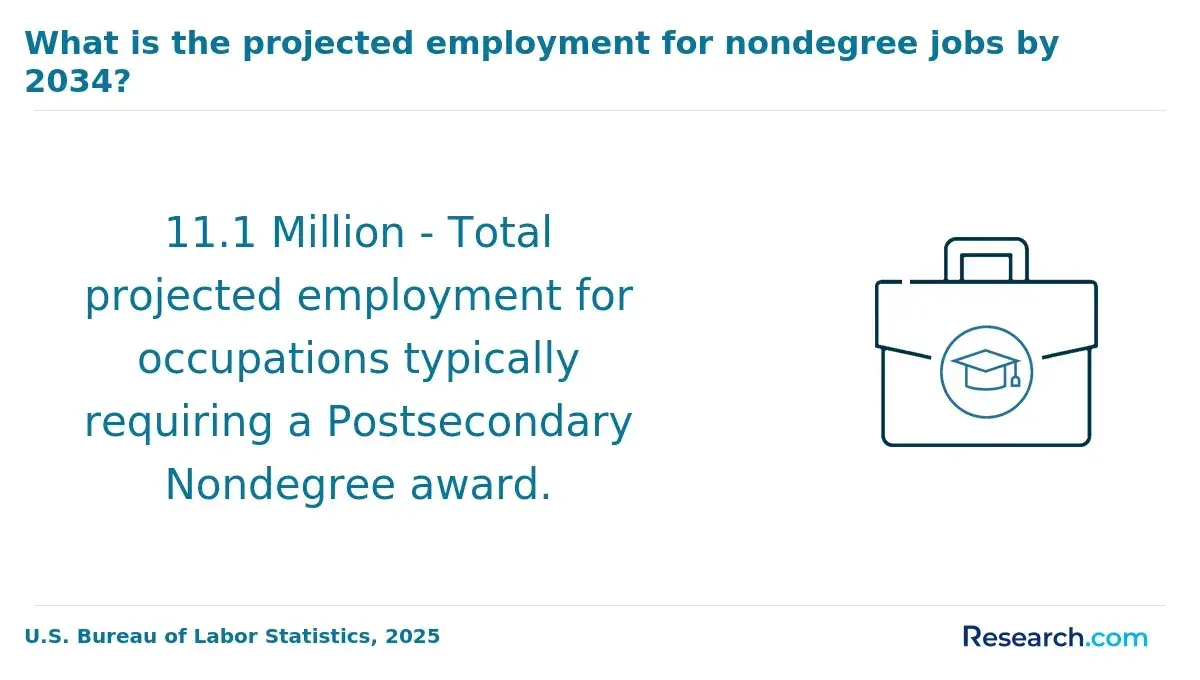
- Admission to an eligible degree-seeking undergraduate or graduate program rather than a certificate or nondegree classification.
- A stated admissions GPA, transfer GPA, test-score standard where applicable, portfolio, or other merit threshold.
- Completion of the FAFSA when the award considers financial need or requires federal-aid eligibility.
- Enrollment at least half-time or full-time, with some online programs using different definitions for accelerated terms.
- U.S. citizenship, eligible noncitizen status, state residency, or institutional residency criteria when the award specifies them.
- Submission by a priority deadline, including any separate scholarship application or essay.
- Compliance with satisfactory academic progress and any conduct, major, or participation conditions.
A frequent mistake is assuming that "online tuition" means "online scholarship eligibility." Ask the financial-aid office whether the award is available to a fully online student, whether it applies to your start term, and whether changing from full-time to part-time attendance would change the amount.
How Do You Apply for University Scholarships for an Online Retail Management Degree?
Application processes vary. Some universities automatically review eligible applicants using the admissions application, while others require the FAFSA, a scholarship portal, recommendation letters, an essay, or all of these. Automatic consideration is convenient, but it does not mean an award is guaranteed.
Follow this sequence early enough to meet both admissions and aid deadlines.
- Identify the exact online retail management, business, merchandising, or related degree and confirm that it is degree-seeking and eligible for institutional aid.
- Submit the admissions application by the school's scholarship-priority date, not merely the final enrollment deadline.
- File the FAFSA if you are eligible and the institution uses it for need-based aid, grant eligibility, or scholarship consideration.
- Complete the university scholarship application and upload requested transcripts, essays, recommendations, or military documentation.
- Review the offer letter for amount, frequency, conditions, and whether the award is accepted automatically or requires a response.
- Save the award terms and ask for written clarification before committing to enrollment.
Keep records of every deadline and submission. Students who may later pursue management education can also compare program budgets such as an MBA under 30k; however, graduate financial aid and institutional scholarship rules are usually separate from undergraduate retail-management awards.
Are Scholarships for Online Retail Management Degree Programs Renewable Every Year?
Some scholarships are renewable, meaning the university can continue the award in later academic years if the student meets stated conditions. Renewal is not the same as a guaranteed four-year price: funding can be subject to published limits, enrollment status, satisfactory academic progress, or the award's maximum number of terms.
Before relying on an award in a degree budget, verify these renewal details.
- The cumulative GPA required for renewal and whether it is checked each term or annually.
- The minimum number of credits, including whether summer or accelerated sessions count.
- The maximum number of semesters, academic years, or attempted credit hours covered.
- Whether the scholarship follows a student who changes major, modality, campus, or enrollment status.
- Whether the award can be restored after a temporary loss and what appeal process applies.
- Whether the institution may revise the award after receiving external scholarships or updated financial information.
Students should model a conservative scenario in which a renewable award ends after its stated duration or is reduced after an enrollment change. This is especially important for part-time adult learners, whose completion timeline may exceed a scholarship's standard renewal window.
Can You Combine an Online Retail Management Scholarship With FAFSA and Other Financial Aid?
Usually, yes. FAFSA is an application for federal student aid, and it can also be used by states and universities to assess need-based assistance. An institutional scholarship may be combined with federal grants, work-study eligibility, loans, state grants, employer tuition assistance, and outside scholarships, subject to the school's packaging rules.
For example, the maximum Federal Pell Grant for the 2024-25 award year was $7,395. Pell eligibility and amount depend on federal formulas and student circumstances, so it should not be assumed in a retail management cost estimate. Its practical value is that it may lower the remaining tuition bill before a student considers loans.
Financial-aid packaging can change when new resources are reported. Review these interactions before accepting an offer.
| Type of support | Typical role in a package | Question to ask the university |
| Institutional scholarship | University-funded merit, need-based, or targeted aid | Will outside aid reduce this award? |
| Federal Pell Grant | Need-based federal grant for eligible undergraduates | How will my enrollment level affect disbursement? |
| Federal Direct Loan | Borrowed aid that generally must be repaid with interest | What amount remains after grants and scholarships? |
| State grant | State-funded aid, often tied to residency and FAFSA | Is online enrollment at this institution eligible? |
| Employer assistance | Workplace education benefit or reimbursement | Can it be combined without reducing university aid? |
Report outside scholarships and employer benefits as required. A red flag is a school that gives only a total "aid" figure without separating grants and scholarships from loans; loans reduce immediate billing but increase future repayment obligations.
How Much Does an Online Retail Management Degree Cost After Scholarships and Financial Aid?
Net cost is the amount remaining after grants and scholarships are subtracted from the institution's cost of attendance. Cost of attendance can include tuition, required fees, books, supplies, technology, and living-cost allowances. It is not identical to the amount a student will be billed, particularly when housing and personal expenses are estimated rather than charged by the university.
A practical calculation is: total annual tuition and required fees, plus program-specific academic charges, minus confirmed grants and scholarships. Then separately plan for books, equipment, transportation, and living expenses. Do not subtract loans when estimating net cost; loans are financing, not a price reduction.
This example shows why comparing annual net cost is more useful than comparing tuition or an award in isolation. It is illustrative only and not a published offer from a retail management program.
| Cost comparison item | Program A | Program B |
| Annual tuition and required fees | $12,000 | $18,000 |
| Confirmed institutional scholarship | $2,000 | $6,000 |
| Other confirmed grants | $3,000 | $3,000 |
| Estimated annual net tuition and required fees | $7,000 | $9,000 |
| Decision insight | Smaller scholarship, lower remaining tuition | Larger scholarship, higher remaining tuition |
Also compare transfer-credit policies and time to completion. Fewer required remaining credits can lower total cost more than a modest scholarship increase. For students considering education leadership or training roles after retail experience, reviewing the cheapest online doctorate options later is a separate decision with different tuition and aid rules.
Are There Scholarships for Transfer, Adult, Military, and Other Online Retail Management Students?
Yes, many institutions maintain scholarships or tuition benefits for nontraditional populations, but eligibility varies substantially. Transfer awards often use transferable credits and transfer GPA; adult-learner awards may be designed for students returning after time away; military benefits can involve institutional discounts, federal benefits, or both.
Students in these groups should look beyond general freshman merit scholarships and ask about the categories most relevant to their enrollment history.
- Transfer students: Ask whether awards require a minimum number of accepted transfer credits, a particular transfer GPA, or full-time enrollment after transfer.
- Adult learners: Ask whether accelerated online terms qualify and whether part-time study affects the award.
- Active-duty service members, veterans, and dependents: Ask how institutional aid coordinates with military tuition assistance, GI Bill benefits, and residency policies.
- First-generation and low-income students: Ask whether FAFSA-based institutional grants, completion grants, or emergency aid are available to online students.
- Employees in retail or related industries: Ask whether the university has an employer partnership or tuition-reimbursement process.
Transfer students should obtain a written credit evaluation before comparing scholarship offers. An award that looks generous may provide less value if many completed courses do not transfer. Those exploring adjacent information, customer-service, or organizational roles may also find it useful to compare a library degree, although its curriculum and career path differ from retail management.
What Is the Difference Between Merit-Based and Need-Based Scholarships for Online Retail Management Degrees?
Merit-based scholarships are generally awarded for achievement, such as academic performance, leadership, talent, or a strong admissions profile. Need-based scholarships generally consider a student's financial circumstances, often using FAFSA information. A university may use a hybrid approach that considers both academic record and need.
Neither type is automatically better. Merit aid can be valuable for students with strong academic qualifications regardless of financial need, while need-based institutional aid can be more significant for students whose FAFSA information demonstrates eligibility. The best offer is the one that produces the most manageable net cost while fitting the student's enrollment plan.
| Feature | Merit-based scholarship | Need-based scholarship |
| Primary basis | Academic or other achievement criteria | Demonstrated financial need under the institution's process |
| FAFSA role | May not be required, depending on the award | Commonly required for eligible students |
| Typical renewal focus | GPA, credits completed, and enrollment | Continued need, FAFSA renewal, academic progress, and enrollment |
| Key risk to check | Loss after GPA or enrollment changes | Reduction after a financial-circumstance change or new aid |
Do not skip FAFSA solely because you expect a merit scholarship. A school may use it to determine eligibility for institutional grants or to build the full aid package. Conversely, do not assume a high financial-need estimate guarantees university grant funding, because institutional budgets and policies differ.
How Should You Compare Scholarship Offers From Online Retail Management Degree Programs?
Compare written offers on the same timeline and with the same cost categories. Start with the annual amount you will actually owe for tuition and required fees, then evaluate the probability that each scholarship remains available until completion. A transparent, smaller award at a lower-cost institution can be more valuable than a large award with restrictive renewal rules.
Use these questions when speaking with admissions and financial-aid representatives.
- Is my fully online retail management or related business program eligible for this scholarship?
- Is the stated award amount per term, per year, or for the entire degree?
- What tuition, fees, and course-specific charges remain after the scholarship?
- What GPA, credit load, FAFSA, and satisfactory academic progress rules apply to renewal?
- How many terms or credits can the award cover, and does it cover summer study?
- Will transfer credits shorten my program enough to reduce total cost?
- Can the scholarship be combined with federal grants, state aid, employer assistance, and outside awards?
- Will the university reduce institutional aid if I receive another scholarship?
- Which items in the cost of attendance are estimates rather than direct charges?
Common mistakes include accepting the first offer, comparing only scholarship amounts, overlooking fees, and treating loans as scholarships. Request a revised estimate if your enrollment plan changes. The strongest scholarship value is the offer with the lowest realistic total cost, workable renewal conditions, and a program that supports your retail, e-commerce, merchandising, or management goals.
Other Things You Should Know About Retail Management
Possible paths include retail store management, assistant management, merchandising, buying support, inventory control, customer experience, e-commerce operations, and sales supervision. Employers may also weigh retail experience, communication skills, data literacy, and familiarity with point-of-sale, inventory, and customer relationship systems.
A retail management degree may offer more focused coursework in merchandising, store operations, and consumer behavior. A general business degree can be more flexible for careers beyond retail. Compare curriculum, internship access, scholarship eligibility, and the total number of credits required before deciding.
Yes. Confirm that the institution holds institutional accreditation recognized by the U.S. Department of Education or the Council for Higher Education Accreditation framework. Programmatic business accreditation can be an additional quality signal, but it is not required for every retail management role.
Possibly. Some universities award transfer credit for prior college coursework, standardized exams, military training, or prior-learning assessments. Credit policies vary, so obtain a written evaluation and ask whether fees apply before assuming experience will shorten the degree.
References
- Financial Aid at Online Colleges | OEDB.org https://www.oedb.org/ilibrarian/financial-aid-for-online-colleges/
- Retail Management Degree- Best Schools, Major & Programs https://www.onlinedegree.com/bachelors/retail-management/
- Online Retail Management Certificate Program - City Vision University https://www.cityvision.edu/lp/online-retail-management-certificate/
- Financial Aid Is for Everyone: Top 5 Resources for All Students in 2025 https://curisfinancial.org/financial-aid-resources-for-students/
- Scholarship Statistics - Blog | Arms Wide Open ABA https://www.armswideopenaba.com/blog/scholarship-statistics
- Retail Operations Management https://www.helms.edu/programs/retail-operations-management/
- Online Retail and Sales Degrees - Retail and Sales Schools and Universities https://www.classesandcareers.com/online-programs/retail_and_sales
- Retail Management https://www.fastweb.com/directory/scholarships-for-retail-management-majors
- 2025 Most Affordable Online Business Degrees https://www.onlineu.com/most-affordable-colleges/business-degrees
- Financial Aid for Adult Learners: Grants, Scholarships & How to Pay for College (2026 Guide) https://www.straighterline.com/blog/financial-aid-resources-adults