2027 Online Nurse Educator Master's Programs With No Personal Statement or Admissions Essay Required

Co-Founder and Chief Data Scientist
Applying to a Nurse Educator master's program can feel unnecessarily time-consuming when an admissions essay is the main barrier. Online programs with streamlined applications may remove that requirement, but they still evaluate RN licensure, GPA, clinical background, and readiness for graduate work. This matters as the U.S. Bureau of Labor Statistics projects 18% employment growth for postsecondary nursing instructors and teachers from 2023 to 2033. This guide helps prospective students identify legitimate no-essay options, compare their trade-offs, verify current policies, and choose a program that supports their teaching career goals.
Key Things You Should Know
- "No personal statement" usually means a school does not require a traditional multi-paragraph admissions essay; it does not necessarily mean no written responses, no resume, no recommendations, or automatic admission.
- Most online MSN Nurse Educator pathways still require an active, unencumbered RN license, a BSN or qualifying nursing degree, official transcripts, and a minimum GPA often near 2.5 to 3.0; no-essay and no-GRE policies are separate decisions.
- Program quality depends on institutional accreditation, nursing accreditation such as CCNE or ACEN, supervised practicum arrangements, faculty qualifications, and total cost - not whether an essay is waived. Postsecondary nursing instructors and teachers had a 2024 median annual wage of $86,530, according to the U.S. Bureau of Labor Statistics.
What Does "No Personal Statement or Admissions Essay Required" Mean for Online Nurse Educator Master's Programs?
A no-essay online Nurse Educator master's program generally does not ask applicants to submit a formal narrative explaining their career goals, academic history, or reasons for pursuing graduate education. Schools may describe this policy as "no admissions essay," "no personal statement," "no statement of purpose," or "no writing sample." These labels are not always interchangeable, so applicants should read the program-specific checklist rather than relying on a general graduate admissions page.
An admissions essay is usually a longer, applicant-written document. A statement of purpose often serves a similar function but may focus more directly on academic and professional goals. Short-answer prompts can be much shorter, yet they are still written application requirements. A school can accurately advertise "no personal statement" while asking candidates to explain a prior low GPA, describe nursing experience, or confirm clinical-placement plans.
The comparison below shows why the wording on an admissions page matters.
| Application item | What it usually evaluates | Can it still appear in a no-essay application? |
| Personal statement | Motivation, goals, background, and fit | Usually no, when explicitly waived |
| Statement of purpose | Academic and professional direction | Possibly; verify separately |
| Short-answer response | Specific issue, prerequisite gap, or goals | Yes |
| Resume or curriculum vitae | RN experience, leadership, teaching, and certifications | Often yes |
| GPA explanation | Context for academic performance | Sometimes, especially below the minimum GPA |
| Recommendation letters | Professional readiness and clinical performance | Often yes |
For busy RNs, streamlined admissions can be useful because they reduce one time-intensive task. They do not remove the need to show that you can succeed in graduate-level nursing education coursework or complete educator-focused practicum experiences.
Which Online Nurse Educator Master's Programs Do Not Require a Personal Statement or Admissions Essay?
Availability changes frequently, and universities may update requirements by term, degree track, or applicant type. The most reliable approach is to treat a school's current program admissions checklist as controlling. Several online-focused institutions have historically promoted streamlined graduate nursing applications, but prospective students should obtain confirmation in writing before paying an application fee or enrolling.
The following comparison identifies examples of institutions and program formats that applicants may investigate for an MSN nursing education or nurse educator emphasis. "Verify" is intentional: an omitted essay on one webpage does not prove that supplemental prompts will not be requested after transcript review.
| Institution or program type to investigate | Typical educator-focused option | What to verify directly | Why verification matters |
| Western Governors University | MSN Education | Current written-response policy, degree eligibility, RN license, clinical requirements | Competency-based formats can use admissions rules different from traditional MSN programs |
| University of Phoenix | MSN with nursing education preparation | Specialization availability, essay policy, nursing accreditation, practicum expectations | Degree titles and specialty offerings can change |
| Purdue Global | MSN with nurse educator focus or concentration | Whether a statement is required for the selected pathway and any state restrictions | Requirements may differ by entry route and location |
| Regional public universities with online MSN education tracks | MSN Nursing Education or Nursing Professional Development | Graduate school versus department-level essay rules | A university-wide application may differ from the nursing school application |
Do not choose from a list based solely on a no-essay claim. Compare curriculum, clinical placement support, educator certification preparation, tuition, and state authorization. RNs considering earlier academic pathways can also compare a nursing school with no entrance exam, but undergraduate entry requirements do not predict MSN admissions rules.
A strong email to admissions is specific: ask whether the named MSN Nurse Educator track requires a personal statement, statement of purpose, goal statement, writing sample, or short-answer response for your intended start term. Ask the representative to identify any exception for applicants below the stated GPA threshold.
What Admission Requirements Do Online Nurse Educator Master's Programs Use Instead of an Essay?
Programs that waive essays typically use evidence that is easier to standardize and verify. Academic history, RN licensure, and professional experience can provide a more direct view of an applicant's preparation than a narrative alone. Requirements vary substantially, particularly between BSN-to-MSN, RN-to-MSN, and bridge pathways.
Applicants should expect some combination of the following requirements.
- Official transcripts showing a qualifying nursing degree and the program's minimum cumulative or nursing GPA.
- A current, unencumbered RN license in the state where the student will complete practice experiences.
- A resume documenting bedside, leadership, precepting, staff-development, or teaching experience.
- Prerequisite coursework, which may include statistics, nursing research, health assessment, or community health.
- Professional references, commonly from a nurse manager, faculty member, or supervisor familiar with the applicant's work.
- A criminal background check, drug screen, immunization records, CPR certification, and other clinical-compliance documents after admission.
- Proof of English-language proficiency when required for applicants whose prior education does not meet the school's exemption rules.
Some programs still use the GRE, but many nursing master's programs have adopted no-GRE policies. A waived GRE does not replace GPA or professional standards. Likewise, an applicant with strong clinical experience may still need to meet prerequisite and licensure requirements.
A resume can become especially important when there is no essay. Highlight measurable responsibilities: orienting new nurses, serving as a preceptor, developing staff education, leading quality-improvement work, presenting in-services, or mentoring students. These activities help an admissions reviewer see educator potential without requiring a lengthy personal narrative.
Yes, it may be possible to find an online Nurse Educator master's program that does not require an essay and does not require the GRE. Those two policies are independent, however, and neither automatically offsets a low GPA. Many programs use a stated minimum GPA as an initial eligibility screen, while others conduct holistic review or offer conditional admission for applicants who fall slightly below the standard.
Applicants with a lower GPA should distinguish between a published minimum and a competitive profile. A 2.5 minimum, for example, means an application may be considered; it does not mean every applicant at that GPA is admitted. Schools may weigh more recent coursework, a nursing GPA, advanced clinical experience, recommendations, or successful completion of graduate prerequisites.
This framework can help applicants judge which flexibility is most useful for their circumstances.
| Applicant situation | Potentially helpful policy | Important limitation |
| Strong transcript but limited time to write | No personal statement | References, transcripts, and a resume may still take time |
| Solid professional record but weak standardized-test history | No GRE | GPA and prerequisite grades can still carry significant weight |
| GPA below a preferred threshold | Holistic or conditional review | May require an explanation, probationary terms, or graduate prerequisite coursework |
| RN with an associate degree | RN-to-MSN or bridge route | Additional undergraduate coursework can lengthen completion time |
Before applying with a low GPA, ask whether the school calculates cumulative GPA, last-60-credit GPA, or nursing GPA; whether conditional admission is available; and whether an explanatory statement becomes required below a cutoff. If your first degree was an RN-to-BSN pathway, a comparison of Capella RN to BSN vs Chamberlain RN to BSN can also help clarify how earlier nursing education formats may affect transcript planning.
Not necessarily. Removing an essay simplifies the application process; it does not establish a lower academic standard, guarantee admission, or indicate weak program quality. A school may replace subjective essay review with more emphasis on licensed RN status, prior nursing grades, work history, references, prerequisite completion, and clinical-site eligibility.
A no-essay process can be a good fit for experienced RNs who have a clear record of academic and professional readiness and want to avoid duplicative paperwork. It may be less helpful for applicants who need an essay to explain career changes, demonstrate teaching goals, address academic challenges, or distinguish themselves from applicants with similar credentials.
Consider the trade-off before assuming streamlined admissions are better.
| Application approach | Potential advantage | Potential drawback |
| No-essay, document-based review | Faster and less writing-intensive for qualified applicants | Less space to explain context or demonstrate mission fit |
| Traditional essay-based review | Allows applicants to present goals, growth, and teaching motivation | Requires more time and careful writing |
| Conditional or holistic review | May offer a route for applicants with uneven academic records | Terms may include probation, additional coursework, or delayed progression |
One common mistake is equating online delivery with open admission. Online nurse educator programs still involve advanced coursework and supervised practicum work. Admissions selectivity is not always publicly reported, so use concrete indicators instead: minimum GPA, prerequisite rules, faculty credentials, cohort structure, completion policies, and clinical requirements.
Start by separating institutional accreditation from nursing program accreditation. Institutional accreditation confirms that the university meets broad academic and administrative standards. For an MSN, specialized nursing accreditation from the Commission on Collegiate Nursing Education (CCNE) or the Accreditation Commission for Education in Nursing (ACEN) is an especially important quality signal. Accreditation does not guarantee employment, but it can affect transferability, employer confidence, financial-aid eligibility, and eligibility for certifications or future doctoral study.
Use these checks before enrolling, especially when an application is marketed as unusually fast or simple.
- Confirm institutional accreditation in the U.S. Department of Education's Database of Accredited Postsecondary Institutions and Programs or the accreditor's directory.
- Confirm that the specific nursing school or MSN program, not merely the parent university, is accredited by CCNE or ACEN.
- Review whether the Nurse Educator curriculum includes teaching-learning theory, curriculum development, assessment, evaluation, technology, and a supervised practicum.
- Ask who identifies and approves practicum sites, how many practicum hours are required, and whether placement support is available in your state.
- Check state authorization and confirm that the university can enroll students where you live and place you for required experiences.
- Review faculty biographies for graduate nursing preparation, teaching experience, and relevant clinical expertise.
- Request the total estimated program cost, including technology, graduation, practicum, travel, compliance, and proctoring fees.
A no-essay policy is not itself a red flag. The red flag is a school that cannot clearly document accreditation, curriculum, faculty, clinical arrangements, or total charges. The same accreditation-first habit is useful when comparing other online degrees, including accredited online bachelors in sociology, because delivery format does not replace quality review.
For nurse educator career preparation, also ask whether coursework aligns with the National League for Nursing Certified Nurse Educator examination competencies. Certification is voluntary in many settings, and eligibility rules can change, but alignment may be valuable for faculty-oriented career plans.
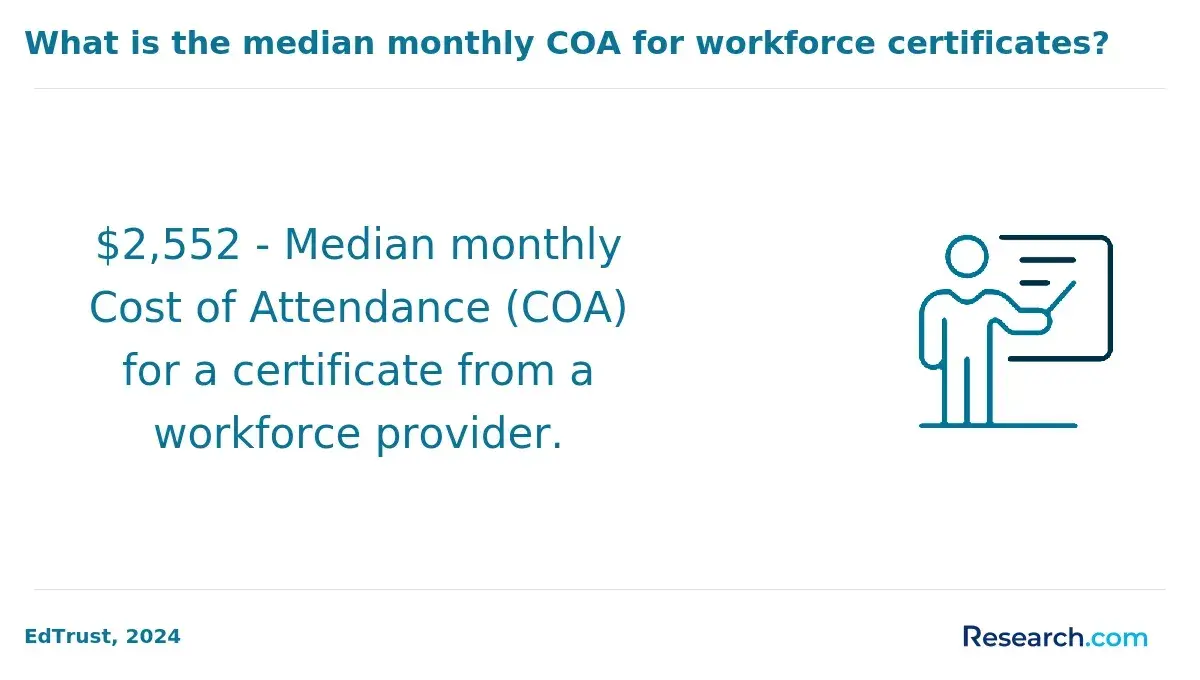
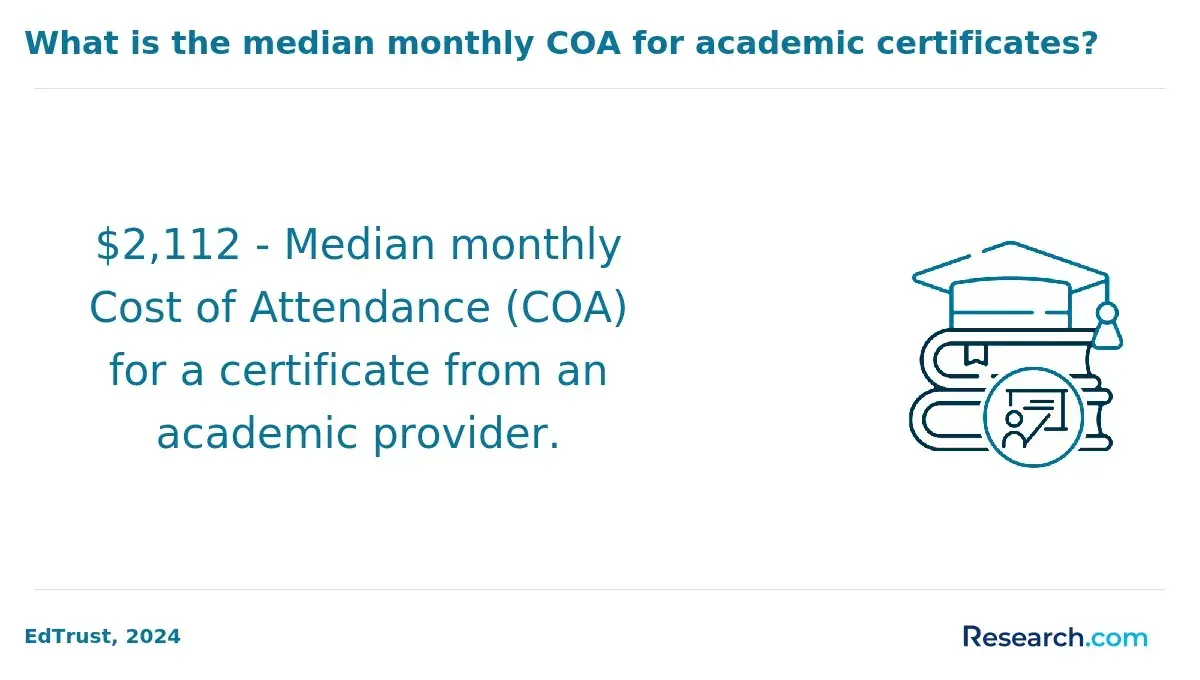
No-essay admissions do not make a program less expensive. Tuition depends on institution type, resident status, credit requirements, transfer credit policies, and fees. For context, College Board reported average published tuition and fees for the 2024-25 academic year of $12,596 for public four-year graduate programs and $29,931 for private nonprofit four-year graduate programs. Those national figures are not MSN price quotes, but they show why applicants should request program-specific estimates.
Compare total cost rather than cost per credit alone. A lower rate can be offset by more required credits, recurring technology charges, clinical fees, travel for intensives, or costs of arranging a preceptor and site. An accelerated program may reduce time to completion but can limit the ability to work full time.
The table outlines the major financial elements to compare across programs.
| Cost or aid factor | What to ask | Decision impact |
| Tuition and required credits | What is the complete tuition for the published plan of study? | Shows the baseline degree cost |
| Mandatory fees | Are there application, technology, clinical, graduation, or proctoring fees? | Prevents underestimating out-of-pocket costs |
| Employer tuition assistance | Does your health system fund graduate nursing education, and is a work commitment required? | May reduce borrowing but can affect career flexibility |
| Federal Direct Unsubsidized Loans | Are you eligible through the FAFSA, and what borrowing amount is appropriate? | Graduate students may borrow up to $20,500 annually, subject to federal limits and eligibility |
| Scholarships and grants | Are awards specific to nursing education, workforce development, or the university? | Can reduce net cost without repayment |
| Clinical and travel expenses | Will practicum work require commuting, travel, reduced work hours, or unpaid time? | Represents a meaningful indirect cost |
Complete the FAFSA early if you may use federal aid, and compare aid offers using net cost rather than the largest loan amount offered. Explore workplace support before borrowing. Nurses evaluating related health education options may also find a nutritionist degree online useful for comparison, although its licensure and career outcomes differ from graduate nurse educator preparation.
A streamlined application is easiest when documents are collected before the portal opens. Begin with the program page for your desired start term, because nursing departments can have separate deadlines, clinical requirements, and state eligibility rules from the university's general graduate school.
Follow this sequence to confirm that "no personal statement required" applies to your actual application.
- Identify the exact degree title, specialization, entry route, and intended start term rather than relying on a general MSN webpage.
- Download or save the current admissions checklist and note whether it names a personal statement, statement of purpose, writing sample, short response, or GPA explanation.
- Confirm degree eligibility, minimum GPA calculation, active RN license requirements, prerequisite courses, and whether the GRE is required or waived.
- Request official transcripts early, since schools may need records from every postsecondary institution attended.
- Update your resume to include nursing roles, licenses, certifications, precepting, staff education, leadership, and relevant volunteer work.
- Ask admissions whether references are required and, if so, give recommenders enough time and a clear deadline.
- Submit the application, monitor the portal for missing items, and complete compliance or clinical-placement steps promptly after admission.
- Obtain written clarification if an advisor gives a verbal answer about an essay waiver, tuition, accreditation, or clinical placement.
Do not submit an unsolicited essay unless a school invites additional materials. It may not be reviewed and can create confusion. However, if an application includes an optional section, use it thoughtfully to explain a relevant gap, such as an older low grade or a transition from bedside nursing into academic instruction.
Applicants changing healthcare roles should avoid assuming admissions standards transfer across professions. For example, people exploring entry-level clinical training can review medical assistant programs near me, but medical assistant education is not a substitute for the RN license and nursing background normally required for an MSN Nurse Educator program.
Most BSN-to-MSN Nurse Educator programs are designed to take roughly 18 to 30 months, depending on credit requirements, course load, transfer credits, and practicum scheduling. The absence of an admissions essay affects application workload, not the academic length of the degree. An RN-to-MSN option can take longer because it may include baccalaureate-level nursing content before graduate coursework begins.
Completion time often depends more on clinical logistics than on online coursework. Even asynchronous classes have weekly deadlines, group work, examinations, and faculty interaction. Nurse educator programs also typically require applied teaching or education practicum experiences that must be scheduled with approved sites and preceptors.
This comparison highlights the main timeline variables applicants should discuss with each school.
| Program feature | Possible effect on timeline | What to verify |
| Full-time enrollment | May shorten completion time | Expected weekly workload and course sequencing |
| Part-time enrollment | May support continued employment but extend graduation | Maximum time allowed to finish |
| Accelerated terms | Can move courses faster | Whether work and practicum demands are realistic |
| Transfer credit | May reduce remaining coursework | Credit limits, age of prior courses, and formal evaluation timing |
| Practicum placement | Can delay progression if site approval takes time | Placement responsibilities and required hours |
A practical plan is to map your expected course sequence against work shifts, family obligations, and the semester when practicum occurs. Ask whether clinical experiences can be completed at your employer, whether you can use an education department rather than a patient-care unit, and whether an approved preceptor must hold specific credentials.
Is an Online Nurse Educator Master's Degree With No Admissions Essay Worth It for Your Career?
An online Nurse Educator master's degree can be worthwhile when it matches the role you want, the employer expectations in your area, and your financial plan. It is most directly relevant for RNs seeking faculty, clinical-instructor, staff-development, patient-education, simulation, professional-development, or healthcare education roles. Requirements differ by employer: colleges may prefer or require graduate nursing education and may favor doctoral preparation for some tenure-track positions, while hospitals may focus on clinical expertise and educator experience.
The U.S. Bureau of Labor Statistics reported a 2024 median annual wage of $86,530 for postsecondary nursing instructors and teachers. This is an occupational benchmark, not an expected starting salary for every MSN graduate. Pay can vary with location, employer type, teaching load, academic rank, clinical specialty, experience, and whether a role includes administrative responsibilities.
Evaluate value using career fit rather than admissions convenience alone.
| Career goal | How an MSN Nurse Educator may help | Question to ask before enrolling |
| Community college or nursing school faculty | Builds education-focused graduate nursing preparation | Does the target employer require an MSN, a specific specialty, or doctoral study? |
| Hospital staff educator | Supports curriculum design, onboarding, competency assessment, and professional development | Will your employer recognize this specialty and offer tuition support? |
| Clinical instructor or preceptor leader | Develops teaching, evaluation, and clinical-learning skills | Does the curriculum include sufficient supervised education practicum? |
| Simulation or academic support specialist | Can strengthen instructional design and assessment knowledge | Are simulation, informatics, or instructional technology courses available? |
The degree is a stronger investment when the curriculum supports your target setting, total borrowing is manageable, and you can complete practicum work without destabilizing employment. A no-essay application is a meaningful convenience for qualified nurses, but it should be the last - not first - factor in the enrollment decision.
Other Things You Should Know About Nurse Educator
Yes. Schools sometimes use different terms for different written materials. Review the application checklist for "statement of purpose," "goal statement," "writing sample," "supplemental questions," and "GPA explanation." Ask admissions whether any of these items apply to your selected Nurse Educator track and start term.
Many do, although the required amount varies. Programs commonly expect applicants to hold an active RN license and have professional nursing experience. Experience in precepting, charge nursing, staff development, quality improvement, or patient education can be especially relevant, but it does not necessarily replace published admission criteria.
No. Nurse educator and nurse practitioner tracks prepare for different roles. A nurse practitioner pathway includes population-focused advanced practice clinical preparation and certification requirements. An MSN in nursing education prepares nurses to teach, develop curriculum, assess learning, and support professional development.
Possibly, but only with program approval. A hospital education department, nursing school, simulation center, or staff-development setting may be eligible if it meets course objectives and preceptor requirements. Confirm approval before assuming your employer can serve as a practicum site.
- College Applications Without Essays: Do They Exist? https://collegewise.com/blog/college-application-without-essay
- 30 Most Affordable Online Nurse Educator Programs https://www.bestmasterofscienceinnursing.com/best/affordable-online-nurse-educator-programs/
- Online MSN Programs No GRE Required (Master of Science in Nursing) https://www.onlineeducation.com/nursing/faqs/online-msn-programs-no-gre-required
- Masters in Nursing, Nurse Educator Specialization https://www.chamberlain.edu/academics/nursing-school/graduate-programs/msn-nurse-educator
- Nurse Educator Concentration MSN (Online) https://www.gcsu.edu/health/nursing/nurse-educator
- Master's Education https://www.aacnnursing.org/students/nursing-education-pathways/masters-education
- Why personal statements in academic admissions are (mostly) a waste of time - Acuity Insights https://acuityinsights.com/personal-statements-academic-admissions-mostly-waste-time/
- How Are College Applications Reviewed? https://www.ivywise.com/ivywise-knowledgebase/how-college-applications-are-evaluated/
- MSN Nurse Educator - Online Program | Worcester State University https://online.worcester.edu/programs/nursing/msn-educator/
- Test Optional: What it Means for Your College Applications https://www.collegeessayadvisors.com/test-optional-what-it-means-for-your-college-applications/