2027 Best Online Nurse Educator Master's Programs at Nonprofit Universities

Co-Founder and Chief Data Scientist
Choosing an online nurse educator master's program requires more than finding a convenient schedule: the degree must support your intended teaching role, certification goals, and budget. Nonprofit universities include public institutions and private schools that reinvest revenue into their educational missions rather than distributing profits to owners. This guide compares reputable online options, explains accreditation and practicum requirements, and helps working RNs assess cost, flexibility, and outcomes. The Bureau of Labor Statistics reported a $93,600 median annual wage for registered nurses in May 2024, underscoring the value of weighing educator preparation against continued clinical earning potential.
Key Things You Should Know
- Prioritize institutional accreditation, nursing-program accreditation from CCNE or ACEN, and a curriculum aligned with the National League for Nursing Certified Nurse Educator examination if certification is a goal.
- Most online MSN nurse educator pathways require roughly 30-39 credits, include a supervised education practicum, and can take about 18 months to 3 years depending on full-time or part-time enrollment.
- Compare the complete cost - not only advertised tuition - alongside faculty access, placement support, state authorization, and whether the program prepares you for academic, clinical-staff-development, or patient-education work.
Which Nonprofit Universities Offer the Best Online Nurse Educator Master's Programs, and How Were They Selected?
The best fit depends on where and whom you want to teach. A nurse educator master's degree is usually an MSN with a nursing education, educator, or academic nurse educator concentration. It prepares licensed RNs to design instruction, assess learning, supervise clinical education, and evaluate nursing curricula. Online programs commonly deliver coursework digitally while requiring local practicum hours with an approved preceptor.
The nonprofit universities below are examples of institutions commonly recognized for online MSN nursing education pathways. They are not a universal ranking: tuition, availability, state authorization, and curriculum can change. Each should be reviewed directly before applying.
| Nonprofit university | Typical program pathway | Format considerations | Best for |
| University of Alabama at Birmingham | MSN with nursing education preparation | Online coursework with practicum planning | RNs seeking a research-intensive public-university environment |
| University of South Alabama | MSN Nursing Education | Distance learning with supervised field experiences | Students wanting a public nonprofit option and educator focus |
| University of Texas at Arlington | MSN Nursing Education | Online courses; clinical or practicum requirements remain local | Working nurses needing multiple start-date possibilities |
| East Carolina University | MSN Nursing Education | Online delivery may include synchronous expectations or placement rules | Students who value public-university nursing infrastructure |
| Saint Xavier University | MSN Nursing Education | Online coursework plus education practicum | Students seeking a private nonprofit, mission-driven setting |
Selection should begin with evidence rather than a broad "best" label. Strong candidates have recognized institutional accreditation, CCNE or ACEN nursing accreditation where applicable, transparent total-cost information, qualified faculty, a feasible practicum process, and a curriculum that matches the learner's target setting.
Use this short comparison process before submitting applications:
- Confirm the university is a public or private nonprofit institution and is institutionally accredited by an accreditor recognized by the U.S. Department of Education.
- Verify the MSN nursing program's CCNE or ACEN status and review any accreditation notices.
- Request the number of credits, mandatory fees, estimated practicum expenses, and a written total-program estimate.
- Ask whether the school helps identify practicum sites and whether it accepts students in your state.
- Review faculty biographies, course sequencing, certification alignment, and graduate career support.
Why Choose a Nonprofit University for an Online Nurse Educator Master's Degree?
Nonprofit status means a university is organized around an educational mission and reinvests net revenue in operations, instruction, student services, facilities, or scholarships. It does not automatically mean lower tuition, stronger outcomes, or better online teaching. Public nonprofit universities may receive state support and often differentiate resident and nonresident tuition, while private nonprofit universities may charge one rate but offer institutional scholarships.
A nonprofit university can be a sensible choice when you want established nursing-school relationships, transparent governance, faculty scholarship, and access to university-based student services. For an RN still completing foundational education, comparing Capella RN to BSN vs Chamberlain RN to BSN pathways may be more relevant before pursuing graduate educator preparation.
The decision is strongest when nonprofit status is one part of a broader quality review. Look for these practical advantages rather than assuming the label alone proves value:
- Clear institutional oversight, published academic policies, and access to a registrar, financial-aid office, library, disability services, and student complaint procedures.
- Potential connections to affiliated health systems, nursing schools, alumni networks, and clinical education partners.
- Faculty who may combine academic credentials with current clinical, simulation, curriculum, and teaching experience.
- Eligibility for federal financial aid when the institution and program meet applicable requirements.
Choose a different option if a nonprofit program is unaffordable, unavailable in your state, or unable to support your required practicum. A well-matched accredited program matters more than whether a school is public or private nonprofit.
What Accreditation Should an Online Nurse Educator Master's Program Have?
Accreditation is central to program legitimacy, financial-aid eligibility, employer confidence, and future doctoral study. Institutional accreditation evaluates the university as a whole. Programmatic nursing accreditation evaluates nursing education standards, including curriculum, faculty, outcomes assessment, and resources. They are related but not interchangeable.
For an online MSN nurse educator program, look for institutional accreditation recognized by the U.S. Department of Education and nursing-program accreditation from the Commission on Collegiate Nursing Education (CCNE) or the Accreditation Commission for Education in Nursing (ACEN). Also verify that the specific program, location, and delivery format are covered; do not rely only on a school's general accreditation statement.
| Review item | Why it matters | What to verify |
| Institutional accreditation | Supports overall academic quality and federal-aid eligibility | The accreditor, current status, and any public sanctions or warnings |
| CCNE or ACEN nursing accreditation | Provides nursing-specific quality review | Coverage of the MSN program and accreditation period |
| State authorization | Determines whether the school can enroll and place students in your state | Your state of residence and practicum location |
| Certification alignment | Helps determine readiness for voluntary nurse educator certification | Curriculum coverage, practicum hours, and faculty guidance |
A common mistake is assuming an online MSN creates a new RN license or qualifies every graduate for faculty work in every state. Nurse educator preparation is generally not an initial nursing licensure program. Faculty qualifications, educator requirements, and clinical teaching rules may be set by employers, state boards of nursing, accreditors, or individual clinical agencies.
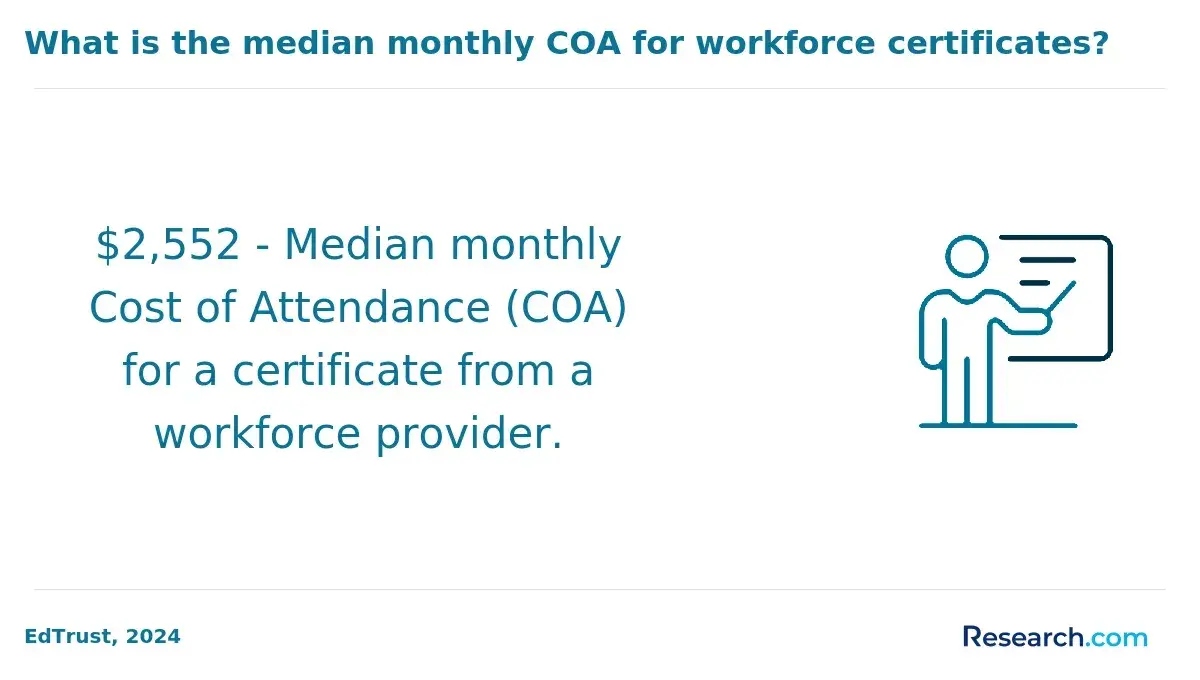
Cost varies sharply by residency, credit load, university, and required experiences. As a broad benchmark, the National Center for Education Statistics reported average graduate tuition and required fees of $12,596 at public institutions and $29,931 at private nonprofit institutions for the 2023-24 academic year. Those figures cover graduate education generally, not a specific online MSN, so they should not be treated as a program quote.
For a meaningful comparison, ask each school for a written estimate based on its required credits. The table identifies costs that often sit outside a per-credit tuition rate.
| Cost category | What it may include | How to compare it |
| Tuition | Per-credit charge multiplied by required credits | Use the program's required credit count, not a minimum estimate |
| Mandatory university fees | Technology, distance-learning, student-service, graduation, or course fees | Ask whether fees apply each term or each course |
| Practicum expenses | Background checks, immunizations, travel, parking, liability coverage, and site requirements | Estimate based on your likely placement location |
| Learning materials | Books, simulation software, examination preparation, and supplies | Identify items included in tuition versus purchased separately |
| Financing cost | Interest and origination fees if borrowing is used | Compare net price after employer aid and scholarships before borrowing |
Do not select the lowest published tuition without checking total cost and completion risk. A lower-cost program can become more expensive if inflexible course sequencing delays graduation or if a student must travel repeatedly for placement. Conversely, a higher-tuition school may be reasonable when employer tuition assistance, a strong local network, or reliable practicum support reduces other costs.
Ask about employer reimbursement, graduate scholarships, payment plans, military or veteran benefits where applicable, and federal student aid. Borrow only after comparing the expected debt with your likely career transition, because nurse educator salaries can vary substantially by setting and region.
Admissions standards differ, but applicants generally need an active, unencumbered RN license, a BSN from an accredited institution, official transcripts, and a competitive undergraduate GPA. Many programs also request a résumé, professional statement, recommendation letters, and evidence of clinical experience. Some require statistics or research prerequisites.
Graduate nurse educator programs are not typically "no-exam" nursing entry pathways. Applicants researching a nursing school with no entrance exam should distinguish undergraduate prelicensure admissions from MSN admissions, which usually evaluate prior nursing education and professional readiness instead of TEAS or HESI scores.
Before applying, confirm these points with admissions and the nursing department:
- Whether your RN license must be issued in the state where you will complete practicum experiences.
- Whether the program accepts an associate-degree RN plus a BSN from another institution and how prerequisite coursework is evaluated.
- Whether work experience must be in a specific specialty, such as acute care, community health, or maternal-child nursing.
- Whether a minimum GPA is required and whether conditional admission is available for applicants below that threshold.
- Whether transfer credits are accepted, how old they may be, and whether transferred courses shorten time to completion.
A strong personal statement should connect your clinical background to a realistic teaching goal. For example, applicants can explain whether they intend to teach prelicensure students, lead staff development, coordinate simulation education, or educate patients and families. That alignment helps identify whether a nursing education concentration - not nursing leadership, informatics, or advanced practice - is the right degree.
Most MSN nurse educator curricula combine graduate nursing core courses with education-focused coursework and a practicum. The central goal is not simply to become a subject-matter expert; it is to learn how to translate nursing knowledge into measurable learning, safe clinical instruction, valid assessment, and inclusive teaching.
Course titles differ, but students commonly study the following areas:
- Teaching and learning theories, adult learning principles, instructional design, and inclusive education.
- Curriculum development, program evaluation, accreditation standards, and outcomes assessment.
- Assessment design, test-item writing, grading, remediation, and academic integrity.
- Simulation, clinical teaching methods, debriefing, educational technology, and virtual learning design.
- Evidence-based practice, nursing research appraisal, informatics, leadership, and health policy.
- A faculty-supervised practicum in an academic, staff-development, clinical, or community education setting.
Interprofessional education can also matter, especially for educators who teach health promotion or community-based care. Nurses who want to understand adjacent online training options may find a nutritionist degree online useful as a separate comparison, but it is not a substitute for graduate nursing education or RN-based educator preparation.
Ask for a course sequence and practicum handbook. This reveals whether a program has enough pedagogy, evaluation, and supervised teaching practice for your goal. A curriculum heavily weighted toward administration may be better for management than classroom or clinical faculty work.
"Online" does not always mean self-paced or entirely remote. Many nonprofit MSN programs use asynchronous weekly modules, while others include live seminars, group projects, virtual presentations, proctored assessments, or limited campus intensives. Practicum experiences are usually completed in person at an approved local site, even when all didactic courses are online.
Programs commonly require about 30-39 credits. A full-time student may finish in roughly 18-24 months when courses are offered in a fixed sequence, while part-time enrollment often extends the timeline to 2-3 years. Actual timing depends on transfer credit, course availability, leaves of absence, and whether a practicum site is approved on schedule.
| Format | Typical fit | Trade-off to evaluate |
| Mostly asynchronous online | Shift-working RNs who need weekly scheduling freedom | Requires strong time management and may still have deadlines |
| Online with live sessions | Students who value real-time faculty and peer interaction | Meeting times may conflict with clinical shifts or time zones |
| Hybrid or campus-intensive | Students who want hands-on workshops or simulation experiences | Adds travel, lodging, and schedule demands |
| Part-time sequence | RNs maintaining full-time employment or caregiving duties | Longer completion time and potentially more fee-bearing terms |
| Accelerated sequence | Students with reliable availability and financial capacity | Compressed deadlines can make practicum coordination difficult |
Before committing, obtain the academic calendar and ask whether courses are cohort-based, whether attendance is required at set times, and when practicum planning begins. The most common flexibility mistake is counting only class time and overlooking field hours, preceptor meetings, compliance paperwork, and group assignments.
Online graduate students need more than a learning-management system. Useful support includes responsive faculty, a dedicated clinical or practicum coordinator, research librarians, writing assistance, technical help, career advising, and accessible disability services. Because nurse educator roles rely on communication and professional relationships, cohort interaction and mentoring can be as valuable as course convenience.
Ask programs how they support students at the points most likely to delay progress:
- Practicum approval, preceptor agreements, affiliation contracts, immunization tracking, and background-check requirements.
- Faculty feedback on teaching demonstrations, assessment design, simulation debriefing, and scholarly projects.
- Access to tutoring, graduate writing support, statistical consultation, library databases, and technology training.
- Connections to alumni, local nursing schools, hospital education departments, professional associations, and job postings.
- Career coaching for academic résumés, teaching portfolios, interview preparation, and negotiation of faculty appointments.
Students considering broader teaching and social-science perspectives can compare an accredited online bachelors in sociology as a separate undergraduate pathway, but nurse educator employers generally prioritize nursing preparation, RN experience, graduate education, and demonstrated teaching ability.
Evaluate support using concrete questions: Who approves my practicum site? How quickly do faculty normally respond? Can I speak with a current student or recent graduate? Are faculty available outside scheduled sessions? A school that provides specific answers is usually easier to assess than one that relies on general promises of "personalized support."
An MSN in nursing education can support careers in colleges of nursing, vocational nursing programs, hospitals, health systems, simulation centers, public-health organizations, and continuing professional development. Job titles vary and may include nursing instructor, clinical faculty member, staff development educator, professional development specialist, simulation educator, patient educator, or curriculum coordinator.
Salary depends on setting, region, credentials, clinical specialty, teaching load, and employer policies. The U.S. Bureau of Labor Statistics reported a $79,940 median annual wage for postsecondary nursing instructors and teachers in May 2024. This national occupation-level figure is useful context, not a prediction of an individual offer; academic faculty, hospital education, and part-time clinical instruction can have very different compensation structures.
| Role | Typical responsibilities | Common employer expectations |
| Academic nurse educator | Teach classroom, lab, and clinical courses; evaluate student performance | MSN, active RN license, clinical expertise, and teaching preparation |
| Clinical instructor | Supervise students in patient-care settings and assess safe practice | Current clinical competence and eligibility under school and board requirements |
| Staff development educator | Design onboarding, competency validation, and continuing education | Clinical experience, instructional design ability, and quality-improvement skills |
| Simulation educator | Develop scenarios, facilitate simulations, and lead debriefing | Simulation training, communication skills, and technology fluency |
| Patient or community educator | Develop health education for patients, families, or populations | Health-literacy expertise and community or specialty knowledge |
Career outcomes are strongest when the practicum, portfolio, and prior RN experience point toward the same role. For example, an ICU nurse who wants hospital education should seek a practicum in professional development, while an RN pursuing faculty work should prioritize classroom, simulation, and student-evaluation experiences.
Nursing education skills can transfer across healthcare training settings. Those exploring entry-level allied-health education should understand that medical assistant programs near me are a different educational and career pathway, with distinct scope, credentialing, and instructor requirements.
Is an Online Nurse Educator Master's Degree From a Nonprofit University Worth It?
An online nurse educator master's degree can be worth the investment for an experienced RN who wants to move into teaching, staff development, simulation, or curriculum work and can complete required practicum experiences without excessive debt or disruption. It is especially practical for nurses who need to remain employed while studying and who value an accredited university with established nursing resources.
It may be less compelling if your goal is advanced clinical practice, independent diagnosis and treatment, executive administration, or data-focused informatics work. In those cases, an NP, DNP, nursing leadership, or nursing informatics pathway may better match the role. An MSN educator concentration also does not guarantee a faculty job; hiring standards, local demand, and available teaching experience matter.
A final decision should balance these trade-offs:
- Choose affordability when employer reimbursement, lower borrowing, and a manageable total cost outweigh brand recognition.
- Choose stronger practicum support when you lack academic or hospital education contacts and need help accessing a suitable site.
- Choose a flexible part-time format when maintaining RN income is necessary, even if graduation takes longer.
- Choose an accelerated option only when your work schedule, finances, and practicum availability can support compressed deadlines.
- Choose a different degree when your desired role requires advanced practice certification, administrative preparation, or informatics specialization rather than education-focused coursework.
The best value is not automatically the cheapest or highest-profile program. It is the accredited nonprofit program that accepts students in your state, fits your schedule, provides an achievable practicum plan, and builds the teaching skills needed for your intended employer.
Other Things You Should Know About Nurse Educator
Yes, an accredited online MSN with a nursing education concentration can prepare an RN for educator roles when it includes appropriate pedagogy and practicum experiences. Employers may also require a current RN license, specialty experience, faculty credentials, or eligibility under state nursing-board and clinical-site rules.
The National League for Nursing Certified Nurse Educator credential is voluntary, not a universal legal requirement. It can demonstrate educator-focused knowledge and may be preferred by some employers, but schools and health systems set their own hiring standards.
Employers generally focus on the university's accreditation, nursing-program quality, RN licensure, graduate curriculum, practicum experience, and your clinical background rather than online delivery alone. Confirm that the degree transcript does not create barriers for the employers or states where you plan to work.
Some programs allow this if the experience involves new educator responsibilities, a qualified preceptor, and clear separation from your regular job duties. Approval is not automatic, so obtain written confirmation from the program before relying on an employer-based placement.
- Master of Science in Nursing | Nurse Educator | Methodist College https://www.methodistcol.edu/academics/graduate-school/msn-nurse-educator
- School of Nursing https://www.ohsu.edu/school-of-nursing/nursing-education-online
- Online Master in Nurse Educator (MSN) Degree | South University https://www.southuniversity.edu/online/degrees-programs/nursing/nurse-educator-msn
- Masters in Nursing, Nurse Educator Specialization https://www.chamberlain.edu/academics/nursing-school/graduate-programs/msn-nurse-educator
- Master of Science in Nursing Education https://www.niagara.edu/programs/ms-ed-nursing-education/
- MSN Nurse Educator - Online Program | Worcester State University https://online.worcester.edu/programs/nursing/msn-educator/
- Master of Science in Nursing - Nurse Educator https://centralmethodist.edu/academics/graduate/master-of-science-nursing/msn-nurse-educator.html
- Master of Science in Nursing Education https://www.msmc.edu/programs/master-of-science-in-nursing-education/
- Online MSN in Nursing Education | Master's in Nursing Online | Rivier https://www.rivier.edu/academics/all-programs/msn-nursing-education/
- Master of Science in Nursing - Nurse Educator https://www.usuniversity.edu/degrees/master-of-science-in-nursing-nurse-educator