2027 Online MSN-to-DNP Programs for Nurses in Georgia: Project, Practice Hours, and Total Cost
Audited and Verified:
Our Editorial and Data Verification Process
Research.com uses government datasets, official education statistics and primary institutional information to support its career and degree guides. Our review process checks factual accuracy, occupational definitions, source dates and the requirements associated with the credentials discussed.
How This Article Was Fact-Checked
Our editorial team verifies salary estimates, employment projections, education requirements and program information against original data providers and official organizations. Salary figures are checked against the relevant occupational definitions and reporting periods. Information about licensure, accreditation and required in-person training is reviewed separately.
Fact-checked and verified on:

Co-Founder and Chief Data Scientist
An online MSN-to-DNP program can let an experienced Georgia nurse pursue a practice doctorate without leaving work, but "online" does not eliminate practice hours, a substantial project, or possible campus visits.
The right choice depends on what your MSN already covered and whether you want to deepen an existing role or qualify for a different one. This guide shows you how to compare Georgia programs, document prior hours, assess project feasibility, and calculate the full cost before committing.
Key Things You Should Know
- MSN-to-DNP programs build on an existing nursing master's degree; a leadership-focused DNP does not, by itself, qualify a nurse for a new APRN population focus.
- Schools commonly assess prior graduate practice hours against a 1,000-hour post-baccalaureate practice expectation, but the additional hours you must complete depend on the program's review of your records.
- Compare written, individualized estimates of remaining credits, approved practice hours, required visits, project support, and fees - not advertised tuition alone.
What are online MSN-to-DNP programs in Georgia?
An online MSN-to-DNP program is a post-master's Doctor of Nursing Practice pathway for nurses who already hold an MSN or another graduate nursing credential accepted by the school. Its coursework is delivered primarily online, while supervised practice activities and a DNP project take place through approved sites and faculty oversight. Some programs also require in-person intensives.
These programs commonly emphasize evidence-based practice, quality improvement, systems leadership, and translating evidence into care. They are not initial nursing programs. Someone seeking a first nursing credential should investigate an entry route, such as shorter practical nursing study pathways, rather than an MSN-to-DNP.
The crucial distinction for an MSN-prepared nurse is degree advancement versus new specialty preparation. An APRN who remains in the same population focus may want doctoral practice preparation. An MSN-prepared nurse seeking a new NP role needs a program that explicitly provides the required population-focused education and supervised direct-care experiences; a general post-master's DNP may not do so.
Which Georgia schools offer accredited online MSN-to-DNP programs?
Georgia-based universities worth screening for post-master's DNP study include Augusta University, Georgia Southern University, and Georgia State University. Do not treat this as a confirmed list of currently open, fully online, identically accredited tracks: degree offerings, entry terms, delivery methods, and accreditation scope can change. Request the current post-master's plan of study from each school before applying.
The comparison below identifies what to verify rather than assigning features that may differ by track or enrollment term.
| Georgia school to investigate | Questions that determine fit |
| Augusta University | Is the post-master's option open for your entry term, and what visits, practice activities, and project arrangements does it require? |
| Georgia Southern University | Which existing MSN specialties are accepted, and how does the school evaluate documented prior hours? |
| Georgia State University | What portion is online, where may project work occur, and who helps secure an appropriate site? |
For every candidate, check the institution's accreditation and the nursing program's current accreditation status and scope directly with the relevant accreditor, such as CCNE or ACEN. Then ask the school whether it may enroll a student living in your state and whether your proposed practice site is eligible. Accreditation, state enrollment authorization, and an individual student's placement approval answer different questions. If you are comparing schools beyond this shortlist, comparing DNP admission criteria can help you identify questions to put to each program, but confirm the answers with the school.
What are the admission requirements for Georgia online MSN-to-DNP programs?
Georgia online MSN-to-DNP applicants should expect a review of graduate preparation, active nursing licensure, academic performance, professional goals, and readiness to complete practice and project work. A school may also request recommendations, a résumé, an interview, or a proposed area of improvement. Requirements vary by institution and track.
Before applying, collect both academic and practice records. A transcript may establish that you earned an MSN, but it may not show the population focus, supervised activities, or hours a DNP program will accept. Ask your former program for course descriptions and a verified breakdown of graduate practice hours, then ask the receiving school for a written gap assessment showing what remains.
Already-certified APRNs should identify their present population focus and whether they intend to change it. Nurses with a non-APRN MSN should not assume a DNP application includes NP preparation. Likewise, professional experience can inform an admissions review without automatically replacing required supervised education. Graduate admission criteria should not be confused with comparing nursing admission test policies for entry-level nursing programs; ask each DNP school which, if any, assessments it actually requires.
The meaningful difference between online and campus-based MSN-to-DNP study is where and when academic work happens - not whether practice expectations disappear. Online courses can reduce routine commuting, but live classes, team assignments, site meetings, project approvals, and required visits may still constrain a working nurse's schedule.
Use this comparison to test whether the advertised format fits your job and project site.
| Consideration | Primarily online program | Primarily campus-based program |
| Course attendance | Remote coursework; confirm live-session times and any intensives | Regular travel for scheduled classes or activities |
| Practice and project work | Usually completed through school-approved arrangements that may be near home | May draw more heavily on local campus or institutional relationships |
| Practical constraint | Remote coordination of site, mentor, faculty, and data access | Commute and campus scheduling alongside those same project obligations |
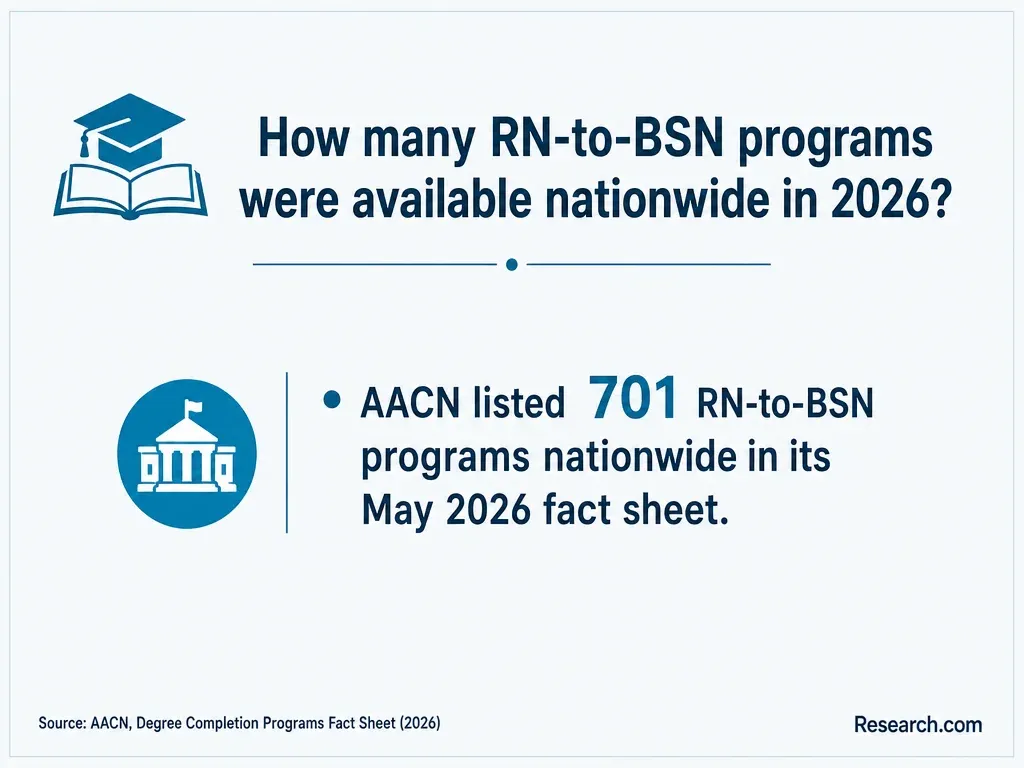
Ask for the term-by-term calendar, including any mandatory dates, before deciding that online delivery will work with shifts or caregiving. Also check the distinction between online coursework and reduced clinical work: discussions of RN-to-BSN capstone and practice requirements concern a different degree and do not establish what a doctoral program will accept.
Post-master's DNP curricula generally concentrate on advanced nursing practice at the systems level: evaluating evidence, measuring outcomes, leading change, and completing a practice project. The exact courses and sequence depend on the institution and whether the student also needs specialty preparation.
These common course areas show what to look for in a plan of study and how each supports the final project.
- Evidence appraisal and implementation: selecting defensible interventions and assessing whether they fit a practice setting.
- Quality improvement and measurement: defining outcomes, collecting appropriate data, and interpreting results and limitations.
- Leadership, policy, and population health: addressing changes that cross teams, services, or patient groups.
- Informatics and project courses: managing workflows, data stewardship, project milestones, and dissemination.
Review the actual course map rather than assuming that a familiar specialty label signals new APRN eligibility. For example, psychiatric MSN study with condensed timelines concerns specialty preparation, while a post-master's DNP may principally develop a nurse's existing practice and improvement skills.
There is no single additional-hour number that applies to every Georgia MSN-to-DNP student. DNP programs commonly use a minimum of 1,000 post-baccalaureate practice hours across qualifying graduate preparation as a planning benchmark. The receiving school decides which documented MSN hours count, what doctoral-level experiences remain, and how those hours must be supervised and assessed.
For a useful estimate, request the program's hour-accounting policy and an individualized audit. Ask whether it distinguishes prior direct patient care from other graduate practice, what documentation it requires, whether your current workplace can serve as a site, and who approves a preceptor or mentor. Paid employment, volunteer time, simulation, and project activity should not be counted interchangeably without explicit school approval.
A nurse changing APRN population focus has a separate question: whether the intended specialty program provides the supervised direct-care experiences needed for its certification and state requirements. The pace advertised for comparing 12-month family NP programs does not establish that an MSN-to-DNP student can waive new population-specific preparation.
A DNP project is a faculty-guided application of evidence to a real practice, education, or organizational problem. Depending on school policy and site approval, it might evaluate a care-coordination workflow, a staff-education intervention, or a quality measure. It is not automatically a PhD-style dissertation or a claim to have produced publishable research.
Project feasibility should influence program choice early. Before committing to a site or topic, establish who owns the problem, what change is permitted, which measures are available, how much time the baseline and follow-up periods require, and who can authorize access to data. Faculty and the host organization must determine the appropriate privacy safeguards and whether quality-improvement, institutional review, or other oversight is required. A project proposal is not evidence of completed results.
Ask prospective programs for their project handbook, milestones, site agreement requirements, and rules for dissemination, particularly if you are continuing from an ADN into MSN study. An undergraduate capstone discussed under RN-to-BSN capstone and practice requirements would be a useful contrast, but because that resource addresses a different credential, the DNP school's handbook must control your project plan.
Completion time depends on remaining credits and hours, whether courses run year-round, and how quickly a site can approve and sustain the project. An applicant whose prior MSN hours are well documented may receive a different schedule from an applicant who needs substantial additional practice or specialty coursework. A published "fastest" timeline is therefore not a personal graduation date.
Ask each school for a term-by-term plan based on your transcripts and hour audit. Confirm whether project courses must be taken in sequence, whether enrollment is required while approvals or data collection continue, and what happens if a site or preceptor becomes unavailable. Nurses considering a new PMHNP focus rather than primarily doctoral advancement should also compare the time needed for shorter psychiatric-mental health NP certificates, subject to an individualized eligibility review.
The total cost of a Georgia online MSN-to-DNP is more than the posted per-credit tuition. Without a verified, entry-term-specific tuition schedule and an individual credit and hour audit, a reliable school-by-school total cannot be stated. Compare written estimates that use the same assumptions: your residency, remaining credits, enrollment pace, and expected project duration.
These components belong in a total-cost estimate because they can change which apparently affordable program costs less to finish.
- Academic charges: remaining credits multiplied by the applicable tuition rate, plus mandatory university, nursing, online, and continuing-enrollment fees.
- Practice and project costs: required travel or lodging, site-related requirements, software or materials, and any costs associated with approved data collection.
- Household and work costs: reduced shifts, childcare, and any additional term caused by delayed placement or project approval.
- Funding offsets: only scholarships, aid, or employer reimbursement for which you have confirmed eligibility and conditions.
Request an itemized estimate from each school and ask whether fees continue during a project extension. If your immediate objective is specialty preparation rather than a doctorate, compare that estimate with the appropriate alternative; budget planning for BSN-to-MSN study addresses an earlier degree stage and should not be mistaken for an MSN-to-DNP price quote.
What careers, salaries, and certifications follow a Georgia MSN-to-DNP?
An MSN-to-DNP may support advancement in an existing APRN role or strengthen preparation for nursing leadership, practice improvement, education, or informatics work. The attainable role still depends on the nurse's license, population-focused education, experience, employer requirements, and - where applicable - national certification. A non-APRN DNP does not create NP eligibility or expand legal scope of practice.
Salary comparisons need the same discipline. The U.S. Bureau of Labor Statistics reports wages by occupation, such as nurse practitioner, rather than a salary earned because someone holds a DNP. An occupation-wide median cannot predict a Georgia offer or the financial return on this degree. Compare actual openings and employer pay ranges for your intended role against the program's full cost and any income you would give up.
If your objective is a new psychiatric NP role, determine first whether you need population-focused education and certification eligibility; a post-master's certificate or appropriate specialty program may be more direct than a general DNP. Comparing online psychiatric NP programs by cost can frame that separate decision. Before enrolling in any route, check the current rules of the relevant certifying organization and Georgia nursing regulator for your intended practice.
Other Things You Should Know About Nursing
Possibly, but online enrollment authorization and eligibility to use a practice site depend on your location and the school's policies. Get confirmation for your state before applying.
It may. Ask whether doctoral nursing courses qualify, what grades or continued service are required, when reimbursement is paid, and whether project-related expenses are excluded.
Not necessarily. Schools set their own completion and dissemination requirements; a presentation or other approved scholarly product may be required instead of journal publication.
A PhD is generally the more direct route for a career centered on generating original research. A DNP is practice-focused; compare each program's faculty, methods training, and required scholarly work against your goal.
- Accreditation in the U.S. | ed.gov http://www.ed.gov/laws-and-policy/higher-education-laws-and-policy/college-accreditation/accreditation-in-the-us
- Supporting Student Success: A Meaningful and Efficient Teaching Strategy to Document Practice Hours - PMC https://pmc.ncbi.nlm.nih.gov/articles/PMC7854943/
- Cost of Attendance (Budget) | 2025-2026 Federal Student Aid Handbook https://fsapartners.ed.gov/knowledge-center/fsa-handbook/2025-2026/vol3/ch2-cost-attendance-budget
- Dissemination of doctor of nursing practice project findings | PubMed https://pubmed.ncbi.nlm.nih.gov/36396500/
- Authorization FAQ | Georgia Nonpublic Postsecondary Education Commission https://gnpec.georgia.gov/authorization/faq/authorization-faq
- State Authorization | Georgia State Online https://online.gsu.edu/about/state-authorization/
- Doctor of Nursing Practice, D.N.P. | gsu.edu https://www.gsu.edu/program/nursing-practice-dnp/
- Graduate Programs | MSN | Enrollment Requirements | UAH https://www.uah.edu/nursing/graduate-programs/msn/grad-enrollment
- Admissions | Mennonite College of Nursing | Illinois State https://nursing.illinoisstate.edu/academics/dnp/admissions/
- Doctor of Nursing Practice (DNP) - UA Online https://online.ua.edu/degrees/doctor-of-nursing-practice-dnp/