2027 Online MSN Nursing Education Programs for Nurses in Kansas: Teaching Practicum and Cost
Audited and Verified:
Our Editorial and Data Verification Process
Research.com uses government datasets, official education statistics and primary institutional information to support its career and degree guides. Our review process checks factual accuracy, occupational definitions, source dates and the requirements associated with the credentials discussed.
How This Article Was Fact-Checked
Our editorial team verifies salary estimates, employment projections, education requirements and program information against original data providers and official organizations. Salary figures are checked against the relevant occupational definitions and reporting periods. Information about licensure, accreditation and required in-person training is reviewed separately.
Fact-checked and verified on:

Co-Founder and Chief Data Scientist
An online MSN in nursing education can prepare an experienced Kansas RN to teach, but "online" does not mean the teaching practicum can be completed from anywhere or that tuition is the only expense.
This guide focuses on the decisions that matter before enrollment: whether a program accepts Kansas students, how its supervised teaching experience works, what the full degree will cost, and whether its curriculum fits the teaching job you want. It also explains what to verify directly with a school when published program details are incomplete or subject to change.
Key Things You Should Know
- Budget for tuition, required fees, and practicum-related expenses; a per-credit price alone is not a reliable total-program quote.
- Confirm three separate matters before enrolling: institutional accreditation, nursing-program accreditation, and approval of your proposed teaching site and supervisor.
- Part-time study may take roughly two to three years, but course sequencing and access to an approved practicum, not online coursework alone, determine your finish date.
What are online MSN nursing education programs in Kansas?
These are postlicensure Master of Science in Nursing programs, or MSN tracks, designed to help registered nurses teach nursing students, practicing nurses, or patients. Coursework may be online while supervised teaching takes place at a school, health system, or other approved site. A nursing education MSN is not a nurse practitioner program and does not, by itself, confer an APRN license.
For a Kansas RN, "in Kansas" can mean a Kansas-based school or an out-of-state online school authorized to enroll Kansas residents and able to approve a Kansas teaching site. Both can be worth considering. Ask each school for its current degree plan and written confirmation of Kansas enrollment eligibility before treating an advertised online option as available to you.
If you are an ADN-prepared RN, check whether you need a BSN before applying. BSN completion pathways with alternative practice experiences may be one step toward graduate eligibility, but a BSN program's practice requirements do not replace an MSN teaching practicum.
Which Kansas online MSN nursing education programs are accredited?
No fixed list of accredited Kansas online nurse-educator tracks is dependable without checking the school's current catalog and the accreditor's current program listing.
Begin by asking Kansas schools you are considering, including Emporia State University and Fort Hays State University, whether they currently enroll students in an online MSN nursing education track. Then verify the exact degree and accreditation scope rather than assuming that accreditation of a different nursing degree covers it.
The checks below answer different questions and should not be substituted for one another.
| Check | What to confirm | Why it matters |
| Institutional accreditation | The university's current accreditation status | Applies to the institution; does not identify the MSN specialty |
| Nursing-program accreditation | Whether the MSN is included in the current CCNE or ACEN accreditation scope | Establishes the accreditation status of the nursing degree, not automatic approval of every practicum site |
| Kansas enrollment eligibility | Whether the school may enroll a student residing in Kansas for your entry term | Online availability can depend on state authorization and school policy |
| Teaching placement | Whether the school will approve your proposed Kansas site and supervisor | An accredited online degree can still be impractical if you cannot complete its practicum |
State-board approval of prelicensure nursing programs serves a different purpose from accreditation of a postlicensure MSN. Likewise, a school's admissions standards do not establish a graduate's eligibility for another credential; a guide to DNP program admission accessibility addresses a different decision from checking an educator MSN's accreditation and placement rules.
How much do online MSN nursing education programs in Kansas cost?
A defensible Kansas-specific total cannot be calculated without a current, program-specific tuition schedule, required credit count, fee schedule, and your enrollment plan. Schools may price graduate nursing credits differently from other online courses, and published tuition may exclude practicum expenses. Request an itemized estimate for your intended start term rather than relying on a headline per-credit rate.
Use the following cost components to compare written estimates from schools on the same basis:
- Tuition price: required credits multiplied by the applicable graduate nursing rate, accounting for any prerequisite or repeated courses.
- Required fee prices: online, technology, nursing, graduation, and practicum fees, where applicable.
- Teaching-placement costs: screening, travel, parking, and any time away from paid work.
- Learning-material costs: books, software, and equipment required for teaching or simulation assignments.
Ask whether employer tuition assistance covers graduate nursing courses, when reimbursement is paid, and whether you must remain employed afterward. Compare total out-of-pocket cost and forgone earnings, not tuition alone. For an RN who still needs a bachelor's-to-master's pathway, comparing lower-cost BSN-to-MSN routes can help frame the cost question, provided each route actually includes the educator preparation you need.
A teaching practicum is supervised application of educator skills, not simply additional bedside work. Depending on the program, a student might develop lessons, teach a class or staff-development session, facilitate simulation, assess learning, and revise instruction using faculty feedback.
The school determines acceptable activities, required hours, documentation, and how performance is evaluated; there is no single practicum-hour figure that can safely be applied to every Kansas option.
Before accepting an offer, request the practicum handbook and ask who finds the site, who can supervise you, when agreements must be signed, whether your employer can host the experience, and whether teaching must occur during weekday hours.
Your current job is not automatically an approved placement. An employed RN may be able to use a workplace site, but only if the school approves the setting, supervisor, activities, and separation of paid duties from credited learning.
This is a different placement problem from finding patient-care preceptors for advanced practice training. Preceptor-provided FNP program comparisons should not be used as evidence that an educator program supplies a teaching supervisor. Confirm placement assistance in writing for the education track.
Expect graduate nursing foundations alongside courses on how people learn, how to design instruction, and how to evaluate whether it worked. Exact course titles and the balance of classroom, clinical, and staff-development teaching vary by school.
The most decision-relevant curriculum elements are these:
- Graduate nursing foundations, such as evidence appraisal, healthcare policy, and quality improvement.
- Curriculum design, instructional methods, accessible learning materials, and assessment of student or staff competence.
- Clinical teaching, simulation facilitation, feedback, and evaluation of learners in supervised settings.
- A teaching practicum or educator-focused project with documented faculty oversight.
Compare syllabi with your intended role. Someone seeking to teach clinical reasoning to nursing students should examine clinical-instruction and simulation content; a hospital staff-development applicant should look closely at competency assessment and continuing education.
If your goal is instead to provide psychiatric advanced practice care, cost-focused online psychiatric NP options concern a different curriculum, supervised clinical preparation, and credential pathway.
Most postlicensure educator pathways expect an RN license and prior nursing education, but schools set their own degree, GPA, experience, and application requirements. Some accept ADN-prepared RNs through a bridge sequence; others require a BSN before MSN coursework. A nurse with an RN license and a non-nursing bachelor's degree should request an individual eligibility review rather than assume either automatic admission or exclusion.
Ask admissions to confirm the entry credential, acceptable RN license status, transcript review, any statistics prerequisite, required clinical experience, recommendations, and whether practicum-site screening occurs before or after admission. ADN-prepared RN graduate study options are useful only if the specific route awards the educator preparation you want and its bridge coursework fits your budget and schedule.
A working RN studying part time may need roughly two to three years, but that is a planning range, not a promise for any named Kansas school. Credit load, required bridge courses, course availability, and the term in which the teaching practicum is offered can all change the finish date. Full-time study may be faster if the school permits it and you can meet supervised teaching commitments.
Request a term-by-term plan showing the first possible practicum term and any courses offered only once a year. If you work shifts or provide family care, also check live-session times, daytime site hours, and leave-of-absence rules. A later doctorate is a separate undertaking: online DNP program length comparisons should not be added to an MSN timeline unless you have decided that a DNP serves your teaching goal.
An educator MSN can support applications for nursing faculty, clinical instructor, simulation educator, and nursing professional development roles. The best fit depends on what and whom you want to teach.
Colleges may weigh academic teaching experience and degree-level faculty policies; health systems may place greater weight on current specialty practice, onboarding experience, and competency assessment.
A practicable transition is to document teaching you already do, such as approved precepting or staff education, then use the MSN practicum to build evidence of lesson design, delivery, feedback, and revision. A degree alone does not guarantee a faculty appointment or authority to supervise every clinical specialty.
Teaching nurses and practicing as an NP are distinct career goals. Shorter routes to family NP preparation do not replace an educator track when the target job is teaching; conversely, an educator MSN does not qualify its graduate for FNP practice.
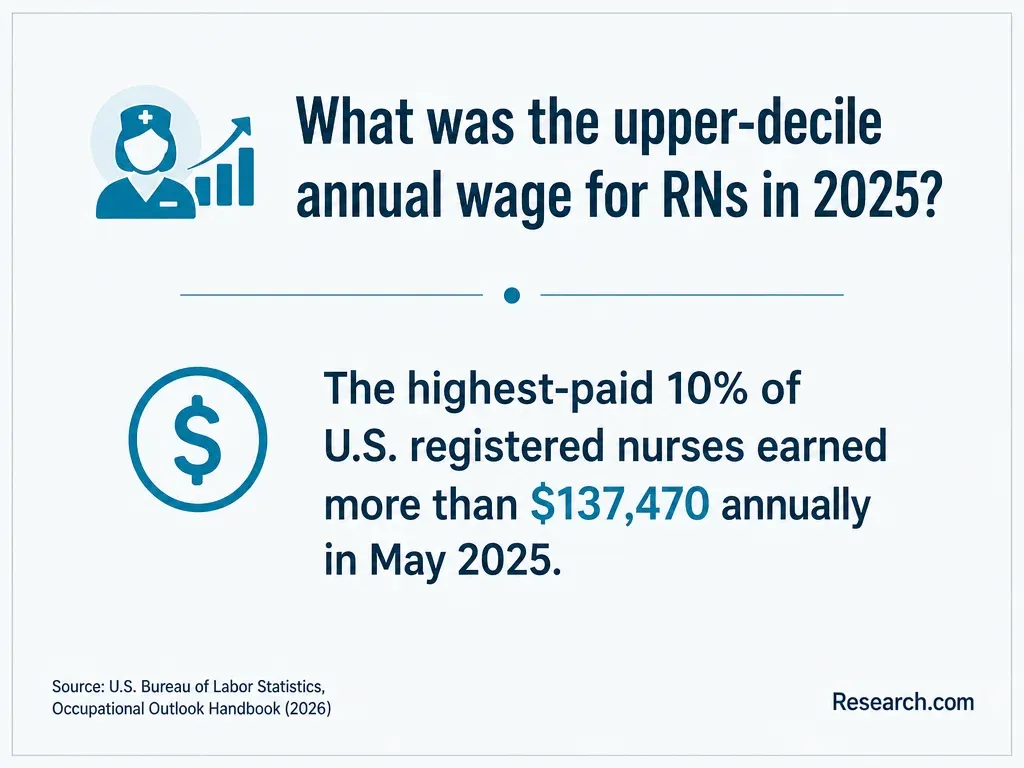
There is no single Kansas "MSN nurse educator salary." Academic nursing faculty are commonly compared with the U.S. Bureau of Labor Statistics occupation nursing instructors and teachers, postsecondary. Hospital-based educators may be classified under different employer job titles, so an academic occupation figure should not be presented as their expected pay.
For a useful local comparison, obtain current Kansas postings or written offers for the setting you want and check whether the figures are for nine-month or 12-month appointments, whether clinical work is required, and what benefits are included. Compare those terms with your current RN compensation and the full cost of study. An occupation-wide wage is not a promised return on an MSN.
If your financial goal is tied to advanced practice rather than teaching, cost comparisons across online NP pathways address a different investment; compare costs only after identifying the job and credential each degree actually prepares you for.
What licensing and certification options do MSN nurse educators need?
Nurse educators generally need an RN license appropriate to their nursing duties, and employers may require an active license and recent clinical competence for clinical teaching. The Kansas State Board of Nursing governs Kansas nursing licensure; a university awards the degree, while an employer sets job-specific hiring and competency requirements. An educator MSN neither creates a new nursing license nor grants APRN authority.
Professional nurse-educator certification can be valuable later, but eligibility depends on the certifying organization's current education and teaching-experience rules. Check the exact credential and eligibility guide before paying for an exam or assuming graduation makes you eligible.
If you already hold a graduate nursing degree and want family NP practice instead, accelerated postgraduate family NP certificates address a separate supervised clinical and certification pathway, not an educator credential.
Other Things You Should Know About Nursing Programs
Some employers use RNs as preceptors or skills instructors, but duties and supervision vary. Ask about the specific role; precepting experience is not the same as meeting a college's faculty qualifications.
Possibly. The receiving DNP program decides which graduate courses apply to its curriculum. Keep syllabi and request a written degree audit before assuming credits will shorten the program.
Potentially, but the employer or school sets faculty and clinical-supervision rules. If your duties include nursing practice or supervising clinical learning across state lines, confirm applicable licensure and site requirements first.
Usually only with appropriate permission and removal of patient, student, and employer-confidential information. Ask your school and placement site what you may share before publishing slides, evaluations, or examples of learner work.
- Understanding College Costs | studentaid.gov https://studentaid.gov/resources/prepare-for-college/students/choosing-schools/consider-costs
- Residency FAQ | Kansas Board of Regents https://kansasregents.gov/students/residency_faq
- Cost of Attendance (Budget) | 2025-2026 Federal Student Aid Handbook https://fsapartners.ed.gov/knowledge-center/fsa-handbook/2025-2026/vol3/ch2-cost-attendance-budget
- Online MSN Nurse Educator Program | Chamberlain University https://www.chamberlain.edu/nursing-programs/master-of-science-in-nursing/msn-nurse-educator
- MSN Nursing Education - MidAmerica Nazarene University https://www.mnu.edu/pgs/msn-nursing-education/
- Preceptor Roles & Responsibilities - WSU College of Nursing https://nursing.wsu.edu/preceptor-roles-responsibilities/
- Master of Science in Nursing - Wichita State University https://www.wichita.edu/academics/health_professions/nursing/graduate/msn.php
- Clinical Leadership Practicum Orientation and Training | kumc.edu https://www.kumc.edu/school-of-nursing/about/preceptors/bachelor-of-science-in-nursing-preceptor/clinical-leadership-practicum-orientation-and-training.html
- KU Estimated Cost of Attendance | The University of Kansas https://financialaid.ku.edu/estimated-cost-of-attendance