Online MBA in Organizational Change: Admissions Guide for International Applicants

Co-Founder and Chief Data Scientist
Applying to a US online MBA from another country involves more than meeting an academic deadline. You need to know whether the school accepts students where you live, how it evaluates your degree, and whether the program's schedule and credential will serve your career goals.
This guide explains the admissions questions specific to international applicants, then puts curriculum, cost, recognition, and career outcomes in context. Use it to decide which programs are worth applying to - and what to confirm before paying an application fee.
Key Things You Should Know
- International applicants should confirm overseas enrollment eligibility, credential-evaluation rules, English-language policies, and live-session times with each school before applying.
- An online US MBA does not, by itself, provide a US student visa or work authorization; check immigration implications separately if working in the US is your goal.
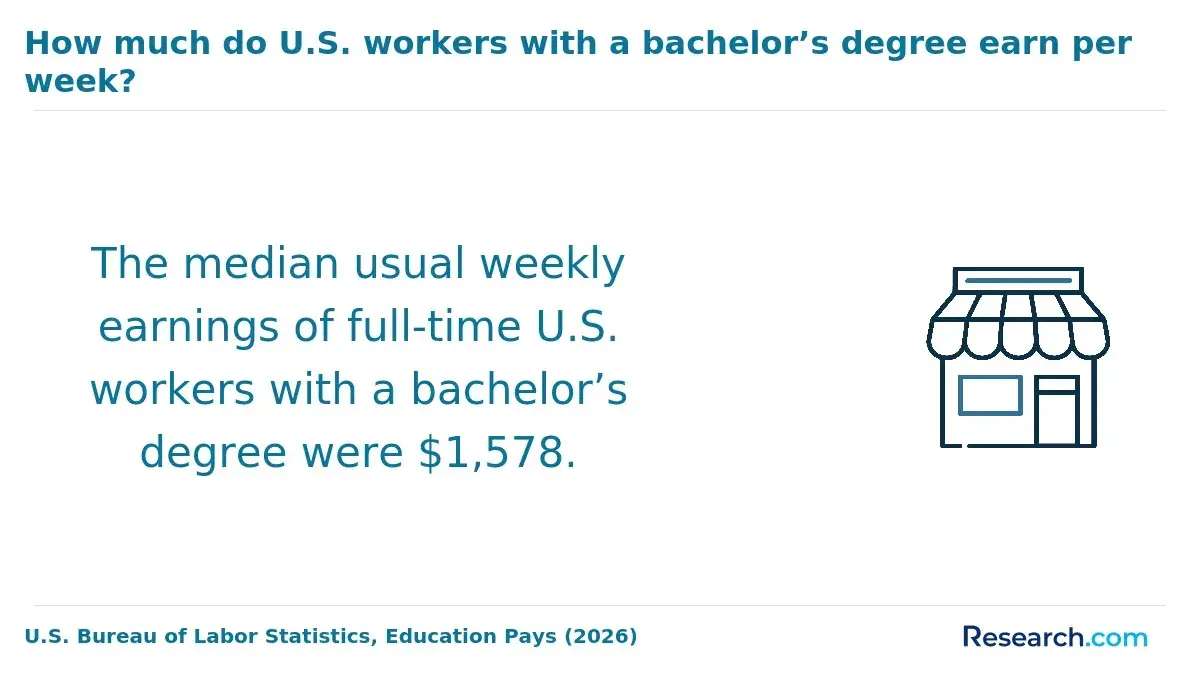
- For context, the US median annual wage across management occupations was $126,520 in May 2025, according to the Bureau of Labor Statistics - not a starting salary or a forecast for MBA graduates.
What is an online MBA in organizational change?
An online MBA in organizational change combines a broad business-management degree with study of how organizations plan, communicate, and implement change. The MBA core typically develops decision-making in areas such as finance, strategy, operations, and leadership. Change-focused study may address stakeholder resistance, organizational culture, change communication, and the evaluation of implementation results.
Check what the program actually awards. Organizational change might be a formally named concentration, a set of electives, or a topic within a general leadership course. Those options offer different depth and may appear differently on a transcript. Ask for the current degree plan and confirm whether the change specialization is available to fully online students.
Why choose an online MBA in organizational change as an international student?
Online study may let you remain employed and apply course projects to changes underway at your organization without relocating to the US. That can be especially useful if you already work in operations, consulting, human resources, or another role where you must win support for new processes. It is less compelling if your main objective is access to US campus recruiting or in-person internships.
Geography still matters online. A live class scheduled for a US evening can fall overnight where you live, and group assignments may require recurring cross-border meetings. Ask whether attendance is live or recorded, whether exams require a particular testing arrangement, and whether any residency requires travel. If you work in healthcare, compare change-management coursework with graduate business options in healthcare; sector-specific operating knowledge may matter more than a general change concentration.
Studying online from abroad is also distinct from entering or working in the US. Do not assume admission creates visa eligibility, practical-training eligibility, or employment authorization. Discuss any immigration objective with the school's international-student office and an appropriately qualified immigration adviser before choosing a format.
What are the admission requirements for international MBA applicants?
Requirements belong to the individual university, not to organizational change MBAs as a category. Most applicants should expect a review of their prior degree and professional background, but schools differ on work experience, tests, minimum grades, and whether they accept applicants living abroad. A nonbusiness bachelor's degree does not automatically rule you out; relevant preparation may come from your work or prior coursework.
The table separates common application materials from the policy decisions you need to verify. None of its entries establishes a universal requirement.
| Admissions area | What may vary by school | Why it matters internationally |
| Prior degree and records | Accepted degree equivalencies, official transcripts, translations, and credential-evaluation provider | A degree awarded outside the US may need review before it meets the school's entry standard. |
| English proficiency | Accepted tests, score thresholds, and exemptions | Citizenship alone may not determine whether testing is required; prior language of instruction may matter. |
| Work history | Experience expectations, résumé, recommendations, and interview | Examples should explain the scope and results of your work across different employer contexts. |
| Admissions tests | GMAT or GRE requirements, waivers, or test-optional policies | A waiver at one school says nothing about another school's policy. |
| Location and timing | Countries served, intake dates, document deadlines, and payment methods | Admission may not be possible from every location, even when courses are online. |
Build your application around evidence that you can handle both the MBA core and organizational-change work. A useful example might show how you analyzed a process problem, coordinated affected teams, and measured the result; managerial job titles are not the only way to demonstrate readiness. A search for MBA options by total cost GMAT required may lead to no-GMAT program lists, but verify each school's current test and waiver policy directly.
Before submitting an application, complete these checks in order:
- Confirm that the school accepts online MBA applicants residing in your country and that your intended change coursework is available online.
- Request written instructions for degree equivalency, transcripts, certified translations, and any required credential evaluation.
- Check English-test exemptions, admissions-test rules, work-experience expectations, and deadlines for your intake.
- Prepare a résumé, recommendations, and essays that connect your experience to a specific organizational-change goal.
- Ask how the application fee and tuition can be paid from your location before making a financial commitment.
The important distinction is not simply convenience. For an applicant abroad, format affects where you can live while studying, which professional relationships you can build, and what US immigration questions arise.
This comparison identifies format-related trade-offs; individual programs can differ substantially within either category.
| Factor | Online MBA | Campus-based MBA |
| Location | May permit study while living and working abroad, subject to school restrictions | Generally requires relocation for in-person attendance |
| Schedule | May mix independent work with live sessions across time zones | Requires attendance around the campus timetable |
| Professional access | Networking and career services may be virtual or limited by location | May offer more direct access to campus events and recruiting |
| Immigration | Online enrollment alone does not establish a right to enter or work in the US | Any student-visa eligibility depends on the program and applicable rules |
If you intend to keep your current job and lead change locally, online study may preserve valuable experience. If a US-based career switch is the priority, investigate recruiting access and immigration feasibility before assuming either format will deliver it. A nurse comparing formats might encounter one-year MBA program choices degree programs; those examples concern MSN/MBA dual degrees, so confirm the actual award and published length rather than treating them as organizational change MBAs.
Expect business fundamentals alongside any change-focused work. Core courses may cover managerial accounting, finance, operations, strategy, and organizational behavior. Relevant concentration courses might examine change leadership, negotiation, culture, communication, or how to assess whether a new process is working. The number and status of those courses vary: one leadership elective is not equivalent to a documented concentration.
Look for assignments that let you diagnose a real organizational problem and test a response against constraints such as budget, staff capacity, and stakeholder interests. If you plan to use your employer as a project setting, check whether you can protect confidential information. An MBA generally teaches change from a management perspective; it is not automatically a substitute for deeper study in psychology, organizational development, or a specialized technical field.
There is no single completion time or price for this specialization. Duration depends on required credits, course sequencing, transfer-credit policy, and whether you study part time or at an accelerated pace. Ask for a sample plan based on the number of courses you can realistically take while employed, not just the shortest advertised completion time.
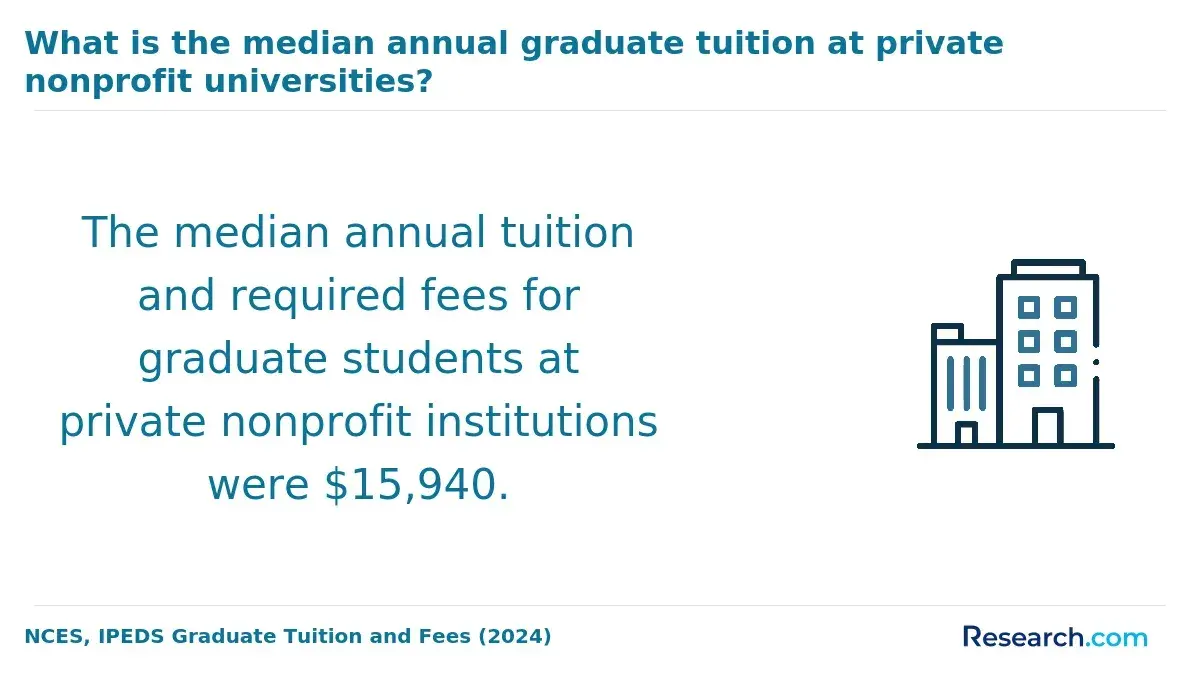
Compare the total cost you would pay: tuition at the rate applicable to an overseas online student, mandatory fees, materials, evaluation and translation charges, payment costs, and any required travel. A per-credit tuition figure is not a total-program quote. The MBA tuition comparison online MBA tuition and total cost provides a starting point for cost questions; obtain a current, individualized estimate from each school before deciding.
Ask whether scholarships or employer reimbursement are available to students in your country and when funds are paid. Do not assume eligibility for US federal student aid while studying abroad. If financing is necessary, compare the full repayment obligation with the value of the skills and opportunities you can realistically use in your current labor market.
Start with the university, then the business program, then your intended country of use. Confirm the institution's current US accreditation through the accreditor and the US Department of Education's recognized-accreditor information. Business-school accreditation, if claimed, is a separate designation; verify its current scope with the named business accreditor rather than assuming it follows from university accreditation.
Accreditation does not guarantee that an employer, licensing body, or public agency outside the US will recognize the credential for a particular purpose. If you need the MBA for promotion, public-sector hiring, or further study in your country, ask the relevant employer or authority what documentation it accepts. Request the school's exact degree title and whether the organizational change concentration appears on the transcript; marketing language alone may not establish that distinction.
The strongest fit is often advancement from work you already know. An operations professional might lead a process redesign; an HR professional might support a workforce transition; a consultant might take on broader implementation responsibilities. In each case, employers can evaluate both the MBA and demonstrated results. A degree alone is unlikely to qualify someone with no relevant experience to lead a major transformation.
Compare prospective roles by the work they require: diagnosing problems, building stakeholder support, managing resources, and tracking adoption. If you are changing industries as well as functions, identify the sector knowledge you still need. For instance, a clinician considering management can explore business careers supported by an MBA in nursing, while checking whether a change-focused MBA or healthcare-specific preparation better fits the target role.
The US Bureau of Labor Statistics reports a $126,520 median annual wage for management occupations in May 2025. That figure covers workers across many management jobs, not graduates of organizational change MBAs; it should not be used as your expected post-MBA pay. Your location, existing experience, industry, and the role you can obtain matter more to a personal forecast.
The BLS projects management employment to grow faster than the average for all occupations from 2025 to 2035. That broad outlook supports investigating management opportunities, but it does not measure demand for this concentration. For a useful salary comparison, look at actual vacancies for your target role and location, then compare their experience requirements with your résumé.
Do organizational change MBA graduates need professional certifications or licenses?
There is no general professional license required simply to hold an organizational change MBA or work in organizational change. Particular jobs can have separate requirements: a regulated profession, for example, does not lose its licensing rules because the role includes management duties. Check the requirements of the position and jurisdiction where you intend to work.
A change-management or project-management certification may help demonstrate a specific method or support an employer's hiring criteria, but it is distinct from an MBA and is not universally required. If a vacancy repeatedly asks for a certification or hands-on implementation experience, weigh that more direct preparation against the time and cost of a full degree.
Other Things You Should Know About MBA
Often, but ask the school about project rules and obtain employer permission when needed. Remove confidential or identifiable information before sharing workplace material.
Not necessarily. Some programs use a capstone, consulting project, or other final assessment instead. Check the degree plan for the program you are considering.
Deferral policies vary. Ask admissions whether an offer can move to a later intake and whether scholarships, tuition rates, or submitted documents would remain valid.
Consider one if you have substantial management experience and want a senior-level peer cohort. Compare admissions expectations, travel requirements, and price; "executive" does not automatically mean better for organizational change.
- 9 FAM 402.5 (U) STUDENTS AND EXCHANGE VISITORS | state.gov https://fam.state.gov/fam/09FAM/09FAM040205.html
- Recognition of Foreign Qualifications | ed.gov http://www.ed.gov/about/initiatives/international-affairs/recognition-of-foreign-qualifications
- Chapter 3 - Courses and Enrollment, Full Course of Study, and Reduced Course Load | USCIS https://www.uscis.gov/policy-manual/volume-2-part-f-chapter-3
- Evaluation of Foreign Degrees - United States Department of State https://www.state.gov/global-community-liaison-office/family-member-employment/family-member-employment-in-the-d-c-area/evaluation-of-foreign-degrees
- International Student Visa Requirements - Spartan Central https://spartancentral.uncg.edu/registration-degree-planning/international-student-visa-requirements/
- Dates & Deadlines for International Students | The Pennsylvania State University https://www.psu.edu/resources/international-students/deadlines
- Required Academic Credentials | University of North Texas https://www.unt.edu/admissions/international/required-academic-credentials.html
- English Proficiency Policy and Test Waiver Eligibility | jhu.edu https://engineering.jhu.edu/admissions/graduate-admissions/full-time-programs/how-to-apply/international-students/english-proficiency-policy-test-waiver-eligibility/
- How to Be Successful in Online and Hybrid Classes | mwcc.edu https://mwcc.edu/blog/how-to-be-successful-in-online-hybrid-classes/
- International Degree Equivalencies - Cornell Graduate School https://gradschool.cornell.edu/admissions/application-steps/transcripts/international-degree-equivalencies/