2027 Online IT Degrees That Award Credit for Expired Industry Certifications

Co-Founder and Chief Data Scientist
An expired CompTIA, Cisco, Microsoft, or security certification may still document valuable learning, but colleges do not treat it the same way. This guide is for IT professionals who want to turn older credentials into degree progress without assuming credit is automatic.
The U.S. Bureau of Labor Statistics projects computer and IT occupations to grow faster than average from 2024 to 2034. Learn which online programs may review expired certifications, how to verify credit before applying, and whether an IT degree is worth the investment for your career goal.
Key Things You Should Know
- Expired industry certifications can sometimes support prior-learning credit, but acceptance is school-specific and commonly depends on verification, the certification's original exam objectives, and how closely those objectives match a current course.
- Competency-based and transfer-friendly online IT degrees may be the best starting point, but many institutions accept only active certifications for automatic transfer; ask for a written evaluation of an expired credential before enrolling.
- The U.S. Bureau of Labor Statistics reports a $105,990 median annual wage for computer and information technology occupations in May 2024, but an IT degree's return depends on total cost, completed credits, prior experience, location, and target role.
Which online IT degrees accept expired industry certifications for credit?
No online IT degree can reliably promise credit for every expired certification. Schools generally distinguish between automatic certification transfer, which often requires an active credential, and individual prior-learning assessment, where an evaluator reviews documentation from an expired credential alongside the current curriculum.
For applicants with expired credentials, the most promising choices are typically online bachelor's completion programs with broad transfer-credit, professional learning, examination, portfolio, or competency-assessment policies. Schools such as Thomas Edison State University, Charter Oak State College, Excelsior University, and some competency-based institutions are often worth contacting because they have established pathways for evaluating learning outside traditional coursework. The key question is not whether a school "takes certifications," but whether it will evaluate your specific expired certification for a named course.
This comparison shows the types of online degree pathways to investigate. It is not a guarantee of credit; catalog rules, certification mappings, and expiration requirements can change.
| Online IT degree pathway | How expired certifications may be considered | Best fit | Primary caution |
| Transfer-friendly Bachelor of Science in Information Technology | May be reviewed through professional learning or course-equivalency processes | Professionals with multiple old certifications and college credits | Credit may apply as elective credit rather than a required technical course |
| Cybersecurity bachelor's completion program | May review older security credentials, work history, or a portfolio | Applicants with legacy security training and documented experience | Fast-changing security content can limit credit for older exams |
| Competency-based IT bachelor's degree | Prior knowledge may reduce time through assessments even when direct transfer credit is unavailable | Self-directed learners who can demonstrate current skills | Some programs require active certifications for direct transfer |
| Associate-to-bachelor's IT completion program | May combine transcript transfer with evaluated certifications | Applicants who already hold an associate degree or substantial college credit | Upper-division residency requirements can still apply |
Before applying, send the admissions or transfer-credit office the certification name, issuing organization, candidate ID or verification record, issue date, expiration date, score report if available, and the exam version. Ask whether the credit would satisfy a specific degree requirement, count as an elective, or simply support placement into a higher course.
These questions can help you avoid enrolling based on an informal verbal estimate:
- Will you evaluate this expired certification for transfer or prior-learning credit?
- What course number and how many semester credits could it satisfy?
- Does the credit apply to my intended IT major, general electives, or neither?
- Is there an evaluation fee, portfolio requirement, challenge exam, or time limit?
- Can I receive the decision in writing before I commit to enrollment?
How do schools evaluate expired certifications for prior learning credit?
Prior-learning assessment, often called PLA, is a process for awarding academic credit for learning gained through professional certifications, military training, examinations, work-based learning, or structured training. An expired credential is not automatically invalid evidence of learning. However, its age can matter because cloud platforms, cybersecurity frameworks, networking standards, and vendor products change rapidly.
Evaluators usually compare the former certification's documented learning outcomes with a current course. A certification is more likely to be useful when its exam objectives are available, its identity can be verified, and its technical content still overlaps substantially with the degree requirement.
The following factors often determine whether an expired certification receives credit or another form of academic recognition.
- Verifiability: The issuer, credential number, digital badge, transcript, or score report must establish that you earned the certification.
- Recency and version: A recent expiration may be easier to map than a credential based on obsolete software, hardware, or standards.
- Learning-outcome alignment: The school compares the certification's objectives with the outcomes of a specific course.
- Level and scope: A broad professional credential may map more readily than a narrow product exam, though either can have value.
- Independent evidence of current competence: A portfolio, challenge exam, current job duties, or a newer related certification can strengthen the case.
A common mistake is treating an issuer's certification expiration date as the same thing as a college's transfer-credit deadline. They are separate policies. The credential issuer may no longer consider someone currently certified, while a college may still review the underlying completed exam for historical learning evidence.
If a school declines direct credit, ask about alternatives. A course challenge exam, portfolio review, placement assessment, or updated certification may cost less and take less time than repeating material you already know. Conversely, if your knowledge is outdated, retaking foundational coursework may be the safer choice, especially before advanced cybersecurity, cloud, or systems-administration classes.
What accreditation should an online IT degree program have?
For most IT students, the essential credential is institutional accreditation from an accreditor recognized by the U.S. Department of Education or the Council for Higher Education Accreditation. Institutional accreditation affects federal financial-aid eligibility, transferability, employer confidence, and the likelihood that another college will recognize your degree.
Programmatic accreditation can provide an additional quality signal, particularly for technical bachelor's programs. ABET accreditation is relevant for some computing, cybersecurity, information systems, and information technology programs, but it is not required for every legitimate IT degree or every IT employer. Its value is greatest when a student wants a curriculum with externally reviewed technical outcomes or is comparing similarly priced programs.
Use this checklist before you rely on a school's certification-credit claim:
- Confirm institutional accreditation through the accreditor and the U.S. Department of Education database.
- Check whether the exact online degree, not merely the institution, holds any programmatic accreditation it advertises.
- Read the current transfer-credit and prior-learning policies, including residency and maximum-transfer limits.
- Request a written degree plan showing where approved certification credit would apply.
- Verify that the program's curriculum supports your goal, such as systems administration, cybersecurity, cloud operations, data analytics, or IT management.
A red flag is a provider that emphasizes "accreditation" without identifying the accrediting organization, its recognition status, or the exact degree covered. Another is a recruiter who quotes a large number of potential credits but will not specify the courses those credits replace. Credit that only fills free electives may shorten a degree less than credit that satisfies core IT requirements.
How do online IT degrees compare with campus programs?
An online IT degree can carry the same institutional credential as its campus counterpart, but the learning experience is different. Online programs are often a strong match for employed technicians, career changers, military-connected learners, and adults with expired certifications because they may offer multiple start dates, asynchronous coursework, and more flexible transfer evaluation.
Campus programs may be better for students who want scheduled labs, face-to-face mentoring, a residential experience, or immediate access to faculty-led research and networking events. The right choice depends less on delivery format than on curriculum quality, instructional support, credit recognition, and your ability to manage independent work.
This comparison highlights practical differences that matter when prior certifications are part of your degree plan.
| Factor | Online IT degree | Campus IT degree | Decision guidance |
| Schedule | Often asynchronous or partly asynchronous | Usually fixed class and lab times | Online can suit working adults; campus can add structure |
| Certification-credit review | May have centralized transfer or PLA teams | May be handled by department and registrar offices | Compare written policies, not assumptions about format |
| Hands-on learning | Virtual labs, cloud environments, simulations, home lab work | Physical labs plus virtual tools | Ask how networking, hardware, and security labs are completed |
| Networking | Virtual career events and remote group projects | In-person faculty, peers, clubs, and employer events | Choose the environment in which you will actually participate |
| Pacing | May offer accelerated terms or competency-based pacing | Often follows a semester calendar | Faster pacing helps only when you have sufficient time and current knowledge |
Online learning is not automatically easier. Students still need dependable internet access, time-management habits, comfort asking for help remotely, and enough weekly study time to complete labs and projects. If reducing time to graduation is your priority, compare online options with a fast track bachelor degree carefully; acceleration is useful only when the school confirms which credits transfer and how quickly required courses are available.
What IT courses are typical in these degree programs?
Online IT degrees generally combine technical foundations, applied labs, business or communication courses, and general education. The exact mix varies: an information technology program usually emphasizes infrastructure and user support, while computer science is more programming- and theory-intensive, and cybersecurity focuses more heavily on risk, defense, and governance.
Students using expired certifications for credit should compare the certification content against the required courses below. This helps identify whether a potential award could replace a meaningful requirement or only an elective.
| Typical course area | What students learn | Related expired credentials that may be relevant |
| Networking | Routing, switching, protocols, troubleshooting, and network design | Older Cisco or CompTIA networking credentials |
| Systems administration | Operating systems, identity management, virtualization, and endpoint support | Legacy Microsoft, Linux, or server-administration credentials |
| Cybersecurity | Security principles, access control, incident response, risk, and secure operations | Older CompTIA, ISC2, ISACA, or vendor security credentials |
| Cloud and virtualization | Cloud services, virtual infrastructure, deployment, and governance | Earlier cloud-platform or virtualization credentials |
| Databases and scripting | SQL, data management, automation, and introductory programming | Database or programming certifications, if outcomes align |
| IT project management | Requirements, budgeting, communication, service management, and project delivery | Project-management or IT service-management credentials |
Do not select a program solely because it accepts more transfer credit. A degree should still fill your skill gaps. For example, an experienced help desk professional may benefit more from networking, cloud, automation, and security coursework than from duplicating entry-level support material.
Students who need a faster, narrower workforce option rather than a full degree may also compare short certificate programs. That option can make sense for immediate skill development, but it does not provide the breadth, general education, or advancement signal of a bachelor's degree.
What admission requirements do online IT programs usually require?
Most online associate and bachelor's IT programs require a high school diploma or GED and an application. Bachelor's completion programs usually also require prior college credit, an associate degree, or a transcript review. Admissions requirements and transfer rules are separate: admission to a program does not mean that expired certifications will earn credit.
Applicants should prepare records early because certification reviews can take longer than a standard admissions decision. A complete package makes it easier for the evaluator to identify the exam version and relevant learning outcomes.
- Official high school and college transcripts, if required for your entry level or transfer evaluation
- Official certification transcript, digital badge record, score report, or issuer verification for each expired credential
- Certification issue and expiration dates, exam code, version, and available exam-objective documentation
- A current resume describing related job responsibilities, tools, and dates of experience
- A portfolio of work products when permitted, with sensitive employer or client information removed
- Any required placement, readiness, English-language, or technology assessments
Some schools use holistic admission practices, while others publish minimum academic requirements. Applicants with a weak academic record should ask about conditional admission, tutoring, foundation courses, and whether a lower GPA affects financial aid or program entry. If your priority is simply completing a bachelor's degree with fewer technical prerequisites, compare IT with an easiest online degree only after considering whether that alternative supports the jobs you actually want.
Avoid submitting only a resume and assuming it proves certification completion. Employers may accept a resume summary, but colleges normally need official or independently verifiable documentation before posting academic credit.
How long does an online IT degree usually take?
A traditional bachelor's degree is designed around approximately 120 semester credits and often takes four years of full-time study when started from scratch. Online completion time can be substantially shorter for learners who transfer general education courses, receive approved prior-learning credit, or attend year-round. The school's residency requirement and course sequence may limit how much an expired certification can accelerate graduation.
Your realistic timeline depends on how much credit is approved before you enroll, whether prerequisite courses are offered every term, and how many hours you can study consistently. A certification that replaces one elective may have little effect on completion time; several approved credits that satisfy required courses can matter much more.
This planning guide shows typical scenarios rather than promised completion times.
| Starting point | Likely path | Timeline consideration |
| No college credit and expired certifications | Full bachelor's degree with possible PLA review | Plan for a multi-year path unless substantial credit is approved |
| Associate degree plus expired certifications | Bachelor's completion program | Transcript alignment and upper-division requirements determine remaining time |
| Substantial college credit plus documented IT experience | Transfer-friendly or competency-based bachelor's program | May move faster if the school accepts coursework and current competency evidence |
| Bachelor's degree plus IT experience | Graduate certificate or master's degree | Prior certifications may support admission or placement more often than direct graduate credit |
Ask for a personalized graduation plan that lists every remaining course by term. If you already have a bachelor's degree and want an advanced credential, a 1 year masters option may be more appropriate than earning a second bachelor's degree, provided it covers the technical specialization and prerequisites you need.
What do online IT degrees cost, and what aid is available?
Total cost matters more than advertised tuition per credit. Students should calculate tuition, mandatory fees, technology charges, textbooks, lab platforms, proctoring, certification exams, and the cost of time away from work. Approved credit for an expired certification can reduce cost only if it replaces billable courses and does not trigger a costly evaluation process that outweighs the savings.
For context, College Board reported average published tuition and fees of $11,950 for in-state students at public four-year colleges in the 2025-26 academic year. Online programs can be lower or higher than that figure depending on residency rules, institution type, and pricing model, so it is a benchmark rather than a quote for an IT degree.
Compare these cost components before committing to a program:
- Per-credit tuition: Multiply the rate by the credits that remain after the official evaluation.
- Transfer and PLA fees: Ask whether certification evaluation, portfolio review, or challenge exams carry separate charges.
- Residency requirement: Determine the minimum number of credits that must be completed through the school.
- Technology and lab costs: Include virtual lab subscriptions, hardware, software, remote proctoring, and broadband needs.
- Financial aid eligibility: Confirm institutional accreditation and speak with the financial-aid office about federal aid, state aid, scholarships, employer tuition assistance, and military education benefits.
Complete the Free Application for Federal Student Aid if you may qualify for federal student aid, and compare net price rather than sticker price. Employer tuition assistance can be especially valuable for IT workers, but check repayment, continued-employment, grade, and preapproval conditions before relying on it.
A frequent mistake is choosing the lowest per-credit rate without checking how many credits will actually transfer. A slightly higher-priced program can be less expensive overall if it awards more applicable, documented credit and has fewer mandatory fees. The reverse is also true when a school's generous transfer estimate applies only to electives.
What jobs can an online IT degree lead to?
An online IT degree can support entry-level and advancing roles in infrastructure, support, cloud operations, cybersecurity, systems analysis, and IT management. The degree is most useful when paired with a portfolio, current technical skills, internships or work experience, and certifications that match the job target. An expired credential can still demonstrate career history, but employers may prefer evidence that your skills are current.
The roles below illustrate common directions. Job requirements vary by employer, industry, security-clearance needs, and local labor market.
| Career direction | Typical responsibilities | Helpful degree emphasis |
| IT support specialist | Resolve user issues, configure devices, document incidents, and escalate problems | Support, operating systems, networking, customer service |
| Network or systems administrator | Maintain infrastructure, accounts, servers, backups, and network performance | Networking, Linux or Windows administration, virtualization |
| Cybersecurity analyst | Monitor alerts, assess risks, support incident response, and improve controls | Security operations, networking, risk management, scripting |
| Cloud support or cloud operations specialist | Assist with cloud environments, access, monitoring, automation, and deployment | Cloud platforms, infrastructure, automation, security |
| Computer systems analyst | Analyze organizational needs and help improve systems and workflows | Business analysis, databases, systems design, communication |
| IT project coordinator or manager | Coordinate timelines, stakeholders, requirements, vendors, and implementation work | Project management, IT service management, business communication |
AI and automation are changing IT work, especially routine ticket handling, documentation, monitoring, and scripting. This does not eliminate the need for IT professionals; it increases the value of people who can validate automated output, secure systems, translate business needs, troubleshoot complex failures, and communicate with users and leaders.
For career changers, a support or junior operations role can be a practical entry point. For experienced technicians, a bachelor's completion degree may be more useful for moving toward analyst, security, cloud, project, or management roles where employers often prefer a degree alongside demonstrated experience.
What salaries and job outlook do IT graduates see?
IT salaries vary widely by occupation, experience, specialization, industry, metro area, and employer. A degree can expand eligibility for some roles, but it does not guarantee a particular title, salary, or promotion. Use labor-market data as a benchmark and compare it with local job postings and your own experience level.
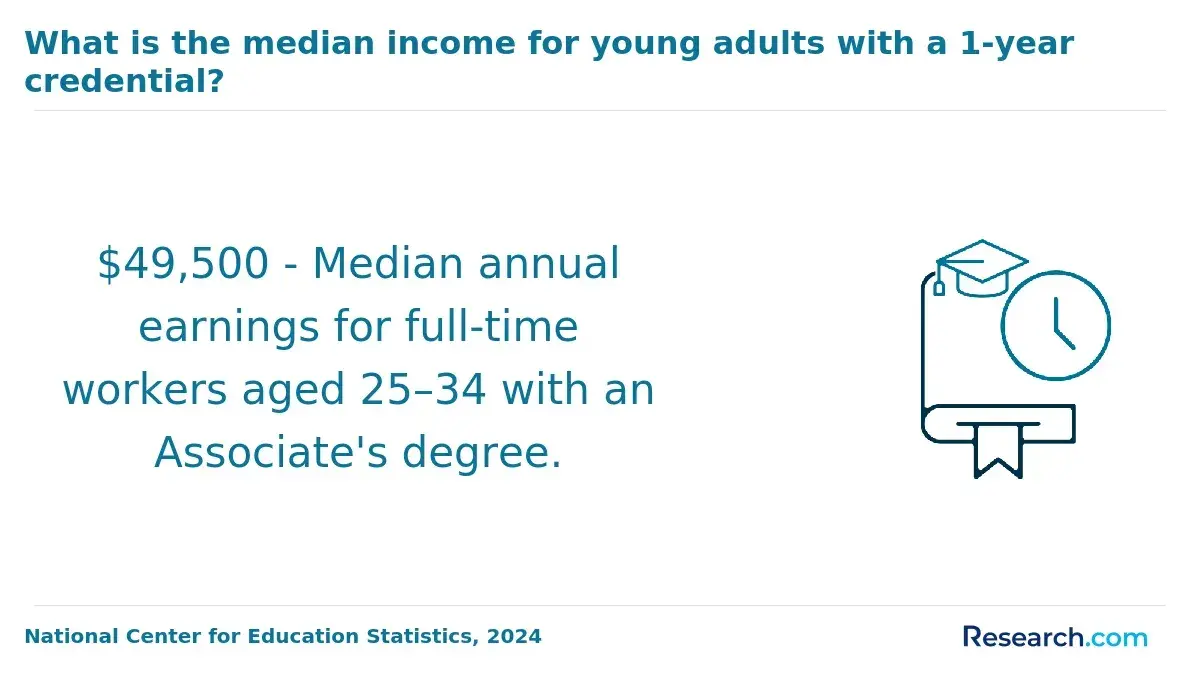
The U.S. Bureau of Labor Statistics reported a median annual wage of $105,990 for computer and information technology occupations in May 2024, compared with $49,500 for all occupations. That gap reflects the broad occupational group, which includes both entry-level support positions and highly paid technical and leadership roles; it should not be treated as a starting-salary estimate.
These BLS occupation figures show why matching your degree emphasis to a target role matters.
| Occupation | Median annual wage, May 2024 | Projected employment change, 2024-2034 | What to consider |
| Computer systems analysts | $103,790 | 9% | Business and technical communication are important alongside systems knowledge |
| Information security analysts | $124,910 | 29% | Employers commonly expect hands-on security knowledge and relevant experience |
| Computer support specialists | $61,550 | -3% | Support can remain a useful entry path, though tasks and hiring needs vary |
| Network and computer systems administrators | $96,800 | -4% | Cloud services and automation are reshaping traditional administration work |
The projected growth figures are national estimates, not a forecast for a specific employer or region. Security analysis has particularly strong projected demand, while support and traditional administration roles are being reshaped by cloud adoption and automation. Students can improve their options by building current skills in cloud services, security fundamentals, scripting, documentation, and problem solving rather than relying solely on an older certification.
To evaluate return on investment, compare the program's net cost and expected remaining time with the roles you can realistically pursue after graduation. Also ask whether the program offers career coaching, internship support, employer relationships, portfolio guidance, and outcomes information for online students.
Other Things You Should Know About Information Technology
Possibly, but it depends on the college and the specific certification. Many schools require active CompTIA credentials for automatic transfer credit, while others may review an expired credential through prior-learning assessment. Provide official verification, the exam version, issue date, and related work experience, then request a written decision.
They can help document your technical background, especially when paired with a current resume and work history. They may not automatically produce academic credit, but they can support a portfolio review, challenge exam, or placement discussion. Current certifications or recent projects may strengthen the case.
It can be a good fit if you still possess the underlying skills and can study independently. Even if the school does not transfer the expired certification directly, you may move through familiar subjects faster by demonstrating competency. Confirm assessment rules, pacing expectations, and tuition structure before enrolling.
Renewing can be worthwhile when the credential aligns with a required course, your intended job target, or an employer's expectations. First ask prospective schools whether renewal would change your credit outcome. If it would not, a course challenge exam, portfolio, or newer role-specific certification may offer better value.
References
- Adding Industry Certifications to Degrees https://evolllution.com/opinions/adding-industry-certifications-degrees
- Online Technology Degree Programs | University of Phoenix https://www.phoenix.edu/online-information-technology-degrees.html
- Explore Top IT Certificate Programs | CyberDegrees.org https://www.cyberdegrees.org/listings/best-it-certificate/
- College Credit for Industry-Recognized Credentials - State of Ohio | Learn & Work Ecosystem Library https://learnworkecosystemlibrary.com/initiatives/college-credit-for-industry-recognized-credentials-state-of-ohio/