2027 Psychology Graduate Programs With Tuition Discounts for Behavioral Health Employees

Co-Founder and Chief Data Scientist
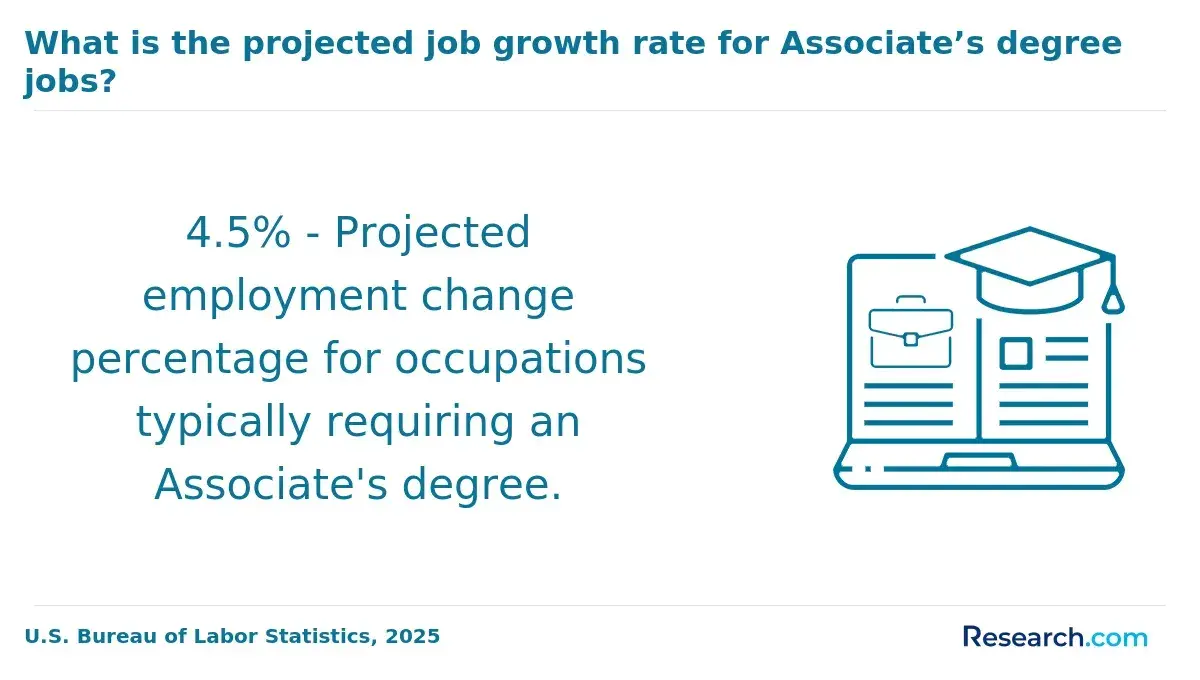
Choosing a psychology graduate program while working in behavioral health means balancing tuition, schedule, accreditation, and licensure eligibility, not simply finding the lowest advertised price. The U.S. Bureau of Labor Statistics projects 17% employment growth for substance abuse, behavioral disorder, and mental health counselors from 2024 to 2034.
This guide helps behavioral health employees compare employer-linked tuition reductions, degree formats, licensure pathways, total costs, and career value before applying.
Key Things You Should Know
- Employer education assistance can be tax-free up to $5,250 per year under Internal Revenue Code Section 127 when an employer has a qualifying written educational assistance plan. Confirm whether your benefit applies to graduate tuition, fees, and required clinical training costs.
- For counseling licensure, the practical benchmark is often a 60-credit master's degree with required practicum and internship experiences, but every state licensing board sets its own education and supervised-practice rules.
- The U.S. Bureau of Labor Statistics projects 17% growth in employment for substance abuse, behavioral disorder, and mental health counselors from 2024 to 2034, making an appropriately accredited, licensure-aligned program more valuable than a discount alone.
How do tuition discounts for behavioral health employees work in psychology graduate programs?
Tuition discounts for behavioral health employees are usually employer-sponsored education benefits, school-employer partnerships, workforce-development arrangements, or standard institutional discounts extended to eligible staff. They are not the same as federal financial aid, and they may be combined with other funding only when both the employer and university allow it.
Most arrangements fall into a few categories. Understanding which one applies matters because the payment timing, repayment obligation, and eligible programs can differ substantially:
- Employer tuition reimbursement: You pay tuition first, meet grade or continued-employment requirements, and submit documentation for repayment.
- Direct-bill education assistance: An employer pays the institution directly, reducing the amount you must finance upfront.
- University partner discount: A university reduces tuition for employees of participating hospitals, community mental health centers, insurers, nonprofits, or public agencies.
- Workforce or union benefit: A labor-management fund, state workforce initiative, or professional employer group contributes toward an approved credential.
Ask whether the discount applies to the entire degree, only newly enrolled students, or only courses taken while you remain employed. Also ask whether it applies to tuition alone; technology fees, books, residency travel, background checks, malpractice coverage, and clinical placement expenses can remain your responsibility.
A common mistake is treating a tuition discount as free education. Some employers require one to three years of post-completion employment or require repayment if you leave early. Request the policy in writing before enrolling, including the repayment formula, grade standard, annual cap, and deadline for filing claims.
Which accredited psychology graduate programs offer tuition benefits to behavioral health staff?
Accreditation and employee tuition benefits are separate features. A university may offer a discount to behavioral health staff without holding the professional accreditation needed for a particular license, while an accredited program may have no formal employer partnership. The safest approach is to identify the degree needed for your intended role first, then verify available benefits with both the school and your employer.
For prospective counselors, look for master's programs accredited by the Council for Accreditation of Counseling and Related Educational Programs (CACREP) when that accreditation fits your state and career goal.
For doctoral psychology pathways, review accreditation from the American Psychological Association Commission on Accreditation. Institutional accreditation is also important for federal aid, credit transfer, and employer recognition, but it does not by itself establish licensure eligibility.
This comparison shows what to verify by program type. It is especially useful because school partnership lists, discount percentages, and eligible employers can change by term.
| Program type | Typical credential | Accreditation or approval to verify | Best use for behavioral health employees | Benefit question to ask |
| Clinical mental health counseling | Master's degree | CACREP status; state board curriculum requirements | Individuals seeking counselor licensure and direct clinical practice | Does the partner discount apply to the full 60-credit curriculum and clinical courses? |
| Marriage and family therapy | Master's degree | COAMFTE status where relevant; state MFT board requirements | Employees planning systemic, couple, or family-focused practice | Are practicum, supervision, and residency costs included? |
| Social work | MSW | CSWE accreditation | Workers pursuing clinical social work or agency leadership routes | Does the employer support field-placement scheduling and reduced work hours? |
| Applied psychology or general psychology | Master's degree | Institutional accreditation; state requirements for intended role | Program evaluation, behavioral health administration, research, or non-licensed roles | Does this degree meet any specific promotion requirement at my employer? |
| Clinical, counseling, or school psychology | Doctoral degree | APA Commission on Accreditation; state psychologist licensing rules | Employees seeking psychologist licensure or advanced assessment roles | Is there a staff tuition rate, and can full-time employees complete required practica? |
Do not rely solely on an admissions representative's verbal statement that a program is "licensure track." Check the program's written disclosure for your state, review the relevant licensing board's rules, and obtain written confirmation of the employer discount before paying a deposit.
What types of psychology degrees are most accessible to working behavioral health professionals?
The most accessible degree is usually the one that fits your existing education, intended scope of practice, and work schedule. For many behavioral health employees with a bachelor's degree, a part-time master's program is more realistic than a doctoral pathway because it can be completed while maintaining employment. Accessibility, however, should never override clinical training and licensure requirements.
A clinical mental health counseling master's degree is often the clearest route for professionals who want to provide therapy after meeting state requirements. An MSW may be a better fit for employees who want broader social-service, case-management, policy, or clinical practice options.
A nonclinical psychology master's can support advancement into program coordination, quality improvement, behavioral health operations, or research, but it generally does not lead to independent therapy licensure.
The options below distinguish flexibility from professional scope, helping applicants avoid paying for a degree that does not support their intended role.
| Degree path | Typical study pattern | May support independent clinical licensure? | Best fit | Important trade-off |
| Clinical mental health counseling master's | Part-time, cohort-based, hybrid, or online with local fieldwork | Often, after state-required supervised practice and examination | Future professional counselors | Clinical placement and live skills training can limit scheduling flexibility |
| MSW | Part-time, hybrid, or online with field education | Often, for clinical social work after state requirements | Employees seeking clinical and systems-level roles | Field placements may be intensive and are not always paid |
| Applied or general psychology master's | Frequently online or evening-based | Usually no | Leadership, program evaluation, research, and support roles | Does not substitute for a counseling, social work, or psychology license |
| Doctoral psychology degree | Longer, highly structured training with practica and internship | Potentially, as a psychologist | Assessment, advanced practice, supervision, teaching, or research | Higher time commitment and limited compatibility with full-time employment |
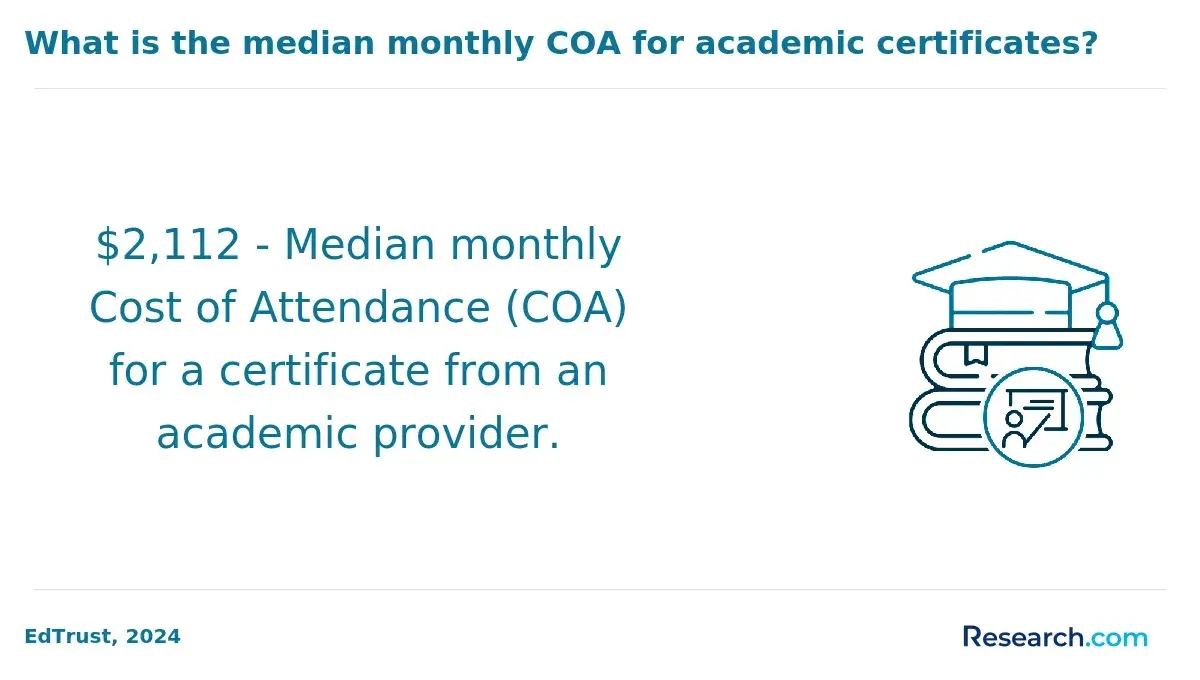
If you need a lower-cost stepping stone before committing to a full graduate degree, compare role-relevant online certifications with employer promotion requirements. A certificate can build a targeted skill, but it usually cannot replace the degree, fieldwork, examination, or supervised experience required for licensure.
How do online psychology graduate programs compare to campus-based options for full-time employees?
Online psychology graduate programs can reduce commuting and make evening coursework easier to manage, but "online" does not mean entirely self-paced or free of in-person clinical obligations. Licensure-oriented counseling, social work, and psychology programs commonly require live sessions, skills assessments, local practicum placements, internships, or brief campus residencies.
For a full-time behavioral health employee, the best format depends on how predictable work shifts are and whether the employer can support fieldwork hours. This comparison focuses on practical constraints rather than assuming one format is universally better.
| Factor | Online or hybrid program | Campus-based program | Decision implication |
| Course access | Often offers asynchronous readings and assignments, with scheduled live classes | Usually meets at fixed times and locations | Online can suit shift workers, but verify synchronous attendance rules |
| Clinical training | Usually completed at approved local sites | May use local sites and campus clinics | Neither format removes practicum and internship requirements |
| Peer and faculty contact | Requires deliberate virtual engagement | Often more spontaneous in-person access | Choose the support style that helps you persist through clinical training |
| Geographic reach | Can expand choices across state lines | Usually serves nearby students | Out-of-state enrollment requires careful state authorization and licensure review |
| Schedule control | May offer greater flexibility between deadlines | Usually follows a consistent weekly timetable | Self-direction helps, but a fixed schedule can protect study time |
Programs marketed as flexible still require sustained weekly work. If you are considering a more independent schedule, review how self paced online college options differ from cohort-based clinical degrees. Self-paced models can work well for certain academic subjects, but they are less common in programs requiring faculty-observed counseling skills and coordinated field experiences.
Avoid enrolling based on course delivery alone. Confirm the school is authorized to enroll students in your state, ask who secures placements, and learn whether your job can serve as a practicum site. An employer may be supportive of tuition but unable to provide the supervision, protected time, or client population your program requires.
What are typical admission requirements for psychology graduate programs with employer tuition discounts?
Employer tuition eligibility does not replace university admission requirements. Most psychology graduate programs evaluate academic preparation, professional fit, writing ability, and readiness for graduate-level clinical or research work. Requirements vary by degree type, and licensure-oriented programs may be especially attentive to interpersonal readiness and ethical judgment.
Applicants commonly need the following materials. Start collecting them early because transcripts, references, and employment verification can delay an otherwise complete application:
- A bachelor's degree from an institution recognized by the university, often with prerequisite coursework in psychology, statistics, research methods, or human development.
- Official transcripts and a cumulative or recent-coursework GPA that meets the program's published threshold or review standard.
- A statement of purpose connecting your behavioral health experience to your professional goal and explaining why the program's curriculum fits that goal.
- Professional or academic recommendations that can address communication, reliability, ethical conduct, and capacity for graduate study.
- A résumé documenting clinical support, case management, crisis services, peer support, administration, research, or related experience.
- For employer benefits, proof of current employment, eligible job classification, supervisor approval, or participation in a partner organization.
Some programs have removed standardized test requirements, but that does not mean admission is automatic. Applicants with a lower GPA can improve their case through strong recent coursework, relevant experience, a focused statement, and clear evidence of readiness. Do not assume a school's general graduate admission standard is the same as the standard for its counseling or psychology program.
Before applying, compare your employer's benefit calendar with the university's term schedule. Reimbursement policies may require approval before classes begin, and missing a preauthorization deadline can make an otherwise eligible course ineligible for funding.
How much do psychology graduate programs cost after tuition reductions and employer benefits?
Your out-of-pocket cost is the total program price minus confirmed discounts, grants, employer payments, and other non-loan aid, not the tuition rate shown on a program webpage.
The Internal Revenue Service permits employers to provide up to $5,250 annually in tax-free educational assistance through a qualifying Section 127 plan. Amounts above that threshold may have different tax treatment, so employees should consult their benefits office and, when needed, a tax professional.
Use a term-by-term budget rather than an annual estimate. This calculation framework identifies costs that are easy to overlook when comparing a university partnership discount with employer reimbursement.
| Cost component | What to confirm | Why it changes the real price |
| Published tuition | Per-credit rate, total required credits, and any differential rate | A lower per-credit rate can still cost more if the program requires more credits |
| University discount | Percentage or fixed amount, eligibility dates, and excluded courses | Partner discounts may not apply to fees, transfer credits, or clinical terms |
| Employer benefit | Annual maximum, payment method, grade requirement, and repayment obligation | Reimbursement can create an upfront cash-flow need even when the benefit is generous |
| Required fees | Technology, application, graduation, residency, lab, and clinical fees | These charges may not be reduced by tuition-only benefits |
| Clinical expenses | Travel, background checks, immunizations, liability coverage, and reduced work hours | Fieldwork can produce indirect costs beyond the bill from the university |
| Financing cost | Federal loans, payment plans, interest, and repayment timing | Borrowing can substantially change the long-term cost of a discounted degree |
Workers comparing broad online options can use this guide to affordable master's degrees online as a starting point, then narrow choices by accreditation and state licensure fit. The least expensive program is not necessarily the best value if it lacks required clinical preparation or creates barriers to obtaining a license.
Ask the financial aid office for a written, program-specific estimate and ask your employer whether aid must be applied before reimbursement. A frequent error is accepting federal loans for costs an employer will later reimburse without understanding how that affects cash flow and future repayment.
What coursework and specializations are common in psychology programs serving behavioral health workers?
Programs serving behavioral health professionals typically combine psychological theory, evidence-based practice, ethics, cultural responsiveness, assessment, research literacy, and supervised application. The curriculum should match the work you intend to perform after graduation. A general psychology curriculum may strengthen analysis and leadership, while a counseling curriculum is designed around clinical skill development and field training.
Students in clinically oriented programs often encounter the following subjects. These courses matter because licensing boards and employers may expect documented preparation in particular content areas:
- Psychopathology, diagnosis, and the use of diagnostic classification systems within an ethical scope of practice.
- Counseling theories, helping relationships, group work, crisis intervention, and evidence-based psychotherapy approaches.
- Human development, family systems, addiction, trauma-informed care, and multicultural counseling.
- Ethics, law, confidentiality, documentation, telebehavioral health, and professional identity.
- Research methods, program evaluation, statistics, and use of outcome data to improve services.
- Assessment foundations, appraisal, treatment planning, and referral practices appropriate to the profession.
- Practicum and internship experiences with faculty and site supervision.
Specialization should be chosen based on a demonstrated local need and your intended license, not only personal interest. Addiction counseling, trauma, child and adolescent mental health, integrated primary care, school-based services, and gerontology can all be useful areas, but states vary in whether a specialization changes credentialing requirements.
Technology is changing behavioral health work without eliminating the need for clinical judgment. Programs increasingly address telehealth, electronic records, measurement-based care, and responsible use of digital tools. Look for instruction on privacy, bias, informed consent, and documentation rather than assuming that technology training alone qualifies you to provide remote care.
How do these programs support licensure pathways for counseling and other behavioral health roles?
A graduate degree is only one component of professional licensure. In most states, counseling, social work, marriage and family therapy, and psychology licenses require a specific degree curriculum, supervised post-degree experience, an examination, and an application to the state board. The exact title, required hours, and scope of practice vary by jurisdiction.
For future licensed professional counselors, a 60-credit clinical mental health counseling curriculum is a common educational model, but it is not a universal legal standard. Some states require particular courses or specific supervised experiences beyond the degree. For psychology licensure, a doctoral degree, supervised internship, postdoctoral experience in some jurisdictions, and examination requirements may apply.
Use this sequence before enrolling in any program advertised as "licensure eligible." It protects you from discovering a curriculum gap after completing a degree:
- Identify the state where you expect to seek your initial license, not merely the state where the university is located.
- Read the state licensing board's current educational, practicum, examination, and supervised-experience requirements.
- Request the university's state-specific licensure disclosure and compare its required courses with board rules.
- Ask whether the school arranges, approves, or only advises on practicum and internship placements.
- Confirm how graduates document course content, direct client hours, supervision, and field evaluations for a board application.
- Keep copies of syllabi, internship records, supervision agreements, and official transcripts throughout the program.
Behavioral health technicians, peer specialists, case managers, and substance use counselors may have different credential routes that do not require the same graduate degree. If your goal is advancement within an existing employer rather than independent practice, ask whether a shorter credential, supervised experience, or employer-approved training pathway would meet the job requirement more efficiently.
What are the career outcomes and salary ranges for graduates in behavioral health psychology?
Career outcomes depend more on the credential, license, location, setting, and experience level than on the words "psychology graduate program" alone. A counseling master's may support work toward professional counselor licensure. An MSW may support clinical social work; a nonclinical psychology master's may be more relevant to program operations, research coordination, or behavioral health administration.
According to the U.S. Bureau of Labor Statistics, the median annual wage for substance abuse, behavioral disorder, and mental health counselors was $59,190 in May 2024. This is a national occupation-wide median, not a starting salary or a promise for graduates. Pay can vary materially by state, public versus private employer, clinical licensure, shift differentials, and specialization.
The following roles illustrate how degree choice connects to work responsibilities and advancement. Actual hiring requirements should be checked with employers and state licensing boards.
| Potential role | Typical work focus | Common education or credential fit | Career consideration |
| Mental health counselor | Assessment, treatment planning, individual or group counseling | Licensure-aligned counseling master's plus required post-degree steps | Independent practice authority depends on state licensure |
| Substance use counselor | Recovery support, counseling, treatment coordination, relapse prevention | Requirements vary; may involve degree, state credential, and supervised experience | Some roles have pathways below the master's level, while others prefer licensure |
| Clinical social worker | Psychotherapy, care coordination, advocacy, and systems navigation | CSWE-accredited MSW plus clinical licensure requirements | Broad agency and healthcare applicability, with demanding field education |
| Behavioral health program manager | Operations, quality improvement, compliance, staffing, and outcomes | Psychology, social work, counseling, public health, or business graduate preparation | Licensure may be helpful but is not always required |
| Psychologist | Assessment, psychotherapy, consultation, research, or supervision | Doctoral psychology education and state licensing requirements | Longer training path with more extensive scope in many settings |
For employees using military education benefits or transitioning from military behavioral health work, compare institutional support services as carefully as tuition rates. The best online college for military comparison can help identify schools that address transfer credit, deployment interruptions, and benefit processing, though each program's clinical and licensure requirements still need separate review.
How can behavioral health employees evaluate and choose a reputable psychology graduate program?
Choose a program by working backward from the role you want, the state where you plan to practice, and the benefits you can actually use. A reputable option should provide transparent information about accreditation, curriculum, clinical placement, total cost, state eligibility, student support, and outcomes without pressuring you to enroll before those questions are answered.
Use these steps to make a comparison that reflects both career fit and financial reality:
- Write down your target role, desired license if any, intended state of practice, and target work setting.
- Verify the state board requirements before comparing program marketing claims or rankings.
- Confirm institutional accreditation and any profession-specific accreditation relevant to your intended credential.
- Request a complete program plan showing required credits, course sequence, practica, internship, residencies, and likely completion timeline.
- Obtain written confirmation of employer eligibility, the discount or reimbursement amount, grade requirements, annual cap, and any repayment obligation.
- Calculate total costs, including fees, travel, clinical requirements, lost work time, and borrowing - not only discounted tuition.
- Ask who is responsible for securing clinical placements, what happens if a placement is delayed, and whether your current employer can host training.
- Review state-specific licensure disclosures and ask for the contact information of the program's licensure or field-experience advisor.
- Compare student services such as evening advising, tutoring, disability accommodations, career support, and crisis support that can help working adults persist.
Red flags include vague answers about state licensure, no clear explanation of practicum placement, discounts that disappear after the first term, unusually fast clinical degree promises, and pressure to borrow before you receive a written financial estimate. Also be cautious when a school uses "accredited" without identifying whether it means institutional accreditation or the profession-specific accreditation your career path may require.
A degree is most likely to be a sound investment when it closes a specific qualification gap: licensure eligibility, advancement into a role with defined employer demand, or preparation for responsibilities you genuinely want. If your employer only requires a narrow skill or supervisory credential, a full graduate degree may be more education and debt than the immediate role requires.
Other Things You Should Know About Psychology Programs
Often, yes, but the order in which benefits are applied and the amount you can borrow may change. Ask the university financial aid office and your employer benefits administrator how reimbursement, direct billing, scholarships, and federal aid interact before accepting loans.
It may, but online delivery alone does not determine eligibility. The program must meet your state's curriculum, practicum, internship, supervision, and other licensing requirements. Review the state board rules and the school's written state-specific disclosure.
A general or applied psychology master's commonly focuses on psychological science, research, organizational work, or program evaluation. A clinical mental health counseling master's is designed around counseling skills and supervised clinical training and may support a path toward counselor licensure, depending on state requirements.
Not necessarily. Keeping your job can preserve income, benefits, relevant experience, and tuition support. Consider reducing hours only if required practicum and internship schedules cannot be managed safely alongside full-time work, and calculate the lost income before deciding.
References
- Earn your degree in psychology at Grand Canyon University https://www.gcuonlineprograms.com/psychology
- APA-Accredited Programs https://accreditation.apa.org/accredited-programs
- Online Psychology Programs https://www.waldenu.edu/programs/psychology