2027 CEPH MPH Programs Where Informatics Coursework Counts Toward an Applied Epidemiology Certificate

Co-Founder and Chief Data Scientist
Choosing an MPH is harder when you want both field epidemiology skills and data-system expertise without paying for duplicate courses. This guide is for prospective public health students comparing CEPH-accredited MPH programs, epidemiology certificates, and informatics options. The U.S. Bureau of Labor Statistics projects 16% employment growth for epidemiologists from 2023 to 2033, faster than average. Learn how shared-credit policies work, what to verify before enrolling, and whether an online, campus, certificate-first, or full MPH route fits your career goal.
Key Things You Should Know
- CEPH accreditation applies to the school or program, not automatically to every concentration or certificate; confirm that the MPH is CEPH-accredited and that the applied epidemiology certificate is formally administered by the institution.
- Informatics courses can sometimes satisfy elective, methods, or concentration requirements in an applied epidemiology certificate, but double-counting is controlled by each school's catalog and may require written approval from both program directors.
- Epidemiologists had a 2024 median annual wage of $83,980, and the BLS projects 16% job growth from 2023 to 2033; informatics training can be especially relevant for surveillance, data quality, and health-system analytics roles.
How do CEPH-accredited MPH programs integrate informatics coursework with applied epidemiology certificates?
A CEPH-accredited Master of Public Health program teaches broad public health competencies, while an applied epidemiology certificate generally focuses more narrowly on study design, surveillance, outbreak investigation, analytic methods, and communicating findings. Public health informatics is the use of information systems, standards, data workflows, and technology to improve population health practice.
Integration usually happens through an approved overlap rather than through an automatic combined credential. For example, an MPH epidemiology student may take a surveillance informatics, health data management, geographic information systems, or electronic health-record analytics course that also meets a certificate elective requirement. Whether that course can count in both places depends on minimum-credit rules and the school's policy on shared credits.
The most useful models for working toward both goals are summarized below. They show what "informatics counts" can mean in practice.
| Integration model | How it works | Best fit | Key question to ask |
| Shared elective | An approved informatics class fills an MPH elective and certificate elective. | Students seeking the most efficient path. | How many credits may be applied to both credentials? |
| Concentration pathway | Informatics is embedded within an epidemiology or population-health concentration. | Students who want a cohesive curriculum rather than a separate certificate. | Will the transcript show a separate certificate? |
| Stacked credential | The certificate is completed first and later applied toward an MPH, subject to transfer limits. | Career changers testing the field before committing to a degree. | What is the maximum age and number of transferable credits? |
| Independent credentials | The MPH and certificate have separate requirements with little or no overlap. | Students needing deeper training in both disciplines. | What additional time and tuition will the certificate require? |
Do not assume that a course with "informatics" in its title qualifies. A health policy technology class may be valuable but may not meet an epidemiology methods requirement. Conversely, a surveillance course may count only as an epidemiology elective. Obtain the current degree map and a written determination before registering.
Which MPH programs allow informatics courses to count toward applied epidemiology certificates?
There is no national CEPH rule requiring MPH programs to allow shared credit between informatics coursework and an applied epidemiology certificate. Schools establish their own certificates, credit minimums, elective lists, residency rules, and double-counting limits. As a result, the strongest option is not necessarily the school with the most certificate titles; it is the one that documents an approved, efficient pathway for your specific curriculum.
When comparing CEPH-accredited schools, look for MPH epidemiology, biostatistics, public health practice, or health policy programs that offer coursework in surveillance systems, public health data standards, GIS, data visualization, health information exchange, or applied analytics. A school may offer these courses through a public health, informatics, biomedical informatics, data science, or health administration unit.
This comparison framework helps distinguish a promising option from a program that merely offers related courses.
| What to verify in the catalog | Why it matters | Favorable evidence | Potential concern |
| CEPH status | Confirms the MPH meets recognized public health accreditation standards. | The school identifies the accredited MPH degree or public health unit. | The school is institutionally accredited but does not identify CEPH accreditation for the MPH. |
| Certificate ownership | Clarifies whether the certificate is transcripted and governed by a formal curriculum. | Published admission, course, and completion requirements. | A loosely described "track" with no certificate policy. |
| Overlap policy | Determines whether informatics coursework reduces duplicate credits. | A catalog rule or written approval process for shared electives. | Advisers give verbal assurances without a policy reference. |
| Applied practice access | Shows whether students can use real surveillance or health-system data. | Practicum, capstone, field placement, or agency partnership options. | Training is entirely theoretical with no applied data work. |
| Course scheduling | Prevents a certificate from delaying graduation. | Required classes rotate predictably and are available online if needed. | A required course is offered infrequently or conflicts with MPH core courses. |
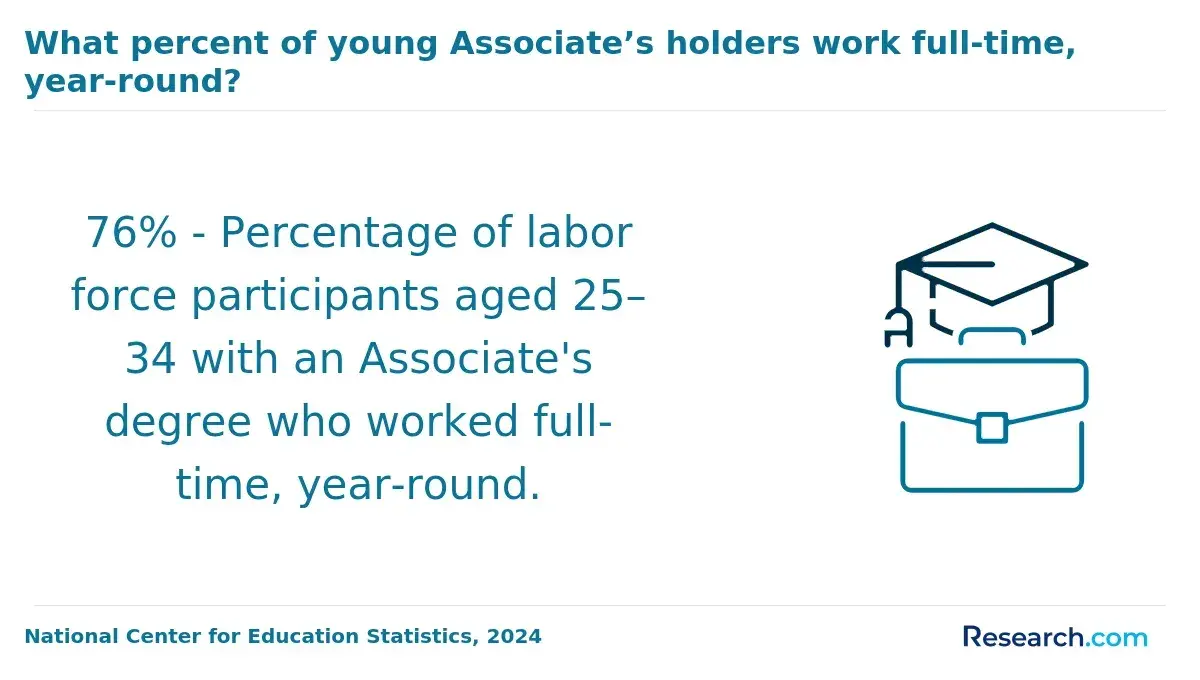
Students entering public health from another educational route should focus on readiness rather than speed alone. An earlier credential can build academic momentum, but a fastest associates degree online option is not a substitute for the statistics, biology, and writing preparation commonly needed for graduate epidemiology study.
What does an applied epidemiology certificate with informatics emphasis cover in public health?
Students commonly develop capabilities in the following connected areas. The exact titles and depth vary by school.
- Descriptive and analytic epidemiology, including measures of disease frequency, association, bias, confounding, and causal interpretation.
- Public health surveillance, including case definitions, reporting workflows, timeliness, completeness, and evaluation of surveillance systems.
- Biostatistics and reproducible analysis using statistical software, code documentation, and interpretable outputs.
- Health data management, including data cleaning, linkage, privacy-aware handling, metadata, and quality assurance.
- Informatics concepts such as interoperability, data standards, electronic health records, dashboards, and public health reporting systems.
- Communication of findings through visualizations, technical reports, briefings, and recommendations for nontechnical stakeholders.
This combination is most valuable for students who want to work with surveillance data, registries, immunization systems, claims data, electronic health records, or program-monitoring data. It is less essential for someone whose goal is primarily community program management, health education, or policy advocacy and who does not expect to work directly with data systems.
AI tools are increasing demand for careful data governance and validation rather than eliminating epidemiology work. Automated tools can assist with coding, summarization, and pattern detection, but public health professionals still need to assess data provenance, bias, confidentiality, and whether an apparent pattern is meaningful for a population.
How do online and campus MPH formats differ for informatics and epidemiology training?
Online and campus MPH formats can both support applied epidemiology and informatics training, but the better choice depends on how you learn, where you live, and whether the program can arrange meaningful applied experiences. Delivery format alone does not establish academic quality; curriculum, faculty access, practicum support, and course availability matter more.
The comparison below highlights the practical trade-offs prospective students should weigh.
| Factor | Online MPH | Campus MPH | Decision implication |
| Schedule | Often supports asynchronous lectures and part-time pacing. | Usually follows fixed meeting times and a local academic calendar. | Online may suit employed students; check for required live sessions. |
| Applied data access | May use virtual labs or arrange placements near the student. | May provide easier access to local faculty labs and partner agencies. | Ask how real-data projects and privacy restrictions are managed. |
| Networking | Can connect professionals across regions but requires intentional participation. | Provides more spontaneous in-person connections. | Choose based on the labor market where you hope to work. |
| Technical support | Requires reliable equipment, self-direction, and remote access to software. | May offer on-site labs and immediate help. | Confirm access to statistical, GIS, and secure computing tools. |
| Course sequencing | Some electives may be available only in certain terms. | More sections may be available at larger campuses. | Verify that certificate courses fit your intended graduation date. |
Online study works well for disciplined students who need to remain employed or who live far from a CEPH-accredited school. Campus study can be better for students seeking intensive faculty mentorship, research assistantships, laboratory access, or a local public health network. Before choosing a remote format, compare the school with other good online colleges and prioritize transparent support, course scheduling, and student services over marketing claims.
What admission requirements apply to MPH programs offering informatics-linked epidemiology certificates?
Admission requirements differ by institution, but MPH applicants commonly need a bachelor's degree from an appropriately accredited institution, transcripts, a statement of purpose, a résumé or curriculum vitae, and recommendation letters. Many schools no longer require the GRE, while some retain it as optional or request it in selected circumstances. Certificates may have a separate application, may be open only to enrolled MPH students, or may allow nondegree enrollment.
Quantitative readiness matters more for epidemiology and informatics than it may for some other public health paths. Schools may expect prior college-level statistics, algebra, research methods, biology, or health-related experience. Applicants without these courses are not automatically excluded, but they can fulfill prerequisite requirements through online self paced college courses before or during the program.
Use this checklist before applying so that you do not discover a sequencing problem after admission.
- Confirm that the MPH itself is CEPH-accredited and identify the exact epidemiology, informatics, or public health practice concentration.
- Read the certificate's separate eligibility rules, including whether nondegree students may apply and whether current MPH students receive priority.
- Check prerequisite courses and determine whether statistics must be completed before enrollment rather than concurrently.
- Ask whether certificate courses can be reserved for MPH students and whether there are enrollment caps.
- Request written confirmation of the shared-credit policy, including the maximum number of overlapping credits and any grade minimum.
- Ask whether international, military, employer-sponsored, or previously completed graduate credits are subject to separate transfer rules.
A common mistake is treating admission to the MPH as automatic admission to the certificate. Another is applying to a certificate first without confirming that its courses will later transfer into the target MPH. Keep copies of email approvals and the catalog version that applies to your entry term.
What core and informatics courses typically fulfill applied epidemiology certificate requirements?
Course names vary, but a credible applied epidemiology certificate usually requires a methods foundation plus a limited number of approved electives. Informatics coursework is most likely to count when it directly supports public health surveillance, management of population-health data, analytic workflows, or communication of epidemiologic findings.
The table separates courses that are commonly foundational from informatics-oriented electives that may be eligible for overlap. It is a planning guide, not a guarantee that a particular course will satisfy a particular school's rules.
| Course category | Typical course content | Likely role in a certificate | Why it supports applied practice |
| Introduction to epidemiology | Study designs, measures of occurrence, association, bias, and confounding. | Core requirement. | Builds the framework for interpreting population-health evidence. |
| Biostatistics | Statistical inference, regression, software use, and interpretation. | Core requirement or prerequisite. | Supports defensible analysis and reporting. |
| Applied epidemiologic methods | Outbreak investigation, causal reasoning, protocol development, and field applications. | Core or advanced requirement. | Connects theory to public health decisions. |
| Public health surveillance | Case reporting, surveillance design, data quality, and evaluation. | Common approved elective. | Directly bridges epidemiology and informatics. |
| Health informatics or health data systems | Data standards, interoperability, system design, and governance. | Possible approved elective. | Explains how data move from care settings to public health action. |
| GIS or spatial epidemiology | Geocoding, mapping, spatial patterns, and geographic data limitations. | Possible approved elective. | Supports place-based surveillance and resource planning. |
| Data visualization or dashboard design | Visual communication, usability, and audience-specific reporting. | Possible approved elective. | Helps decision-makers use findings responsibly. |
Students should prioritize course sequences over appealing individual titles. For example, taking advanced analytics before introductory epidemiology can make the material harder and may block certificate completion. Also check whether a practicum or capstone is required; a certificate without an applied component may be less useful for a student who needs a work sample for employers.
How long do these MPH programs and certificates take, and what do they cost?
Most full-time MPH programs are designed for roughly two academic years, while part-time programs commonly take longer because core courses, electives, and practicum requirements must be sequenced. Stand-alone graduate certificates are often shorter, but completing one alongside an MPH can still extend time to graduation if required classes are offered only once a year or if shared credits are not permitted.
Total cost is more important than published tuition alone. Public and private nonprofit institutions can both offer strong programs, and either can be a good investment when the curriculum, aid, employer support, and career outcomes fit the student. Tuition varies substantially by residency, credit load, delivery format, and required fees, so compare the full program estimate rather than a per-credit figure in isolation.
The following cost factors should be included in your financial comparison.
- Tuition for all MPH core, concentration, and certificate credits, including any credits that cannot be double-counted.
- Mandatory university, technology, distance-learning, graduation, and practicum fees.
- Software, secure computing, textbooks, travel, background checks, immunizations, and placement-related expenses.
- Lost earnings or reduced work hours for internships, synchronous courses, or campus residencies.
- Scholarships, assistantships, employer tuition benefits, federal aid eligibility, and payment-plan terms.
Ask each program for a written estimate based on your residency and planned pace. If the school offers a certificate-first route, compare its transfer policy with the cost of completing the MPH concentration directly. A certificate can reduce uncertainty for a career changer, but it is not automatically the lower-cost route if credits later expire or do not transfer.
Students who expect to move into research leadership, university teaching, or advanced population-health analytics after the MPH may eventually consider doctoral study. Reviewing options for a cheap online PhD can help with long-range planning, but doctoral education is usually unnecessary for entry-level epidemiology or public health informatics roles.
What careers can graduates pursue with an MPH plus applied epidemiology and informatics training?
An MPH paired with applied epidemiology and informatics preparation can support roles that sit between population-health analysis and the systems used to collect, manage, and report health data. Employers may include state and local health departments, federal agencies, hospitals and health systems, health insurers, universities, nonprofits, consulting firms, and technology vendors serving public health or healthcare organizations.
Job titles vary widely, so evaluate responsibilities rather than relying only on the word "epidemiologist." The roles below illustrate common directions.
| Potential role | Typical work | Useful preparation | Common next step |
| Applied epidemiologist | Analyzes disease patterns, designs studies, evaluates interventions, and prepares reports. | Epidemiologic methods, biostatistics, surveillance. | Senior epidemiologist or program lead. |
| Public health surveillance analyst | Monitors reporting data, evaluates completeness and timeliness, and supports case-based surveillance. | Surveillance systems, data quality, dashboards. | Surveillance manager or informatics specialist. |
| Public health informatician | Improves data workflows, reporting systems, standards, and information exchange. | Informatics, governance, systems thinking, epidemiology. | Informatics manager or systems lead. |
| Healthcare data analyst | Analyzes clinical, claims, quality, or population-health data for operational decisions. | Statistics, SQL or comparable data skills, visualization. | Senior analyst or analytics manager. |
| Program evaluation specialist | Measures program reach, outcomes, implementation, and equity impacts. | Evaluation design, epidemiology, communication. | Evaluation director or public health consultant. |
This path is a particularly good fit for students who enjoy asking structured questions, working carefully with imperfect data, and explaining results to varied audiences. It may be a weaker fit for someone who dislikes quantitative work or wants a clinical role involving direct patient diagnosis and treatment; an MPH does not qualify a person for clinical licensure.
Build employability while enrolled by completing a practicum using real data, maintaining a privacy-safe portfolio of code or dashboards when permitted, and learning to explain data limitations. Employers often value evidence of applied judgment as much as familiarity with a specific software platform.
What salary ranges and job outlook exist for informatics-focused applied epidemiologists?
The closest national occupation measure for many graduates on this path is epidemiologist. The U.S. Bureau of Labor Statistics reports a 2024 median annual wage of $83,980 for epidemiologists and projects 16% employment growth from 2023 to 2033. That outlook indicates demand for population-health expertise, but it does not mean every MPH graduate will qualify for an epidemiologist title or earn the median immediately after graduation.
Compensation varies by employer, region, years of experience, degree level, technical skills, and job classification. Government health departments, academic research groups, hospitals, insurers, and private-sector analytics employers may use different titles and pay structures for similar work. Some roles classified as data analyst, informatics specialist, research analyst, or program evaluator may not appear in epidemiologist wage data.
Use salary information as an ROI input rather than a promise. Compare likely local openings with the program's total cost, your ability to work while studying, and the value of practicum connections. A lower tuition program with relevant agency partnerships may offer stronger value than a more expensive program whose specialized electives do not align with available jobs in your area.
To improve competitiveness, focus on transferable capabilities: study design, statistical reasoning, data cleaning, reproducible workflows, surveillance evaluation, privacy-aware data handling, visualization, and concise communication. Software preferences change, but these underlying skills remain useful across platforms and employers.
How can students evaluate and choose reputable MPH programs with these certificate options?
Choose a program by starting with the work you want to do, then testing whether the curriculum, shared-credit rules, cost, and format support that goal. Do not select a school simply because it advertises both epidemiology and informatics. The critical question is whether you can complete an applied, CEPH-accredited MPH plan with the specific courses and experiences you need.
Use the following decision process before submitting applications or deposits.
- Define a target role, such as surveillance analyst, applied epidemiologist, health data analyst, or public health informatician, and review several local and national job descriptions for recurring skills.
- Verify CEPH accreditation directly through the school's current accreditation information and confirm that it covers the MPH you intend to pursue.
- Download the MPH and certificate curriculum sheets and map prerequisite, core, elective, practicum, and capstone requirements term by term.
- Request written confirmation of which informatics courses may count toward the applied epidemiology certificate and whether double-counted credits appear on both credentials.
- Compare total cost after aid, including fees, travel, technology, and the financial impact of reduced work hours.
- Ask where recent students complete practica, whether remote students receive equivalent placement support, and how students access secure data tools.
- Review faculty expertise and course availability, especially if you need surveillance, GIS, data standards, or electronic health-data coursework.
- Ask about certificate completion rates, career support, and whether the institution can provide outcomes information relevant to your concentration.
Common red flags include vague claims that "courses may overlap" without a published rule, an online program with no clear practicum plan, required electives offered too infrequently to fit the degree timeline, and tuition estimates that exclude mandatory fees. Also avoid assuming that a certificate alone will replace graduate-level epidemiology training for roles that require an MPH or substantial applied experience.
A strong final choice is one where the school can show you a realistic plan of study, a documented overlap decision, accessible faculty and technical support, and applied opportunities that match your intended employer sector.
Other Things You Should Know About Public Health
Usually, CEPH accreditation applies to the public health school, program, or MPH degree rather than certifying every individual certificate. Confirm the MPH's CEPH status and ask the school how the certificate is governed and recorded on the transcript.
Sometimes. Schools may allow an approved course to satisfy both an MPH elective and a certificate elective, but limits on double-counting vary. Get the course number, credit amount, and approval in writing.
Not always. Some entry-level data or systems roles accept related degrees and relevant technical experience. An MPH is especially useful when the work requires population-health methods, public health practice knowledge, or advancement into epidemiology and program leadership.
Choose a certificate first if you need to test the field, strengthen prerequisites, or gain a focused skill while working. Enroll directly in an MPH when you already know you need the degree and the school confirms that the certificate pathway will not add unnecessary credits or delay graduation.
References
- What is CEPH accreditation? https://masterspublichealth.com/what-is-ceph-accreditation/
- Best CEPH-Accredited, Online MPH Programs https://www.onlinemastersdegrees.org/best-programs/public-health-mph/ceph-accredited/
- Search for a Degree Program | Council on Education for Public Health https://ceph.org/about/org-info/who-we-accredit/search/
- Public Health Certificate Programs | 2026 https://www.publichealthonline.org/degree-programs/certificate/
- Online MPH Degrees https://www.mphprogram.com/program/online-mph/