2027 From Billing Specialist to Health Information Technician: Stackable Accredited Pathways

Co-Founder and Chief Data Scientist
Medical billing experience can be a practical starting point for a broader health information career, but choosing the right credential matters. The U.S. Bureau of Labor Statistics reports that medical records specialists, a closely related occupation, had a median annual wage of $50,250 in 2024.
This guide is for billers, coders, and career changers who want to move into health information technology. Learn how stackable accredited programs work, which certifications fit your goal, what to expect from online study, and how to assess whether an associate degree is worth the investment.
Key Things You Should Know
- A stackable pathway usually starts with a billing or coding certificate and builds toward an accredited associate degree in health information technology, allowing prior coursework to potentially count toward a larger credential.
- For roles commonly classified as medical records specialists, the 2024 U.S. median annual wage was $50,250; pay varies substantially by employer, location, experience, credentials, and responsibility level.
- CAHIIM-accredited associate programs are the most direct educational route for people seeking eligibility for the Registered Health Information Technician credential, while billing certificates alone usually prepare learners for narrower revenue-cycle roles.
What is the path from billing specialist to health information technician?
The path from billing specialist to health information technician (HIT) builds on knowledge of claims, reimbursement, medical terminology, and coding, then adds records management, data quality, privacy, analytics, and health information systems.
A billing specialist typically focuses on claims submission, payment posting, denials, and patient accounts. A health information technician generally works more broadly with the accuracy, security, classification, reporting, and lifecycle of health data.
A stackable pathway means each credential has value on its own while also applying toward a later credential. For example, a student may complete an entry-level medical billing certificate, use it to pursue a billing role, and later transfer applicable credits into an associate degree in health information technology. Whether credits transfer is determined by the receiving school, course equivalencies, grades, and program rules.
The following comparison shows why the associate-degree stage can expand career options beyond billing. It is especially useful for deciding whether to stop after a short certificate or continue toward HIT preparation.
| Stage | Typical focus | Common work outcome | Best fit |
| Medical billing certificate | Claims, reimbursement, insurance rules, patient accounts | Billing specialist, claims representative, patient accounts representative | People seeking a faster entry into revenue-cycle work |
| Medical coding certificate | ICD-10-CM, CPT, HCPCS, documentation review | Entry-level coder or coding support role | People who prefer classification and documentation work |
| Associate degree in health information technology | Data governance, privacy, records systems, coding, quality, statistics, management basics | Health information technician, records analyst, coding or compliance support role | People seeking broader health-data responsibilities and RHIT eligibility |
| Bachelor's completion or related degree | Leadership, analytics, informatics, management, policy | Advanced analyst, supervisor, compliance, informatics support roles | Workers aiming for advancement beyond technician-level responsibilities |
Before enrolling, map your target job backward. If you mainly want to resolve denials and manage claims, a billing credential may be sufficient. If you want eligibility for RHIT, records oversight, quality reporting, or a future move into health informatics, prioritize an accredited HIT associate degree.
A practical sequence can help working adults limit risk while testing the field:
- Review job postings in your area or preferred remote-work market and identify the credentials employers repeatedly request.
- Compare certificate courses with the associate degree curriculum to see whether credits can apply to the later program.
- Confirm institutional and programmatic accreditation before paying an enrollment deposit.
- Ask the school in writing how previous college coursework, coding training, or industry credentials may be evaluated for transfer credit.
- Choose certification timing after matching the exam to the job duties you actually want.
Which accredited programs support this career transition?
The strongest program choice depends on your destination, not simply the fastest credential available. For a move from billing into health information technology, look for an associate degree in health information technology accredited by the Commission on Accreditation for Health Informatics and Information Management Education (CAHIIM). This programmatic accreditation is important because it is the usual educational requirement for RHIT exam eligibility.
Institutional accreditation also matters. It affects transferability, federal financial-aid eligibility, and how employers may evaluate the school. A certificate can be useful when it is offered by an institution with recognized accreditation, but it does not automatically provide the same certification eligibility or career scope as a CAHIIM-accredited HIT degree.
This comparison clarifies the program types that may support a stackable transition and the questions each one raises.
| Program type | What it can provide | Main limitation | What to verify |
| Medical billing certificate | Foundational claims and reimbursement training | May not include broad health-data or records-management preparation | Transfer-credit policy and employer recognition |
| Medical coding certificate | Coding-focused preparation and possible entry-level exam preparation | May not satisfy RHIT educational requirements | Code-set instruction, practicum options, and credential alignment |
| CAHIIM-accredited HIT associate degree | Broader technician preparation and RHIT eligibility pathway | More coursework and general-education requirements than a certificate | Current CAHIIM status, graduation requirements, and practicum expectations |
| Health informatics or HIM bachelor's degree | Potential preparation for advanced data, management, or informatics roles | Usually requires more time and tuition | Career outcomes, transfer pathways, and whether the curriculum supports your target credential |
Online learners should not assume that a school's general reputation replaces programmatic accreditation. Some learners prefer public community colleges for lower published tuition, while others need the scheduling structure of a private institution.
Institutional type alone does not determine quality or return on investment. Compare accreditation, transfer rules, total charges, student support, and outcomes. Students evaluating online institutional options can also review non profit universities as part of a broader school-selection process.
Common red flags include a school that cannot clearly state its accreditor, promises certification eligibility without naming the exam requirements, or refuses to explain whether certificate courses apply to its associate degree. Request the academic catalog, graduation plan, and transfer-credit evaluation process before committing.
What certifications are needed for health information technicians?
Certification is not universally required for every health information technician job, but it can strengthen an application and may be preferred by employers. The right credential depends on whether your work will center on health information management, coding, billing, compliance, or revenue-cycle operations. Requirements can vary by employer and are not the same as state professional licensure rules.
For graduates of a CAHIIM-accredited associate degree, the Registered Health Information Technician (RHIT) credential is often the most directly aligned option. The RHIT exam is administered by the American Health Information Management Association and is designed for professionals working with health information, data quality, privacy, coding, and related operations.
The credentials below serve different purposes, so selecting one based on a job title alone can be a mistake.
| Credential | Primary focus | Typical educational fit | When it makes sense |
| RHIT | Health information management, records, data, privacy, coding fundamentals | Graduate of a qualifying accredited HIT program | You want technician-level health information roles and broader records responsibilities |
| CCA | Entry-level coding knowledge | New coders or coding students | You need a coding-focused starting credential |
| CCS | Advanced coding proficiency | Experienced coders with substantial coding preparation | You are pursuing more complex coding roles |
| CPC | Professional-fee and physician-practice coding | Coding students or billing professionals moving into coding | You want outpatient or professional-services coding work |
| CPB | Medical billing and reimbursement | Billing specialists and revenue-cycle staff | You intend to remain focused on claims and payment processes |
Do not pay for several exams simply to collect credentials. Start by reviewing the education and experience requirements published by the certifying organization, then compare them with job postings you want.
An RHIT pathway may be more strategic than an additional billing credential if your goal is health records, data integrity, or information governance; a coding credential may be more relevant if coding is the actual work you plan to perform.
Certification maintenance also matters. Many credentials require ongoing education, fees, and compliance with renewal policies. Include those continuing costs and time commitments in your career plan.
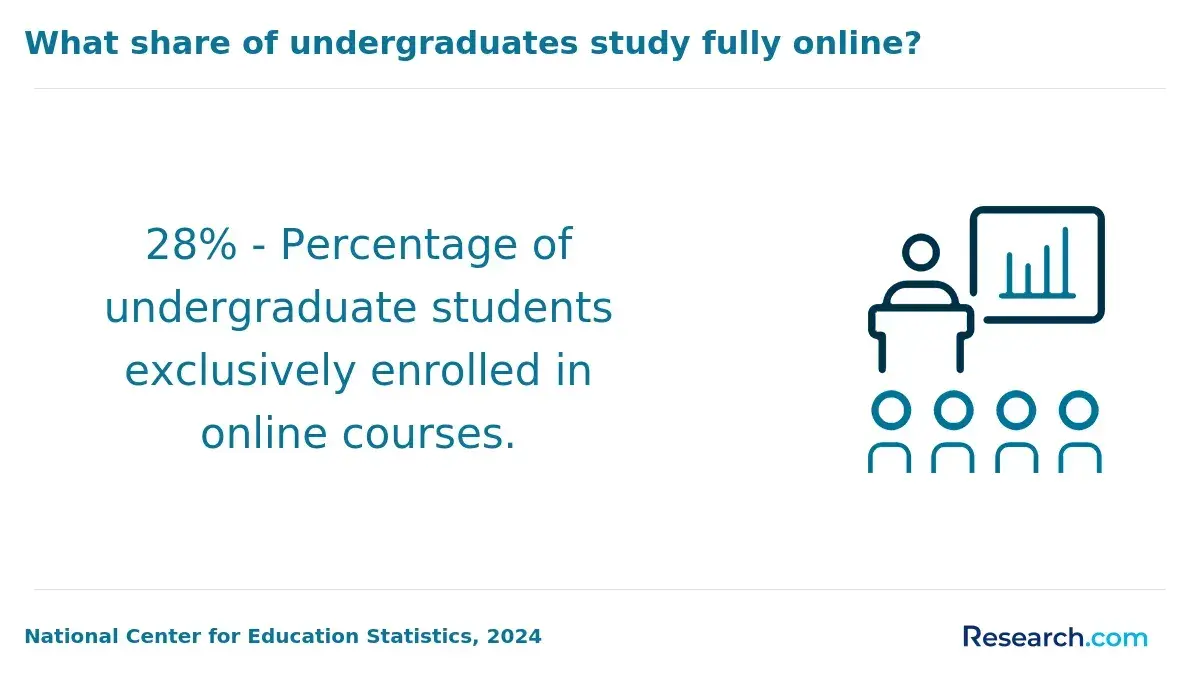
Are online health information programs as reputable as campus programs?
Online health information programs can be as reputable as campus programs when the institution is appropriately accredited, the specific HIT program holds applicable programmatic accreditation, and the curriculum includes the required learning experiences. Employers generally care more about your credential, demonstrated skills, experience, and ability to work accurately with health data than whether lectures were delivered online or in a classroom.
The key distinction is not online versus campus; it is verified quality and fit. An online program may be a strong choice for a working billing specialist because it can reduce commuting and allow more flexible scheduling. However, online study requires reliable time management, technology access, and proactive communication with instructors and practicum coordinators.
This side-by-side view helps identify which format fits your circumstances rather than assuming one is automatically better.
| Consideration | Online format | Campus format | Decision question |
| Schedule | May offer asynchronous coursework or flexible access | Often follows fixed meeting times | Can you consistently study around work and family duties? |
| Networking | Requires intentional participation and virtual outreach | May provide easier face-to-face contact | How will you build relationships with faculty and local employers? |
| Practicum support | May require local placement coordination | May have established local partnerships | Who finds the site, and what happens if placement is delayed? |
| Learning style | Requires independent reading and deadline management | Provides more structured in-person routine | Do you learn effectively with limited live instruction? |
| Credential value | Depends on accreditation and curriculum quality | Depends on accreditation and curriculum quality | Is the specific program accredited and aligned with your goal? |
Ask whether courses are synchronous, asynchronous, or mixed; whether exams require proctoring; and whether a practicum is mandatory. Also ask whether the school arranges practicum sites or leaves the responsibility to students.
A program that is convenient but cannot support required field experiences may create avoidable delays. Remote and hybrid health-data roles exist, especially in coding, billing, release of information, and revenue-cycle work, but remote work is not guaranteed.
Readers assessing broader education options for flexible employment can explore work from home degrees while keeping in mind that healthcare employers may still require secure equipment, privacy safeguards, and location-specific availability.
What coursework is in a health information technician program?
A health information technician program combines healthcare knowledge with information-management skills. Coursework is broader than medical billing because technicians must understand how health records are created, classified, protected, retrieved, audited, and used for reporting. Course names vary by school, but accredited associate programs commonly cover comparable competencies.
The curriculum below shows the subjects that typically distinguish an HIT degree from a shorter billing-only program.
| Course area | What students learn | Why it matters in practice |
| Medical terminology and anatomy | Clinical language, body systems, and common conditions | Supports accurate interpretation of provider documentation |
| Medical coding and classification systems | Diagnostic and procedural classification principles | Supports reimbursement, reporting, and data consistency |
| Health data management | Data quality, record completion, retention, and information governance | Helps organizations maintain reliable health information |
| Privacy, security, and legal issues | Confidentiality, release of information, ethics, and compliance concepts | Protects patient information and reduces operational risk |
| Reimbursement and revenue cycle | Claims processes, payer systems, and payment principles | Builds on billing experience and connects records to reimbursement |
| Health information systems and analytics | Electronic health records, databases, reporting, and basic statistics | Prepares students for increasingly digital health-data workflows |
Artificial intelligence and automation are changing routine administrative work, including claim edits, document indexing, and basic coding support. That does not eliminate the need for trained personnel.
It raises the value of workers who can validate data, identify documentation problems, apply privacy rules, and understand when automated output requires human review. Programs that teach data quality, compliance, and health information systems may offer a more durable foundation than training limited to one billing platform.
Before enrolling, compare the course sequence with your existing skills. An experienced biller may already know portions of reimbursement and terminology, but should not assume that job experience replaces academic prerequisites or qualifies for course credit. Ask about credit by examination, prior-learning assessment, and transfer policies.
What are the admission requirements for these programs?
Admission requirements differ by college and credential level. Entry-level billing certificates may have open or relatively accessible admission processes, while associate degree programs commonly require a high school diploma, GED, or equivalent and an application to the college. Some programs also require placement assessment, prerequisite coursework, background checks, immunizations, or health-system onboarding for practicum participation.
Applicants moving from billing into an associate program should focus on requirements that affect time to completion, especially transfer credit and prerequisites. The checklist below can prevent an unexpected delay after enrollment:
- Submit official transcripts from high school and all prior colleges, even if you completed only a few courses.
- Ask whether medical terminology, anatomy and physiology, computer applications, English, or math must be completed before core HIT courses begin.
- Request a written transfer-credit evaluation and confirm any minimum grade required for accepted coursework.
- Determine whether the program has limited enrollment, separate program admission, or a waitlist after general college admission.
- Review practicum requirements early, including background screening, drug testing, immunization documentation, and geographic placement limits.
- Confirm whether international students, distance learners, or out-of-state students face any additional placement restrictions.
A common mistake is confusing admission to a college with admission to the HIT program itself. Another is assuming a previous billing certificate will transfer automatically. Get the requirements in writing, and keep copies of course syllabi because schools may request them when evaluating older or nontraditional credits.
If you already have an associate or bachelor's degree, ask whether general-education credits can transfer. This can shorten the path, but it should not be the only factor: the remaining professional courses must still meet the program's graduation and credential-eligibility requirements.
How long and how much does this training usually take?
Training time depends on the credential, transfer credit, course load, prerequisites, and practicum availability.
A billing or coding certificate can often be completed more quickly than an associate degree, while an associate HIT program generally requires a longer sequence because it includes general education and specialized health information courses. Part-time enrollment may make the program manageable for employed learners but extends the calendar time to completion.
Rather than relying on advertised "fast-track" language, compare the program's required credits, course rotation, and whether prerequisites are included. The following ranges are planning estimates, not guarantees; each school's catalog controls the actual schedule.
| Credential route | Typical time pattern | Major cost drivers | Best financial-use case |
| Billing or coding certificate | Often shorter than a degree and may be completed in months to about a year | Tuition, books, coding materials, exam fees | Quick entry or skill validation before committing to a degree |
| Associate degree in HIT | Commonly designed as about two academic years of full-time study | Tuition, fees, general education, technology, practicum, credential exams | Broader career preparation and possible RHIT pathway |
| Part-time stackable route | Longer calendar timeline but may allow continued employment | Potentially more terms of fees and delayed completion | Workers who need income stability while studying |
| Transfer-credit route | May be shorter when applicable credits are accepted | Transcript evaluation and any remaining prerequisites | Students with prior college-level coursework |
Total cost is more than tuition. Include registration and technology fees, textbooks, software, certification exam and renewal expenses, transportation or lost work time for practicums, and any costs associated with background checks. Ask for a program-level estimate rather than a single per-credit figure, particularly if you will study online.
To reduce borrowing, complete the Free Application for Federal Student Aid if eligible, compare employer tuition assistance, and ask about scholarships for allied health or workforce learners. Community colleges can be a cost-conscious starting point, but compare total required charges and transfer outcomes rather than assuming the lowest tuition produces the best value.
If your long-term plan eventually includes advanced study, reviewing affordable online PhD programs can help place future education goals in perspective, though a doctorate is not required for entry-level HIT work.
What jobs can graduates get after completing this pathway?
Graduates can pursue roles across hospitals, physician groups, outpatient clinics, insurance companies, health systems, government agencies, third-party billing firms, and health-data vendors.
Job titles are inconsistent: one employer's health information technician may be another employer's medical records coordinator, document imaging specialist, or release-of-information representative. Read the duties, not just the title.
The roles below illustrate how a stackable pathway can support progression from revenue-cycle work into broader health-information responsibilities.
| Role | Typical responsibilities | Common entry route | Potential next step |
| Medical billing specialist | Submit claims, post payments, follow up on denials | Billing certificate or relevant experience | Revenue-cycle specialist or coding support |
| Medical coder | Assign codes from clinical documentation and support claim accuracy | Coding education plus employer-preferred certification | Specialty coder, auditor, or coding quality role |
| Health information technician | Maintain records, review data quality, support privacy and reporting processes | HIT associate degree; RHIT may be preferred | Health information supervisor, analyst, or compliance support |
| Release of information specialist | Process authorized requests for patient records | Health information training or relevant records experience | Privacy, records, or information-governance work |
| Clinical documentation integrity support role | Help identify incomplete or inconsistent documentation workflows | Experience plus employer-specific training | Documentation quality or auditing work |
Career advancement usually depends on a combination of education, certification, system knowledge, accuracy, and experience with a particular setting. Hospital roles may emphasize electronic health record workflows and compliance, while physician-practice roles may prioritize professional-fee coding and payer rules.
An associate degree is a good fit for people who want operational health-data work; those seeking senior informatics, leadership, or highly analytical roles may eventually need a bachelor's degree or additional specialized training.
When comparing long-term education options, remember that health information is not always among the fields associated with the very highest earnings. A review of the top paying degrees can help you compare broader income goals with your interest in healthcare administration and data work.
How much do health information technicians earn?
Pay depends on the exact occupation, employer setting, geographic area, experience, credentials, and job duties. The closest federal occupational category for many entry-level HIT and records roles is medical records specialists. The U.S. Bureau of Labor Statistics reports a median annual wage of $50,250 for medical records specialists in 2024.
That median is a useful benchmark, not a promised starting salary. It includes workers with different levels of experience and responsibilities, and it does not isolate people with a particular degree, certification, or billing background. Use local job postings and wage information to understand what employers in your target market offer.
These factors commonly explain why earnings differ across health information roles:
- Credential level and whether the employer prefers RHIT, coding certification, or demonstrated specialty experience.
- Work setting, such as a hospital system, physician group, insurer, government agency, or outsourced revenue-cycle company.
- Specialization in areas such as inpatient coding, auditing, privacy, compliance, cancer registry, or documentation integrity.
- Geographic labor market, including local healthcare concentration and cost of living.
- Experience using specific electronic health record systems, coding platforms, and reporting tools.
For return-on-investment planning, compare realistic local pay ranges with the program's full cost, your likely work schedule during school, and the time required to advance. Avoid schools or advertisements that imply a credential alone guarantees a particular wage or remote position.
What is the job outlook for health information technicians?
Health information work is supported by the healthcare system's continuing need for accurate, secure, and usable records. The U.S. Bureau of Labor Statistics projects employment of medical records specialists to grow 7% from 2024 to 2034, faster than the average for all occupations. This projection suggests ongoing demand, but it does not guarantee openings in every city, specialty, or remote-work arrangement.
Several forces shape the outlook for billing specialists and health information technicians. Electronic health records, interoperability requirements, quality reporting, cybersecurity concerns, and increasingly detailed reimbursement processes all increase the importance of data governance and documentation accuracy. At the same time, automation can streamline repetitive tasks such as claim edits, document routing, and basic data entry.
The most resilient career strategy is to build skills that complement technology rather than compete only on routine processing. Focus on interpreting documentation, protecting privacy, resolving data-quality problems, understanding coding and reimbursement rules, and communicating with clinical and administrative teams.
Before choosing a program, evaluate local demand using job postings from your target employers. Look for repeated requirements, such as a specific coding credential, electronic health record experience, an associate degree, or knowledge of release-of-information procedures. This approach is more useful than relying on a national growth figure alone because hiring needs vary by region and organization.
Other Things You Should Know About Medical Billing and Coding Programs
Often, yes. Billing experience provides useful knowledge of reimbursement, claims, terminology, and payer processes. You may still need an accredited HIT associate degree and additional coursework in records management, privacy, data quality, and health information systems if you want broader technician roles or RHIT eligibility.
No. Medical billing focuses mainly on claims and payment processes. Health information technology covers a wider set of responsibilities, including health records, coding, privacy, data quality, reporting, and information systems. Billing can be an entry point into HIT, but the roles are not interchangeable.
Not always. Some entry-level records, release-of-information, billing, and coding-support jobs do not require RHIT. However, employers may prefer it for roles involving broader health information responsibilities, and it can be valuable for graduates of qualifying accredited HIT programs.
Choose a billing certificate if you need a faster route into claims and revenue-cycle work. Choose an HIT associate degree if you want wider health-data responsibilities, a stronger foundation in privacy and records management, and a potential pathway to RHIT certification. A stackable program can offer both options if the certificate credits apply to the degree.
References
- Health Information Technology | Ozarks Tech (OTC) https://ozarkstech.edu/programs/health-services/health-information-technology/
- Health Information Technology (HIT) at McLennan Community College https://www.mclennan.edu/health-professions/health-information-technology/index.html
- Health Information Technology A.A.S. - Moraine Valley Community College https://www.morainevalley.edu/program/health-information-technology/
- Health Information Technology https://www.mtc.edu/academic-programs/healthcare/health-information-technology/index.html
- Health Information Technology https://www.southtexascollege.edu/academics/hit/